May 06, 2024

The Invasive Warrior Battle Continues!   

Chinese Privet bushes

our next Workday is:

Saturday May 18th at 9:00-11:30

at the club


After a short education session about Tree of Heaven, Princess Tree, and Autumn Olive we will head out to the woods.


If you see invasive species in the common areas like: Tree of Heaven, Princess Tree, Autumn Olive, Chinese Privet, or one of the invasive vines strangling trees, please note the location and notify your Sector Leader, or Liza Moorman, Team Leader. 

(Chinese Privet Photo Right)

Wear long sleeves, long pants, work gloves, and protective eye wear. Consider using an insect repellant for exposed skin. Bring hand pruners, and loppers if you have them.

Did you know?


In Common Areas where we have been working to remove invasive species for a few years, native shrubs and trees including, Black Haw Viburnum, Bitternut Hickory and Paw Paw trees, are starting to make a comeback

Need to Replace? Think Native!


Native trees, shrubs and flowers have adapted to our climate so that they require less additional water and less maintenance, and native birds, mammals and pollinators have developed a symbiotic relationship with them.


When it’s time to replace, instead of planting Nandina, Burning Bush Euonymus, or Leatherleaf Mahonia which are invasive species, consider planting one of these native plants instead:


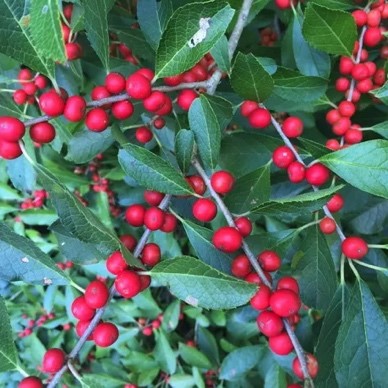
Yaupon Holly (Ilex vomitoria):


Native to the Southeast, this holly doesn’t look like others as it has smooth leaves, but does produce red berries in the fall that are important for many birds, like the Eastern Bluebird and songbirds. 


Maple leaf Viburnum (Viburnum acerifolium):


Produces white flowers in the spring (photo 1) and blue-black berries in the fall (photo 2) that are a high value food source for many birds. It is the host plant for many pollinators and the blue azure butterfly. The leaves turn a beautiful rose-purple in the fall.  

Photo 1

Photo 2

Carolina Allspice (Calycanthus floridus)


is a deer resistant, deciduous shrub with fragrant and profuse burgundy red flowers (photo 3) from spring to mid-summer. It attracts bees, butterflies and other pollinators. The leaves turn golden yellow in the fall (photo 4). 

Photo 3

Photo 4

Winterberry Holly (Ilex verticillata):


This native holly is not evergreen but produces an abundance of red berries that stay from fall to early spring, which feed the birds and wildlife through the winter. The leaves, which aren’t spiky like other hollies, turn yellow in the fall and then drop leaving a bush covered in bright red berries.

Our Invasive Warrior Team

Liza Moorman: Team Leader. Sandown Lane and Sandown Park- liza.moorman@gmail.com

John Crawford: Sandown Park, Trails- john@uscrawford.com

Liz Burns: Scottish Homes- lburns1117@gmail.com

Cathy Martens: Piper East- steve.cathy@sbcglobal.net

Cathy Skelly: Highlands, Carroll Creek area- cathy.skelly@yahoo.com

Nancy Canavan: S section, Glenlochan pond- nancanavan@aol.com

Tom Hedstrom: S section Glenlochan pond- Red99cedar@msn.com

Diana Ferguson: Darby West- dianasfergy@gmail.com

Bob Cox: Bremerton Cottages- robertwcox855@gmail.com

Anne Poland: Piper West- lauren.poland@att.ne