The Power of Walking: Keep Moving, Stay Strong | | |
Evolution: A very slow but fabulous way to create change and brilliant innovation.
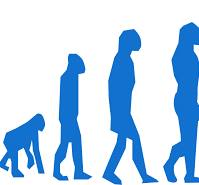
Humans evolved from our arboreal (tree climbers) and quadrupedal (4-legged) ancestors to being bipedal—standing and walking with 2 legs and not 4. As a result, we can use our hands with handy-dandy opposable thumbs to do lots of things!
This did not happen in a day, week, or year. It took 3 to 4 million years! Since we believe the fittest win the survival race, and make it to manhood or motherhood, some very practical things happened along the way.
In addition to opposable thumbs:
The entire body shape changed from our more recent primate relatives (monkeys and apes) to something very different: Humans, or homo sapiens, with the ability to stand upright and walk on 2 feet.
| |
Human Locomotion — Upright walking on 2 legs.
We do, mostly, seem to take this for granted. Not so much infants or babies. Not so much as we launch into our journey into older age. And not so much after any number of difficult situations could impair this amazing structure and nervous system that allows us to stand and walk or run on two legs.
| |
This is by way of convincing you, my reader, to not take this fantastic ability for granted! First of all: Something about the structure of being upright…
POSTURE!
So, if you built a house that gently sloped instead of straight up and down — maybe it leaned to the right or left or forward or backward. You might be nervous any perturbation, like a strong wind, or even a gang of teenagers looking for thrills — climbing on your roof could urge the whole structure to fall down. Maybe in one big structural failure. Crashing down. Or maybe just slowly but surely collapsing into a big heap.
Well, not so different — your standing and/or walking posture should be nice and upright. Straight, up and down. Or the forces of gravity, or forces of nature, will gradually or even possibly suddenly cause a collapse.
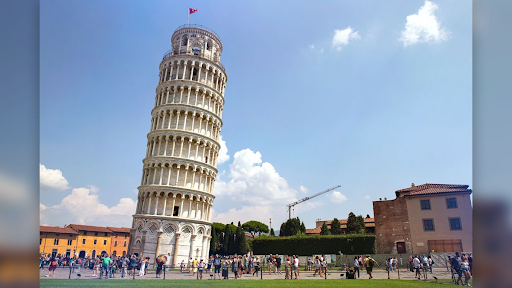
The leaning tower of Pisa: Built in the year 1173. No one knows how long it can remain standing! Trying to correct the tilt, they ended up with a slight "banana shape!”
| |
What might that collapse of your bones and joints look like:
- Fractured spinal vertebrae
- Chronic back pain
- Degenerative joint disease of weight-bearing joints — knees, hips, back or neck, feet.
- Chronic shoulder degenerative disease — rotator cuff impingement.
- Lung function impairment.
| |
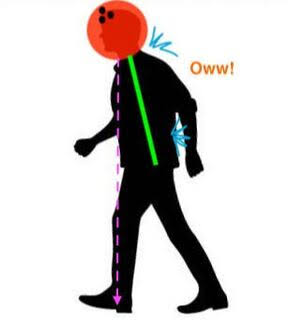
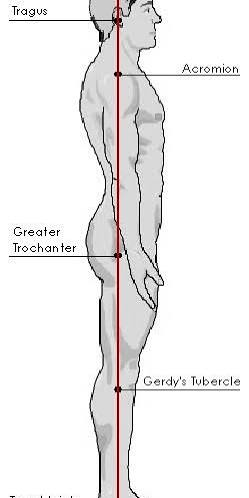
And here’s what functional upright posture basically should look like if you were building it carefully from scratch:
Notice the nice straight line going through basic structural points in your body.
The EAR is over the middle of the SHOULDER (acromion), then the middle of the HIP JOINT (greater trochanter), likewise the knee joint (Gerdy’s tubercle) and the ANKLE BONE.
All attached together into a supported, sturdy, upright structure. Allowing the movement needed and protecting the organs.
Let’s be honest, it’s not like aligning bricks or upright supporting beams. It’s a little more complicated. Taking into account that so many of the parts that need to be balanced in this upright position have different shapes and functions. Not to mention all the motion that goes on throughout your day and night. A rather complicated situation. But somehow, it all seems to come naturally. Through the brilliant brain and nervous system. It’s designed well, and it’s “instinctive.”
| | |
And so WALKING!
Getting back to "getting around… on 2 feet." With modern human ingenuity over all these millennia, we don’t have to always walk to “get where you need to get." So why worry? Forgive me for being a devil's advocate. Perhaps just trying to get you (my reader) to fill in the blank. What’s so important or great about walking (or running). Until, of course, you can’t!
| |
THE PERFECTION OF THE HUMAN BODY FOR WALKING
First, given that your up/down alignment is basically maintained…
The head is over the shoulders. The normal spinal curves are balanced and in the right places. Your legs and feet from pelvis down to the ground are in position to do the job.
Given that beautiful weight-bearing structure.
The hinges (or joints) must work properly. Because walking is kinetic.
- The arms and legs move reciprocally: The right leg and left arm swing forward at the same time. Rhythmically. Naturally!
- Likewise the left leg and right arm (of course)
Check out this video below:
| |
These swinging pendulums (arms and legs) balance each other: “A natural, passive movement where the arms swing like pendulums to balance body rotation, save energy, and propel forward motion with minimal muscle effort.”
The beautiful, functional upright alignment and hinging of skeletal parts…Is there more to it than that? Well, let’s just say that alone—the fabulous design of the human body makes walking almost effortless on a flat surface, with no imminent danger of wild beasts or other more modern hazards.
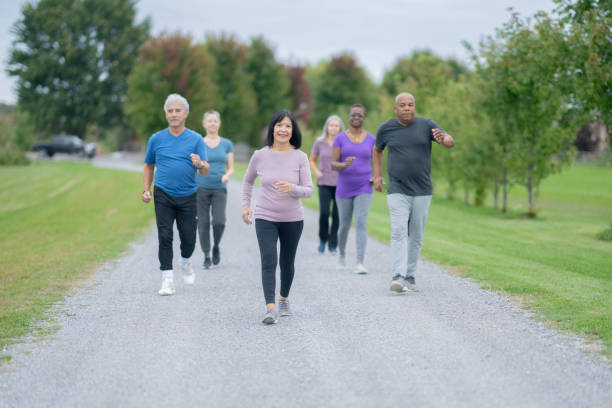
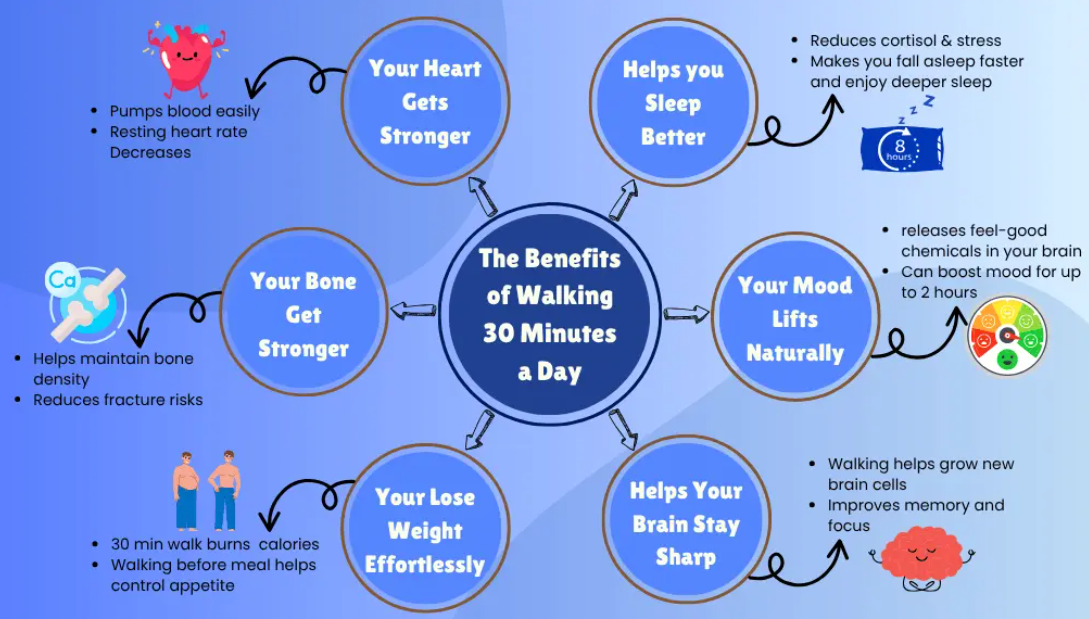
So get out and walk, my fellow seniors. All you need is a little song in your heart, perhaps a friend by your side, and you’re on your way to a strong body, a good metabolism, a peaceful mind, and a good night’s sleep.
| |
Here are some helpful suggestions to start a walking habit.
Wear the right shoes, unless of course, you’re on the beach.
Avoid traffic. And dogs off leash.
Love your body, and take a walk, maybe with a friend.
NIH says: 5 days a week. Moderate level of effort. Even try interval training.
Check out this great link to the latest extra special walking trend—with interval training features for seniors from Japan:
What Are the Benefits of Japanese Walking?
NEW Japanese Walking Technique 2x Better Than 10,000 Steps:
Enjoy yourself!
| |
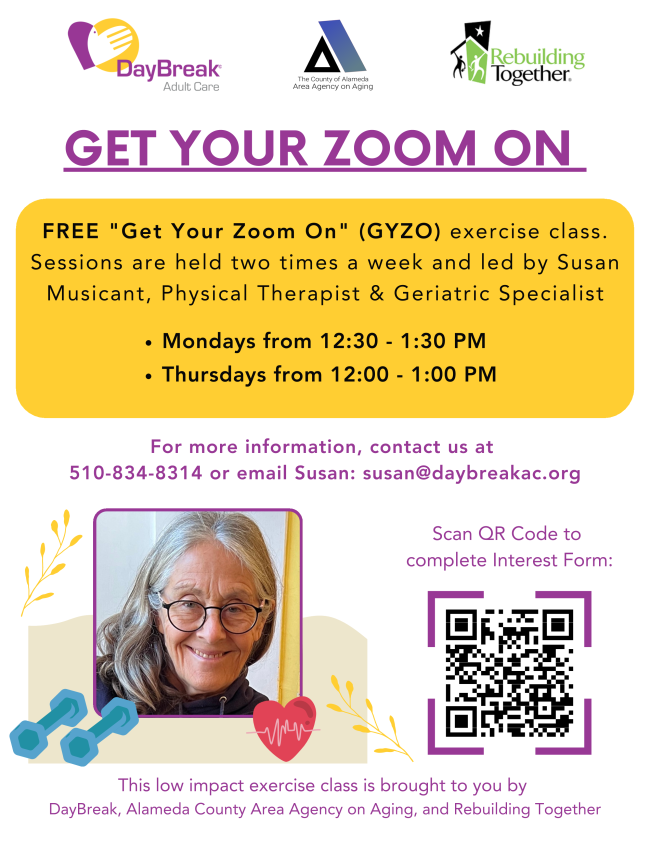
And if you need some extra help getting up to exercise…
Maybe start by getting off the couch with “Get Your Zoom On”. Free twice a week exercise program led by this author, Geriatric Certified Physical Therapist.
| | |
— Susan Musicant, DPT
Injury Prevention Specialist at DayBreak
| |
Upcoming Events & Workshops 📣 | |
Help Us Reach Our Goal ❤️
| | Your gift helps keep older adults and individuals with disabilities safe and supported. Join us in spreading love, hope, and care throughout our community! | | |
If you know an elder in need of our care and coordination services, or a caregiver seeking support, please encourage them to reach out to us at:
510-834-8314
| | | | |