|
A Division for Advancing Prevention & Treatment (ADAPT) provides substance use prevention Training and Technical Assistance to High Intensity Drug Trafficking Area (HIDTA)
communities across the nation. The Prevention Post keeps HIDTA communities
up-to-date with the latest advances and opportunities in the field.
| | |
Dear HIDTA Communities & Prevention Partners,
While dismantling and disrupting drug trafficking organizations to reduce the supply of drugs is the critical mission of the High Intensity Drug Trafficking Area (HIDTA) program, HIDTAs across the country understand the big picture and are doing everything in their power to complement their important supply reduction work with prevention activities to also reduce the demand for substances in any way they can, especially when it comes to youth. Prevention activities can look very different across HIDTAs, but all are brought to life through incredible partnerships with local, state, and federal organizations and promote the best available evidence we have for substance use prevention. HIDTA prevention resources are limited, so a thoughtful approach to determining how HIDTAs can best support prevention efforts in their communities is always engaged.
This issue of the Prevention Post is exciting for so many reasons! It really showcases the extraordinary impact of HIDTA prevention activities. ADAPT has had the honor of working intimately with several HIDTAs over the past couple of years on a variety of large initiatives. From launching city wide social norms media campaigns to bringing evidence-based prevention curricula into schools to hosting 2-day institute trainings on relationship science, HIDTAs are joining hands with their partners to respond in innovative ways to the needs of youth in their areas.
In this issue you'll also hear from HIDTA's Drug Threat Analysis Group and ODMAP and learn about new information and resources coming out of SAMHSA, CDC, the National Council for Mental Wellbeing, World Health Organization, and the South Southwest PTTC. In addition to this wealth of information, I hope you'll take a few minutes to read and reflect on our Prevention Tip. The tip offers a flavor of some of the content shared in our Youth Prevention Institutes and really challenges us to examine the full potential of our roles as trusted adults in the lives of youth.
Take care of yourselves, and please don't be shy about reaching out to us (adapt@wb.hidta.org) to share any ways in which HIDTA prevention efforts or resources have benefitted you!
| | | |  |
Lora Peppard, PhD, DNP, PMHNP-BC
Director of ADAPT
Deputy Director for Treatment & Prevention
Washington/Baltimore HIDTA
| | |
Liberty Mid-Atlantic HIDTA Champions Citywide
Prevention Initiative in Philadelphia
| | | | In October 2024, the Liberty Mid-Atlantic HIDTA (LMA HIDTA) and its partners brought together prevention advocates from across Philadelphia at the U.S. Attorney’s Office for the Eastern District of Pennsylvania. The meeting aimed to explore collaborative opportunities for strengthening substance use and violence prevention efforts citywide. Participants overwhelmingly favored piloting a social norms prevention intervention. | | |
Social norms interventions are evidence-based approaches that prevent high-risk behaviors by teaching youth that the majority of their peers avoid such activities. These interventions, often delivered through multimedia campaigns, work by highlighting and reinforcing the true positive attitudes and behaviors already demonstrated by most young people in their community, or within their peer group.
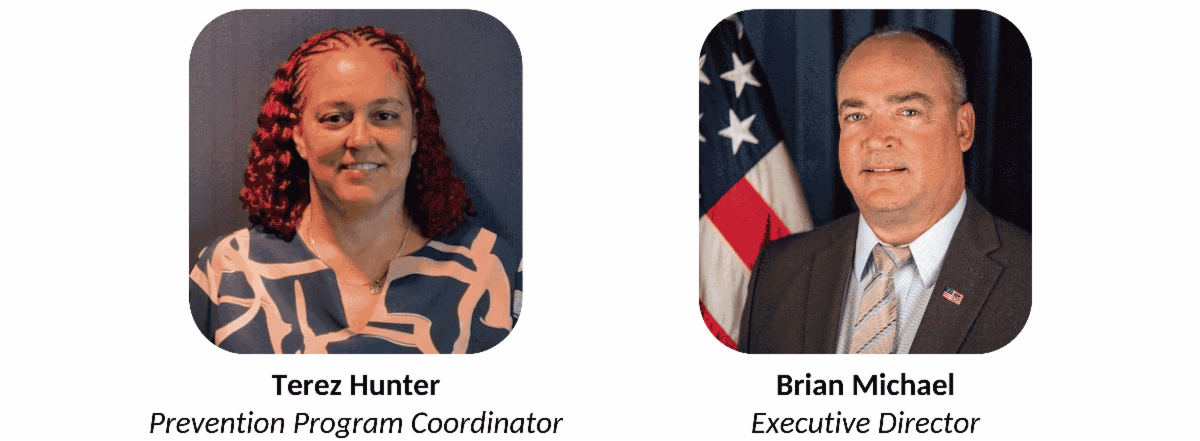
Over recent months, LMA HIDTA's Prevention Coordinator, Terez Hunter, has worked alongside ADAPT and prevention partners throughout Philadelphia to mobilize community members across sectors around this strengths-based approach aimed at substance use and gun violence prevention among Philadelphia youth. By creating a robust network of prevention champions committed to this intervention, this initiative seeks to create a sustainable approach to implementation that includes training community members—including young people themselves—to implement the intervention and serve as ongoing local leaders for this work.
These collaborative efforts have resulted in commitments to roll out the social norms intervention across both school and community-based programs that serve youth. Implementation is set to begin this fall.
| | Kudos to Terez and team for recognizing this important need and advancing prevention efforts in Philadelphia. For more information about this initiative, reach out to Terez at huntert@lmahidta.org. | | |
San Diego Imperial Valley HIDTA Advances Evidence-Based
Prevention through County Schools
| | | | |
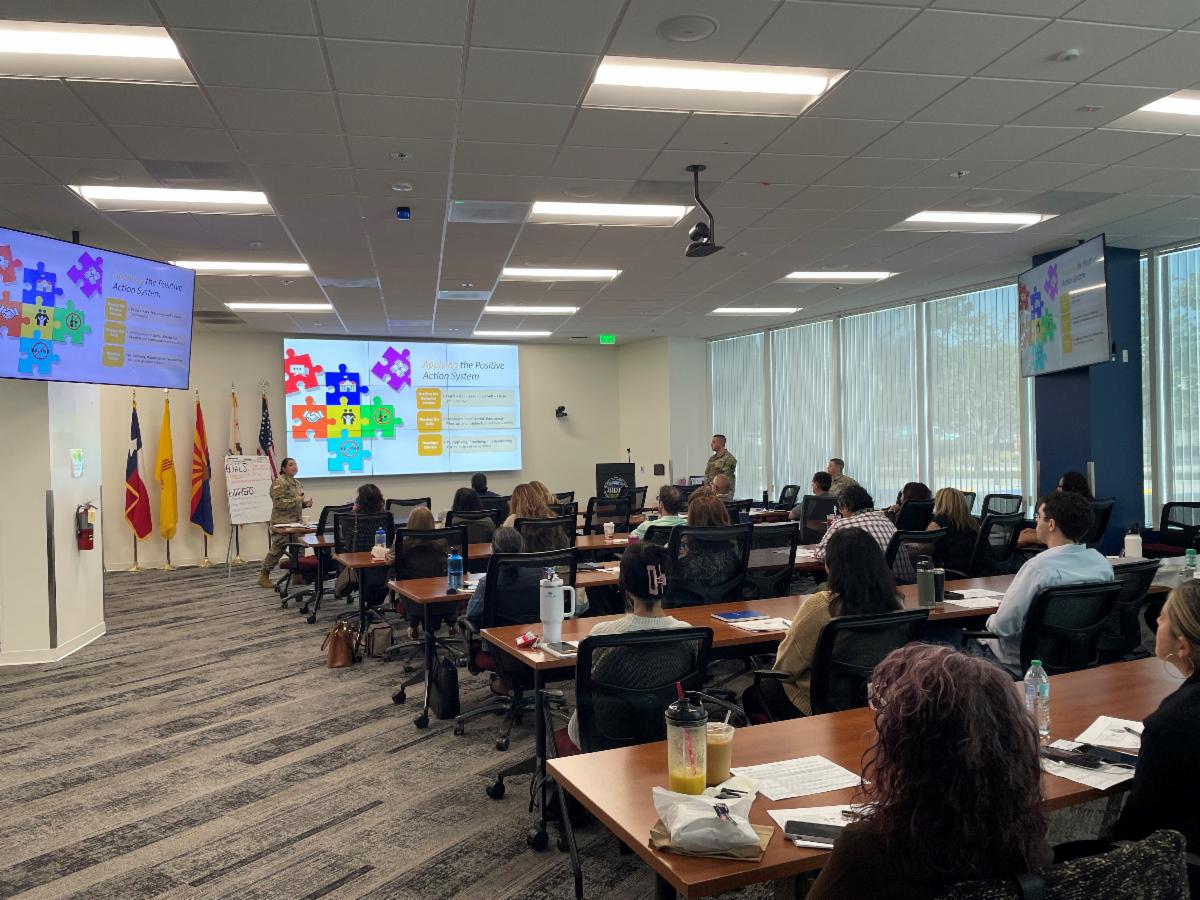
San Diego Imperial Valley HIDTA (SDI HIDTA) brings evidence-based prevention training to its region to expand the implementation of school-based preventive interventions across their district.
Using a train-the-trainer model, Service Members from the California National Guard Counterdrug Task Force facilitated curriculum training to over 30 attendees.
| | This group dedicated two days to earning certification as a trainer in the Positive Action K-12 curriculum, a Blueprints "Model" evidence-based program. Training participants represented various sectors engaged in school-based prevention, spanning school and county offices, coalitions, Overdose Response Strategy teams, school resource officers, behavioral health and healthcare organizations, and corrections agencies. | | | |
This trainer certification is projected to extend this intervention's reach to thousands of additional students.
| | |
Training was delivered through partnerships with the San Diego County Office of Education, San Diego District Attorney's Office, California National Guard Counterdrug Task Force, and San Diego Substance Use and Overdose Prevention Taskforce.
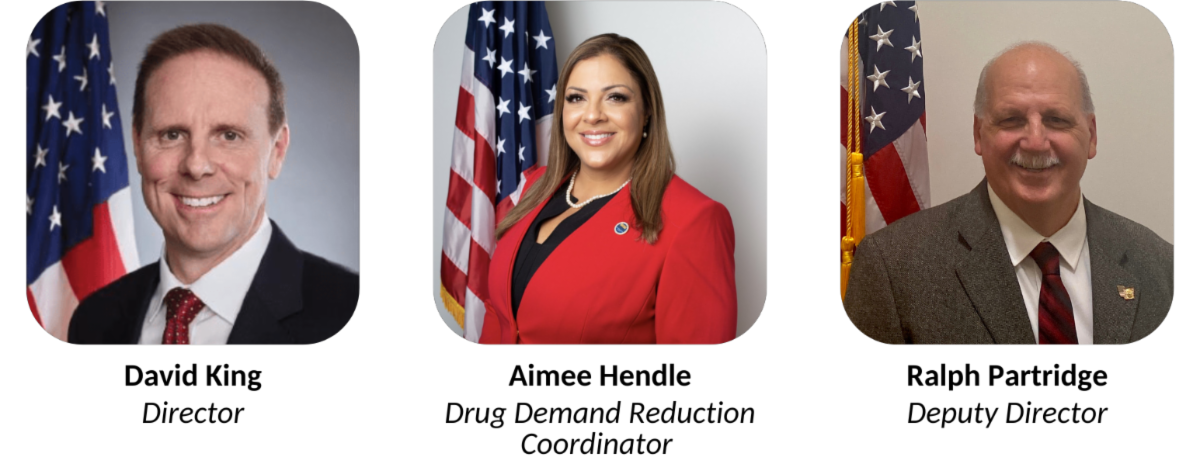
For more information about this training, or SDI HIDTA's comprehensive community prevention strategy, contact Aimee Hendle, Drug Demand Reduction Coordinator, at Aimee.Hendle@sdi.hidta.org.
| | |
| |
A Way of Being with Youth
Our previous Prevention Tip emphasized how connection plays a vital role in building and deepening relationships. When we embody all 16 connection facilitators in our interactions with youth, we build the trust necessary to effectively serve as support figures in their development.
| | |
Many of us serve as trusted adults in the lives of youth. Research shows that having at least two trusted adults in a youth's life significantly increases positive outcomes and builds resilience in youth, especially for those who have experienced adversity. Trusted adults can serve as a strong safety net, reducing harmful behaviors, improving mental health, and promoting flourishing throughout a youth's life. Importantly, trusted adults are chosen by youth as safe figures that listen without judgment, agenda, or expectation, but with the sole purpose of supporting and encouraging positivity within a young person's life.
Our way of being with youth is central to whether or not we can serve as a trusted adult in their lives. The way we approach connecting with youth, the words and actions we use, and the environment we create all contribute to our way of being with youth, which lays a foundation for opportunities to cultivate healthy, positive, and protective beliefs in youth.
Considering this, trusted adults can engage in small, specific activities, also known as micro-skills, that can be used in real-time to foster protective beliefs . The following example identifies 3 micro-skills a trusted adult can learn and apply to cultivate a belief of "I matter." in youth:
-
NOTICE: Truly see and hear the youth as they are.
-
AFFIRM: Share with youth how their unique gifts have a unique impact.
-
EXPRESS NEED: Show youth how they're relied on, indispensable, and essential.
Take a moment to reflect on how you might be applying these micro-skills in your everyday interactions with youth. If you'd like to learn more about protective beliefs in youth and micro-skills for trusted adults, consider attending one of this year’s remaining Youth Prevention Institutes (see HIDTA News below) where resources are provided to support participants in developing these skills.
| | 6 HIDTAs Host 2-Day Youth Prevention Institutes in 2025 | | |
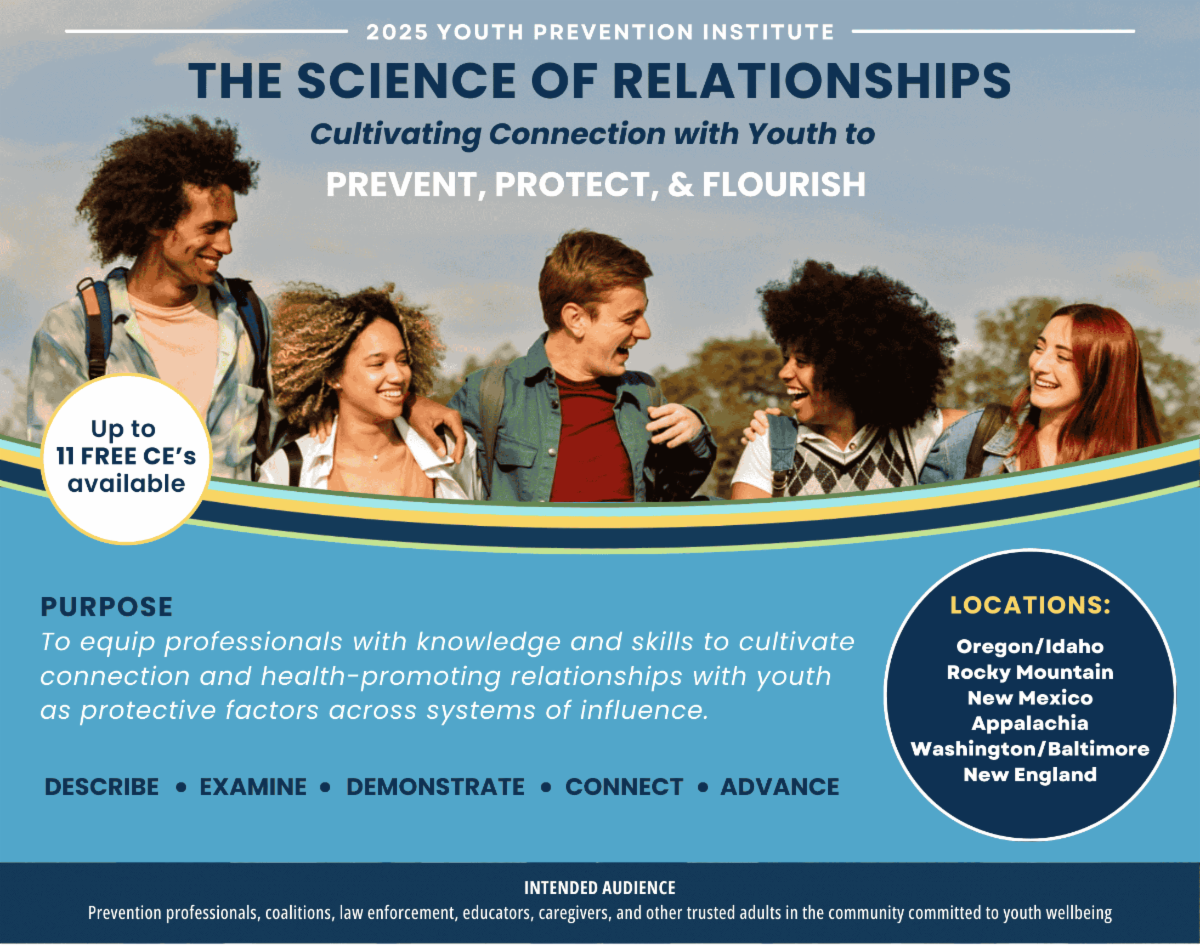
This year, 6 HIDTAs signed up to offer a FREE 2-day Youth Prevention Institute to orient participants to the science of relationships and how to connect with youth to boost protection, prevent risk, and cultivate overall well-being.
Four institutes have already completed, with great success:
- Oregon/Idaho HIDTA
- Rocky Mountain HIDTA
- New Mexico HIDTA
- Appalachia HIDTA
Collectively, these institutes brought together over 400 prevention professionals to participate in immersive training where they learned to apply new approaches to cultivating protective beliefs and skills in youth within the context of their trusted relationships with them. Application considerations were discussed across various prevention roles including community prevention, public health, public safety and corrections, education, and more. Ideas to support adaptation to special populations and scaling this approach within organizations and systems were also shared. Lastly, best practices and opportunities were highlighted from the perspectives of state-level administration and community coalitions/organizations.
Two remaining institutes will be held in September. Select the links below to learn more and register.
| | Hear from ADAPT's Director why YOU won't want to miss this opportunity! | | Save the Date: 2025 Annual HIDTA Prevention Summit | | |
The Annual HIDTA Prevention Summit will be held virtually, and free to the public, on October 29th, 2025 from 8:30am - 5:00pm ET.
The purpose of this year's Summit is to equip trusted adults in every role with knowledge and tools to support integration of the science of relationships into their approach to working with youth to prevent substance use, violence, mental health conditions, and suicide.
Mark your calendars today and be on the looking for more event information in a few weeks!
| | To view subscription links to all previously listed resources in this section, such as substance use prevention newsletters, click HERE and scroll to GET CONNECTED. | | Public Health/Public Safety Updates | | Mapping the Change in Overdose Fatalities Across States | | |
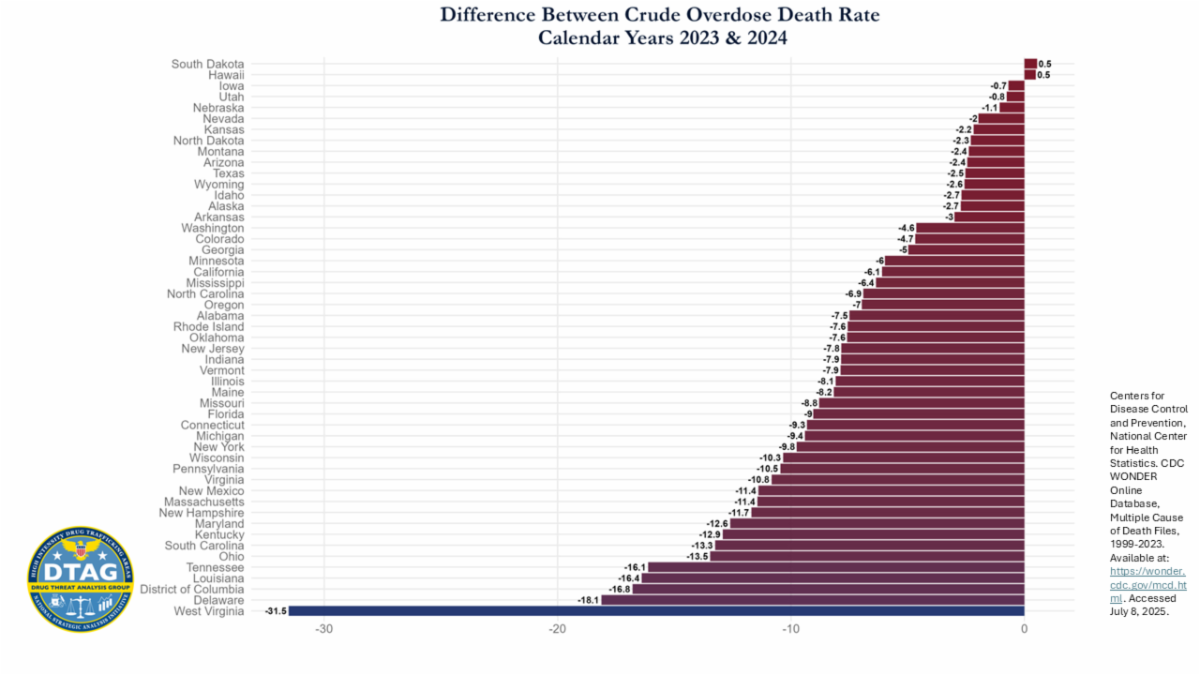
The Drug Threat Analysis Group (DTAG), formerly the National Emerging Threats Initiative, offer a review of U.S. overdose death rates in 2024. The chart below shows the change in overdose death rates, measured as deaths per 100,000 people, between 2023 and 2024 for each U.S. state and the District of Columbia. Each bar represents the year-over-year difference for a state.
Bars extending to the left (negative values) indicate a decrease in overdose deaths, meaning fewer people per 100,000 died in 2024 compared to 2023. Bars extending to the right (positive values) reflect an increase in the rate. Most states experienced a decline, which is a positive sign overall. West Virginia saw the largest drop at -31.5, suggesting significant progress. Only South Dakota and Hawaii had a slight increase of +0.5, indicating a small rise in overdose deaths per capita.
|
| ODMAP Expansion in Illinois | | |
Illinois State Senator Laura Fine passed House Bill 3645 in the Illinois Senate, improving overdose prevention efforts across the state. The Bill passed the House and Senate unanimously and will be sent to the Governor for signature. The bill expands overdose reporting to ODMAP beyond Chicago to all municipalities and expands the current API to the entire state. More about this bill can be found HERE.
Opportunity for Spotlights and Feedback
The ODMAP team is actively working on producing additional Spotlights to connect with new agencies to spotlight in 2025. These spotlights serve to recognize stakeholders and illustrate the innovative ways in which they employ ODMAP to positively impact their communities. By sharing these success stories, they aim to increase awareness of the exceptional work being undertaken by various agencies in the field of overdose prevention. The ODMAP team wants to hear how your agency is using ODMAP, its new features, or how it is helping your organization. If you would like to share your story, click here to complete a brief survey.
The ODMAP team is committed to platform improvement and values feedback. Your input is essential to ensuring ODMAP remains a valuable resource for partners and supports your overdose response efforts. Please provide feedback via their ODMAP Customer Satisfaction Survey.
For ongoing updates on ODMAP, their website is updated at the end of each month under the ‘Resources’ tab.
| | Resources/Science from the Field | | SAMHSA Launches Substance Use & Misuse Prevention Month Toolkit | | |
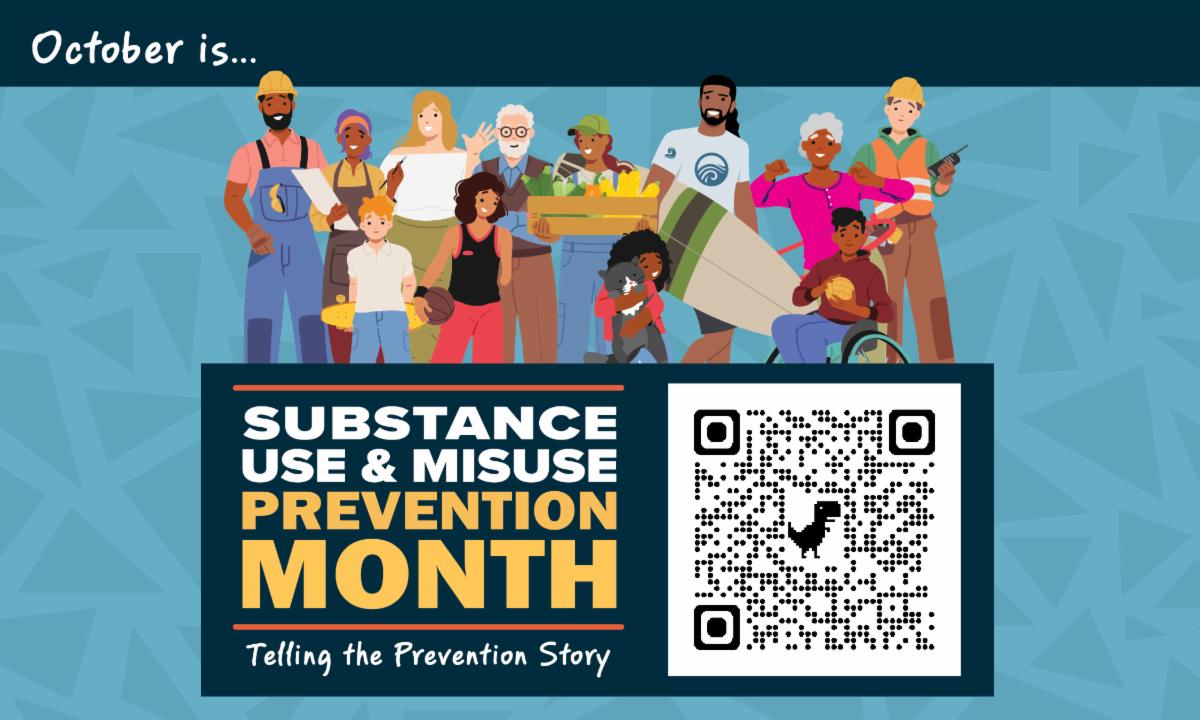
October is Substance Use & Misuse Prevention Month —
and SAMHSA invites you to Tell YOUR Prevention Story.
Prevention Month lifts up the national conversation — to showcase prevention’s positive effects on communities across the country.
- We aim to prevent substance use in the first place, prevent the progression of use (to a disorder), and prevent consequences associated with use. And we have the prevention playbook to do so.
- Prevention science (with decades of research and community-based experience) shows that prevention works.
- Prevention strengthens protective factors and reduces risk factors ― in individuals, families, schools, communities, and society.
- Prevention helps us get ahead of substance use and mental health challenges — so that youth, families, and communities can thrive.
To inspire action, each of us can share how prevention is improving lives in our communities.
-
Stay tuned for the 2025 update to SAMHSA’s toolkit.
- Share your #MyPreventionStory on social media.
Join SAMHA and communities nationwide as partners in prevention!
| | Prevention Isn't What It Used to Be and That's Progress | | |
An article published by the National Council for Mental Wellbeing highlights the landscape of substance use prevention today. Strategies have evolved to meet current complexities, including more lethal substances and increased use of social media. The article emphasizes how prevention today focuses on building real-life skills, incorporating trusted voices for messaging, and creating meaningful dialogues.
View the full article HERE.
| | Planting Seeds Early: The Need for Mental Health Awareness in Children | | |
The importance of promoting mental wellness in youth is emphasized in an article out of the South Southwest PTTC. Mental health and behavioral outcomes such as substance use are closely linked, and the need for prevention starts earlier than adolescence or adulthood.
Learn more about the role of adults and communities in youth mental wellness HERE.
| | World Health Organization Report on Global Tobacco Epidemic | | |
A new publication out of the World Health Organization reports on the global tobacco epidemic and progress made by countries since 2008. The report draws attention to the impacts of tobacco and prevention strategies. Strategies include graphic health warnings on tobacco product packaging, grounding campaigns in a comprehensive strategy, and restricting marketing towards youth, such as banning nicotine flavoring.
The full report can be accessed HERE.
| | U.S. Overdose Deaths Decrease Almost 27% in 2024 | | |
According to data out of the CDC, 2024 saw a 26.9% decrease in estimated drug overdose deaths in the US. Almost all states experienced a decrease, with Louisiana, Michigan, New Hampshire, Ohio, Virginia, West Virginia, and Wisconsin and the District of Columbia showing a sharper decline of 35% or more. Read more HERE.
| | | | |