About Us

Services

Awards

Website


From Rising Yields to Market Rotation: What October's Reversal Means for Investor Relations


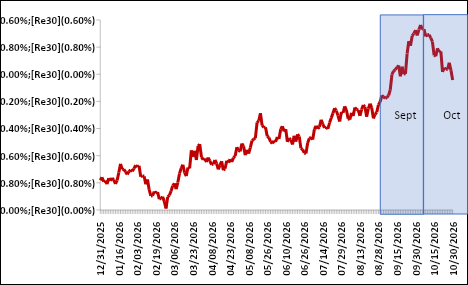
After rising 52 basis points in September to reach 5.27%, the 10-Year U.S. Treasury Yield reversed course dramatically in October, tumbling 37 basis points to close the month at 4.91%.


The shift reflected changing investor sentiment amid technology-sector volatility, uncertainty surrounding Federal Reserve policy, and mixed economic signals. As institutional investors reassessed risk and adjusted portfolio allocations, demand for defensive equities and government bonds increased.


But what drove this reversal, and more importantly, what does it mean for public companies and their investor relations strategies going forward?


Understanding October's Market Shift


Technology Sector Volatility and Safe-Haven Demand:


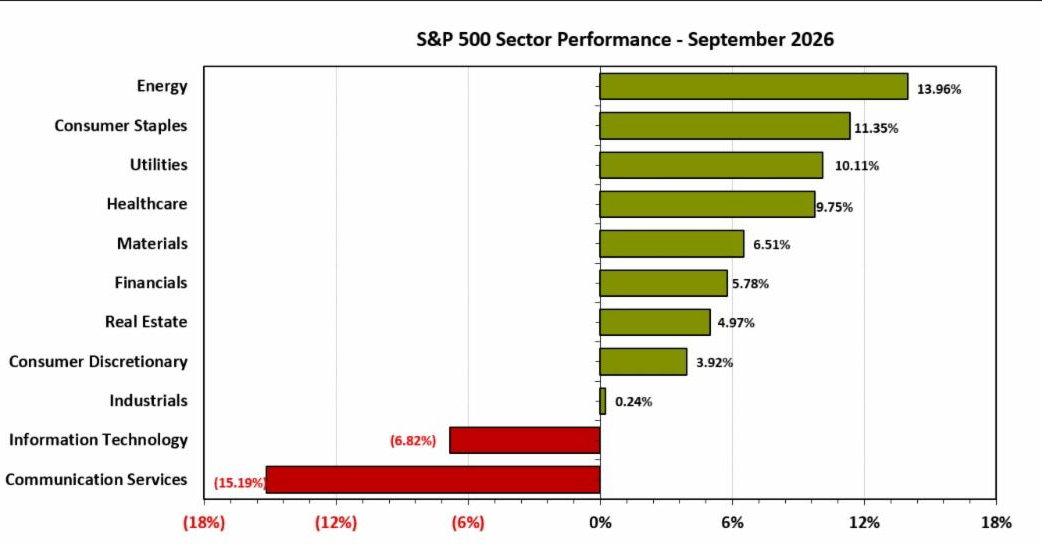
Although the S&P 500 declined 0.93% in October, market performance varied considerably across sectors. Communication Services (-15.19%) and Information Technology (-6.82%) were the only two of the index's 11 sectors to finish the month in negative territory.


Major technology companies, including GOOG (-18.35%), META (-15.19%), and NVDA (-10.39%), weighed on sector performance as Wall Street grew increasingly concerned about the substantial capital expenditures required to support artificial intelligence (AI) infrastructure and whether those investments would generate sufficient near-term returns.


Against this backdrop, institutional investors increasingly favored defensive areas of the market, including Consumer Staples and Utilities, while also increasing exposure to government bonds. This shift toward perceived safety helped drive bond prices higher and Treasury yields lower.


Federal Reserve Caution and Monetary Policy Reassessment:


Following the Federal Reserve's October 28 decision to maintain the benchmark federal funds rate within its target range of 3.75% to 4.00%, investors reassessed the potential trajectory of monetary policy.


With limited forward guidance accompanying the decision, market participants adjusted expectations for future rate increases. The resulting moderation in rate-hike expectations provided additional support for fixed-income assets and contributed to declining Treasury yields.


Mixed Economic Signals:


Economic data throughout October presented a mixed picture of the U.S. economy.


While certain reports pointed to resilient summer consumer spending, other indicators, including softer-than-expected September personal income growth, tempered expectations for continued economic strength.


These conflicting signals prompted bond investors to reassess the economic outlook, contributing to increased demand for Treasury securities as markets priced in a more cautious growth environment.


Pre-Election and Macroeconomic Positioning:


As October came to a close, investors positioned their portfolios ahead of the November 3 U.S. midterm elections and an anticipated series of labor market and macroeconomic reports.


Heightened uncertainty encouraged portfolio hedging and increased demand for longer-duration Treasury securities, adding further downward pressure on yields.


Together, these developments reflected a broader reassessment of risk, growth expectations, and capital allocation priorities among institutional investors.


Key Investor Relations Messaging Pivots Going Forward


October's market conditions highlighted the importance of adapting investor communications to changing institutional priorities. With heightened volatility, increased scrutiny of technology spending, and greater emphasis on financial discipline, IR teams should consider adjusting how they communicate corporate performance, growth strategies, and capital allocation decisions.


1. Pivot from AI Hype to Measurable ROI and Revenue Attribution


The Strategy: Shift earnings-call and investor conference discussions away from broad spending announcements, such as GPU infrastructure expansion and overall capital expenditure targets, toward measurable business outcomes. Investors increasingly want to understand how AI investments translate into monetization opportunities, margin improvements, and customer adoption.


Key Message: Demonstrate clear investment payback periods, measurable cost efficiencies, and incremental organic revenue streams resulting from technology investments.


2. Emphasize Free Cash Flow Generation and Capital Discipline


The Strategy: With Treasury yields remaining elevated near 4.9% and investors placing greater emphasis on financial resilience, companies should prioritize balance sheet strength, cash generation, and disciplined capital allocation over unconstrained expansion.


Key Message: Highlight operating cash flows, interest coverage ratios, working capital management, and clearly defined investment hurdles to demonstrate the financial sustainability of ongoing growth initiatives.


3. Provide Granular Segment Guidance to Address Market Bifurcation


The Strategy: Significant differences in sector performance have reinforced the importance of transparency around underlying business fundamentals. Investors want greater visibility into which segments are driving growth, where margins are improving, and which areas may face increased pressure.


Key Message: Break down revenue and operating performance across core and emerging business segments to demonstrate the resilience of foundational operations while providing realistic expectations for developing business lines.


4. Address Yield-Sensitive Capital Return Strategies


The Strategy: With Treasury yields remaining relatively high, companies must recognize that investors have alternative opportunities for generating income and returns. IR teams should clearly communicate how dividend policies and share repurchase programs fit within broader capital allocation strategies.


Key Message: Provide transparency around dividend sustainability, payout and coverage ratios, and the rationale behind share repurchase programs, including how companies approach buybacks during periods of market volatility and valuation dislocation.


Turning Market Intelligence Into Shareholder Insight


Understanding market movements is only part of an effective investor relations strategy. Companies also need visibility into who owns their stock, how institutional positions are changing, and where potential shifts in shareholder sentiment may be emerging.


InvestorCom's Stock Surveillance services help public companies monitor institutional ownership, identify shareholder activity, and gain actionable insights into their evolving shareholder base.


The Pulse Takeaway: Understand What Is Driving Your Shareholder Base


Market volatility and changing institutional priorities extend beyond daily stock price movements. As investors reassess risk, growth expectations, and capital allocation, public companies must remain attentive to how these developments influence their shareholder bases.


For investor relations teams, understanding who owns the stock, how institutional positions are changing, and where shareholder concentration is shifting is just as important as understanding broader market performance.


Consistent stock surveillance provides companies with the visibility needed to identify emerging ownership trends, monitor institutional investor activity, and better prepare for changes in shareholder sentiment.


In an increasingly dynamic market, effective IR strategy starts with understanding not only how your stock is trading, but who is trading it.


Stay Ahead of Shareholder Changes


In an increasingly dynamic market, understanding who is buying, who is selling, and how your shareholder base is evolving can make a meaningful difference in your investor relations strategy.


InvestorCom provides the shareholder intelligence and surveillance capabilities companies need to stay informed, identify emerging ownership trends, and prepare for potential shareholder activity.


Interested in learning more? Contact InvestorCom to discuss how our Stock Surveillance services can support your IR strategy.


ICOM Senior Surveillance Leadership


Douglas E. Jaffe:

Managing Director, Capital Markets Group


Doug Jaffe heads InvestorCom’s Capital Markets Group and leads the Stock Surveillance division. With over 20 years of experience in investor relations and securities surveillance, Douglas specializes in institutional targeting and identifying complex ownership shifts. Before joining InvestorCom, he served as a Senior Analyst at Citigate Dewe Rogerson and worked at The Carson Group, where he advised blue-chip clients such as FedEx and Verizon. His expertise allows clients to anticipate market reactions and build proactive engagement strategies.


John Glenn Grau: President & CEO


The founder of InvestorCom, John Glenn Grau is a 30-year veteran of proxy advisory and shareholder identification. A former principal at Beacon Hill Partners and Director at The Carter Organization, John has worked alongside some of the most prominent figures in M&A history. He provides the strategic oversight that connects our surveillance data to successful corporate governance and defense outcomes.


WHERE DATA MEETS OWNERSHIP INTELLIGENCE

As the shareownership landscape grows more complex, issuers must look beyond the ticker to understand the forces moving their stock. Investorcom provides proactive stock surveillance and deep ownership intelligence designed to unmask institutional rotation, identify accumulation, and anticipate shifts in your shareholder base before they impact the market. InvestorCom helps clients navigate today’s volatile trading environment with precision. Contact us to gain a clearer view of your shareownership today.

 
X  LinkedIn  Web
 

LET’S STAY CONNECTED!


Join the conversation and keep up with us on socials! Be the first to know about exclusive industry updates and insight, exciting announcements and company news you don’t want to miss. Why stop here? Follow us on social media and tag us, we’d love to connect. Engage with us today!


📲

SEE YOU ONLINE!


IN CASE YOU MISSED IT...

 
X Share This Email
LinkedIn Share This Email
 

Star Equity Fund to Acquire Harte Hanks for $38.4M | Douglas Jaffe's Post on the Topic | LinkedIn

A transaction worth keeping on the radar, Star Equity Fund has entered into an agreement to acquire Harte Hanks in a transaction valued at approximately $38.4 million. With Harte Hanks stockholder approval required to complete the merger, understanding the shareholder base and monitoring changes in ownership can be an important part of preparing for the vote.


KLX Energy Services $125M Rights Offering | Douglas Jaffe's Post on the Topic | LinkedIn

Rights offerings can be complex for shareholders, making clear and accessible communication especially important throughout the process. InvestorCom is serving as Information Agent to KLX Energy Services (Nasdaq: KLXE) in connection with its recently announced $125 million rights offering. We're pleased to support KLX and its shareholders through this important corporate action.


InvestorCom Recognized in Bloomberg

InvestorCom has once again been recognized in the latest Bloomberg Activism Scorecard for the first half of 2026. Ranked as the Top Advisor to Investment Funds in the sector rankings for H1 2026, and recognized among the top half of proxy advisors to activists in both the U.S. and global rankings.


Contact Us


203-972-9300


Info@Investor-Com.com


X Share This Email
LinkedIn Share This Email

We can't wait to serve you soon!


InvestorCom | 1055 Washington Blvd. | Suite 520 | Stamford, CT 06901 US