|
Phish testing is a cybersecurity practice where organizations send fake but safe phishing emails to their own staff to test how well they can recognize and avoid malicious messages.
Phishing testing in healthcare is critical because human error remains the #1 cause of cybersecurity breaches, and healthcare is one of the most targeted sectors due to the sensitivity and value of patient data.
1. Protecting Patient Privacy and Data (PHI)
Phishing emails often aim to steal login credentials or deliver malware. A successful phish can lead to unauthorized access to Electronic Medical Records (EMRs), exposing Personal Health Information (PHI)—a major violation under Ontario’s PHIPA and Canada’s PIPEDA regulations.
2. Preventing Ransomware Attacks
Many ransomware attacks start with a simple phishing email. Once a user clicks a malicious link or opens an infected attachment, the attacker can encrypt systems, disrupt care, and demand payment. Testing helps reduce the risk by teaching staff to recognize and avoid suspicious messages.
3. Creating a Culture of Cyber Awareness
Regular simulated phishing tests keep cybersecurity top of mind for clinical and administrative staff. Testing helps reinforce training with real-world practice and identifies areas where more awareness is needed.
4. Meeting Regulatory and Insurance Requirements
Cyber insurance providers increasingly require proof of phishing training and testing. Compliance audits (e.g., under NIST CSF or ISO 27001) often expect evidence of human-centric security controls like phishing simulations.
5. Measuring and Improving Risk Posture
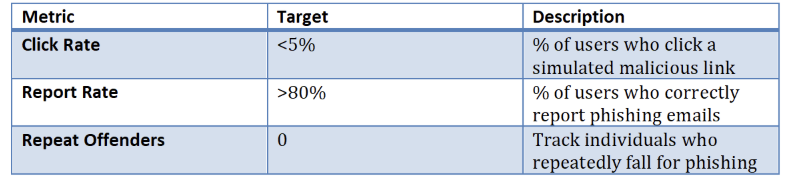
Phish testing provides measurable insights into how vulnerable your organization is to social engineering. You can track click rates, report rates, and staff who need additional training, thereby closing gaps before real attacks exploit them.
Example Metrics from a Phishing Test Program
|