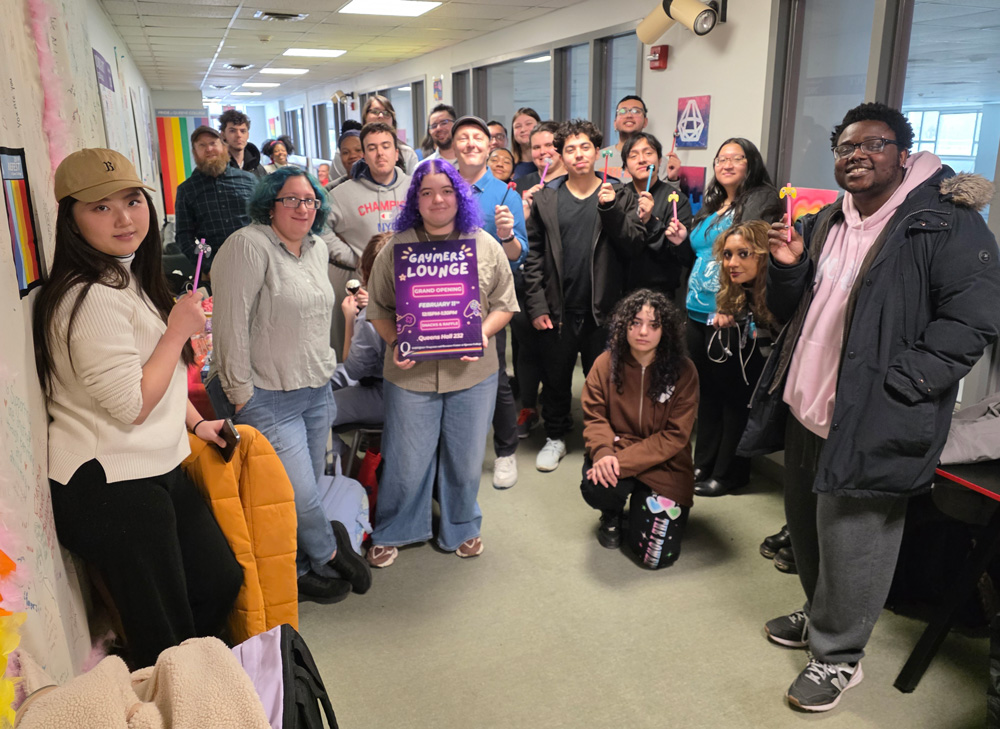
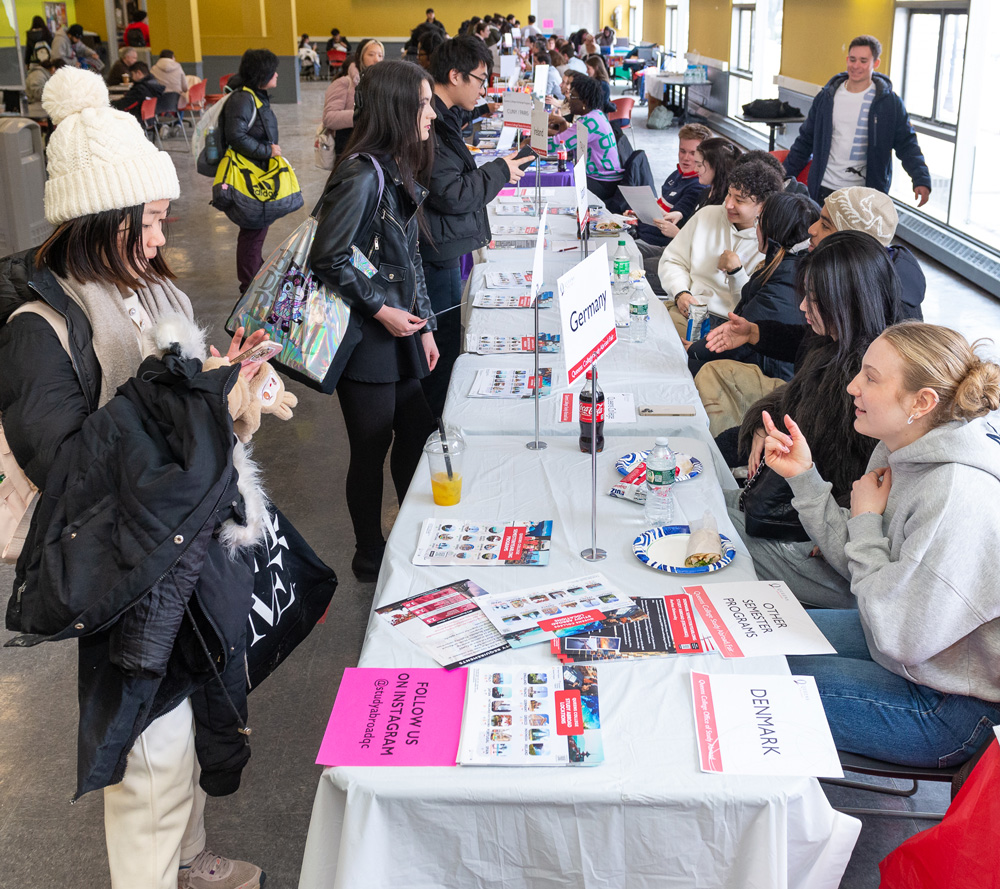
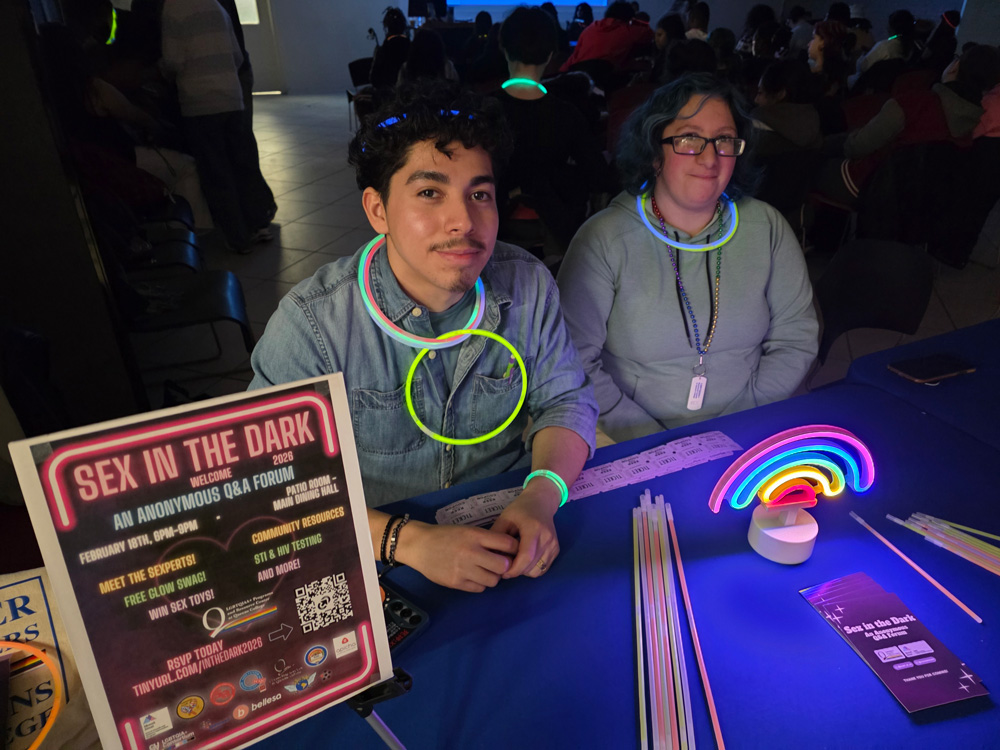
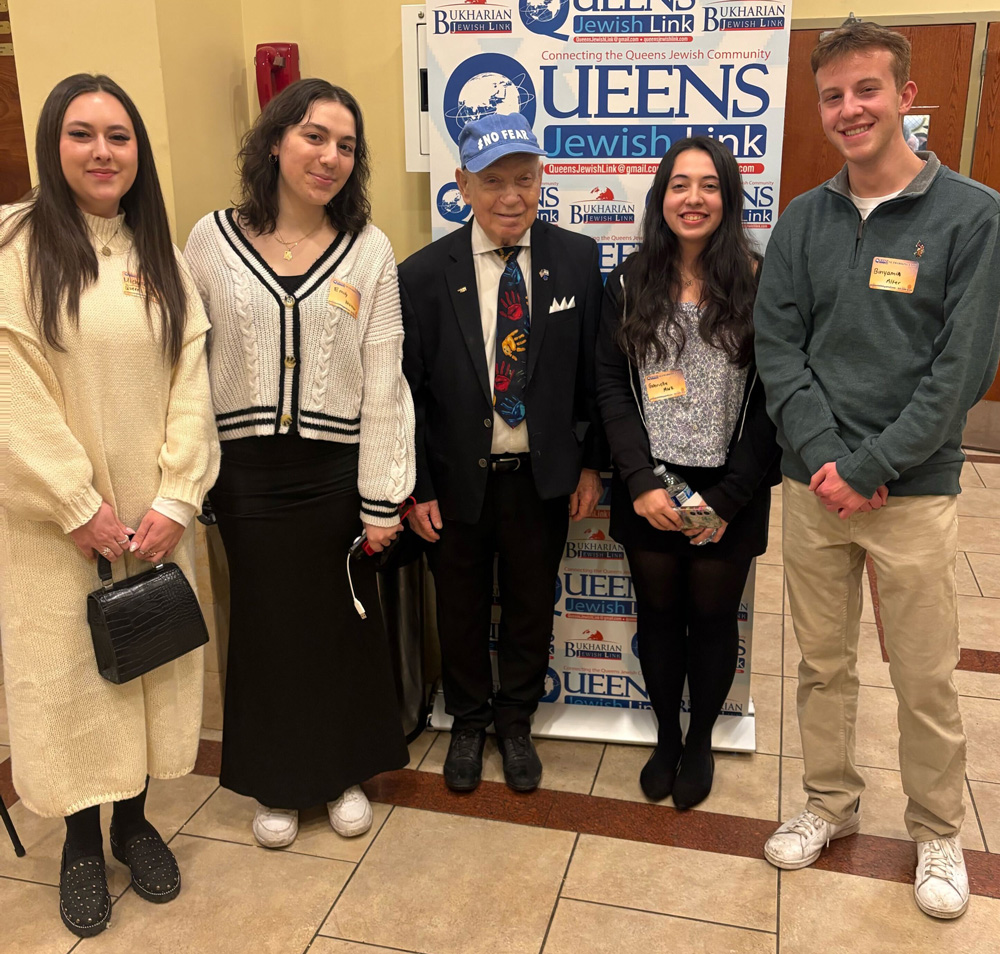
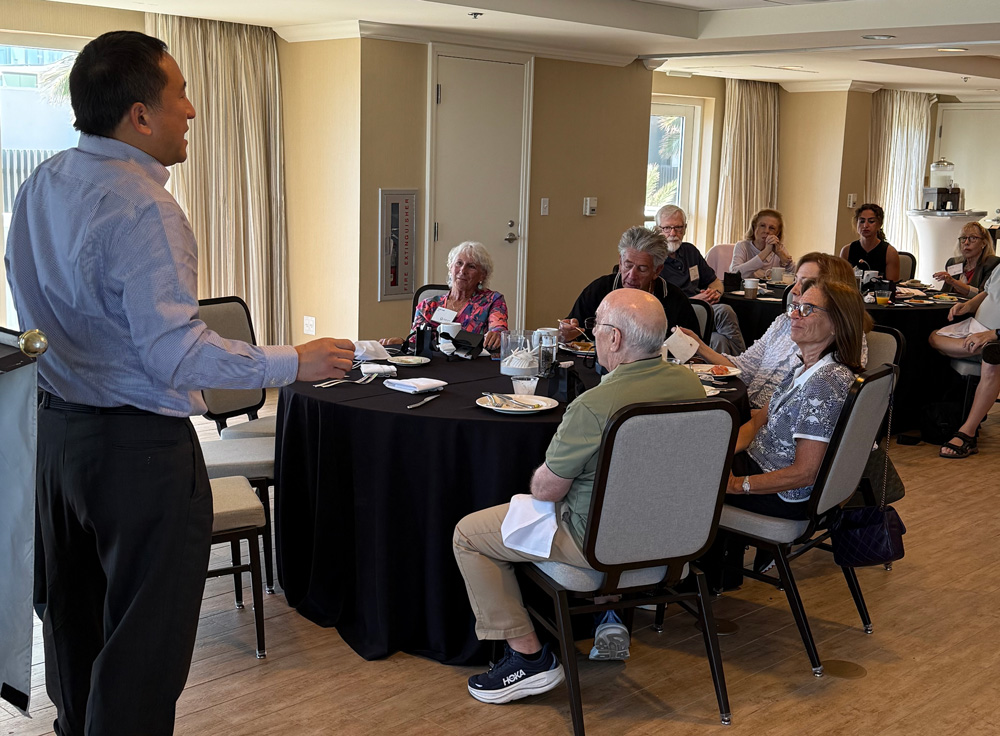
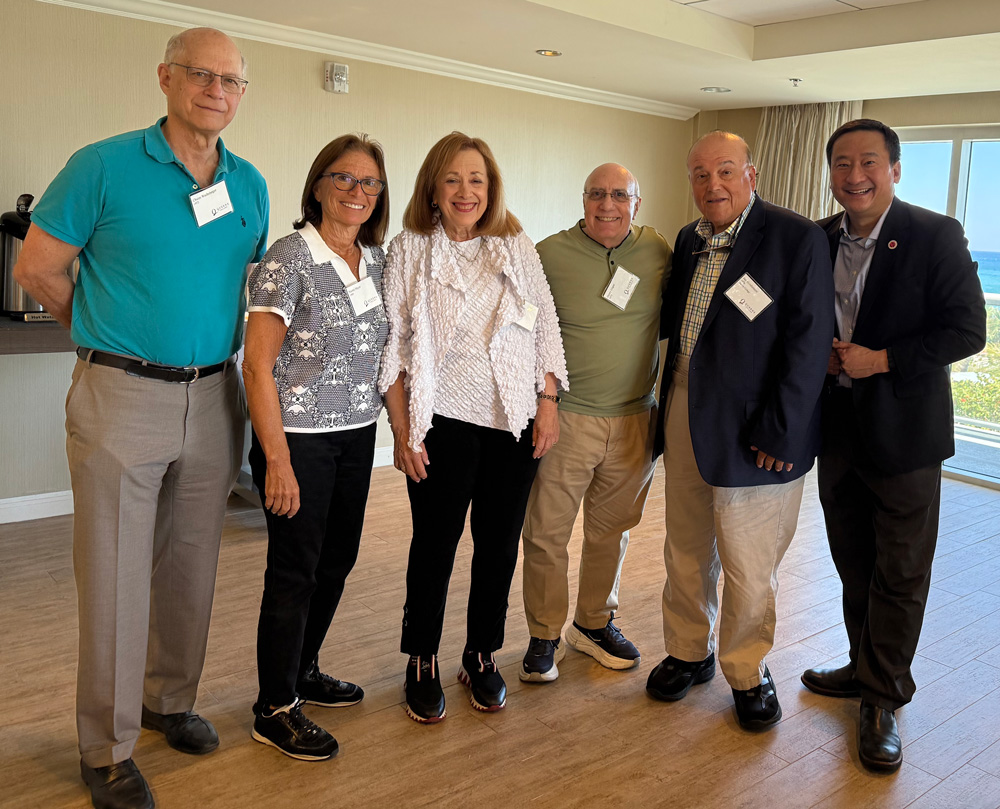
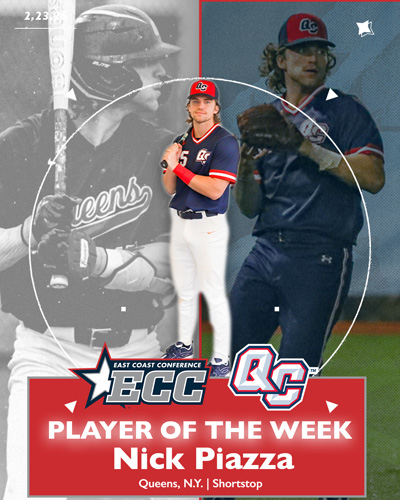
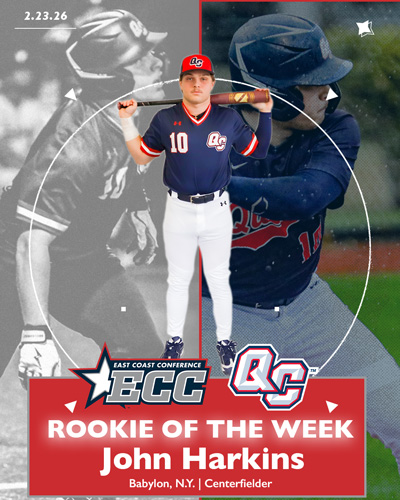
Discimus ut serviamus: We learn so that we may serve. | | Queens College will continue with remote work and learning operations on Tuesday, February 24, 2026. We will resume all in-person operations on Wednesday, February 25. | | With snacks, a raffle, and giveaways to the first 50 arrivals, the Gaymers Lounge—an inclusive space located in the LGBTQIAA+ Resource Center, Queens Hall Room 232—opened on February 11. Hanging out with old friends and making new ones, students enjoyed playing Mario Kart World, Super Smash Bros. Ultimate, Super Mario Party Jamboree, and more on the new Nintendo Switch 2 and gaming monitor. All are welcome at the lounge Monday through Thursday, from 9 am until 5 pm. | Students looking for an educational change of scenery explored their possibilities at the Study Abroad Fair on Wednesday, February 18. Options range from comparatively brief summer and winter sessions—for which there are no prerequisites—to semester- or year-long programs. For details and deadlines, visit the Study Abroad website. | | Lights were dimmed on February 18 when students donned free glow swag for Sex in the Dark: An Anonymous Q&A Forum, an annual event sponsored by the Office of LGBTQIAA+ Programs and Resource Center at Queens College, and the Mt. Sinai Sexual Assault and Violence Intervention (SAVI) Program in partnership with the CUNY LGBTQIA+ Consortium and the New York City Council. A panel of "sexperts" answered anonymously submitted questions about sex and relationships. The event was co-sponsored by Bellesa, the Queens College Gender, Love and Sexuality Alliance/GLASA, the Alliance of Latin American Students at Queens College, the Queens College Hispanic Club, Queens College Student Association, and the CUNY Office of Student Inclusion Initiatives with additional support from The AIDS Center of Queens County/ACQC, the Mt. Sinai Young Adult Sexual Services Program/YASS, Northwell Health, the LGBT Network, Pride for Youth, Project Rite, the NYC Condom Collective, and Pride for Youth/PFY. | From left: Queens Hillel Engagement Associate Michelle Hurtin, Queens Hillel Engagement Intern Emily Nisanov, an active community leader, Queens Hillel Student Leader Gabrielle Mark, and Queens Hillel Engagement Intern Binyamin Alter | A delegation from the campus chapter of Hillel represented QC at this year’s Queens Jewish Link Networking Expo on February 18. The event, held at Young Israel of Jamaica Estates, brought together business owners, rabbinic guides, educators, nonprofit leaders, young professionals, volunteers, and long-time community figures from across the borough. | | President Frank H. Wu spoke to QC alumni on Sunday, February 22, at a reunion that Vice President for Institutional Advancement and Alumni Relations Laurie Dorf and her team organized in Pompano Beach, Florida. | From left: Queens College Foundation Chair Chaim Wachsberger; alumni Naomi Mayer, Judith Skylar, and Henry Unger; Vice President for Communications and Marketing and Senior Advisor to the President Jay Hershenson; President Frank H. Wu | | Spring Season Gets Underway as Baseball Heads South | | The 2026 baseball season got underway this week, as the Knights traveled to Myrtle Beach, South Carolina for the first three games of the year. After they dropped their first two contests to Southern New Hampshire on Friday, the Knights rebounded to defeat local rival Adelphi University, 8-2, in their final game of the trip on Saturday. | | |
If weather conditions permit, the Knights will be back in Queens to host a four-game series against Franklin Pierce University this Saturday and Sunday.
The tennis teams also kicked off their spring seasons, as the men defeated Division I Hofstra University in the warm confines of the QC tennis bubble by a score of 5-2 last Friday. The Knights are now 4-0 on the season, with their other three victories coming during the fall portion of the schedule. The women’s team also had its first spring match last week, but was edged by Division I Stony Brook University, 4-3. It was the first loss of the season for the women, who were 5-0 during the fall season.
As the spring sports get started, QC’s winter sports are winding down. The men’s basketball team picked up an important East Coast Conference (ECC) victory last Wednesday, defeating Mercy University, 82-69.
Both the men’s and women’s basketball teams are still in the hunt for the final ECC playoff spot with just two games left in the regular season. QC closes out the regular season with a home doubleheader versus the College of Staten Island on Wednesday (men 5 pm; women 7:30 pm) and then goes on the road to battle the University of the District of Columbia on Saturday (women 1 pm; men 3:30 pm).
Be sure to visit queensknights.com for the latest athletics news and schedules.
| | |
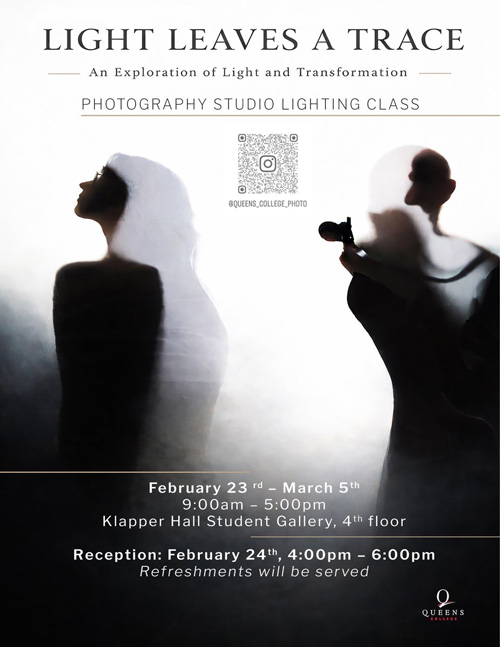
Light Leaves a Trace: An Exploration of Light and Transformation, an exhibition of photography by students in the fall and spring Studio Lighting courses, is now on display in the Klapper Hall Student Gallery, 4th floor. While Studio Lighting is required for everyone pursuing a Photography & Imaging BFA, some of the images in this show were created by psychology and design majors and graduate students in art education. Light Leaves a Trace will run through March 5.
| | |
Supreme Legal Impact in Israel
The Israeli Supreme Court plays a central role in shaping Israel’s character as a state that is both Jewish and democratic. In the three-part lecture series Landmark Cases of the Supreme Court of Israel, Nourit Zimerman (Jewish Studies/History) discusses cases concerning freedom of speech, equality, and the relationship between religion and state. The series will be offered over Zoom on three Wednesdays at 7 pm: tomorrow, February 25; March 11; and March 25. To attend, register here.
| | |
As part of the 2026 AAARI Innovators Fellowship Program, the Tech Incubator at QC will host an intensive workshop on human-centered design, social entrepreneurship, and community problem-solving this weekend, February 27-28, from 9 am to 5 pm on both days. The interactive, beginner-friendly program is open to anyone interested in designing effective solutions for real-world challenges; material is grounded in issues facing Asian American communities. To attend, register here. The next cohort of AAARI Innovators Fellows will be selected from workshop participants.
| | Hoping for Fulbright Futures | | |
Six QC students are semifinalists this year for overseas placements through the Fulbright Program, “a suite of fellowships and scholarships conducted in partnership with more than 160 countries worldwide.” The program was founded in 1946 to promote international academic exchange.
Rosalynn Ye, Tasha Jeffers, and Lesley Xu ’25 are in the running to become English teaching assistants. Ben Shabatian, Allison Kim, and Ann‑Carlie Laurent ’25 are candidates for graduate study awards.
Final decisions are expected in May.
| | Help for Immigrants at CUNY | | |
Members of the CUNY community affected by changing immigration policies can seek help from a new university-wide resource: the Immigration Assistance Project (CIAP), launched with funding from the Carroll and Milton Petrie Foundation and Robin Hood. CUNY faculty, staff, and currently enrolled students are eligible for free consultation with a lawyer regarding F-1 Student Visa revocation and reinstatement, termination of temporary protected status (TPS), and other immigration issues.
The project actively monitors a submission form to respond to inquiries from detained CUNY students, faculty, and staff. If a current CUNY student, faculty, or staff member is detained, they or their family members should email immigrationhelp@cuny.edu.
To keep informed about policy changes, visit Citizenship Now! Latest Immigration Law Updates. CUNY Citizenship Now! hosts monthly webinars on these topics. The next session will be held on Thursday, February 26, at 6 pm. To attend, register here.
| | |
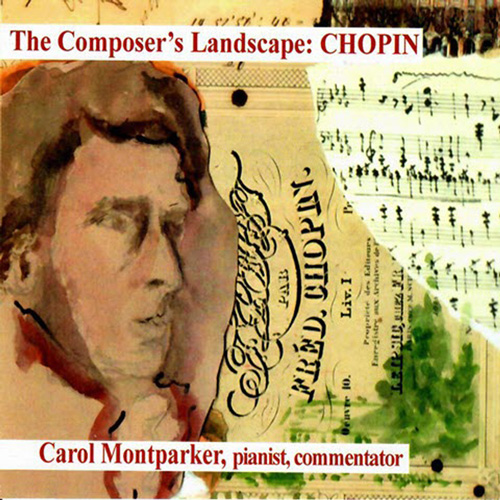
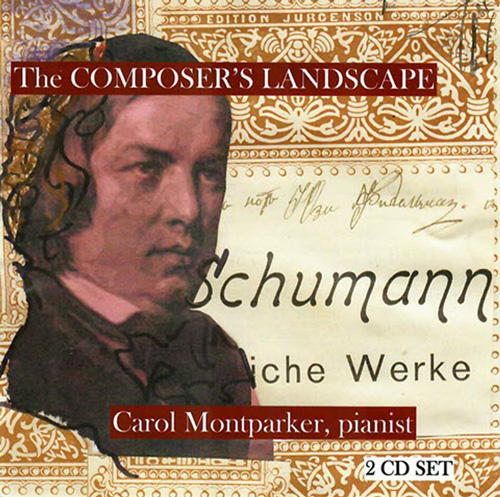
When alumna Carol Montparker, a concert pianist and writer, offered to give her CD collection to the Queens College Music Library, substitute music librarian Alex Crowley ’21 MLIS fielded the voicemail. “At that time, we weren’t taking CD donations,” recalls Crowley. “I asked her what kind of CDs she had, thinking I could direct her to a place that takes them.”
Turns out that Montparker had a different kind of content in mind. As a longtime senior editor for Clavier magazine, she had interviewed and profiled many of the world’s best-known pianists, such as Vladimir Ashkenazy, Arthur Rubinstein, Andre Watts, and comic musician Victor Borge, who tried to rewrite her article. Those conversations were preserved on a few dozen cassettes, with some digitized on CDs.
| |
Crowley accepted the cassettes and CDs happily. “These have a different kind of value,” he says. “They create avenues for musicology students.” He expects that the recordings will inspire potential projects, foster deeper research, and personalize cultural history. “These are original materials that we can hold in perpetuity,” he adds. “We can hear the musicians’ voices and cadence . . . . Some of these people mentored Montparker.”
Making Music
A Steinway artist, Brooklyn-born Montparker found her calling early. “My mother told me that I toddled over to my grandfather’s upright piano and started picking out tunes when I was three,” she says. “My mother taught me how to read music at an early age. By age five I was with a neighborhood piano teacher, who within a year took me to her piano teacher, Harold Henry. He was scary to me; he had a glass eye and a big dog. I had to take the subway to get there. I studied with him for a little while.”
| | |
When Montparker was 12, her father, who with his brother ran a wholesale business in TV and radio parts, and her mother, a homemaker, relocated the family to Forest Hills, Queens. “My mother had read about Leopold Mittmann, an émigré pianist who had fled the Nazis and lived there,” explains Montparker. “I could walk to my lessons.” She considers Mittmann the most influential person in her life—someone who not only nurtured her talent but also took her to museums. Otherwise, unlike many prodigies, she had an ordinary upbringing. “I went to public schools,” she continues. “I had other interests.” While she played a concerto with the Forest Hills High School orchestra, she was also a member of the debating society and the student government.
For college, she stayed close to home. “I got a scholarship to Barnard, but it did not include board, and my dad didn’t want me on the train to what he considered a bad neighborhood,” she says, adding that “Queens had a better music department than Barnard.”
Montparker enjoyed her time at QC. “I had wonderful professors and wonderful courses,” she says. “I loved contemporary civilization and philosophy.” She left without graduating to get married; by age 23 she was the mother of a son and a daughter who, remarkably, amused themselves with blocks under the piano while she practiced. (Her son became a concert cellist and professor of chamber music. Her daughter, a designer and painter, could have made a career with the flute but chose the visual arts.)
Montparker decided to give a New York recital. Commonly, performers or their patrons rent a venue, pay for technical staff and ushers, and print programs and tickets, among other costs. “It’s an expensive proposition,” she observes. “I put it off when my children were quite young.” They had reached school age when fate intervened. “I met a woman while standing on a freezing street. We shared a cab and became close friends. She was extremely generous to me. She sponsored that first recital in New York. In those days, the New York Times came to debut recitals. I was delighted to read the fine review they gave me.”
| | |
Recalling Recital
That recital launched Montparker’s literary career, too. “I wrote my first book, The Anatomy of a New York Recital: A Chronicle, which started as a diary about the joys and stresses of playing in New York,” she says. “I got hundreds of letters, some of which led to subsequent invitations from pianists performing at Carnegie Recital Hall.”
After her marriage ended, editorial work became a lifeline, supplementing her earnings from teaching piano privately and performing. ”When I got divorced, I told the publisher of that book, ‘I need a job.’ . . . . He had several periodical publications, one of which was Clavier magazine, the most widely read and finest keyboard magazine. He said, ‘Come to Chicago one week a month and take stuff home to edit.’ I lived in Huntington, New York. I did this for 15 years. I got to interview almost every famous artist I wanted to talk to. Those conversations were converted into cover stories. In some cases, they led to wonderful friendships and coachings for myself before big concerts . . . . Everything got recycled. Their wit and wisdom went into my articles, were passed down to my students, and are the stuff of the recordings that I have just given over to Queens College.”
One of her biggest coups was snagging an interview with Romanian pianist Radu Lupu. “He was a genius and a wonderful man,” says Montparker. “He had refused to do interviews. I wrote him a letter, telling him I’m a ‘serious pianist’ and would let him review what I wrote before publication.” A few days later, at his concert in New York, she followed up in person. “I told him, ‘I wrote you a note. Would you kindly read it later?’ He said, ‘of course,’ putting it in the very sweaty pocket of his tuxedo. The very next morning, the phone rang and I heard the word, ‘Okay.’ I asked incredulously, ‘Is this Mr. Lupu?’ He said, ‘Who should it be?’ Within the next two years, I had three interviews with him. I asked him, ‘How did I get so lucky?’ and he said, ‘I trust you.’”
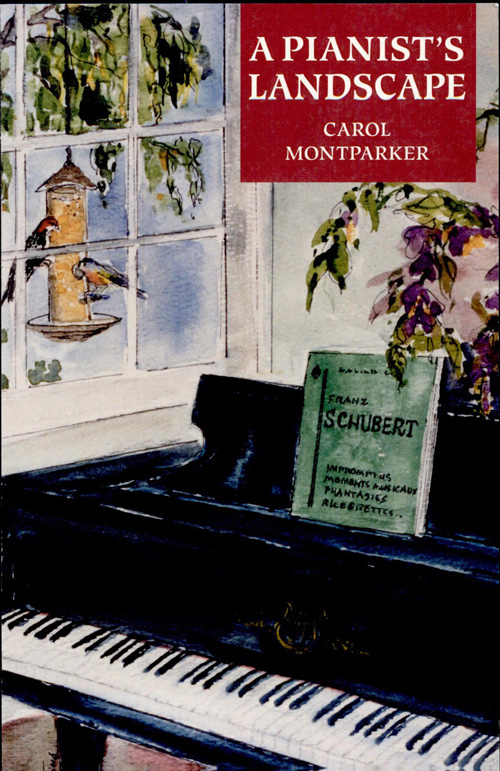
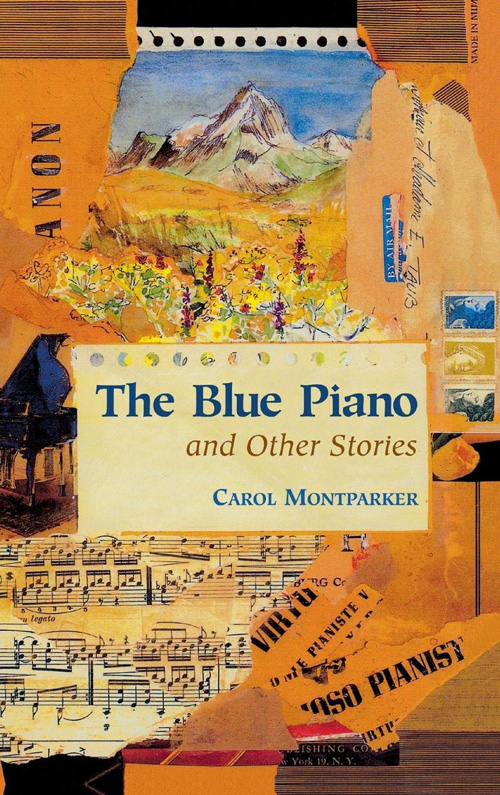
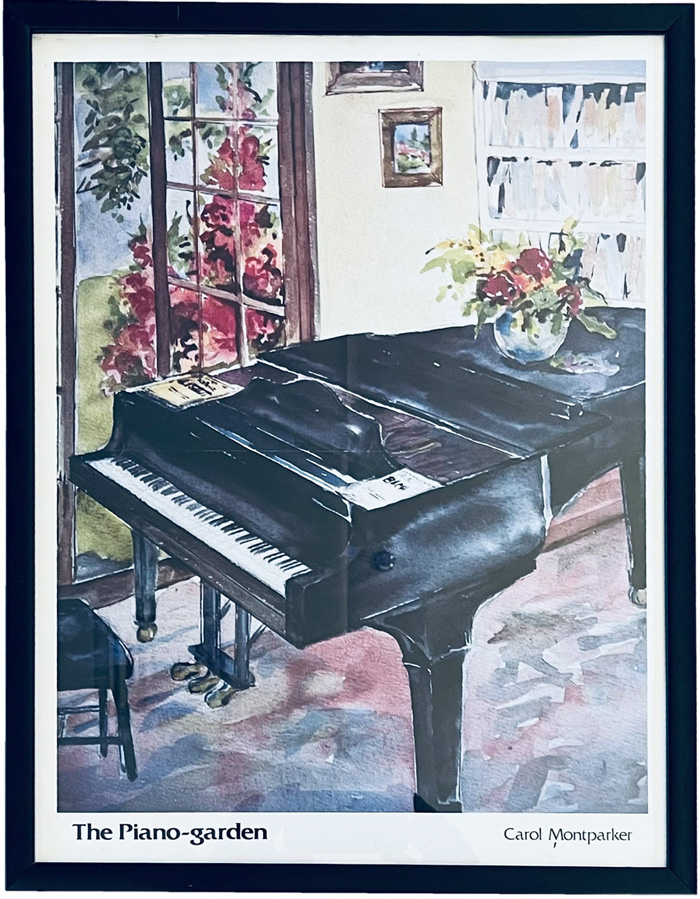
Montparker has written eight books in different genres. Polly and the Piano is a children’s story about her dog, who slept under the piano. A Pianist's Homecoming: Chronicle II: A sequel to The Anatomy of a New York Debut Recital, documents her preparation for a solo in Weill Recital Hall 35 years after she made her debut at the same location, then known as Carnegie Recital Hall. A watercolorist since childhood, she designed the covers of some of her books and painted on the road, producing illustrated travel diaries. One was published as A Pianist’s Journal in Venice.
“Before I went to Venice, I’d made up my mind not to be a pianist there,” she comments. “But every fourth door in Venice is a church—I’d see a harpsichord—and I’d go into a church and start to play. I can write anywhere. Playing the piano requires a lot of physical energy and extreme focus. Painting for me is relaxing and intuitive.”
Montparker still performs today, albeit on a smaller stage. “I’ve been giving musicales at home,” she reports. “Every few months. I play ‘seriously’ for people who want to hear music. Everything in my past is the way I would have wanted it. I don’t want to be younger. I play when I feel the absolute urge to do so . . . . Throughout my creative life, I feel I had everything. Most women artists have to make choices. I raised two wonderful children. Nothing is more enjoyable than playing chamber music with them. I played publicly when I could and when I wanted to. I never wanted to live out of a suitcase in Gopher Prairie, Idaho.”
| | Campolo conducted oral history interviews with Montparker through a separate joint project between the Music Library and Queens Memory, a community archiving initiative. These interviews are available in partnership with Queens Public Library on its Aviary Platform. | | |
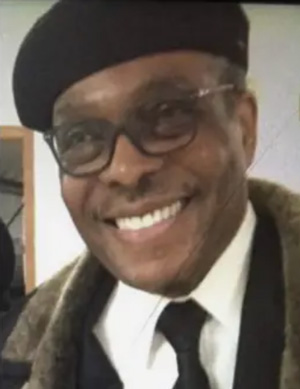
Former QC Vice President for External Affairs Herman L. Jenkins Sr. passed away on December 5, 2025. He was 85.
Born in Alabama, Jenkins grew up in Detroit and joined the Army upon graduating from Pershing High School. His tour over, he involved himself in civil rights and tenant issues, moving back to Detroit to enroll at Wayne State College. Transferring to Clark University on a scholarship, he completed his bachelor’s degree and a doctorate in political geography. When Clark’s dean of political geography, Saul Cohen, was named president of Queens College, he brought Jenkins along.
Jenkins’ post-QC career included serving as executive director of the New York State Martin Luther King Jr. Commission and as New York City personnel commissioner in the administration of Mayor David Dinkins.
Jenkins is remembered for his love of music (in his youth, he was part of a band that auditioned for Chess Records), roller skating, Broadway, travel, and spending time with family. He is survived by his wife, two children, four grandchildren, ten great-grandchildren, and many relatives.
| | |
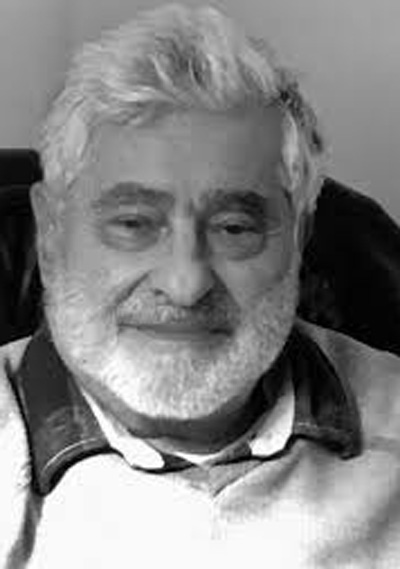
Malvin Howard Kalos, a scientist responsible for groundbreaking work in computational physics, died in December 2025. He was 97.
The son of Polish immigrants, Kalos completed a degree in physics from QC, followed by a doctorate at the University of Illinois Urbana-Champaign and a postdoc at Cornell University. His long career included professorships at New York University’s Courant Institute of Mathematical Sciences (now known as the Courant Institute School of Mathematics, Computing, and Data Science) and Cornell University, where he served as director of the Cornell Theory Center. At 70, he began working at Lawrence Livermore National Laboratory in California, retiring 13 years later.
Katos is survived by his wife, three children, three grandchildren, two great-grandchildren, sister, nieces and nephews, and numerous friends and colleagues.
| | |
Saheras Ansari, a Macaulay Honors College student at QC, is among the current cohort of Civic Futures Lab Fellows. Supported through a multiyear partnership with Design for America and the Watson Foundation, Civic Futures Lab Fellows use systems thinking, research, and community collaboration to address major New York City challenges identified by the Macaulay student body . . . .
Elisa Bemporad (History) has won the National Jewish Book Award in History for Jews in the Soviet Union: A History Revolution, Civil War, and New Ways of Life, 1917-1930, Vol.1 . . . .
Pascal Hannou BA ’17, MA ’19 has been named an Empire State Fellow for 2026-2028. He will take part in a full-time, two-year leadership training program that prepares the next generation of talented professionals for careers in New York State government. Fellows were selected following a rigorous review process from more than 500 applicants. In addition to their hands-on work and learning at eight different state agencies, fellows will attend bi-weekly classes at the Rockefeller Institute of Government throughout the first year of the program. Hannou has been placed in placed at the New York State Department of Environmental Conservation in the Commissioner’s Office . . . .
Eugene Lim MLS ’03 has been awarded the Dos Passos Prize for Literature, given annually by Longwood University to a talented American writer who experiments with form, explores a range of voices, and merits further recognition. Lim, a former QC faculty member, is best known for his novels Search History (2021), Dear Cyborgs (2017), and The Strangers (2013) . . . .
Keena Lipsitz (Political Science) is quoted in The Complicated Politics of Rama Duwaji’s Style, published recently in the New York Times . . . .
| |
Edward Norris BA ’02, MSEd ’06, director of choral music at Glen Cove High School, has been named the 2025 Educator of Note by the Long Island Music and Entertainment Hall of Fame. Norris has led Glen Cove’s Select Chorale in a performance at the White House for the Obamas and, on a tour of Italy, in a concert at St. Peter’s Basilica before the late Pope Francis. Norris is an adjunct faculty member at the Aaron Copland School of Music and Long Island University. He will accept his honor at a ceremony on March 20 . . . .
| Jerry Seinfeld ’76 has joined the Topps baseball card lineup. The company’s 2026 Series 1 includes autographed, pack-pulled cards of Seinfeld, a Mets fan, in the uniform of his favorite team. | |
The Q View is produced by the
Office of Communications and Marketing.
Comments and suggestions for future news items are welcome.
| | | | |