Volume 2 Issue 8
August 2026
The RECap
A newsletter from South Coast Research and Extension Center
and UC Cooperative Extension Orange County
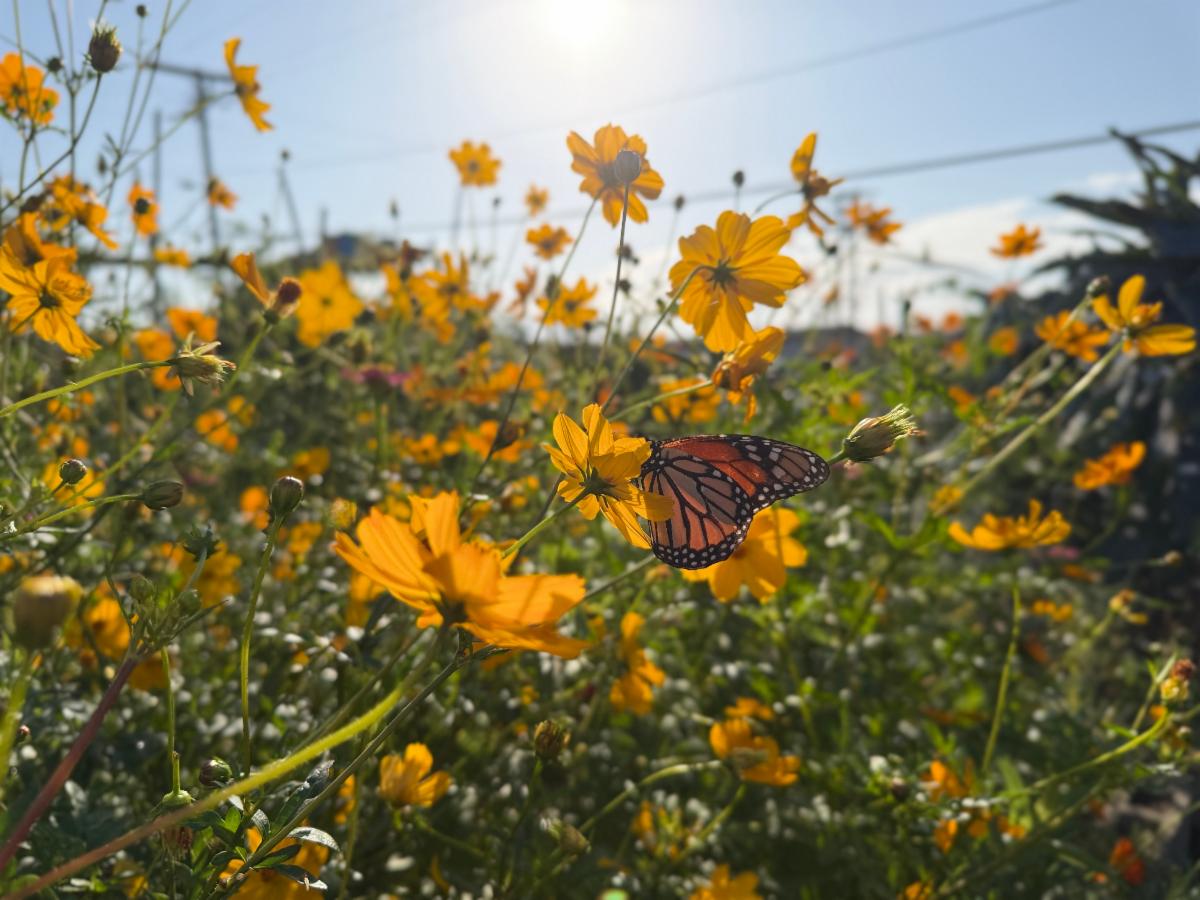
| | A monarch butterfly enjoying the cosmos. | |
4-H Youth Development Program
by Rita Jakel, Program Coordinator
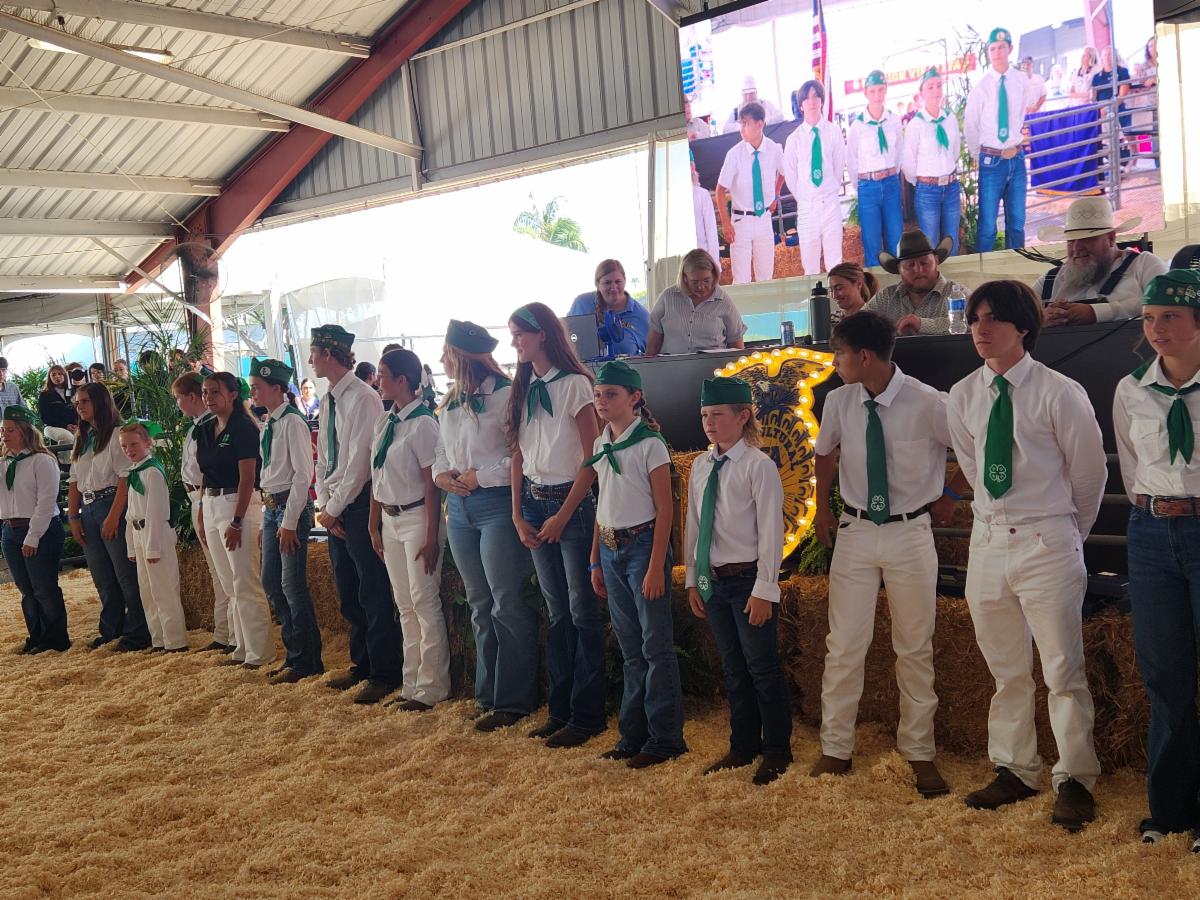
| | 4-H youth saying the 4-H pledge at the 2026 Orange County Fair. | | |
Urban Watershed Resilience Program
by Dr. Esther Lofton
| |
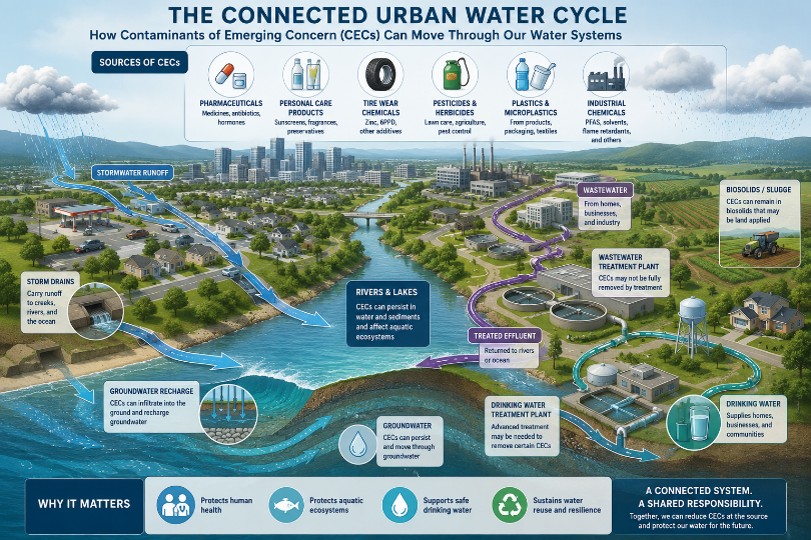
Connected urban water cycle image:
Illustration showing how contaminants can move from everyday sources through stormwater, wastewater, rivers, groundwater, treatment systems, and drinking water supplies.
| |
Ever Heard of CECs? Why They Matter for Your Water and What You Can Do
Medicines, plastics, tires, pesticides, personal care products, and industrial materials can leave behind chemicals and particles that enter wastewater, stormwater, rivers, groundwater, and, in some cases, drinking water sources.
Many of these substances are classified as contaminants of emerging concern, or CECs. However, “emerging” does not always mean “new”. Some have been present in products and the environment for decades. What is emerging is our ability to detect them, understand how they move through water systems, and evaluate their potential effects on our health and aquatic ecosystems.
What are CECs? Where do they come from? Does detecting one automatically mean that water is unsafe? How are these contaminants monitored, regulated, treated, and prevented? What can residents, communities, businesses, water agencies, and others do to help reduce their release?
This month’s Urban Watershed Resilience blog explores these questions, explains why CECs matter in Southern California, and shares practical actions that can help protect water quality.
Read the full article here:
Contaminants of Emerging Concern: What They Are, Why They Matter, and What We Are Learning
Explore the Flagship Publication
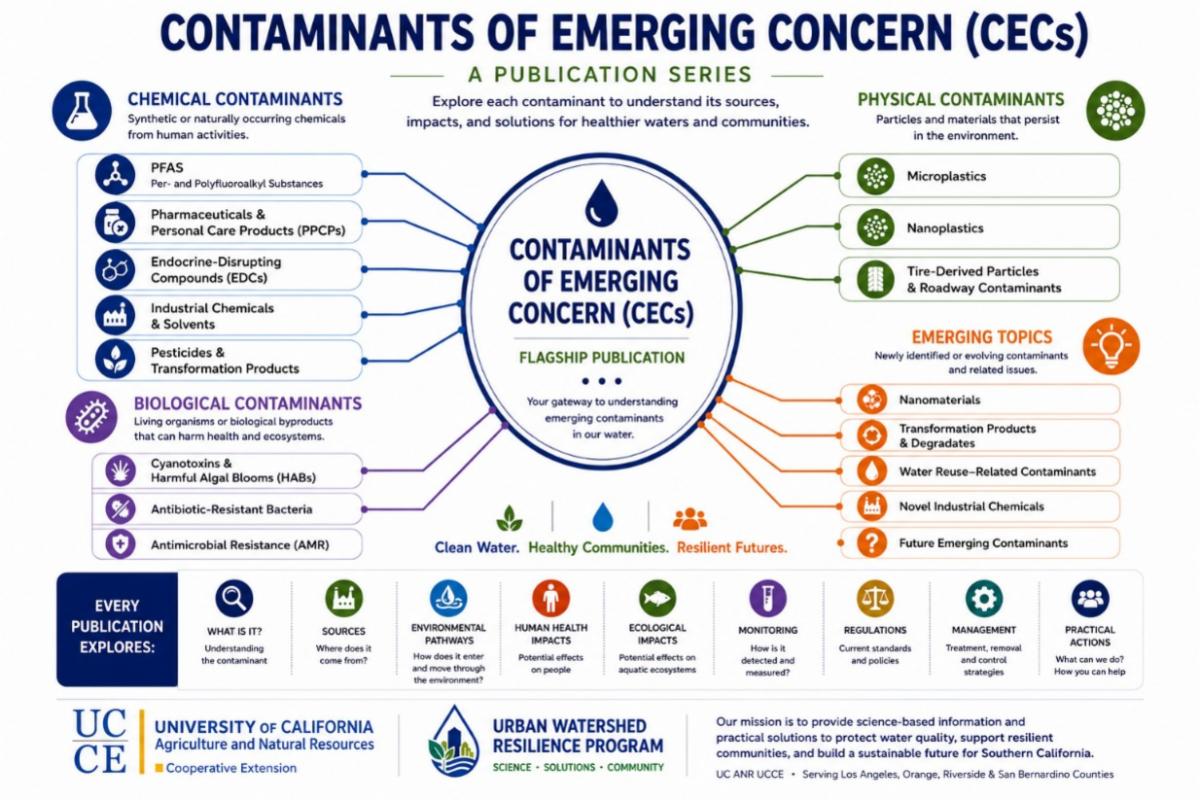
This flagship publication introduces a continuing series on individual CECs and contaminant groups, including PFAS, microplastics and nanoplastics, pharmaceuticals, tire-derived chemicals, cyanotoxins, antimicrobial resistance, and other emerging topics.
| |
CEC flagship publication roadmap:
Diagram showing the flagship CEC publication connected to future topics, including PFAS, microplastics, pharmaceuticals, cyanotoxins, tire-derived chemicals, antimicrobial resistance, and nanomaterials.
| |
Subscribe to receive updates when new publications in the series are released. Here is the form to fill out: SoCal Water resources interest form
📲 Follow & Stay Connected
Instagram @socal_h2o
TikTok @socal_water
X @socal_h20
🌐 Explore the SoCal Water Blog Series:
Visit the SoCal Water Blog Series
📩 Contact / Collaborate
Dr. Esther Lofton Urban Watershed Resilience Advisor
anrsocalwater@gmail.com
| | |
Employee Spotlight
Get to know the folks who work with South Coast REC and UCCE Orange County.
| | |
Meet
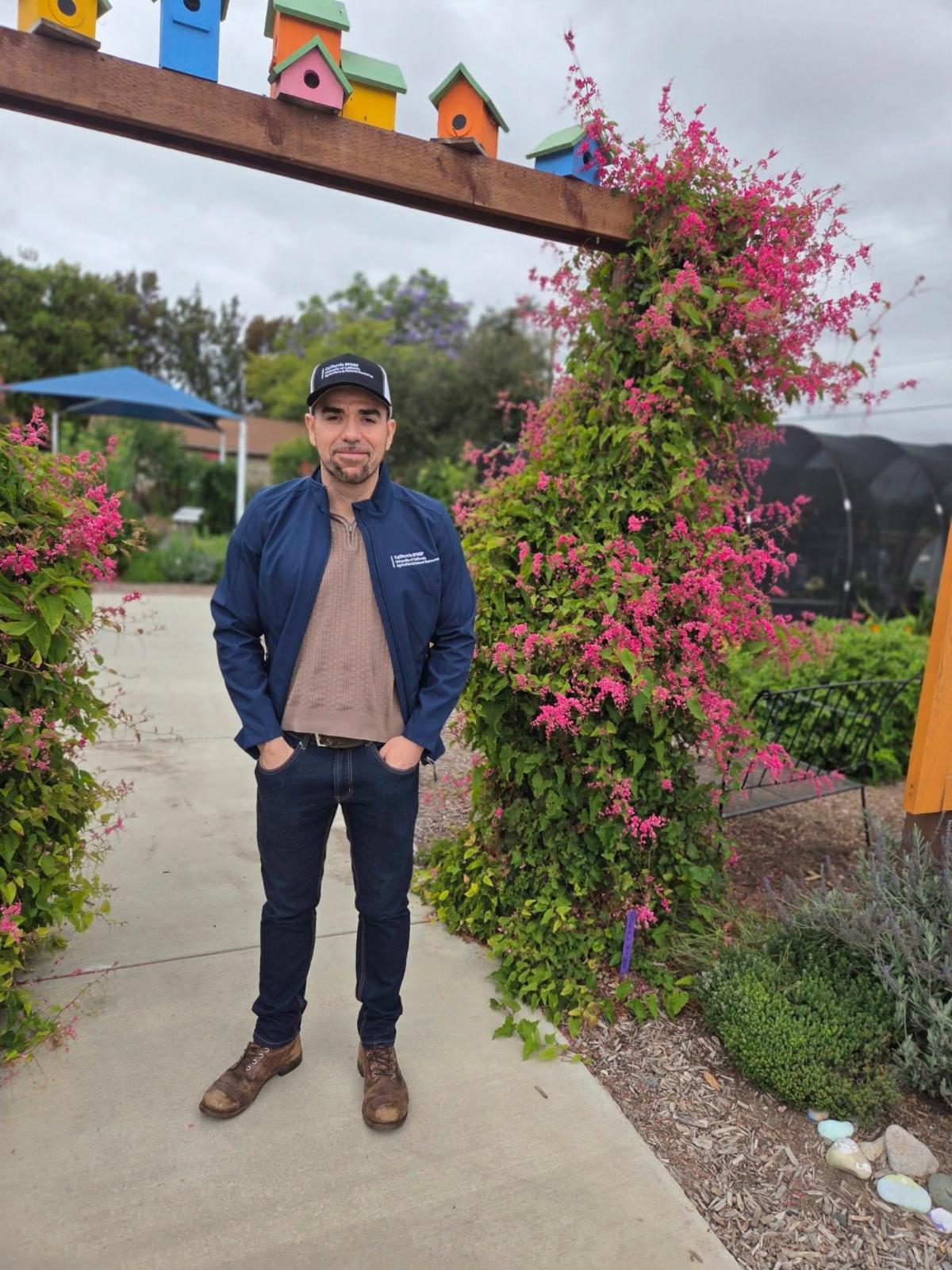
Javier Miramontes
Community Nutrition and Health Supervisor, 14 years of service
What does a "typical" day look like for you?
As the EFNEP Supervisor for Los Angeles and Orange Counties, no two days are ever the same. My role involves providing leadership and support to our nutrition education team, coordinating with community partners, and ensuring our programs run smoothly. I work closely with staff to provide guidance, monitor program goals, address challenges, and help expand our reach so we can serve more families throughout our communities.
In addition to supervising staff, I oversee many of the administrative and operational aspects of the program, including reviewing data, managing budgets, coordinating logistics, and ensuring compliance with University of California and federal program requirements. Whether I'm meeting with community partners, mentoring staff, or planning for future initiatives, my focus is on ensuring our team delivers high-quality nutrition education that makes a meaningful impact on the lives of participants.
What part of your work are you most excited about or proud of right now?
Being part of the leadership committee for the Orange County Nutrition and Physical Activity Collaborative (NuPAC) is incredibly rewarding. It gives me the opportunity to connect community programs with valuable resources while creating a space where partners can share ideas, collaborate, network, and strengthen their collective impact on the communities they serve.
What’s your favorite fruit/vegetable/plant we grow at SCREC?
I love anything spicy, so I love any variety of peppers!
To request an EFNEP class or get more information about our free nutrition education program for parents, please complete our survey. Someone will contact your shortly. You can also contact Javier Miramontes at jfmiramontes@ucanr.edu.
| | Free California Invasive Species Tours | |
Join us for one or all of our upcoming free regional Invasive Species Tours across California. Seats are filling up, so please register now for the tour(s) of your choice:
- Delta Tour, August 12, 2026, starting and ending at Foundation Plant Services UC Davis – 501 Hopkins Street, Davis, CA, 95616.
- Eureka Tour, August 20, 2026, starting and ending at Humboldt County Agricultural Commissioner’s Office – 5630 South Broadway Street, Eureka, CA 95503.
-
Los Angeles Tour, August 26, 2026, starting and ending at the Joint Forces Training Base – 3802 Constitution Avenue, Los Alamitos. Featuring Dr. Beatriz Nobua Behrmann, Urban Forestry and Natural Resources Advisor
The Invasive Species Council of California (ISCC – www.iscc.ca.gov) and related California Invasive Species Advisory Committee (CISAC) are planning invasive species tours throughout the state. The goal of the tours is to bring together elected officials and staff, industry, agencies, UC Cooperative Extension, tribal, NGOs, local partners, others and you to create a shared understanding of our California Pest Prevention System, ways to improve the system, and protect our agriculture, natural resources, and unique biodiversity from invasive species.
These tours are free to attend with lunch, drinks, and snacks provided. Tours will begin promptly at 9:00am and end at approximately 5:00pm. Free parking is available at each tour starting point. You will leave your vehicle for the day and board one of 2 charter buses and arrive back at the starting location at approximately 5:00pm the same day. The charter buses will take you through the tour stops where there will be speakers, demonstrations, and networking opportunities.
Click here to register for one of our tours:
Register for the Tours
The purpose of these tours is to bring together a diverse coalition of participants to provide a field-based understanding of priority invasive species issues in California’s natural and managed landscapes, while highlighting local response efforts and the partners leading or supporting that work. The Invasive Species Council of California and the California Invasive Species Advisory Committee hope you can attend and please forward this invite to your contacts who may be interested in attending.
While these tours are free to registrants, we also have some funding available to help attendees get to the tour starting point. Details on those funding resources and the application are here:
Funding Resources and Application
Please feel free to forward this invite to your contacts. These tours will lead to a free Invasive Species Summit planned for October 1st and 2nd, 2026, join the CISAC listserv for more details:
Join the CISAC Listserv
| Capture the Flavor: Herbs and Spices | |
Pick from the following dates:
August 13, August 20, August 27, or September 3
"Capture the Flavor: Herbs and Spices" is an educational program sponsored by the McCormick Science Institute and delivered by the Master Food Preservers of California. The class focuses on the history, use, storage, food safety & health benefits of herbs and spices and includes a quick hands-on portion where participants make a spice blend to take home. Participants in this class will have the opportunity to participate in follow-up surveys that will help evaluate the effectiveness of the program. Participants that enroll in the surveys will receive a 6-week newsletter and a free herb and spice book. All participants in this class must be 18+ years old.
Closed-toe shoes are required. If you have long hair, please tie it back for this class. Please bring an apron from home. If you cannot bring an apron, please select the $5 cleaning fee for a loaner apron. All ingredients and kitchen tools will be provided at the class.
Cancellation Policy: No refunds two weeks prior to workshop, as materials will have been purchased.
Four complete sessions offered – choose one:
August 13, August 20, August 27 or September 3, 2026
| Orange County Bee Team Apiary Tours | | |
Explore the world of honey bees and their habitat with our Certified California Master Beekeeper Program (CAMBP) Instructors. After this tour, participants will be able to:
- Explain how to light a hive smoker.
- Describe a complete hive inspection.
- Identify eggs, larvae, and capped brood.
- Distinguish hive food sources.
- Identify the queen, worker, and drone.
Date(s):
| |
2026 Central Coast Region Organic Agriculture Conference | |
September 15 and 16 in San Luis Obispo, CA at the Octagon Barn
Click here to view the event website and to register! Registration closes September 5th, 2026
Join UC Organic Agriculture Institute (UC OAI) and partners, Community Alliance with Family Farmers (CAFF), Central San Luis Resource Conservation District (RCD), UC Cooperative Extension (UCCE), and UC Small Farms Network (UC SFN), for two days of organic agriculture programming on the Central Coast.
These events are free, thanks to our funders at CDFA State Organic Program, CDFA Office of Agricultural Resilience and Sustainability, and USDA AMS West/Southwest Transition to Organic Partnership Program, and programming is tailored to aspiring, transitioning, or currently certified organic farmers and ranchers in San Luis Obispo, Santa Barbara, and Ventura Counties. Spanish interpretation will be available / Habrá interpretación en español.
Click here to view the event website for more information and to register by September 5th! Questions? Please contact Lexie Wilson, UC OAI Extension & Outreach Coordinator at lwwilson@ucanr.edu
---
Conferencia de Agricultura Orgánica de la Región de la Costa Central 2026: 15 y 16 de septiembre en San Luis Obispo, CA en el Octagon Barn
¡Haga clic aquí para ver el sitio web del evento y registrarse! Las registraciones cierran el 5 de septiembre de 2026.
Acompañe al Instituto de Agricultura Orgánica de la UC (UC OAI) y a sus socios Alianza Comunitaria con Agricultores Familiares (CAFF), Distrito de Conservación de Recursos de Central San Luis (RCD), Extensión Cooperativa de la UC (UCCE) y Red de Pequeñas Granjas de la UC (UC SFN) en dos días de actividades sobre agricultura orgánica en la Costa Central.
Estos eventos son gratuitos gracias a nuestros patrocinadores: el Programa Estatal de Agricultura Orgánica del CDFA, la Oficina de Resiliencia y Sostenibilidad Agrícola del CDFA y el Programa de Asociación para la Transición a la Agricultura Orgánica (región Oeste/Suroeste) del USDA AMS. La programación está diseñada para agricultores y ganaderos ya sean aspirantes, que estén en proceso de transición o que ya cuenten con certificación orgánica de los condados de San Luis Obispo, Santa Bárbara y Ventura. Habrá servicio de interpretación al español.
¡Haga clic aquí para ver el sitio web del evento, obtener más información y registrarse antes del 5 de septiembre! ¿Tiene preguntas? Comuníquese con Maria Orozco, coordinadora de Educación y Mentoría del UC OAI, en mdlorozcoramirez@ucanr.edu o llame (805)781-5815 (Hablo Español).
| | |
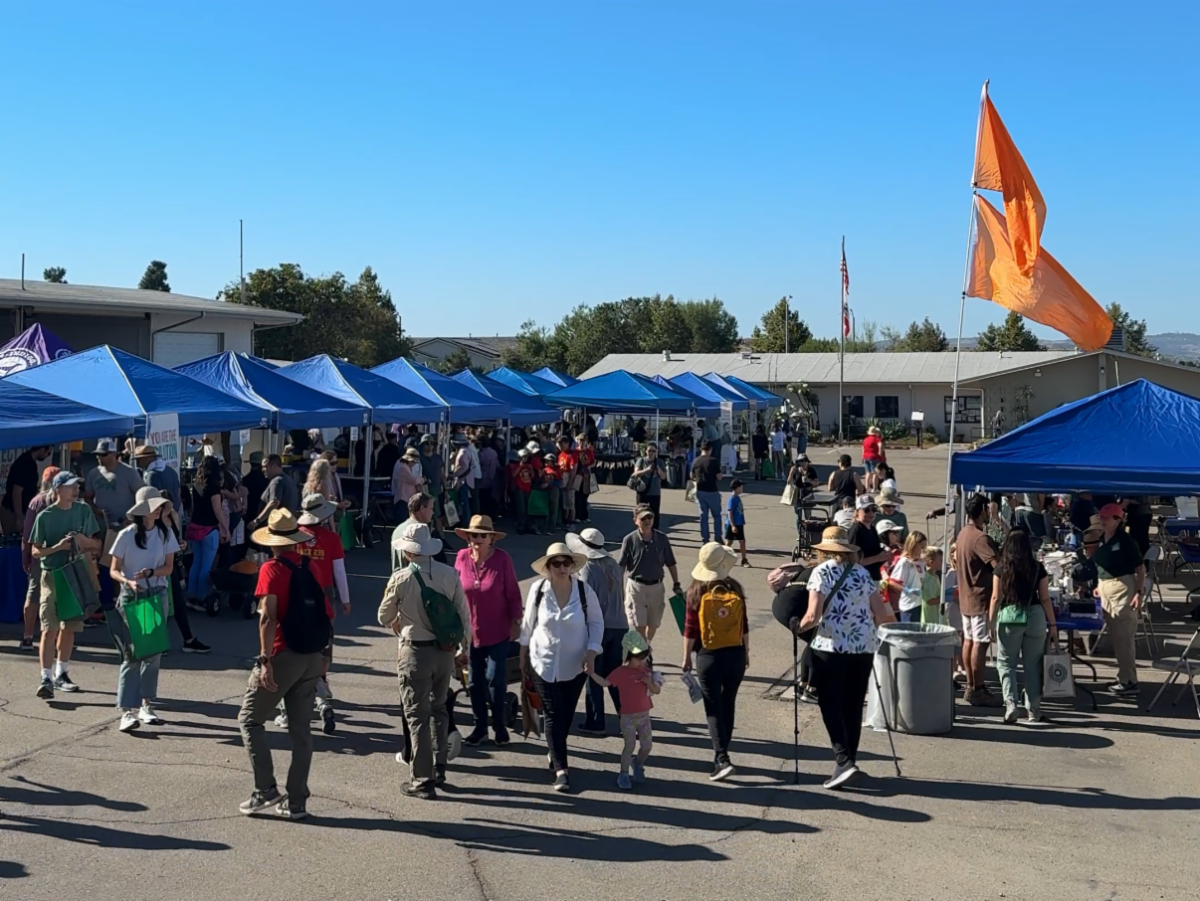
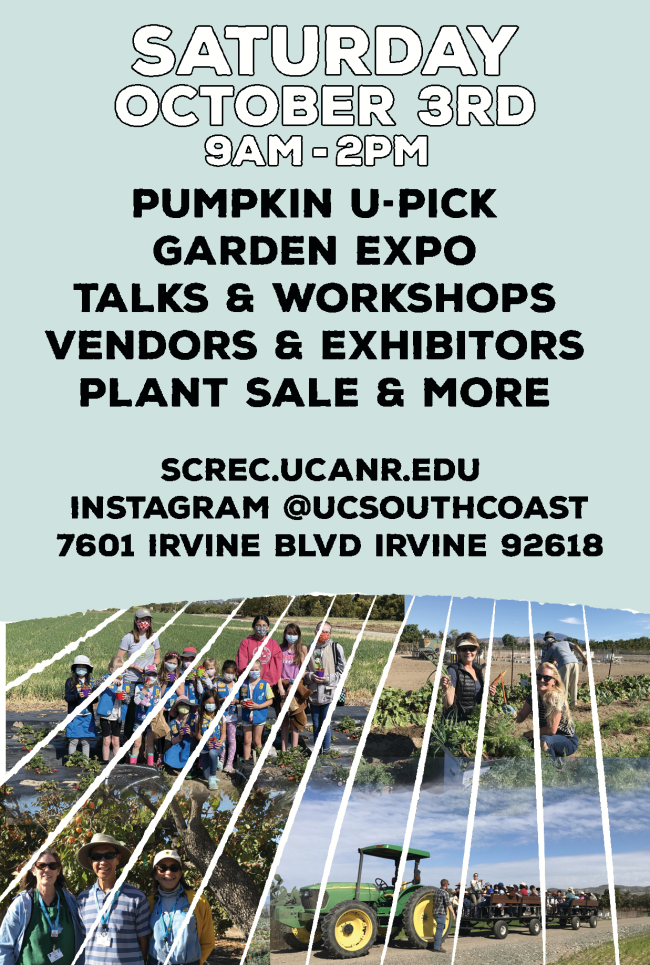
Annual Open House and Urban Ag Expo:
70th Anniversary Celebration
| Celebrating 70 years of impact in Orange County | |
Date
Saturday, October 3, 2026
Time
9:00am - 2:00pm
Location
South Coast Research & Extension Center, 7601 Irvine Blvd. Irvine, CA 92618
Fee FREE!
Other Info
- Pumpkin U-pick
- Garden Expo
- Talks and Workshops
- Vendors and Exhibitors
- Plant Sale and more!
Please note we can only accept cash and checks at this time.
| | | | |