Volume 2 Issue 9
September 2026
The RECap
A newsletter from South Coast Research and Extension Center
and UC Cooperative Extension Orange County
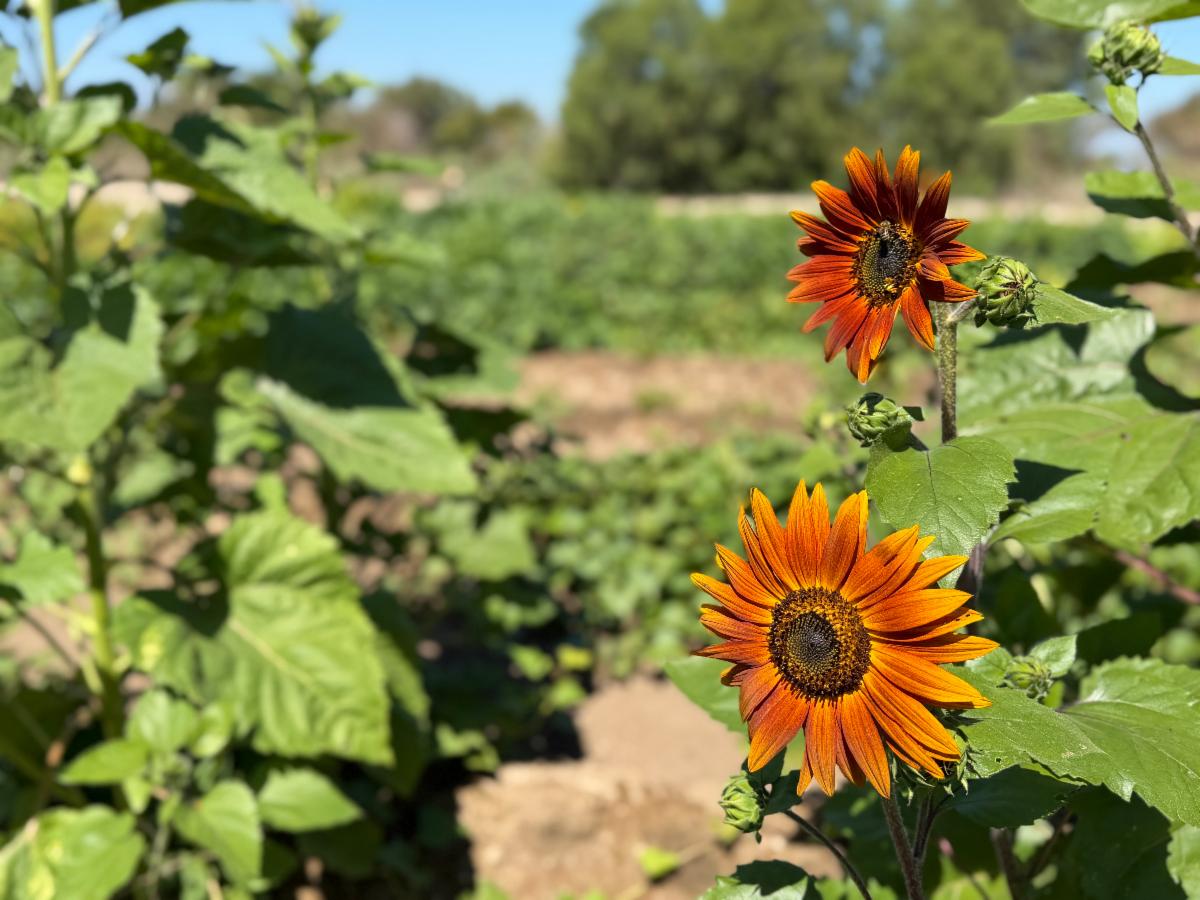
| | Sunflowers growing within our sweet potato field. | |
4-H Youth Development Program
by Rita Jakel, Program Coordinator
| | |
IT’S 4-H ENROLLMENT TIME!
Do you have a child or grandchild or know someone who would thrive in the 4-H program? Please encourage them to join 4-H! We offer projects to suit all ages and interests! From learning how to raise and care for an animal, to sewing clothing and softies, to arts & crafts like ceramics, mixed media arts, to hiking & photography. 4-H offers something for everyone – an opportunity to try something you have never tried before! And 4-H is the best value in town – annual program fees are only $85 per youth for the whole year! (Note: there is an additional $25 Family Fee with the first youth enrollment.)
Youth enrollment has two steps:
-
Create a 2026-2027 enrollment on our enrollment platform called ZSuite.
-
Pay program fees using our secure online payment survey .
Have you been wondering how to give back to your community? Have a special skill or talent to share? Want to help as an evaluator at one of our countywide events? You can be a 4-H volunteer! We love our volunteers! Adult enrollment starts with completing our New Volunteer Interest Survey here.
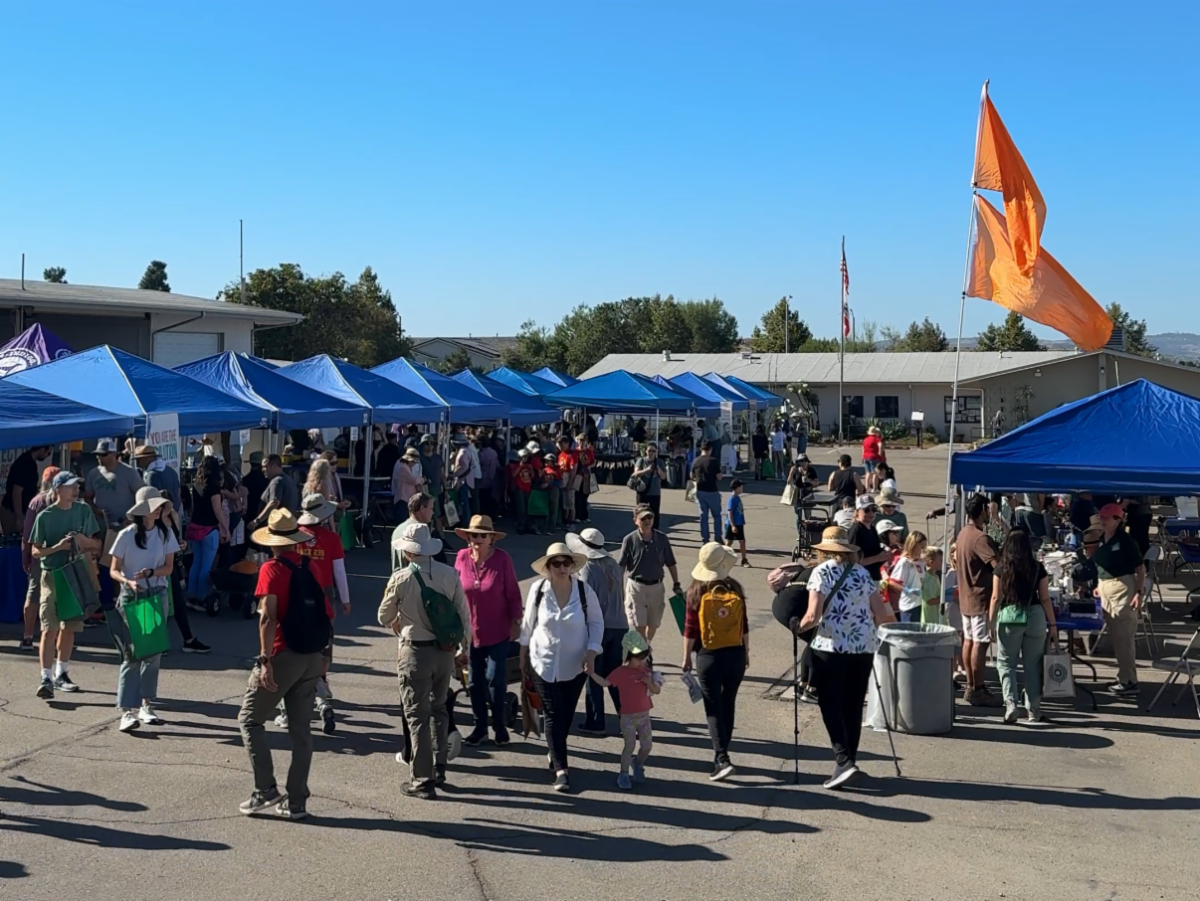
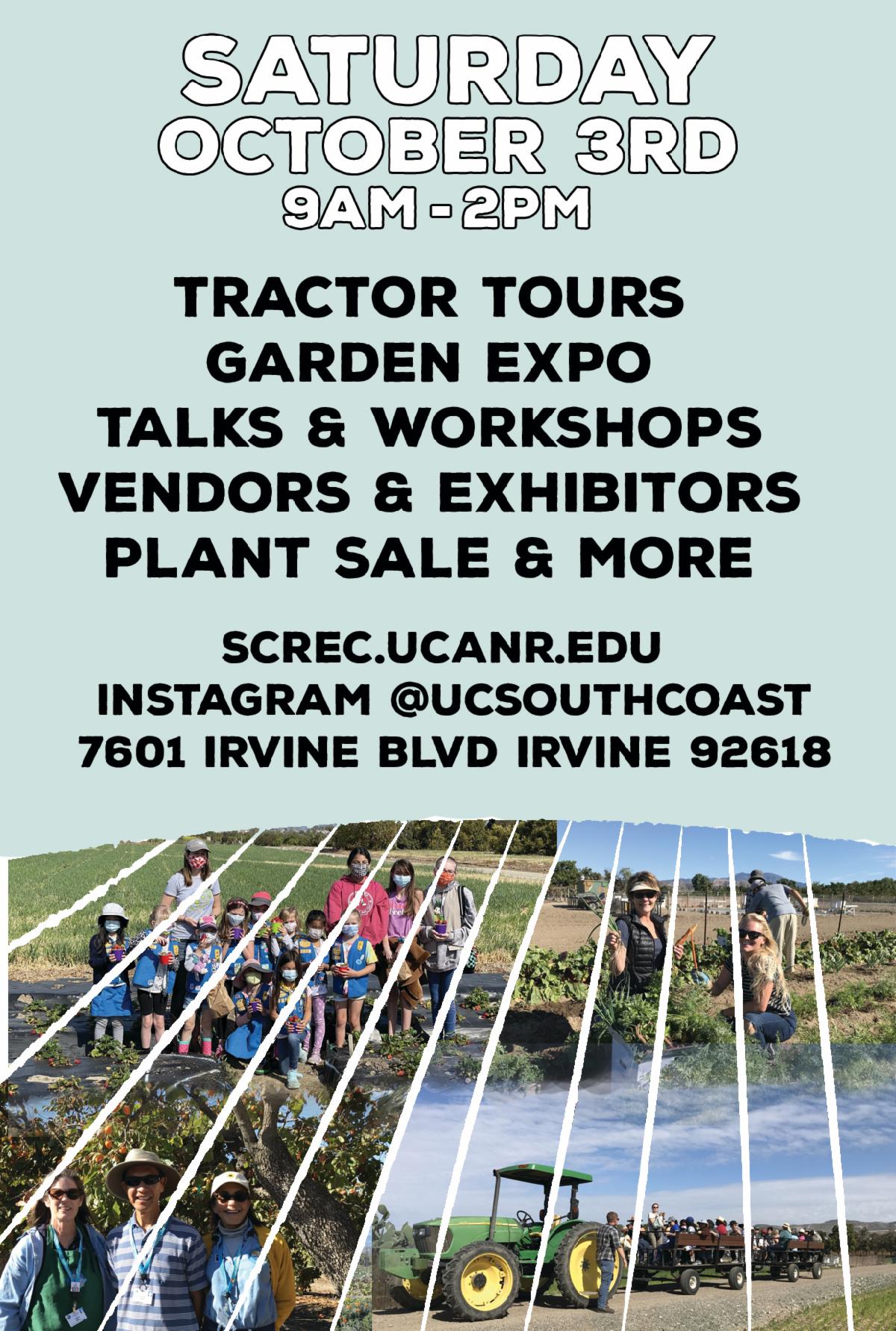
Got questions? Call us at 949.653.1853 or send us an email at oc4h@ucanr.edu – we are happy to help! And don’t forget to stop by our booth at the SCREC Open House & Urban Ag Expo 70th Anniversary Celebration on Saturday, October 3 from 9am-2pm!
| | Urban Watershed Resilience Program | |
From Wastewater to Drinking Water: Is Potable Reuse a Viable Water-Supply Option for Southern California?
by Dr. Esther Lofton
| | |
What happens to water after it disappears down a household drain?
We explore that question in a new Water Supply and Security blog post following a tour of the Grace F. Napolitano Pure Water Southern California Innovation Center in Carson. Could water once treated for disposal instead become part of your drinking-water supply?
The blog post examines advanced purification, multiple treatment barriers, emerging contaminants, source control, public trust, and the proposed Pure Water Southern California program.
Along the way, readers will learn how membrane bioreactors, reverse osmosis, and ultraviolet light with advanced oxidation work together, why source control matters, and how public trust may influence the future of potable reuse.
| | |
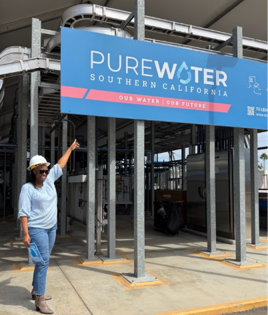
Esther Lofton during a tour of the Pure Water Southern California Innovation Center in Carson.
Photo Credit: Esther Lofton
| | |
PFAS, often called "forever chemicals" due to their resistance to breakdown in the environment or human body, have become one of the most important emerging drinking water issues in California and across the nation. While challenges remain around how to reduce and regulate these contaminants, they also raise important considerations related to water equity, including whether all communities have the resources to monitor, treat, and communicate drinking water risks.
| | |
Nearly half the tap water in the U.S. contains PFAS, but some communities are more affected than others.
(Pexels/Jynto/Wikipedia/CC0 1.0 ).
| |
As El Niño Looms, Scientists Raise Concerns About Erosion in Altadena Burn Scar
by Caroline Champlin, Science Communication Specialist
| |
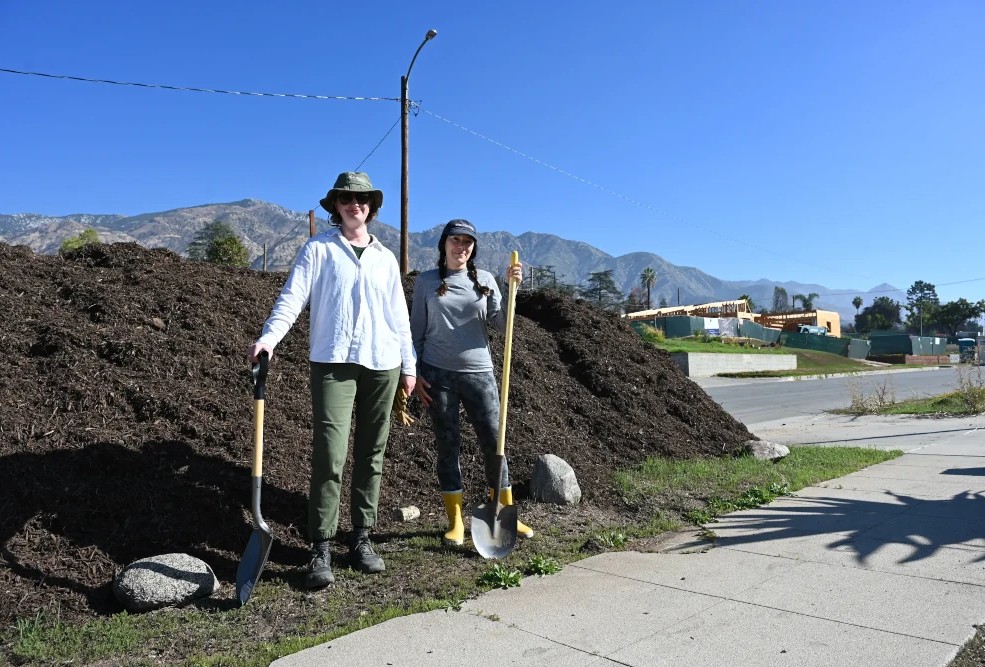
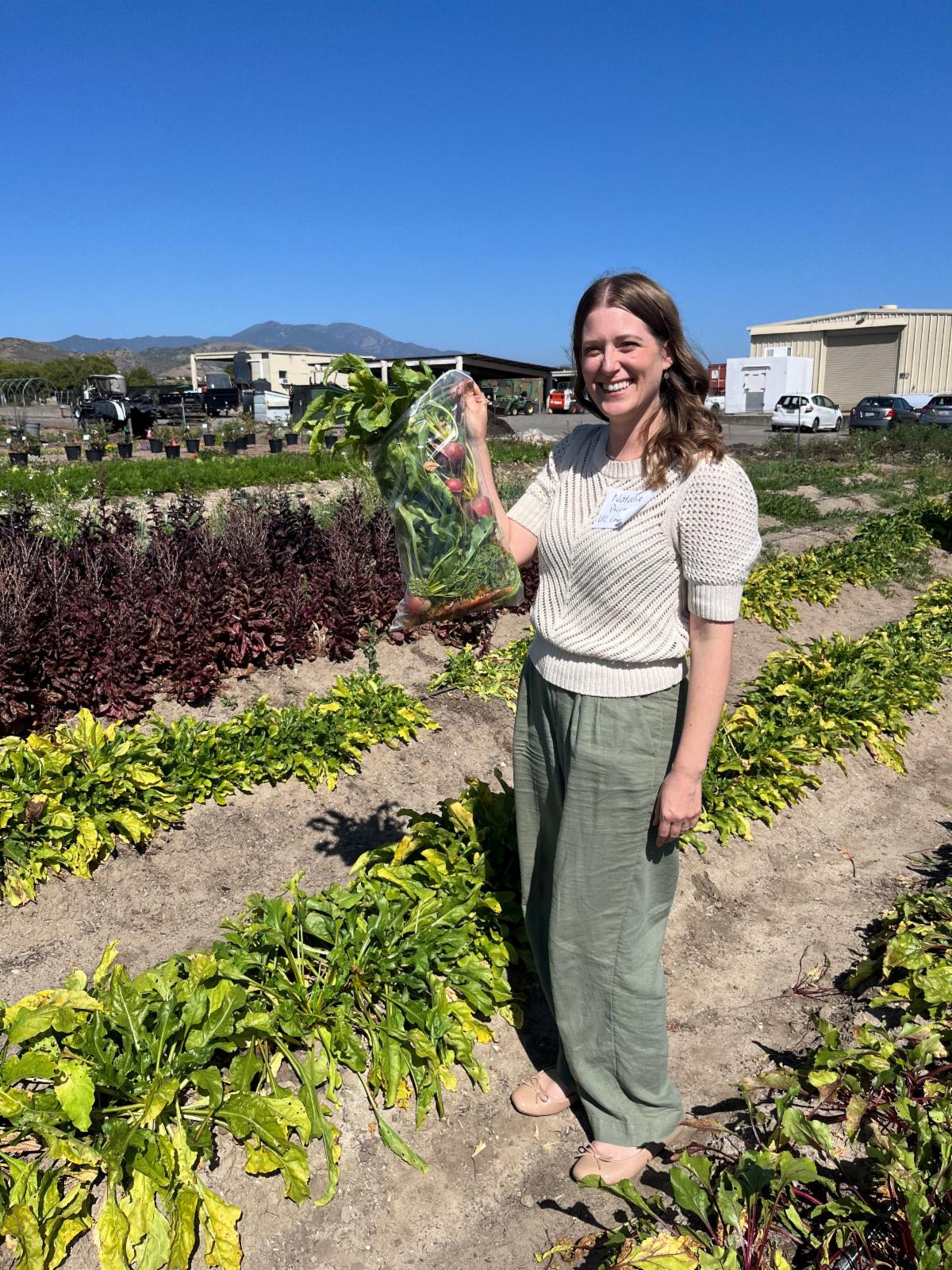
Lydia Whitlock (left) and Natalie Levy (right) stand next to a pile of composted mulch used to cap the soil on multiple Altadena properties. (Photo courtesy of Natalie Levy)
UC experts recommend using free public compost to ‘cap’ soil, keep heavy metals out of waterways.
Read the full article here and watch the video below to learn more.
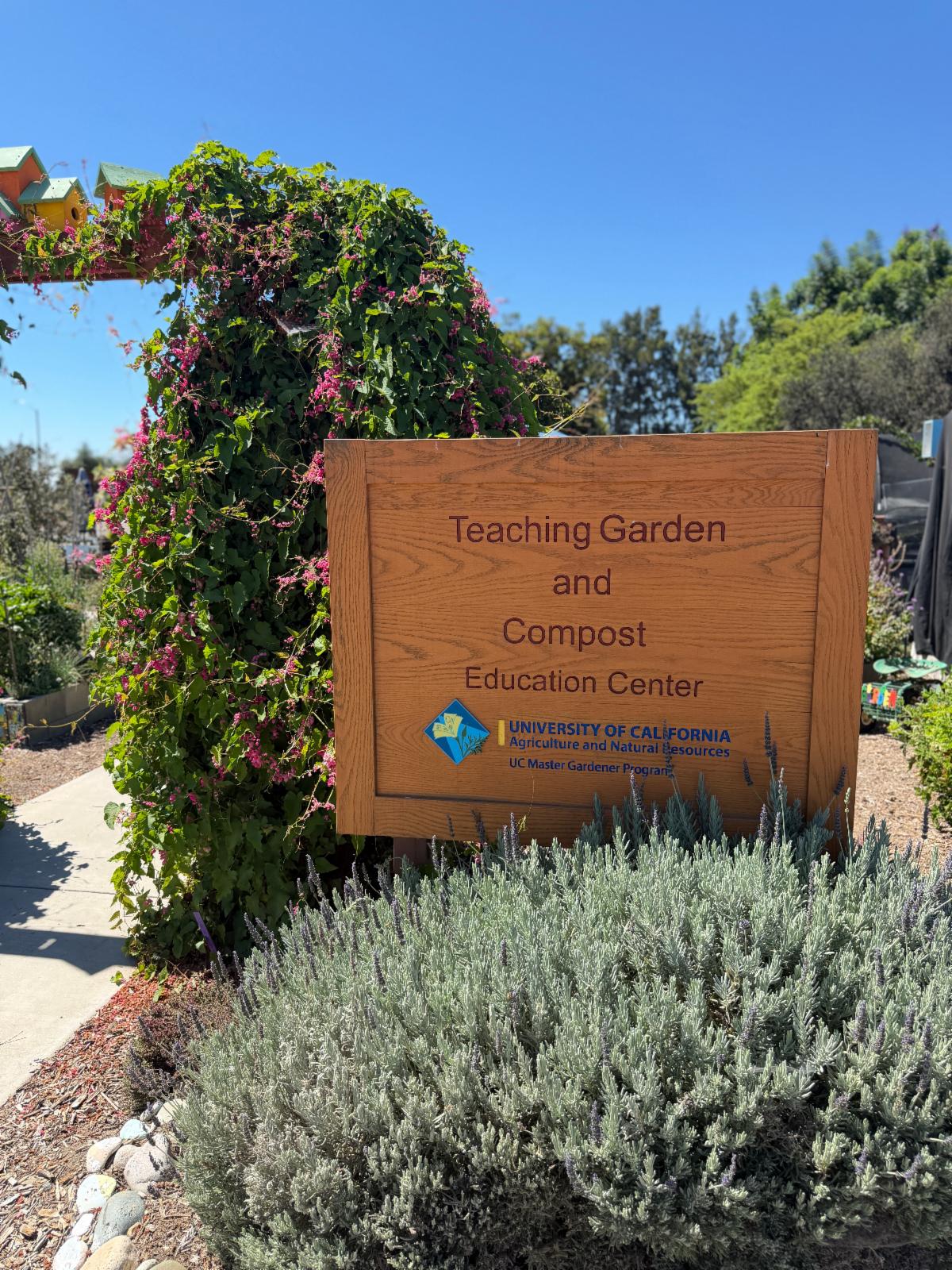
| Rooted in Research: The UC Master Gardener Program | |
 | | What does gardening have to do with the University of California? Quite a lot! The latest episode of In the Garden with UC Master Gardeners explores the science, education and community service behind the UC Master Gardener Program. In “Rooted in Research: The UC Master Gardener Program,” host Bill Brooks talks with Randy Musser, Program Coordinator for the Master Gardeners of Orange County, about the many ways the University of California helps Californians make informed decisions about gardening, agriculture, natural resources and environmental stewardship. The program highlights the work of UC Agriculture and Natural Resources (UC ANR), the University of California Cooperative Extension, and the UC Master Gardener Program. Listeners will learn how UC research is translated into practical, research-based information that can be used by gardeners, homeowners, schools and communities throughout California. Musser also discusses what Master Gardeners do, how the program serves the public through workshops and educational outreach, and what it takes to become a UC Master Gardener. Tune in to discover how a statewide network of university researchers, educators and volunteers is helping Californians grow healthier gardens and communities—while putting science to work right in the backyard. In the Garden with UC Master Gardeners airs Thursdays from 8:30–9:30 a.m. on KUCI 88.9 FM in Irvine.
Listen to the podcast episode here and subscribe for more!
| | |
Employee Spotlight
Get to know the folks who work with South Coast REC and UCCE Orange County.
| | |
Meet
Natalie Price
Community Nutrition and Health Advisor, 9 years of service
What does a "typical" day look like for you?
I am usually at my computer either working on one of my current projects, collaborating with colleagues through Zoom, or answering emails. However, my favorite days are when I can get out into the field to meet with community partners or see our nutrition educators in action!
What part of your work are you most excited about or proud of right now?
Last year I was appointed as the program area chair for the UC ANR Youth, Families and Communities Program Area. As such I provide support and facilitate coordination between 5 UC ANR program teams: Community Nutrition and Health, Positive Youth Development and 4H, Systemic Inequities, Native American Community Partnerships, and Science Literacy and Critical Thinking. The program teams serve as platforms for academics to collaborate on research and extension within and across disciplines. I am proud to support UC ANR academics in this role and have gotten to know many new colleagues and learned about the impactful work they do. It has been a new experience to move into a leadership position, but it is pushing me to learn new things and challenge myself in new ways.
What’s your favorite fruit/vegetable/plant we grow at SCREC?
Cherimoyas! My husband is from Venezuela, where he grew up eating them, and he always talked about how much he loved cherimoya juice. I had never tried a cherimoya myself until I had the opportunity to taste one at SCREC. It was my first time trying them, and now I understand why he loves them so much!
If you could travel anywhere in the world tomorrow, where would you go?
My 6-year-old son is fascinated by technology and is convinced Japan is the place to see the coolest things in the world, so I would love to take him there and see it through his eyes. I’ve also always thought Japan would be such an interesting mix of history, culture, and food to experience.
You can check out more information about our UC ANR Program Teams and Program areas here: https://ucanr.edu/site/uc-anr-program-areas-and-program-teams
| | Orange County Bee Team Apiary Tours - Final 2026 Tour! | | |
Explore the world of honey bees and their habitat with our Certified California Master Beekeeper Program (CAMBP) Instructors. After this tour, participants will be able to:
- Explain how to light a hive smoker.
- Describe a complete hive inspection.
- Identify eggs, larvae, and capped brood.
- Distinguish hive food sources.
- Identify the queen, worker, and drone.
Date(s):
| |
2026 Central Coast Region Organic Agriculture Conference | |
September 15 and 16 in San Luis Obispo, CA at the Octagon Barn
Click here to view the event website and to register! Registration closes September 5th, 2026
Join UC Organic Agriculture Institute (UC OAI) and partners, Community Alliance with Family Farmers (CAFF), Central San Luis Resource Conservation District (RCD), UC Cooperative Extension (UCCE), and UC Small Farms Network (UC SFN), for two days of organic agriculture programming on the Central Coast.
These events are free, thanks to our funders at CDFA State Organic Program, CDFA Office of Agricultural Resilience and Sustainability, and USDA AMS West/Southwest Transition to Organic Partnership Program, and programming is tailored to aspiring, transitioning, or currently certified organic farmers and ranchers in San Luis Obispo, Santa Barbara, and Ventura Counties. Spanish interpretation will be available / Habrá interpretación en español.
Click here to view the event website for more information and to register by September 5th! Questions? Please contact Lexie Wilson, UC OAI Extension & Outreach Coordinator at lwwilson@ucanr.edu
---
Conferencia de Agricultura Orgánica de la Región de la Costa Central 2026: 15 y 16 de septiembre en San Luis Obispo, CA en el Octagon Barn
¡Haga clic aquí para ver el sitio web del evento y registrarse! Las registraciones cierran el 5 de septiembre de 2026.
Acompañe al Instituto de Agricultura Orgánica de la UC (UC OAI) y a sus socios Alianza Comunitaria con Agricultores Familiares (CAFF), Distrito de Conservación de Recursos de Central San Luis (RCD), Extensión Cooperativa de la UC (UCCE) y Red de Pequeñas Granjas de la UC (UC SFN) en dos días de actividades sobre agricultura orgánica en la Costa Central.
Estos eventos son gratuitos gracias a nuestros patrocinadores: el Programa Estatal de Agricultura Orgánica del CDFA, la Oficina de Resiliencia y Sostenibilidad Agrícola del CDFA y el Programa de Asociación para la Transición a la Agricultura Orgánica (región Oeste/Suroeste) del USDA AMS. La programación está diseñada para agricultores y ganaderos ya sean aspirantes, que estén en proceso de transición o que ya cuenten con certificación orgánica de los condados de San Luis Obispo, Santa Bárbara y Ventura. Habrá servicio de interpretación al español.
¡Haga clic aquí para ver el sitio web del evento, obtener más información y registrarse antes del 5 de septiembre! ¿Tiene preguntas? Comuníquese con Maria Orozco, coordinadora de Educación y Mentoría del UC OAI, en mdlorozcoramirez@ucanr.edu o llame (805)781-5815 (Hablo Español).
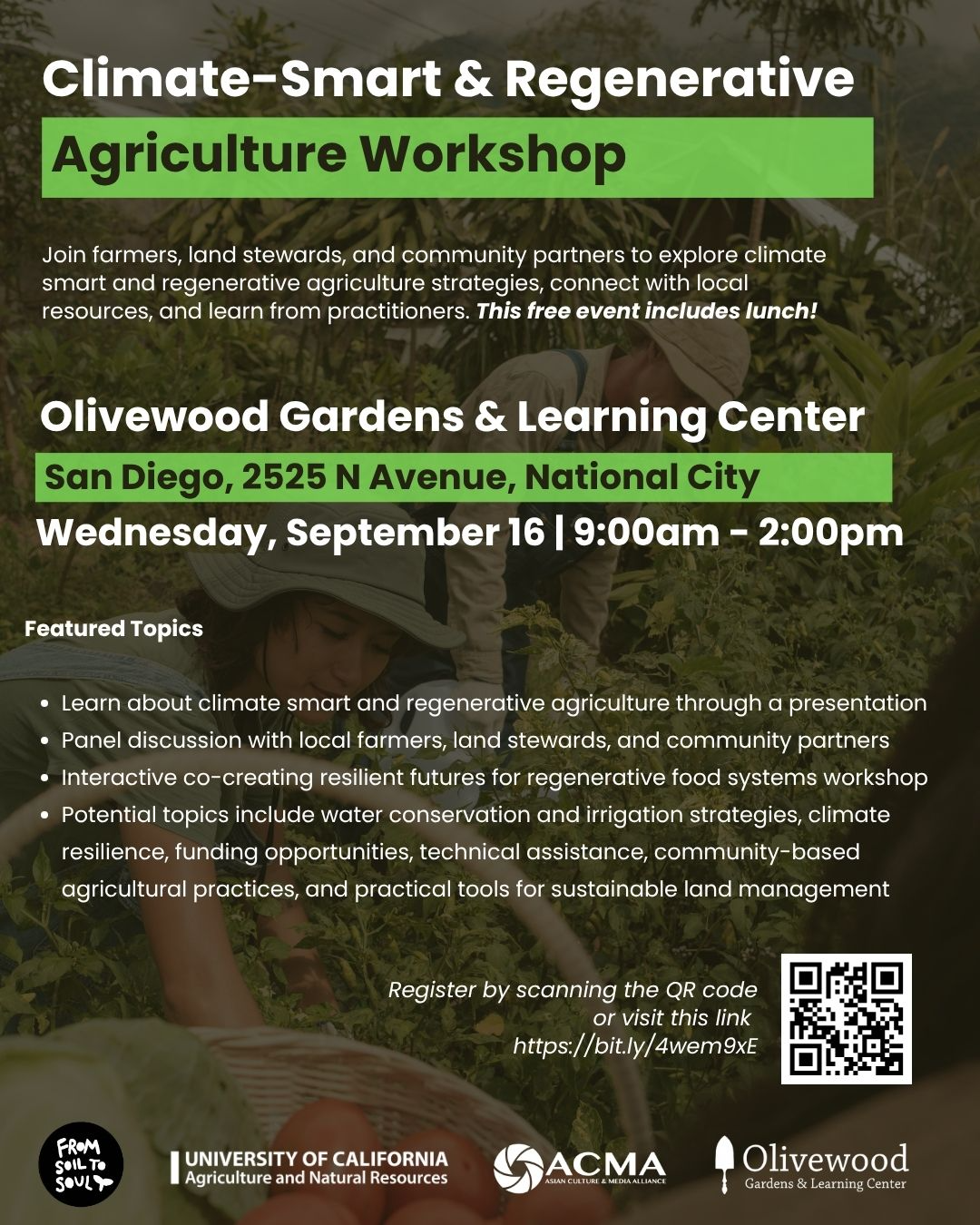
| Climate-Smart & Regenerative Agriculture Workshop | |
Join farmers, land stewards, and community partners for a regional gathering focused on climate-smart and regenerative agriculture practices, resources, and connections.
This event is part of the UC ANR Climate Action & Land Equity (CALE) Project, funded by the California Department of Conservation’s Climate Smart Land Management Program. The CALE Project works to strengthen equitable land access and climate-smart land management through collaboration, technical assistance, outreach, and resource development across Southern California.
Date: Wednesday, September 16th, 2026
Time: 9:00 AM – 2:00 PM
Location: Olivewood Gardens and Learning Center, 2525 N Avenue, National City, 91950
Event Highlights:
- Farmer and practitioner discussions
- Climate-smart and regenerative agriculture resources
- Soil health and water conservation strategies
- Technical assistance and funding opportunities
- Networking and community connection
- Optional farm tour and hands-on learning
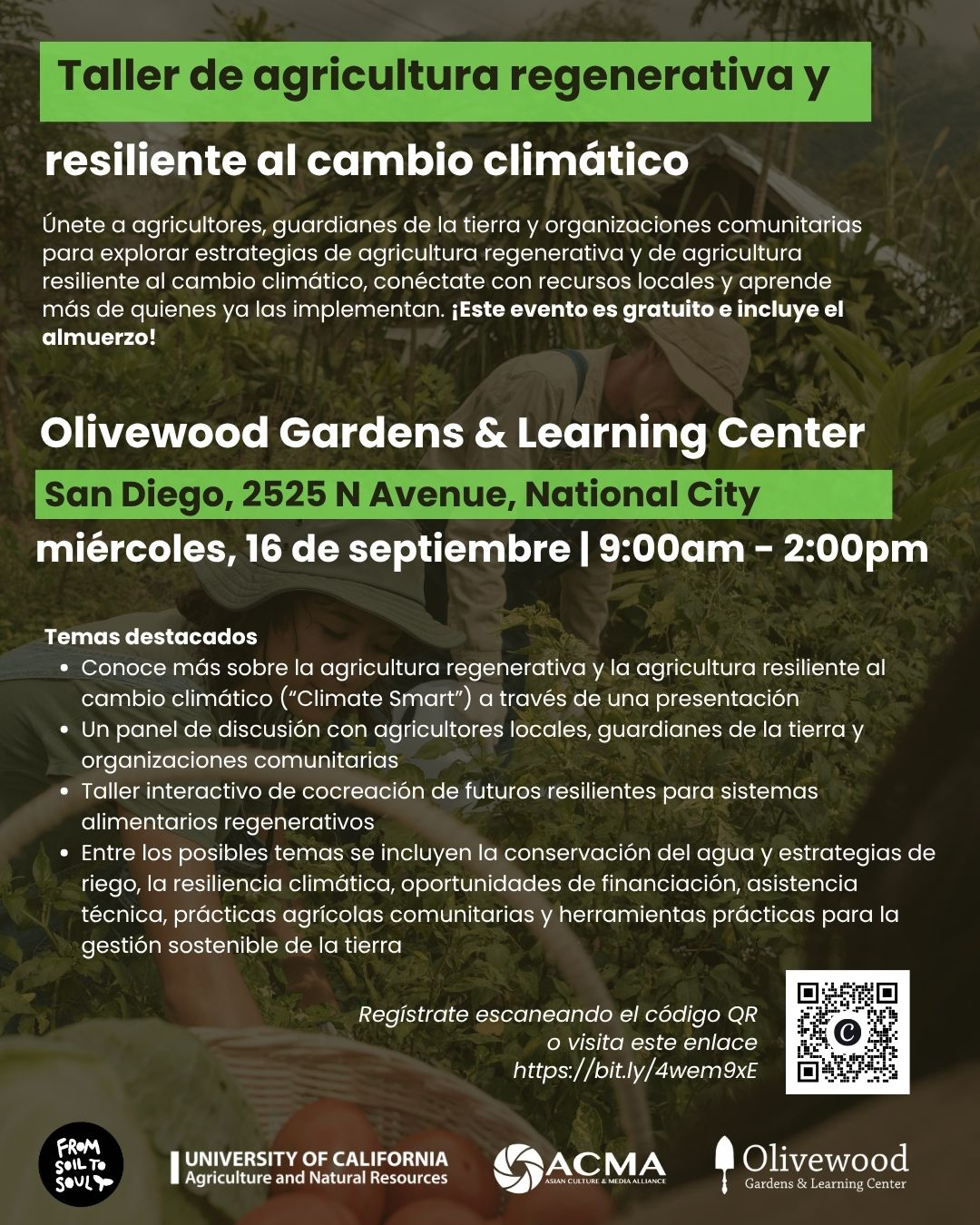
Para personas que hablan español: Haga clic aquí para registrarse y consulte el volante en español adjunto abajo a la derecha para obtener más información.
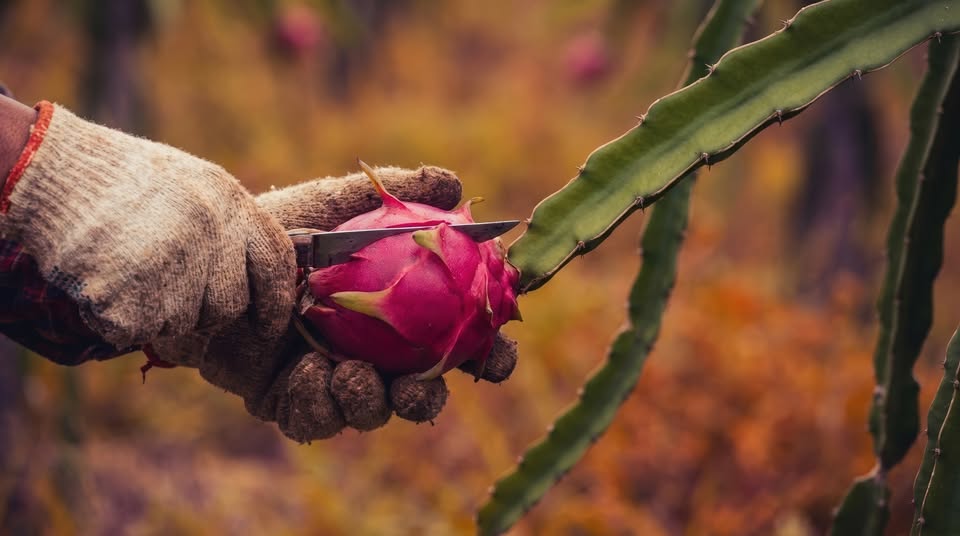
| Dragon Fruit Production Workshop & Farm Tour Field Day | |
Go beyond the basics and get an inside look at what it takes to grow, manage, market, and add value to Dragon Fruit in Southern California.
From variety selection and field establishment to irrigation, pest management, harvesting, marketing, and value-added products, this workshop and field day brings together research-based information, hands-on demonstrations, local grower experience, and valuable industry resources.
Learn it. See it. Taste it. Grow it.
Join us for an engaging day of learning, hands-on field activities, networking, and discovery as we explore the opportunities and challenges of Dragon Fruit production in San Diego County!
Date and Time
Friday, September 18, 2026 8:00am - 5:00pm (Workshop)
Saturday, September 19, 2026 8:00am - 4:00pm (Farm tours)
Location
San Diego Farm Bureau 420 S. Broadway Escondido, CA 92025
Fee
Workshop & Tour COMBO: $100 if registered by September 11, 2026.
Workshop Only: $60 if registered by September 11, 2026.
Tour/Field Day Only: $60 if registered by September 11, 2026.
Click here to view the agenda
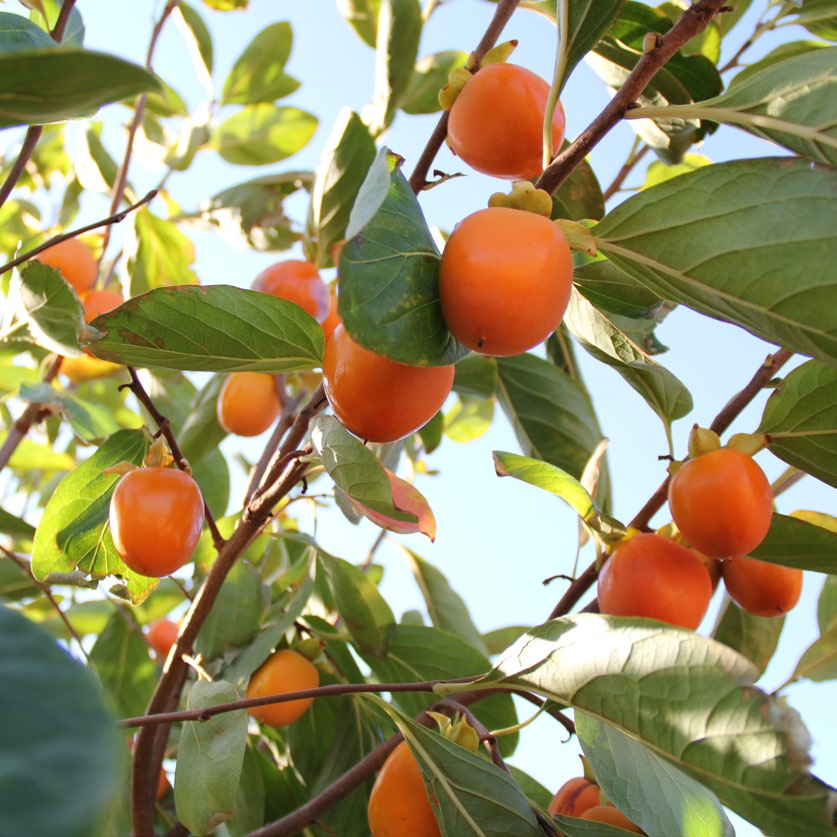
| Hoshigaki Workshop and Hachiya Persimmon U-Pick | |
PRE-REGISTRATION REQUIRED – SPACE IS LIMITED
Enjoy a special U-Pick opportunity (box provided) harvesting Hachiya persimmon varieties to preserve for your upcoming holiday dishes and delectable hostess gifts of Hoshigaki. Following the harvest, UC ANR South Coast REC’s own persimmon aficionado, Isabel Barkman, REC Steward, UCCE Master Gardener and CA Rare Fruit Grower Volunteer, for a hands-on demonstration learning the Hoshigaki method of air-drying and massaging persimmons creating a magical confection as she discusses fun facts providing an opportunity to have your questions answered about theses delectable wonders.
Date
Saturday, September 26, 2026
Time
9:00am - 12:00pm
Location
South Coast Research & Extension Center, 7601 Irvine Blvd. Irvine, CA 92618
Fee $75 (non-refundable after September 12, 2026) includes (1) box for Hachiya Persimmon U- Pick
*PLEASE NOTE* Before you proceed:
For security purposes while processing your payment, please use the following web browsers: Fire Fox, or Google Chrome.
All proceeds support UCANR South Coast REC extension activities.
Registration
Register here: https://surveys.ucanr.edu/survey.cfm?surveynumber=49870
Deadline to register is September 15, 2026
No refunds after September 12, 2026
Schedule
9:00 am to 9:45 am Field Visit - Hachiya U-Pick
9:45 am to 10:00 am Break – sample available non-astringent type fruit
10:00 am to 11:30 am The Art of Hoshigaki - Japanese method of air-drying fruit
Review General Cultural Practices
Q&A
Questions?
For more information, please contact Tammy Majcherek, (949) 653-1824
| Microscopy Honeybees and Flowers Workshop | |
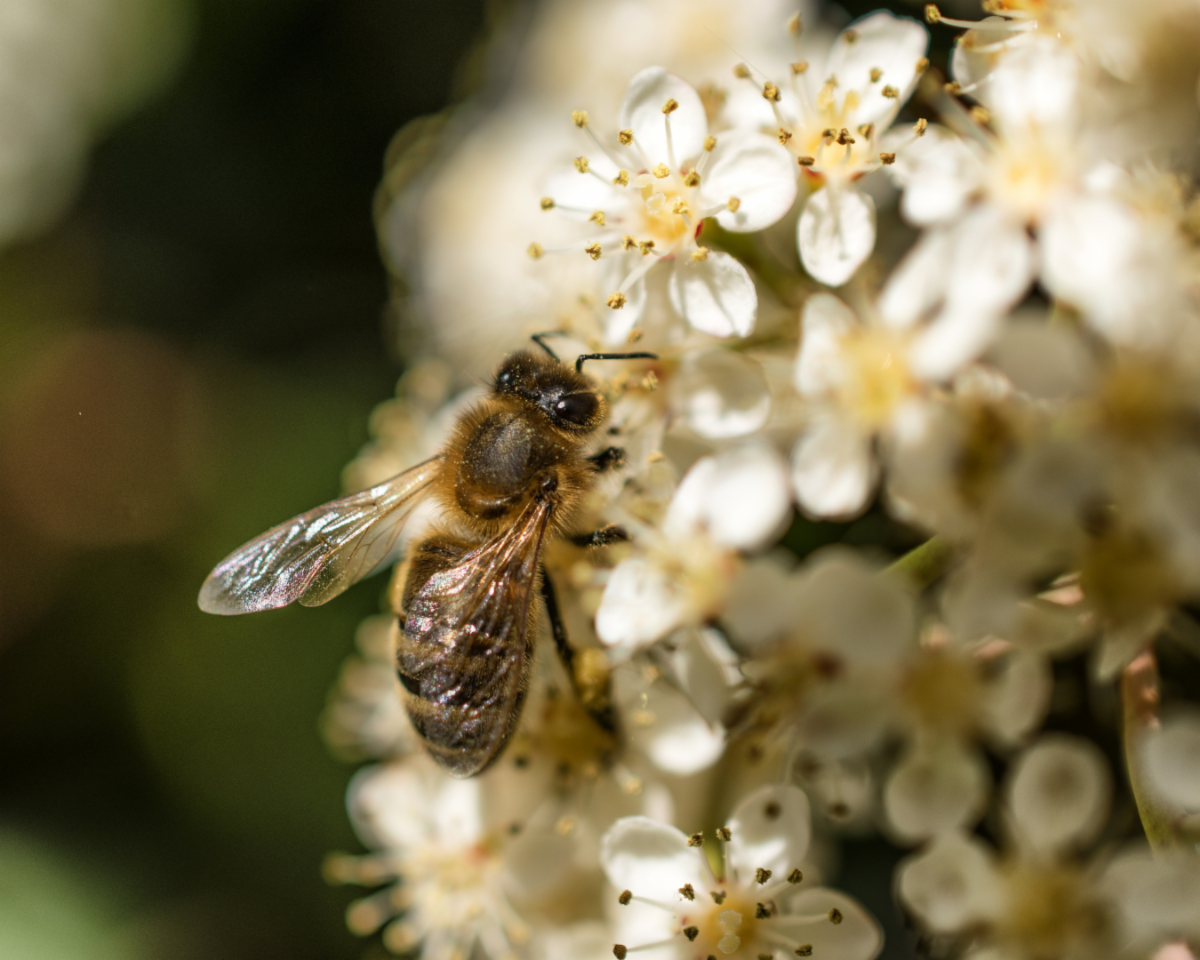
This 3-hour class is designed to excite participants about the science of bees and make it easy to use science tools to see the beauty of the bee pollination ecosystem.
This class is self-paced for those that have more experience and those learning microscopy for the first time.
Objectives
- To learn about bee parts that are important to pollination.
- To learn about how flowers and bees have evolved together.
- To learn how to use a stereo microscope to observe bees and flowers, whole fixed, and preserved under microscope slides.
- To learn how to prepare wet mount slides using a specimen.
Date
Saturday, September 26, 2026
Time
9:00am - 12:00pm
Location
South Coast Research & Extension Center, 7601 Irvine Blvd. Irvine, CA 92618
Fee $35
Age Requirements Children between 12yrs. old to 16yrs. old must be accompanied by a registered adult; Youth between 16yrs. old to 18yrs. old may register to participate unaccompanied with a parent signature.
Questions? tjmajcherek@ucanr.edu or (949)653-1824
| | | | |