| | |
The
Raven's
Nest
January
2026
| | |
Birding Events
Join us for birding on these Saturdays.
Free and open to all.
January 17, 9 am
Lake Julian, Arden
(meeting at Hendersonville Road entrance this time)
February 7, 9 am
Beaver Lake, Asheville
February 14, 9 am
Jackson Park, Hendersonville
More about our monthly bird outings
| |  | |
Programs/Events
Beaver Lake Workdays
Tuesdays: Jan 20 & 27
Feb 3, 10, 17, 24
Beaver Lake Bird Sanctuary, Asheville
Nature Photography Night
Wednesday, January 28, 6 pm
AB Tech, Asheville
Pepper-eaters:Toucans of Europe
Wednesday, February 25, 6 pm
with Rick Wright
location TBD
| | | |
Friends,
January is a time for a good bit of administrative work here at Blue Ridge Audubon Chapter. We are taking account of our financial actions over the past year. We are making reports to National Audubon and the membership on our achievements over the past year. And we are setting a budget and a plan for our priorities for the next year. It’s a lot to do, and for many of us it’s one of the busiest times of the year.
We are blessed to have a Treasurer that is remarkably conscientious, competent and motivated. Dora Brande had big shoes to fill in 2024 when she took over for Linda Walker, and she has capably filled them indeed. She manages the bills for Beaver Lake Bird Sanctuary, juggles membership fees and donations, and disperses grants and contributions seamlessly with the dependability of a Swiss watch. Her deft management of the accounts has been flawless, and it is a credit to her that she is one of the biggest proponents of the Annual Audit process that we started three years ago. Sometime this month she and I will sit down with an Audit Committee and go over every check, deposit and withdrawal from the previous year to make sure that every financial transaction is accounted for properly. I am pleased that we have both reputable financial leaders and a solid audit process in place to ensure that each contribution to Blue Ridge Audubon goes to funding the conservation and advocacy causes the donors believe they are contributing to.
When someone joins Blue Ridge Audubon Chapter (or someone in Buncombe or Henderson County joins the National Audubon Society) a portion of that comes to us, and some goes to the National Audubon Society. The portion that goes to National is used for national-level conservation efforts like standing up for the Endangered Species Act and state-level policies like the Port of Wilmington (NC) Expansion. But donating money through the Blue Ridge Audubon Chapter website goes entirely to us. And donating through our Birdathon web page sends 100% of that donation to the conservation cause connected to our Birdathon effort—currently funding bird habitat conservation efforts in Boyaca, Colombia.
So what does Blue Ridge Audubon do with all the funds given to us? Well, the crown jewel of our organization is Beaver Lake Bird Sanctuary, and a good bit of the money we raise goes to maintenance of and improvements to this precious preserve. We rely on a healthy cadre of volunteers to maintain it, but expenses like boardwalk repair, parking lot maintenance, filter pond dredging and invasive plant management all require outlays.
But Blue Ridge Audubon funds many more education, conservation and advocacy efforts every year. For many years we have provided a modest scholarship to a UNC-Asheville student to pursue a degree related to ornithology or related fields. This past year we also instituted a new Education Grant Program to directly fund conservation studies by students at local universities. We sponsor field trips for elementary students and efforts with the North Carolina Arboretum to educate children on environmental conservation. We fund programs and speakers to come and engage us on interesting and compelling avian topics throughout the year. And we support other conservation endeavors like Lights Out! Asheville that protect birds on their migratory journeys.
It’s hard to keep up with all the valuable conservation endeavors that your contributions to Blue Ridge Audubon Chapter support. And we DO appreciate each and every contribution! That is why we are initiating an Annual Impact Report to let people know what their donations are helping fund. It’s designed to be high-level but informative, and I am confident that it will help you understand more about this organization that you are part of. Look for an email with this report in the coming weeks, as well as a posting on our website.
Thanks again for being part of Blue Ridge Audubon Chapter.
Thanks,
John
| | |
Nature Photography Night
Sharing our favorite photos and stories from 2025
Wednesday, January 28, 6 pm
AB Tech, Asheville
We are coming up on our Nature Photography night. We have some excellent photographers lined up including Alan Lenk, Jim Poling, Blake Cloninger, and Gary Hurley. The photos that they have sent over are awesome! We would love to have a couple more photographers if you are interested in sharing your work. This should be a fun evening. We will start at 6:00 P.M. with light refreshments and get to the photos at 6:30. Please join us for this night of fun and photography.
| | |
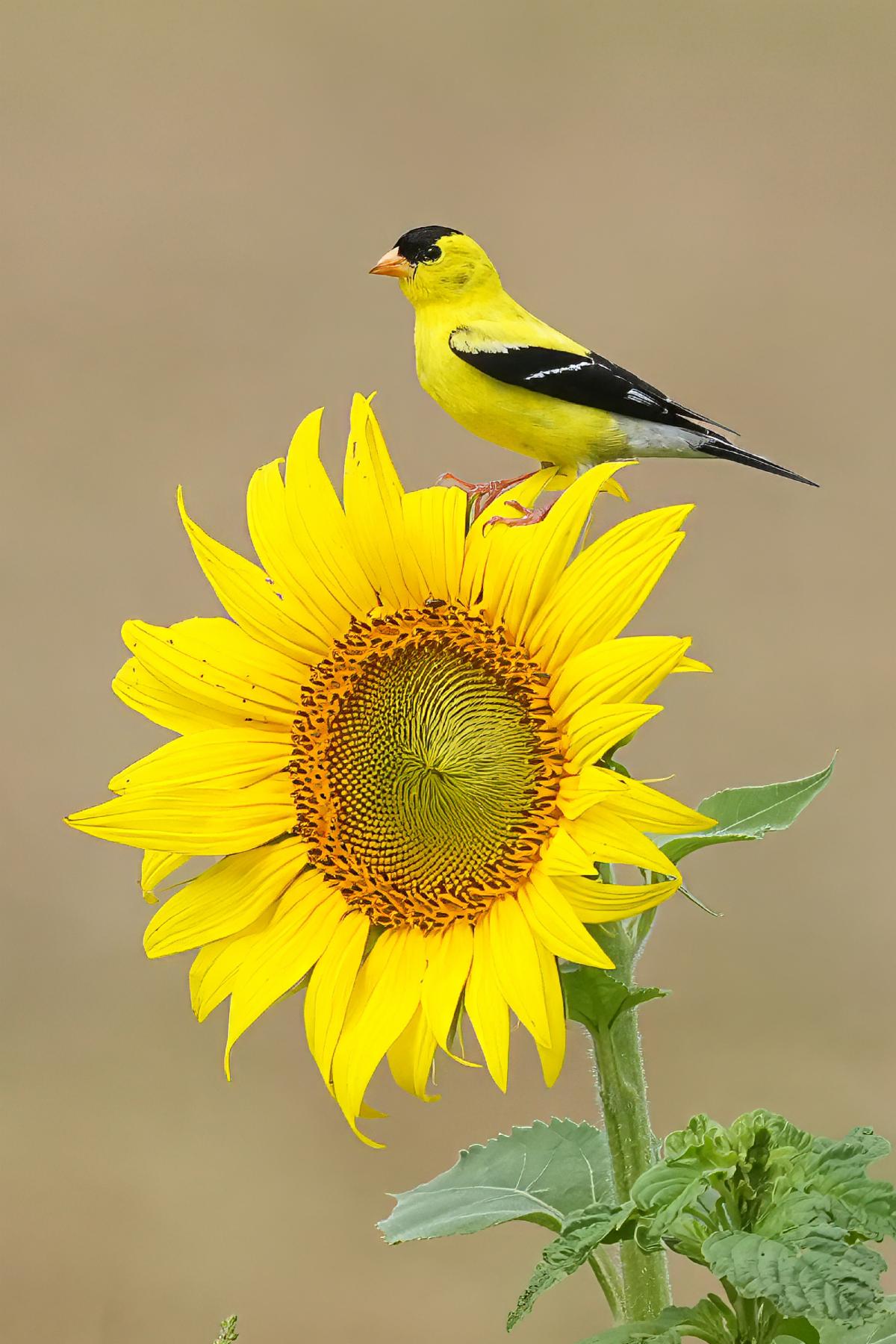
Goldfinch on Sunflower, Biltmore Estate
By Alan Lenk
| | |
Please join us at AB Tech's Ferguson Center for Allied Health at Workforce Development, 10 Genevieve Cir, Asheville, NC 28801 (building #24 on map found here). We'll be in room 326 - take the elevator to the third floor.
To participate in sharing your photos and for more information please contact Kevin Burke at birdingburke@gmail.com.
|
|
Peppereaters: The Toucans of Europe
with Rick Wright
Wednesday, February 25, 6 pm
location TBD
No, there aren't any toucans in the Old World—no wild ones, at least. But over the centuries, the natural historians of Europe have taken the ramphastids to heart as the ultimate emblems of the exotic. Join Rick Wright for an amusing and richly illustrated tour through the earliest literature of the toucans, aracaris, and other big-nosed birds of the American tropics.
After an academic career, Rick now leads Birds and Art tours for Victor Emanuel Nature Tours in Europe and the Americas. He also writes extensively about birds; among his recent publications are the second editions of his ABA Field Guide to Birds of New Jersey and his ABA Field Guide to Birds of Arizona. His Peterson Reference Guide to the Sparrows, published in 2019, is a standard work on the little brown birds of North America.
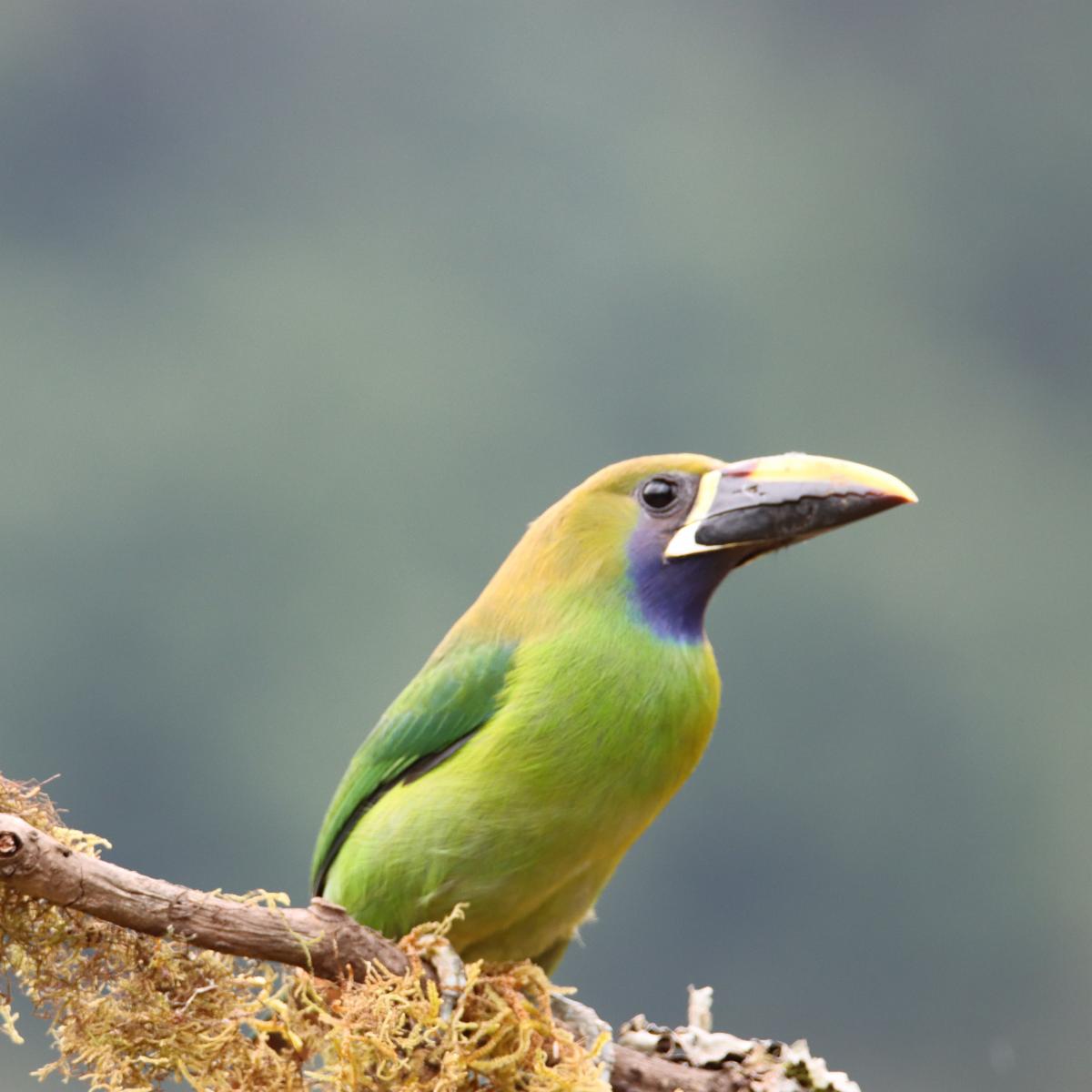
photo: northern emerald toucanet by Kevin Burke
| | Travel with Blue Ridge Audubon | | |
We are considering offering multi-day overnight trips. Thanks to everyone who answered out travel poll last month!
- 66 people responded
- 32% (21) are interested in any and all travel
- 29% (19) are interested in travel primarily in the Southeastern US
- 11% (7) are interested in travel throughout the US
- 12% (8) are mainly interested in international travel
- 17% (11) are not interested in traveling with us
| |
Bird in Colombia with Blue Ridge Audubon Chapter!
We are considering the organization of a trip to Colombia next winter (2026-7) to visit the Boyaca Province, the site of our Birdathon conservation partners. In addition to great birding, the trip would feature meeting Diana Caterina and other conservation leaders, and tours of the habitats, cocoa and coffee plantations, and communities that our Birdathon fundraiser is helping support and sustain to protect our treasured migratory birds that winter in this area.
If you are interested in possibly joining us (no commitment needed at this point!), please email us at blueridgeaudubon@gmail.com expressing your interest so we can start a list and see what level of interest there is for this trip. You can further help by telling us which months would work and what trip parameters (trip length, distances travelled in Colombia, et al) you prefer. Thanks!
| | |
Beaver Bits
Beaver Lake Bird Sanctuary 2025 Highlights
Text and photos by Jay Wherley
| | |
In 2025, Beaver Lake Bird Sanctuary (BLBS) surpassed 12,000 reported eBird checklists. It continues to be the hottest “hotspot” in North Carolina with respect to submitted checklists. Those checklists have been submitted by over 2300 different birders. (2nd place in N.C. is Brumley Nature Preserve with 9900+ checklists from 1000+ birders).
There were two species observed for the first time at BLBS in 2025 – an American Woodcock in March, and an Anhinga in November.
New “high counts” were set for multiple species in 2025 at BLBS, of note: 50 Common Nighthawks in September, and 10 Ring-billed Gulls in November.
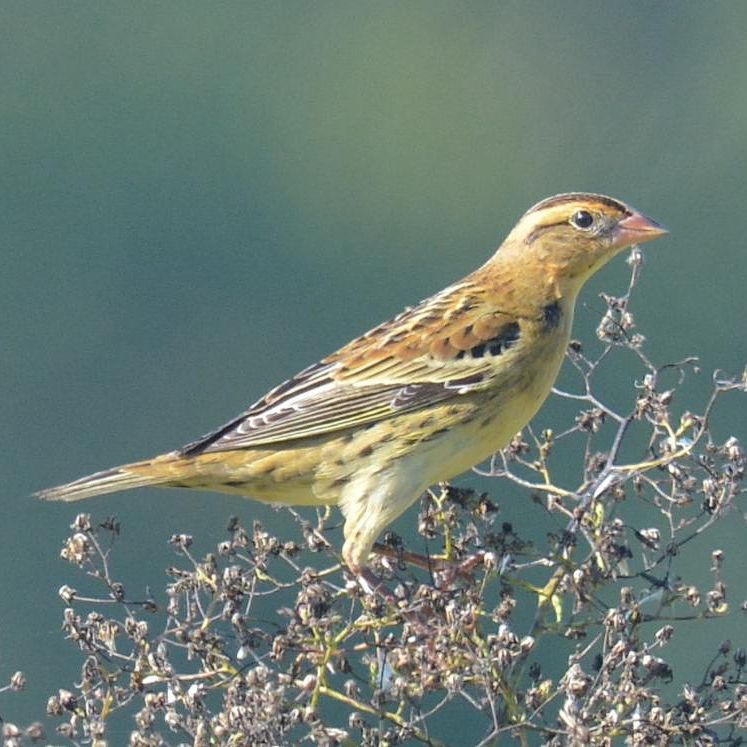
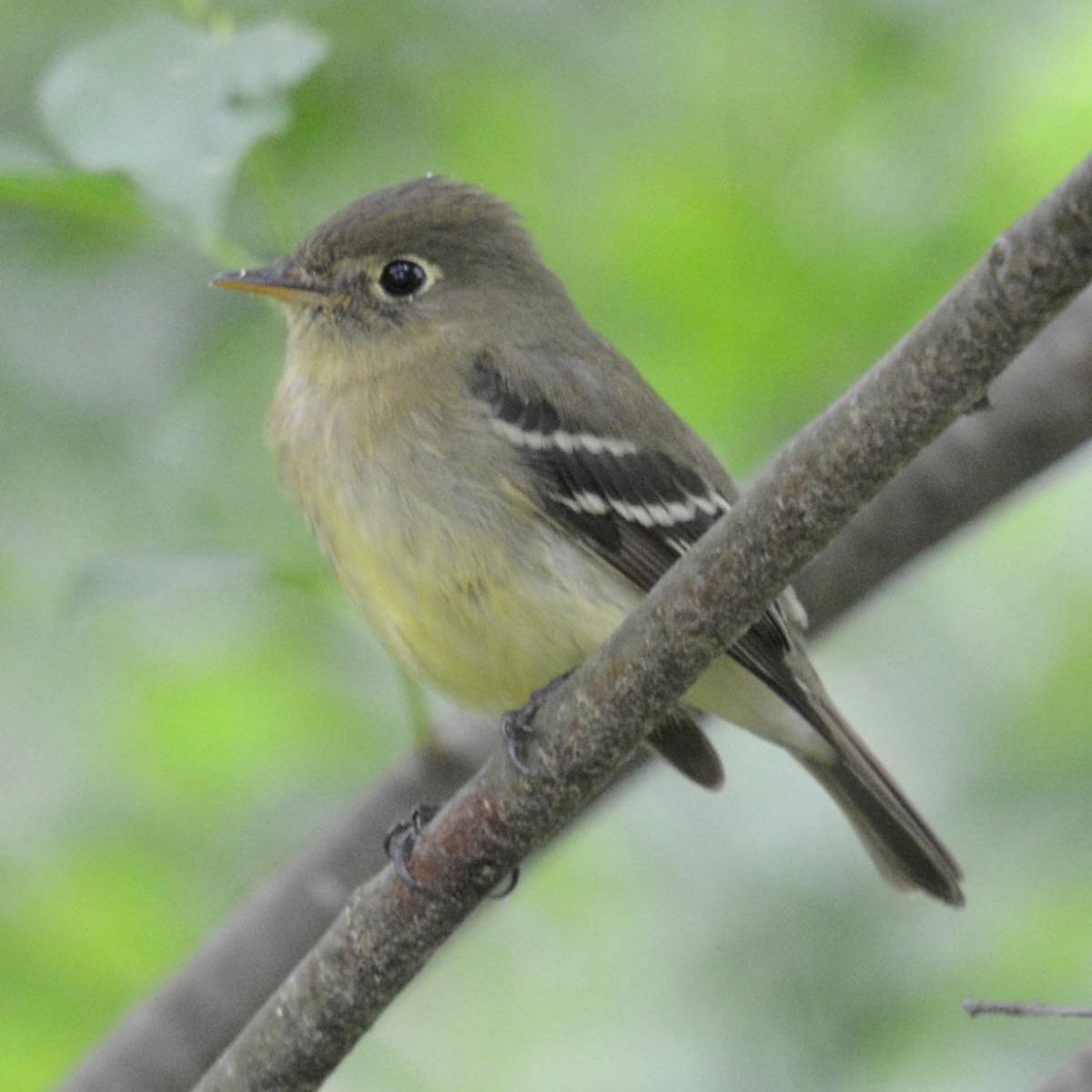
Rare/unusual/notable species seen in 2025 include Snow Goose in January, American Black Duck in February, Greater White-fronted Goose in March, Glossy Ibis in April, Yellow-bellied Flycatcher in May, Barred Owl in June, Cliff Swallow in July, Purple Martin in August, Bobolink in September, Lincoln’s Sparrow in October, Surf Scoter in November, and Redhead in December.
Trying to predict first time species sightings at BLBS for 2026 is half guesswork and half data review. How about a Cave Swallow in March, and a Golden Eagle in September…
| | Bobolink observed at Beaver Lake in September 2025 | | Yellow-bellied Flycatcher observed at Beaver Lake in May 2025 | | |
Christmas Bird Count Results
Thank you to all who participated this year!
| | |
Buncombe County - December 27
by John Koon
We had 36 people participate on 12 field teams and two feeder watches. This year's totals yielded remarkably stable numbers from recent years. We recorded 73 species, the same as last year and one more than 2023. Overall, the birds counted numbered 5009 individuals
- Top 5 birds: 681 crows, 284 song sparrows, 269 robins, 255 Canada geese, and 254 American goldfinches
-
Notable finds: vesper sparrow, only the sixth time this species has been counted (but 52 were counted in 1980!?), and a red crossbill for only the 5th time ever
- 46 fish crows were counted, a new high.
- Nine great horned owls were counted! While GHOs have been counted in 31 of our 52 years, the previous high count was only 5.
| |
Henderson County - December 28
by Kevin Burke
We had 27 participants with 8 teams. It was an interesting year. We were a little below average with the species total. We tallied 76 species for the count, we usually get around 90. There were some misses, but we managed to put together a good count.
- Most numerous bird: American Robin (1,336)
- New birds for the count: Ruby-throated Hummingbird, Surf Scoter
- Birds with new high counts: Great Horned Owl (7, previous 4)
- Birds that tied high counts: Ross's Goose (1), Eastern Screech Owl (4)
- Birds we missed that have been on 20 or more counts in the past: American Woodcock, Brown Creeper, Wilson's Snipe, American Pipit, Pine Warbler, Rusty Blackbird, American Coot, Green-winged Teal, Wild Turkey
| |
Transylvania County - December 15
by Steve Matadobra, Mary Leone & Michael Plauché
We had 32 participants with 20 teams. Despite the cold, we were able to identify 80 species totaling nearly 4000 birds!
- Most numerous species: American Crow (425), American Robin (308)
- Notable finds: Ross's Goose (4), Rusty Blackbird (2), Fox Sparrow (8), American Pipit (54).
|
Birds, Backyards, and the Blue Ridge Mountains
What the 2025 Great Backyard Bird Count Tells Us & How You Can Help
By Paula Caycedo
| |
Each February, thousands of birders across the world take part in the Great Backyard Bird Count (GBBC), -organized by Cornell Lab of Ornithology, Audubon Society, and Birds Canada- creating a powerful snapshot of where birds are, and how they’re using the landscape during the heart of winter. The 2025 GBBC once again highlighted North Carolina as a birding hotspot, with especially high numbers along the coast and major wetlands. But a closer look reveals an important story unfolding closer to home in the Blue Ridge Mountains.
| |
Compared to coastal and Piedmont counties, Blue Ridge counties tend to report fewer total birds during the GBBC. This isn’t because our mountains are less important; quite the opposite. Winter birding in the Blue Ridge is shaped by dense forests, steep terrain, and colder conditions that make birds harder to detect and observers fewer in number. Many mountain species occur at lower densities and don’t gather in the massive flocks typical of coastal waterfowl.
What stands out instead is diversity. Counties such as Buncombe, Transylvania, Haywood, Clay, and Henderson recorded a wide range of species during the 2025 count, particularly forest birds and species associated with mixed woodland–edge habitats. Buncombe County ranked among the most species-rich counties in the state, demonstrating how participation and accessible habitat can strongly influence what we document.
This distinction matters for conservation. The Blue Ridge Mountains provide continuous forest cover, elevational gradients, and climate refugia that are increasingly important as temperatures warm and habitats fragment elsewhere. While winter bird counts may not produce dramatic numbers here, they reveal the steady presence of resident and overwintering species that depend on intact forests, clean water, and connected landscapes. Just as importantly, the data remind us that conservation does not stop at public lands and protected areas. Many GBBC observations in the Blue Ridge came from parks, small wetlands, and backyards. That means individual yards, especially those managed with native plants, are part of the region’s bird habitat network.
| |
Backyard Habitat Tip: Feed Birds Where It Matters Most
Caterpillars are birds’ main food, especially for the young. Plants, not feeders, support this need.
Certain keystone plant species support an exceptional number of caterpillars and other insects, forming the backbone of local food webs. Without them, ecosystems break down—even if many other plant species are present. As Homegrown National Park emphasizes, planting just one or two keystone species can significantly help restore biodiversity.
If you want to support birds in your own yard, start here:
Trees (top caterpillar producers):
Oaks (Quercus), Maples (Acer), Pines (Pinus)
Shrubs:
Serviceberry (Amelanchier), Dogwood (Cornus), Cherries & Plums (Prunus)
| | |
Wildflowers:
Goldenrods (Solidago), Black-eyed Susans (Rudbeckia),
Asters (Symphyotrichum), Joe-Pye Weed & Boneset (Eupatorium)
To maximize impact, aim to create a garden with multiple strata—trees, shrubs, herbaceous plants, and a natural ground layer. Reduce mowing, avoid pesticides, provide a source of clean water, keep cats indoors, protect your windows from bird collisions, diminish the artificial lights, and leave the leaves. Fallen leaves shelter overwintering insects that birds depend on in spring.
Plant native. Grow caterpillars. Feed birds.
Join Us This February
The next Great Backyard Bird Count will take place February 13–16, and everyone is invited to participate. Whether you’re an experienced birder or just curious about the birds in your neighborhood, GBBC is an easy and rewarding way to get involved.
Invite your friends, family, neighbors, and students to join you. By counting birds together and creating bird-friendly spaces, we deepen our connection to the Blue Ridge landscape and support the region's wildlife. Every checklist adds to the picture. Every bird-friendly yard helps. Every participant matters.
Why It Matters
The Great Backyard Bird Count shows that what we do in our own yards and communities matters for conservation. By creating bird-friendly spaces and joining community science, we help keep the Blue Ridge strong for birds—now and for future generations.
If you want to learn more about pollinator habitats in Asheville and Western North Carolina, visit Bee City Asheville, Certify your Habitat Program.
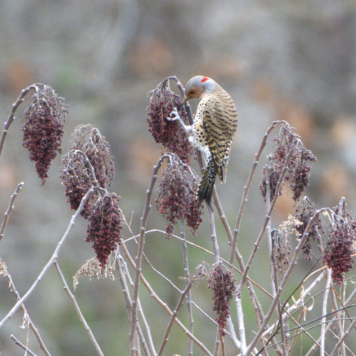
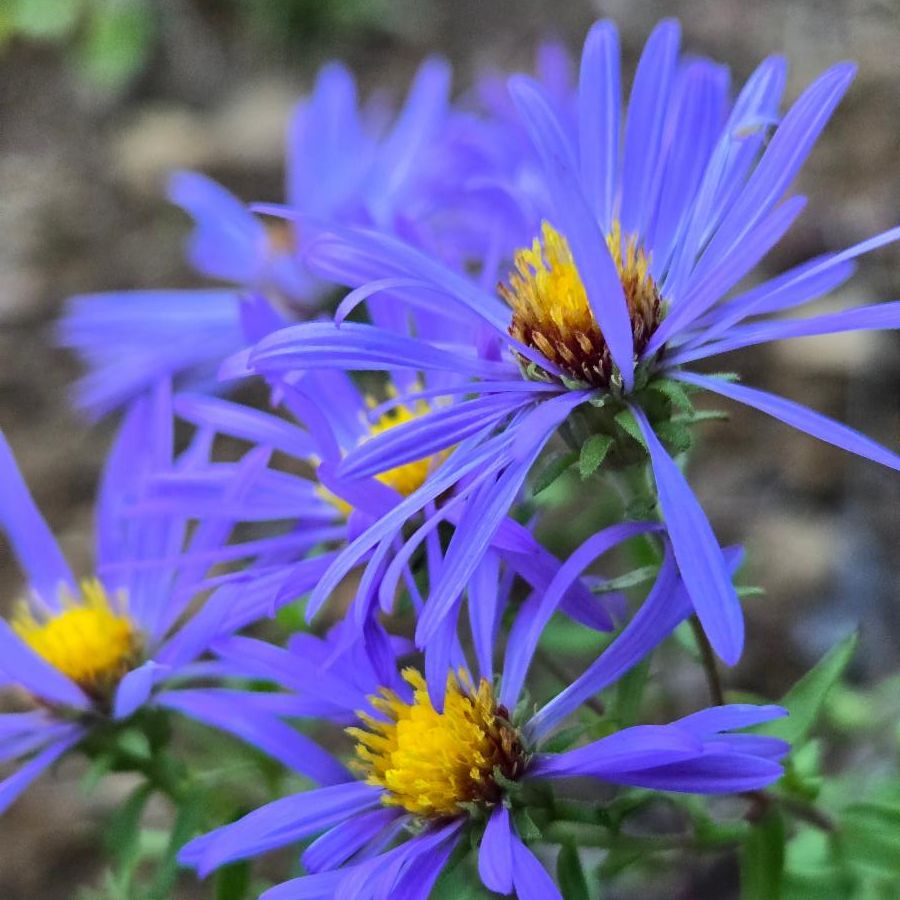
| | Photos: Northern Flicker, by Mitch Covington; Asters by Paula Caycedo | | |
Advocacy in 2025
by Danielle DiBella-Lenaway
As a New Year is upon us it's time for reflection of all the wins for our birds in 2025. This was a special year as it marked Audubon's 120 years anniversary! Successful advocacy led to protection of 624,000 acres in California's Mojave Desert and millions of acres are now being conserved through efforts in Latin America and Canada. Final results from the Great Backyard Bird Count highlighted diverse species like the Bonaparte's Gull, Emperor Penguin and Spendid Fairywren.
Closer to home North Carolina made progress in major restoration at Pine Island Sanctuary in the Outer Banks and it was a record breaking summer for bird banding on the coast. A new motus tower was built and urban forestry programs were developed. Senator Bill Rabon partnered with Audubon to advance a suite for bird friendly native plant policies in an omnibus bill at the NC General assembly. Advancements have been made on ground habitat protection on the Cape Fear River. It's because of you that our flock of bird advocates grew to 70 that attended the Advocacy Day at the NC Legislature. I have been part of the Blue Ridge Audubon Chapter for many years now and I am thankful for all of those who have volunteered to save our birds and their habitats. Here's to a wonderful 2026 in hopes of lots more good bird news ahead.
| | About the Blue Ridge Audubon Chapter | | |
Blue Ridge Audubon is a chapter of the National Audubon Society, serving Buncombe, Henderson, and surrounding counties in western North Carolina.
We are a 501(c)(3) nonprofit organization. Donations are
tax-deductible to the extent
allowed by law.
Raven's Nest Editor:
Jennie Burke
jennifer_bradbury85@yahoo.com
| | |
Blue Ridge Audubon Chapter
PO Box 18711
Asheville, NC 28814
Blue Ridge Audubon's mission is to protect birds and the places they depend on. We believe that a world in which birds thrive is a world that benefits all living things.
Our vision is a vibrant and just community where the protection of birds and our natural world is valued by everyone.
| | | | |