| | |
The
Raven's
Nest
October
2025
| | |
Birding Events
Join us for birding on these Saturdays. Free and open to all.
October 11, 9 am
Jackson Park
October 18, 9 am
Patton Park, Hendersonville
October 25, 8:30 am
Lake Julian Park
registration required
November 1, 9 am
Beaver Lake
Please note that our Saturday Bird outings begin at 9 am starting in October!
More about our monthly bird outings
| |  | |
Programs/Events
Beaver Lake Workdays
Tuesdays: October 7, 14, 21, 28
10 am - 12 pm
Beaver Lake Bird Sanctuary
Hawaiian Birds Program
Wednesday, October 29, 7 pm
with Kevin Burke
New Venue - AB Tech, Asheville
Birds & Brews Trivia
Sunday, November 2, 4 - 6 pm
Turgua Brewing, Fairview
| | | |
Friends,
It has been an incredible fall migration season in Buncombe County and across western North Carolina this year. The northern migrants like the Cape May Warbler and the Philadelphia Vireo seem to have been seen regularly and in good numbers for most of September, and almost every day there are reports of great numbers of warblers being seen, even in people’s back yards. And the number of rarities seen this year is incredible. Local birders have seen Buff-breasted Sandpipers, Soras, Nelson’s Sparrows, Caspian Terns, a Golden Eagle, a Say’s Phoebe and a Yellow-crowned Night Heron, none of which are regulars here. It has been a great year for rare birds.
In general, we conservationists have done a pretty good job of protecting rare species, and particularly with North American Birds. While we have lost the Imperial Woodpecker and the Bachman’s Warbler, success stories like the Whooping Crane, the Kirtland’s Warbler and the Bald Eagle are much more common. The Audubon Society was founded 120 years ago to protect the Great Egret and other plumed wading birds whose numbers had plummeted as targeted victims of the millinery trade. And other species have made great recoveries, like the expansion of Sandhill Cranes in the eastern US.
So if we are so good at responding to protect threatened species, why have we lost 3 billion birds in the last 50 years? Well, a recent study concludes that the overall loss of bird numbers is being driven by large losses in the populations of our more common birds. While some bird losses are very specific to a particular pesticide like DDT or a very specific habitat requirement that can be protected, more prevalent changes to our landscape are affecting bird populations much more significantly than we realize. The “optimization” of farmland that has eliminated hedgerows and minimized weed growth has had devastating effects on grassland bird populations. Does it seem like there are less bugs around the floodlights in summer now compared to 20-30 years ago? Well, that is less food for birds. That perfect, grub-free lawn is also depriving your robins of dinner. And migrating birds continue to fall victim to window collisions day and night.
Which is why it is really important for us all to do what we can to help our common birds thrive too. Turn your lights off at night during migration. Treat your pane glass windows to prevent collisions. Plant native plants in your yard and take care of your trees and shrubs to help them provide food for birds. Most people live in rather ordinary places with rather common birds. And it turns out that these are the places and birds most in need of care and protection.
John Koon
| | |
The Beauty and Challenges of Hawaiian Birds
Wednesday, October 29, 7 pm
AB Tech Asheville
with Kevin Burke
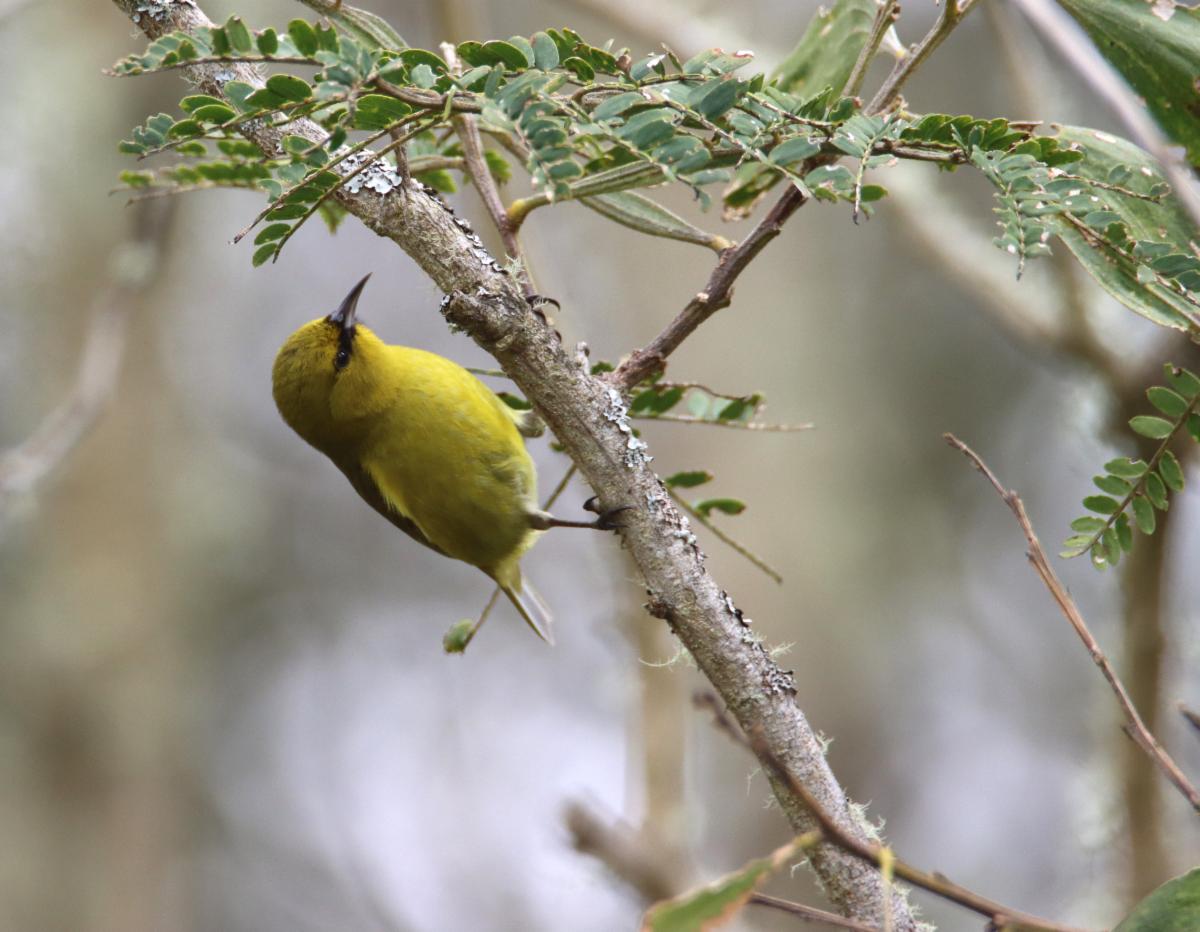
Join Kevin Burke on a tour of Hawaii and its beautiful birds! We'll explore the avian highlights from three main islands: Oahu, Hawaii, and Kauai and learn about the challenges facing the native Hawaiian birds and efforts to slow the rapid decline of these species. As a guide for Victor Emmanuel Nature Tours (VENT), Kevin has led several recent birding trips to Hawaii. Hawaiian birds are in a constant battle for survival, from the Palila to the 'Alala see what is being done to save these magnificent endemic birds.
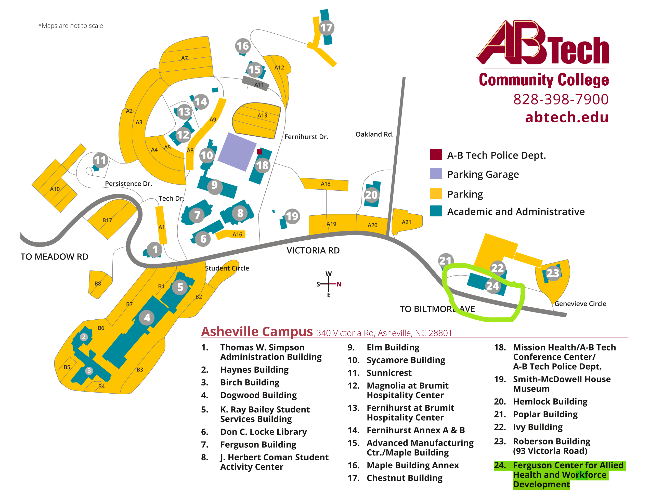
We are trying out a new venue for this in person program. Please join us at AB Tech's Ferguson Center for Allied Health at Workforce Development, 10 Genevieve Cir, Asheville, NC 28801 (building #24 on map below).
| | |
Birds & Brews Trivia:
North Carolina Birding
Sunday, November 2
4 - 6 pm
Turgua Brewing, Fairview
with Kevin Burke
We're back to Turgua Brewing in Fairview for some bird trivia! Join us on Sunday November 2 from 4 - 6 pm to test your avian knowledge and visit with fellow Blue Ridge Audubon members. This time it will be all about birding in North Carolina! Hope to see you there!
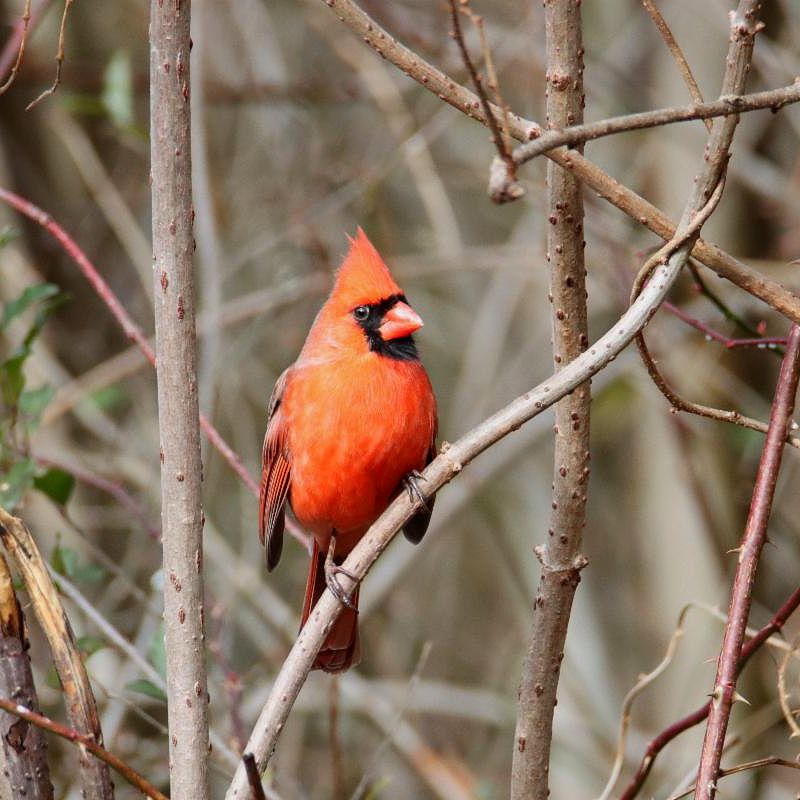
| | Northern Cardinal, North Carolina's state bird, by Kevin Burke | | |
Swift Night Out
by Andrew Laughlin
| | After having to cancel last year's Swift Night Out due to tropical storm Helene, it was great to return to this annual tradition on September 25th, where several hundred people showed up to watch the swifts descend into the Rankin Ave. chimney. The weather was perfect, and the clouds and sunset put on a spectacle while the birds were gathering prior to their descent. We estimated about 1000 swifts in all eventually made their way into the chimney to roost for the night. |
| |
Butterfly Dedication
by Tom Tribble
| | |
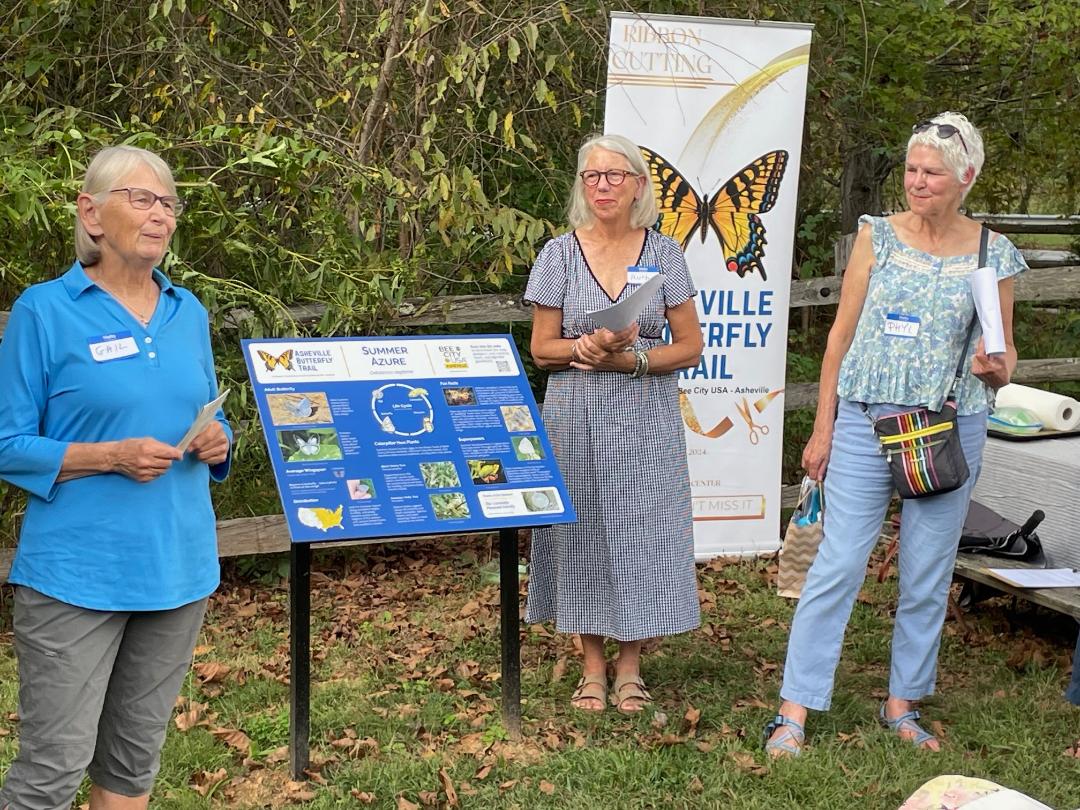
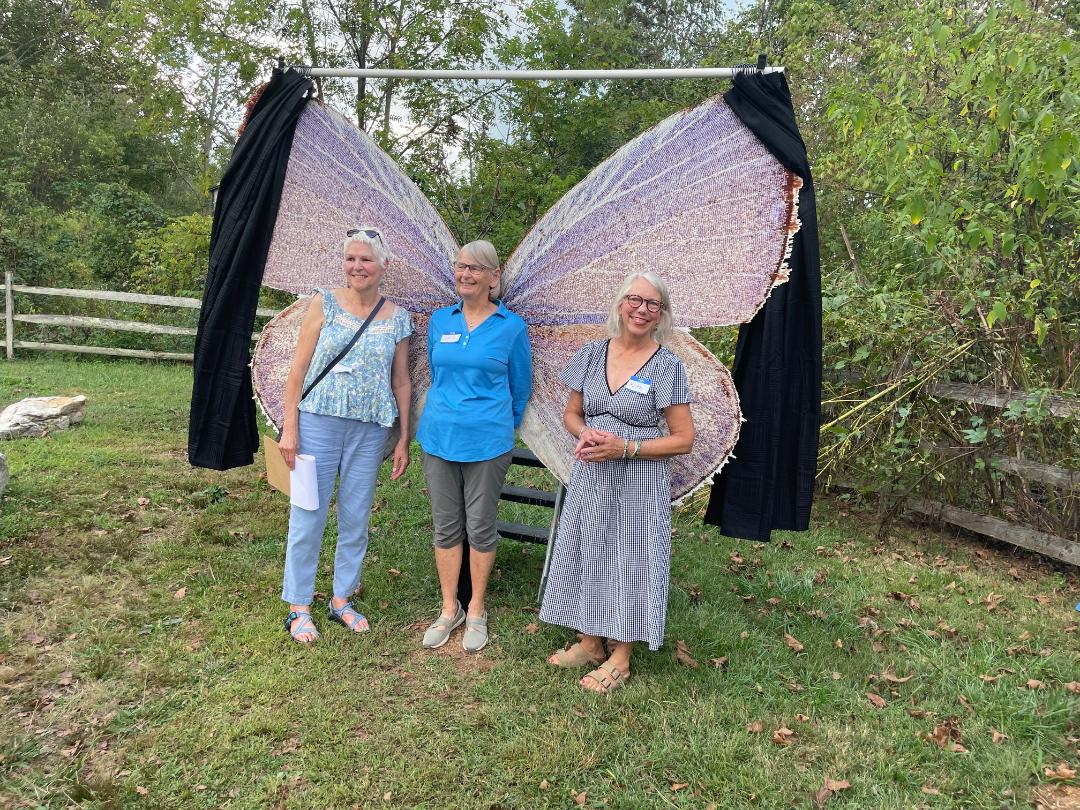
Blue Ridge Audubon and Bee City USA-Asheville dedicated the Summer Azure sculpture at the Beaver Lake Bird Sanctuary on Sunday September 28. More than 25 folks attended. Blue Ridge Audubon is proud to host the 4th station on Bee City's Asheville Butterfly Trail. Our thanks to Phyllis Stiles, founder and chair of Bee City USA-Asheville, Ruth Gonzalez, Bee City-Asheville and Reems Creek Nursery. and especially Gail Carmody, who donated the sculpture. We encourage you to stop by the Beaver Lake Bird Sanctuary to see this beautiful sculpture and to read the accompanying sign.
| |
Butterflies and other pollinators lay millions of caterpillar eggs on native plants that are critical to our resident and migratory birds. Bee City USA-Asheville plans to expand the Butterfly Trail to 15 stations. See here https://beecityasheville.org/avl-butterfly-trail to learn more about this wonderful project.
| Photos by Tom Tribble: Gail Carmody, Ruth Gonzalez, Phyllis Stiles | | |
Plants for Birds
by Jennie Burke
| |
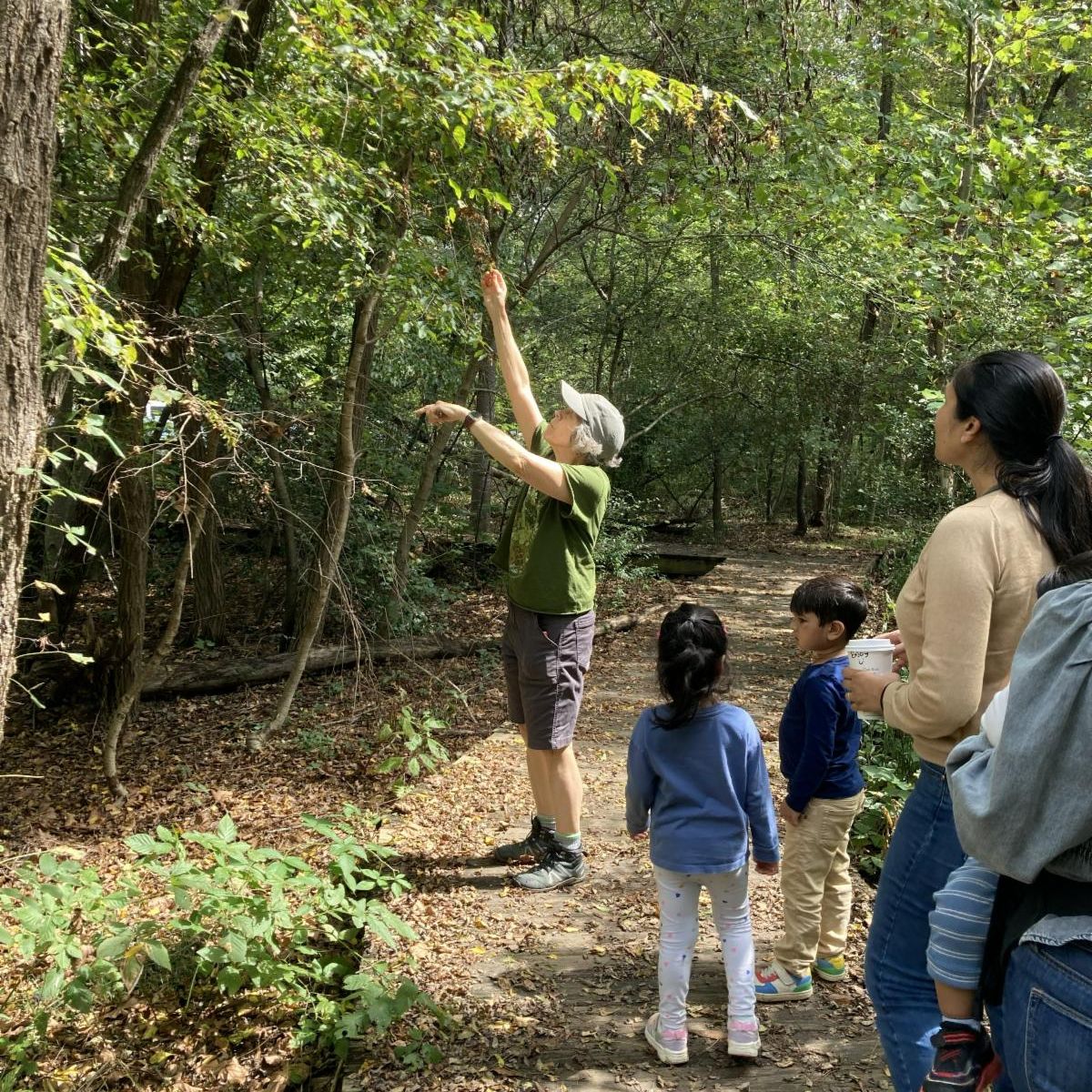
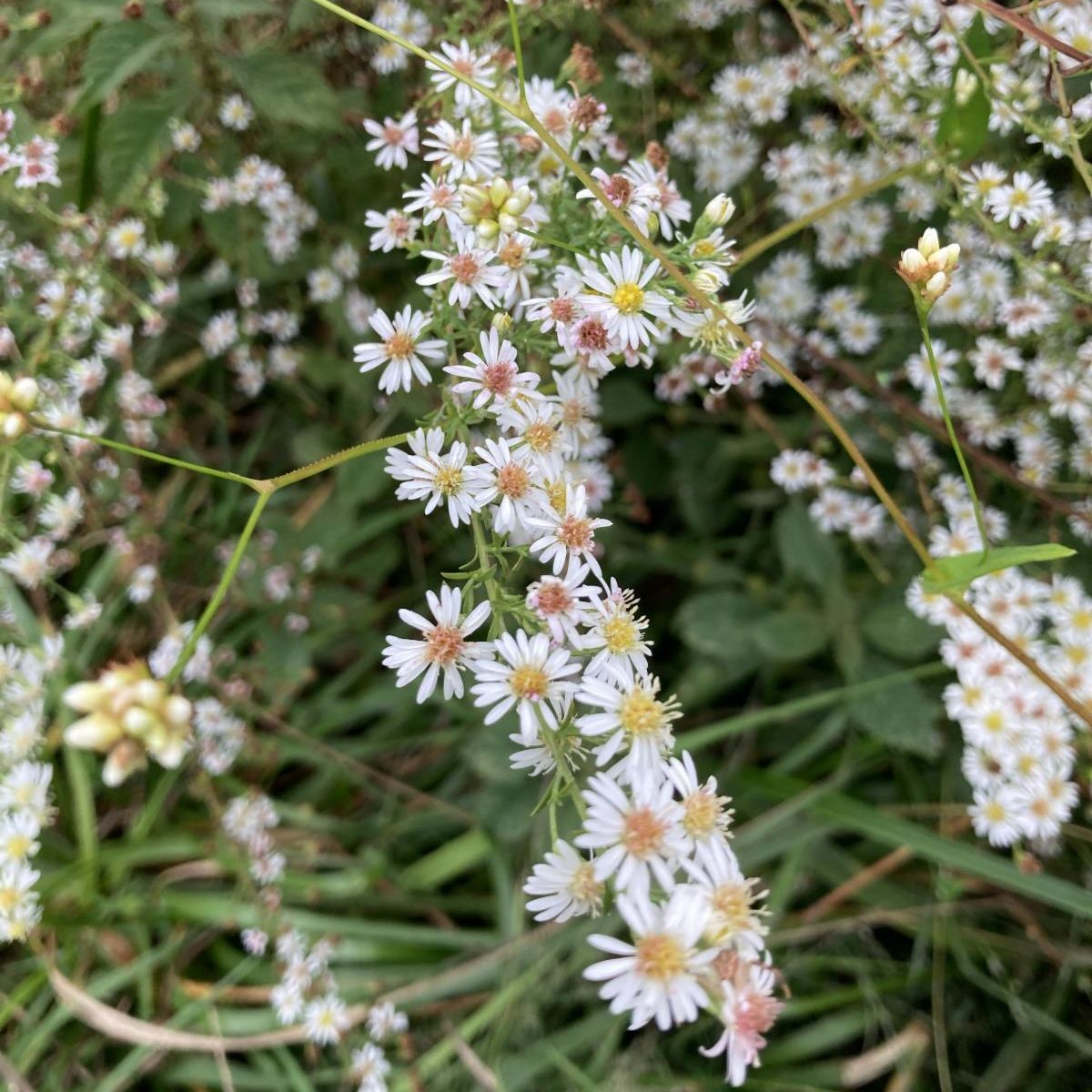
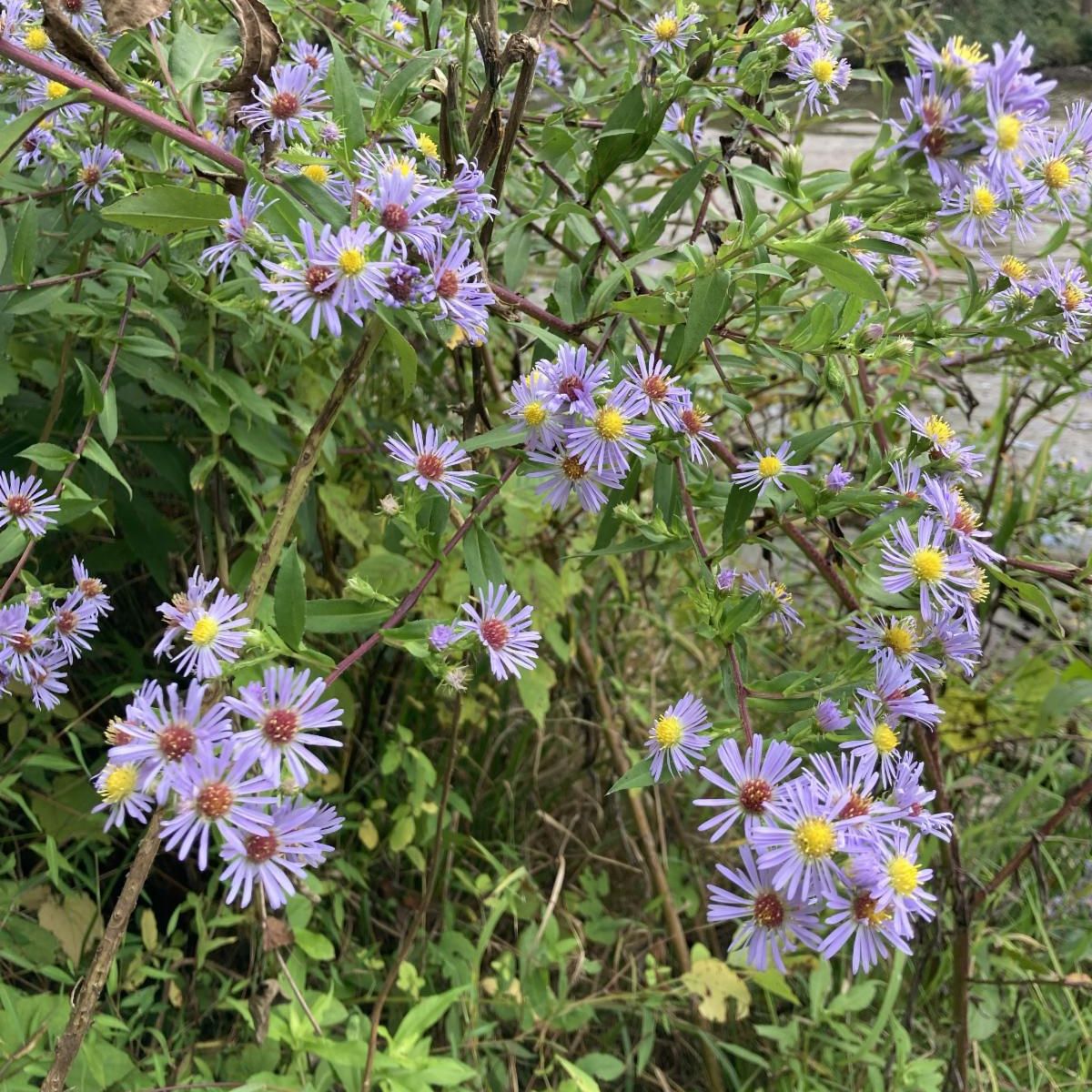
We had a great time on our last Plants for Birds Walk of the year led by Florrie Funk. Florrie showed us lots of beautiful asters. Twelve participants attended the afternoon walk at Beaver Lake on Saturday, September 27. Florrie showed us lots of plants that birds rely on, not just for their seeds, but also as host plants for the caterpillars that many feed on. Asters are particularly important for birds and the sanctuary was filled with lots of beautiful blooms!
| | |
Calico Aster, Symphyotrichum lateriflorum and Swamp Aster, Symphyotrichum puniceum
by Jennie Burke
| | |
Motus Tower Update
by John Koon
| |
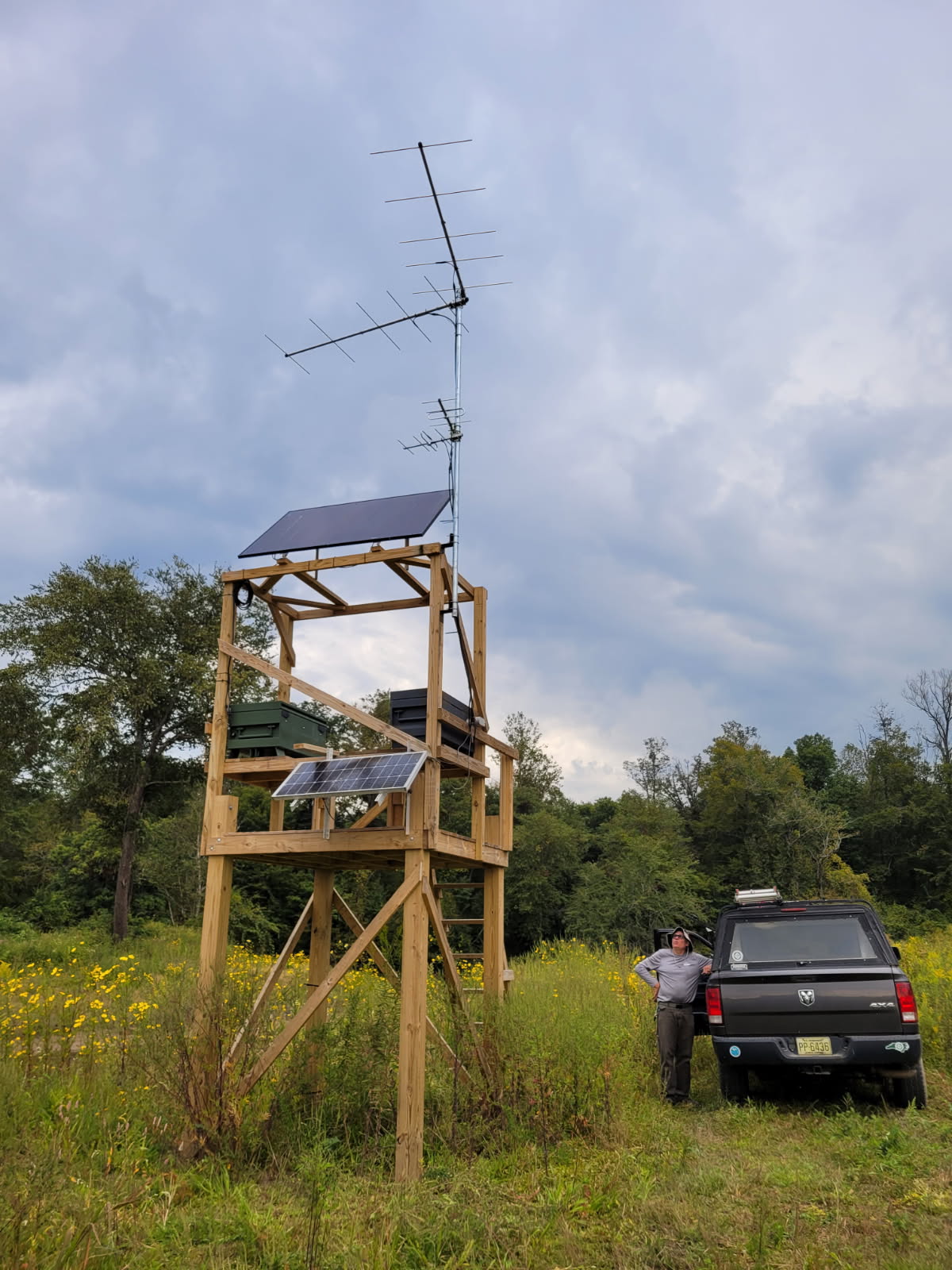
The Motus tower that we funded in the 2023 Birdathon at Mud Creek—and which miraculously survived the Helene flooding intact— has disappointingly not had any bird detections in the 20 months it has been operational. So in September we took advantage of the presence of regional Motus expert Garrett Rhyne to do a radio frequency analysis of the station—and found that indeed there was a significant amount of radio magnetic “noise” being emitted from nearby airport facilities that were preventing the antennae from detecting airborne (really, birdborne) transmitting tags. Within a week, the amazing team at North Carolina Wildlife Resources Commission relocated the entire Motus station two miles south to the King’s Bridge Conservation Easement, and that new station is up and running—which you can view at this website.
Also, UNC-Asheville also finished the installation of their Motus tower on campus, and it is up and running as well. Here is its web page.
|
| |
Native Plants Week
by Audubon NC
| | |
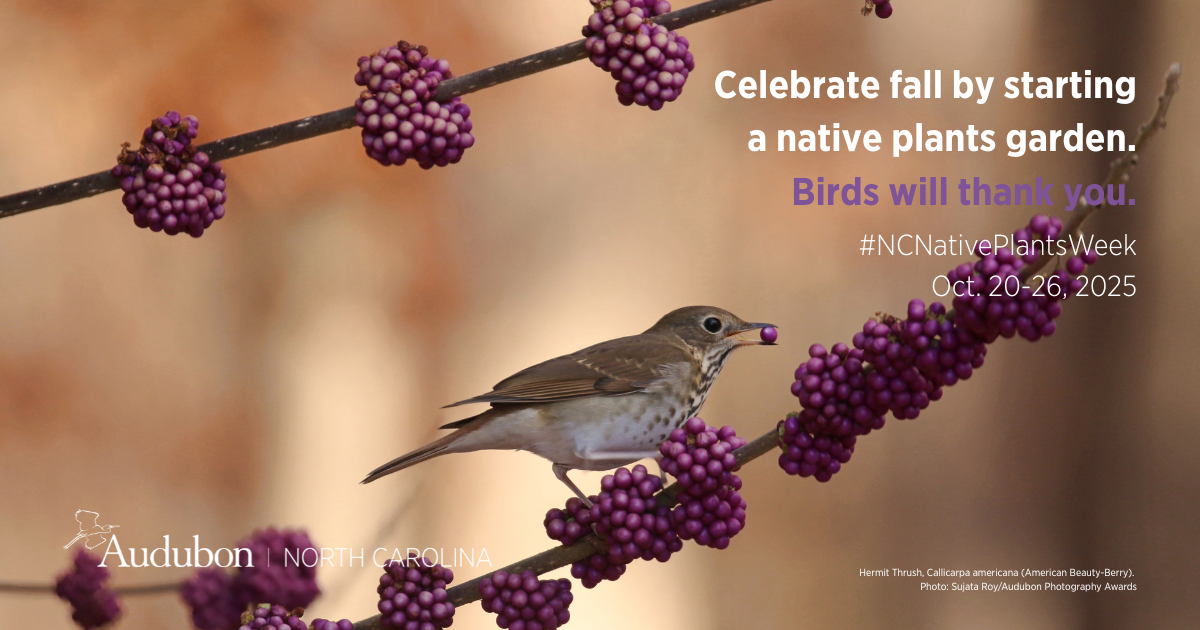
North Carolina Native Plants Week is Oct. 20-26! Celebrate by planting native this fall–the best time of year to plant.
Native plants are good for wildlife and people as they require less maintenance and provide abundant food and habitat for birds, insects, and other backyard critters. Creating healthier, more diverse ecosystems even in small areas like backyards and urban gardens.
This year Audubon NC partnered with Senator Bill Rabon once again to advance a suite of bird-friendly native plant policies in a bill at the NC General Assembly. Among the proposals are the prohibition of mowing on NC DOT rights-of-way during the month of May to help early-season pollinators and birds as well as an invasive plants removal plan for state parks and highways. Get the full rundown. This recent win builds on native plant wins passed in recent years…
This is great news for birds and people but we still need to encourage others—homeowners, businesses, government agencies—to do the same.
| | About the Blue Ridge Audubon Chapter | | |
Blue Ridge Audubon is a chapter of the National Audubon Society, serving Buncombe, Henderson, and surrounding counties in western North Carolina.
We are a 501(c)(3) nonprofit organization. Donations are
tax-deductible to the extent
allowed by law.
Raven's Nest Editor:
Jennie Burke
jennifer_bradbury85@yahoo.com
| | |
Blue Ridge Audubon Chapter
PO Box 18711
Asheville, NC 28814
Blue Ridge Audubon's mission is to protect birds and the places they depend on. We believe that a world in which birds thrive is a world that benefits all living things.
Our vision is a vibrant and just community where the protection of birds and our natural world is valued by everyone.
| | | | |