|
Happy November! Although as I write this newsletter, it’s 70°F and sunny in San Francisco. If your kids went trick-or-treating last night, today starts the annual battle over candy consumption. May the odds be ever in your favor!
Take breaks! Drink water! And mostly treat yourself and everyone around you with grace!
| |
Today is Dia de los Muertos. For those that commemorate, I hope you have a wonderful celebration remembering those who came before and sharing traditions with your family. If this isn’t your holiday, it’s still a great time to think about those who have passed. | Today is the start of American Indian Heritage Month. How will you teach your kids about Native history, including land theft and genocide? Here is one helpful video. Remember that Native American stories are alive and evolving. Here’s a list of movies of contemporary Indian narratives. I’m planning to watch Smoke Signals next week. If you haven’t read There There yet, get on it! Bay Area peeps, it’s set in Oakland! | |
For our adoptive family community, National Adoption Day is November 9. If you post anything on your socials, tag me on Insta @villagewellparenting or Tiktok @queerbrowndad so I can share your messages as well. | |
|
Friday, November 3 at 12 PM PDT
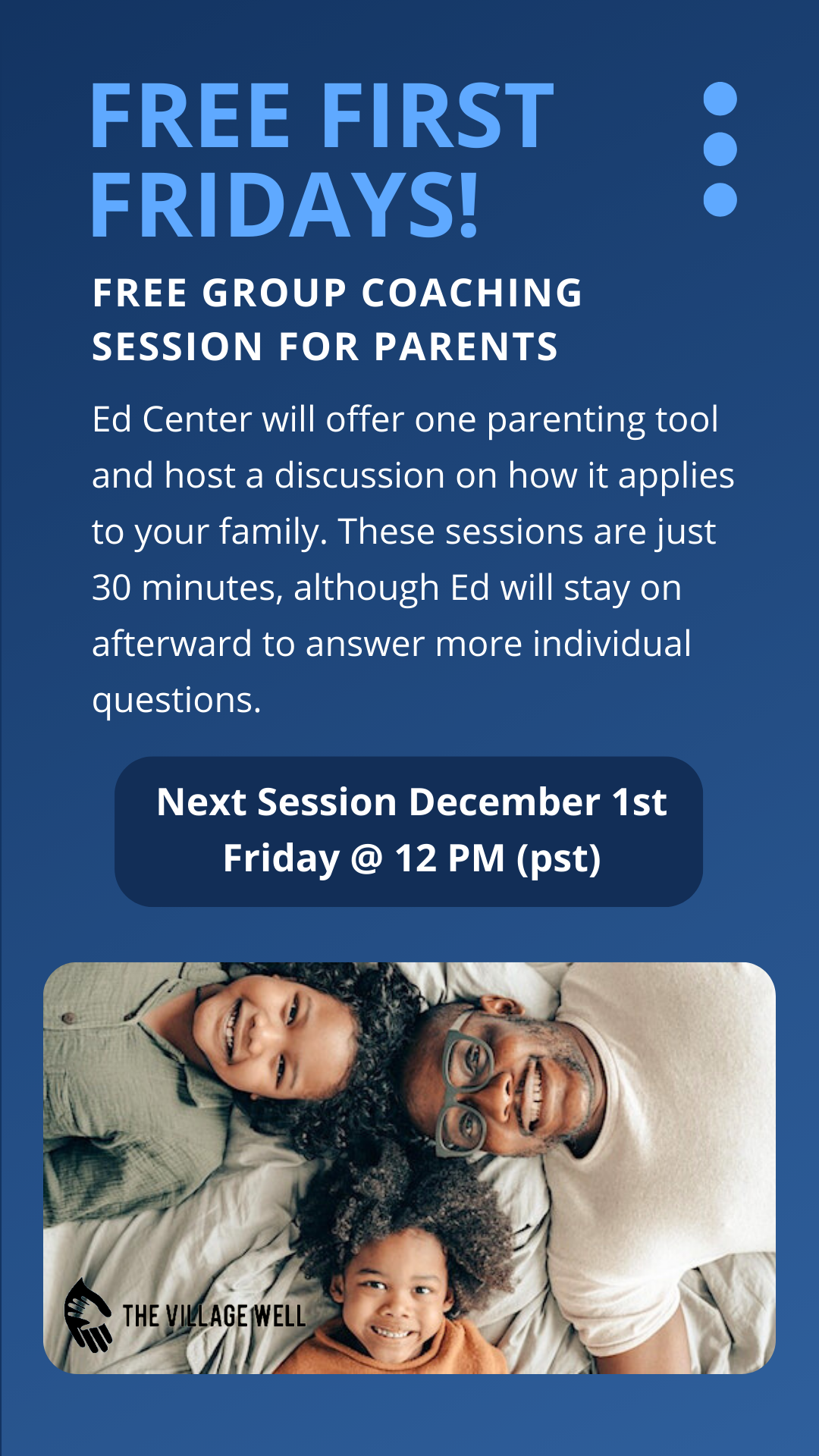
Free First Fridays with Parenting Coach Ed Center Featuring "All the Sibling Drama" in November is sold out, but December's First Friday is still available!
Friday, December 1 at 12 PM PDT
Ed will offer one parenting tool at your request and host a discussion on how it applies to your family. These sessions are just 30 minutes.
Ed will stay on afterwards to answer more individual questions.
| |
|
|
Listen to my episode on The Peaceful Parenting Podcast.
ABOUT
In this episode, Ed Center shares his personal journey as a queer Brown dad, raising his children with a different approach from the cultural norms he grew up with.
| |
|
|
Email a friend!
Just below is the final part of a four-part series on generational wisdom and trauma. I hope you’ve enjoyed it. I’d be so grateful if you shared it with a friend who would benefit. Here’s an email to cut and paste:
Hey Friend!
I follow this parent educator named Ed and he wrote a newsletter series that I think you enjoy. It’s about detangling cultural wisdom from intergenerational wounds. Check it out here:
Part 1
Part 2
Part 3
Part 4
Send it now while it’s fresh on your mind!
| |
|
Generational Wisdom and Trauma
So you’ve recognized that you have some childhood or generational wounds that impact your parenting. You don’t want to pass these onto your children, but you still get triggered with certain behaviors. Congratulations on the recognition! You’ve completed the first step. Now you can choose to keep doing the same thing and get the same results, or you can take the red pill and dive into fear, confusion, some of the hardest work you’ve ever done, with the possibility of transformation.
| |
|
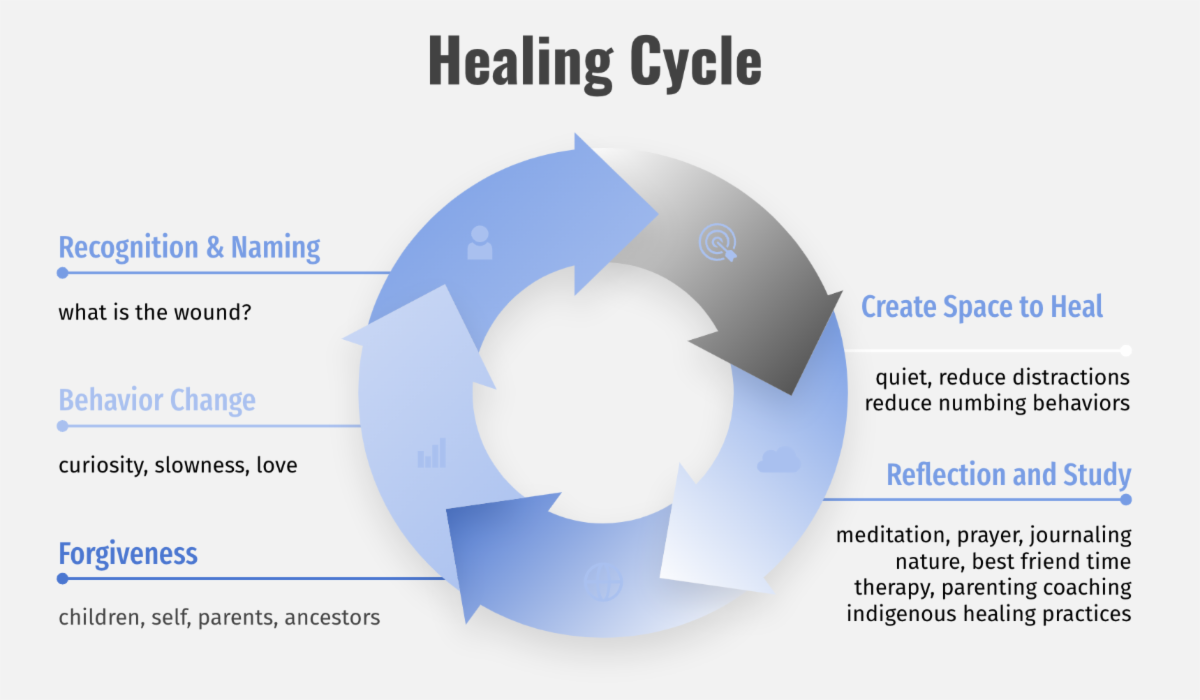
Recognition and naming (you’ve already done most of this!)
If you have been reading this newsletter and doing the work, you have already made the connection between a triggered reaction and your past. Name it. When you name it, you can understand it and begin to heal. When I understood that the pain in my heel was plantar fasciitis, I made specific accommodations to rest, rehabilitate, and prevent reinjury. Some possible names for your wound: insecure attachment, rage, impulse control, caretaking, fear of conflict, numbing, freezing, overwhelm, and SO MANY OTHERS!
| |
In the naming process, notice the patterns that emerge with your trigger:
- What is the repetitive situation that triggers you?
- How is this connected to something from your childhood?
- How is your adult emotional response similar to or different from what you experienced in childhood?
- Are there contexts when you are more likely to get triggered? Common examples include when tired, hungry, frustrated by something else, and after alcohol consumption.
Answering questions like these brings a deeper understanding of the trigger, and helps you to anticipate it before it seizes control of you.
| |
|
Create space to heal
Let’s go back to my plantar fasciitis metaphor. (By the way, don't get this injury, it sucks!) If I want to get better, I can’t just keep doing what I’ve been doing. I need to rest and do my rehab. With generational wounds, rest and rehab mean creating space for deep reflection. You’ll need to create and protect time to do the work. Is this four days away at your friend’s cabin? Waking up 30 minutes earlier to have “me time” in the morning? “Rehab” exercises take time. Plan that time and protect it.
| To create reflective space, you’ll want to reduce numbing behaviors. These include alcohol, weed, other drugs, television, workaholism, social media, processed food, even podcasts. We turn to these activities because they give us fleeting respite from life’s pains. Don’t get me wrong, I looooove me some numbing. On a good Friday night, I might do all of these. Numbing is not healing. To do the hard work, we need to face the wounds. That requires focus and clarity. | |
Reflection and study
This is the injury rehab part, and I recommend concerted effort with the equivalent of a physical therapist. This could be a psychologist, parenting coach (oh, hello!), mindfulness coach, or regular phone calls with your best friend. EMDR is a strange, research-based practice that many people say is life-changing. If you have a religious practice, prayer is powerful - connect with your priest/pastor/rabbi/imam.
Choose your own adventure!
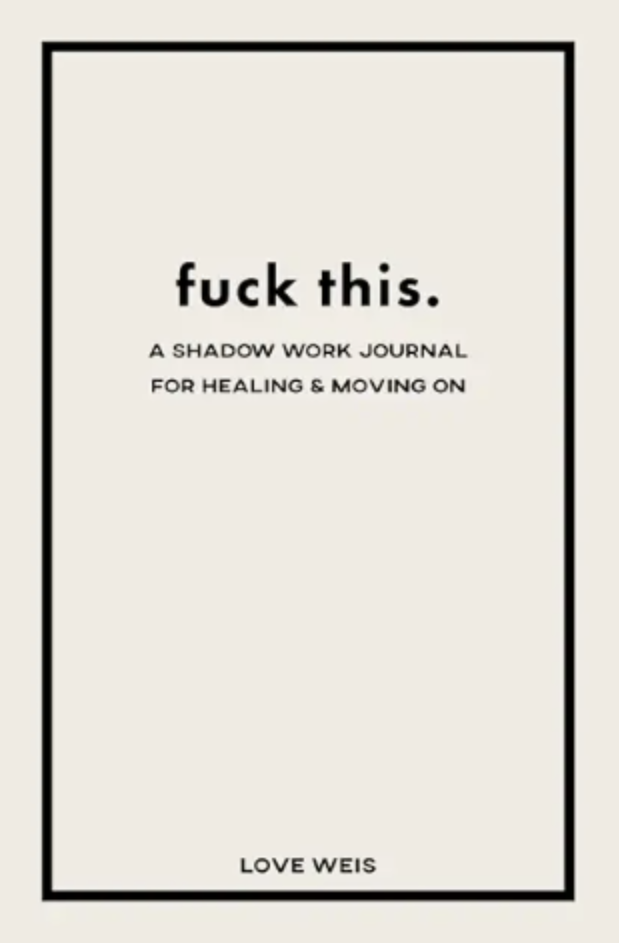
My healing was catalyzed three years ago when I met a Lakota Sioux shaman trained in guided hallucinogenic journeys. I believe we heal best in community - find the right support group for you. Here’s a free, virtual option (not an endorsement, I don’t know this group). Mindfulness and journaling are powerful practices in this phase. I plugged the search words journal + healing into Amazon, and got a ton of hits (again, not an endorsement). Of course, I had to order this one:
| |
|
Forgiveness
In my work with parents, I discovered that reflection ALWAYS leads to a point of forgiveness. This happens in at least three ways:
-
We forgive our children for being who they are. We drop our expectations of the children we imagined, and embrace the kids we have. This leads to deeper love and greater ease.
-
We forgive our parents, caregivers, and ancestors. Your parents did the best they could with what they knew and had, or they were sick. Accepting this releases the hold their faults had on you. If you had loving caregivers, forgiveness helps you to tap into the cultural wisdom that you inherited from them. You can choose whether you want to involve your parents or caregivers in this process, or if this forgiveness is something you do without them. Important note: forgiving and understanding does NOT mean that you should cultivate relationships with anyone. If you’ve cut toxic people out of your life, you can forgive and accept in your heart without inviting their negativity back. Remember, you are doing the work, that doesn’t mean they have. If you choose deeper relationships, you can and should hold boundaries. Your healing journey will help with this.
-
We forgive ourselves. This is the hardest one. We understand that we’ve made many mistakes as parents, and that we did the best we could at the time. These mistakes may be big ones. I work with some parents who have returned from prison, or whose kids spent time in foster care. They all did the best they could and now can make different decisions with growth and healing. We also forgive our childhood selves - for not feeling good enough, for not getting approval, for feeling like disappointments, for feeling responsible for our parents feelings or behaviors, for not being able to stop shitty things from happening.
Remember that forgiveness isn’t sudden, linear, or permanent. We keep learning to accept our kids, our parents, ourselves, all the time, over time.
| |
|
Behavior change
In working to heal your wounds and triggers, you will discover that you are able to be calm in situations that once sent you spiraling. You can respond rather than react. You can access tools. You can lead your children instead of following their behaviors. It’s not quite accurate to say this is the fifth step in the cycle. Rather, as you do the work, you’ll find your behaviors shifting. You’ll find that your reactivity diminishes in frequency, intensity, and duration. Like magic, you’ll find your kids’ behaviors are more regulated as well.
| |
|
The work is never done
You’ll find that as you work to heal, other wounds present themselves. Maybe your trauma response was feeling like you have to fix everything when your kid is upset. In healing that wound, you discover that you have a triggered reaction to mess in your house that is tied in with a your perfectionism. Great - that’s next on the docket! But first, take a break. Binge The Bear while sipping bourbon. That newly discovered wound will be there waiting for you when you are ready.
| |
Other resources
My Grandmother’s Hands
People I love including my husband were glued to this groundbreaking book about healing racialized generational trauma.
How to do the Work
I discovered this self-help book right after my trip (in all senses) with the shaman. I love the half that I’ve read (hey, I have ADHD, I get distracted).
| |
College I’ve started talking about college differently. What I used to hail as the only credible path to success, I’m now discussing as a good option for some people. I’m not alone. In this podcast, one of the most influential journalists of our era asks, “Is College Worth It?” | San Francisco’s Mission High School Specifically this story from Snap Judgement (my favorite pod) that follows three BIPOC students through their final year of high school. | |
Brisk Walking Whenever I coach parents in self-care, I say, “I’m not going to push you to exercise, but you only need to go for a brisk walk for 10 minutes twice a day in order to get mental health benefits.” Here’s some more fascinating evidence. I know… a podcast about walking. Just trust me. Listen while you walk. | |
|
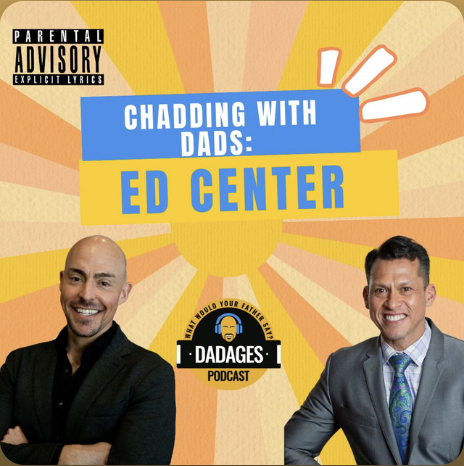
Dadages = Dad + Adages. Listen to my interview on the Dadages Podcast on Youtube, Spotify, or wherever you listen to your podcasts.
| |
|
|
I facilitated four weeks of support groups for parents and caregivers of children with disabilities (including mental health challenges).
| |
|
|
I facilitated four weeks of support groups for parents and caregivers of children with disabilities (including mental health challenges).
| |
|
The Village Well is a community of parents in BIPOC families, focused on attaining more joy, calm, and meaning in family life. We coach parents to prioritize their own healing and wellness, deepen connections with their kids, and learn tools to support better behavior. Services include coaching, courses, and community events. Our support is culturally-grounded and honors your unique family. Ready to stop yelling? | | |
FOLLOW THE VILLAGE WELL ON: |
| | | |