Updates from the Center for Policy Analysis & Research | | |
A Message from the Vice President of CPAR
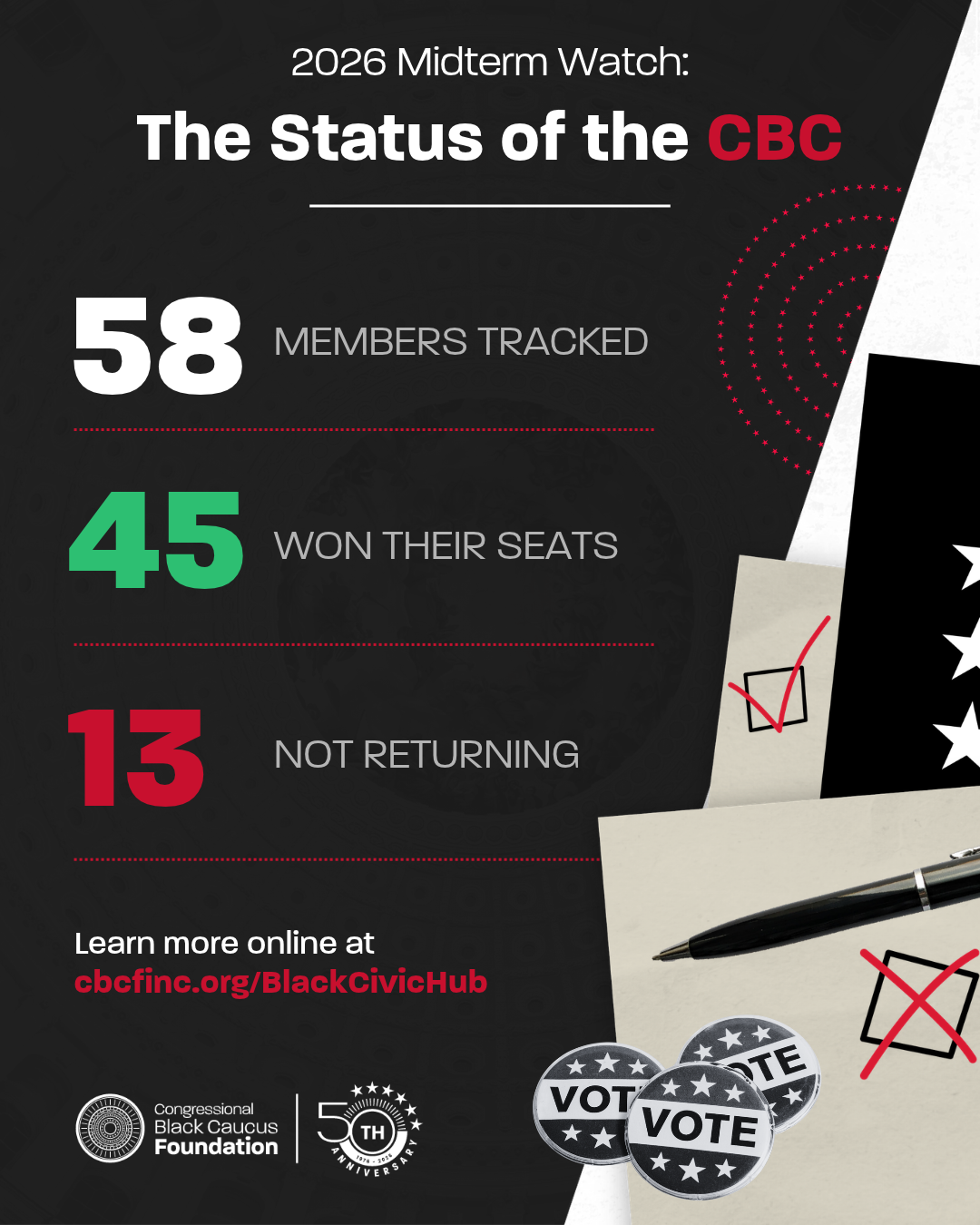
It's been a little more than a week since the midterm elections, and the Center for Policy Analysis and Research continues to track their impacts for Black America and beyond. Black voters cast ballots at near-historic rates, and we saw major wins for Black representation across the country. Despite the challenges created by the Supreme Court's Callais decision (tracked in CPAR's 2026 Midterm Watch website), 45 Congressional Black Caucus members won reelection, nine seats transitioned from departing Black members to newly elected Black candidates, and Black candidates gained six additional seats in Congress. The country also saw historic gains in statewide leadership, with seven Black Senators, including Scott Colom as the first Black Senator elected in Mississippi since the Reconstruction era, and five Black Governors, including the first Black Governors elected in Florida, Wisconsin, and Georgia.
In this final Research Roundup of the year, explore CPAR's latest work on immigration enforcement, our Black Policy Playbook, our commemorative edition of the Journal for the Center for Policy Analysis and Research, and various policy updates. Read, share, participate in our research studies, and sign up for our emails so you are always in the know.
In peace and solidarity,
| | |
New on the CBCF Website
The 2026 midterm elections brought significant changes to the congressional landscape, with important implications for Black political representation. From election outcomes and new congressional seats to ongoing redistricting efforts following the Supreme Court’s decision in Louisiana v. Callais, the future of the Congressional Black Caucus is evolving.
Our updated 2026 Midterm Watch tracks election results, potential changes in CBC membership, and the impact of redistricting on Black representation. Explore the website to see what changed, who won new seats, and what the results mean for Black political representation in Congress.
| | |
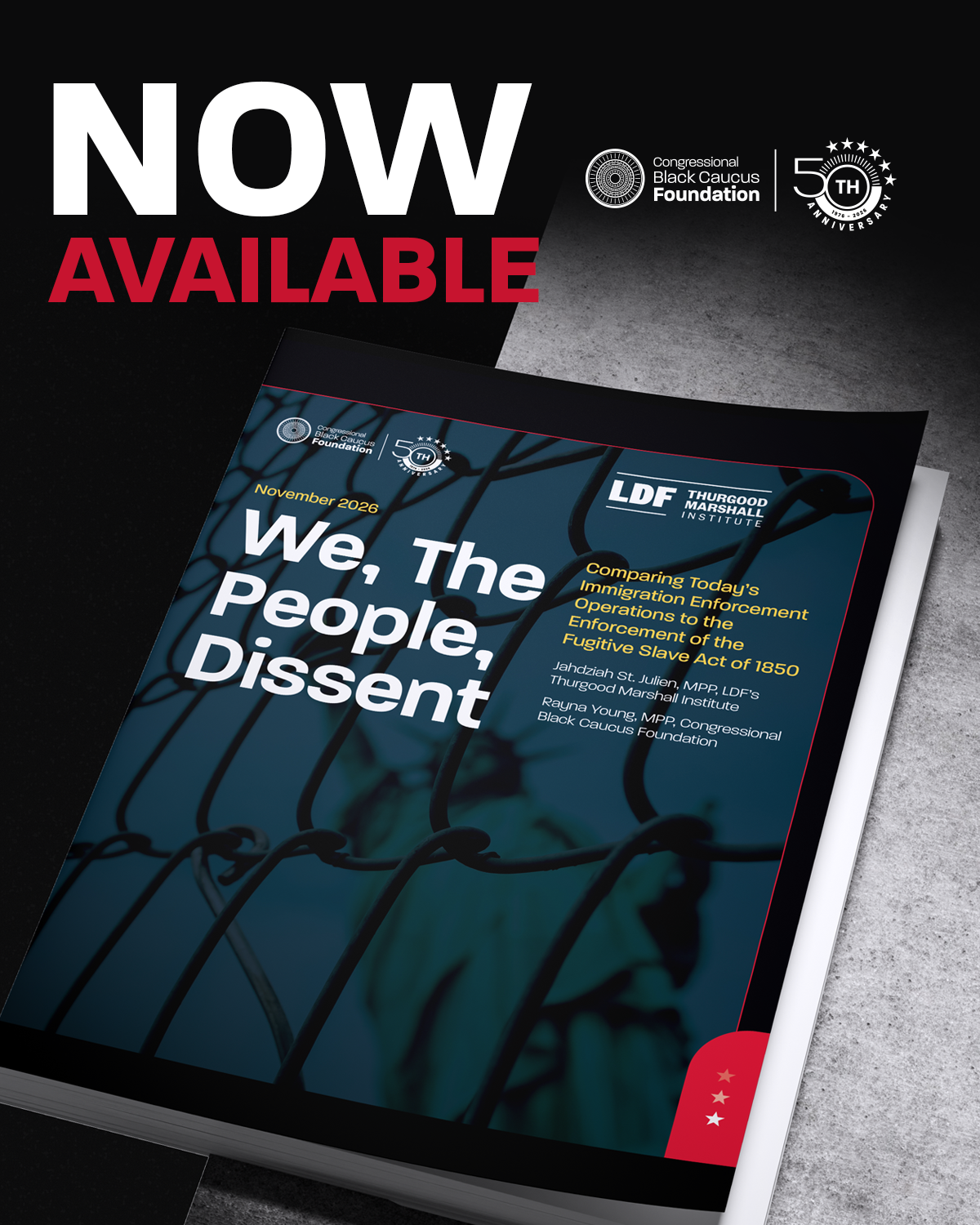
We, The People, Dissent: Comparing Today’s Immigration Enforcement Operations to the Enforcement of the Fugitive Slave Act of 1850
Developed in partnership with the Legal Defense Fund’s Thurgood Marshall Institute, this brief compares today’s immigration enforcement operations to the federal enforcement of the Fugitive Slave Act of 1850. It examines parallels in racial profiling, dehumanizing rhetoric, and violent enforcement tactics, then highlights the nonviolent strategies communities used then and now to protect their neighbors, from personal liberty laws to “know your rights” trainings and countersurveillance, illustrating that when communities organize together, change is possible.
| | |
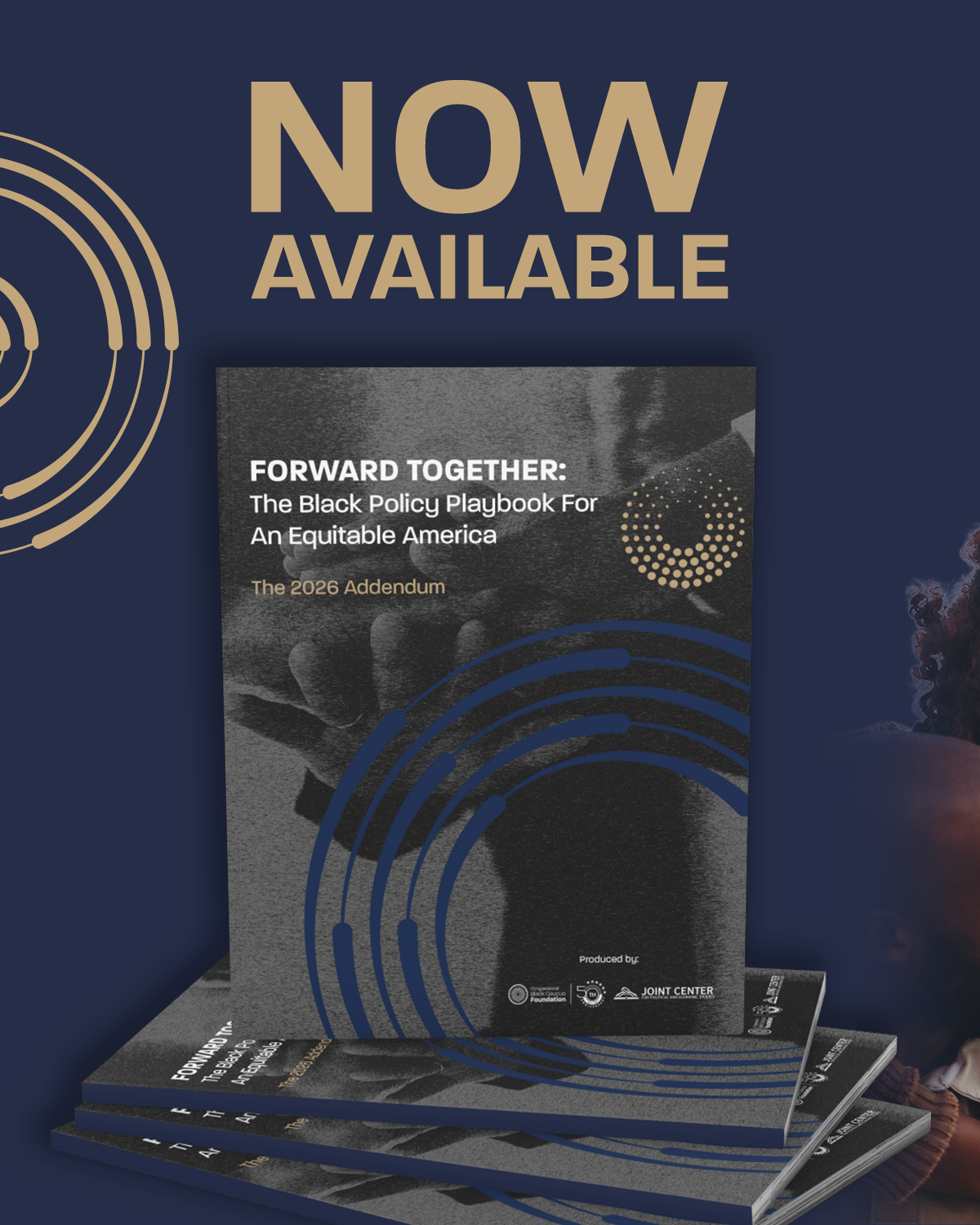
The Black Policy Playbook for an Equitable America, 2026 Addendum
The 2026 addendum updates the original Playbook to reflect changes in the policy landscape and their implications for Black communities. Developed with leading civil rights and policy organizations, it revisits existing recommendations and identifies new priorities in areas such as voting rights, health equity, immigration, criminal justice, and artificial intelligence to help policymakers and advocates advance equity and opportunity.
| | |
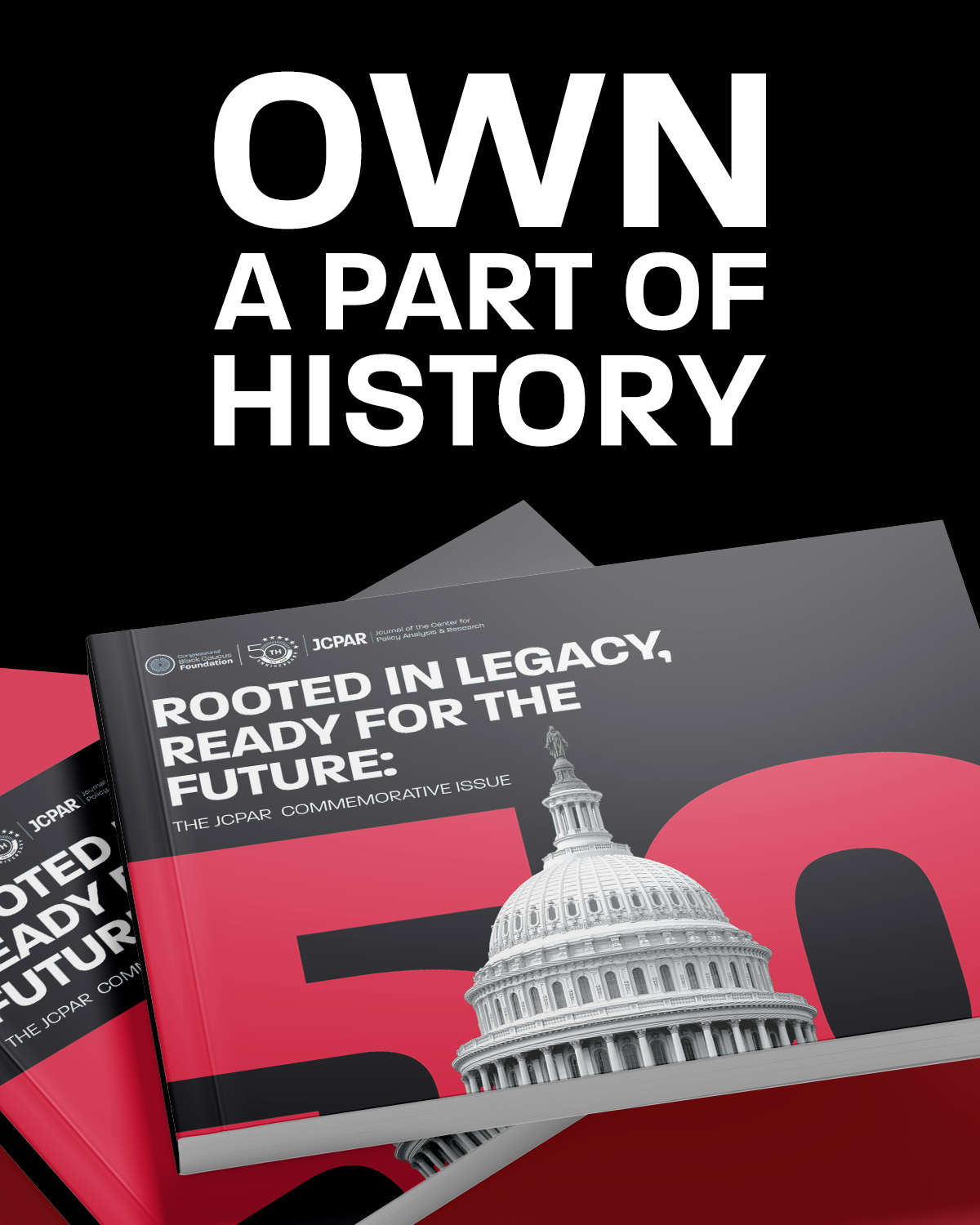
Rooted in Legacy, Ready for the Future: The JCPAR Commemorative Issue
Rooted in Legacy, Ready for the Future celebrates the Congressional Black Caucus Foundation’s 50 years of impact. This special commemorative issue features contributions from leading scholars, policymakers, and advocates who reflect on the challenges facing Black communities while advancing research-driven ideas and policy solutions for what comes next.
| | |
New on the CBCF Website:
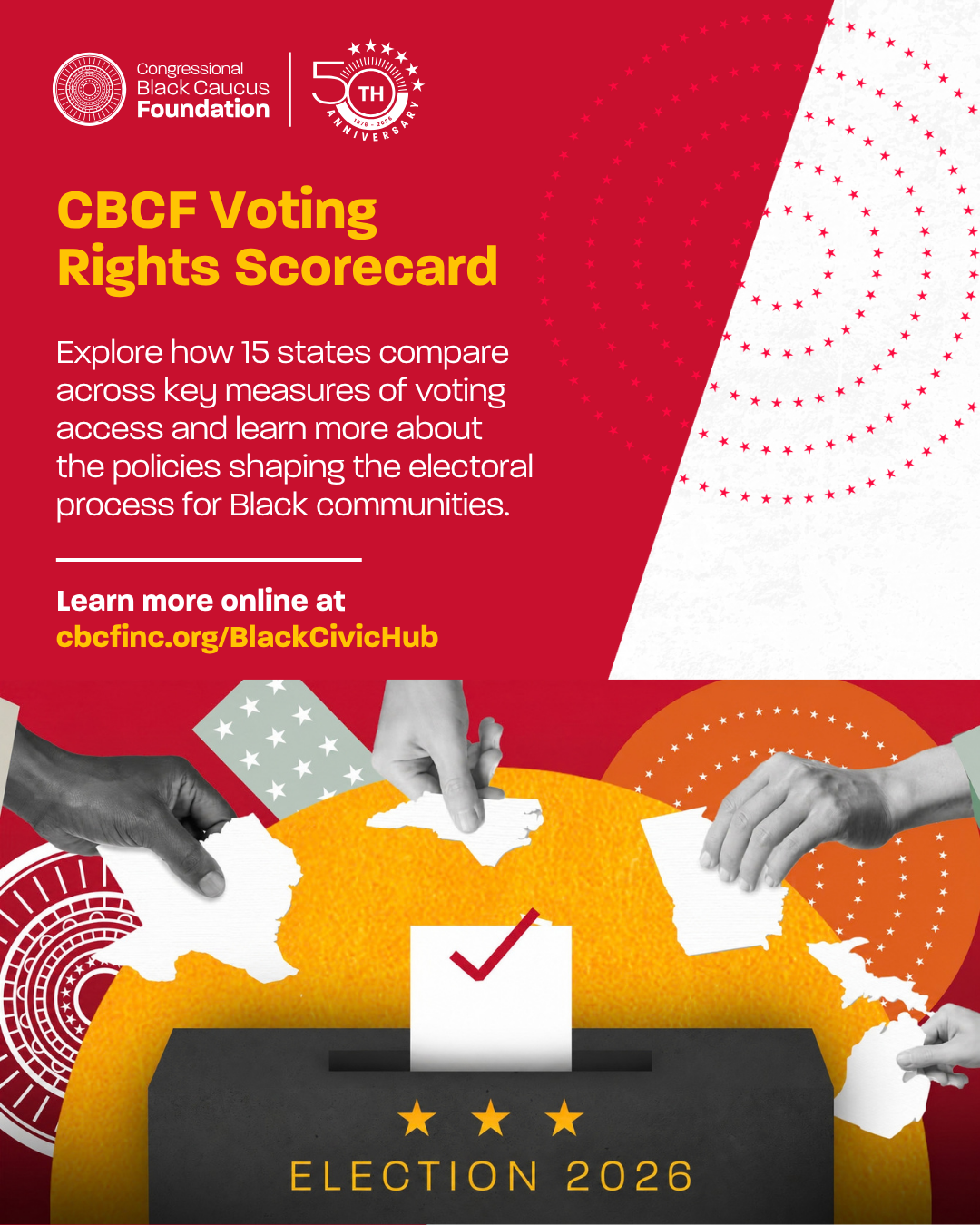
Voting Rights Scorecard
The Scorecard provides a state-by-state look at voting rights and access to the electoral process across 15 states with some of the nation’s largest Black populations. It examines seven key areas: in-person early voting, voter ID laws, access to polling places, felon disenfranchisement, election disinformation, vote by mail, and, new this year, redistricting.
| | |
From Our Blog
How are Black Americans approaching the 2026 midterm elections amid concerns about election integrity and voting access?
In a new blog post, Voting Amid Uncertainty: Perspectives on the 2026 Midterm Elections, Ashley Marie Stewart, PhD, explores findings from CBCF’s Amplifying Black Perspectives research initiative. The findings reveal that despite concerns about misinformation, voter access, and election interference, respondents reported strong intentions to vote and participate in civic life.
| | Research in the Moment: Current Event Highlights | | |
Proposed Federal Transit Funding Criteria
Raise Equity Concerns
The U.S. Department of Transportation has proposed new criteria that would prioritize federal transportation funding for projects in communities with birth and marriage rates above the national average. The proposal stems from a January 2025 directive emphasizing economic analysis and reflects a shift away from policies that centered racial equity and environmental justice.
Many Black residents in major metropolitan areas rely on buses and rail to reach jobs, health care, and schools. Tying funding to demographic benchmarks rather than transportation need could favor communities where these rates are higher and deepen disinvestment in underserved neighborhoods. How the criteria are implemented will be important to watch.
| |
Federal Court Blocks Limits on Medicaid
Work Requirement Exemptions
On October 29, 2026, a federal judge in Massachusetts blocked Centers for Medicare & Medicaid Services restrictions that narrowed the definition of “medically frail,” which determines who is exempt from Medicaid work requirements. Under the One Big Beautiful Bill Act, most adults ages 19-64 must complete 80 hours per month of work, community engagement, or education beginning January 1, 2027. Other challenged provisions remain in place.
According to KFF, Black people under 65 face higher uninsured rates than their White counterparts, and many rely on Medicaid to manage chronic and behavioral health conditions. The ruling protects an important exemption, but the work requirements themselves stand, so how states process exemption requests will matter.
| |
Colorado Finalizes Scaled-Back AI Rules
as Federal Challenge Looms
On October 26, 2026, the Colorado Department of Law held a rulemaking hearing on SB 26-189, which replaces the state’s 2024 AI law. The new law requires companies using automated tools in hiring, housing, and lending to notify consumers, explain the tool’s role within 30 days of an adverse decision, and offer data correction and human review. But it removes the duty to avoid algorithmic discrimination and the impact assessments that pushed companies to test their systems for discriminatory effects, and it creates no private right of action. Disparate impact, the legal standard that reaches seemingly neutral policies that produce racially skewed outcomes without requiring proof of intent, is central to what was lost. Final rules are due by January 1, 2027.
The Department of Justice’s Civil Rights Division has intervened in xAI’s lawsuit against Colorado, arguing that requiring companies to prevent disparate-impact discrimination “compels discrimination” in violation of the Equal Protection Clause, because it forces them to consider race. If the argument prevails, it could weaken enforcement under laws like the Fair Housing Act and the Equal Credit Opportunity Act well beyond Colorado. Congressional Black Caucus Chair Rep. Yvette Clarke’s Artificial Intelligence Civil Rights Act would require the pre-deployment evaluations and annual impact assessments that Colorado abandoned.
| |
New Policy Agenda from The State of the People
The State of the People recently published, The Black Papers: A Policy Agenda for Black Liberation in the 21st Century, a 26-chapter series exploring policy issues that shape Black communities. As a comprehensive Black policy agenda, the series equips readers with the knowledge and tools to enact reform across key institutions. CPAR Vice President, Jonathan Cox, co-authored Chapter 18, Housing as a Human Right, and Chapter 25, The Historical Imperative and Contemporary Case for Washington, D.C. Statehood.
| | |
Take the Black Census Today!
CBCF is partnering with Black Futures Lab to recruit 300,000 Black Americans to take the Black Census. The Black Census Project is the largest survey of Black people in America, designed to capture the opinions of Black communities and transform collective imagination into actionable data that shapes policy, fuels organizing, and reclaims narrative power.
| |
CPAR Research Program
Our research is powered by your voices. In 2025, CPAR published three original reports based on survey and focus group insights from our community. Want to be part of what we build next? Complete the short demographic survey below (about 4 minutes) to participate in our 2026 research.
| | |
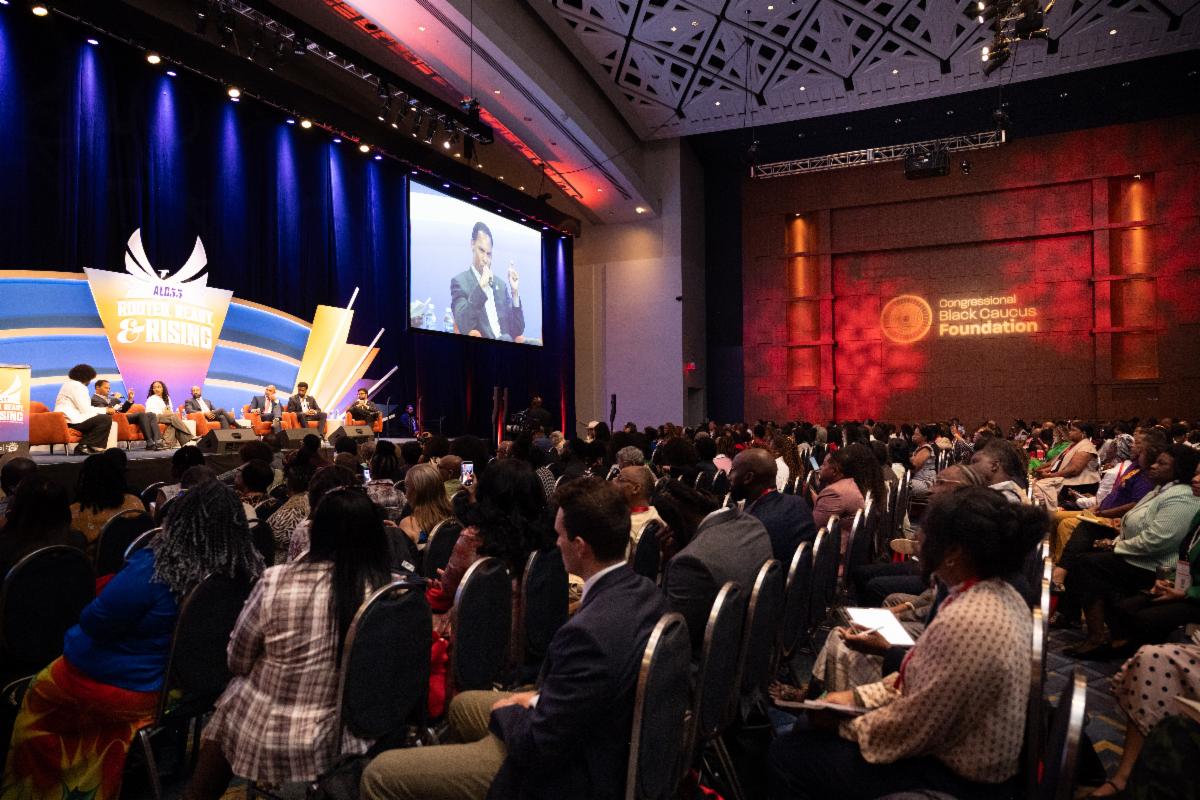
At CBCF's 55th Annual Legislative Conference, CPAR hosted 10 thought-provoking sessions exploring some of today's most pressing policy issues, including health equity, technology, economic opportunity, and constitutional democracy. Featuring moderation by CPAR's Dr. Lauren Pearlman and panel participation from CPAR Vice President, Dr. Jonathan Cox, and fellows Daniel Ikem and Anthony Nicome, the sessions reflected the conference theme, Rooted, Ready, and Rising, by bringing together researchers, policymakers, and advocates to center Black communities in conversations about the future of public policy and social progress.
Keep an eye out for CPAR's forthcoming Take Action Guide, a practical resource featuring actionable takeaways from the conference.
| | | | |