|
Greetings!
As Vice President of the Center for Policy Analysis and Research (CPAR), I’m proud to welcome you to the inaugural edition of our newsletter. CPAR advances the mission of the Congressional Black Caucus Foundation by delivering rigorous, data-driven research and policy recommendations that inform Black leadership, elected officials, stakeholders, and communities nationwide. Grounded in a commitment to thoughtful, open inquiry on issues impacting the global Black community, our work combines original research, policy analysis, and strategic partnerships to address today’s challenges and help shape long-term solutions. Through this newsletter, we’ll share recent findings, valuable resources, and updates on the projects driving critical policy conversations.
Thank you for engaging with our work! We remain committed to advancing research and policy solutions that drive equity and opportunity for Black communities everywhere.
In peace and solidarity,
| | |
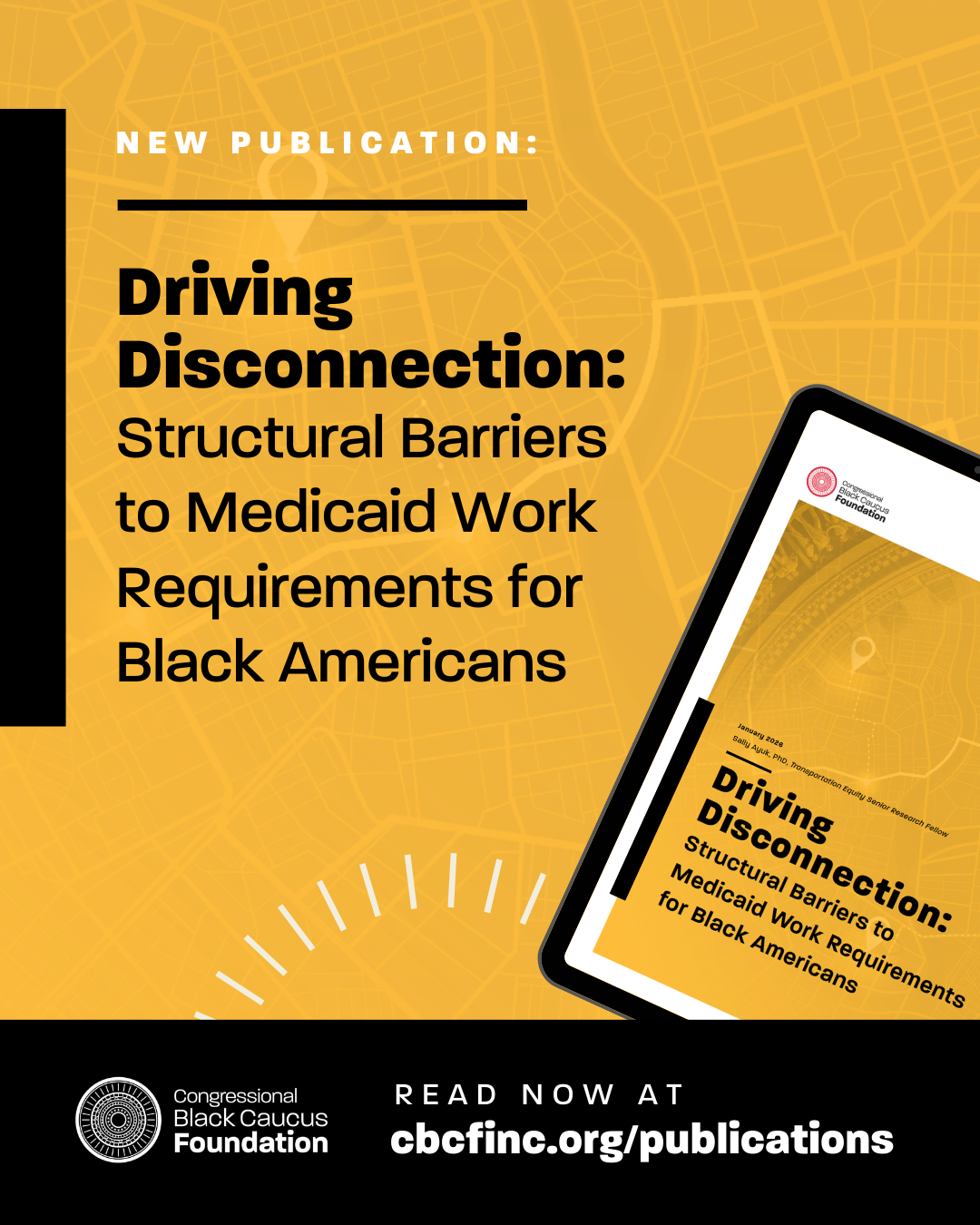
Driving Disconnection:
Structural Barriers to Medicaid Work Requirements for Black Americans
Starting January 1, 2027, a new provision in the One Big Beautiful Bill Act will require many Medicaid recipients to prove they’re working or completing at least 80 hours a month of approved activities to keep their health coverage. Supporters call it a path to self-sufficiency, but our analysis of Arkansas, Georgia, Nebraska, Pennsylvania, and Texas shows it’s far more likely to push people off coverage than into stable jobs.
The reality? Most adults on Medicaid are already working or have valid reasons they can’t. And even 80 hours at minimum wage doesn’t lift someone out of poverty, especially when you factor in the cost of transportation and the challenge of navigating online reporting systems without reliable internet access. Without tackling these real-world barriers, this policy risks taking health care away from working families instead of expanding opportunities.
| | |
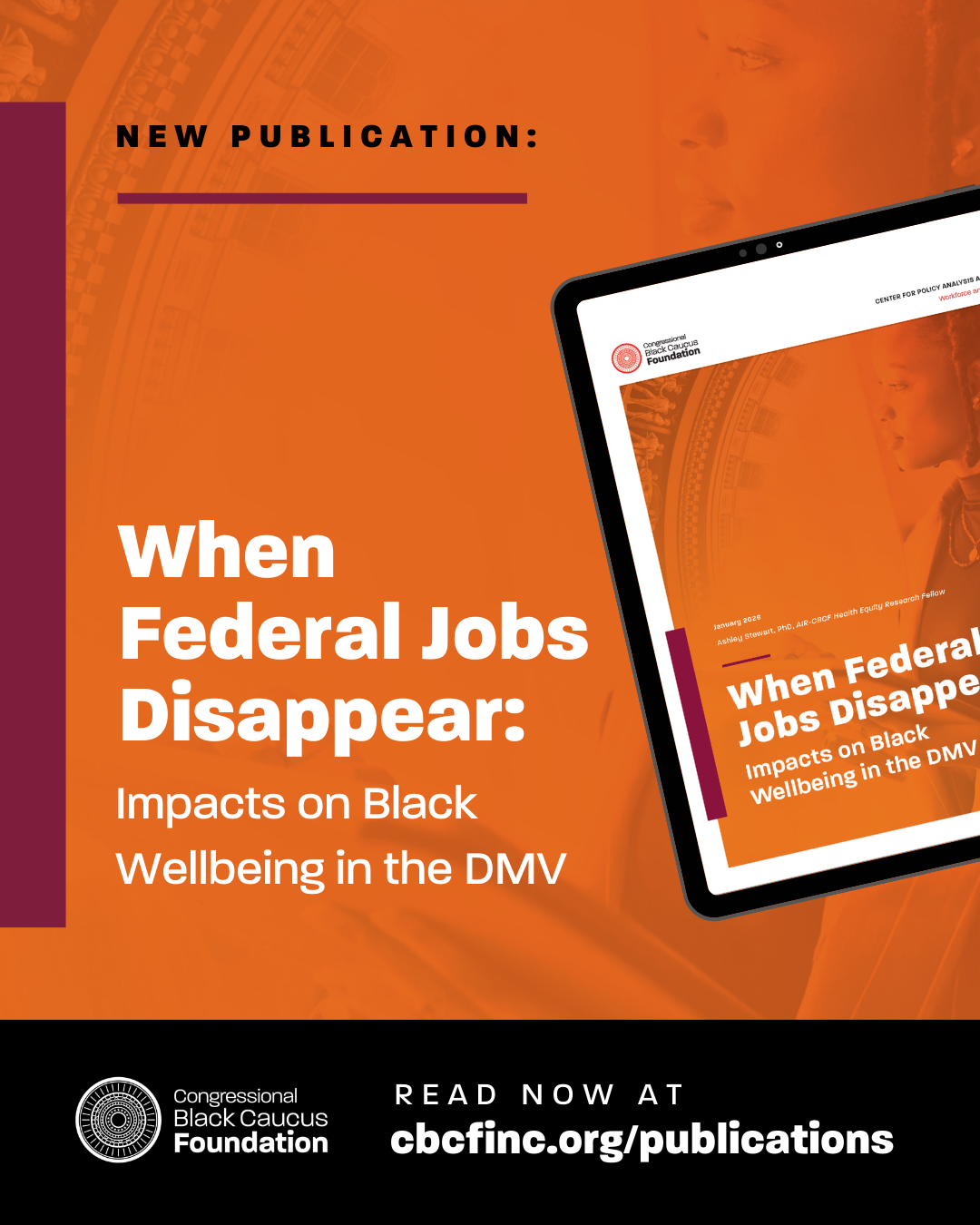
When Federal Jobs Disappear:
Impacts on Black Wellbeing in the DMV
This case study examines how recent federal workforce reductions, including mass layoffs, hiring freezes, deferred resignations, and the elimination of DEI roles, have disproportionately harmed Black federal workers and Black communities in the Washington, DC–Maryland–Virginia (DMV) region. The analysis shows that these actions undermine diversity and inclusion within government by accelerating the exit of Black professionals, eroding institutional knowledge, and weakening agencies that disproportionately serve Black communities.
The impacts extend beyond employment outcomes to mental health, access to healthcare, food security, and community stability, demonstrating that workforce diversity is deeply connected to public health, economic equity, and effective governance. Ultimately, the brief argues that federal workforce retrenchment is not race-neutral, and that protecting diversity, equity, and inclusion within government is essential to sustaining both institutional effectiveness and racial equity.
Key Takeaways
- Eliminating DEI roles has material equity consequences.
- Federal employment is a cornerstone of racial equity.
- Workforce diversity is inseparable from community well-being.
- “Efficiency” reforms are not race-neutral.
- DEI is essential to government effectiveness, not ancillary.
| | |
CPAR Research Program
Our research is powered by your voices. In 2025, CPAR published three original reports based on survey and focus group insights from our community. Want to be part of what we build next?
Complete the short demographic survey below (about 4 minutes) to participate in our 2026 research.
| | |
Research in the Moment
A House-passed bill moving through Congress could create sweeping new barriers to voting ahead of November’s high-stakes Midterm elections. The Safeguard American Voter Eligibility (SAVE) Act would end online voter registration, require documentary proof of U.S. citizenship, restrict mail voting, and mandate photo ID at the polls. These provisions could disenfranchise more than 5 million married Black women whose birth certificates don’t match their married names, as well as eligible voters without costly passports or hard-to-access documents. The Senate is expected to vote soon. If you have thoughts, questions, or ideas regarding proposed policies, you may contact your Senator ‘s office. Find your elected officials here. Read our full policy update below.
| | |
Program Updates
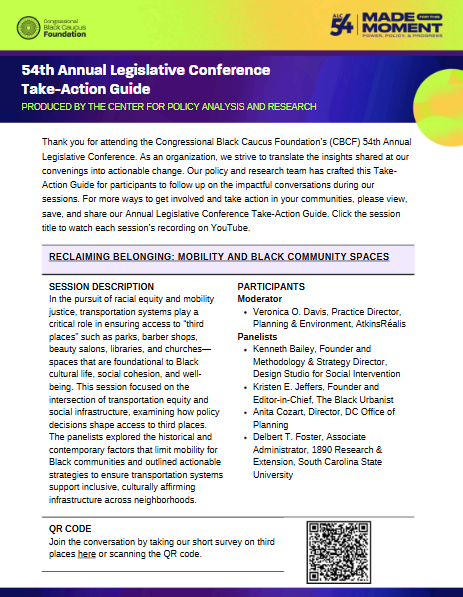
We encourage you to explore the 2025 ALC Take-Action Guide, which features concrete follow-up items inspired by conversations from the 54th Annual Legislative Conference. For additional ways to get involved and take action in your communities, please view, save, and share the guide with your networks.
Click on each session title to watch the corresponding recording on YouTube.
| | |
From Our Blog
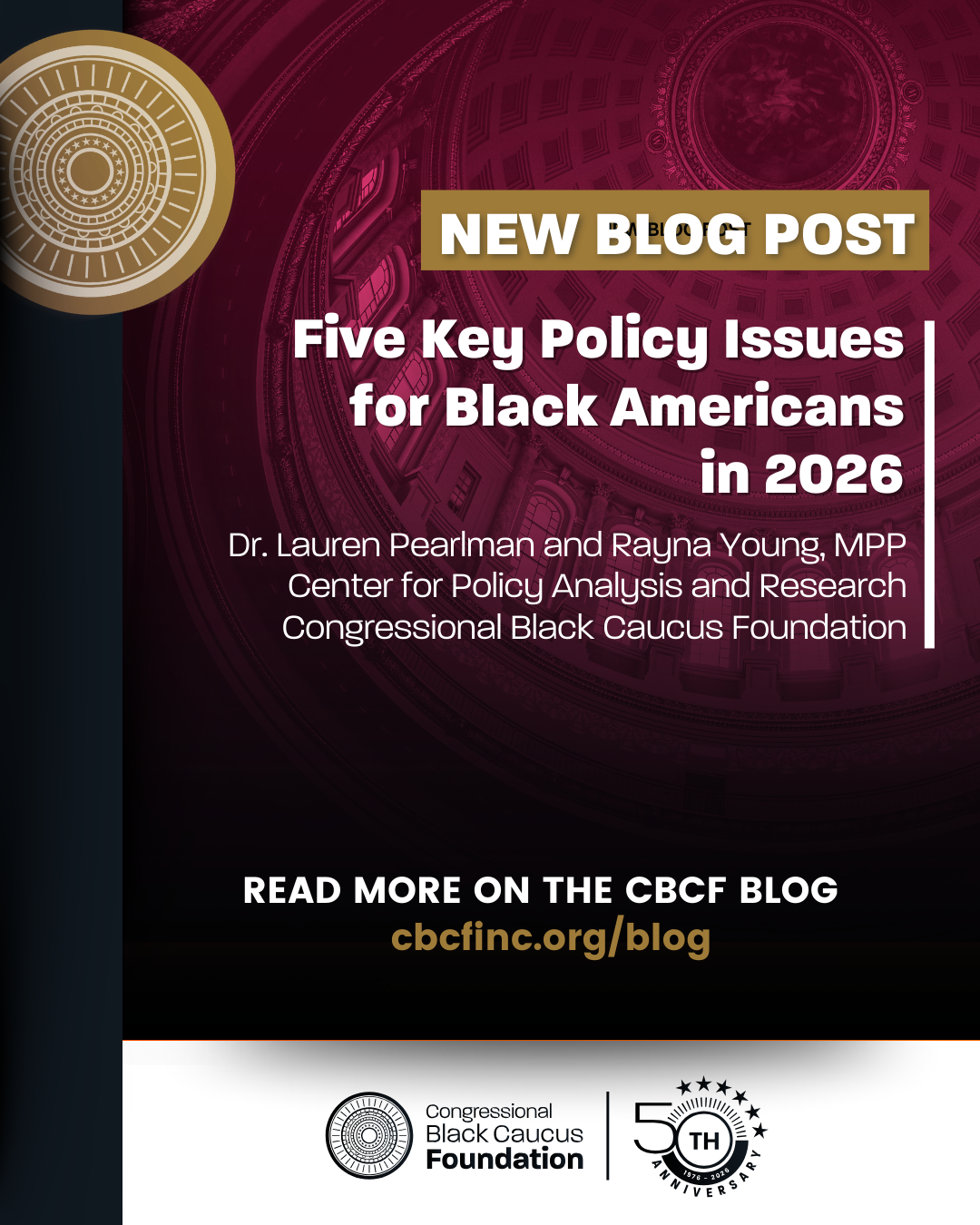
To start the year, CPAR published a blog, Five Key Policy Issues for Black Americans in 2026, examining how developments in healthcare, immigration, technology, voting rights, and the workforce will have lasting impacts on economic security, health outcomes, and civic participation. So far this year, we have already seen deadly immigration raids and challenges to voting rights. We encourage you to read and share this timely analysis as we continue to prepare for what’s ahead.
| | Meet Our New Research Fellows! | | |
Daniel Ikem is a technology and policy strategist specializing in AI governance, biotechnology, and global health equity. He serves as a Technology and AI Research Fellow at the Congressional Black Caucus Foundation and American Institutes for Research. A former Microsoft and U.S. Postal Service leader, his work bridges responsible AI governance, intellectual property, and emerging technologies across public, private, and civil society sectors.
| |
Anthony Nicome is a policy, research, and community engagement strategist specializing in environmental justice, health equity, and community development. He serves as a Transportation Equity Research Fellow at the Congressional Black Caucus Foundation. He earned a Master of Health Science from the Johns Hopkins Bloomberg School of Public Health and a Master of Public Health from the Yale University School of Public Health. He most recently served as the inaugural Environmental Justice Fellow at the Association of American Medical Colleges Center for Health Justice and Program Manager of the White House Environmental Justice Advisory Council at the United States Environmental Protection Agency.
| | | | |