|
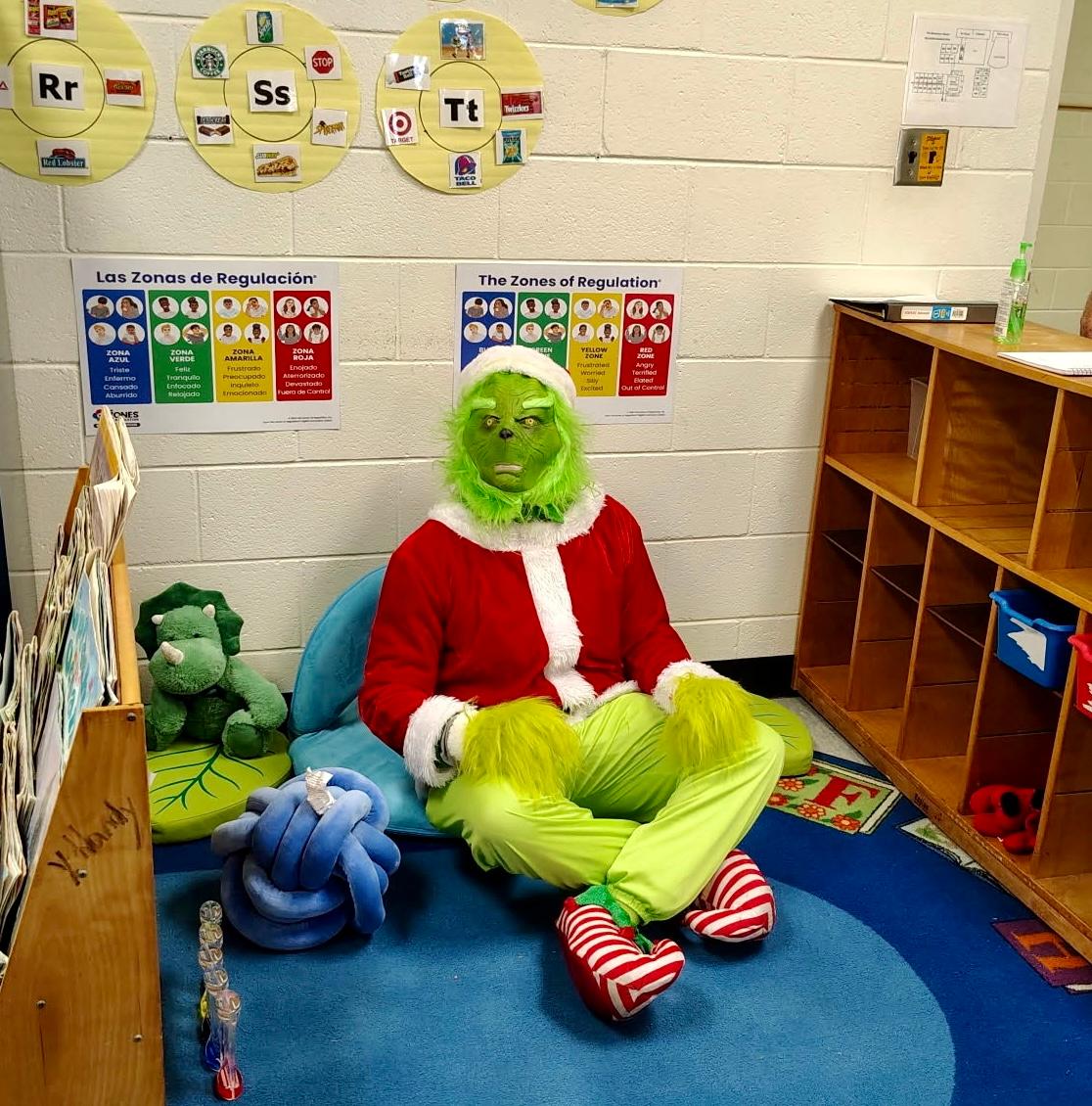
Even the Grinch practices regulation. 💚
This Wilson County school’s Calm Down Corner supports resilience by giving students a space to pause, regulate emotions, and build the skills needed to return to learning.
A powerful reminder that resilience is strengthened through intentional environments.
| |
School of the Month:
Restorative Practices at Greene County Middle School
by Stacey Craig
| | |
Greene County Middle School has been a partner school with the Center for Resilience and Learning for over three years, since the beginning of the 2022-23 school year.
From the beginning, staff there have shown a deep care for and dedication to their students. The only middle school in a small, rural, eastern county of less than 3,000 students, surrounding the town of Snow Hill, NC, GCMS serves over 560 students, grades 6-8. As the school’s resilience coach with R&L, I have had the pleasure to learn about some of the great practices the school is putting in place and its path to getting here. And I am excited that the principal and staff have been so generous with sharing about their experiences, so that we can share their learning and success with you all through this story.
| |
How it started
During the first year of partnership with R&L, a Resilience Team gathered biweekly to reflect on the role that stress and trauma might play in the challenges staff and students were facing, and what they could do as a school to help address the needs underlying problematic behaviors. This team determined that a Restorative Practices approach could strengthen relationships and student engagement.
| |
This continuum includes minimally intensive strategies such as:
- Using language that distinguishes “the deed from the doer,” and communicates the impact that a behavior has had, such as “I know you to be a kind person. It hurt me when you mocked a lesson I worked hard to make for you.”
- All the way to more time-intensive practices such as restorative circles and conferences, which use a structured way of addressing conflict or behavior that has caused harm.
At the end of the 2022-23 school year, several staff members were trained in Restorative Practices and in leading community-building circles.
Community-building circles are used proactively and routinely to build a foundation of safety, trust, connection, and communication with students, so that problematic behavior is prevented or can be more effectively addressed when it arises.
These staff members facilitated circles with their colleagues during summer professional development to deepen their connections to one another and reflect on the type of work culture they wanted to build together.
The following school year, a new principal, Phil Cook, arrived, who already had experience with Restorative Practices at his previous school (also in Greene County). He combined the Resilience Team with the school’s Social and Emotional Learning (SEL) Committee and designed his doctoral dissertation around furthering Restorative Practices at GCMS.
That school year, Dr. Cook focused on building relationships and a culture of support with staff, and the school focused on teaching and practicing clear and consistent expectations with the students.
During this year, the administration also sought to provide information and support to those staff who were interested in facilitating community-building circles with students and in engaging in a Restorative Practice approach. The goal for building knowledge, interest, and confidence with Restorative Practices among staff was to eventually roll out Restorative Practices consistently, school-wide.
|
Restorative Circles: A Pilot Study
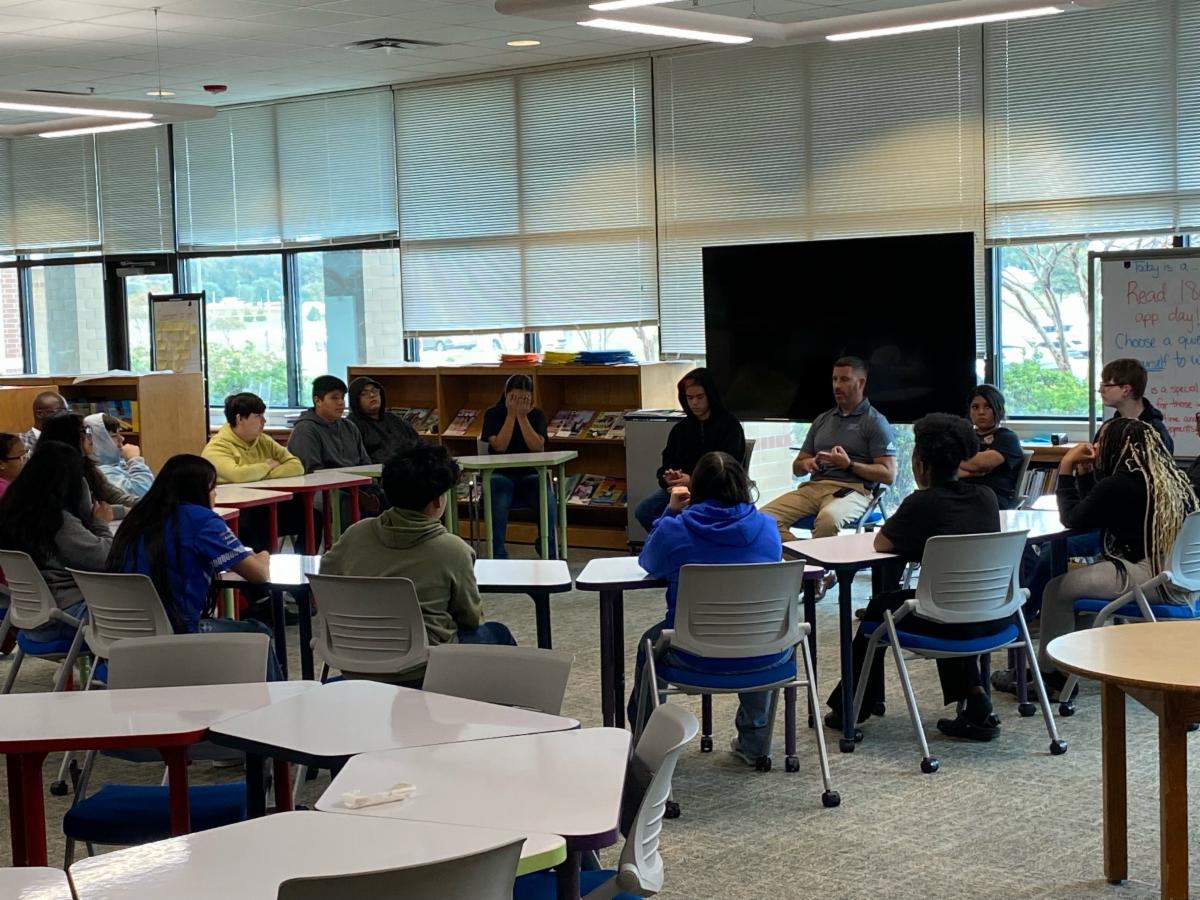
Since then, Dr. Cook has taken the opportunity to design a doctoral dissertation on the impact of restorative circles on relationships and behavior. Restorative circles build on and leverage the relationships built during community-building circles to jointly address issues and resolve conflicts with and between students as they arise.
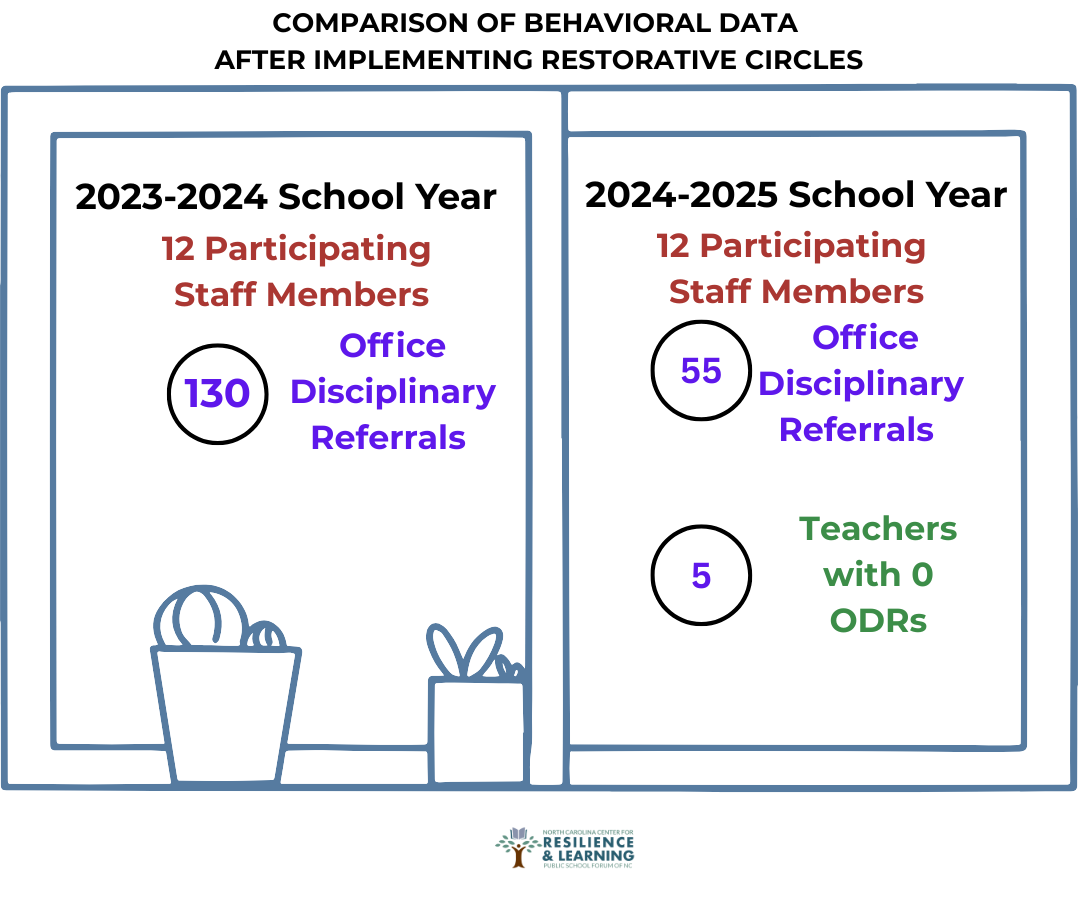
Dr. Cook turned his dissertation into a pilot study in the 2024-25 school year, with a group of staff who volunteered to take part.
First, Dr. Cook shared research and data with his staff to show them how facilitating restorative circles with their students could positively impact them - reducing problematic behaviors, reducing lost instructional time, and increasing student engagement. He presented to his Leadership Team, School Improvement Team, and finally at a whole-staff meeting.
He continued to engage in individual conversations with his staff to answer questions and foster a trauma-informed mindset. Hoping for 20% of staff to participate in a pilot study, he then asked for volunteers to facilitate restorative circles with their students, and more than enough volunteered.
Dr. Cook, already trained in Restorative Practices, then provided training to the participating staff on facilitating restorative circles. He also modeled the facilitation of restorative circles with students and co-led restorative circles with his staff.
He encouraged staff to use the school’s daily 15-20 minute SEL time for restorative circles, and supported staff in making time for restorative circles as needed.
| |
The Impact of Restorative Circles
| | |
Three 8th-grade teachers interviewed for this article reported that they not only made fewer referrals, but they also saw fewer behaviors.
Ms. Suggs noted that in some cases,
“Where I would have normally written up a student, we were able to have a restorative circle, kind of talk through what we did, [and] students were able to apologize to the other student, and we were able to resolve the conflict that way. Doesn't always work, but it has helped cut down on a lot of those behaviors.”
Ms. Carlton agreed, adding that she has
“seen that the outside drama that students bring in…doesn't disrupt our day in school because we will sit them down and have a circle. That helped them out, that helped them like, hey, that's at home, and we're here. So I've seen the distractions from outside, not interrupt our day as much.”
And Ms. Dail observed that it’s been especially helpful
“For some of the kids who have more difficulty filtering their emotions than other students…those [restorative] conversations help students maintain their emotional equilibrium better than they would otherwise.”
The data shows that restorative circles helped increase equity within the pilot group as well.
The rate of referrals dropped by 21% for Black students, and in 2023-24 prior to implementing circles, discipline referrals for Black students at the school were four times the rate than those for their White and Hispanic peers.
Teachers describe many other impacts the use of restorative circles has had on them, their students, and the school. They note how good it’s been for building relationships with students.
“It's really good for relationship building, getting to know your students better. I've had teachers that come to me, and…they're awesome teachers, but they struggle with that part of it. And I truly believe that if you have a good relationship with your students it makes your job as a teacher a million times easier. And so I would say that restorative circles are an excellent way to formally help you build those relationships with your students,” says Ms. Suggs.
Ms. Carlton highlights that one important aspect of relationship building is listening and having a two-way problem-solving discussion about what needs to happen to make things better.
“I think it's impacted my ability to sit and listen to students…cause I'm usually one to be like, ‘You know what? I don't care. That has nothing to do with what we're talking about.’ But I'm able to sit and listen and hear what they're saying now. It's an easier way to, if my classroom is kind of chaotic, to bring us back. It centers us, because once we talk about it, it's kind of, ‘okay, now we can get on to what I want to get on.’”
It’s also helped teachers to feel more comfortable and capable with addressing difficult topics with students, and helping students repair harm and resolve conflict among one another.
“I've found myself able to talk about topics that normally I wouldn't have felt comfortable approaching in the past. I remember last year we had one student who called another student a racial slur. And that can be a very uncomfortable topic to approach. And since it involved two of my students, but one of them was in another class at the time, we actually brought both classes together and held a large restorative circle that Dr. Cook, myself and the other teacher helped to facilitate, and we were able to all share experiences and reasons why we shouldn't do that or why it can hurt and not letting our temper get the best of us. But topics that, again, I didn't always feel comfortable approaching before, but it allows that safety net and that freedom to kind of speak on those topics in a respectful setting,” says Ms. Suggs.
| |
Lessons Learned for How to Pilot Restorative Circles
Dr. Cook has found the pilot study a helpful way to start restorative circles at the school, and he offers some lessons for any school seeking to do the same.
He highlights that it was important to take the time to build buy-in, to share the data with staff, showing the benefits that would make implementing circles worth their investment.
The teachers highlighted that having time within their daily schedule when they could do circles, such as the morning SEL time and study hall, was very important, as well as having support from administration who could also facilitate restorative circles, or cover a classroom so that the teacher could facilitate a circle, when a subset of students need to address an issue and the whole class doesn’t need to be involved.
They also found a strong foundation of training helpful, including the Restorative Practices training the principal provided them, as well as their participation in professional development on equity and trauma-informed practices through the Public School Forum’s Rural Teacher Leader Network (RTLN).
They noted that the principal’s overall support has also been especially important to the success of restorative circles. “He's really passionate about it, so when you're passionate about something, you're going to make way for that to work,” says Ms. Dail.
Hopes for the Future
With these initial signs of success, the principal hopes to leverage strengthened relationships and improved behavior to raise academic achievement. Staff are receiving significant professional development and support to ensure academic rigor and push their students to engage more. While restorative circles are not a school-wide practice yet, Dr. Cook intends to work toward that goal over the next several years.
And the teachers I spoke with look forward to seeing that happen.
“We have to include these restorative practices because it really does cut down on the behaviors [and] suspensions, and we have the data to back that up. So I'm hoping it becomes less of a voluntary to a mandatory type of thing,” says Ms. Carlton.
“Even if it's more voluntary, once other teachers see the impact it's had for those of us who have implemented it into our classrooms…I'm hoping that it'll be something that they'll be ready to do,” added Ms. Dail.
Teachers who have facilitated restorative circles would like to see their benefits expanded in various ways. “Like having restorative circles with other teachers. Like, what's going on? What can we do to help one another?,” says Ms. Dail. Ms. Suggs says, “I would like to see some student-led restorative circles and develop some student leaders in the school that can help to facilitate.”
Messages for Those Hesitant to Implement Restorative Circles
When I asked the principal and teachers what they would like other schools to know about conducting restorative circles, they had many things to share.
Dr. Cook emphasized that it’s important to be clear with all staff that using restorative practices, such as restorative circles, to address behavioral concerns does not take away the use of consequences. At first, it might look as if students are not getting consequences for their actions; it’s actually that the consequences look different. A student will often determine what they need to do to make things right, or what they will do differently in the future. And the consequences may still include suspension, but restorative circles can turn any consequences, including suspension, into a more meaningful learning opportunity.
Ms. Carlton wants others to know that restorative circles are also a useful tool to help directly increase students’ academic success.
“Last year we were all struggling with [a particular part of the curriculum]. And I'm like, what's so hard about it? Let's stop. Let's talk about it. And we each talked about it, okay, what's this problem? And…we all came to consensus, like, oh, okay, this is what we're struggling with.”
Also, restorative circles are “not as scary as it seems. It might be a little awkward and uncomfortable the first couple weeks or so…But the more real conversations you have with your students, the easier it gets…And if the first one doesn't go well, keep at it. It gets better…students will want to open up the more you do it,” shares Ms. Suggs.
The Gift of Restorative Circles
At GCMS, the data speaks for itself about the impact restorative circles can have in just one school year. But for the educators who facilitate restorative circles with their students, it goes deeper than data. They have a learning tool that helps them make deeper connections with their students, changing both their students and themselves for the better.
Ms. Carlton sums up how facilitating restorative circles can help schools and teachers get to the root of problems and find solutions with their students, saying “Restorative circles is a way to have honest conversations when you and a student have really just come to a stalemate like, hey, I hear you, you hear me…what do you need to process so we can get what we need to get done, from me? And this is what I need from you.”
| |
| |
Some NC schools still falling short of physical activity, mental health requirements
Some North Carolina school boards, at least 38, are still not planning for students to get the required number of minutes of physical activity, according to a report the state Department of Public Instruction presented to the State Board of Education on Wednesday.
The report collected data via survey from all of the state's traditional public school districts and many public charter schools regarding issues related to student mental health and well-being.
READ MORE
| | | |
| |
From hungry to hopeful: How school pantries fuel learning
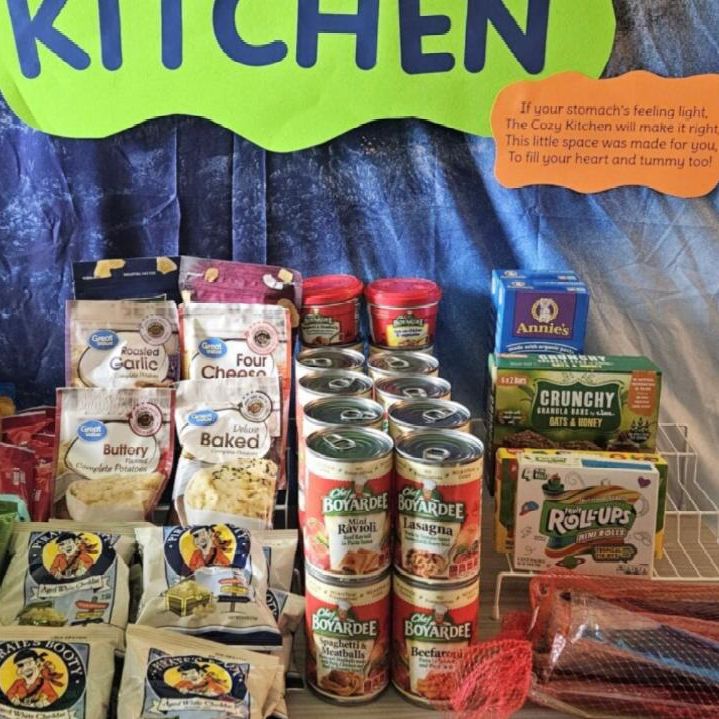
I’ve seen what hunger does to a child’s ability to learn. I’ve seen the head down on the desk, the short temper, the inability to focus, the anxiety about how much food will be at home that night. No worksheet or lesson plan can overcome the physiological need for nourishment.
READ MORE
| | | |
| |
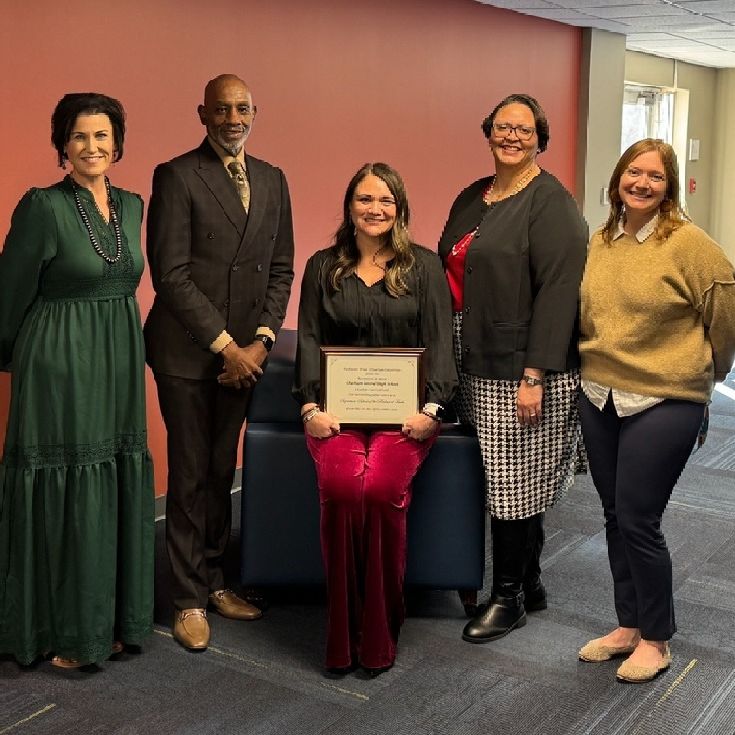
Chatham Central High School Named a 2025 PTEC Signature School at Annual Consortium Meeting
The PTEC Signature School distinction recognizes schools demonstrating outstanding commitment to student achievement, innovative teaching practices, and meaningful school improvement.
“We are incredibly proud of Chatham Central High School for earning this prestigious recognition,” said Dr. Anthony D. Jackson, Superintendent of Chatham County Schools. “This honor reflects the tireless efforts of our teachers, administrators, students, and families who work every day to create a school environment where ALL students can thrive.”
READ MORE
| | | | Resources & Opportunities | |
The Learning Brain Exchange: February 16, 17, 2026
A Creating Trauma-Sensitive Schools Virtual Conference
Join the Newest Creating Trauma-Sensitive Schools Conference - focused on the Science of Learning. Explore what all educators need to know about students' developing brains and how to help them get ready to learn and excel!
Registration is NOW OPEN with Early Bird pricing through December 15, 2025.
- Reaching & Teaching Students: Explore the Science of Learning with strategies that improve learning for all.
- Brain-Based Behaviors: Look at behaviors, discipline and classroom management through a neuroscience lens.
- Trauma-Responsive Leadership: Discover why Trauma-Informed leadership will guide your school with compassion and clarity.
- Connected Communities: Dive into ways to build connection with students, staff, parents, and the community at large…all for healthier brains and to enhance learning!
| | AdLit Trauma and Resilience Podcast and Video Series | | |
The Trauma and Resilience: Podcast and Video Series explores topics related to trauma-informed teaching in schools. In this series, Ricky Robertson interviews guests who offer unique personal and professional insights on ways to support educators, students, and communities impacted by adverse childhood experiences (ACEs) and trauma.
The Trauma and Resilience: Podcast and Video Series is an excellent companion to the Trauma-Informed Teaching: Video Series, which provides educators with knowledge and practices to support students impacted by ACEs and trauma.
| |
Show Your Public School Pride with NC Forum 40th Anniversary Merch!
Public school champions, we’ve launched a store for you! In celebration of the Forum's 40th anniversary, we collaborated with student artist Dewone Wright on a line of t-shirts, sweatshirts, notebooks, mugs, and more!
| | |
Follow us on INSTAGRAM!
We want to share our story on Instagram- join us there!
| | Want your school to begin the journey to becoming trauma-informed? | | |
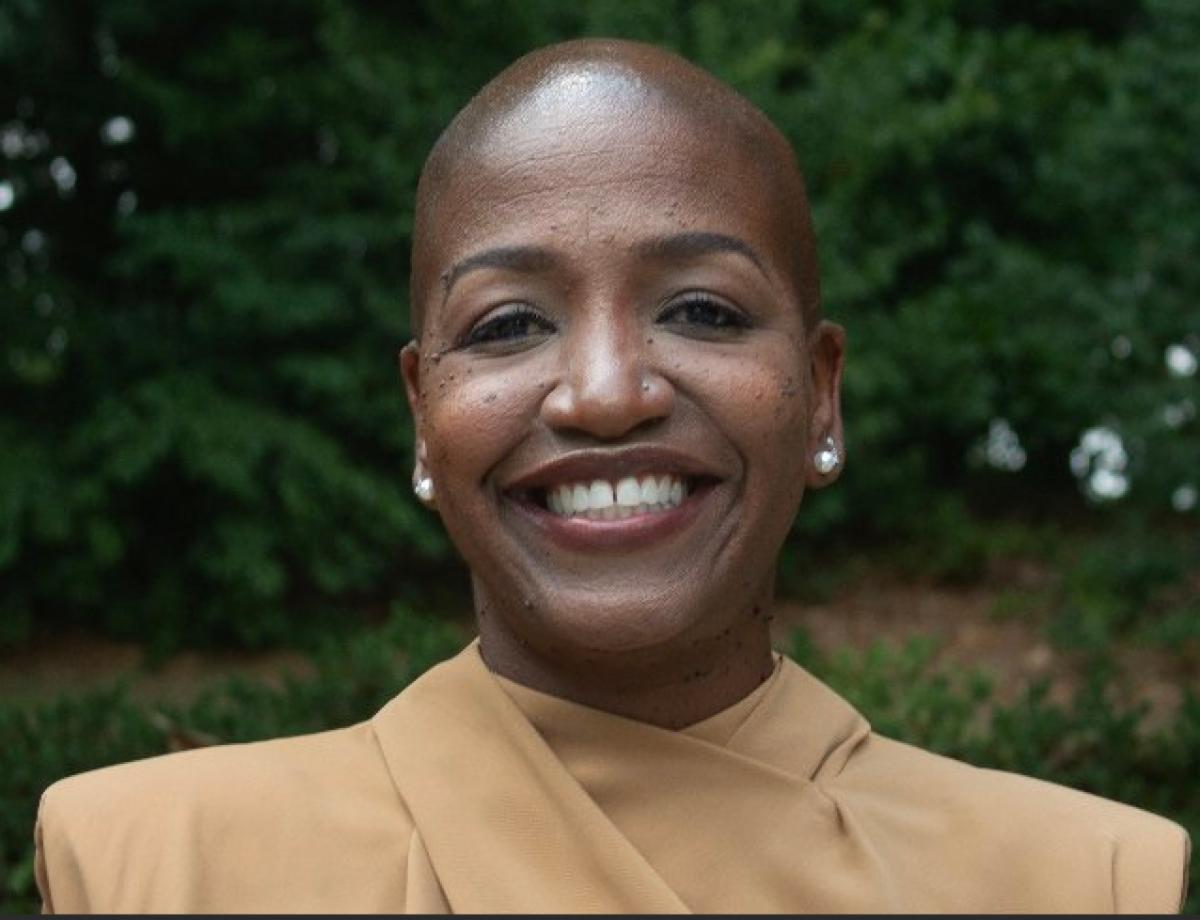
Elizabeth DeKonty
Director
NC Center for Resilience & Learning
(Raleigh, NC)
|
| |
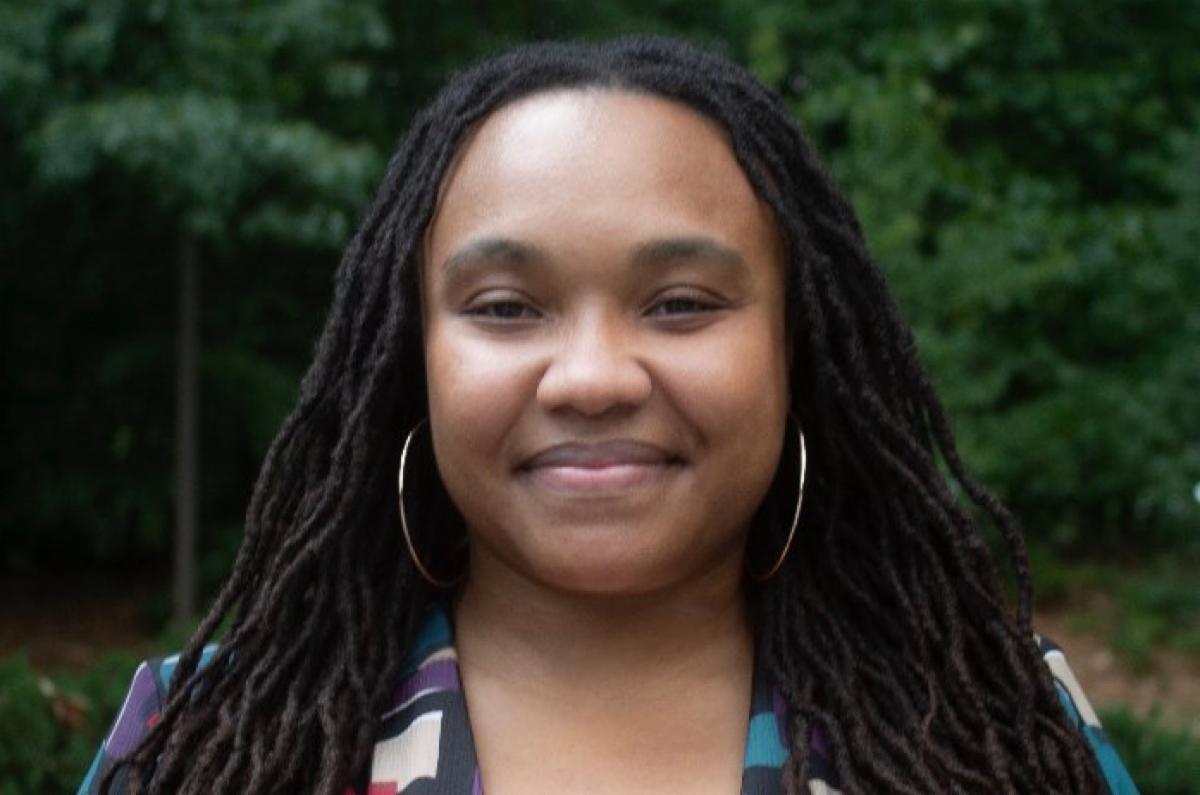
Eulanda Thorne
Senior Program Manager
NC Center for Resilience & Learning
(Wilson, NC)
| | |
Brian Randall
Senior Regional Program Manager
NC Center for Resilience & Learning
(Asheville, NC)
| | |
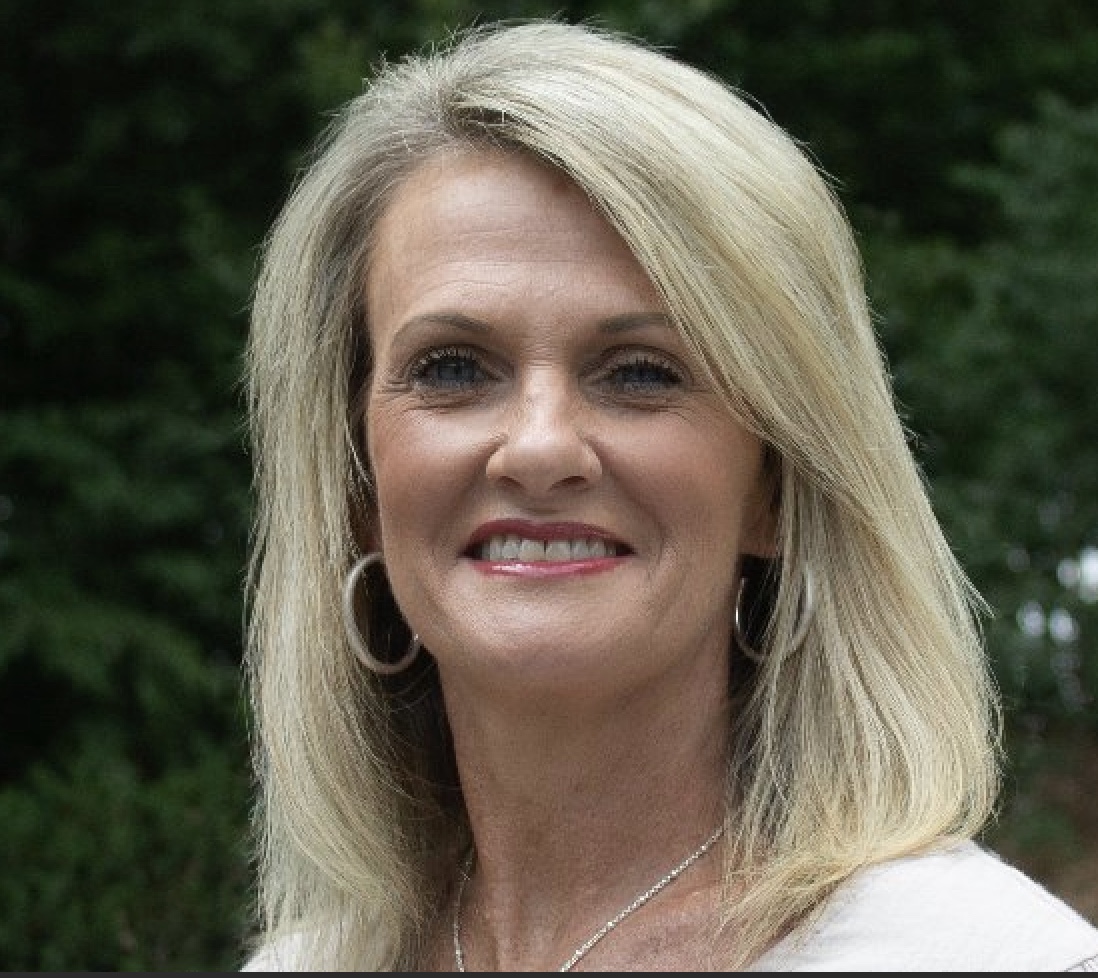
Michelle Harris Jefferson
Sr. Program Manager of Professional Learning
NC Center for Resilience & Learning
(Greensboro, NC)
| | |
Orlando Dobbin, Jr
Senior Regional Program Manager
NC Center for Resilience & Learning
(Greenville, NC)
| | |
Angela Mendell
Senior Program Manager
NC Center for Resilience & Learning
(Elizabethtown, NC)
| | |
Leslie Blaich
Program Manager
NC Center for Resilience & Learning
(Marshall , NC)
| | |
Stacey Craig
Program Manager
NC Center for Resilience & Learning
(Raleigh, NC)
| | |
Jessica Edwards
Impact Specialist
NC Center for Resilience & Learning
(Spring Hope, NC)
| | |
Ervin Jones
Consultant
NC Center for Resilience & Learning
(Elizabeth City, NC)
| | |
Rebecca Stern
Consultant
NC Center for Resilience & Learning
(Carrboro, NC)
| | |
MKayla Nelson
Program Manager
NC Center for Resilience & Learning
(Newland, NC)
| | |
Quintin Mangano
Program Manager
NC Center for Resilience & Learning
(Rocky Mount, NC)
| | |
Whitney N. McCoy, Ph.D
Research & Evaluation Partner
(Duke University)
| | |
Katie Rosanbalm
Research & Evaluation Partner
NC Center for Resilience & Learning
(Duke University)
| | |
Victor Jones
Consultant
NC Center for Resilience & Learning
(Rocky Mount, NC)
| | | Our Partners and Sponsors | | |
The Resilience Reader is published monthly by the Public School Forum of NC and distributed to Forum members, educators, policymakers, donors, media, and subscribers -- or anyone interested in issues such as Adverse Childhood Experiences (ACEs), childhood trauma, resilience and the power of trauma-informed schools and communities.
Please pass the word! Forward The Resilience Reader to anyone who may find this information useful.
If you received this email from a friend, subscribe to this newsletter by clicking here.
Archived editions will be located at https://resilienceandlearning.org/newsletter/.
©2024 Public School Forum of North Carolina. All Rights Reserved.
Public School Forum of North Carolina
919-781-6833
Follow us at @theNCForum
www.ncforum.org
| |
|
|
Subscribe to this Newsletter | | | | NC Center for Resilience & Learning | www.resilienceandlearning.org | |
| | | |