School of the Month:
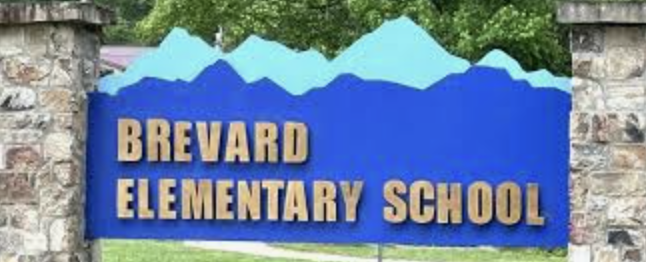
Brevard Elementary School
| |
What Students Need: A Story from Brevard Elementary
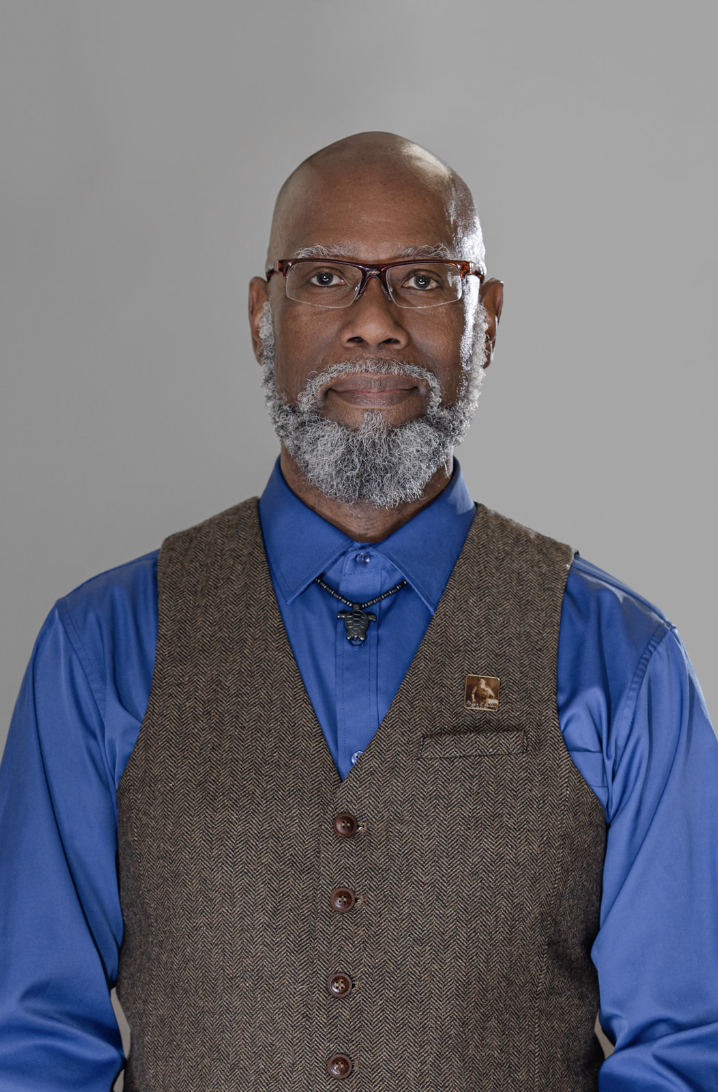
By Resilience Coach: Brian Randall
| |
It began with a question. Not a compliance question or a curriculum question, but a deeper one. Staff at Brevard Elementary School were asked to consider:
"What do students need to become their most successful selves?"
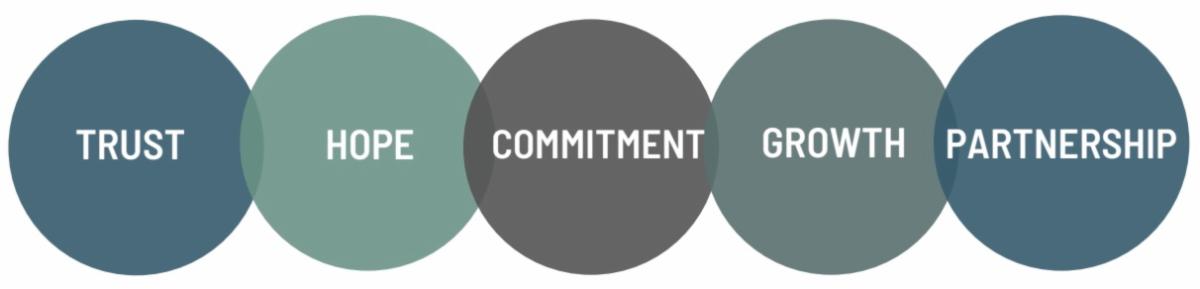
The answers did not come all at once. They surfaced gradually, shaped by experience, frustration, and hope. Teachers spoke about effort, ownership, relationships, and resilience. Over time, these ideas began to take form as a shared set of commitments that would become the Foundations of Success.
Before the language was finalized, the team reached a point of tension. The conversation narrowed to a single choice: kindness or empathy. At first, the distinction felt subtle. Both mattered, and both were visible in classrooms. But the more the staff talked, the more it became clear that the decision was not just about wording. It was about direction. What they chose would signal what they believed students truly needed, especially when learning felt difficult.
Rather than resolve the question alone, the team invited students into the process. A student leadership group was asked to weigh in, not as a formality, but as contributors. During that conversation, one student offered a perspective that shifted the room:
“To show empathy, you have to be kind. Kindness is basic. Empathy is what we need."
The statement was simple and direct, but it clarified the work. Kindness was not dismissed. It was assumed. Empathy, however, required more. It asked students to understand, to consider perspective, and to respond with intention. It aligned with the kind of growth the school wanted to cultivate, not just the behavior it hoped to see.
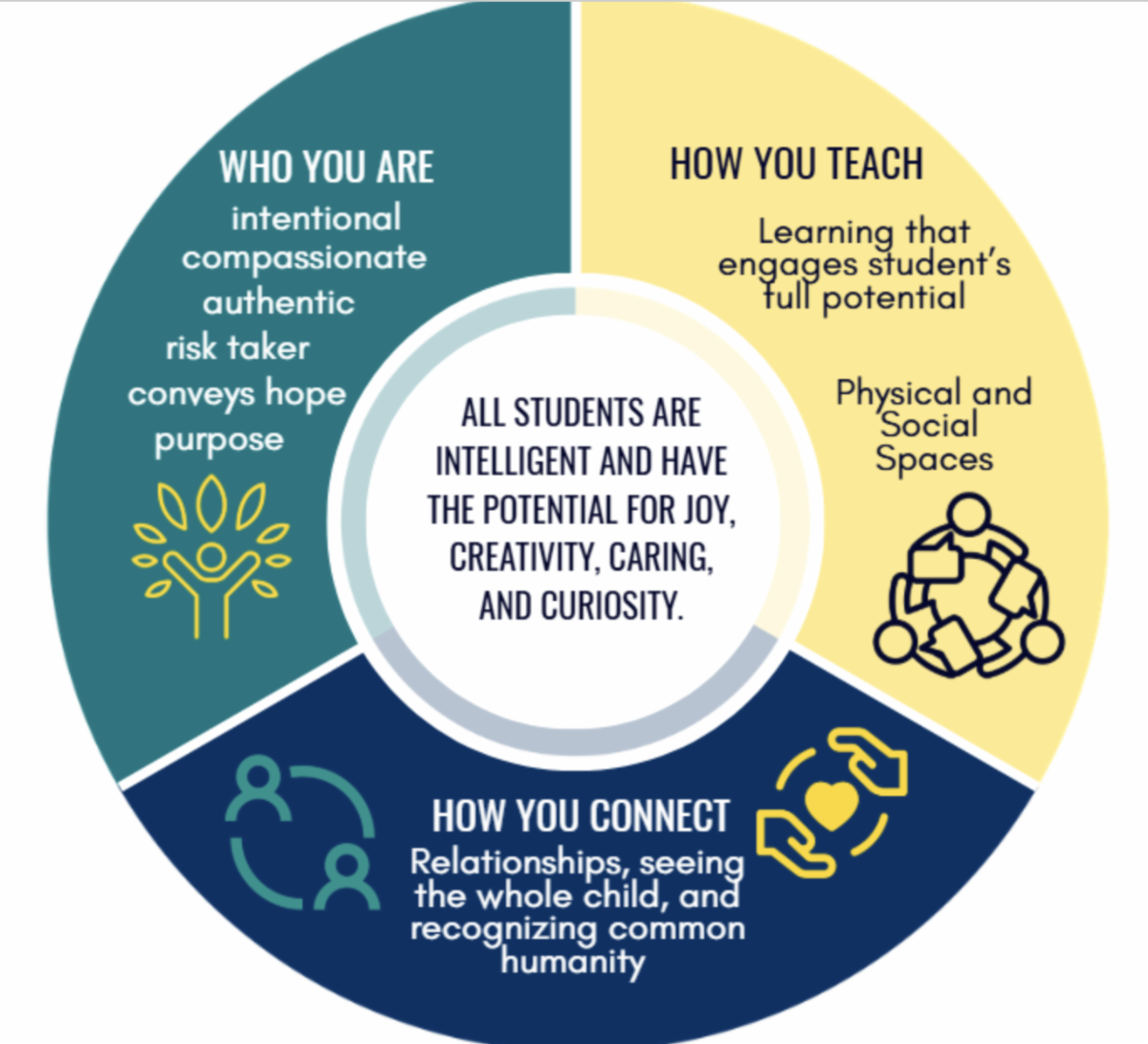
Foundations of Success:
From that point, the Foundations of Success took shape:
- We show Respect
- We practice Perseverance
- We act with Responsibility
- We lead with Empathy
These are not intended to live on posters alone. They are beginning to show up in daily interactions across classrooms, hallways, and shared spaces. The work is early, and implementation is unfolding through cycles of training, practice, and reflection.
Teachers are starting to use shared language to name what they see in students.
Praise is becoming more specific and more connected to values.
A student staying with a difficult task might be recognized for perseverance.
A student repairing a mistake might be acknowledged for responsibility.
These moments are not yet consistent, but they are becoming more intentional.
|
The Strategy: Give'm Five Framework
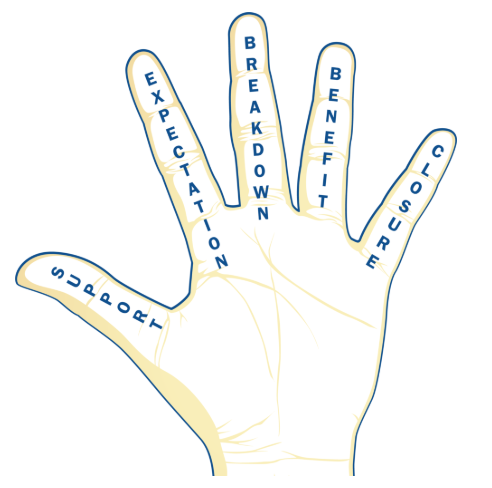
Alongside this, the school has introduced a structured approach to feedback and redirection. The Give’m Five framework, developed by Larry Thompson, is being practiced as a way to hold students accountable while maintaining strong relationships. Teachers are working to apply support, expectations, benefits, and closure in real time, learning what they look like in different situations and with different students.
Give’m Five is a structured approach to addressing student behavior while maintaining strong relationships and high expectations. Grounded in the decades-long work of Larry Thompson and his book Responsibility-Centered Discipline (RCD), it reflects a shift away from obedience-based discipline toward a model that centers student ownership of both behavior and learning. RCD recognizes that behavior and effort are closely tied to relationships, and when emotions escalate, those relationships are often tested. Give’m Five helps educators respond with clarity and consistency in those moments, keeping students engaged while reinforcing responsibility.
| |
The framework moves through five parts:
- Support
- Expectation
- Breakdown
- Benefit
- Closure
| Together, these steps provide a way to address behavior without escalating it, helping students understand the impact of their actions and make better decisions moving forward. Schools implementing RCD have seen improvements in school climate, reductions in disciplinary referrals, and increased student ownership. Give’m Five builds the skills needed to navigate challenging moments in ways that strengthen both accountability and connection. |
The Implementation: A Culture in Progress
A small team is helping to guide this work, testing what is effective, gathering feedback, and refining how these practices show up across the school. There is an understanding that this will not be implemented perfectly or all at once. It is being built through iteration.
Part of that learning includes recognizing that not every moment requires a full framework. Staff are beginning to calibrate their responses, using simple relational cues when appropriate and reserving more structured conversations for moments that require deeper reflection. Finding that balance is still in progress.
The shift at BES is grounded in a growing understanding of students and how they experience learning.
For many, academic struggle can feel like a threat. Mistakes can lead to withdrawal, and what appears as apathy is often a form of protection. In that context, rigor alone is not enough. Students need to feel safe enough to engage in the work.
This is where the balance between care and challenge becomes essential. BES is raising expectations. Students are still being asked to think deeply, persist through difficulty, and take ownership of their learning. What is changing is how the school is working to support them in meeting those expectations.
Empathy is not replacing accountability; it is helping make accountability possible.
The work is still developing. Teachers are practicing, reflecting, and adjusting. Some moments feel natural, while others require more thought and intention. The language is becoming more familiar, and the direction is increasingly shared.
What is taking shape at Brevard Elementary is not a finished model, but an extension of an already powerful culture. Guided by an incredible administration and an experienced, educated staff, it is being built through daily decisions, small interactions, and a willingness to keep refining the work.
The question that started it all still remains, but it is now being answered in classrooms, one moment at a time.
| |
Ed Matters Episode featuring Our Center and partnership in Wilson County Schools
In this episode of Education Matters, Elizabeth Dekonty and Eulanda Thorne join host Sarah Howell and a partner principal from Wilson County to discuss what it truly means to create trauma-informed schools.
We explore how shifting the conversation from "What’s wrong with you?" to "What happened to you?" transforms the educational experience for both students and staff.
Here’s a look at what we cover:
Our Collaborative Model: How we partner with schools for two full years to move beyond simple training and into real, sustainable action plans.
The Adult Foundation: Why we prioritize educator well-being and resilience as the necessary first step to supporting students.
Small Shifts, Big Impact: Practical examples of how simple routines—like morning meetings and mindfulness moments—build the safety and connection kids need to learn.
Proven Transformation: We share the real-world results of our work, including one partner school that saw a 57% decrease in disciplinary referrals.
At the Center, we believe that when students feel safe and seen, they are finally empowered to succeed. Join us as we dive into the neuroscience and the heart behind the work we do every day across North Carolina.
|
|
| |
Transform Your School from a Place of Stress to a Sanctuary of Safety and Growth
For too long, educational environments have operated under a cloud of stress. Behavioral challenges are rising, teacher burnout is at an all-time high, and students are struggling to connect. We often ask, "What is wrong with this student?" when the better question—the more scientific question—is "What happened to this student?"
READ MORE
| | | |
| |
What if we valued joy in schools?
The Teaching with Joy Network (TWJN) was founded by educators at UNC Wilmington as a response to the systemic challenges in public education. The initiative aims to transform classrooms into spaces where both students and teachers thrive by prioritizing emotional engagement and human connection.
READ MORE
| | | | Resources & Opportunities | |
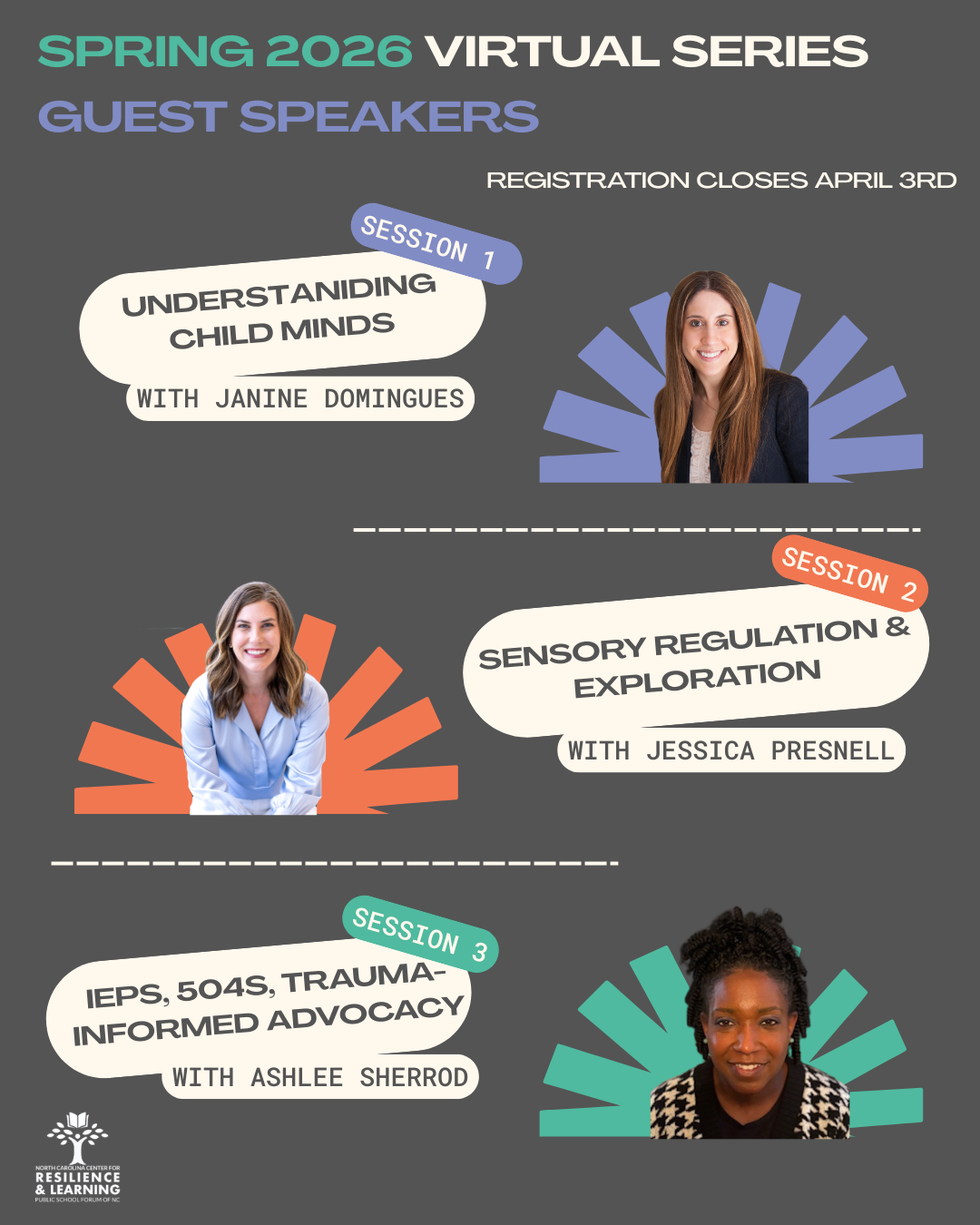
REGISTRATION CLOSES ON APRIL 6th- REGISTER TODAY!
This free three-part virtual workshop series is designed to deepen understanding of student behavior by examining trauma’s impact on development, sensory needs, and school-based systems of support.
Participants will be guided through a shift in perspective—from “What’s wrong with you?” to “What happened to you?” and ultimately to “What’s going on with us?”
Grounded in trauma-informed practice, neuroscience, and equity-centered approaches, this series is designed for North Carolina K–12 educators, support staff, administrators, and related service providers seeking practical, sustainable ways to respond to student needs.
| |
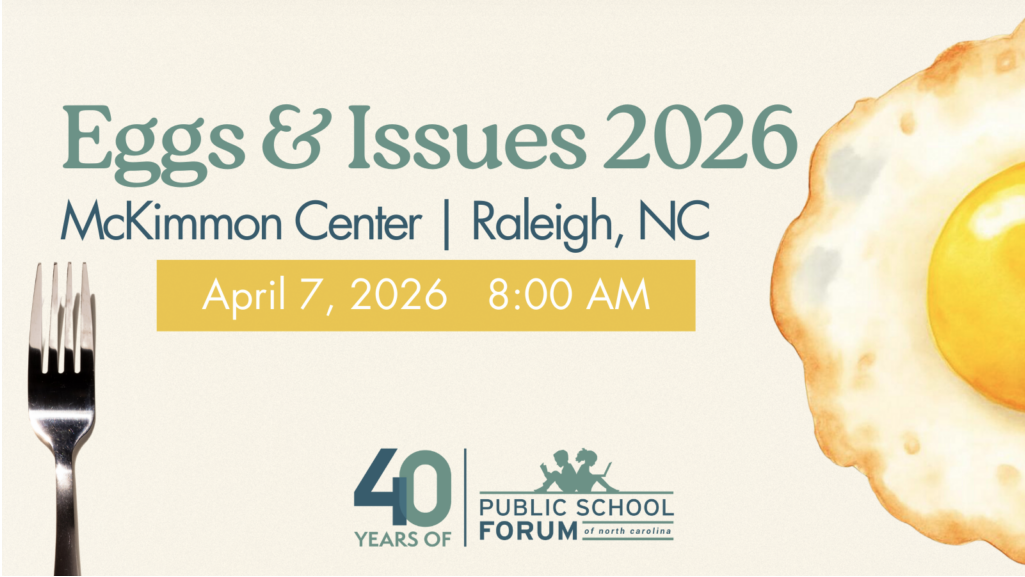
Public School Forum Eggs & Issues 2026
Eggs & Issues is an annual breakfast event hosted by the Public School Forum of North Carolina at the beginning of each legislative session, at which the Forum releases our Top Education Issues report. The Top Issues outline the Forum’s priorities for what should be at the forefront of education policy decision-making in the coming legislative biennium.
Eggs & Issues also serves as an opportunity for educators, policymakers, and advocates to connect.
Get Your Tickets Here
| | | |
Mental Health Literacy Toolkit
What does it mean to teach mental health literacy?
Pooja Mehta, project coordinator for the Mental Health Literacy Collaborative’s Young Adult Council, has one answer: “Teaching people how to be people. Teaching people how to connect with each other, how to care about each other, and really how to strengthen those bonds that give rise to functional and caring communities.”
Originally from North Carolina, Mehta helped lead the development of a mental health literacy advocacy toolkit designed by and for young people — one of the many tools the Mental Health Literacy Collaborative (MHLC) oversees.
Young Adult Advocacy Toolkit
Read More About the Collaborative
| | | |
Follow us on INSTAGRAM!
We want to share our story on Instagram- join us there!
| | Want your school to begin the journey to becoming trauma-informed? | | |
Elizabeth DeKonty
Senior Director
NC Center for Resilience & Learning
(Raleigh, NC)
|
| |
Eulanda Thorne
Senior Program Manager
NC Center for Resilience & Learning
(Wilson, NC)
| | |
Brian Randall
Senior Western Regional Program Manager
NC Center for Resilience & Learning
(Asheville, NC)
| | |
Michelle Harris Jefferson
Senior Program Manager of Professional Learning
NC Center for Resilience & Learning
(Greensboro, NC)
| | |
Orlando Dobbin, Jr
Senior Eastern Regional Program Manager
NC Center for Resilience & Learning
(Greenville, NC)
| | |
Angela Mendell
Senior Program Manager
NC Center for Resilience & Learning
(Elizabethtown, NC)
| | |
Leslie Blaich
Program Manager
NC Center for Resilience & Learning
(Marshall, NC)
| | |
Stacey Craig
Program Manager
NC Center for Resilience & Learning
(Raleigh, NC)
| | |
Jessica Edwards
Impact Specialist
NC Center for Resilience & Learning
(Spring Hope, NC)
| | |
Ervin Jones
Program Consultant
NC Center for Resilience & Learning
(Elizabeth City, NC)
| | |
Rebecca Stern
Program Consultant
NC Center for Resilience & Learning
(Carrboro, NC)
| | |
MKayla Nelson
Program Manager
NC Center for Resilience & Learning
(Newland, NC)
| | |
Quintin Mangano
Program Manager
NC Center for Resilience & Learning
(Rocky Mount, NC)
| | |
Katie Rosanbalm
Research & Evaluation Partner
NC Center for Resilience & Learning
(Duke University)
| | |
Victor Jones
Consultant
NC Center for Resilience & Learning
(Rocky Mount, NC)
| | |
The Resilience Reader is published monthly by the Public School Forum of NC and distributed to Forum members, educators, policymakers, donors, media, and subscribers -- or anyone interested in issues such as Adverse Childhood Experiences (ACEs), childhood trauma, resilience and the power of trauma-informed schools and communities.
Please pass the word! Forward The Resilience Reader to anyone who may find this information useful.
If you received this email from a friend, subscribe to this newsletter by clicking here.
Archived editions will be located at https://resilienceandlearning.org/newsletter/.
©2024 Public School Forum of North Carolina. All Rights Reserved.
Public School Forum of North Carolina
919-781-6833
Follow us at @theNCForum
www.ncforum.org
| |
|
|
Subscribe to this Monthly Newsletter | | | | NC Center for Resilience & Learning | www.resilienceandlearning.org | |
| | | |