Privacy and Cybersecurity Law section presents
The Robot in My Living Room: A New Frontier for Product Liability and Privacy Claims
🗓️ Live Webinar: Monday, November 2 at 1:30 PM Pacific
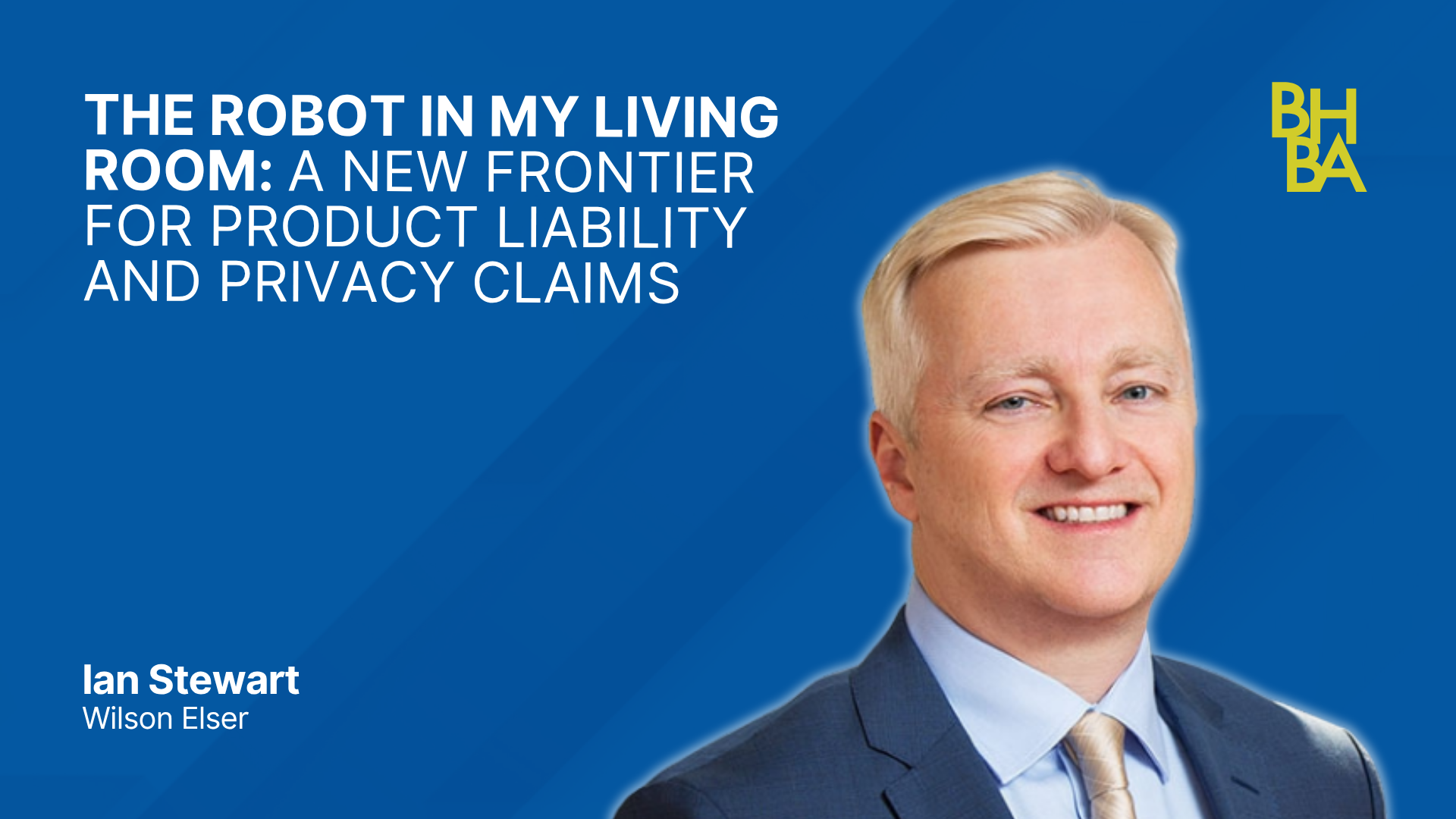
Humanoid robots are no longer prototypes. Figure AI, Unitree, 1X Technologies, and Tesla have placed learning, adapting machines inside private homes, and Goldman Sachs now projects a $38 billion market by 2035. No coherent U.S. regulatory framework governs these devices, and the existing rules were written for Roombas and factory arms, not autonomous humanoids that rewrite their own decision-making after purchase. That gap is about to produce a wave of novel litigation. This program examines how traditional product liability theories, design defect, manufacturing defect, and failure to warn, break down when applied to a continuously learning robot, and how liability may be distributed across hardware makers, foundation model developers, system integrators, and owners. Ian Stewart, Wilson Elser, walks through the convergence of injury and privacy claims, the CCPA, CPRA, BIPA, and COPPA exposure created by always-on cameras and biometric collection, and the "silent AI" coverage gaps facing homeowners, manufacturers, and insurers. Attendees will leave understanding where the first serious home-robot lawsuits are likely to land and what documentation and coverage language positions clients to withstand them. The Privacy and Cybersecurity Law Section is chaired by Don Dennis and Diana Iketani Iorlano.
Earn 1.00 CA CLE hour of General credit If you're interested but not able to attend this live webinar, register anyway and we'll send you a link to access the recording and materials when they're ready. |
Award-Winning. Nationally Recognized. Always Relevant. BHBA CLE programs are eligible for credit in jurisdictions with mandatory CLE requirements, subject to each jurisdiction’s accreditation rules. Refer to the registration page or course flyer for specific CLE information. Built for lawyers, by lawyers, to keep you ahead.
|
||||