Volume 7 Issue 1 | January 2026 | | The Root of It newsletter ends with our monthly quotation. If you find your newsletter has been clipped by your email provider please click HERE for a webpage version of the newsletter. | | |
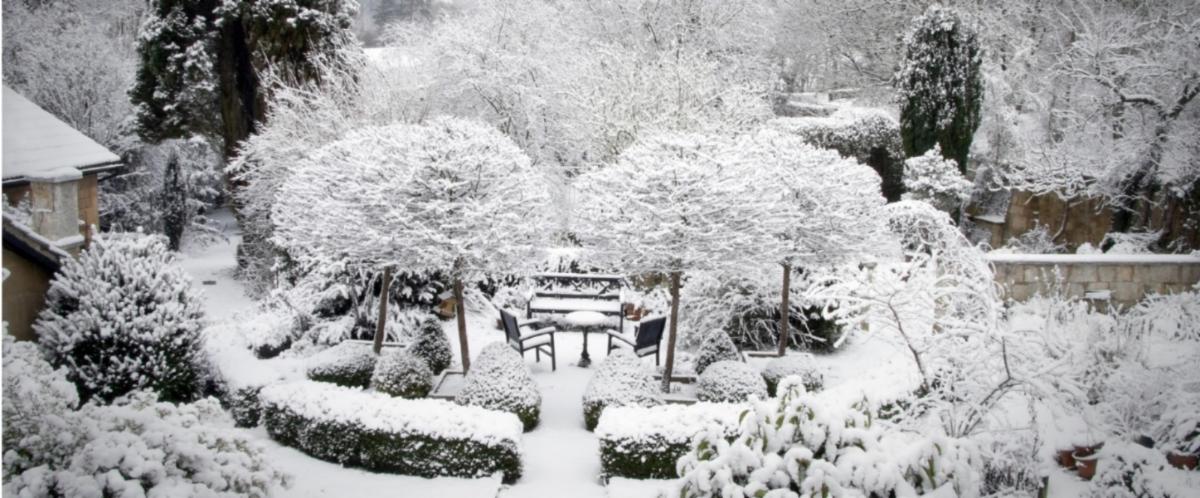
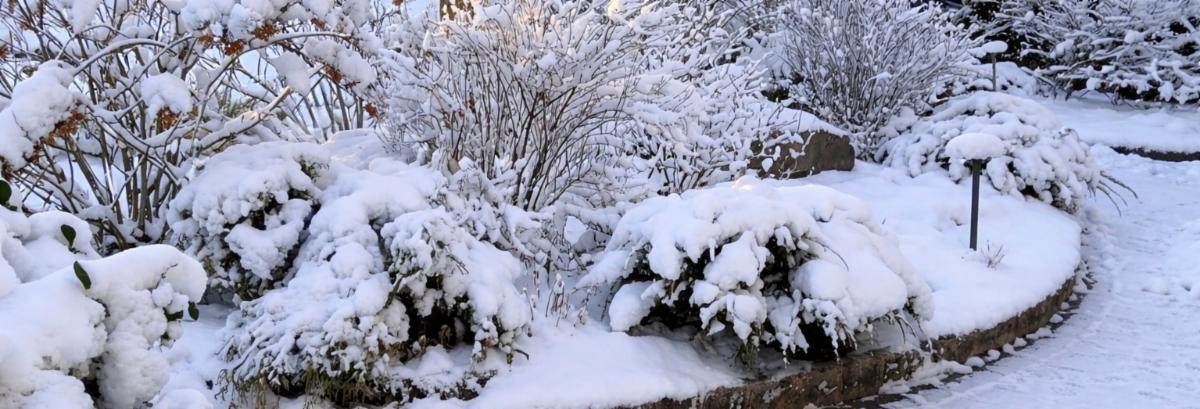
Whether a dusting or a deluge, snow transforms a landscape. Icicles add sparkle, and a hoarfrost* adds decorative edges to fences and other geometric garden features. While an overabundance of snow can strain or break the branches of conifers such as junipers (and requires removal with the upward or sideways sweeping motion of a broom), snow highlights garden elements. The eye is drawn to tree silhouettes, ornamental grass blades, colorful berries, seed pods. A snowy garden extends an invitation to get close and personal, to appreciate the textures of conifer branches, to observe the winter birds and other creatures foraging for a meal. Fallen leaves reveal the exfoliating, ridged, colorful, and patterned bark of trees. Snow’s porous nature makes it a natural sound absorber: a snow-laden garden has a peaceful quiet that speaks to the soul.
Garden designers use the winter landscape to evaluate their work—good gardens are also beautiful in winter. When leaves have fallen and flowers fade, walls, walks, hedges, steps, and garden structures come into view. Depth becomes apparent. The black and white of a snowy garden clarifies this view and highlights the strength of the design. Does the garden flow? Are the bones sufficient and in proportion? Is there enough plant and structural interest? Detroit landscape designer and garden writer, Deborah Silver, says significant snowfall can reveal the bones of the design. Are they good sturdy bones?
The gentle fall of snowflakes is an invitation to go outside, to notice that the flakes are not single, but clusters tethered together for their downward journey. They entreat us to drop our indoor tasks, and explore the ephemeral magic of the winter garden. Look Around!
Hoarfrost: a needle-like collection of ice crystals formed when water vapor directly converts to ice
GOOD BONES: Deborah Silver Blog Dirt Simple
K Edgington
| | |
LEAF BRIEF
Breynia nivosa: Snow Much Fun
| | |
Breynia nivosa
photo by Tamara Kuklova
| | |
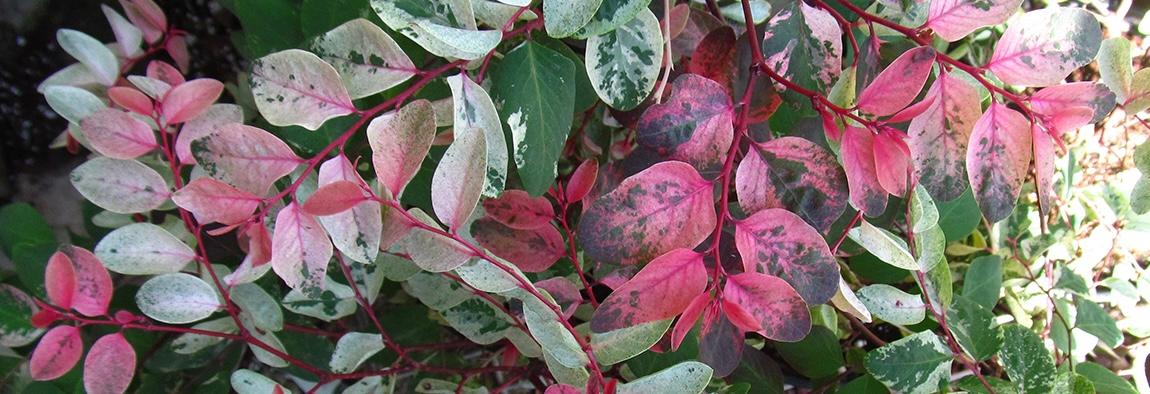
Come January, snow is a given. Why not go all in and enjoy another form with a Snowbush? For the tropical plant enthusiast seeking a distinctive houseplant that brings texture and color indoors, Breynia nivosa*—commonly known as Snowbush or Snow-on-the-Mountain—is a charming choice. Native to the South Pacific (specifically New Caledonia and Vanuatu), it has naturalized throughout the Pacific Islands and parts of Southeast Asia. It’s also found in the southern United States and Hawaii in hardiness zones 10-11. This ornamental shrub is prized for its delicate foliage and variegated leaves, splashed with pink, green and white, that resemble a dusting of new-fallen snow.
When properly maintained indoors, Breynia adds vibrant year-round color that is not dependent on a floral display. This small shrub can reach two to three feet tall indoors, but may grow much taller (three to five feet) in its native outdoor habitat where it makes a great specimen plant or hedge. The Snowbush’s colorful, variegated leaves develop their best color under bright, indirect light, making careful light management essential for indoor growth. Providing four to six hours of adequate light helps prevent legginess, and regularly rotating the plant promotes even development. In low-light climates like Ohio, supplementing with a full-spectrum grow light can also help maintain vibrant foliage.
.
Despite its name, the Snowbush thrives in warm, humid environments—an essential factor for indoor gardeners to replicate. On the other hand, its roots can be sensitive to standing water, which makes a well-draining soil mix, such as one containing perlite, essential.
Humidity should be kept moderate to high. Those gardeners with dry indoor heat can use a pebble tray or humidifier to maintain proper moisture levels. Temperatures between 65 and 80°F are optimal. It’s best to avoid drafts or furnace/AC vents.
One of the most appealing features of the Snowbush is its adaptability to pruning. Regular trimming helps the plant maintain a compact snowball (or perhaps a snowman?) shape and encourages denser foliage growth. Cut branches at a 45° angle above a leaf node. Pruning can also counteract sparse growth caused by insufficient light exposure.
Fertilizing during the growing season supports vibrant foliage color. Using a balanced, water-soluble fertilizer every four to six weeks from spring through early fall generally suffices. Moderation is key as excessive fertilization can cause root burn or leaf discoloration.
Like many tropical houseplants, Breynia can attract common indoor pests such as aphids, mealybugs, spider mites and scale. Use insecticidal soap or neem oil to address early infestations. Monitoring regularly and cleaning the foliage with a damp cloth can help keep pests at bay.
With its showy foliage and manageable size, Snowbush is a rewarding choice for indoor gardeners who enjoy nurturing tropicals. It can be found at local specialty nurseries and on the internet. With the proper warmth, light, and humidity, it can thrive for years, long after the real snow has melted away.
*also seen as Breynia disticha and Phyllanthus nivosus
PHYLLANTHUS NIVOSUS: North Carolina State State University Extension
J Gramlich
| |
|
CREATURE FEATURE
Snowy Survival
| |
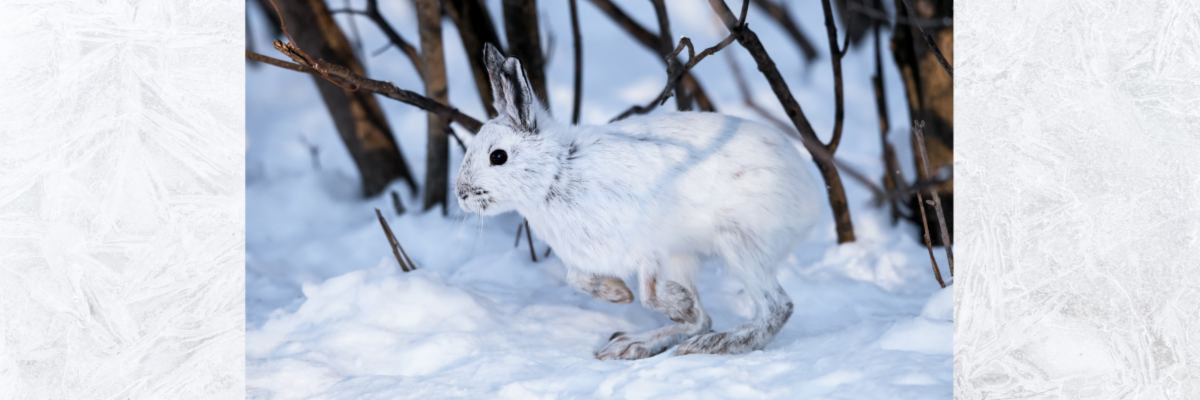
A snowshoe hare blends into the winter landscape.
photo by Karen Hogan
| |
Snow is magical. The blinding sparkle of a sunny, snowy day, the hushed blue glitter of a frosty night, the crunch of snowy footsteps—it’s truly wonderful.
For about ten minutes.
Then inside is better. With a window between me and that cold, wet, drippy snow, a hot beverage, and, hopefully, a large cookie. Now that’s magical.
But what about the creatures who can’t go inside? What do they do?
Interestingly, animal and human winter survival strategies are not all that different. There are three main ways animals survive cold and snow, sometimes using a blend of these strategies.
The first strategy, migration, is also a favorite of human "snowbirds.” Heading for sunnier skies when the weather turns frosty sounds easy, but travel is taxing and stressful, regardless of whether your wings are made of feathers or aluminum. Humans usually survive the trip, but birds often do not—an estimated 25% to 50% of migrating birds don’t make it. And the flight is only the first part of the journey. Once they arrive, newbies must battle with locals for habitat and food (and pickleball courts and tee times!)
The second strategy for surviving winter is dormancy—a period of time when body temperatures decrease and breathing and heart rate slows to conserve energy. Depending on how extreme these changes are, animals are classified on a scale ranging from true hibernators to occasional sleepers. A groundhog’s body temperature drops 60 degrees—these true hibernators are not going to hear the DoorDash guy! On the other hand, a black bear’s temperature decreases only about 10-15 degrees, allowing him to wake in case of danger, or shift to a more comfortable position. Squirrels and raccoons generally remain active, only going to bed when the temperature really drops. This sounds a bit like those of us who use long naps and Netflix to survive winter.
The creatures that don’t leave town or snooze winter away must, like us, adapt to survive. This strategy is called resistance or tolerance. One common adaptation is adding fat to provide insulation for warmth, and as an energy reserve. Bears, deer, squirrels and chipmunks eat like crazy in the fall (this seasonal overeating is called hyperphagia) to prepare for winter. Ducks, geese and ladybugs do the same. (Feel free to use this excuse to justify winter weight gain.)
Other animals and birds such as beavers, fox, jays and woodpeckers gather and cache extra food for the winter. Squirrels take no chances—they overeat and cache—which I totally get. Costco as a form of caching…?
There are many other ways creatures have adapted to survive the cold. Birds fluff their feathers, trapping a layer of air around their bodies, which insulate them like our down coats insulate us. A white-tailed deer’s winter coat is made of two layers, a topcoat consisting of hollow hairs which trap air and provide insulation similar to the birds, and a dense undercoat. A deer’s body heat is so effectively contained by his coat that snow on its back often doesn’t melt!
Coyotes, raccoons and foxes also grow thicker coats of fur or hair in winter (which may make them look bigger than in summertime). Animals that dwell in cold climates may have smaller ears and tails than those living in warmer climates, as smaller appendages closer to the body stay warmer. While a deer’s winter coat is darker than its summer coat to absorb more heat, some animals turn lighter in winter for camouflage in snow—like the snowshoe hare and stoat.
Snow is magical. But how creatures that can’t come inside survive winter is pretty magical too. Watch the magic HERE.
WILDLIFE WINTER SURVIVAL STRATEGIES: National Wildlife Federation
C Christian
| | |
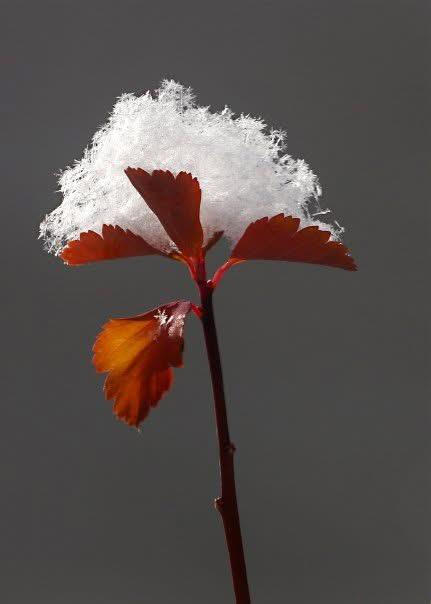
Fluffy snow stacks on a lingering spirea twig.
photo by E Barth-Elias
| | |
A blanket of snow is the BEST winter cover for plants.
photo by E Barth-Elias
| | |
During winter it’s easy to grumble about snow. Roads become ice rinks, traffic snarls. A child's snowy playground is a chore to people able to maneuver a snow shovel. Before we label snow as bad, though, let’s look at the many benefits that fall from those cold skies.
It’s hard to gripe when taking in a landscape covered in fluffy white snow. Snow blankets everything, hiding the not-so-pretty scenery and allowing us to bask in the magic. But there are other benefits that make snow a welcome partner in our gardens.
We need coats, scarves, and hats in this weather; soil needs protection from the cold. The freeze-thaw cycle wreaks havoc with soil structure and desiccates plants left standing after fall, often killing them before spring. Snow also shelters the myriad creatures and microbes that live in the soil, enabling them to do the vital tasks needed to wake plants when the weather finally warms.
Snow is, in essence, frozen water shaped by the cold into crystalline flakes. Those crystals hold water and slowly release it as the snow melts, shielding the soil from erosion and floods. It also ensures water is distributed evenly by melting slowly over the entire area rather than as a deluge, which often makes the soil impermeable or waterlogged, killing plants and microbes alike.
Not many of us think of snow as fertilizer, but as it falls, snow picks up dust and charged particles such as nitrogen, sulfur and trace minerals. No need to worry about amounts; those nutrient-filled flakes dole out the food evenly.
Finally, snow helps bulbs and shrubs get ready for spring by providing the chilling they need to form buds and roots. Some seeds need a period of cold, called stratification, in order to sprout when the weather warms.
Yes, snow can be a real pain in the back, but it is also exactly what our gardens need to do their jobs when that cold, flaky blanket is gone. It’s hard to imagine snow when the temps are soaring, but gardens thrive because Jack Frost paid a visit. Next time the snow falls, enjoy the magic and the gifts it brings.
A HEALTHY SNOW OFFERS VARIETY OF BENEFITS: University of Delaware
S Vradenburg
| | |
January Checklist:
- Use Christmas tree branches to mulch perennials.
- Cozy up with a seed catalog and plan your perfect garden.
- Check houseplants for spider mites and other indoor pests. MANAGING INSECTS ON INDOOR PLANTS: University of Minnesota Extension
- Take advantage of local indoor botanical gardens, greenhouses, and nature centers, many of which host special winter events.
- Reflect on last year’s gardening season and plan changes. Assess which trees/shrubs need pruning and reevaluate problem areas.
- Keep your bird feeder stocked to enjoy the beauty and entertainment of winter birds.
J Gramlich
| | |
More learning opportunities:
| | |
The way a crow
Shook down on me
The dust of snow
From a hemlock tree
Has given my heart
A change of mood
And saved some part
Of a day I had rued.
Robert Frost
| | We invite you to share The Root of It with your friends and family. If you would like to subscribe to our mailing list please visit our website, scroll to the bottom, and follow the link under Join our email list. | | The Root of It staff: Karen Edgington (Editor), Emma Barth-Elias (Photo Editor), Carolyn Christian, Jennifer Gramlich, Sarah Vradenburg, and Geoff Kennedy (Technical Advisor) | |
We Would Like your Feedback
Contact us at: newsletterscmg@gmail.com
To discontinue receiving this newsletter please click on the UPDATE YOUR PROFILE link below. You may then choose what types of information you would like to receive from us.
| | | | |