Volume 6 Issue 5 | May 2025 | | May gardening—so many "ahhhhh" moments! Long days in the garden make for a satisfying day's end. | | The Root of It newsletter ends with our monthly quotation. If you find your newsletter has been clipped by your email provider please click HERE for a webpage version of the newsletter. | | |
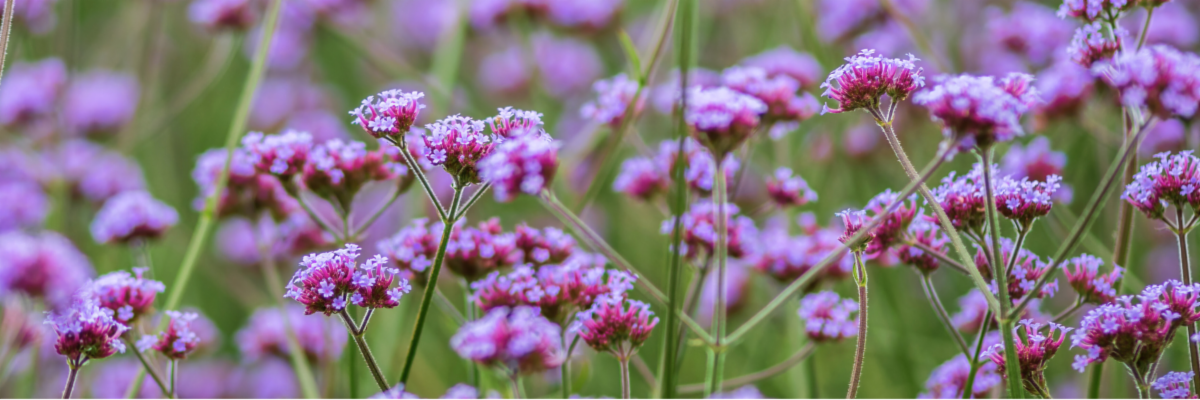
The flower heads of Vebena bonariensis
photo by E Barth-Elias
| | |
Formulas make life easier. Who hasn’t browsed the nursery aisles saying, “I’ve got the spiller and filler, now where’s that thriller?” We organize our plants in stadium-seating-like beds: low-growers in front, mediums in the middle, and talls in the back, giving each their day in the sun. How much more interesting, though, to mix it up a bit. An occasional tall plant in the front of the bed causes the eye to pause. Better still, adding see-through plants to the mix brings in a bit of drama, a bit of mystery.
See-through plants are those tall plants with flower heads atop wiry, slender stems that allow the viewer to see through to the plants or the view beyond. They provide a feeling of depth and an enticement for further exploration. Often catching the light in an ethereal manner, they can be spectacular when back-lit by late-day sun. Since many are self-sowers, they show up, unannounced, at the party, often providing a serendipitous element to garden designs. Place see-through plants in front or to the side of an aspect you’d like to feature: they frame a view, drawing the eye onward. Because of their tall, thin stems, when breezes blow they offer movement to a static garden. Gaura lindheimeri is an excellent see-through plant whose fluttering flowers live up to its “whirling butterflies” common name. Talk about movement!
Verbena bonariensis is the quintessential see-through plant, with its 2-3” clusters of lavender blooms atop strong, wiry stems. Planted en masse, it makes quite a garden statement, which is how I first encountered it—a 40’ by 4’ row of blooming Verbena bonariensis at a public garden. Beautiful! But its use as a see-through plant is what earns VB its stripes. Try this beauty in your garden framing efforts. While VB is not hardy in our zone 5/6 gardens, it readily self-sows, providing a year-to-year presence. Unwanted seedlings are easily rogued out and can be transplanted when small.
You will likely recognize these great see-through plants:
GRASSES: Molinia caerulea (purple moor grass), Muhlenbergia species (muhly grass)
BULBS: Allium species, Lilium species
PERENNIALS: Achillea millefolium (yarrow), Eryngium planum (sea holly), Sanguisorba officinalis (greater burnet), Knautia macedonica (Macedonian scabious)
ANNUALS: Gomphrena species (globe amaranth), Anethum graveolens (dill), Foeniculum vulgare (bronze fennel), Cleome hassleriana (spider flowers)
Most of these see-through plants are pollinator magnets, increasing movement in the garden, enhancing the view, and supporting the ecosystem. Add texture, movement, and a bit of mystery to your bed designs this spring with see-through plants, and look for them in your garden wanderings throughout the season. Look Around!
SEE-THROUGH PERENNIALS IN PICTURES: The Guardian
K Edgington
| | |
Leaf Brief
In Awe of Pawpaws
| | |
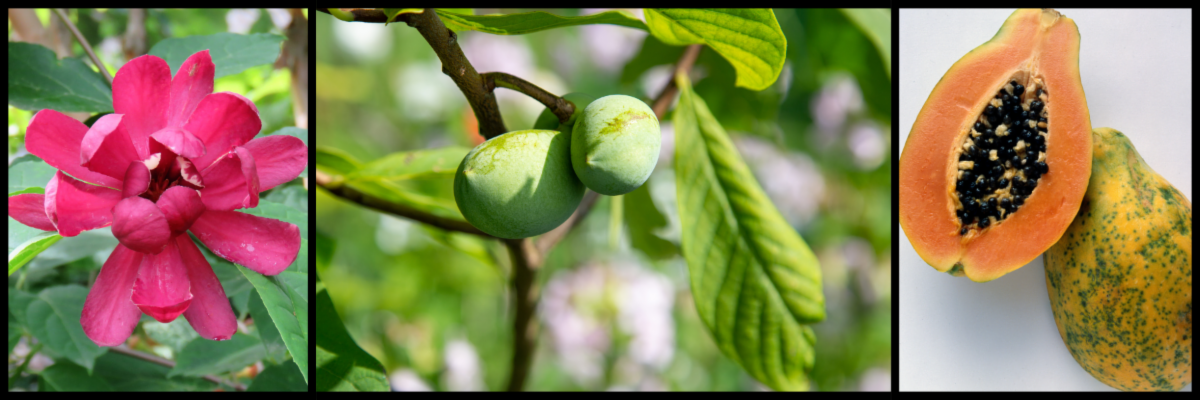
Pawpaw flower, immature fruit on tree, ripe fruit
photo series by: Christine Kohler
| | |
Often overlooked and underappreciated, the Pawpaw (Asmina triloba) is a native tree that holds a special place in the heart of Ohioans for its uniqueness, tasty fruit and contribution to our culture. The pawpaw is the only non-tropical member of the Annonacea family and produces the largest edible native fruit in North America.
The ideal conditions for pawpaws include humid summers and mild winters in zones 5-8. They flourish in fertile, well-drained soil with a pH of 5.5-7.8 and good moisture retention. For these reasons, you’ll find them throughout the Appalachians from Ohio, south to Florida, and west to Texas. This understory tree likes partial (dappled) shade but will tolerate more sun as it matures. It reaches 15-30 feet high and has a pyramidal silhouette. Pawpaws will sucker and naturally form a “pawpaw patch.”
The pawpaw fruit is the state fruit of Ohio, measuring 1 to 6 inches in length and weighing from a few ounces to nearly a pound. It is a tantalizing mix of banana, mango, and papaya flavors. (Like a fine wine, it’s said to have notes of pear and vanilla.) Its nicknames include the 'custard apple', 'poor man’s banana', and the ‘Indiana banana.’
Pawpaw leaves are fragrant, similar to bell peppers. This contrasts with the putrid smell of the purple maroon blooms in late spring, which attracts flies and beetles. The plant is self-incompatible, meaning it cannot pollinate itself; therefore, it relies on neighboring trees and the previously mentioned opportunistic insects to pollinate. Bees do not participate.
The pawpaw fruit was a staple of the Native American and colonial diet. In addition to eating them right off the tree, some Native American tribes mashed them and formed them into cakes that could be dried and stored for later. George Washington was said to be a fan of pawpaws as a dessert and Thomas Jefferson cultivated them at Monticello. The fruit is packed with nutrients including antioxidants, vitamins A and C, magnesium, potassium and fiber. It serves as an excellent snack for hikers and anyone else who did not pack enough granola bars. Don’t eat the skin or the seeds which can be toxic.
Because pawpaw fruits only have a shelf life of about 2 days (up to a week if refrigerated) and don’t transport well due to their fragile skin, we don’t see them in stores and only occasionally at farmers' markets. In addition, they don’t ripen all at once so the same trees must be continually revisited to harvest.
If you’d like to try your hand at propagating pawpaw, planting seeds or grafting are the most “fruitful” methods. Cuttings have a poor success rate. HERE is more information. Plant seedlings in the spring and water frequently until established, 6 months to a year. Larger saplings don’t transplant well due to their sprawling roots. The Pawpaw is not a good choice for sidewalks, patios or driveways because of the mess and risk of falling. Many cultivars have been discovered or developed and are usually found through online specialty nurseries. They make a great privacy screen or specimen planting.
Ohio is known as the "Pawpaw State," and is the epicenter of pawpaw culture. Its large population of pawpaw trees is celebrated with the Pawpaw Festival every September in Albany, Ohio. People come from all over to experience pawpaw-themed food, drinks, music, and educational opportunities. The Ohio State University South Centers is at the forefront of pawpaw research and propagation (Read about it HERE.) and the Ohio Pawpaw Growers Association works to preserve the pawpaw legacy and promote the growth of this unique native.
Keep an eye out for this intriguing tree and its fruit this summer. Don’t hesitate to experiment with a pawpaw-infused dessert, sauce or even craft beer. Or in its best form—straight off the tree.
J Gramlich
| | |
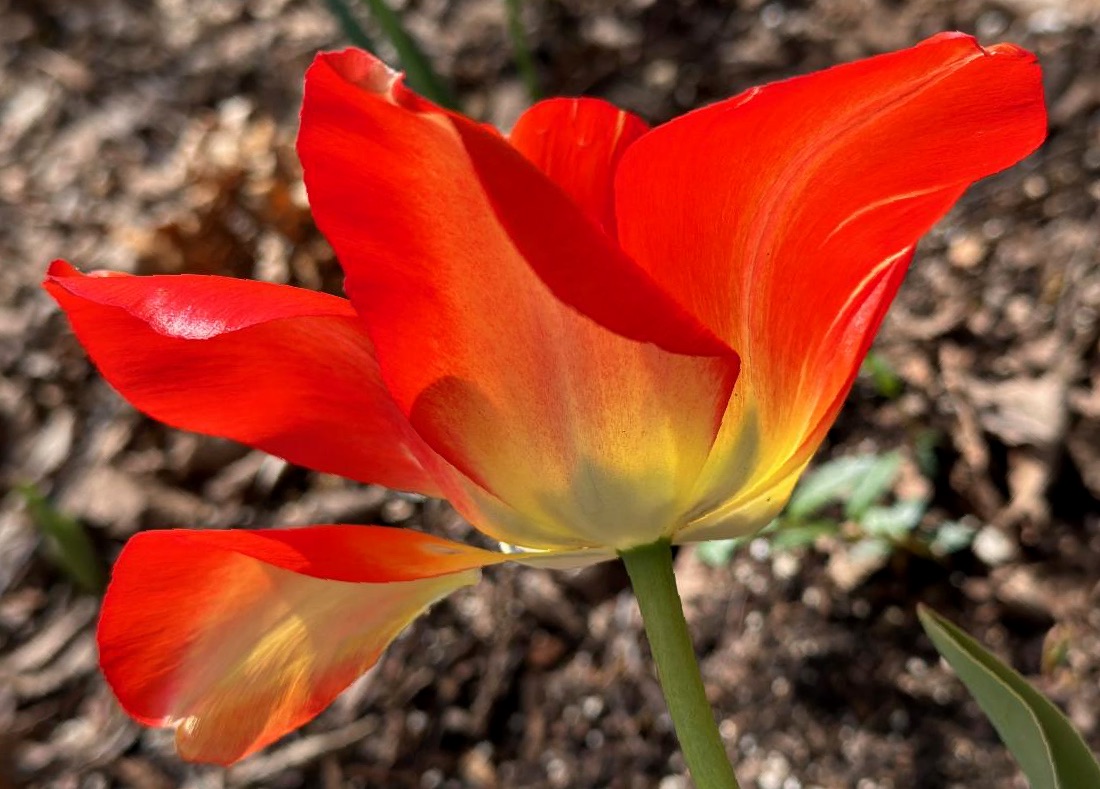
A tulip catches the light—ahhhh!
photo by E Barth-Elias
| | |
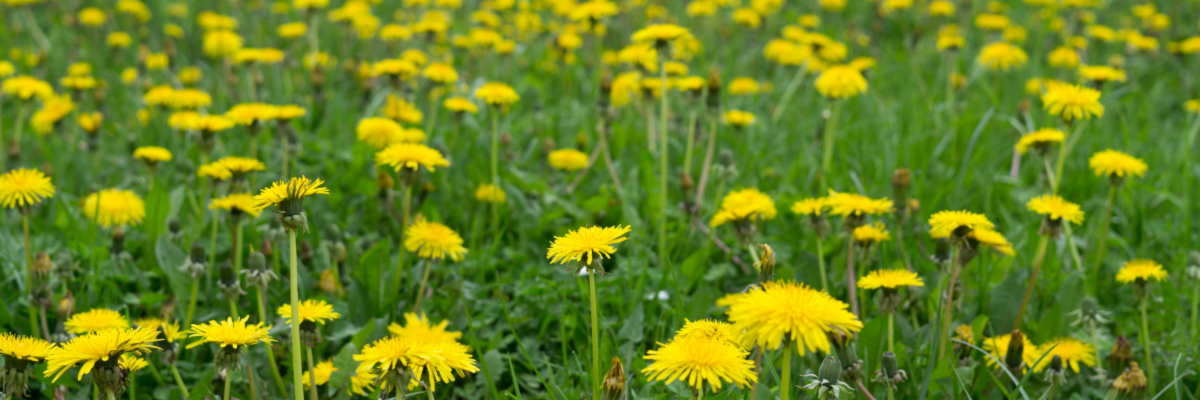
The sight of yellow flowers in the yard toward winter’s end can be a happy event or a source of dread. Dandelions are a sure sign that spring has arrived, even if the air stays nippy for a couple more weeks. They are also a bane for anyone who insists on a pristine lawn. Not only do they stand out, they are almost impossible to get rid of without using lots of chemicals.
Dandelion (Taraxacum officianale) and its many relatives are native to Eurasia but have been in North America long enough to be completely naturalized. They are hardy to Zone 3 and are characterized by daisy-like flowers. Most are bright yellow, but some can be white. Their petals fan out from a central hub, placing dandelions squarely in the Aster family, one of the largest of plant families. Most likely the word dandelion comes from the French “dente de lion,” meaning lion's teeth.
When Europeans traveled to North America, they brought dandelion seeds along to provide food and medicines. All parts of the dandelion plant are edible, although people with allergies to ragweed, marigolds, chrysanthemums, yarrow and chamomile should steer clear of this ubiquitous plant. If picked early in the season to avoid bitterness, dandelion greens can be used in salads. Its taproot, cleaned and dried, can be ground for a coffee substitute or, as some have suggested, used like turnips. Dandelion wine was once a staple for many early settlers and is still offered for sale.
Dandelions are nutritious, containing calcium, potassium and iron. Research from the USDA shows they are high in vitamin A and C. They are high in antioxidants, beta-carotene and polyphenols. A compound, taraxasterol, is reported to be highly effective in reducing overall inflammation. Research suggests dandelion tea calms the digestive system and helps the liver remove toxins from the bloodstream.
Many people will do anything to rid their lawns of dandelions, including adding herbicides that kill the plant before it has a chance to bloom to lawn fertilizers. This may work, but the prolific seeds from nearby dandelions and their stubborn tap roots are likely to make those interventions temporary at best. Applying lawn chemicals regularly will have a more permanent effect but that poses dangers to birds and insects, many of which depend on the flower for pollen and nectar in early spring. Ironically, dandelions are good for the soil, breaking up compaction and drawing up needed minerals with their long tap roots.
It's clear these little yellow flowers have been given a bad rap. Perhaps, as we learn that lawns may not be worth the time, money, and chemicals required to maintain their carpet-like quality, we might also learn to welcome those cute flowers and the many benefits packed into those tiny, fuzzy, flying seeds.
DANDELION: Wisconsin Horticulture
TEN THINGS YOU MIGHT NOT KNOW ABOUT DANDELIONS: Maine Organic Farmers and Gardeners
DANDELION TEA: WHAT IT IS AND 5 BENEFITS: Cleveland Clinic
S Vradenburg
| | |
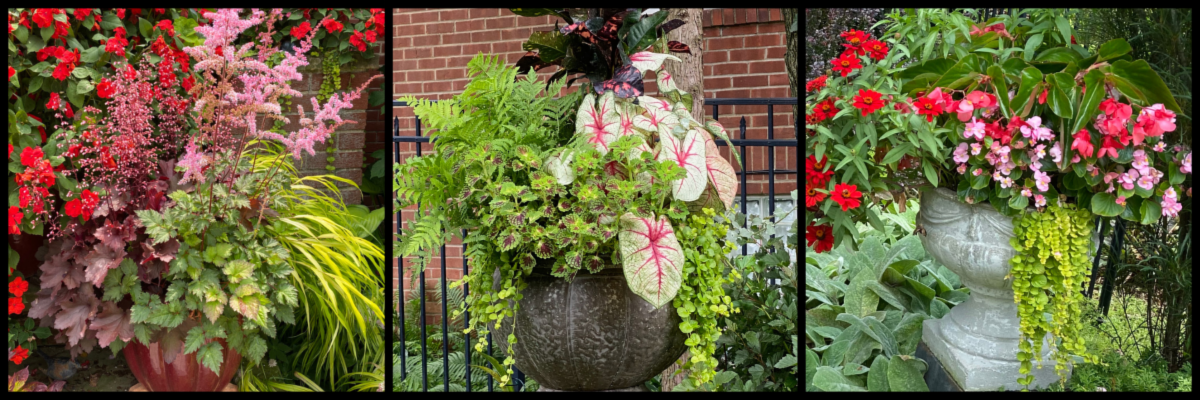
photos by E Barth-Elias
At long last! Frost-free gardening days are in sight, and container planting can begin. Trips to the nursery are no longer scouting expeditions—carts roll to the check-out filled with colorful plants. Whether using annuals, succulents, perennials, or even shrubs, arranging and planting containers is one of the joys of gardening.
Paying attention to the mechanics of container planting yields big benefits down the road. Well-planted containers maintain their beauty throughout the season, often getting more beautiful as the months progress. Here’s a review of container best-practices:
-
Think ahead when selecting your container. Will it need to be moved? Ceramic containers are beautiful, but when they include plants and wet soil become very heavy. Is there water access and time for repeated watering? Clay pots are classic choices and are perfect for plants that like to dry out between watering, but plants in clay pots need more frequent watering, sometimes more than once a day during dry periods. Pots that narrow at the top have an artistic silhouette, but remember that root balls don’t easily slip out of these pots and can be difficult to remove. If plants will be saved at the end of the season, these pots are not the way to go.
-
Use a good potting mix. Cheap mixes are often heavy, which means poor drainage and failing plants down the line. Good mixes absorb water for thirsty roots, yet drain readily so roots have access to the oxygen they require.
-
Slow-release fertilizer pellets are a great tool for keeping plants fertilized for months. The container label will indicate how long the pellets will last, but temperature and moisture play a role as well. Many experienced gardeners put a generous amount of slow-release fertilizer in the root zone when planting their containers, and then water with a water soluble fertilizer solution for immediate plant use.
-
As always, plant like plants together—sun/shade and water needs should be consistent in the planter.
-
Beautiful containers often require editing. Some plants have a brief moment of glory and then fade into the background. Bleeding hearts and pansies add charm to spring containers. Snapdragons add great vertical accents, but languish when the temperatures rise. Switch out these beauties when they’ve passed their prime.
-
Beware of container “thugs”. Sweet potato vine is anything but sweet when it takes over the container and the patio and… In fertilizer-rich containers Wave petunias can dominate. Avoid plants that don’t play nicely with others, and if you want to include them keep them in check with frequent pruning.
-
Space plants with intention. How close should you plant your container plants? Should you follow the instructions on the tag? That depends. If you need instant gratification (i.e. full planters for that huge graduation party at your house) feel free to plant close. Those containers will need more water, of course, and good air circulation. As the plants fill in, they will reach that moment of sublime beauty—probably on the afternoon of the party—but the container will start to decline as the plants become cramped both above and below the soil line. This is the time to edit, and remove some of the plants. Fill in with some fresh potting soil as needed. The bottom line is that for long-term beauty, plants should be planted at suggested distances. OK, many of us plant our containers a bit fuller than suggested, but compensate for that with regular water, judicious pruning, and several applications of water-soluble fertilizer later in the season.
-
As flowers fade and stems get leggy, bring out the pruners. Pruning stems to right after a leaf or leaf bud (which stimulates new growth) and removing spent blooms are key to long-term container beauty.
-
Protect newly planted annual containers from early-season frosts and cold, windy days. Cold soils invite root rots, particularly in heat-loving plants such as zinnias, petunias, coleus, alocasias, and lantanas. It is best to plant heat-loving plants (alocasias, caladiums, begonias, etc) a couple of weeks after the last average frost, when the weather has truly settled and the air and soils have warmed.
There are exciting new and dependable can’t-live-without annuals to fill containers this spring. What fun! Get the mechanics right for results that will make you smile all season long.
K Edgington
| | |
May Checklist:
- Plant summer annuals and vegetables after the last frost. (The average date is May 15th in the Akron area.) Water regularly and protect from any cold snaps.
- Weed now to prevent proliferation in the summer.
- Mow grass to a height of 2-3 inches, leaving nutritious clippings on the lawn.
- Mulch flower (and vegetable) beds once the soil has warmed.
- Sow a second crop of beets, carrots, radishes, leaf lettuce, and chard for continuous harvest.
-
Prune spring-blooming trees/shrubs such as forsythia and lilacs after spring flowering. PRUNING FLOWERING SHRUBS: PennState Extension
- Spray repellent periodically for rabbits, deer, and other foraging guests. Tender perennials are a favorite.
- Put up hummingbird feeders.
- Think flowers for Mother’s Day (May 11)!
J Gramlich
| | |
More learning opportunities:
| | |
They picked the golden flowers. The flowers that flooded the world, dripped off lawns onto brick streets, tapped softly at crystal cellar windows and agitated themselves so that on all sides lay the dazzle and glitter of molten sun.
"Every year," said Grandfather. "They run amuck; I let them. Pride of lions in the yard. Stare, and they burn a hole in your retina. A common flower, a weed that no one sees, yes. But for us, a noble thing, the dandelion."
Ray Bradbury, Dandelion Wine
| | We invite you to share The Root of It with your friends and family. If you would like to subscribe to our mailing list please visit our website, scroll to the bottom, and follow the link under Join our email list. | | The Root of It staff: Karen Edgington (Editor), Emma Barth-Elias (Photo Editor), Nichole Callicutt, Carolyn Christian, Jennifer Gramlich, Sarah Vradenburg, and Geoff Kennedy (Technical Advisor) | |
We Would Like your Feedback
Contact us at: newsletterscmg@gmail.com
To discontinue receiving this newsletter please click on the UPDATE YOUR PROFILE link below. You may then choose what types of information you would like to receive from us.
| | | | |