The Runkle Consulting Castle Crier | | | | |
This year it will be 25 years that we have been in business. The exact start date in 2000 is hard to pinpoint, because I started early in the year as a sole proprietorship and converted to an S Corporation in October 2000. A lot of things I did back in 2000 I wouldn’t dare to do today knowing what I know now, but I think every business owner says that.
| | |
I never really planned to have an engineering firm, it just sort of happened. I was working for a dotcom in the late 90’s, and in 1999 I went from part time employee to full time (remote). Unfortunately, the pay wasn’t so good, so I needed to supplement my income. I made up some of the difference with my pay from the Air Force Reserve, but I still was short. I started working as a subcontractor for an engineering firm that did third
party inspections.
| |
Third party inspections are allowed in lieu of a municipal or county inspector in a lot of jurisdictions. The process is usually the permit agency will have a procedure where a contractor can get the required building inspections through a company that is approved by the agency to do Code inspections. It allows for quicker inspections and more flexibility.
| | |
The idea was I would work part time for this engineering firm taking up their excess inspections and making up my shortfall in pay. However, in early 2000 I was granted stock options from the dotcom I worked for. I was going to be filthy rich! That made me nervous, since third party inspections is very high liability, and I was worried that I’d get sued out of my extreme wealth (looking back, that was a realistic fear - not the extreme wealth, but the other part). While I was technically insured by the firm I was subbing
under, I was still nervous.
I took out my own Errors and Omissions insurance, and I asked myself the question, why am I doing this for someone else? I could easily go out on my own and make a lot more money. What I didn’t ask myself was “how am I going to get clients?” That is what I would never try again!
| | |
Somehow, I obtained clients, but it was slow going for most of that year. Looking back, it was really aggravating doing work. All my clients were independent builders. None of them had e-mail. You had to send them stuff by mail or fax. Forsyth and Gwinnett Counties wanted the inspection forms to be original copies with signatures. In Forsyth County, I would hand a form to the builder when I did an inspection, and they would file it with the County. With Gwinnett County, I personally brought the forms into the county office (I live very close to them). Fortunately, Fulton County accepted faxed inspection reports.
Nobody had websites to speak of. I did get my RunkleConsulting.com domain that year, and I had my own e-mail domain. I also set up a website, but it wasn’t much of a site. Just a page with my phone, and that’s about it. I felt kind of silly at the time for doing all that, with the very little e-mailing I did for the business (basically none), I could have just used my AOL address (remember America Online?).
Third party inspections is not fun at all. It’s a lot of driving around, and a day of it is exhausting. I might have an inspection in Forsyth County and then have to drive in heavy traffic about 40 miles or so to someplace in south Fulton County to do the next inspection. Often the builders would argue with me about inspections when I’d fail them, although somewhere along the line I learned I could fire troublesome clients (and I did).
It was OK, I was going to be a dot-com millionaire very soon, once the company I worked for went public.
Well, they say if you want to hear God laugh, tell him your plans. Dotcoms started to melt down in the second half of 2000, and thing got looking grim by 2001. While the company I worked for stayed afloat, there was no longer any interest in public offerings of such companies, and we never did go public. I was not going to be a dot-com millionaire. However, all wasn’t so bad.
Since I was dead slow in my business, I volunteered for all sorts of active duty with my Reserve unit. Our main function was airfield pavement surveys in PACAF (Pacific Air Force), and USAFE (US Air Force Europe). I went all over the place that year, such as Korea, Japan, Hawaii, and Italy. That, and the work for the dotcom made for an Interesting year.
| | |
I did almost give up on the business in early spring in 2001. I interviewed for a job with an engineering firm to run an office in Athens, GA and it looked like they were going to hire me. However, at the same time, somehow my own business was increasing. I decided I’d give it a run on my own for a while longer. The dotcom and I parted ways as they had to retrench (they are still in business by the way and are doing quite well as a private company). I started doing bits and pieces of design work for my clients, and I made the decision that I would go in that direction. Midway into 2001, business was looking good. In August of 2001, I put in for retirement from the Air Force Reserves. It required a three-month waiting period, so I wasn’t going to be out until November.
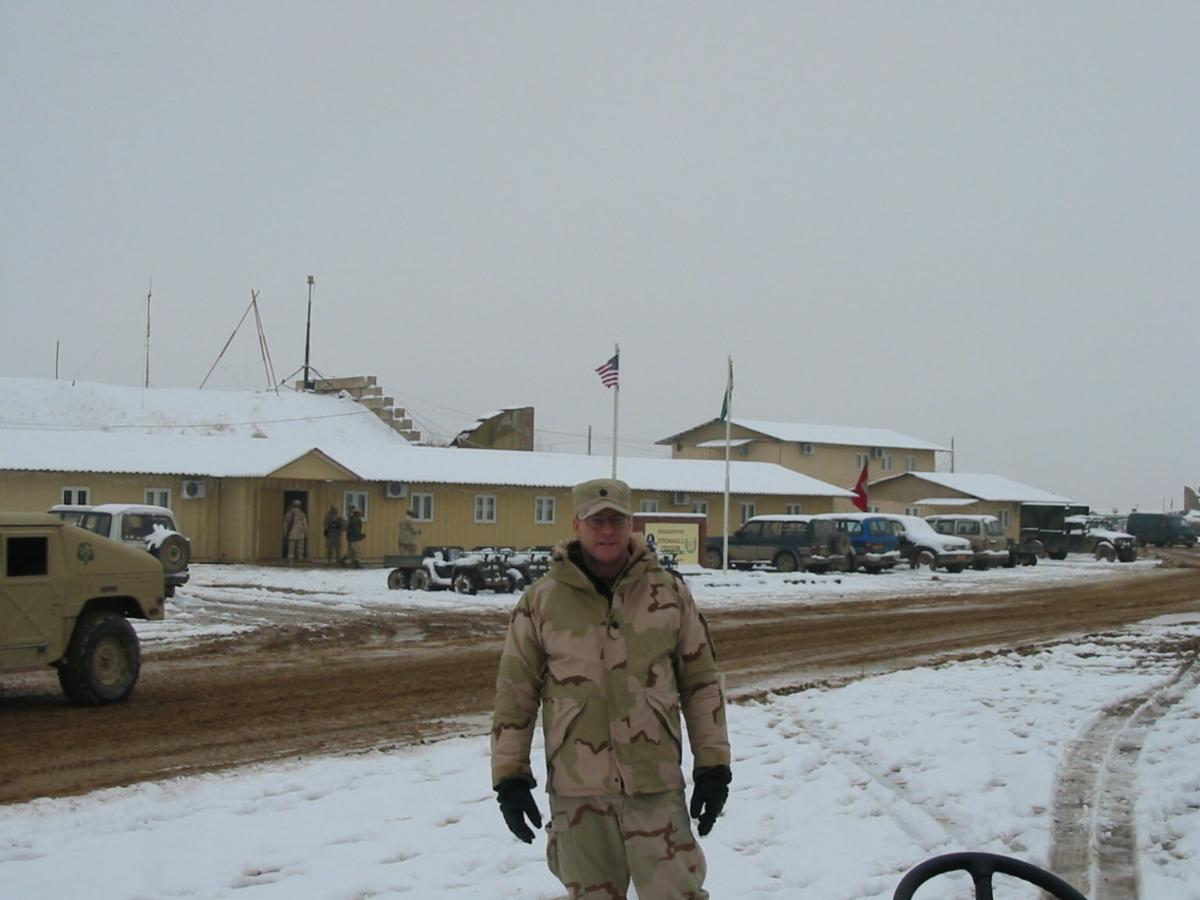
In September 9/11 happened, and my retirement plans went out the window when the Air Force did a stop-loss program. I volunteered to go to the Middle East, and I would spend 3 months in Abu Dhabi. I returned from there and decided to retire (for real this time). Unfortunately, I was promoted to Lt. Colonel, and I had to stay three more years to retire with that rank, so that killed that plan. I did two more trips with the US
Government. One to Uzbekistan (with some short trips into Afghanistan), and another to Kuwait with a couple short stays in Iraq.
| | |
There were some interesting experiences along the way. In the Middle East and Central Asia we built mostly with modular construction, since the buildings could be assembled off the installations, which lessened the security threat by bringing loads of workings on the bases. Most of the construction was wood, but that wasn’t readily available in Uzbekistan. To construct modular buildings there, contractors used shipping containers.
I did some design work of buildings made from containers, and I thought it was interesting, but that was it. I didn’t think I’d deal with them once I got home.
One morning in Kuwait I was eating breakfast, and I realized the dining hall looked a lot like the dining hall I was in the day before in Iraq. I realized that dining hall looked a lot like the dining hall in Uzbekistan, which looked a lot like the dining hall in Afghanistan, which looked a lot like the dining hall in Abu Dhabi. I realized I had enough. I filled out my retirement paperwork and sent it in. That was in the summer of 2005.
| |
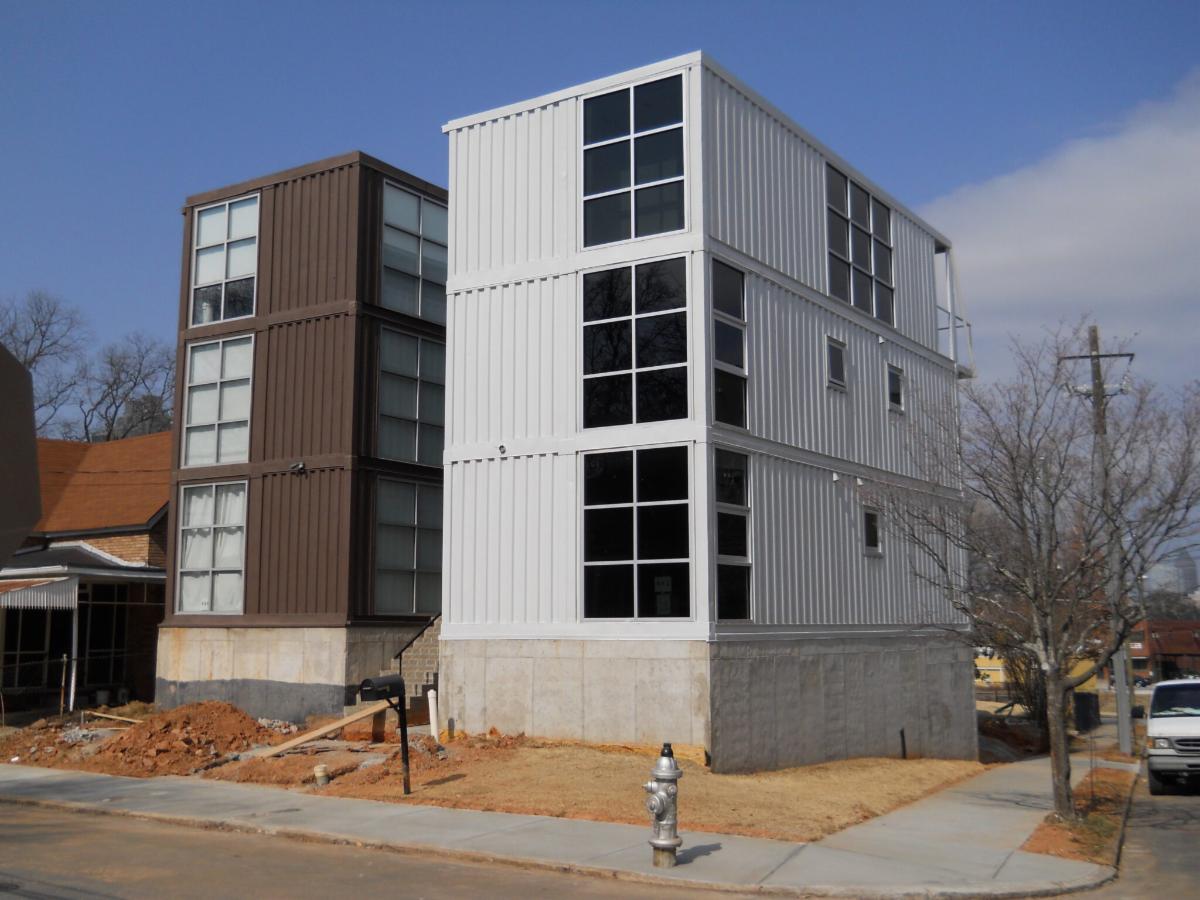
Returning to business went well. We picked up some big clients, and revenue was rising fast. Until it didn’t. The housing market started to get hit in 2006, and by 2007 we got hit hard. We did do an interesting job in 2007 though. We were approached about designing a house out of shipping containers in Old Fourth Ward in Atlanta. It seems that nobody wanted to touch it. I didn’t think it was a big deal. We did the design, and I lost interest after that. After all, who would be building with containers?
One decision I made in 2007 was to drop third party inspections. We had picked up a fair amount of design work, and I found that third party inspections were more aggravating than it was worth. Also, the homebuilders were having serious problems, so there didn’t seem to be a future in that line of work.
As the economy sank, I put a little bit of work into my website. I put up some stuff about the container house in Fourth Ward and didn’t give it much thought. After all, who got work out of a website?
| |
By 2008, things were bad. One day in April I was having a typically bad day of no work and a rapidly declining economy around me. I was feeling hopeless, and I got a phone call from some guy who was absolutely into shipping container buildings. We talked for about an hour. Seems he had found my website while looking at container houses and he called me. I got off the phone and realized there might be something to this shipping
container stuff. Also, I realized somebody was looking at my website.
I had a lot of time that summer, so I used it to research building with containers. I found software I could use to analyze the buildings. I rebuilt my website from top to bottom. I had no idea how to develop a website, but I learned. I realized how little I knew about shipping containers, so I spent a lot of time visiting Container Technology in Morrow, GA (they sell secondhand shipping containers) just looking at shipping containers and
learning about the business of how secondhand containers are sold. That fall the economy took a hard turn for the worst, but ironically, I was feeling optimistic about my business. We started seeing work with buildings made from shipping containers.
| | |
Psst... Speaking of Websites, Our Website was recently redone by CODESS
WWW.CODESS.DEV
Visit on LinkedIn
| | |
By the end of 2009 I did an analysis, and about 80% of my business came to me by way of the website. Our shipping container business started with designing training facilities for military and police. We also did a lot of work in Canada in the oil fields. We also got
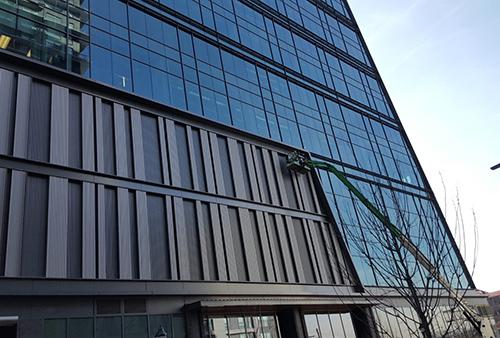
heavily into the design of aluminum cladding for buildings, through another client that found us on the Internet (Seco Architectural Products).
Fortunately, things haven’t been so topsy turvy as they were in the first 8 years of being in business. There was the Pandemic, but that was an annoyance more than anything.
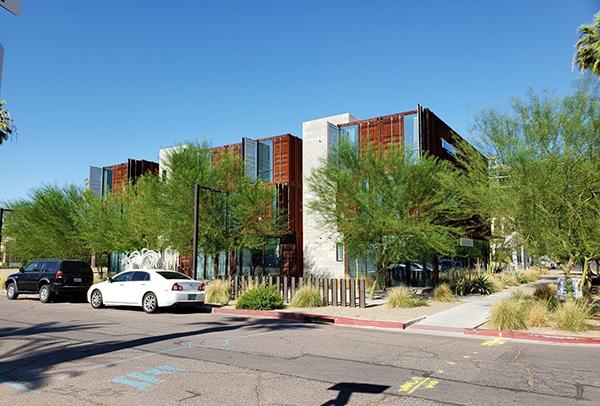
| | | Today about 40% of our business is shipping container building design. Our business is scattered across the country, but we are heavy in Phoenix, Arizona and Detroit, Michigan. There are eight of us now. We are in the process of developing business creating shop drawings for panels on buildings, and we’re branching out into modular buildings too. | | |
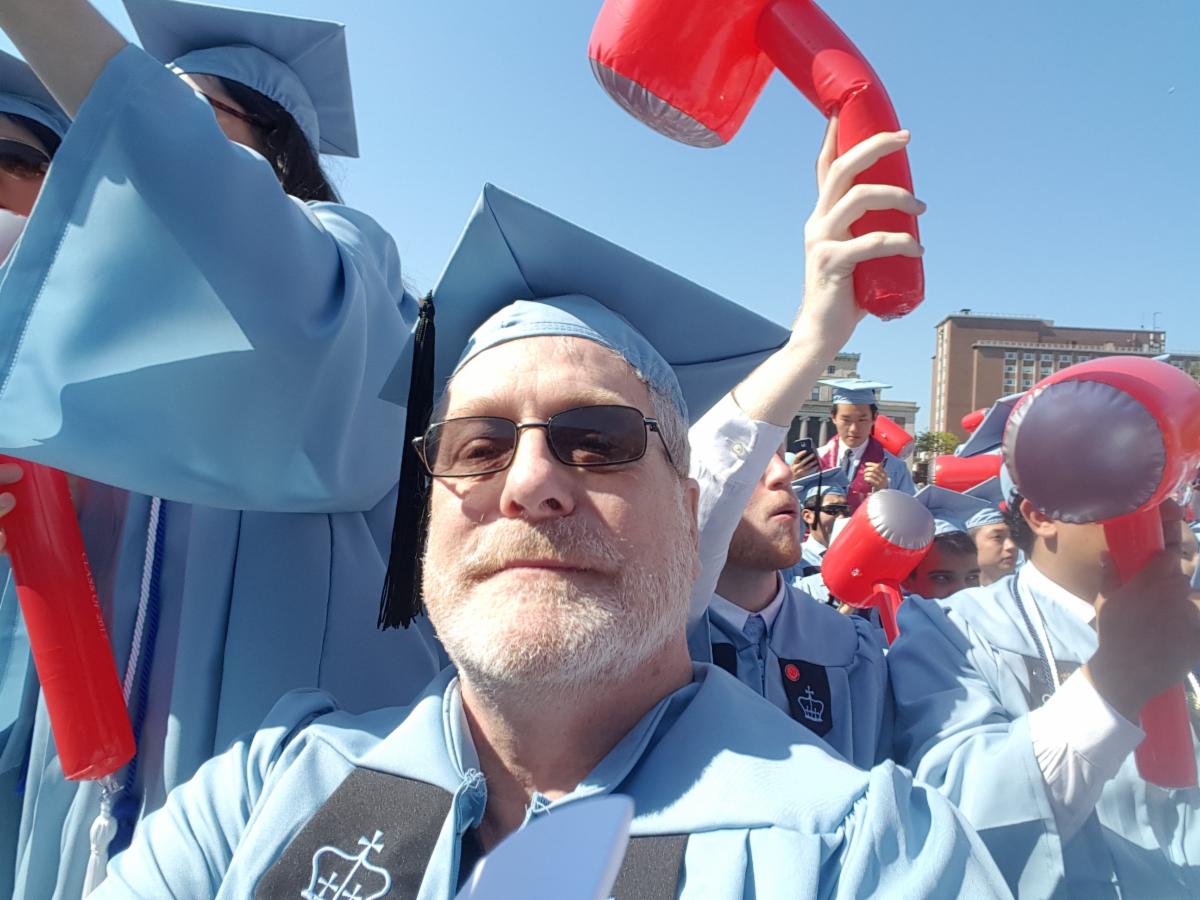
I finally got my master’s degree in civil engineering in 2017 from Columbia University, New York. I didn’t know until well after I was admitted that Columbia is an Ivy League school. I just thought it was a university in New York City with an online master’s degree program. Considering I graduated in the lowest 10% of my high school class, I never expected getting a master’s degree from an institution like that (at 61 years old) would
be on my bingo card.
Unlike 2000, everything happens online. Plans are sent online. Reports are sent online. Billing is online. Two days a week the employees work from home. I gave up the fax machine years ago. We use Artificial Intelligence to help us write proposals and reports (which has cut the time for those tasks to a fraction of what it used to take).
Many of my clients from 2000 dropped out of the construction business during the Great Recession. Others have retired. We still have one from back then, David Moore with Structures, Inc. David was one of my first clients, he was part owner of another business at the time, and I never dealt with him personally. When he started Structures, he called me on a particularly tough structural repair, and we’ve worked on a lot of
projects since then.
I’ve been asked when I intend on retiring. I really don’t know. I think maybe in five years or so, but I have no desire to call it quits at the time being. It’s my hope that the company continues after I pull out, and we’re looking at how succession will happen at that point.
| | | |
Structural Engineers
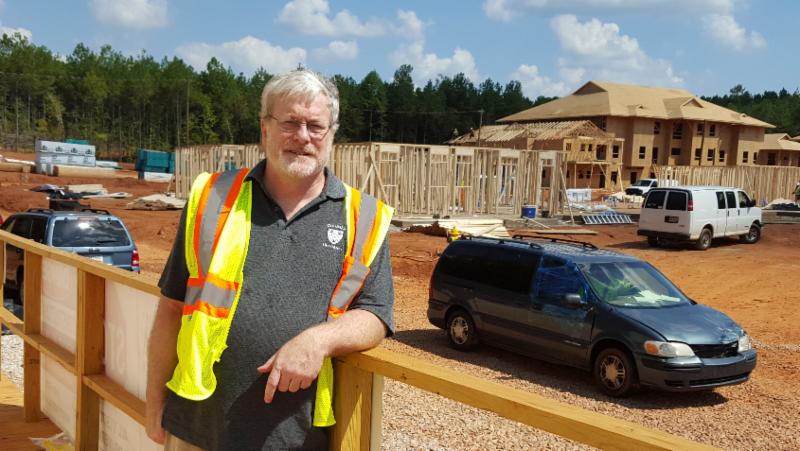
Runkle Consulting was founded in 2000 by George W. Runkle III, PE, SE. We provide structural design for structures fabricated from shipping containers, the structural design for building cladding, and forensic engineering services.
| |
Building Cladding
We have 15 years of experience in the structural engineering of exterior building panels, store fronts, and curtain walls for commercial and government buildings.
| |
Shipping Container Buildings
We provide design services for the design of buildings fabricated from repurposed shipping containers. Our services include the complete design package, architectural, structural, and MEP. Depending on the area, we may be able to help you find a fabricator to provide the containers.
| |
Cold Formed Steel Design
We have extensive experience in cold formed steel design. We can provide structural design services and shop drawings for your project.
| | | | |