VOLUME 85
WEEKLY EDITION
March 24, 2022
SCCG MANAGEMENT CELEBRATES 2022 AS ITS 30TH ANNIVERSARY OF LEADERSHIP AND INNOVATION FOR THE GAMING INDUSTRY!
UPCOMING EVENTS
TRADE SHOWS
  • NTGRA, 3/29 - 3/31 @ Isleta Casino, New Mexico
  • AASBS, 4/7 - 4/8 @ New York
  • ICE (EU), 4/12 - 4/14 @ ExCeL London
  • NIGA, 4/19 - 4/22 @ Anaheim
  • OTGRA, 4/26 - 4/28 @ Choctaw Durant, OK
  • NWIGA, June 2022 @ Tulalip Casino, WA
  • SBC, 7/12 - 7/14 @ Meadowlands Expo, NJ
  • OIGA, 8/9 - 8/11 @ Tulsa Cox Center, OK
  • G2E, 10/10 - 10/13 @ The Venetian, Las Vegas
THIS WEEK AT SCCG
We’re prepping for travel to New Mexico (6 April), New York (7-8 April) and London for ICE (10-12 April). If you're interested in contacting us during this period, please reach out to me directly.

Stephen A. Crystal
Founder and CEO, SCCG Management
stephen.crystal@sccgmanagement.com
+1 702 427 9354 (Mobile/WhatsApp)
THE METAVERSE AND THE GAMING INDUSTRY

by Stephen Crystal
Founder, SCCG Management
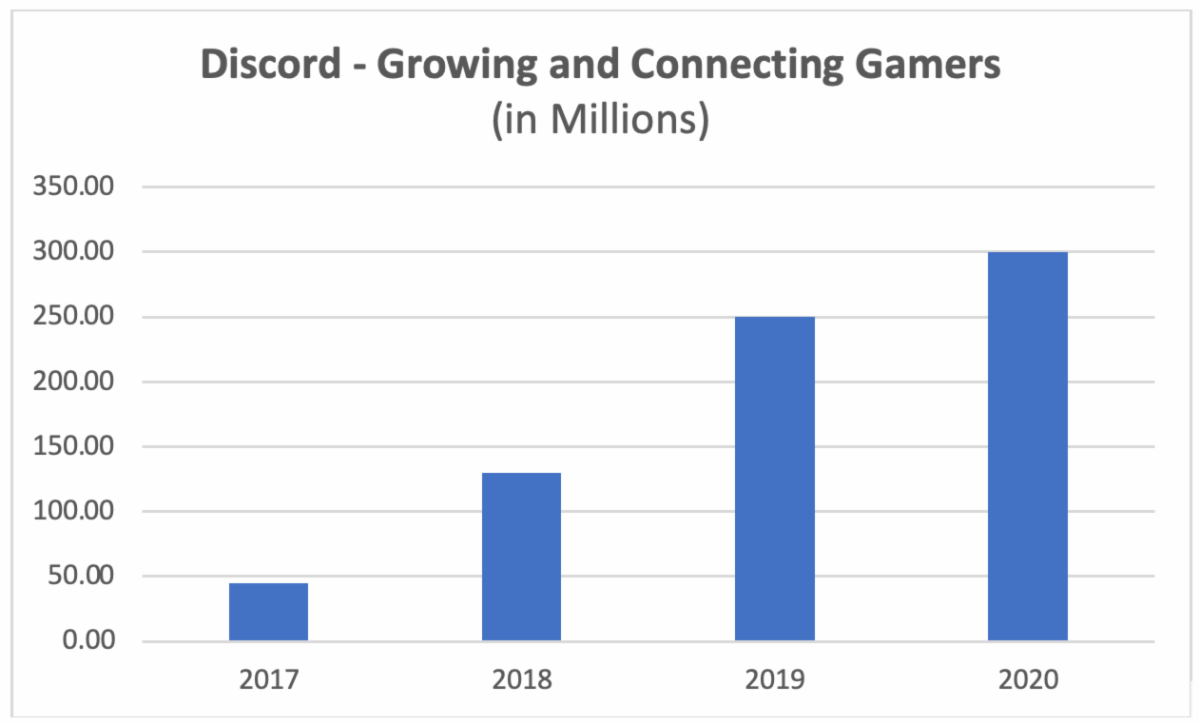
What if you were the top-of-mind choice for digital interactions globally? You get home and hop on your gaming console to play your favorite multiplayer game. You want to use voice chat to communicate with your friends, but instead of XBOX Live, Discord, Teamspeak, Mumble, or Skype, all your friends connect to your VOIP platform.
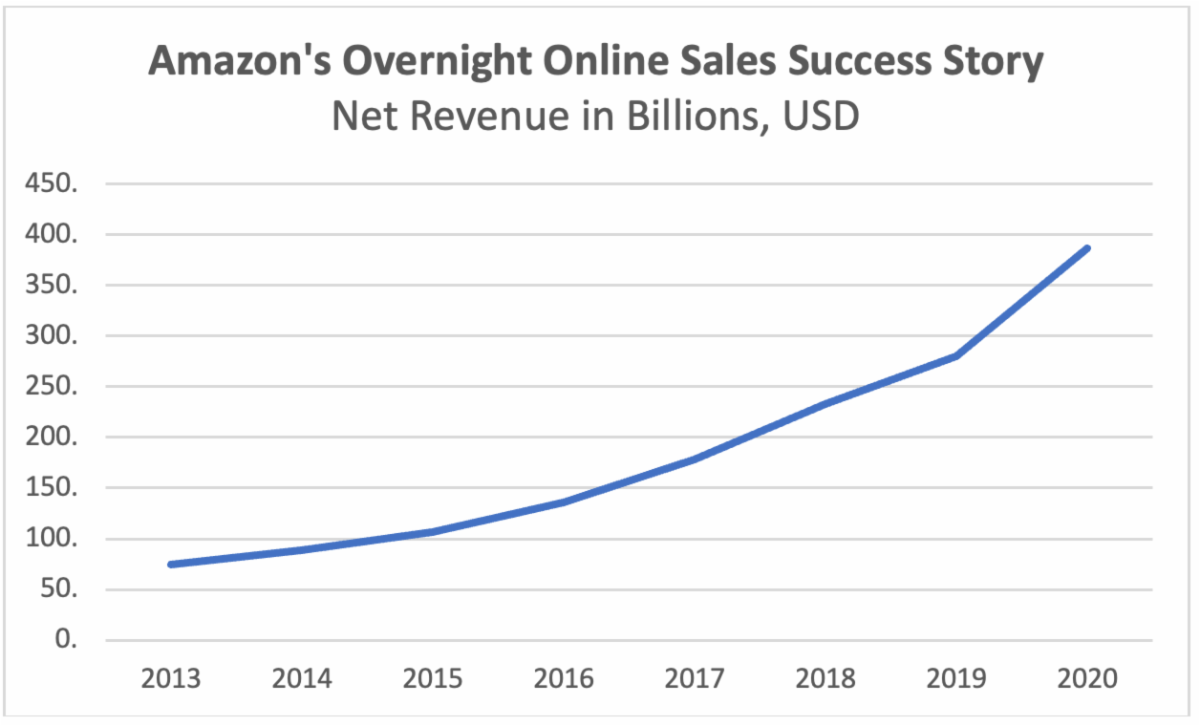
Your daughter has long since left the nest, and you can guiltlessly convert her old bedroom into a home office. You need to find the right furniture at the best price while ensuring everything fits within the space. Nobody stops at Crate&Barrel, DWR, or IKEA anymore because all roads lead to you. I know what you're thinking. Market dominance? Super easy, barely an inconvenience. Amazon did it nearly overnight, for online purchases practically of everything but concrete.
These considerations are driving some of the largest tech companies in the world to invest massive amounts of capital into the Metaverse of Web 3.0. The word Metaverse was first used for a digital interaction space by Neal Stephenson in his novel, "Snow Crash," in 1992. The 2011 Ernest Cline novel "Ready Player One" was made into a movie in 2018, where it concretely explained the OASIS. In this massive online setting, the overwhelming share of the world's population interacts with each other via Virtual Reality.

So, what does this have to do with the Gaming Industry? Please stick with us here; this is a journey. We will get there together, and there will be a payoff.

THE METAVERSE OF YESTERDAY

Today's Metaverse is the idea of using technology like Augmented Reality (AR), Virtual Reality (VR), and Holography to create environments that users can interact with as an avatar within those environments. The first Metaverse was probably the virtual world, Second Life. Launched in 2003, Second Life lets you explore a 3D world on your computer as an Avatar. You could move through the world of Second Life, analyze it, and interact with other Avatars. You could use real money to buy real estate and start businesses online, building, shopping, and trading digital products and services with others. A wide range of social expression has occurred on Second Life, from a live concert by famous band U2 in 2008 to a virtual riot in 2007 between a far-right French anti-immigration party and anti-racism activists. At its height, anything you could conceive of happening in the real world was occurring as test flights in Second Life, including significant sponsorship activity by large businesses.

As technology improved, these virtual worlds continued to grow, especially in the game industry. In 1999, the world's first persistent massively multiple online role-playing game (MMORPG), Everquest, was launched by Sony Interactive, enabling millions of players worldwide to interact and play with each other Avatars in a simulated fantasy world comprised of entire continents.

In 2004, Blizzard Entertainment released its massively successful game, World of Warcraft, another virtual fantasy environment. It was a massive commercial hit — over 100 million subscribers in 2014 and generating over 9 billion dollars in gross revenue by 2017. World of Warcraft even had its first virtual pandemic in 2005, when a special content event, which included a deadly in-game infectious disease in a contained raid area, unintentionally spread outside to the rest of the game through infected pets belonging to the players.

Additionally, game platforms like Roblox and Fortnite are also considered by some to be persistent Metaverses, within which millions of participants virtually connect. These are examples of games that became virtual communities on virtual online platforms.

For some games, an entire world isn't enough. Cloud Imperium, an international independent game company, recently shattered records in 2021 by raising over 500M USD through crowdfunding. Players pledge real money towards developing Star Citizen, a space simulator, allowing player Avatars to interact with other player Avatars in an entire persistent universe of corporate and government-owned planets, gas giants, moons, orbital space stations, refineries, and asteroid belts. Star Citizen is still in an open Alpha, playable, and with over 3 million unique active user accounts.

THE METAVERSE TODAY

Today, Microsoft and Facebook, now Meta, are trying to create their own Metaverses in a reverse process to its forebears, creating virtual social environments that allow its users as Avatars, to interact with other Avatars, connect with their online content and the online content of others, create and publish new content, and conduct activities previously performed in the "real world," within the walled garden of their respective platforms.

Please think of the Metaverse as the Augmented Reality, 3D, holographic or Virtual Reality interface to the content, publicly and privately available by its Web 3.0 publishers.

Bill Gates was quoted as saying, "Within the next two or three years, I predict most virtual meetings will move from 2D camera image grids .. to the metaverse, a 3D space with digital avatars."

Mark Zuckerberg announced to the world in 2021 that Facebook was changing the focus of the entire company by demoting one of the world's most potent brands beneath a new entity, Meta.

Facebook's VR hardware division launched the newest version of their VR headsets, the "Oculus Quest 2". Facebook also debuted their VR meeting service, Horizon Workrooms. Horizon Workrooms enables people wearing VR headsets, like the Oculus Quest 2, could assemble in a virtual meeting room "together" in their digital space.

Microsoft is taking a less future-forward, more practical for today's road to the Metaverse. Microsoft Mesh for Microsoft Teams combines VR/AR features of Microsoft Mesh with the Microsoft Teams productivity tools, allowing users to join virtual meetings, collaborate on shared documents and projects, ubiquitously connected via their chat platform. This is not to say that Microsoft isn't planning for the more distant future. They have their own mixed reality product, HoloLens 2, shipping since 2019. This holographic headset uses AI to create a mixed or augmented reality for its wearers, using Azure's AI capabilities, to collaborate with people in real-time, around the world. The hardware uses eye and hand tracking to allow users to, for example, reach out and move or resize a hologram image they see floating in front of them.

The vision driving these two technology titans is to channel the traffic of their respective product lines into a composite online Metaverse using traditional cameras, virtual reality hardware, and technologies, and augmented reality experiences -- an online one-stop-shop to meet all your needs, whether retail, transactional or experiential.

This process has not gone without pain. Facebook and its related brands and platforms earn almost USD 90B in revenue annually from its over 3.5 billion users worldwide.

For the first time, Facebook reported a decrease in users, losing about a million users compared to the previous quarter. In 2021, Meta's VR hardware division, Reality Labs, lost over USD 10B. On February 3, Meta (FB.O) fell 26%, wiping out USD 200B in market cap from Mark Zuckerberg's personal net worth. No US company has ever experienced a larger drop in market value, but, to be fair, there are very few companies, anywhere, that could lose that kind of value and still exist.

On the other hand, Microsoft has experienced its own losses, losing over 100 employees from their Microsoft HoloLens and AR division to Meta in 2021 alone. Apple is fighting against this Meta talent drain campaign by offering engineers incremental cash and stock bonuses up to USD 180K.

IMPLICATIONS FOR THE CASINO GAMING INDUSTRY

Please consider the following parallels between the broader Metaverse commercial efforts and those of our specific industry:

Migration of Brick and Mortar to Online
• The United States has a massive investment in brick and mortar gaming relative to other gambling markets that have embraced iGaming and online sports wagering, creating mature markets.
• New gaming products and services such as Live Gaming, which distributes interactive, online gambling to table games players, are attracting the attention of traditional table games players, and companies are investing significantly into production studios for Live Gaming dealers on a state-by-state basis to satisfy regulatory requirements.
• Brick and mortar gaming operators in local markets have long considered gambling commoditized, with the most potent factor in deciding where to gamble being distance. Like a gallon of milk, you're not going to drive twenty miles to buy it if there's a closer store just a block away.

The Role and Requirements for Digital Talent
• The regulation and expansion of iGaming and online sports wagering aren't going to slow down, much less go away. Customers will have a way to buy their "gallon of milk" right from their PC or mobile phone, sooner, not later.
• Creating and distributing digital gambling products to customers requires investment in infrastructure, content, and technology.
• Winning the battle for customers requires a fundamental understanding of digital content marketing specific to the casino gaming industry. That talent might not be readily available locally --recruitment will be essential.

The Dangers of the Walled Garden
• Despite its size and relative love of innovation, the casino gaming industry isn't going to outperform infrastructure and platform companies like Microsoft and Meta.
• Partnerships with companies like Microsoft and Meta are inherently fraught with risk. It's their Metaverse. You are a resource inside their walled garden. They own your driveway and the digital freeway your customers took to get there.
• The most competent mid to small-size gaming operators will sharply begin to focus on long-tail marketing and the creation of micro-markets for differentiation and to meet the needs of local gamblers.

Ultimately, there is no realistic way to discount or bonus a gaming operation through future competition. However, through the consolidation and breakups in the coming years, mid and small operators can create tremendous value by understanding who they need to be and who they serve -- investing in those capabilities sooner rather than later.
SCCG Management Founder and CEO, Stephen Crystal, announced that Peo Strömberg has joined the SCCG Management leadership team in Malta.

Peo Stromberg has been leading innovation in iGaming for more than 12 years, based in Malta & Sweden. 

Adding more than 20 years of experience of business development management, delivering products and services on the international business scene based on the forefront of new technologies, Peo has established a global C-level network of experts in a broad variety of business verticals.

The latest addition of mastering new technologies is Crypto where Peo led US based Hedera Hashgraphs EMEA partnership expansion, fostering a deep knowledge of Crypto and NFT technologies. Previous to Crypto, Peo helped launching and selling businesses in eSports, crowdfunding, affiliate and iGaming for Good causes, all based on innovative usage of emerging technologies.
WRITER'S SPOTLIGHT
In today's issue, our featured articles are:

  • Isaac Paglialunga's article on the UFC,
  • Kyle Neverett's article on MAC and PAC-12 Data Rights Deals, and
  • Gambling Insider's International News Highlights
Stephen A. Crystal
Founder and CEO, SCCG Management
stephen.crystal@sccgmanagement.com
+1 702 427 9354 (Mobile/WhatsApp)
The UFC - A Worldwide Hit
by Isaac Paglialunga
Staff Writer, SCCG Management
For the first time since 2019 the UFC had made its first appearance in London. The crowd was electric as some of the United Kingdom’s biggest stars took the octagon as the hometown crowd cheered them on. UFC President Dana White was very excited in his post card interviews as he was hardly able to speak. White reportedly told MMA Junkie that they received a $4.5 million gate which would be the biggest Fight Night gate of all time. With British rising stars such as Jack Shore, Paddy “The Baddy” Pimblett and Molly “Meatball McCann” on the card it is easy to see why the UK fans were so excited for this card. The UK is not the only international card we have seen recently, as international growth has been an obvious priority for the UFC.

The UFC has seen a lot of international growth over the last few years. The most famous being Fight Island that was created in 2020 in response to the Covid-19 Pandemic. Fight Island is in Abu Dhabi and has hosted several pay per views and UFC fight nights. In June 2019 the UFC opened its first international performance institute in Shanghai China, this marks the second institute as the first was built in Las Vegas. The Shanghai institute is used now to train athletes from China for the Olympic games. The UFC has also done several shows in Brazil as there are several Brazilian UFC fighters. In total the UFC has held events in 24 countries and doesn’t seem to be stopping anytime soon. Dana White has made it clear that it is a priority to have cards in more countries. 

The UFC has become a worldwide juggernaut and is clearly the leader when it comes to mixed martial arts. The London show was a hit from start to finish as the crowd was completely invested the entire time. The event was so electric that UFC President Dana White decided to give every single fighter on the card a post-fight bonus. The UFC is still not on the level of boxing in terms of worldwide interest however, it is clearly extremely entertaining and in my opinion the combat is much better. As somebody who has been a huge UFC fan before it was mainstream, I am very happy to see the growth of the sport and can only help but to be excited for the future and expansion of the sport.
Collegiate Data Rights and Sports Betting: MAC and Pac-12 Strike Data Rights Deals
by Kyle Neverett
Contributing Writer, SCCG
The world of college sports is evolving as quickly as the sportsbook industry in the United States. While the NCAA has long shied away from having anything to do with sportsbooks, it appears as though its’ members are gearing up for a new, symbiotic relationship Earlier this month, the Mid-American Conference (or the MAC) announced a 5-year deal with data provider Genius Sports. Genius is known for their partnerships with the NFL and NBA, and distributes live statistics to sportsbooks on the league’s behalf, so that they can do things such as set lines and settle bets. The move to sell data rights was groundbreaking for collegiate athletics, and other conferences appear to be following suit.

Just last week, the Pac-12 reached a deal with San Francisco data company Tempus Ex Machina to manage and market the conference's data rights. Tempus Ex is lesser known than Genius Sports, but was founded in 2019 by former Alliance of American Football (AAF) Head of Technology Erik Schwartz, so the Pac-12 must have felt confident enough in the background of the company to make a deal happen. Tempus Ex will use its tech to build an instant data-capturing infrastructure for all of the conference’s 12 members. They will also support a range of new direct-to-consumer video and metaverse products. Under the current arrangement, Tempus Ex is not allowed to sell live data to U.S. sportsbooks, which is the component that is worth the most amount of money.

President of Pac-12 Networks Mark Shuken states that, “We are not engaging in gambling technology at this point…Ultimately, we might choose to work with our presidents and chancellors in the new world of media rights to determine how to commercially benefit from this.” While they may not be comfortable with the idea just yet, the Pac-12 will need to embrace the world of sports gambling, or else they will risk falling behind the curve as other conferences strike their own data rights deals. As it stands, only three of the Pac-12’s members, Colorado, Arizona, and Arizona State, reside in fully legal states (Washington- tribal land only, Oregon- no college sports betting), but if California were to ever legalized sports gambling, this would shake things up substantially for the conference, as the majority of the Pac-12’s schools are located in The Golden State. 

While the NFL is the most bet on sport in America, collegiate football is #2, and college basketball comes in at #4. When you combine those two sports, they dwarf the handles of the other professional sports leagues. This means that live data for collegiate athletics could prove to be more valuable than that of professional sports leagues such as the NFL and NBA. The NCAA’s members are a long way behind these professional leagues in terms of profiting off of their data rights, but conferences like the MAC and Pac-12 are making the crucial first step in catching up to these leagues. Expect the rest of the Power 5 and Group of 5 conferences to follow suit in the near future.
THE GAMBLING INSIDER INTERNATIONAL NEWS HIGHLIGHTS
Gambling Insider is the premier business-to-business publication for the gaming industry. Each issue brings you the inside track on the global gambling market, interviews with the field’s biggest movers and shakers, and in-depth analysis from some of the sharpest minds in the business.

Gambling Insider offers expert perspective on all the industry’s major talking points from online regulation in the US to the expansion of the European gaming market – all backed up by first-rate comment and astute debate from the people on the inside.

Et tu, brute? 

As always, we’ll begin stateside, where Flutter’s FanDuel continues to dominate New York’s burgeoning mobile betting market, with a handle share of 43% and a revenue share of 48%. 

Based on its trajectory, FanDuel is well on its way to usurping Caesars’ crown, which still leads in year-to-date market revenue by 2%, with a 33% market share. 

DraftKings, meanwhile, sits in second place with a handle share of 25% and a revenue share of 23%.
 
The operator’s performance has seen it supplant Caesars in the weekly rankings, which now languishes in third place with a handle share of 16%, down 3% from the prior week. 

BetMGM, BetRivers, PointsBet, WynnBet and Resorts World Bet trailed behind, with market shares ranging from 2% to 0.3%. FanDuel is, by some way, the runaway leader in the Empire State.

Heard it on the radio 

On a lighter note, American sports radio icon Mike Francesa has inked an exclusive content deal with Rush Street Interactive’s (RSI) BetRivers and PlaySugarHouse brands. 

The 68-year Radio Hall of Famer will produce network and social media content for both brands from his hometown of New York City. 

As the former host of Mike and the Mad Dog on WFAN, a popular and long-lived sports radio show, Francesa is a well-known and much-respected figure in the world of sportscasting. 

To this end, he will host a twice-weekly podcast series and will appear in digital videos that will be published on the brands’ various platforms. 

Money, money, money

For our next stop, we’ll need to take a trip across the pond, where members of the Betting and Gaming Council (BGC) pledged to support the UK Government’s economic recovery plan with investment, jobs and tax revenues. 
Britain’s regulated betting and gaming industry is prepared to help Chancellor Rishi Sunak recover public finances amid the pandemic, allowing the Treasury to alleviate cost of living pressures. 

BGC members have also pledged to create 5,000 apprenticeships through the Government’s Plan For Jobs, with operators signing up to the Kick Start scheme, as well as offering graduate recruitment programmes. 

Where’s Lancelot when you need him? 

We’ll remain in Britain for a moment, where outgoing National Lottery operator Camelot was fined ÂŁ3.15m ($4.2m) by the Gambling Commission for three separate failures linked to its mobile app. 

Firstly, 20,000 participants were informed by the National Lottery mobile app that their winning draw-based ticket was a non-winner. 

Secondly, the investigation uncovered a failure involving 22,210 participants who purchased a single draw-based ticket through the app but were charged for and received two tickets. 

Lastly, the app was found to have sent out marketing messages to users who had either self-excluded, or been identified by Camelot as showing signs of gambling harm. 

Naughty newspaper 

Next up on our list is Sweden, or as they call it, “det avlĂĄnga landet” — the elongated country. Swedish daily newspaper Aftonbladet was guilty of offering betting without a licence, according to the Nordic country’s regulator. 

The publication, whose name translates to Evening Paper in English, provided “games in the form of betting” via its manager competitions; contests akin to fantasy football where players could win prizes, including iPhones and travel gift cards. 

However, an assessment from the Swedish Gambling Authority (SGA) deemed these games betting under the country’s Gaming Act, an activity for which Aftonbladet lacked the requisite licence. Harsh?

New grounds

Our final stop on this week’s journey will take us to the Russian Far East, where South Korean operator Plgen Holdings is set to commit 2.5bn rubles ($24.8m) to building a new casino in the territory of Primorsky. 

The decision to award the project to the construction firm, announced by Primorsky Krai Development Corporation, represents the first foray into the Primorsky gambling zone by a South Korean company. 

The authorities have previously signalled that as many as eight new casinos will be built in the territory, the largest of which was due to be overseen by Cambodia’s NagaCorp. 

However, on 2 March, the company suspended its $350m development “indefinitely until the circumstance is clearer.” 
SCCG Management Client Partners
SCCG MANAGEMENT CURATED INDUSTRY NEWS FEED
SCCG Management curates a feed of news articles from over one hundred of the best industry news sources.

Keep up to date on the items in the news that interest and excite us!