|
The Safer Mobility Report
The Latest in Vehicle Safety, Technology, and Policy
September 21, 2026
Issue #11
| |
The Role of Road Safety Automated Enforcement Amid Growing Privacy Concerns
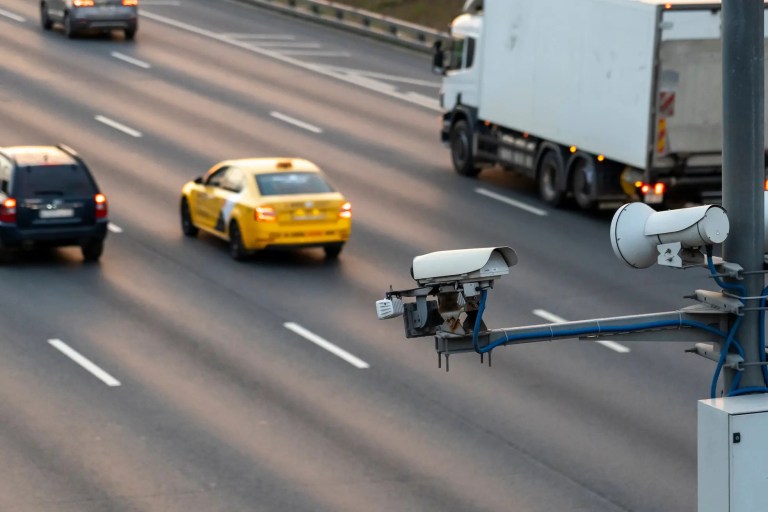
| Photo: Courtesy of Verra Mobility | |
Vision Zero rests on a hopeful premise: traffic deaths are not accidents nor inevitable.
The cities that have adopted the safe system approach of safer roads, safer road users, improving post-crash care, safer vehicles, and safer speeds, have reduced crashes, lowered the number of serious injuries, and saved lives on our roads.
Safer speeds and safer roads is where automated enforcement has proven to be indispensable and where public trust is now at risk of collapsing for the wrong reasons.
Speeding kills roughly 10,000 Americans a year and every 49 seconds across the globe someone dies on our streets due to speeding. In the US, around 1,000 people die annually because drivers run red lights. According to AAA, 85% of all Americans believe red light running is dangerous, but when asked if they run red lights, around 1/3 surveyed say yes, with 40% saying they do it because they think they will not get caught.
Cities with red light cameras see 35% fewer deaths than those without. A review across Chicago, Denver, New York, Portland, Seattle, and Washington, D.C. found automated speed enforcement measurably reduced injuries and deaths, with the best run programs pairing cameras with public engagement, lower fines, and transparent reporting. And unlike an officer pulling a driver over, a camera doesn't bring an interaction that can sometimes turn a routine stop into something more dangerous. Automated enforcement is, in a narrow and important sense, one of the fairest tools cities have.
Unfortunately, “automated enforcement” has become a global term for all camera-based systems. This misconception is doing serious damage to a program that deserves universal support. A road safety enforcement camera triggers based on a specific violation, in a specific spot, captured with a single photo resulting in a process that can lead to a citation being sent to the vehicle owner. These programs do not track where a vehicle comes from or where it is going next.
Automated license plate reader (ALPR) programs are very different and treating them as interchangeable with a speed camera or red light camera is where public debate goes awry. These systems take a photo of every vehicle, with or without violation, turning these permanent records into a nationwide searchable database that is severely underregulated and often abused.
That distinction is not semantics. A driver can avoid a speed camera or stop light citation simply by following the law. No one can opt-out of an ALPR camera's gaze just by driving safely because the system isn't watching for violations.
The backlash against these systems is based on privacy concerns, the misuse that has been reported (including stalking), and lack of guardrails on how data is collected and retained. There have also been incidents of data being sold to third parties and accessed by agencies who should not have free reign to do so.
This is exactly why the work done by a leader in road safety camera systems deserves more daylight than it gets.
Verra Mobility, which operates red-light, speed, and school-bus-arm cameras for municipalities across North America, has gone out of its way to draw a hard line between what it does and what ALPR systems do. Verra's cameras carry no license plate reading or tracking function, they capture an image only when a violation occurs, and that data is treated as confidential customer information, held under contract to the municipality rather than aggregated into a national investigative network, and not sold to third parties.
The lesson here isn't that cameras are good or bad. It's that the design of the system — violation-triggered versus continuous, contractually-scoped versus network-shared, retained briefly versus retained indefinitely — is what determines whether a technology serves Vision Zero's goals or undermines the public trust those goals depend on.
Cities chasing zero traffic deaths should keep investing in the former. They should be far more skeptical and far more demanding of strict and permanent guardrails (which still fail to exist) before signing on to the latter.
As we have a national debate on the concerns on how ALPRs are used, we need to ensure that automated enforcement traffic safety cameras are not caught up in the net of new regulations or laws restricting or banning ALPR systems.
Automated enforcement cameras are an effective tool in saving lives on our roads and removing them from our road safety toolkit will do the opposite.
| |
From the Governors Highway Safety Association (GHSA): Nearly Half of Children Riding the School Bus Have Had a Close Call with a Dangerous Driver
| |
|
With millions of students across the country back in school, a new national survey from the Governors Highway Safety Association (GHSA) finds that dangerous driving around schools and school buses is both common and deeply personal for American families. A clear consensus emerged: Parents overwhelmingly want stronger enforcement to better protect children traveling to and from school.
The survey found that nearly half (46%) of parents whose children ride a school bus say their own child has experienced a close call near a school bus or in a school zone. The findings also suggest parents do not view dangerous driving as simply a problem of awareness: 53% believe dangerous driving continues because motorists do not think they will get caught.
At the same time, parents expressed overwhelming support for stronger accountability. Ninety-one percent of parents surveyed support automated stop-arm enforcement to hold drivers accountable for illegally passing stopped school buses.
Taken together, the findings point to a clear conclusion: Parents believe dangerous driving around schools and school buses is not an isolated problem, but a recurring safety issue that requires stronger accountability, education and enforcement.
A copy of the survey findings can be found on the GHSA website.
Read more here.
| |
|
"The Interview"
How LifeSafer Is Bringing the Promise of ISA to Reality
| |
Michael Travars
President, LifeSafer
| |
What first brought you into road safety and was there a particular moment or incident that convinced you that you wanted to focus on it?
My focus on road safety really crystallized around the opportunity to use technology to address two of the most significant factors in serious crashes: drunk driving and speeding. LifeSafer has spent decades reducing drunk driving – and the results show that ignition interlock programs are working. That’s why we’ve shifted our focus to speed, with the use of Intelligent Speed Assistance.
Tell our readers a little about active intelligent speed assistance (ISA) and how it works.
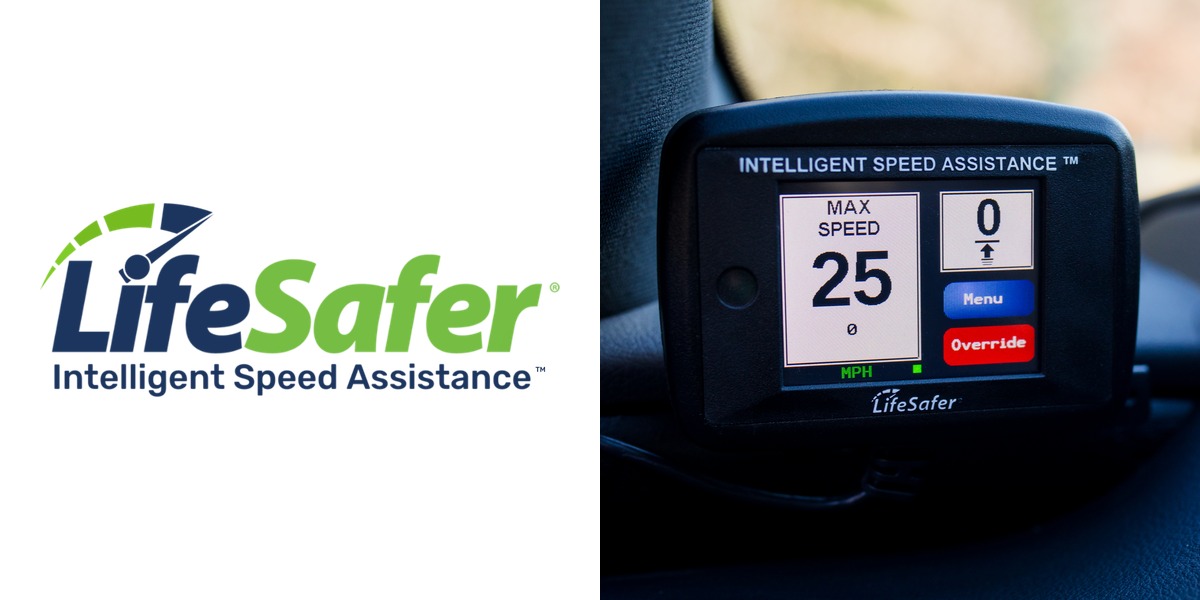
Active Intelligent Speed Assistance – or “ISA” – is an aftermarket vehicle safety device. Once installed, ISA uses GPS technology and onboard speed maps to recognize the current speed limit for the road a vehicle is traveling on and prevent speeding in real time. These devices are sophisticated enough to know the difference between a side street, on ramp, and highway, making them trusted by fleets, parents of teen drivers, and court authorities.
To me, active ISA represents an important shift in road safety—from passively informing drivers about risk to giving them technology that prevents unsafe behavior.
Over the last few years, ISA has moved from fleet pilot programs to being used in more of a mass scale. What do you think has been the reason behind this shift?
It’s true. Makers of ISA devices have conducted many pilot programs over the past few years, from small-scale trials to city-wide programs. With each additional success story, the demand for ISA – and the demonstration of its ability to save lives on our roadways – has grown. Let’s not forget, however, that the core technology behind the current iteration of ISA has been around for decades, in multiple countries with thousands of vehicles installed and millions of miles driven. The widespread adoption of active ISA we’re seeing now is a direct result of fleet programs proving its effectiveness.
Can you tell us a little more about where you see ISA as having the most impact? Will it be young drivers? Commercial and public fleets? Or in regards to stop super speeder laws that we are seeing passed in states across the US?
Active ISA is having an impact for all three of these important groups. For young drivers, ISA acts as training wheels, giving them the opportunity to learn important driving early on, before bad habits have time to form. For commercial and public fleets, ISA is an added layer of protection – for both drivers and everyday citizens who share the road with the millions of commercial vehicles. For super speeders, ISA offers an opportunity to continue driving – more safely and in accordance with the law. For these drivers, ISA is all about behavior correction and rehabilitation. I’m not surprised so many states have already introduced and passed legislation to address super speeders; in fact, there’s clear line of sight to nearly every state in the United States having a Super Speeder ISA program. Similar to ignition interlock programs, ISA programs are already having a real impact on road safety, and we couldn’t be more excited about the opportunity to improve road safety through these three programs.
What do you see as the biggest barriers to widespread ISA adoption over the next three to five years—technology, regulation, consumer acceptance, data and mapping, or something else?
Education and training. Four years ago, I. S. A. weren’t three connected letters, and now they’re on the radar of legislators and safety officials, but general public awareness is still incredibly low. I cannot overstate the value of educating everyone about what active ISA is – and what it is not. It is a support tool; it is not going to control a vehicle or remove a driver’s autonomy. Active ISA just provides an additional safety element to the highest risk drivers on the road. Independent studies conducted by IIHS and GHSA have confirmed the significance of education when it comes to ISA; once drivers, companies, and parents are aware of the option of active ISA, we see adoption.
If we look five years down the road, what would success for ISA look like to you—not just in terms of vehicles equipped with the technology, but in terms of the deaths and crashes it can ultimately prevent?
We know that speed accounts for approximately 30% of fatal crashes. My belief is that over the next five years, we see a steady, measurable decline in this statistic. Not just the deaths and injuries directly attributed to speed, but deaths and injuries across the board on our roads. We know that slower vehicle speeds reduce injuries. ISA is all about saving lives.
Are there any misconceptions about ISA that you would like an opportunity to address?
I often hear two misconceptions.
First, I hear confusion from people who think that active ISA is ‘already’ in new vehicles. From a technology perspective, there’s a huge difference between passive ISA (an alert system) and active ISA (a real-time intervention).
Second, I hear confusion around who should use active ISA. These devices are intended for drivers who have a need for technology to provide an added layer of protection. I trust drivers to make good decisions. I do not believe in forcing every single driver worldwide to use an intelligent speed device. These devices only belong in the vehicles that need them the most. The highest volume drivers, the least experienced drivers, and the drivers that have shown that they have a speed habit that they need to break.
| |
If you want to find out more about Lifesafer ISA and are attending the Fleet Forward Conference on October 20-22 you can stop by at the EBR Safety Solutions exhibit table or click here. | |
Mayor Mamdani Unveils Vision Zero Reimagined to Make Streets Safer for Every New Yorker
Mayor Zohran Kwame Mamdani has released Vision Zero Reimagined, a 10-year blueprint for street safety. The comprehensive, citywide plan brings together 19 City agencies, Mayoral offices and partners to advance more than 100 policies designed to prevent traffic deaths and serious injuries while unlocking the full potential of New York City’s streets as public spaces.
Vision Zero Reimagined pairs bold ideas with practical fixes, including developing the city’s first pedestrian-only and pedestrian-priority districts, expanding implementation of Sammy’s Law, installing hardened daylighting or better treatments at 1,000 intersections each year, dramatically expanding street safety projects and pursuing new legal tools to crack down on dangerous drivers who are responsible for a disproportionate share of traffic deaths and serious injuries.
“We should not have to wait for another family to lose a loved one before we make a street safer. We are committed to building safe streets before tragedy — not because of it. Vision Zero Reimagined puts forward the bold measures and practical fixes we need to make preventable tragedy no longer a part of everyday life in New York City,” said Mayor Mamdani. “With 19 agencies and partners working together, we are doubling down on what works and paving the way for ambitious new models of street safety. Safety is a right for every New Yorker, no matter how you travel, where you are going or what neighborhood you call home.”
“Vision Zero Reimagined is about making our streets safer for every New Yorker,” said Department of Citywide Administrative Services (DCAS) Commissioner Yume Kitasei. “DCAS is committed to leveraging every tool available to prevent crashes and protect vulnerable road users — from installing surround cameras and pedestrian alerts to expanding intelligent speed assistance and more. Vision Zero Reimagined ensures New York City’s municipal fleet remains a national leader in safety innovation.”
Read the full press release here.
There Are More Trucks, Drivers and Trucking Companies On Highways. But the Government Is Inspecting Them Less
A truck operated by Next Level Express Inc. slammed into an SUV parked on the shoulder of the New Jersey Turnpike last December, killing two parents and their daughter on the way home from a family gathering. A second daughter survived. In the decade before the crash, none of the company's trucks or drivers had been subjected to a single roadside inspection. It's a pattern repeating hundreds of times a year.
A CBS News analysis of millions of federal records finds more than 2,000 people have been killed since 2019 in crashes involving trucking companies that held federal authority to operate but had no roadside inspection on record before the crash. That includes 621 deaths in 543 crashes since 2024. Roadside inspections, carried out by federal and state officers, are the government's main tool for catching dangerous trucks, drivers and companies before they crash.
But even as trucks log more miles than ever, CBS News found inspections have not kept pace. Inspections per mile driven have fallen about 20% since 2016. The analysis also identified thousands of companies that have never been inspected — before or after a crash — while holding federal authority to operate coast to coast.
Read the full article here.
Reform UK Accused Of Twisting 20mph Road Death Figures
Road safety campaigners have slammed Reform UK Senedd Members and the right-wing press for wrongly linking an increase in Welsh road deaths to the default 20mph speed limit. Official Welsh Government statistics show that 91 people were killed in road collisions in Wales last year, seven more than in 2024.
The figures have been used by opponents of the 20mph default speed limit to argue that the policy has failed to make Welsh roads safer. However, the increase in deaths did not occur on 20mph roads, they occurred on 60mph and 70mph roads. In fact, figures show that 20mph and 30mph fatalities and collisions have all been lower since the 20mph default speed limit was introduced in September 2023.
Read the full article here.
| |
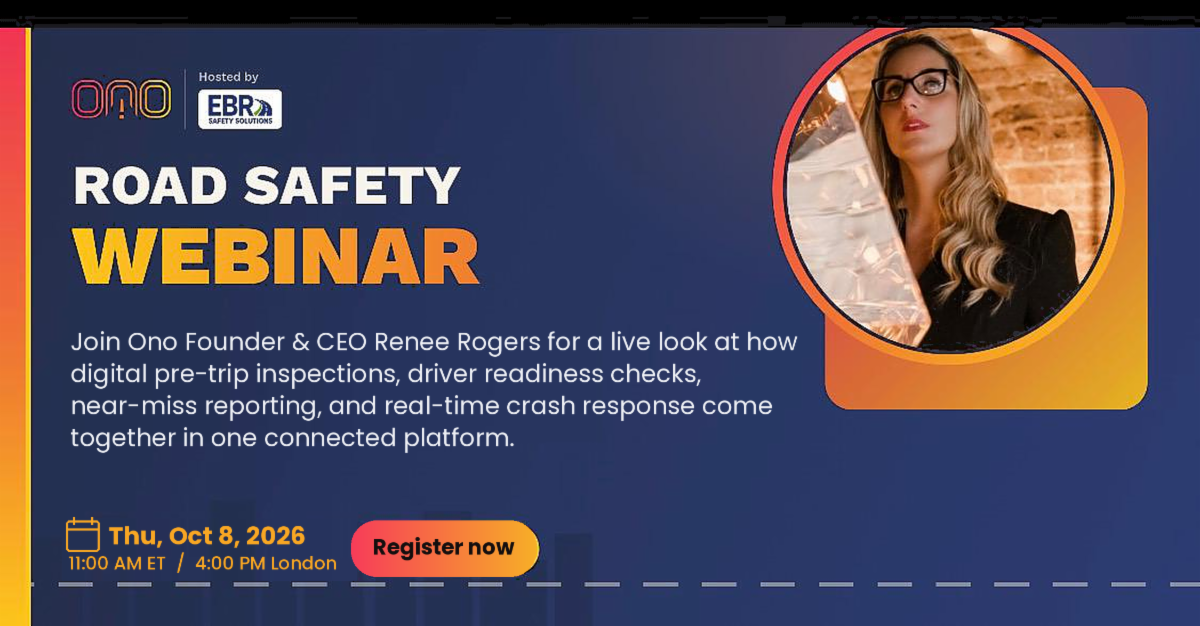
Join Renee Rogers, CEO and Founder of Ono, for an upcoming webinar on Thursday October 8 at 11AM EST where she'll walk participants through the Ono platform and how it helps fleets improve vehicle safety, streamline claims, and manage insurance costs — while ensuring crashes are properly documented and reviewed. This session is relevant for fleets of every kind: small or large, public or private, commercial or personal — including taxis and other for-hire vehicle companies, bus operators, rental car companies, and non-emergency medical transportation providers. Register here.
| |
September 25
AI Applications in Urban Transportation Management Symposium
Brooklyn, New York
Click here for more information
September 27-30
Automotive Fleet & Leasing Association (AFLA) Annual Conference
Las Vegas, NV
Click here for more information
October 8
Road Safety Webinar
Renee Rogers
Founder and CEO, Ono
Click here to register
October 15
National Do Not Disturb While Driving Day
Technology Transforming Transportation: Innovation to Eliminate Distracted Driving - NDDC Live Event
Click here to register
October 20-22
Fleet Forward Conference
National Harbor, Maryland
Click here for more information
October 22
New York City Vision Zero Fleet Safety Forum
Queens, New York
Click here for more information
October 28-29
Transportation Alternatives Vision Zero Cities Conference
New York City
Click here for more information
November 15
World Day of Remembrance for Road Traffic Victims in the U.S.
Locations To Be Announced
Click here for more information
November 18
Public Sector Vehicle Forum
Leicester Tigers Stadium, United Kingdom
Click here for more information
| |
|
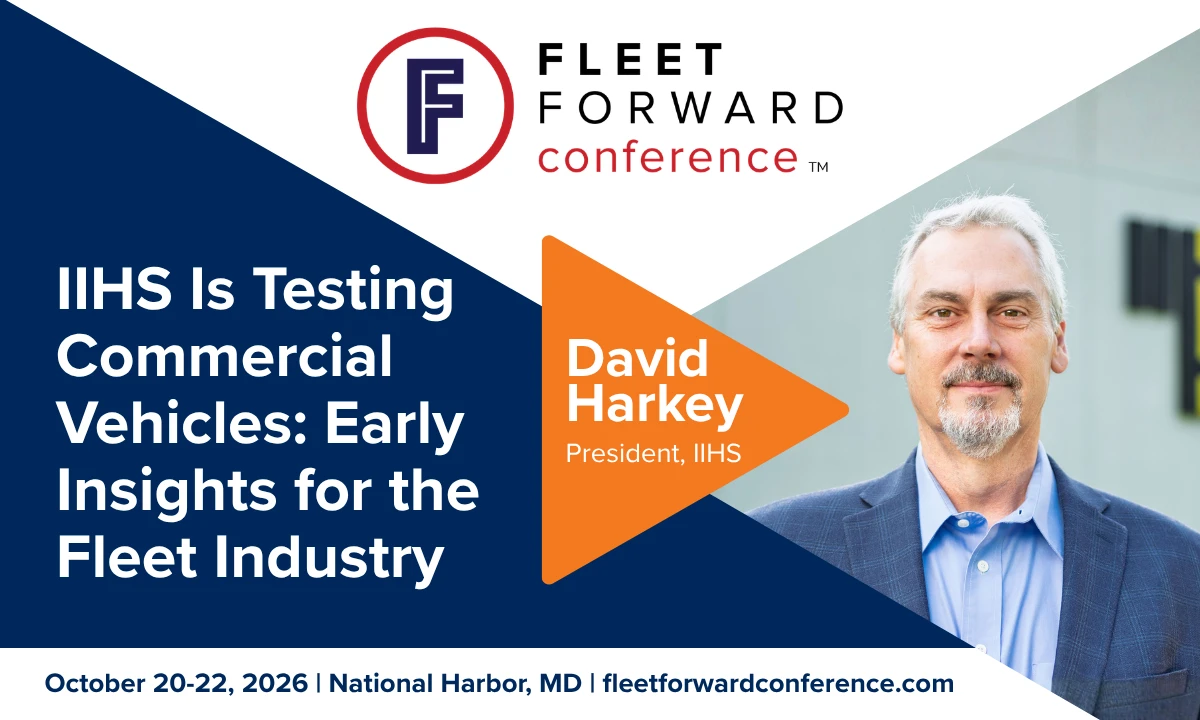
At the 2026 Fleet Forward Conference at Gaylord National Harbor in Maryland, IIHS President David Harkey will deliver the Fleet Safety keynote on Wednesday, Oct. 21, offering fleet professionals an early look at findings that could reshape how they evaluate and select work vehicles.
Titled "IIHS Is Testing Commercial Vehicles: Early Insights for the Fleet Industry," the session will draw on new IIHS testing and analysis of delivery vans, pickups, and work trucks. The presentation will examine how crash-avoidance technologies perform in commercial vehicles and assess the presence of other key safety features across the vans, pickups, and work trucks fleets rely on most.
To find out more about the upcoming Fleet Forward Conference click here.
| |
About the Safer Mobility Report
The Safer Mobility Report exists to bridge the gap between innovation and implementation. We will be sharing the technologies, policy discussions, research, and real world applications that can help companies, organizations, governments, and professional fleets make transportation safer. If one idea, technology, or shift in thinking saves one life, it will more than justify this effort.
About EBR Safety Solutions
EBR Safety Solutions is a mission-driven advisory firm focused on technology and practical solutions to reduce traffic crashes that result in serious injury or loss of life.
Founded by Eric Richardson, the firm brings a deeply practical, systems-level approach to improving road safety across both public and private sector fleets.
Our work is grounded in years of leadership at the highest levels of transportation policy and operations. As former NYC Deputy Chief Fleet Officer and a representative on the NYC Mayoral Vision Zero Task Force, Eric helped shape one of the nation’s most ambitious urban road safety initiatives.
He has also served as a road safety advisor to Together for Safer Roads, Strategic Mobility Advisor to Windels, Marx, Lane, and Mittendorf, and as the Co-Chair of the Health and Safety Committee for the International Association of Transportation Regulators (IATR), giving him a unique perspective that bridges government, industry, and technology sectors. Eric is a proud member of the Worshipful Company of Carmen one of the City of London’s oldest and largest livery companies. He is a global keynote speaker on efforts to eliminate traffic fatalities.
Eric's work advances safer vehicle design, life-saving technologies such as intelligent speed assistance, anti–distracted driving tools, systems to prevent drunk driving and best practices for seat belts and telematics. He also guides safe fleet transitions for government, trade waste, school transportation, and trucking operations. Guided by the Vision Zero Safe System approach, Eric promotes safer vehicles, speeds, and drivers as connected pillars of crash prevention.
EBR Safety Solutions turns proven safety principles into real-world impact, helping organizations meet standards and protect lives on the road.
| | | | |