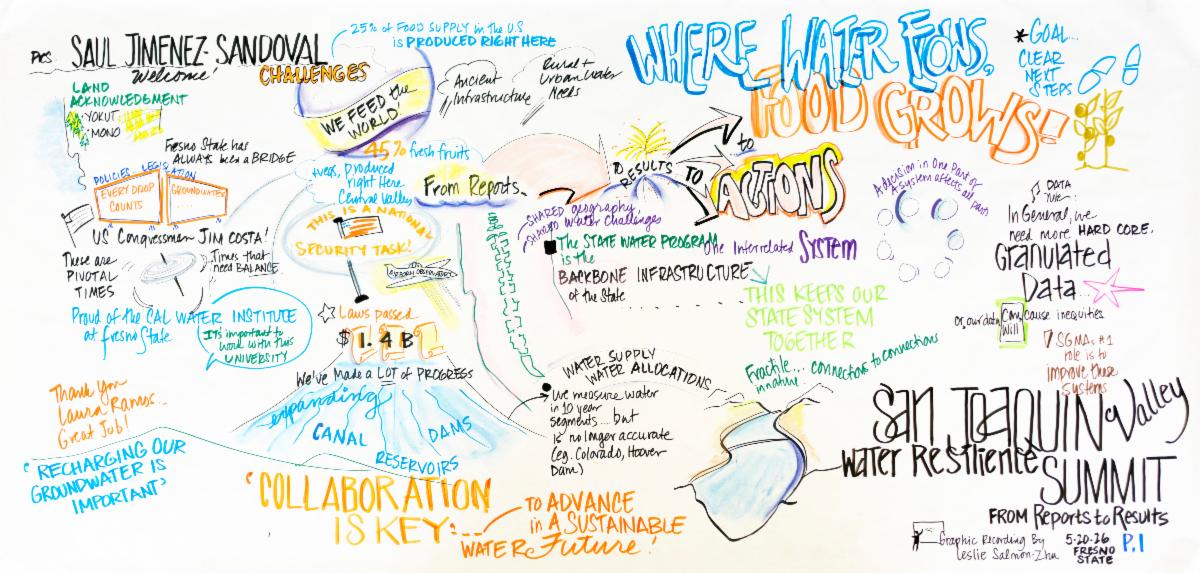
The San Joaquin Valley Water Resilience Summit Was a Success 

The event brought together state leaders, water agencies, policymakers, researchers, and stakeholders to review major new studies from the California Department of Water Resources and discuss coordinated solutions to the Valley’s most pressing water challenges.

The Water Blueprint for the San Joaquin Valley was proud to serve as a partner of the San Joaquin Valley Water Resilience Summit.


The rollout of the Water Blueprint for the San Joaquin Valley’s Unified Water Plan was one of the summit's featured initiatives. Bill Swanson of Stantec outlined both the scale of the Valley’s water challenges and the opportunity to reshape California’s water future. Swanson framed the discussion around a central theme: California’s water system was built through bold, long-term vision, and the state now faces another generational moment that demands the same kind of leadership and investment.


Swanson explained that the Unified Water Plan was created to move beyond fragmented local planning efforts and instead develop an integrated regional strategy that addresses water supply reliability, flood management, groundwater sustainability, ecosystem needs, and long-term economic stability together. The plan identifies a projected 2.5 to 3 million acre-foot annual water supply gap by 2040 and proposes practical solutions including expanded groundwater recharge, improved conveyance, floodwater capture, storage investments, and modernization of Delta operations.


Throughout the presentation, Swanson stressed that the Valley cannot afford complacency. He highlighted that the choices made over the next several years will determine whether California preserves its agricultural economy, food supply, and rural communities for future generations.

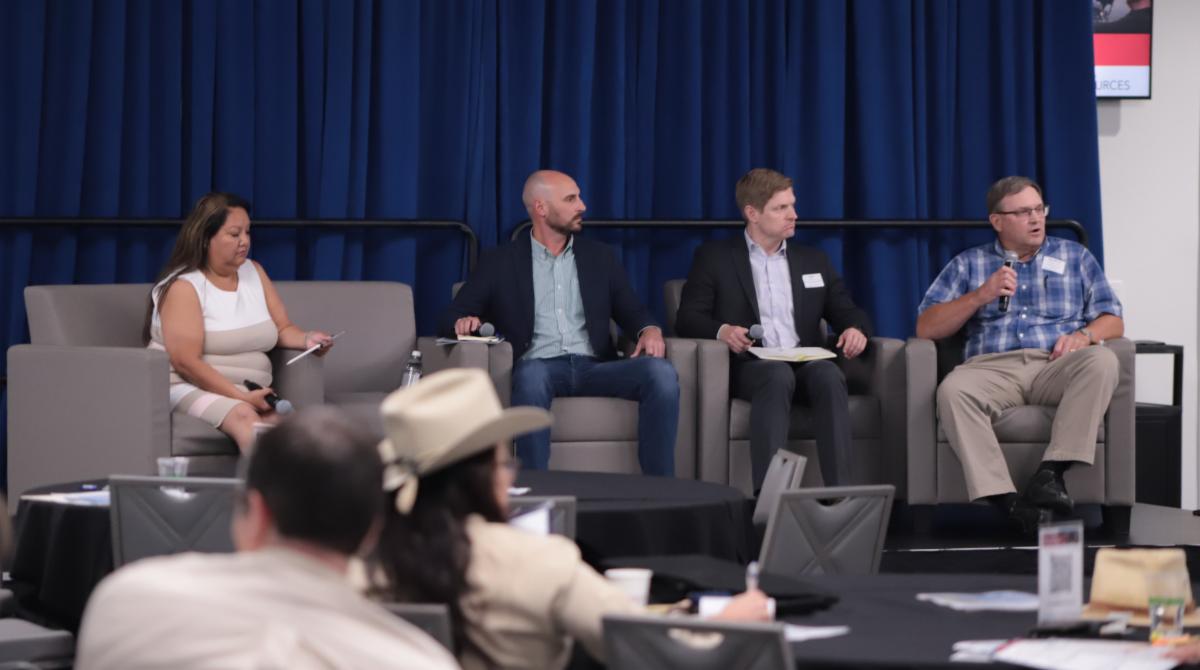
Water Blueprint for the San Joaquin Valley Vice Chair Geoff Vanden Heuvel participated in a later panel discussion, From Plan to Practice: What Do We Need To Do Differently, with Joel Metzger (California Department of Water Resources) and Levi Johnson (US Bureau of Reclamation).

One of the central themes raised during the panel discussion was the importance of regional coordination and collaboration if the San Joaquin Valley is going to successfully move from planning into implementation. Vice Chair Vanden Heuvel emphasized that one of the most important steps now underway is bringing the Valley together around a shared understanding of its water challenges and opportunities.

Photo courtesy of CWI staff

He noted that the Water Blueprint and Unified Water Plan are helping create the regional organization, dialogue, and cooperation necessary to avoid further economic decline and land fallowing while building a more sustainable future for Valley communities and agriculture.


Levi Johnson of the Bureau of Reclamation highlighted the growing importance of the Unified Water Plan and praised the Blueprint’s efforts to build partnerships and establish consensus-based priorities across the region, describing the plan as both “unique” and “powerful.” Johnson explained that the Unified Water Plan can help federal agencies better prioritize funding, technical assistance, permitting support, and interagency coordination by providing a locally supported roadmap for projects and investments. He noted that the plan could also help streamline federal planning and environmental review processes while strengthening coordination among agencies. The discussion reinforced the idea that lasting progress in the San Joaquin Valley will require broad partnerships, aligned priorities, and collaborative action across local, state, and federal levels.

Later in the event, Water Blueprint for the San Joaquin Valley Board Chair, Eddie Ocampo, participated in a group discussion, From Vision to Action: What This Means Across the Valley. Throughout the discussion, Chair Ocampo emphasized that water reliability is directly tied to the long-term health of San Joaquin Valley communities, economies, and families, not just agriculture or water agencies alone.


Chair Ocampo discussed the importance of balancing groundwater sustainability, infrastructure investment, and community resilience as California navigates SGMA implementation and increasing climate pressures. He stressed that many Valley communities are already experiencing the real-world impacts of water shortages and declining groundwater supplies, particularly disadvantaged communities that rely heavily on local groundwater systems. He emphasized that science-based, practical, and coordinated solutions are needed to ensure both reliable water supplies and economic stability across the region.


Importantly, Chair Ocampo emphasized that the Unified Water Plan is about building consensus and creating solutions that work for the entire San Joaquin Valley by protecting communities, preserving agriculture, and strengthening regional resilience for generations to come.

Photo courtesy of CWI staff

Thank you to all who made the summit such a success. If you couldn't attend, a full recording of the two-day event can be found below:

Timestamps:

2:38:46 Unified Water Plan Presentation

3:19:27 From Plan to Practice: What Do We Need To Do Differently Panel

4:46:58 From Vision to Action: What This Means Across the Valley Panel

View as Webpage