November
Supporting Service Members, Veterans, and Their Families.
| |
Go Beyond Green: Supporting Service Members, Veterans & Their Families
November is National Veterans and Military Families Month, a time to recognize the service, experiences, and contributions of Veterans, service members, and the families and caregivers who support them. With Veterans Day on November 11, this month also offers an opportunity to consider how we can support military-connected communities not only on one day, but throughout the year.
One visible way communities show their support is through Greenlight a Vet, which encourages individuals and organizations to change one light to green as a symbol of appreciation and support for Veterans.
But Why Green?
Green represents hope, renewal, and well-being. The term “greenlight” also represents forward movement. Together, these ideas give a simple green light greater meaning, recognizing Veterans, showing that they are valued members of our communities, and helping move the conversation about Veteran support forward.
But recognition is only the beginning.
This November, we are encouraging Marylanders to Go Beyond Green.
A green light can start a conversation, but meaningful support continues after the light is turned on. Going beyond green means learning about the experiences and needs of service members, Veterans, and their families; recognizing when someone may need additional support; reducing stigma around seeking help; and knowing how to connect someone with trusted resources.
It also means looking beyond what we may immediately see. Once home and out of uniform, a person's military connection may not be obvious. Veterans and service members represent diverse backgrounds, identities, experiences, and needs, and not everyone who has served will readily identify themselves as a Veteran. Strengthening support means creating communities where military-connected individuals feel recognized, understood, connected, and comfortable reaching out when they need help.
Throughout November, we will highlight information, data, and practical resources that can help turn recognition into action. From suicide prevention and crisis support to resources for military and Veteran caregivers, substance use prevention, suicide loss and postvention, and seasonal mental health, this month's resources reinforce an important message: our support can extend beyond a green light, beyond Veterans Day, and beyond November.
Whether you have served, support someone who has served, work with military-connected communities, or simply want to be better prepared to help, we invite you to Go Beyond Green by learning, listening, connecting, and sharing resources that strengthen support for Maryland's military-connected communities throughout the year.
| | Stay Connected with Maryland Commitment to Veterans | | |
As part of this month’s Go Beyond Green focus, we are partnering with our sister office, Maryland Commitment to Veterans (MCV), to connect readers with additional information and resources supporting Maryland’s service members, Veterans, and their families.
Stay connected through the Maryland Commitment to Veterans (MCV) Newsletter, which will provide updates, resources, training opportunities, and information focused on supporting the behavioral health and well-being of service members, veterans, and their families. It will also highlight community partnerships, statewide initiatives, upcoming events, and the important work being done to strengthen support systems across Maryland.
Subscribe now!
Maryland Commitment to Veterans (MCV) Newsletter
| |
Featured MCV Trainings & Resources - REGISTER NOW!
| |
Free Training: Answering the Call at Home
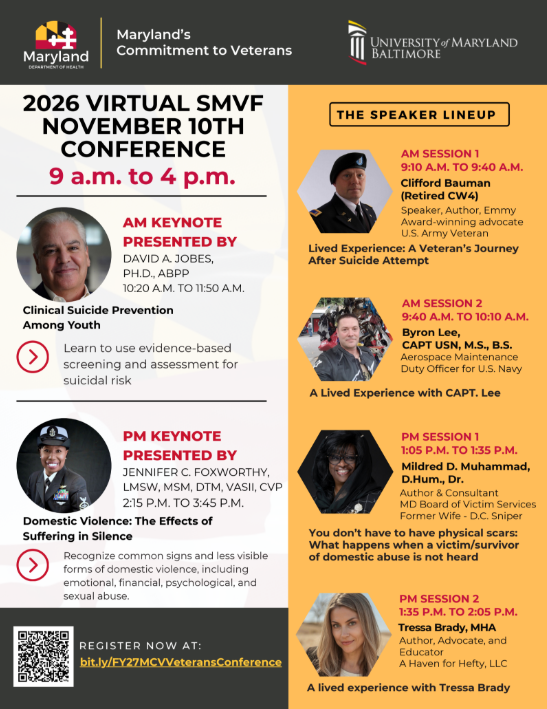
Join Maryland’s Commitment to Veterans for Answering the Call at Home: Clinical Strategies to Support Veteran Suicide Prevention, Military Sexual Trauma (MST), and Intimate Partner Violence (IPV) on Tuesday, November 10, from 9:00 AM–4:00 PM.
Designed for behavioral health providers serving service members, Veterans, and their families (SMVF), this virtual conference will explore current trends, evidence-based and best practices, barriers to accessing care, stigma, and ethical considerations. Sessions will address suicide prevention, military sexual trauma, and intimate partner violence, with perspectives from both subject matter experts and individuals with lived experience.
The conference features keynote speakers: David A. Jobes, PhD, ABPP, and Jennifer C. Foxworthy, LMSW, MSM, DTM, VASII, CVP.
5.5 Continuing Education Units (CEUs) are available.
| |
Supporting SMVF Across Maryland
Did you know Maryland’s Commitment to Veterans (MCV) helps support community organizations providing services to service members, Veterans, and their families across Maryland?
Through the Sheila E. Hixson Behavioral Health Services Matching Grant Program, eligible nonprofit organizations can receive funding to provide behavioral health and other supportive services for Maryland’s military-connected communities. Current and previous grantees include organizations providing mental health and substance use services, crisis support, family and peer support, counseling, and other community-based programs.
The State Fiscal Year 2028 grant opportunity is anticipated to be released in early November 2026. Eligible 501(c)(3) nonprofit organizations interested in applying can visit the MCV website and explore the Sheila E. Hixson Grant Fund for additional information.
Meet the Sheila E. Hixson Grantees
We invite you to learn more about the services available through current and previous Sheila E. Hixson grantees supporting service members, Veterans, and their families across Maryland:
| | |
Be Sure to Connect with MCV!
MCV also provides care coordination, peer support, and referrals for U.S. uniformed service members, Veterans, and their families in Maryland, while offering educational opportunities and supporting collaboration among behavioral health and medical providers, peers, first responders, and community partners.
For support or help connecting to services, contact MCV at 1-877-770-4801.
Calls are accepted 24 hours a day, 7 days a week.
| | Supporting Our Veterans: What the Data Shows | | |
For some Veterans, experiences during and after military service can affect mental health, substance use, and suicide risk. In Maryland, Veterans had higher suicide rates than Marylanders overall from 2019 through 2024.[1]
The 2026 National Veteran Suicide Prevention Annual Report provides a closer look at Veteran suicide nationwide and identifies several areas where connection, prevention, and support can make a difference. [2]
Connection to Care Matters
- From 2023 to 2024, the suicide rate among Veterans receiving health care through the Veterans Health Administration (VHA) decreased by 4.8%.
- During the same period, the rate among Veterans who were not enrolled in VHA care increased by 3.7%.
- Since 2001, the suicide rate among Veterans not enrolled in VHA care has increased 70.8%.
What this tells us: Helping Veterans learn about available resources and connect with appropriate care is an important part of suicide prevention.
Firearm Safety Is Suicide Prevention
- Firearms were involved in nearly 3 out of every 4 Veteran suicide deaths in 2024.
- Firearms were used in 75.4% of suicide deaths among male Veterans and 51.9% among female Veterans.
What this tells us: When there are concerns about suicide, respectful conversations about firearm access and options for safer storage can help create time and distance between a person experiencing a crisis and a potentially lethal means.
Mental Health and Substance Use Are Connected
- Among Veterans who recently received VHA care and died by suicide in 2024, more than 1 in 4 (26.5%) had a diagnosed substance use disorder.
- Mental health concerns, substance use, and suicide risk can occur together and may influence one another.
What this tells us: Supporting the whole person, and addressing mental health, substance use, and suicide risk together, can help ensure people receive care that reflects their needs.
Support During Life After Service Matters
There has also been encouraging progress for Veterans transitioning from military to civilian life.
- Among Veterans who separated from service in 2019, the suicide rate during the following year was 51.5 deaths per 100,000.
- Among those who separated in 2023, that rate decreased to 36.1 deaths per 100,000.
- Housing, employment, food security, access to health care, and other needs can all affect well-being during this transition.
What this tells us: Continued support during the transition from military to civilian life can help Veterans build connection, stability, and access to the resources they need.
Going Beyond the Numbers
Going beyond green means turning awareness into action. The data reinforce the importance of connecting Veterans with care, addressing mental health and substance use together, promoting lethal means safety, and supporting Veterans during and after their transition from military service.
Remember: Behind every number is a person, family, and community.
Understanding what the data show can help us strengthen support for Veterans beyond Veterans Day, beyond November, and throughout the year.
Sources:
- U.S. Department of Veterans Affairs. Veteran Suicide Data and Reporting: State-Level Veteran Suicide Data.
- U.S. Department of Veterans Affairs, Office of Suicide Prevention. 2026 National Veteran Suicide Prevention Annual Report. 2026.
| | Featured Resource: Responding to Suicidal Ideation & Suicide for Service Members, Veterans, and Their Families (SMVF) | | |
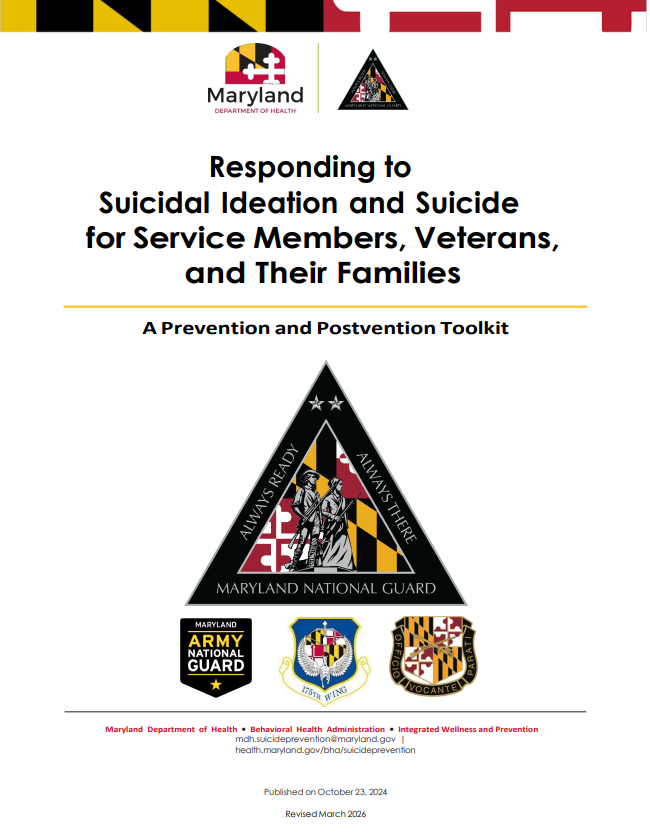
Showing support for Veterans and service members is important. Knowing how to respond when someone may be struggling is another way we can Go Beyond Green.
The Responding to Suicidal Ideation & Suicide for Service Members, Veterans, and Their Families (SMVF) Resource was developed to help individuals, organizations, leaders, and community partners better understand and respond to suicide risk within military-connected communities. The resource provides practical information for recognizing concerns, having supportive conversations, responding to suicidal ideation, and connecting someone with appropriate support.
The resource was last updated in March 2026 to strengthen its usefulness for Maryland's military-connected communities.
Updates included expanded guidance for the Maryland National Guard, additional information for leaders and helpers, strengthened lethal means safety and safe-storage messaging, greater attention to confidentiality and help-seeking considerations, and updated resources and referral pathways. The revisions also emphasized the importance of recognizing that military connection may not always be visible and that not everyone who has served will readily identify themselves as a Veteran.
Help Us Keep the Resource Current!
We are preparing for the next update of the SMVF resource and welcome input from our partners and communities. If you know of new or updated programs, services, trainings, tools, referral pathways, or other resources that could strengthen the toolkit, please contact us and share your recommendations.
Your input can help ensure the resource continues to reflect emerging needs and connect Maryland's service members, Veterans, families, caregivers, and those who support them with relevant and accessible information.
| |
Trainings & Events - REGISTER NOW!
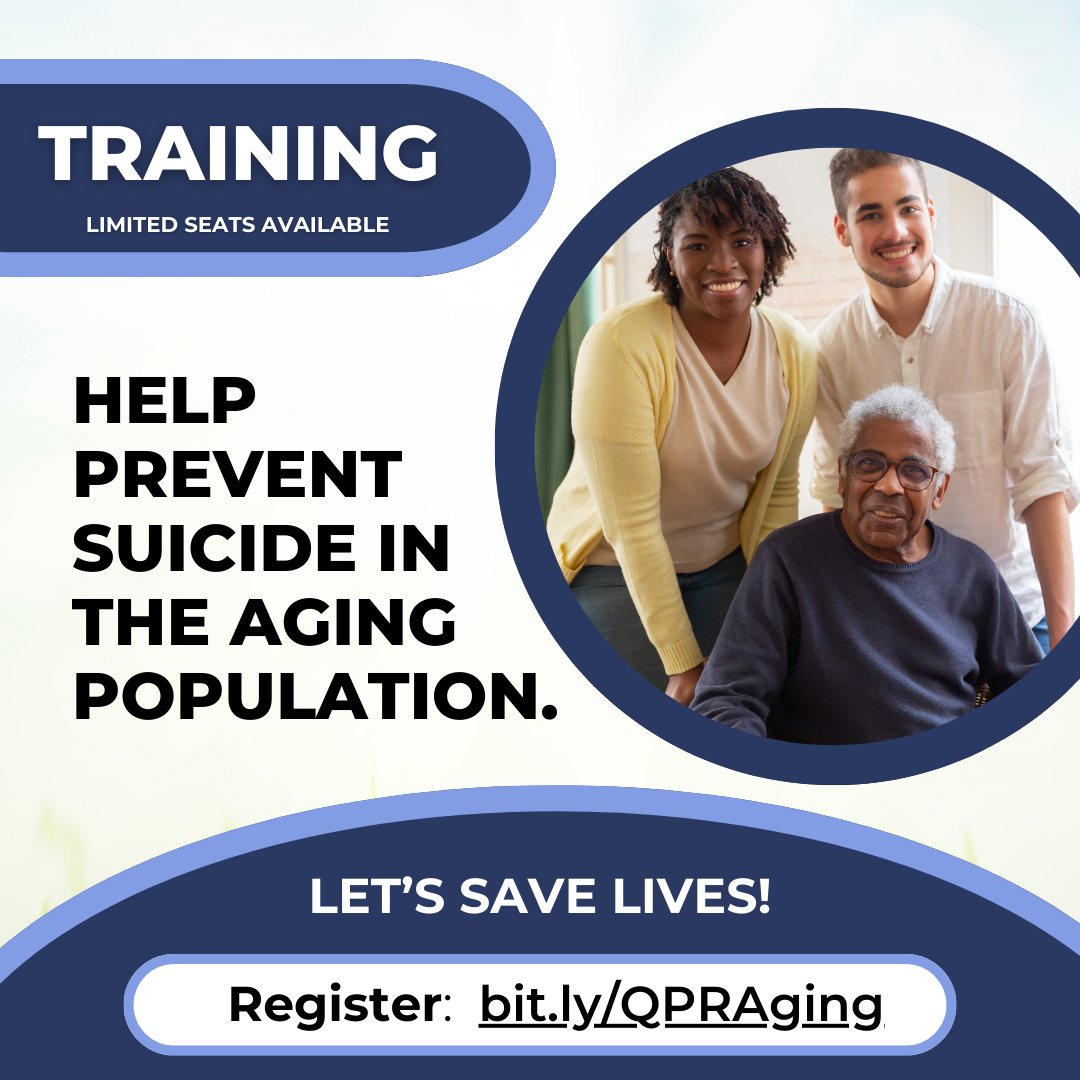
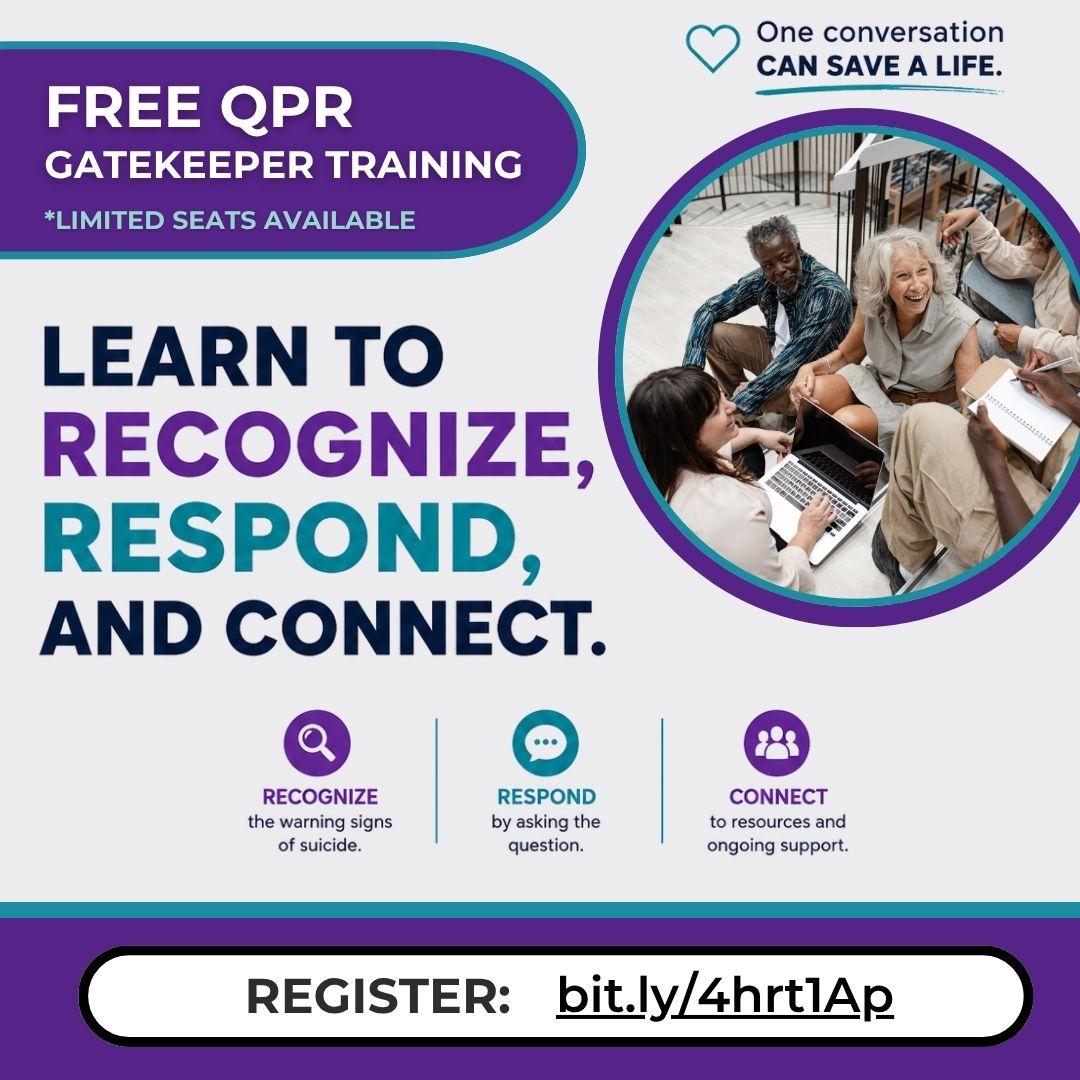
| | The Maryland Department of Health’s Office of Integrated Wellness and Prevention is offering free evidence-based Question, Persuade, Refer suicide prevention training. | | |
Additional Trainings & Events:
| | |
Supporting Our SMVF Community:
Problem Gambling Prevention
| | |
Supporting service members, veterans, and their families (SMVF) includes recognizing how gambling can affect financial stability, relationships, and mental health.
The 2025 U.S. Government Accountability Office report highlighted the growing availability of gambling to service members and identified gaps in military guidance for gambling prevention and treatment. These findings reinforce the importance of raising awareness and connecting our military community with support [2].
The connection between gambling and suicide is also an important part of this conversation. Veterans experiencing gambling problems may also face PTSD, depression, substance use, or challenges adjusting to civilian life. Gambling-related financial strain and relationship difficulties can add to these challenges. Research highlighted by the U.S. Department of Veterans Affairs found that veterans with at-risk or problem gambling were about twice as likely to report past-year suicidal thoughts as those who did not gamble or gambled recreationally. While there is no single cause of suicide, recognizing gambling-related harm can help us identify concerns and connect veterans with support earlier [1].
Help is available for individuals who gamble and loved ones affected by their gambling.
All support is free, confidential, and available to individuals and families.
Maryland offers no-cost gambling counseling regardless of insurance coverage or ability to pay, along with peer recovery support and a free, confidential helpline. Including gambling in conversations about mental health and suicide prevention can help ensure service members, veterans, and their families know where to turn.
Need help or know someone who does?
Call/Text: 1-800-GAMBLER (available 24/7)
Visit or Chat: helpmygamblingproblem.org
Veterans Crisis Line: Call 988 and press 1, text 838255, or visit VeteransCrisisLine.net. Support is available 24/7 for veterans, service members, and those who support them; VA enrollment is not required.
References
- U.S. Department of Veterans Affairs. (2025, July). Problem gambling and gambling disorder: A risk factor for suicide among veterans.
- U.S. Government Accountability Office. (2025, September 22). Military personnel: More guidance could help address service member gambling problems (GAO-25-107700).
| | |
Understanding the Connection:
Substance Use Prevention & Veterans
| | |
Substance use can affect anyone, including service members and Veterans. Experiences such as deployment, injuries, chronic pain, trauma, major life transitions, and challenges adjusting to civilian life can affect well-being and, for some people, may contribute to unhealthy substance use.
For Veterans, substance use may also occur alongside mental health concerns such as depression, anxiety, or post-traumatic stress. Recognizing these connections can help us move beyond stigma and toward support that considers the whole person.
What Can Support Look Like?
-
Recognize changes. Increased alcohol or drug use, changes in behavior, difficulty meeting responsibilities, or using substances to cope may signal that additional support could be helpful.
-
Lead with understanding. Stigma can make it harder to talk about substance use or seek help. Supportive, nonjudgmental conversations can help create an opening for someone to share what they are experiencing.
-
Consider the whole person. Mental health, substance use, physical health, relationships, housing, employment, and other life circumstances can overlap. Effective support should recognize these connections.
-
Know where to connect. Veterans and their families have access to substance use treatment and behavioral health resources through the U.S. Department of Veterans Affairs and other community-based services.
Go Beyond Green
Recovery is possible for everyone.
Substance use disorder is a treatable health condition, and effective support is available. The U.S. Department of Veterans Affairs (VA) offers evidence-based treatment options that may include therapy, medication, or a combination of both, depending on an individual’s needs.
Veterans can access treatment through their local VA medical center or clinic. Vet Centers can also provide assessment and help connect Veterans with appropriate treatment and other services.
Supporting Veterans means recognizing that behavioral health includes both mental health and substance use. Going beyond green means creating communities where Veterans feel comfortable talking about what they are experiencing and know that asking for help means support is needed, not that there is something to be ashamed of.
Additional Resources:
-
988 Suicide and Crisis Lifeline: Call or text 988 for free, 24/7 emotional support for yourself or someone you know.
-
American Society of Addiction Medicine - Words Matter: This handout offers background information and tips for providers to keep in mind while using person-first language, as well as terms to avoid to reduce stigma and negative bias when discussing addiction.
-
Integrating Suicide Prevention in Substance Use Disorder Treatment: This resource spotlights the urgent overlap between suicide risk and substance use disorder, advocating for routine suicide screening, safety planning, and integrated care in SUD treatment settings to improve client safety and recovery outcomes.
-
Maryland Prescription Drug Drop-Off Collection Sites: Provides safe, convenient, and confidential locations for residents to dispose of unused or expired medications. Proper disposal helps prevent prescription drug misuse, accidental poisoning, and environmental contamination.
-
Maryland Tobacco Quitline: Free, confidential support for quitting nicotine, including youth and young adults. (Call, text, or chat 1-800-QUIT-NOW)
-
NAMI Maryland Helpline: Free, confidential support and referral to mental health and grief resources (1-877-878-2371).
-
National Institute on Drug Abuse (For Teens and Educators): Youth-friendly, plain-language information on alcohol, cannabis, nicotine, and other substances, plus science-based prevention tools.
-
National Institute on Drug Abuse - Words Matter: This page offers background information and tips for providers to keep in mind while using person-first language, as well as terms to avoid to reduce stigma and negative bias when discussing addiction.
-
SAMHSA's National Helpline: Free, confidential treatment referral and information service for individuals and families facing mental and/or substance use disorders (1-800-662-4357).
-
Smoking Stops Here: Free service offering support, coaching, and nicotine replacement therapy (NRT) to help Maryland residents quit tobacco, including specialized programs for teens, pregnant women, and those with behavioral health needs.
-
U.S. Department of Veterans Affairs: The VA Substance Use Resources provide Veterans and their families with information about substance use, treatment, and recovery. Explore treatment options, learn about different types of substance use, and find VA services and support available to Veterans.
| |
The 988 Suicide & Crisis Lifeline: Press 1
Veterans, service members, and their loved ones experiencing a mental health, substance use, or suicidal crisis can call 988 and Press 1 to connect with the Veterans Crisis Line. Support is available 24/7, and you do not have to be enrolled in VA benefits or health care to connect.
Marylanders who are experiencing a mental health or substance use crisis should call or text 988. Learn more at 988.maryland.gov and access free community outreach materials in our 988 Toolkit. Maryland veterans and their loved ones can call 988 and press 1 to transfer to the Veterans Crisis Line. Press 2 for Spanish. Option 3 is no longer available. Wait times vary. More information can be found on 988's What to Expect and FAQ pages.
| | |
Additional BHA Newsletters!
-
988 Newsletter: The newsletter includes updates and critical information about 988, provides resources for the general public to learn about 988, and highlights the great work done at the Maryland 988 centers and by the call/text/chat specialists.
-
Maryland Commitment to Veterans (MCV) Newsletter: The newsletter will provide updates, resources, training opportunities, and information focused on supporting the behavioral health and well-being of service members, veterans, and their families. It will also highlight community partnerships, statewide initiatives, upcoming events, and the important work being done to strengthen support systems across Maryland.
| | | | |