March
"Vulnerability is not weakness; it’s our greatest measure of courage.” —Brené Brown
| | |
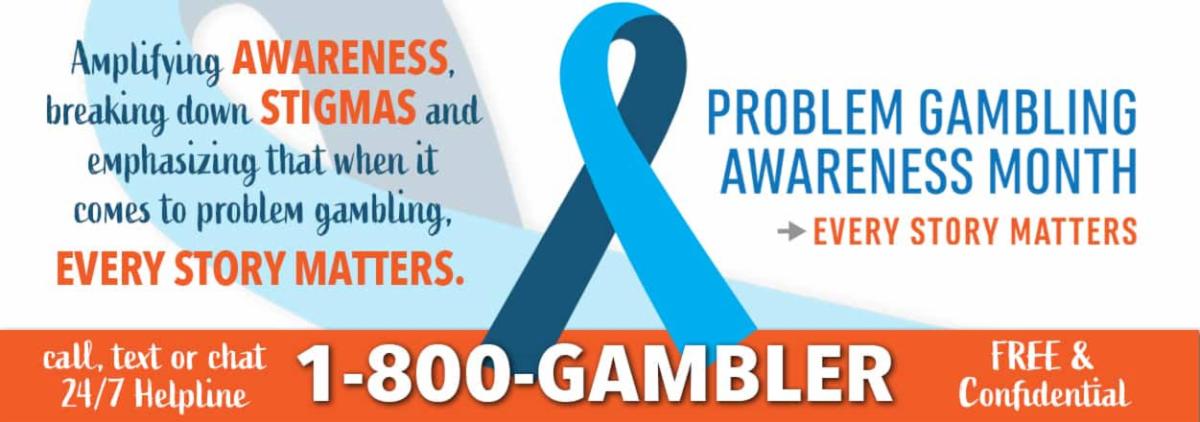
March marks Problem Gambling Awareness Month, a time to raise awareness about gambling-related harm and promote understanding, prevention, and support. Problem gambling is often a hidden issue, affecting individuals and families in ways that may not be immediately visible. It can show up as financial strain, stress, relationship challenges, or changes in mental health and well-being. This month provides an opportunity to increase awareness, reduce stigma, and encourage early help-seeking.
Problem gambling is closely connected to mental health and suicide risk. Research shows that individuals with gambling disorder experience significantly higher rates of suicidal thoughts and attempts, and the impact often extends to spouses, partners, and family members. Financial stress, particularly gambling-related debt, can further increase vulnerability. Recognizing these connections is critical to strengthening prevention efforts and ensuring people receive support before reaching a point of crisis.
In Maryland, the Maryland Center of Excellence for Problem Gambling plays a central role in prevention, education, and access to support. The Center provides free, confidential services for individuals and families, along with training and resources to help communities recognize warning signs and respond effectively to gambling-related harm.
As we observe Problem Gambling Awareness Month, we are reminded that awareness, compassion, and timely support can reduce risk and save lives. By increasing understanding and connecting people to trusted resources like the Maryland Center for Problem Gambling, we can strengthen prevention efforts and support the well-being of individuals, families, and communities across the state.
| | Stay connected with Maryland-specific data, tools, and supports that promote mental health, substance use prevention, and suicide prevention across the lifespan. In recognition of Problem Gambling Awareness Month, this month’s Information Hub highlights resources that increase understanding of gambling-related harm, reduce stigma, and support prevention, early intervention, and access to free, confidential help for individuals and families across Maryland. | |
|
Problem Gambling Awareness Month (PGAM) Toolkit: Resources for Awareness and Action
To support Problem Gambling Awareness Month efforts, the National Council on Problem Gambling has released its 2026 Problem Gambling Awareness Month (PGAM) Toolkit, a comprehensive set of resources designed to help organizations, communities, and partners raise awareness and reduce stigma around gambling-related harm.
The toolkit offers ready-to-use, plain-language materials that can be adapted for a variety of audiences and settings. Resources include social media graphics and messaging, posters and banners, fact sheets, presentation templates, sample press releases, and proclamation language for local and state leaders. Together, these tools are intended to make it easier to share accurate information about problem gambling, promote prevention, and encourage early help-seeking.
Importantly, the PGAM Toolkit emphasizes that problem gambling is a public health issue, not a personal failure. By focusing on awareness, education, and access to support, the toolkit helps normalize conversations about gambling-related harm and highlights pathways to prevention, treatment, and recovery. These resources can be used by behavioral health providers, community organizations, coalitions, workplaces, schools, and advocates to support outreach throughout March and beyond.
Using trusted, evidence-informed materials like the PGAM Toolkit strengthens consistent messaging across communities and helps ensure that individuals and families know they are not alone and that help is available.
| | |
The Maryland State Suicide Fatality Review Team - Report Now Available!
The Maryland State Suicide Fatality Review Team (SFRT) was established by law in 2022 and provides a unique opportunity to gain insight from in-depth case reviews of suicide deaths. The multidisciplinary team’s first annual report of case reviews was released to the public in late February 2026. From October 2024 to September 2025, the team focused on reviewing suicides by firearm among Marylanders aged 19-24. The team identified themes across cases of traumatic experiences and un- or undertreated behavioral health concerns, challenges with major life transitions, loved ones who were uncertain about how to help young adults at risk of suicide, ready access to firearms, and a lack of documented follow-up for bereaved families and communities after a suicide. The team developed more than 50 recommendations to strengthen safety nets for Marylanders at risk of suicide.
Priority recommendations included:
- Developing and disseminating firearm safe storage messaging to firearm owners
- Equipping communities with universal education about suicide prevention and 988
- Implementing long gun purchasing restrictions for individuals under age 21
- Providing follow-up services (including screening for suicide risk/lethal means access) for individuals and families who experience sexual violence and/or domestic violence
- Providing community-based case management for individuals receiving frequent care for suicidal behavior in emergency rooms
- Expanding clinical training for providers to screen for lethal means access and Extreme Risk Protective Orders (ERPOs)
The full report is available through the Maryland Department of Legislative Services website. Findings will be discussed at the Governor’s Commission on Suicide Prevention meeting on March 18, 2026, from 2:00 pm - 4:00 pm. The livestream of the meeting will be open to the public and available on the MDH Office of Suicide Prevention Facebook page.
| | |
Upcoming March Awareness Observances:
| |
Resource Spotlight! The Maryland Center of Excellence on Problem Gambling
| | |
The Maryland Center of Excellence on Problem Gambling (the Center, or CEPG) is a program of the University of Maryland School of Medicine and is funded by the Maryland Department of Health’s Behavioral Health Administration. The Center serves as a statewide leader in problem gambling prevention, education, treatment, and recovery, with a focus on promoting healthy and informed choices around gambling for individuals, families, and communities across Maryland. A core component of the Center’s work is providing direct support to those impacted by gambling-related harm. The Center operates a free, confidential 24-hour Helpline (1-800-GAMBLER; text 1-800-426-2537), offering immediate assistance, information, and referrals for individuals and loved ones experiencing concerns related to gambling.
In addition to direct services, the Center leads statewide public awareness and education efforts to increase understanding of the risks associated with gambling and gambling addiction. The Center also strengthens Maryland’s workforce by training counselors, educators, prevention specialists, and health care and social service providers, while developing new and evidence-informed training approaches to better support individuals and families.
To ensure access to care, the Center builds and maintains a network of problem gambling–capable treatment providers by offering technical assistance and maintaining a counselor referral list. Individuals experiencing at-risk or problem gambling can also access peer recovery support services, which play an important role in engagement, recovery, and long-term well-being.
The Center further supports prevention through community outreach and prevention programming, provides public policy information to address the public health impact of gambling in Maryland, and engages in evaluation and research to inform data-driven prevention, treatment, and recovery strategies.
| CEPG Trainings & Resources | | |
The Maryland Center of Excellence on Problem Gambling houses and connects stakeholders to a wide range of state and national partners offering training, technical assistance, and resources related to problem gambling, mental health, substance use, and suicide prevention.
-
211 Maryland: Connect with local grief counseling, housing, food, and financial assistance supports 24/7 by calling or texting 211.
-
Black Mental Health Alliance: Culturally responsive mental health education, referrals, and training that support Black individuals, families, and communities.
-
International Gambling Counselor Certification Board: Sets international standards and credentials for professionals specializing in gambling counseling and treatment.
-
Maryland Alliance for Responsible Gambling / Voluntary Self-Exclusion Program: Promotes responsible gambling practices and administers Maryland’s Voluntary Self-Exclusion Program to help individuals limit access to gambling venues.
-
Maryland Association of Prevention Professionals & Advocates (MAPPA): Supports Maryland’s prevention workforce through training, certification, and advocacy focused on substance use and behavioral health prevention.
-
Maryland Coalition of Families (MCF): Provides peer support, education, and advocacy for families caring for individuals with mental health, substance use, or behavioral health needs.
-
Maryland Council on Problem Gambling: Works to increase awareness of problem gambling and supports prevention, education, and recovery efforts across the state.
-
Maryland Department of Aging: Offers programs and resources to support the health, safety, and well-being of older adults, a population that can be uniquely impacted by gambling-related harm.
-
Maryland Department of Health Behavioral Health Administration: Oversees Maryland’s public behavioral health system and funds statewide prevention, treatment, and recovery services, including problem gambling initiatives.
-
National Alliance on Mental Illness Maryland: Provides education, support, and advocacy to individuals and families affected by mental health conditions across Maryland.
-
National Association of Administrators for Disordered Gambling Services: Supports state administrators by promoting effective public policy, program development, and service delivery for disordered gambling.
-
National Center for Responsible Gambling: Advances research and evidence-based strategies to reduce gambling-related harm and promote responsible gambling practices.
-
National Center for School Mental Health (NCSMH): Strengthens school mental health systems through research, training, and technical assistance, supporting the early identification and prevention of mental health issues.
-
National Council on Alcoholism and Drug Dependence of Maryland (NCADD-MD): Provides prevention education, training, and advocacy focused on substance use and co-occurring behavioral health concerns.
-
National Council on Problem Gambling: Leads national efforts in awareness, education, and advocacy, including resources and toolkits for Problem Gambling Awareness Month.
-
Substance Abuse and Mental Health Services Administration (SAMHSA): Houses national resources, data, and guidance to support mental health, substance use prevention, suicide prevention, and recovery-oriented systems of care.
| | The Center offers Problem Gambling Training on a variety of topics and all training programs are offered FREE of charge, awarding Continuing Education Units (CEUs) for Maryland licensed psychologists, social workers, counselors and therapists, and alcohol and drug addiction counselors. For more information on the Center’s training programs, please contact Training@MDProblemGambling.com or call (667) 214-2120. | | |
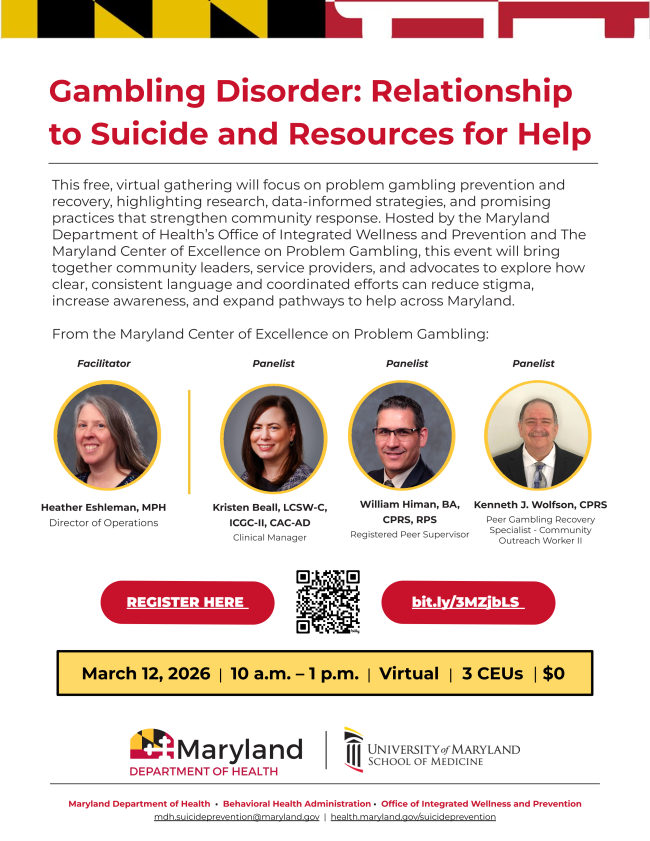
REGISTER NOW! - Gambling Disorder: Relationship to Suicide and Resources for Help
This training examines current research on gambling disorder and suicide, reviews clinical warning signs and risk factors, and provides practical assessment and intervention strategies. Participants will learn how to screen for gambling-related suicide risk, apply evidence-informed response techniques, and connect individuals and families to appropriate crisis and treatment resources. Lived experience perspectives will be integrated to strengthen clinical understanding and compassionate response.
Learning Objectives
- Describe current research linking gambling disorder to increased suicidal ideation, suicide attempts, and suicide mortality.
- Identify at least three gambling-related risk factors and warning signs associated with elevated suicide risk.
- Demonstrate appropriate screening and risk assessment strategies for individuals experiencing gambling-related distress.
- Apply at least two evidence-informed interventions or safety planning strategies to support individuals at risk.
- List appropriate crisis response and referral resources for individuals and families affected by gambling disorder.
Details
Date: March 12, 2026
Time: 10:00 AM - 1:00 PM EST
Location: Online - Live Virtual Training
CEUs: 3.0
Cost: $0
| |
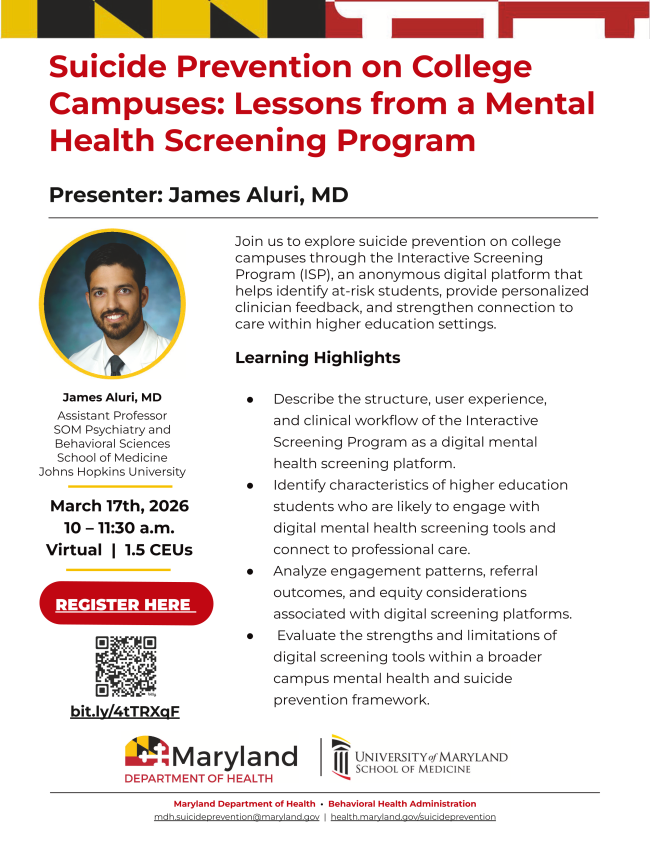
REGISTER NOW! - Suicide Prevention on College Campuses: Lessons From A Mental Health Screening Program
This training examines the Interactive Screening Program (ISP), a digital mental health screening platform developed by the American Foundation for Suicide Prevention and utilized by more than 60,000 college students nationwide. Led by Dr. James Aluri, psychiatrist at the Johns Hopkins University School of Medicine, the session will explore how students use anonymous, clinician-mediated digital screening to report mental health concerns, receive personalized feedback, and engage in ongoing dialogue designed to lower barriers to care.
Learning Objectives
- Describe the structure, user experience, and clinical workflow of the Interactive Screening Program as a digital mental health screening platform.
- Identify characteristics of higher education students who are likely to engage with digital mental health screening tools and connect to professional care.
- Analyze engagement patterns, referral outcomes, and equity considerations associated with digital screening platforms.
- Evaluate the strengths and limitations of digital screening tools within a broader campus mental health and suicide prevention framework.
Details
Date: March 17, 2026
Time: 10:00 AM - 11:30 AM EST
Location: Online - Live Virtual Training
CEUs: 1.5
Cost: $0
***Please Note: Registration is a 2-Step Process. You will receive an email to click to finalize registration. Registration closes at 12 PM the day before EACH training ***
| | |
Problem Gambling Awareness Month: Understanding the Impact and Strengthening Prevention
Problem Gambling Awareness Month (PGAM), observed each March, is a national effort to increase understanding of problem gambling and reduce the harms associated with gambling disorder. In Maryland, the Department of Health’s Office of Problem Gambling, within the Office of Integrated Prevention and Wellness, partners with the Maryland Center of Excellence on Problem Gambling to lead statewide education, outreach, and prevention efforts throughout the month.
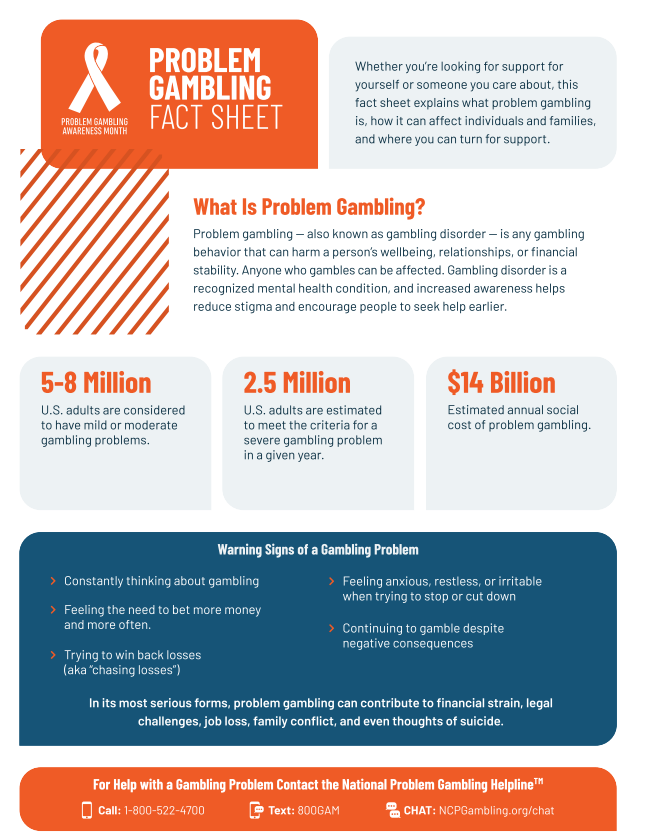
Problem gambling, also known as gambling disorder, is a recognized mental health condition that can negatively affect financial stability, employment, relationships, and overall well-being, and anyone who gambles can be impacted (NCPG, 2026). National estimates indicate that approximately 2.5 million U.S. adults meet the criteria for a severe gambling problem each year, while an additional 5–8 million experience mild to moderate gambling-related harm (NCPG, 2026). The annual social cost of problem gambling in the United States is estimated at nearly $14 billion, reflecting impacts such as healthcare needs, job loss, bankruptcy, legal challenges, and broader community consequences (NCPG, 2026). Increased awareness plays a critical role in reducing stigma and encouraging earlier identification and support.
In FY26, the Center of Excellence on Problem Gambling continues to strengthen prevention and early-intervention efforts by equipping communities, providers, and systems with practical, evidence-informed resources. Through education and outreach to casinos, local organizations, and other relevant entities, the Center will support National Gambling Screening Day on March 10, 2026, while advancing broader initiatives to prevent problem gambling. These efforts focus on educating employees and community partners on recognizing signs and symptoms of problem gambling, implementing effective prevention strategies, and using appropriate early interventions, including how to respond to concerns and connect individuals to screening, support, and treatment services. As part of PGAM activities, the Center will also release a Problem Gambling Awareness Provider Toolkit and a screening guide for behavioral health professionals to promote early identification of risk and strengthen pathways to treatment and recovery. These resources will be available at mdproblemgambling.com.
To elevate lived experience and help reduce stigma, the Center also produced the docuseries Winning Back My Life, which shares the personal journeys of individuals impacted by gambling disorder. Through candid storytelling, the series highlights both the realities of addiction and the importance of timely support. The docuseries is available at winningbackmylife.com.
Need help or know someone who does?
Call/Text: 1-800-GAMBLER (available 24/7)
Visit or Chat: helpmygamblingproblem.org
All support is free, confidential, and available to individuals and families.
| | Problem Gambling & Substance Use | | |
Problem gambling frequently co-occurs with substance use and other psychiatric conditions. A national general population study found that approximately 4% of individuals receiving treatment for substance use disorders also met criteria for gambling disorder. Elevated rates were also observed among psychiatric inpatients (nearly 7%) and among individuals with Parkinson’s disease (up to 7%) (Barnes et al., 2015).
Co-occurring mental health conditions are common. An estimated 96% of individuals with gambling problems have at least one additional psychiatric disorder, including depression, anxiety, or obsessive-compulsive disorder (Sohn, 2023). Gender differences are also evident, with men being nearly three times more likely than women to meet criteria for problem gambling, even after accounting for demographic and substance use factors (Barnes et al., 2015).
Substance-specific patterns further highlight risk. Adults with marijuana abuse or dependence experienced a 33% rate of problem gambling, compared with 4.6% in the general population (Barnes et al., 2015). Additionally, a national study of sports bettors found that 75% of daily or near-daily sports bettors engaged in binge drinking, a rate four times higher than gamblers who did not participate in sports betting (Grubbs & Kraus, 2024).
These findings reinforce the importance of addressing problem gambling within broader substance use and behavioral health prevention efforts. Screening for co-occurring conditions, using coordinated prevention strategies, and strengthening connections to treatment and recovery supports can help reduce harm and improve outcomes.
Healthy coping strategies include:
- Checking in early to notice signs of stress
- Set limits around gambling and spending
- Reduce access furing high-stress moments
- Stay connected with a trusted person
- Prioritize rest and routine
- Reach out for support - Free, confidential help is available through 1-800-GAMBLER and helpmygamblingproblem.org
If you or someone you know is struggling with substance use, help is available.
Additional Resources:
-
988 Suicide and Crisis Lifeline: Call or text 988 for free, 24/7 emotional support for yourself or someone you know.
-
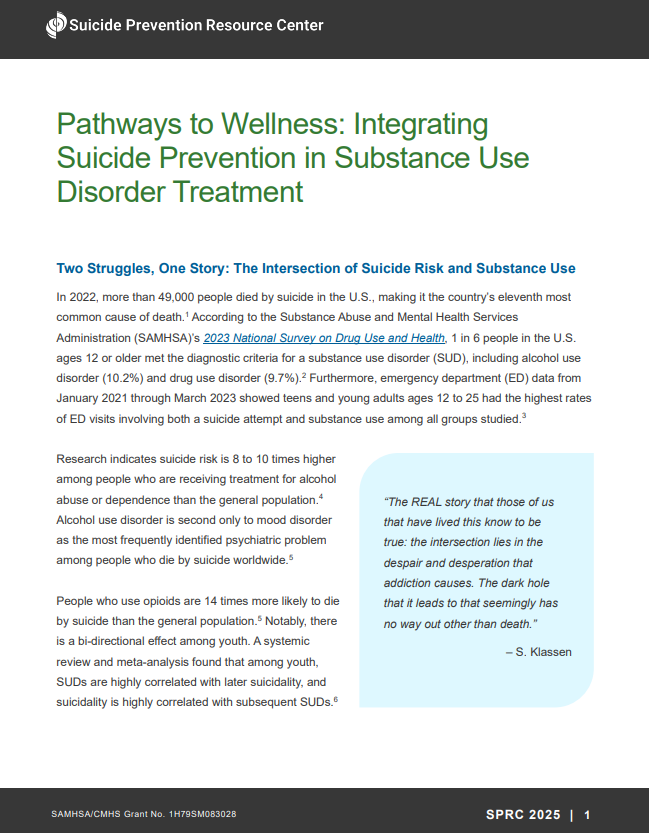
Integrating Suicide Prevention in Substance Use Disorder Treatment: This resource spotlights the urgent overlap between suicide risk and substance use disorder, advocating for routine suicide screening, safety planning, and integrated care in SUD treatment settings to improve client safety and recovery outcomes.
-
Maryland Prescription Drug Drop-Off Collection Sites: Provides safe, convenient, and confidential locations for residents to dispose of unused or expired medications. Proper disposal helps prevent prescription drug misuse, accidental poisoning, and environmental contamination.
-
Maryland Tobacco Quitline: Free, confidential support for quitting nicotine, including youth and young adults. (Call, text, or chat 1-800-QUIT-NOW)
-
NAMI Maryland Helpline: Free, confidential support and referral to mental health and grief resources (1-877-878-2371).
-
National Institute on Drug Abuse (For Teens and Educators): Youth-friendly, plain-language information on alcohol, cannabis, nicotine, and other substances, plus science-based prevention tools.
-
SAMHSA's National Helpline: Free, confidential treatment referral and information service for individuals and families facing mental and/or substance use disorders (1-800-662-4357).
-
Smoking Stops Here: Free service offering support, coaching, and nicotine replacement therapy (NRT) to help Maryland residents quit tobacco, including specialized programs for teens, pregnant women, and those with behavioral health needs.
| |
The 988 Suicide &
Crisis Lifeline:
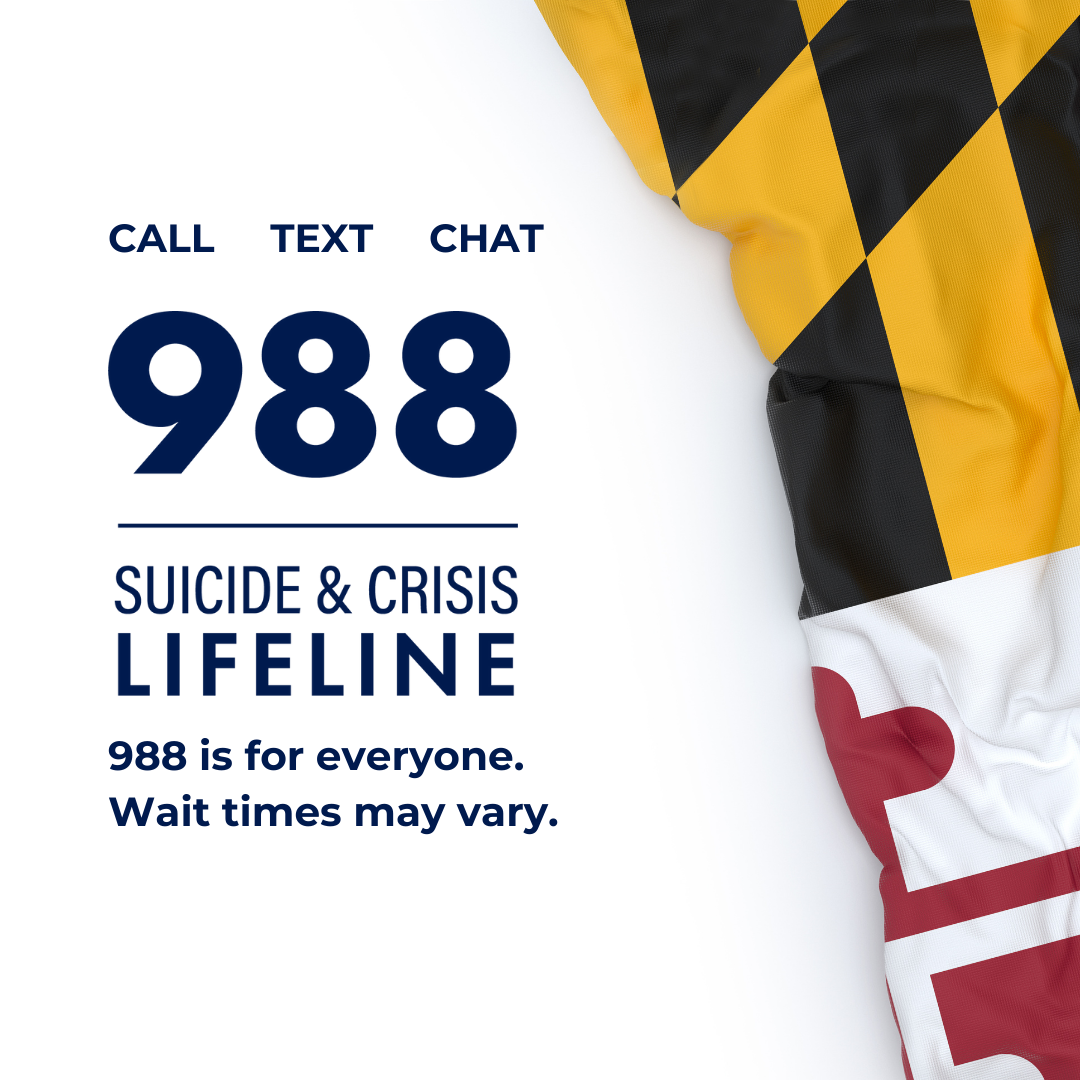
Marylanders who are experiencing a mental health or substance use crisis should call or text 988. Learn more at 988.maryland.gov and access free community outreach materials in our 988 Toolkit. Maryland veterans and their loved ones can call 988 and press 1 to transfer to the Veterans Crisis Line. Press 2 for Spanish. Option 3 is no longer available. Wait times vary. More information can be found on 988's What to Expect and FAQ pages.
| | |
The Behavioral Health Administration is excited to announce that they are creating a new quarterly 988 Newsletter. The newsletter will include updates and critical information about 988, provide resources that behavioral health professionals can use to increase awareness of 988, and dispel myths that the general public may have about 988. There will also be sections highlighting the great work done at the Maryland 988 centers and by the call/text/chat specialists. Register now to sign up for the 988 Newsletter.
| | The content shared in this newsletter is for informational purposes only and does not necessarily reflect the views or opinions of the individuals or organizations involved in its creation. | | | | |