|
Good morning, and welcome to The Ship Show!
Memorial Day weekend marks the unofficial start of summer, which is great news for anyone who enjoys sunshine, cookouts, road trips, and discovering exactly how many people can fit into one Buc-ee’s bathroom line.
The next few months will be packed with all the classic American summer activities, such as:
- Waiting 2 hours for a table at a restaurant with “dockside” in the name
- Hearing someone say, “It’s not the heat, it’s the humidity,” as if that helps anyone
- Discovering your sunscreen expired during the Obama administration
- Buying a kiddie pool “for the dog”
- Sitting in a lawn chair that was clearly designed by someone who hates knees
- Saying “we should do this more often” at a lake you will not visit again until next May
- Eating watermelon over a trash can like a feral raccoon
- Watching dads lose their minds in vacation traffic while claiming they “knew we should’ve left earlier”
So fire up the grill, dip your toes in the water, and remember that “just a little sun” has ruined stronger people than you.
- Greyson Harris
(P.S. Big thanks to the folks at Quantix [specifically Andrew and Jake] for their support of The Ship Show. We don’t usually hand out shoutouts like parade candy, but they’ve been extremely vocal about liking the newsletter, and I am not above being bribed with kind words.)
| | |
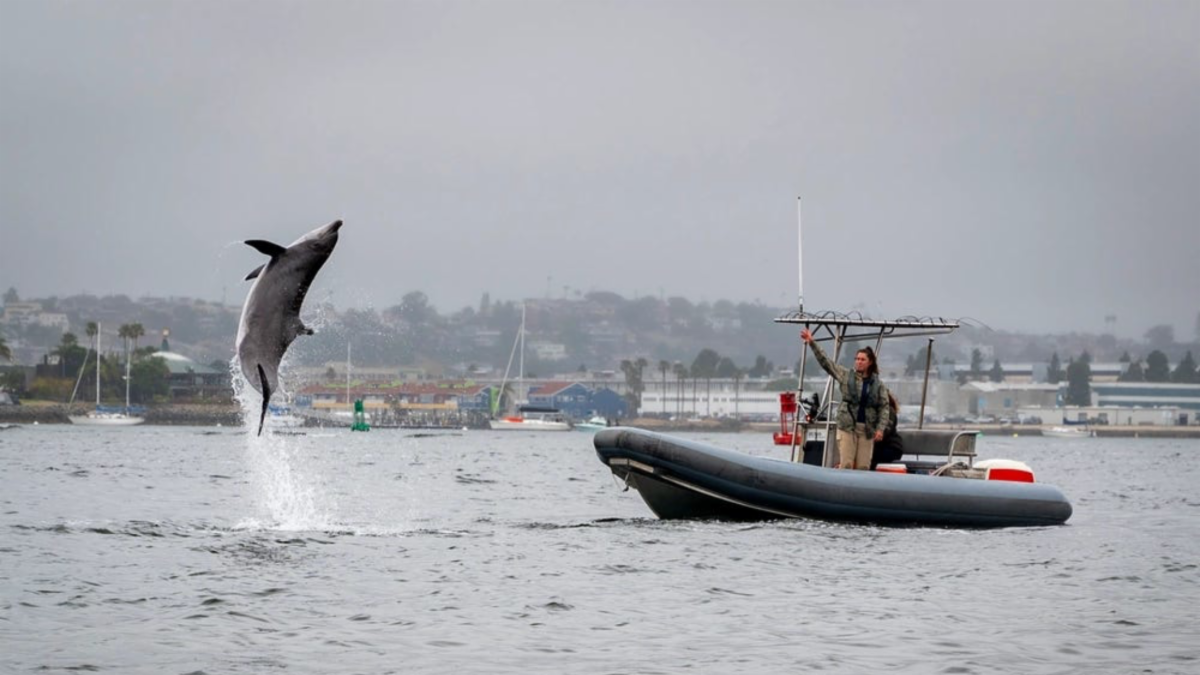
The Navy’s Dolphin Program Is Real, Which Feels Like Something We Should Have Discussed Earlier
(Believe It or Not, This Really is a Supply Chain Story)
| |
A reporter recently asked Gen. Dan Caine, the most senior military officer in the U.S., whether Iran was using “kamikaze dolphins.”
Caine, who usually approaches press briefings with the facial expression of a man reading bad quarterly earnings, actually smiled.
“I haven’t heard the kamikaze dolphin thing,” he said. “It’s like sharks with laser beams, right?”
To his credit, it does sound like a plot from Austin Powers. But here’s the part where the bit bites back: the U.S. Navy really does have military dolphins.
To be clear, they are not strapping on little helmets and yelling “FOR FREEDOM!” before torpedoing themselves into sea mines.
The Navy’s Marine Mammal Program trains bottlenose dolphins and California sea lions to detect, locate, mark, and recover underwater objects (including mines) in harbors, coastal waters, and the open sea.
The program has been operating since 1959, and the Navy says dolphins are especially useful because their natural sonar can find objects that electronic systems still struggle to detect in shallow, cluttered, or murky water.
The dolphin part is real. The kamikaze part is not
The Navy’s dolphin program began during the Cold War, when researchers studying dolphin movement realized the animals were freakishly good at finding things underwater.
Eventually, the program evolved from science project to military tool. Today, the animals are trained for jobs like mine detection, object recovery, and port security.
The important distinction is that dolphins are not trained to blow themselves up.
Their job is to find the problem, mark the problem, and then let the humans deal with the problem, which is also how most corporate meetings should work.
During mine-detection missions, dolphins can search underwater areas using echolocation. If they find something suspicious, they alert handlers and help mark the location so divers or disposal teams can neutralize the threat.
So no, not “kamikaze dolphins,” although that phrase sounds metal as hell and would make for a killer band name.
We’ve done this before
The program is not just Cold War weirdness preserved in a classified aquarium.
During the 2003 invasion of Iraq, the Navy deployed bottlenose dolphins to help clear mines and underwater obstacles near Umm Qasr, Iraq’s only deep-water port. That port mattered because coalition forces needed to reopen shipping lanes quickly so humanitarian aid and commercial supplies could flow into southern Iraq (told you this was a supply chain story - I love a good loophole).
Iraqi forces had lined the harbor with explosives and obstacles designed to slow or damage coalition ships. The dolphins worked alongside divers and mine-clearing teams, using echolocation to help locate threats in the water.
According to Navy accounts, the effort helped clear the way for shipping to resume, which means, yes, military dolphins have already played a role in reopening a critical supply chain.
Somewhere, a logistics manager just learned the phrase “marine mammal capacity solution” and became impossible to be around.
Send in the dolphins
That brings us to the Strait of Hormuz, one of the world’s most important oil chokepoints and currently the geopolitical equivalent of a lit cigarette near a fireworks tent.
With concerns about Iran, mines, and the safety of commercial shipping, the dolphin question landed in the middle of a very real military problem. Iran may not have an active dolphin program, and one source familiar with U.S. operations told CNN that the U.S. military is not currently using dolphins in the Strait.
But the capability exists, and this scenario is exactly the kind of nightmare these animals were trained for.
Bottom mines, which sit on the seabed instead of floating near the surface, are especially nasty. They can be hard to detect, especially in shallow, muddy, cluttered water. That is where dolphins, with their built-in radars and general refusal to respect man-made limitations, still have an edge.
Still, the whole thing feels like a reminder that modern warfare is not always shiny new technology.
Sometimes it’s a bottlenose dolphin named Flipper helping humans find explosives because the water is cloudy and machines are still not as good at dolphining as dolphins.
The real Navy SEALs
The global supply chain has already dealt with a pandemic, a canal blockage, drought-strangled waterways, port congestion, war, pirates, tariffs, labor strikes, and enough “temporary disruptions” to make that phrase legally meaningless.
So naturally, we have arrived at dolphins.
But still, and I want to make this very clear, “kamikaze dolphins” are not real in the way the phrase suggests. But military dolphins absolutely are.
Iran probably does not have a secret squad of explosive ocean mammals waiting in the Strait of Hormuz.
The U.S. does have a real Navy dolphin program, but those animals are trained to detect and mark underwater threats, not become them.
If Hormuz becomes a full-blown clearance operation, the work will likely involve ships, divers, drones, sonar systems, and a lot of very tense people in uniform.
But maybe, somewhere in the supporting cast, a dolphin with better underwater detection skills than most machines and a compensation plan based entirely on fish could be patrolling alongside them.
That's a creature I'd go to war with.
|
The Supreme Court Just Put Broker Vetting on the Witness Stand | |
Quick note before we get into it: we covered this in The Cargo Club last week, but this one felt important enough to bring back for the broader Ship Show audience.
Last week, the Supreme Court ruled in Montgomery v. Caribe Transport II, LLC that negligent-hiring claims against freight brokers are not automatically blocked by federal preemption under the FAAAA.
Translation for everyone who didn’t spend last week marinating in statutory language: brokers can potentially be held legally responsible for the carriers they choose.
And just like that, “we found a truck” is not much of a defense strategy.
The ruling in plain English
The case centered on whether the Federal Aviation Administration Authorization Act, better known as the FAAAA, prevents states from allowing negligent-hiring claims against freight brokers.
The Court said no.
The majority opinion, written by Justice Amy Coney Barrett, leaned on the FAAAA’s safety exception. While the law generally preempts state rules related to broker prices, routes, or services, it does not erase state authority over motor vehicle safety.
Since broker carrier selection involves the trucks hauling freight, the Court said those claims can move forward.
That does not mean every broker is automatically liable when a crash happens. It does mean a jury can now ask a very uncomfortable question: did the broker use reasonable care when choosing the carrier?
That question is going to matter a lot.
The preemption shield has left the building
For the last few years, many brokers leaned on federal preemption as a legal force field. If a negligent-hiring claim came their way, the argument was basically, “State law can’t touch us here.”
That force field just got unplugged.
The Supreme Court reversed the Seventh Circuit and sent the case back for further proceedings. The broader message to the brokerage industry was pretty clear. If you pick the carrier, you’d better be ready to explain how and why you picked them.
Carrier selection decisions are no longer just operational choices. They are discoverable, reviewable, and potentially very expensive choices.
If a broker ignores a carrier’s public safety record, elevated CSA scores, a conditional rating, prior out-of-service history, a sketchy authority timeline, or obvious fraud flags, that decision can now show up in court wearing a little name tag that says “Exhibit A.”
Kavanaugh weighs in
Justice Brett Kavanaugh wrote a concurrence, joined by Justice Samuel Alito, that may end up being the part everyone in freight remembers.
He noted that brokers do not own the trucks or hire the drivers, but they do select the carriers. That selection process is now very much part of the safety conversation.
He also pointed out that this ruling does not mean brokers will be routinely crushed under automatic liability. Plaintiffs still have to prove causation.
Even so, the message was clear. Broker carrier selection is not some harmless back-office chore. It involves actual trucks, actual highways, and actual people.
Which is the polite judicial way of saying, “Maybe don’t give the load to the cheapest carrier with a blinking red safety profile.”
What this means for brokers
This ruling does not create a brand-new responsibility out of thin air. It clarifies that brokers can be held accountable.
That means the legal questions become pretty practical:
- Did the broker check the carrier’s safety data?
- Did they review FMCSA records?
- Did they document the decision?
- Did they have actual rules, or did they just hope for the best and let the vibes dispatch the truck?
For brokers, the new world looks like this:
- Carrier vetting policies matter.
- Exception approvals matter.
- Documentation really, really matters.
If a broker has no documented carrier vetting process, that absence can become evidence. That’s not just a paperwork problem. That’s a lawsuit.
What this means for carriers
For reputable carriers, this ruling may actually be good news.
The freight market has spent the last few years dealing with fraud, double-brokering, identity theft, shell operations, and carriers who seem to appear out of the digital swamp with a fresh MC number and a suspiciously low rate.
A stronger focus on documented vetting could help clean up some of that mess. Safe, properly insured, well-run carriers should benefit when brokers are forced to take carrier selection seriously.
The carriers most likely to feel pressure are the ones with messy safety records, questionable authority histories, insurance problems, fraud reports, or compliance gaps that used to get waved through because someone needed coverage by 3 p.m.
For legitimate carriers, this is a reminder to keep the house clean:
- Fix safety issues before they become patterns.
- Maintain clean authority and registration records.
- Make sure authorized users, contact information, and digital footprints match reality.
Because brokers are going to be looking harder.
And the good ones already were.
Where KCH stands
This ruling does not change how KCH operates. It reinforces why the process already exists.
KCH vets carriers at the time of booking, not just during onboarding. That distinction matters because a carrier’s safety profile can change between the day they join a network and the day they show up to haul a load.
Before a carrier touches customer freight, KCH runs checks through Highway, combined with FMCSA’s public safety databases. Those checks happen before the load is tendered, not after the truck is already rolling and everyone is praying to the logistics gods.
KCH reviews:
- Active DOT and MC authority
- Interstate property authority
- Insurance coverage and pending cancellations
- CSA scores across key safety categories
- ELD and physical verification indicators
KCH does not use carriers with Unsatisfactory or Conditional FMCSA safety ratings. No account, relationship, or rate makes that worth the risk.
KCH also uses an automated Highway rule that blocks carriers showing elevated scores in three or more CSA categories at the same time.
What happens to flagged carriers?
Not every flag automatically disqualifies a carrier. But at KCH, flagged carriers do not get waved through by one broker making a gut call from the dispatch trenches.
Flagged carriers go to the Carrier Compliance Team for review. If a business case supports moving forward, that decision is documented in Highway and stays on the carrier’s profile for future visibility.
That means:
- No undocumented exceptions.
- No “trust me, bro” compliance.
- No mystery decisions buried in someone’s inbox.
Every decision has an owner, a reason, and a record.
That matters because the post-Montgomery world is going to reward brokers who can show their work and punish the ones who can’t.
The bigger industry takeaway
The Supreme Court did not say brokers are responsible for preventing every accident. Nobody can promise that. Freight moves in the real world, not inside a perfectly laminated safety manual.
But the Court did make one thing clear: carrier selection is not a casual administrative task. It is a safety decision.
That should matter to brokers, shippers, carriers, insurers, and everyone else touching the freight. The new standard is not perfection. It is reasonable care.
- Did you follow a real process?
- Did you document the decision?
- Did you avoid carriers with obvious safety problems?
- Did you make the responsible call when the cheap truck looked risky?
For KCH, that has already been the operating model. Every carrier. Every load. No exceptions.
For the rest of the industry, the ruling is less of a curveball and more of a mirror. If you pick the carrier, you own the choice.
So document it. Defend it. Or get ready to explain it under oath.
|
| |
🚢 Ocean Rates Stay High Without Much Demand Help
Trans-Pacific ocean rates are still running well above where they were before the Iran war began in late February, but this doesn’t look like a classic demand-driven surge.
According to the Freightos Baltic Index, Asia-to-U.S. rates are still roughly $1,000 per FEU higher than they were before the war.
For the week ending May 8:
- Asia-U.S. West Coast rates rose 4% to $2,828 per FEU
- Asia-U.S. East Coast rates increased 1% to $4,340 per FEU
The problem for carriers is that demand still isn’t doing much to justify the higher prices. Asia-Europe rates, which jumped by a few hundred dollars per FEU in March, have mostly drifted back toward pre-war levels. Asia-North Europe spot rates did climb 10% last week to $2,850 per FEU, but early pricing this week was already moving lower.
Freightos analyst Judah Levine said carriers are planning more modest mid-month increases while stepping up blanked sailings. There are also reports of containers being rolled to later voyages as carriers try to support spot rates during a soft demand period.
In other words, the market isn’t necessarily packed. The available space is just being made to feel that way.
The Strait of Hormuz is still the big wildcard. Maersk said the strait closure is adding about $500 million per month in costs, which it has so far passed through in freight rates. Some analysts are now warning that fuel availability could become a bigger issue than fuel pricing if the conflict keeps dragging on.
Meanwhile, import demand isn't looking too hot. The National Retail Federation is forecasting a muted trans-Pacific peak season:
- June volumes are projected to fall 2% from May
- July volumes are expected to rise 4%
- Volumes are then expected to ease again
Ocean rates are still elevated, but the market isn’t being carried by roaring import demand. It’s being propped up by higher fuel costs, geopolitical risk, blank sailings, and carriers trying to keep pricing from belly-flopping before peak season gets a chance to disappoint everyone properly.
| | |
✈️ Airfreight Rates Cool Off, But Stay Pricey
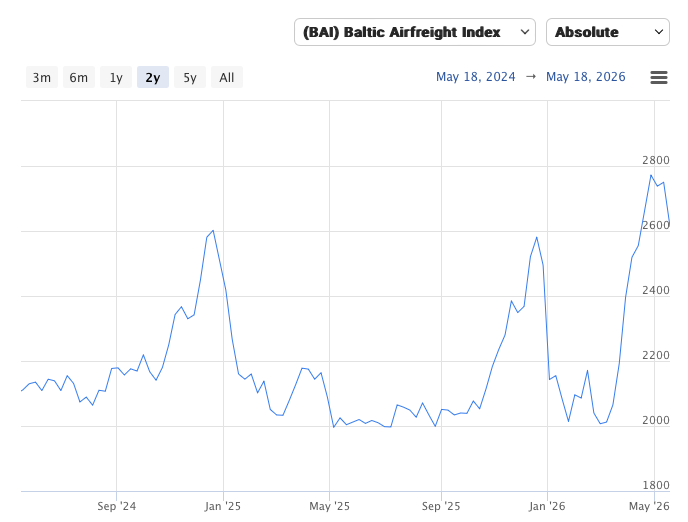
Global airfreight rates appear to be settling into their new, more expensive personality. After two months of sharp increases, the market finally took a breath in early May, though rates are still sitting far above normal peak-season levels.
According to TAC Index, the global Baltic Air Freight Index barely moved for the week ending May 11:
- BAI00 rose 0.4% week over week
- Global rates were still up 35.8% year over year
- April’s average airfreight rate was up 32.7% from last year
Asia showed some signs of cooling. Spot rates out of Hong Kong and India slipped slightly, and the busiest lanes out of China also dipped to both Europe and the U.S. Still, the year-over-year comparisons remain spicy enough to require a warning label.
- Hong Kong outbound index rose 1.6% week over week, leaving it up 37.9% year over year
- Shanghai outbound index fell 3.6% week over week, but remained up 36.1% year over year
Rates to Europe eased from Vietnam and Bangkok after recent big jumps, while rates to the U.S. kept rising from those markets. Seoul, Taiwan, and India were still seeing stronger week-over-week pricing to Europe, though U.S.-bound lanes were more mixed.
Europe, meanwhile, finally softened a bit after its own recent run-up. Transatlantic lanes to the U.S. moved lower, along with rates from Europe to China, Brazil, Mexico, and Australia. The sudden loss of Gulf capacity at the end of February is still keeping some pressure in the system, but the latest week had less “emergency siren” energy.
- Frankfurt outbound index fell 0.7% week over week, but stayed up 13% year over year
- London Heathrow outbound index dropped 5.5% week over week, while still running 61.8% above last year
The U.S. was the outlier. Rates from the U.S. rose sharply, including double-digit gains to Europe, China, and South America.
- Chicago outbound index jumped 14.1% week over week
- Chicago rates are now up 41.4% year over year
Airfreight’s panic spike may be easing, but the new baseline is still expensive. The market is adjusting to the post-February operating environment, not returning to the old one.
|
| |
🚂 Rail Volumes Stay on the Right Track
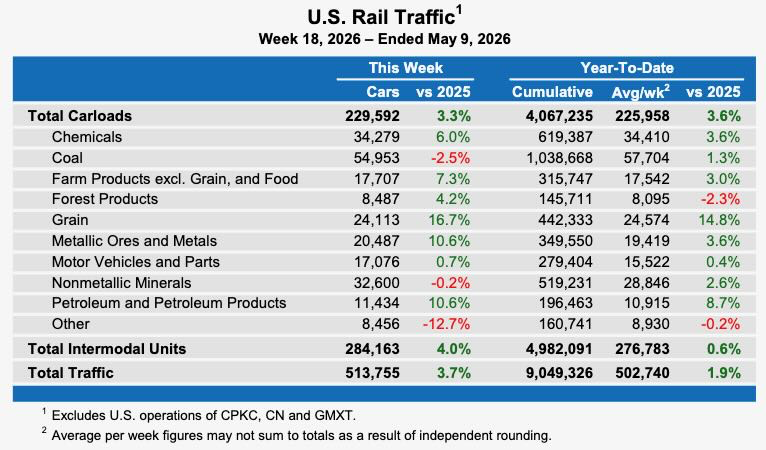
U.S. rail traffic kept its quiet little winning streak alive in early May, with both carloads and intermodal volumes running ahead of last year. Nothing here screams “freight boom,” but the rails are at least moving in the right direction.
For the week ending May 9, total U.S. rail traffic came in at:
- 513,755 carloads and intermodal units, up 3.7% year over year
- 229,592 carloads, up 3.3%
- 284,163 containers and trailers, up 4%
Grain continued to be one of the stronger performers, rising 16.7% from the same week last year. Chemicals also gained 6%, which matters because chemicals tend to be a useful little breadcrumb trail for downstream industrial activity.
Through the first 18 weeks of 2026, U.S. railroads have handled:
- 9,049,326 total carloads and intermodal units, up 1.9%
- 4,067,235 carloads, up 3.6%
- 4,982,091 intermodal units, up 0.6%
Across North America, the story looked similar. Railroads in the U.S., Canada, and Mexico reported 707,511 total unitsfor the week, up 2.1% from last year. Year to date, North American rail traffic is up 2%.
|
|
⛽️ Diesel Prices Dip, But Inventories Are Looking Dicey
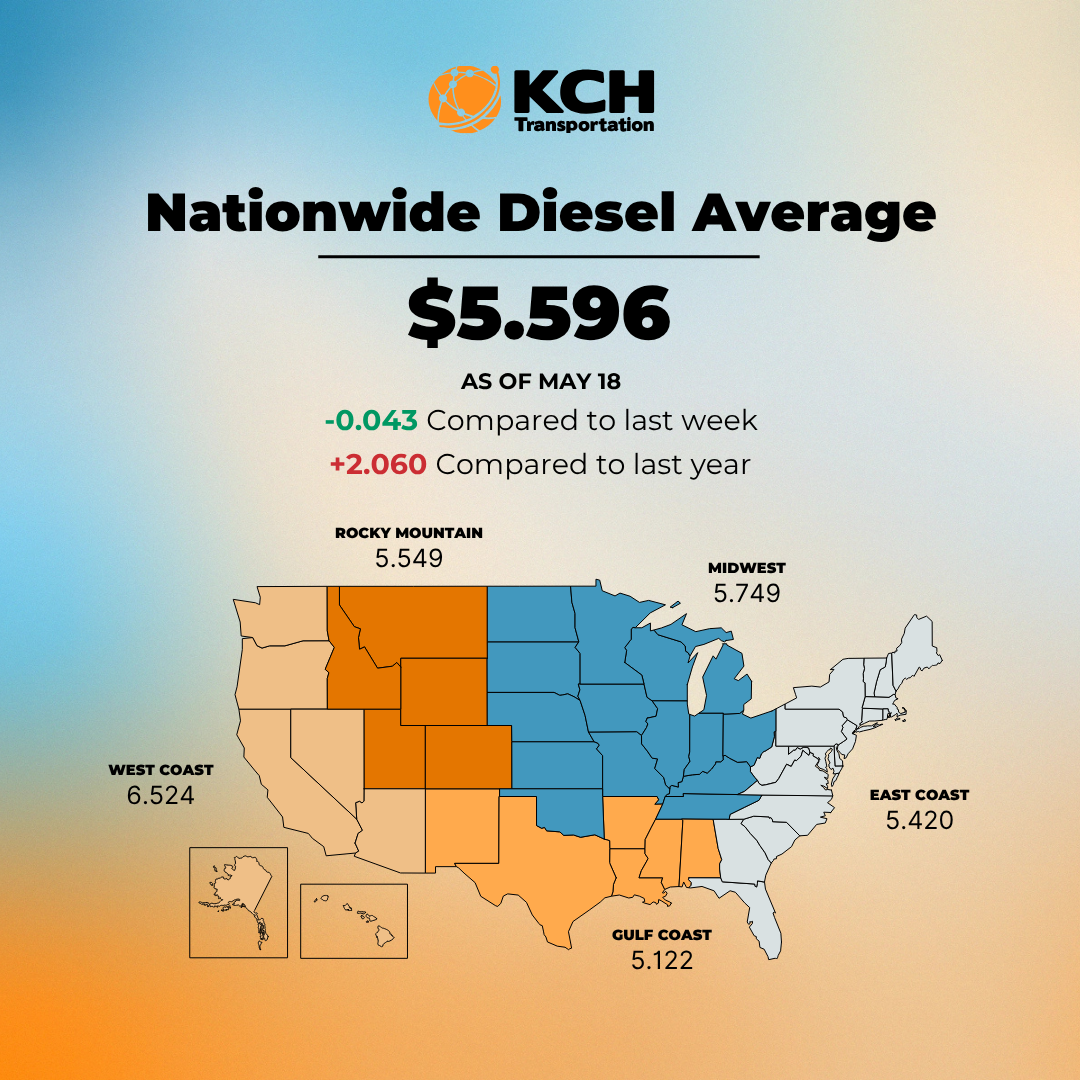
The DOE/EIA average weekly retail diesel price fell for the second straight week, giving buyers a little relief after several weeks of whiplash.
By the numbers:
- National diesel average fell 4.3 cents per gallon
- Current price sits at $5.596 per gallon
- That’s only 1.2 cents higher than where prices stood on April 13
So yes, diesel is basically back where it was five weeks ago. It just took the scenic route through a haunted house to get there.
Since mid-April, weekly moves have gone from a 20.5-cent drop, to another 5.2-cent drop, to a 28.9-cent spike, followed by last week’s tiny 0.1-cent dip. In other words, the final number looks calm.
The bigger concern isn’t just the weekly retail number. It’s what’s happening underneath it.
EIA data shows U.S. distillate inventories, which include heating oil but are mostly ULSD, have dropped to their lowest levels in several years. For the weeks ending May 1 and May 8, inventories came in below 103 million barrels. That appears to be the first time distillate stocks have been that low since 2005.
Oil analyst Jeffrey Currie has been one of the loudest voices warning that markets could be heading into a period of severe inventory drawdown. His concern is that oil already shipped through the Strait of Hormuz is now arriving at ports, but there may not be enough coming in behind it.
Currie said U.S. distillate inventories are getting close to the minimum level needed just to keep the system operating.
To put that in simple, blunt terms: the market is borrowing fuel from the future, and that only works until the tanks hit their operational floor.
| | St. Louis Cardinals Embrace Shirtless Right Field Crowd Because Why Not | |
The St. Louis Cardinals spent the weekend learning a valuable lesson about modern sports entertainment.
You can spend years studying fan demographics, ticketing trends, and in-game experience.
Or you can seat a college club baseball team in right field and let them remove their shirts until the stadium becomes a regional frat castle.
Naturally, option two worked immediately.
Shirts off, vibes on
The shirtless uprising began Friday, when 17 players from the Stephen F. Austin club baseball team showed up at Busch Stadium. The Lumberjacks were in nearby Alton, Illinois, for the National Club Baseball Division II World Series, and the Cardinals had offered them tickets.
Then the Lumberjacks turned the right-field bleachers into a sunburned choir.
They sang soccer chants. They yelled players’ names. They waved their shirts. They got other fans involved.
Even the stadium organist started playing along, because when the universe hands you a shirtless student section, you don’t ask questions. You provide accompaniment.
Then Yohel Pozo (real name, by the way) hit a walk-off single in the 11th inning, and suddenly a random Friday night against the Royals had become a case study in why baseball should occasionally let weird people cook.
Take my money
Cardinals manager Oliver Marmol loved it.
After Friday’s win, Marmol said he would do whatever he needed to do to get those fans back every game. Then he backed it up by offering to buy tickets for fans willing to sit in right field and bring the same energy.
“Last night’s atmosphere was electric. Let’s run it back this weekend,” Marmol posted on social media.
The offer worked. The Cardinals said Marmol bought right-field tickets for both weekend games, and they were all claimed by Saturday afternoon.
A baseball manager personally funding a shirtless fan section was not on the sport’s 2026 bingo card, but honestly, that card has been useless for years.
The sequel did not disappoint
The Lumberjacks returned Saturday after winning their own game earlier in the day, because apparently sleep is optional when you’re building generational traditions in the outfield.
The Cardinals beat the Royals again, 4-2, and the team rewarded the Lumberjacks with swag bags, clubhouse access, photos with players, and a few bats and baseballs.
Freshman pitcher Caleb Cummings said it was the coolest thing that had ever happened to him. He also admitted that, despite being a diehard Astros fan, the Cardinals may have won him over.
That is how you know the weekend worked. St. Louis didn’t just win the game. It executed a hostile takeover of one college freshman’s baseball loyalty.
A new tradition may have been born
Cardinals shortstop Masyn Winn said the atmosphere felt like a playoff game, which is impressive considering this was a May matchup against Kansas City and not, for example, Game 7 of anything.
But that was the whole point. The Cardinals didn’t manufacture the moment. They just let a group of college kids be loudly, stupidly, wonderfully into baseball.
Baseball wanted younger fans. They found them, but not how they expected. Now it's time to lean into it.
|
Pizza Hut Finally Remembers It Was Fun | |
2026 is apparently the year everyone collectively decided the future was a mistake, and Pizza Hut is no exception.
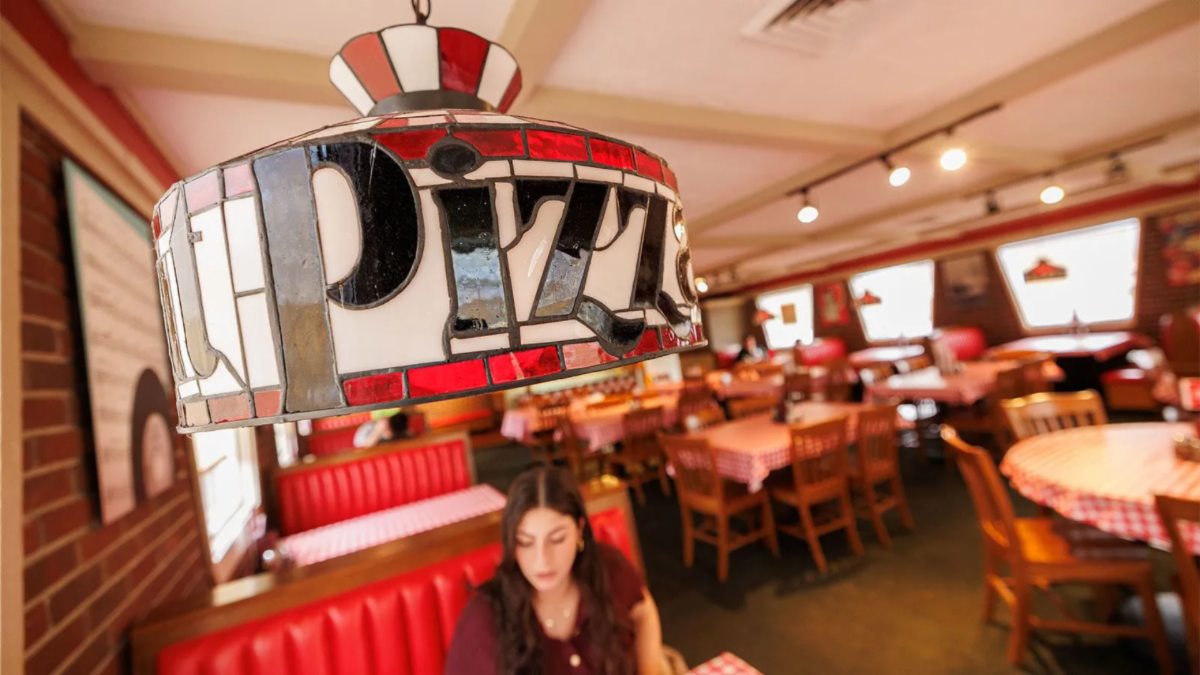
The chain is going full nostalgia mode by converting more locations into Pizza Hut Classics, complete with the red roofs, red-checkered tablecloths, vinyl booths, stained-glass lamps, salad bars, red plastic cups, and Pac-Man machines that once convinced entire families they were having a classy night out in 1997.
No one out-nostalgias the Hut
The throwback effort started in 2019, and 144 dine-in locations have already been converted.
Tim Sparks, president of Daland Corporation, is helping push the time machine harder. His Kansas-based company operates 93 Pizza Hut locations and has already remodeled 38 of them, with plans to redo more than 80.
The makeover includes:
- A little league baseball team celebrating their runner-up trophy
Apparently, it’s working.
CBS reported that those retro locations are among Daland’s top performers, with some customers making three-hour trips to eat under stained-glass lamps and remember a time when “going out for pizza” counted as an event.
Reject the future, embrace the past
The nostalgic pivot comes after years of Pizza Hut trying to modernize its restaurants, many of which ended up looking less like pizza parlors and more like places where you’d renew your license plate.
The old Pizza Hut had a whole ritual:
- You sat in the booth with light fixtures that you'd find at your grandmother's house.
- You mixed 4 different sodas into a plastic red cup and immediately regretted it.
- You went to the salad bar like somehow that would offset the 7 breadsticks you ate.
- You waited patiently for a personal pan pizza that arrived hot enough to legally be considered volcanic material.
Good times.
Then the chain went sleeker, colder, and more delivery-focused. The food was still there, technically, but the vibe had been taken out back and replaced with corporate minimalism.
The business felt it too. In February, Pizza Hut announced it would close 250 underperforming locations after lagging sales. Meanwhile, Domino’s has kept expanding, despite taking approximately 700 years to discover stuffed crust.
Make reading rewarding again
Pizza Hut is also bringing back its BOOK IT! summer reading program, the beloved 1980s institution that taught millions of children the most important lesson of all: literacy is good, but literacy with pizza is better.
The program is open to kids in pre-K through sixth grade, with the summer version starting June 1. Kids read books, earn free personal pan pizzas, and become tiny scholars motivated almost entirely by cheese.
Read books. Earn pizza. Learn capitalism before fractions.
|
| Book Our Loads on Highway's TFX | |
We’re now posting freight on the Trusted Freight Exchange (TFX), a secure, Highway-powered network made for verified carriers like you.
It’s built right into Highway, free to use, and designed to connect you with quality freight fast.
Every KCH load on TFX is:
- Verified: posted by trusted shippers and brokers.
- Ready to roll: book it instantly and get moving.
With TFX, you skip the back-and-forth and get straight to hauling.
| | |
Truck parking sucks. Let's fix that.
The U.S. has 23 million truck parking spots. You should be able to find one without feeling like you're on a wild goose chase.
We’re teaming up with Truck Parking Club to make that happen.
Use code KCH25 for $25 off your next reservation.
Less wandering. More rest.
| |
| |
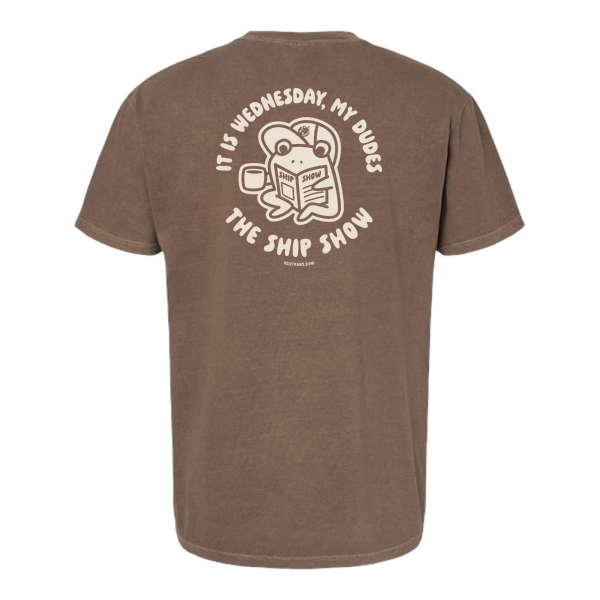
The Frog
Comfort Colors Garment-Dyed Heavyweight T-Shirt
$39.95
| | | | | | |