|
Good morning, and welcome to The Ship Show!
It’s finally December, which, according to the law I just made up, means the Christmas decorations can now come out without judgment.
Unless, of course, you already put yours up before Thanksgiving, at which point I have no choice but to assume you’re the kind of person who claps when the plane lands.
According to a YouGov survey, 30% of adults are in full-blown Christmas mode before December even starts.
Why?
Are you trying to summon Santa through sheer force of will?
Do you have the holiday restraint of a toddler?
Did your weird cousin do something vaguely illegal at Thanksgiving dinner last year and now you choose to skip it?
If your tree has been up since November, you live outside the social contract and I can’t help you. You are chaos incarnate.
Have some respect for the calendar.
Mariah defrosts in December. Not before.
- Greyson Harris
| | Retail’s Two Americas: Why the Holiday Season Looks Good But Feels Bad | |
The government’s long-delayed retail data finally dropped, and it confirms what many of us already suspected: people are still spending, but mostly out of obligation, not joy.
Two shoppers walk into a store...
Economists have a term for what’s happening: a “K-shaped recovery,” where high earners ride the upward slant of the K and everyone else gets dragged down by the bottom leg.
Recent Fed and Bank of America data show just how wide that gap has become:
- The top 10% of earners now account for nearly half (49.2%) of all consumer spending.
- Low-income household wages grew just 1% YoY in October, while inflation clocked in at 3%.
- For the richest third of Americans, wages rose 3.7%
The average American is spending more out of necessity, not desire. Even then, delinquency rates on car loans and credit cards are creeping up, hiring is slowing, and confidence in the economy is tanking (76% of Americans now say the economy is bad, per Fox News).
Q3 review
Despite that gloomy backdrop, Q3 earnings weren’t a complete wash for retailers. Well, at least most of them.
Winners:
- Walmart beat expectations and raised its profit outlook again, thanks to grocery sales and a 27% jump in global e-commerce.
- TJX Companies (TJ Maxx, Marshalls) saw 5% comp growth and are feasting on other retailers’ leftovers.
- Best Buy posted its biggest same-store sales gain in 4 years (+2.7%).
Losers:
- Target saw a drop in net sales and lowered its outlook, citing weak demand for discretionary goods.
- Home Depot also lowered its forecast, citing a sluggish housing market.
Holiday bump looks promising (but only on paper)
Mastercard expects a 3.6% bump in holiday sales this year, but don’t let that number fool you. It’s mostly driven by higher prices, not more shopping.
- Bank of America says holiday-related spending in October rose 5.7% YoY, but the number of actual transactions has slipped since January.
- Target expects a “volatile Q4,” while Walmart says it’ll look “pretty similar” to recent quarters.
- BJ’s Wholesale saw strong membership gains and a 30% jump in digital sales, signaling that cost-conscious shoppers are stocking up.
In short: Americans are spending more, but getting less.
Looking ahead
This holiday season could go either way. If high-income earners keep flexing their financial muscles, retailers might hit their targets. But if the stock market wobbles or layoffs pick up, that leg of the K could buckle, and the whole spending cycle could stall.
So yes, we’ll likely see decent topline numbers in December. But zoom in and it’s clear that this isn’t a feel-good recovery. It’s a split-screen economy, and only one side is smiling.
| | |
After years of letting ELD makers grade their own homework, the Federal Motor Carrier Safety Administration has finally decided to take the red pen back.
On Dec. 1, FMCSA announced it’s scrapping the old self-certification process and replacing it with a multistep vetting system designed to catch bogus devices before they hit the market.
An outdated, vulnerable system
For nearly a decade, ELD suppliers could simply promise they met federal standards, slap their name on a list, and start selling to carriers.
Predictably, this led to a surge in noncompliant, glitchy, and sometimes outright fraudulent devices that left carriers footing the bill when the feds eventually pulled the plug.
“We’re done playing whack-a-mole,” was essentially the message from new FMCSA Administrator Derek Barrs, who called the overhaul a “complete rework” of how ELDs get approved.
How does the new system work?
The new system is meant to stop unsafe or unreliable ELDs from ever getting on the road, and to make sure revocations don’t become a game of registration ping-pong.
Here’s what the new process will look like:
- Step 1: Initial review - Contact info, tech specs, and device photos get checked.
- Step 2: Fraud detection - New ELD apps will be cross-checked against lists of active, inactive, revoked, and in-process devices.
- Step 3: Categorization - Applications get sorted into:
- Category 1: Approved
- Category 2: Info requested
- Category 3: Needs further review
- Category 4: Denied (doesn’t meet standards)
No official timeline was given for rollout, but FMCSA says this will finally close the loopholes that have let bad actors thrive.
FMCSA is making a list and checking it twice
So far in 2025, FMCSA has removed 25 ELDs from its approved list due to failure to meet federal standards. Once a device is revoked, motor carriers typically have 60 days to replace it or risk being out of compliance.
The problem, according to FMCSA, is that shady providers were re-registering the same faulty devices under new names, a move that’s now much harder to pull off with the updated fraud checks.
What happens next?
FMCSA hasn’t given exact dates but expects a phased launch. Meanwhile, ATA and CVSA are still lobbying for external audits to be part of the process.
As standards tighten, expect more sketchy devices to get the boot. If your ELD gets revoked, you’ve got 60 days to swap it out or face possible enforcement.
| | |
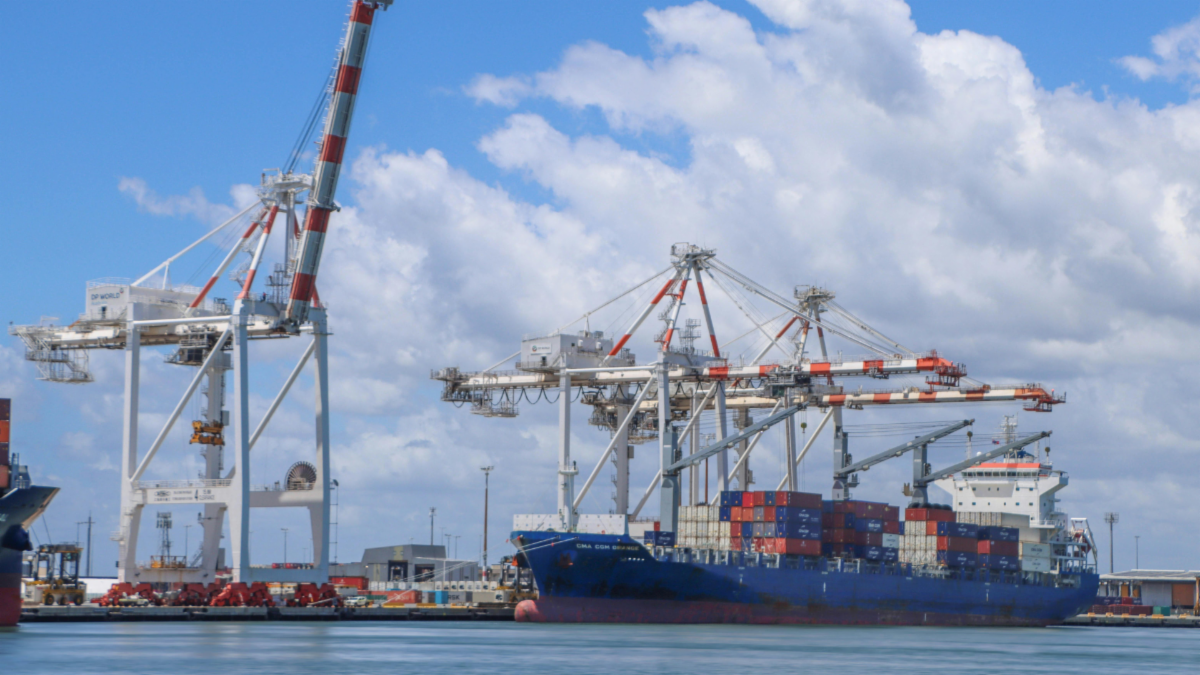
🚢 Spot Rates to the U.S. Still Sinking Amid Possible Red Sea Route Return
Ocean carriers tried to flex their muscles in November with general rate increases (GRIs) that briefly nudged spot rates from Asia to the West Coast up to $3,000 per FEU, but oversupply in trans-Pacific lanes quickly sank the effort.
Rates dropped 32% last week to $1,900 per FEU, and shed another $100 this week. They're still above the $1,400 low from October, but the GRIs clearly didn’t stick.
West Coast spot rates:
- Down to $1,800/FEU this week
- Off 32% from recent high of $3,000/FEU
- Still above October’s low of $1,400/FEU
East Coast spot rates:
- Down 8% last week to $3,400/FEU
- Now sitting at $3,000/FEU, back to early October levels
Despite a temporary Gaza ceasefire raising hopes of a Red Sea return, most Asia-Europe and some Asia-U.S. cargo is still sailing around the Cape of Good Hope. That’s absorbing capacity and keeping transit times stretched.
A full return to the Suez route could unleash 2 million TEUs of latent capacity, which would:
- Shorten round-trip schedules by 7-10 days
- Lead to vessel bunching at congested EU ports
- Further flood the market with capacity, including ships that could shift back to Asia-U.S. lanes
Carriers know this, which is why they’re planning a slow reintroduction of vessels. But shippers will likely pressure for a faster return, and if that happens, spot rates could take another dive in early 2026.
| | |
✈️ Airbus Grounded by Solar Flares and Software Bugs
Usually when we say “aerospace scandal,” we’re looking west toward Boeing. This time, it’s Airbus catching flak, and not from a competitor, but from the sun.
Over the weekend, Airbus issued a sweeping recall of nearly 6,000 A320-family jets due to a software glitch tied to solar flare activity. Then, as if geomagnetic storms weren’t enough, the company announced a separate issue this week: a supplier-quality defect on some fuselage panels.
Both incidents sent shares of the European planemaker down as much as 10% on Monday, dragging Thales (the flight software supplier) down with it.
The software problem appears to stem from geomagnetic interference (specifically solar flares) which may have caused flight-control anomalies mid-air. Airbus said most of the affected jets have already been fixed.
As investors were still digesting the software saga, Airbus admitted it found a separate problem involving a faulty metal panel supplied to A320 fuselages. While the issue is limited to undelivered aircraft for now, it’s already delaying some orders and tainting Airbus’s reputation just as the A320 overtakes Boeing’s 737 as the world’s bestselling plane.
Airbus says the issue is “identified and contained” (a phrase that always inspires total confidence).
| | |
🚂 Rail Traffic Slows Once Again
For the week ending November 22, total U.S. rail traffic hit 516,110 carloads and intermodal units, a 0.9% dip from the same week last year.
What moved (and what didn’t):
- Carloads: 234,592 (+2% year-over-year)
- Intermodal: 281,518 containers/trailers (-3.2%)
Commodity highlights:
- Grain: +9.5%
- Coal: +8.2%
- Nonmetallic minerals: +8%
- Metallic ores & metals: +1.4%
On the losing end:
- Petroleum and products: -10.1%
- Forest products: -7.1%
- Motor vehicles and parts: -5.1%
U.S. volumes through 47 weeks of 2025:
- Carloads: 10.46M (+1.8%)
- Intermodal: 12.76M units (+2.1%)
- Total: 23.23M combined units (+2%)
| |
Adults Are Saving the Toy Industry | |
Whatever you thought adults were responsible for, it probably wasn’t this: a new Circana report says grown-ups in G12 countries spent more on toys for themselves than for toddlers last year.
So if you’ve ever bought a LEGO Death Star and pretended it was for your nephew… the data knows.
Adults run the toy aisle now
The struggling toy sector, which saw sales decline by a miserable 8% in 2023, is now being credit-card-rescued by "Kidults."
Over the last three months of 2024, adults (18+) dropped $1.5 billion on toys for themselves, making them the toy industry’s most important age group and dethroning the previous MVP: toddlers aged 3-5.
By the numbers:
- $1.5B in toy sales to adults over the last three months of 2024
- Adults now account for 28% of global toy sales
- That share is up 2.5 percentage points since 2022
It's the only thing in the sector that's "up and to the right," which, given the economic state of Gen Z and Millennials, is probably why they're buying plushies instead of houses.
Arrested development
Why are fully-grown humans going absolutely ham for plastic and fluff? Analysts offer a few possibilities, and only some of them are embarrassing:
- Less stigma: Being “childish” doesn’t hit the way it used to. Adults are more open about hobbies, fandoms, and collecting. It's less "playing with toys" and more "curating a collection."
-
Delayed Adulthood: A more cynical (and possibly more accurate given how many 40-year-old children I've met in the workforce) take is that Millennials and Gen Z are simply delayed in hitting pivotal life moments like job security or moving out, so they're coping by... collecting stuffed animals.
- Content culture: Toys and collectibles play well on social, especially things like unboxings, display tours, and ranking your 47 favorite little guys.
-
Veiled hope: Unlike their mom's ill-fated Beanie Babies, maybe this collection will finally make them bank. After all, the global collectible-toy industry is projected to be worth $35.3 billion by 2032.
Juli Lennett, Circana’s VP and toy industry advisor, summed it up: "While the toy industry is feeling the heat, it is ripe with opportunity."
Yes, ripe with the opportunity to sell more tiny plastic things to full-grown adults who just want a moment's peace.
| | Book Our Loads on Highway's TFX | |
We’re now posting freight on the Trusted Freight Exchange (TFX), a secure, Highway-powered network made for verified carriers like you.
It’s built right into Highway, free to use, and designed to connect you with quality freight fast.
Every KCH load on TFX is:
- Verified: posted by trusted shippers and brokers.
- Ready to roll: book it instantly and get moving.
With TFX, you skip the back-and-forth and get straight to hauling.
| | |
Truck parking sucks. Let's fix that.
The U.S. has 23 million truck parking spots. You should be able to find one without feeling like you're on a wild goose chase.
We’re teaming up with Truck Parking Club to make that happen.
Use code KCH25 for $25 off your next reservation.
Less wandering. More rest.
| |
| |
The Frog
Comfort Colors Garment-Dyed Heavyweight T-Shirt
$39.95
| | | | | | |