American Minute with Bill Federer
The Space Race: Manned Space Flight & the Faith of Astronauts - “To look out at this kind of creation and not believe in God is to me impossible"-John Glenn, first U.S. astronaut to orbit the Earth
|
|
Robert Goddard,
the
father of American rocketry,
is credited with developing the first
liquid fueled rockets,
with
gyroscope three-axis control
providing
steerable thrust.
NASA's Goddard Space Flight Center
is named for him.
|
|
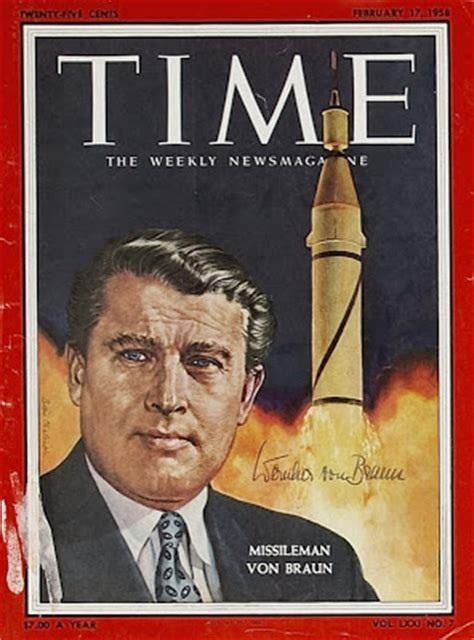
After World War II,
Werner von Braun
, and 1,600 German scientists, surrendered to the United States in
Operation Paperclip,
stating:
"I myself, and everybody you see here, have decided to go West ... We knew that we had created a new means of warfare ... We felt that only by surrendering such a weapon to
people who are guided by the Bible
could such an assurance to the world be best secured."
|
|
On October 4, 1957,
Soviets
launched
Sputnik 1,
the first man-made satellite
.
|
|
Werner von Braun
developed America's first space satellite,
Explorer 1,
launched on January 31, 1958.
The
Space Race
was on.
|
|
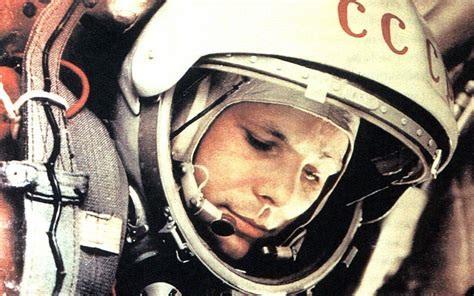
On April 12, 1961, Soviet cosmonaut
Yuri Gagarin
became the first person in space, completing one orbit of the Earth in 108 minutes, reaching an altitude of 91 miles.
|
|
Less than a month later, May 1, 1961, American
Alan Shepard
piloted the
Mercury Freedom 7
to become the second person in space.
His 15 minute flight reached an altitude of 101.2 nautical miles above the earth.
|
|
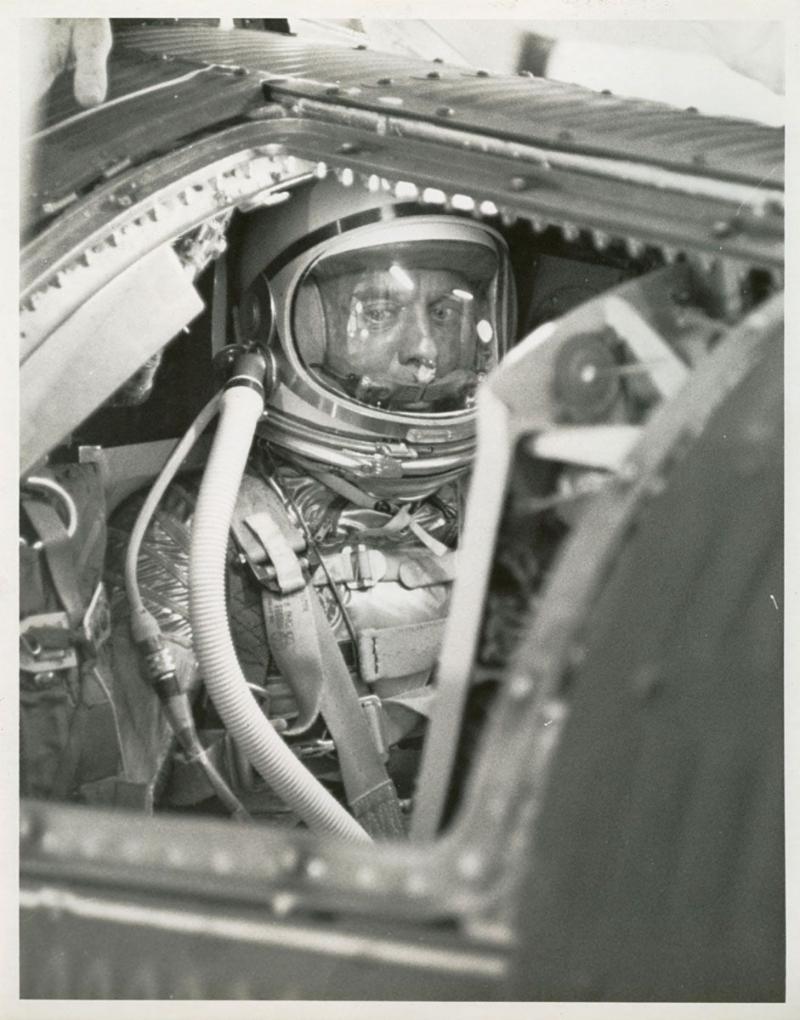
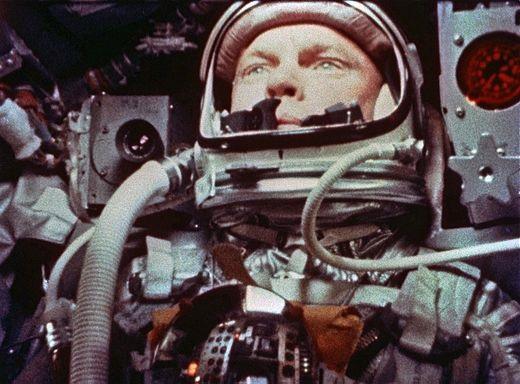
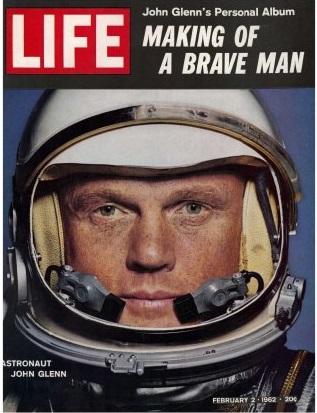
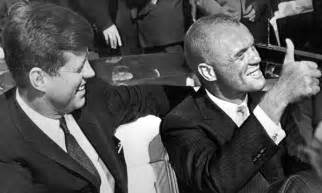
On February 20, 1962, Astronaut
John Glenn
piloted the
Mercury Friendship 7.
"Godspeed, John Glenn,"
radioed backup-pilot Scott Carpenter from the blockhouse as the rockets fired up.
Glenn
became the first American to orbit the earth, circling 3 times in just under 5 hours, reaching an altitude of 162 nautical miles.
|
|
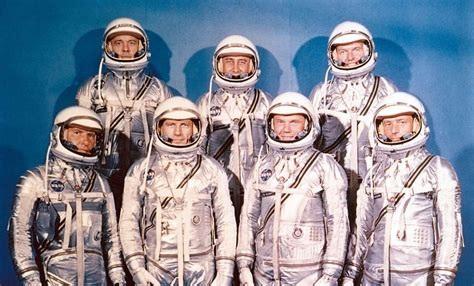
NASA's first
manned spaceflight
program was
Mercury,
1958-1963.
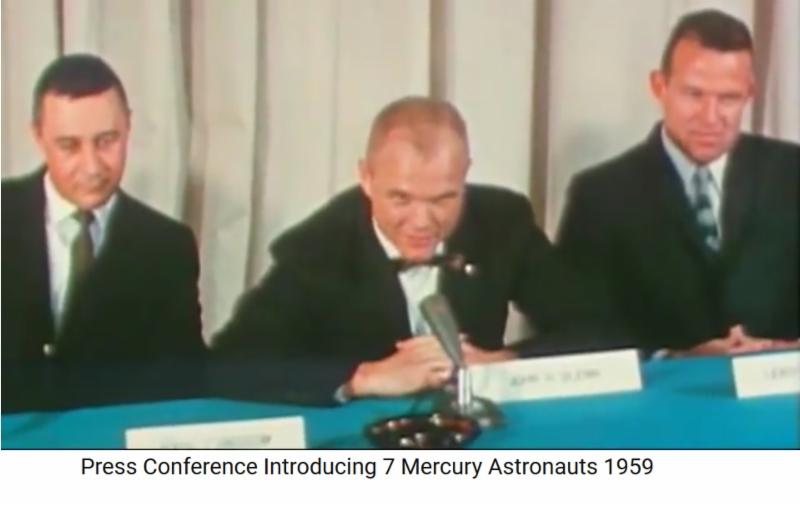
Mercury Astronauts
answered questions at a press conference in Washington, D.C., April 9, 1959:
Alan Shepard, Malcolm Carpenter, Leroy Cooper, Gus Grissom, Walter Schirra, Donald Slayton, and John Glenn.
|
|
When questioned about his faith,
John Glenn
stated:
"I don't think any of us could really go on with something like this if we didn't have pretty good backing at home, really ...
My wife's attitude toward this has been the same as it has been all along through all my flying. If it is what I want to do, she is behind it, and the kids are too, a hundred percent."
|
|
Glenn
added:
"I am a Presbyterian ... a
Protestant Presbyterian,
and I take
my religion
very seriously, as a matter of fact."
|
|
Glenn
told of teaching
Sunday school classes,
being on
church boards,
and doing
church work
with his family:
"I was brought up believing that you are placed on Earth here more or less with sort of a 50-50 proposition, and this is what I still believe.
We are placed here with certain talents and capabilities. It is up to each of us to use those talents and capabilities as best you can.
If you do that, I think there is a Power greater than any of us that will place the opportunities in our way, and if we use our talents properly, we will be living the kind of life we should live."
|
|
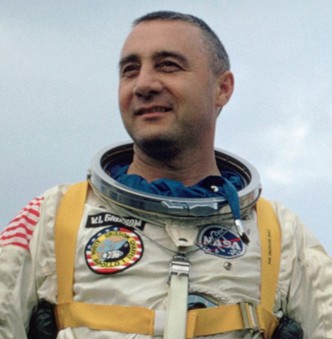
Astronaut Virgil "Gus" Grissom
stated:
"I consider myself religious. I am a
Protestant
and belong to the
Church of Christ.
I am not real active in church, as
Mr. Glenn
is ... but I consider myself a good
Christian
still."
|
|
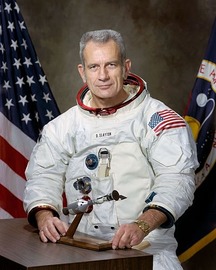
Astronaut Donald "Deke" Slayton
stated:
"As far as my religious faith is concerned, I am a
Lutheran,
and I go to
church
periodically."
|
|
In 1962, after his historic flight,
John Glenn
addressed Congress:
"I still get a lump in my throat when I see the American flag passing by."
|
|
Later that year,
President Kennedy
stated at Rice University in Houston, September 12, 1962:
"Space is there and we're going to climb it, and the moon and planets are there and new hopes for knowledge and peace are there.
And, therefore, as we set sail we ask
God's blessing
on the most hazardous and dangerous and greatest adventure on which man has ever embarked."
|
|
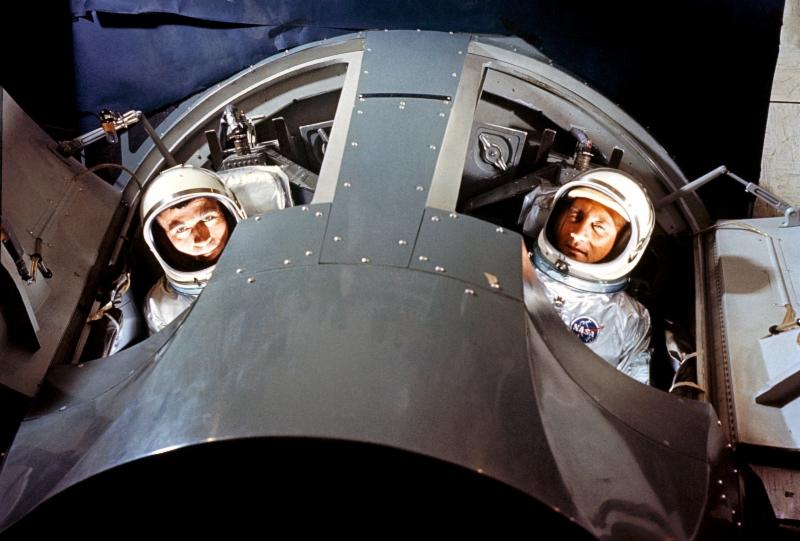
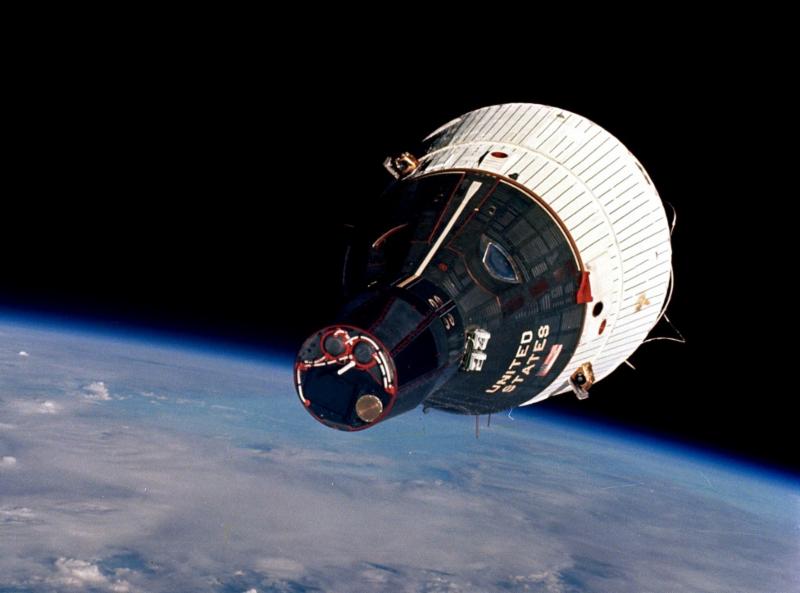
The
Mercury Program
was followed by the
Gemini Program,
1961-1966, which had longer missions and developed techniques of orbital maneuvers, extra-vehicular activity, space rendezvous, docking and reentry.
|
|
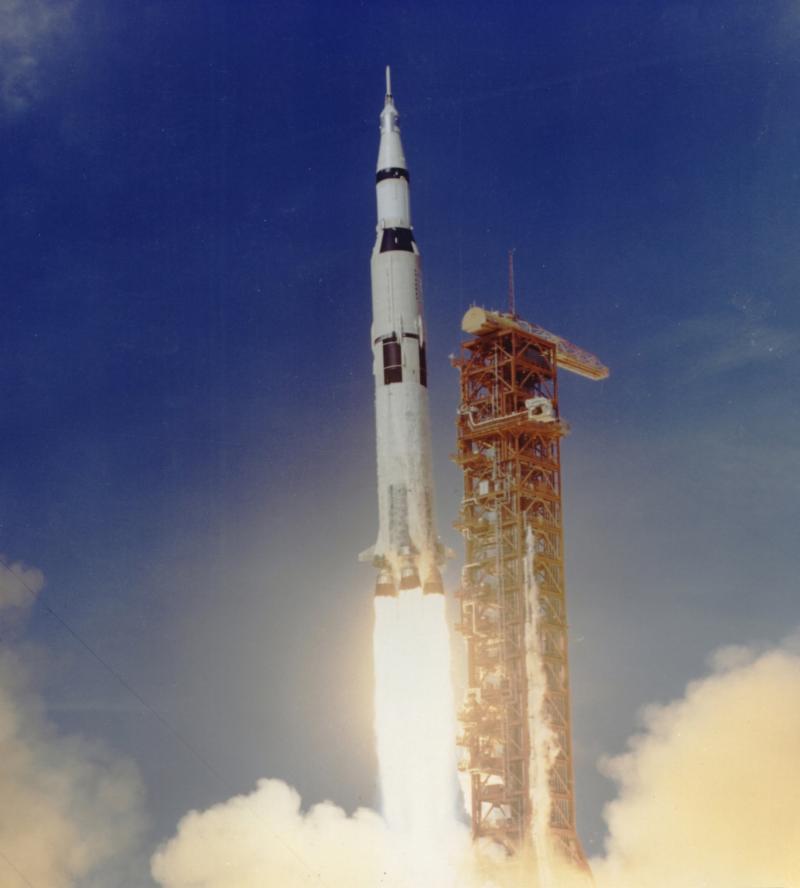
This put America ahead in the
Space Race.
Werner von Braun,
father of modern space flight, developed the powerful
Saturn V rocket
capable of sending a spacecraft beyond Earth's orbit in
NASA's Apollo Program.
|
|
An "astronaut" is defined as someone who has ascended over 62 miles (100km) above the Earth's surface.
As of 2016, over 560 individuals are in that group.
Only 24 individuals have left Earth's orbit, and only 12 have walked on the Moon.
|
|
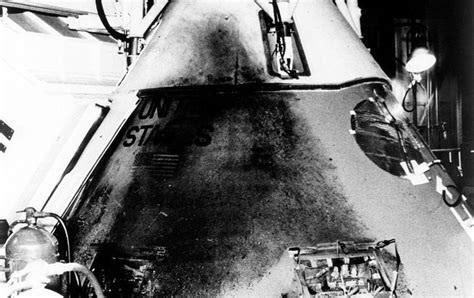
Apollo 1
ended tragically when a launchpad fire killed all three astronauts, Gus Grissom, Ed White, and Roger Chaffee.
This resulted in other Apollo missions greatly improving safety.
|
|
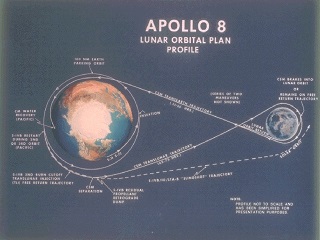
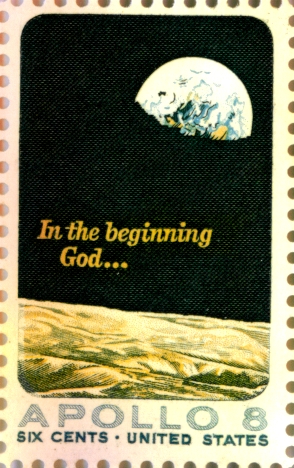
The first mission to leave Earth's orbit and fly around the moon was
Apollo 8
in 1968.
The tiniest mistake would have sent them crashing into the moon's surface or plummeting off into endless space.
|
|
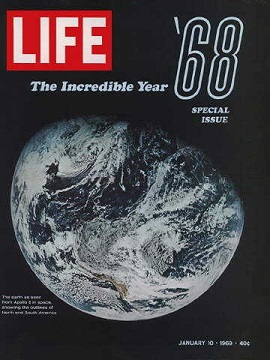
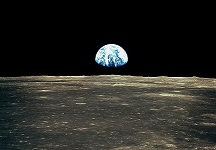
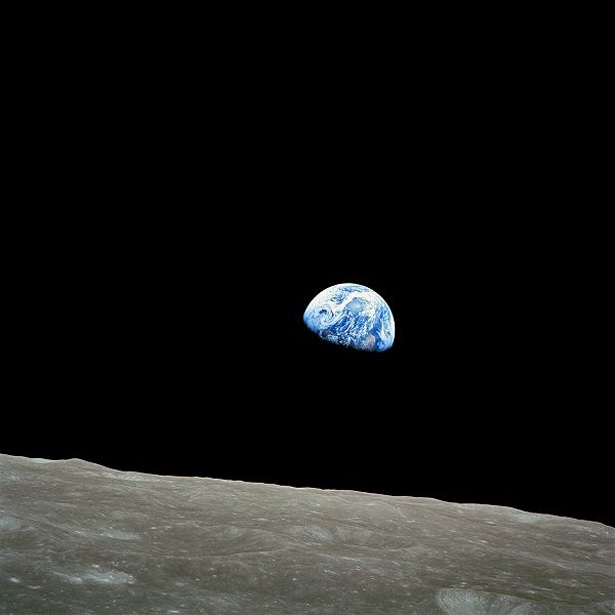
As they successfully went into lunar orbit,
astronaut William Anders
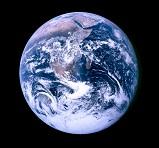
snapped the famous
Earthrise photo
that was printed in
LIFE Magazine.
|
|
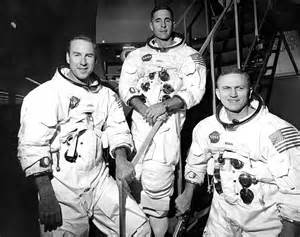
As
Apollo 8's
three man crew looked down on the earth from 250,000 miles away on
Christmas Eve, 1968,
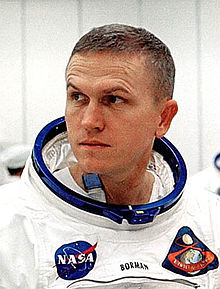
Commander Frank Borman
radioed back a message, quoting from the
Book of Genesis:
"We are now approaching lunar sunrise. And for all the people back on Earth, the crew of
Apollo 8
has a message that we would like to send to you.
|
|
...
In the beginning God created the heaven and the earth.
And the earth was without form, and void; and darkness was upon the face of the deep.
And the
Spirit of God
moved upon the face of the waters.
And
God
said, Let there be light: and there was light.
And
God
saw the light, that it was good: and
God
divided the light from the darkness.
And
God
called the light Day, and the darkness he called Night. And the evening and the morning were the first day.
|
|
And
God
said, Let there be a firmament in the midst of the waters, and let it divide the waters from the waters.
And
God
made the firmament, and divided the waters which were under the firmament from the waters which were above the firmament: and it was so.
And
God
called the firmament Heaven. And the evening and the morning were the second day ..."
|
|
Commander Borman
continued:
"And
God
said, Let the waters under the heaven be gathered together unto one place, and let the dry land appear: and it was so.
And
God
called the dry land Earth; and the gathering together of the waters called he Seas: and
God
saw that it was good."
|
|
Frank Borman
ended by saying:
"And from the crew of
Apollo 8,
we close with good night, good luck, a Merry Christmas, and
God bless all of you
- all of you on the good Earth."
|
|
After returning to earth, a reporter told
Borman
that a
Soviet cosmonaut
returned from space and said
he did not see God.
Borman
replied:
"I did not see Him either, but
I saw His evidence."
Later
Frank Borman
described his voyage:
"I had an enormous feeling that there had to be a power greater than any of us - that there was a
God,
that there was indeed a beginning."
|
|
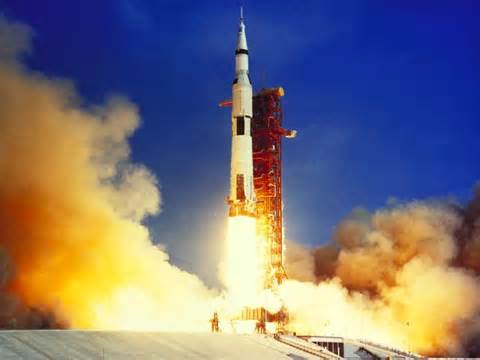
The first mission to walk on the moon was
Apollo 11,
which blasted off JULY 16, 1969, from Cape Kennedy.
|
|
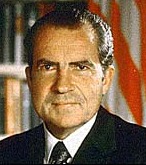
President Richard Nixon
stated in Proclamation 3919:
"Apollo 11
is on its way to the moon. It carries three brave astronauts; it also carries the hopes and prayers of hundreds of millions of people ...
That moment when man first sets foot on a body other than earth will stand through the centuries as one supreme in human experience ...
I call upon all of our people ... to
join in prayer
for the successful conclusion of
Apollo 11's
mission."
|
|
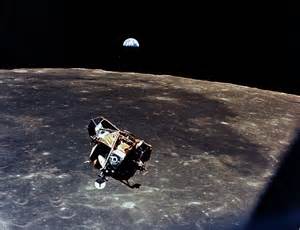
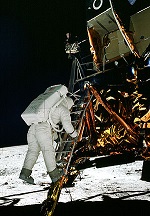
On July 20, 1969,
Astronauts Neil Armstrong
and
Buzz Aldrin,
landed their lunar module, the
Eagle.
Buzz Aldrin
read John 15:5 and partook of communion before exiting the lunar module.
|
|
They spent a total of 21 hours and 37 minutes on the moon's surface before redocking with the command ship
Columbia.
|
|
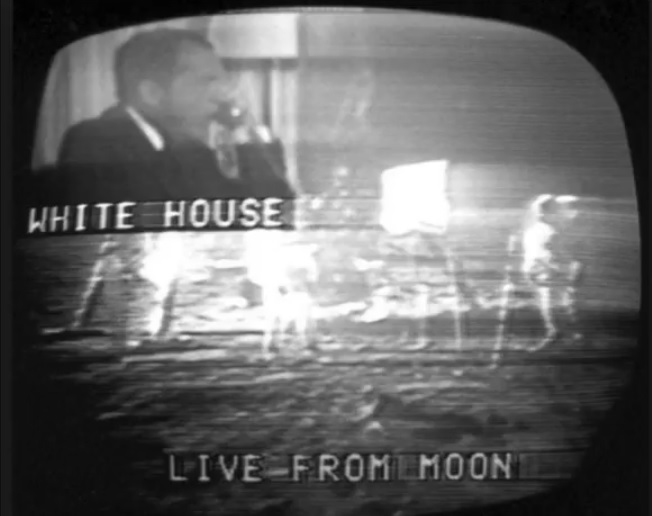
President Richard Nixon
spoke to the astronauts on the moon, July 20, 1969:
"This certainly has to be the most historic telephone call ever made from the White House ... The heavens have become a part of man's world ...
For one priceless moment in the whole history of man all the people on this earth are truly one ... one in
our prayers
that you will return safely to earth."
|
|
Armstrong
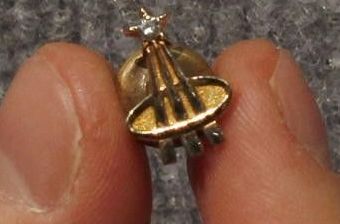
took with him to the moon a diamond studded astronaut pin from the widows of the
Apollo 1
astronauts who died in the launch pad fire.
|
|
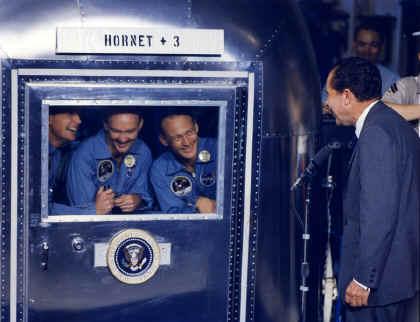
President Nixon
greeted the astronauts on the
USS Hornet,
July 24, 1969:
"The millions who are seeing us on television now ... feel as I do, that ... our prayers have been answered ...
|
|
... I think it would be very appropriate if Chaplain Piirto, the Chaplain of this ship, were to offer a
prayer of thanksgiving."
|
|
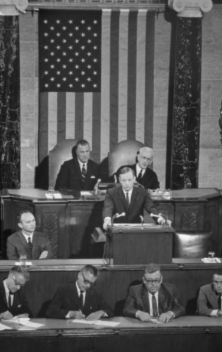
Addressing a joint session of Congress, September 16, 1969,
Commander Neil Armstrong
stated:
"To those of you who have advocated looking high we owe our sincere gratitude, for you have granted us the opportunity to see some of the
grandest views of the Creator."
|
|
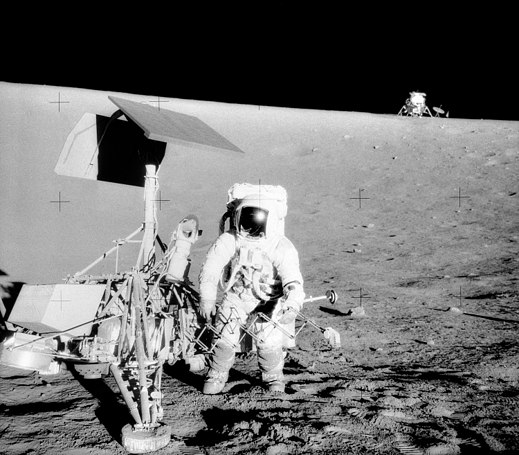
Apollo 12
Astronauts Charles "Pete" Conrad
and
Alan Bean
walked on the moon for 31 hours.
|
|
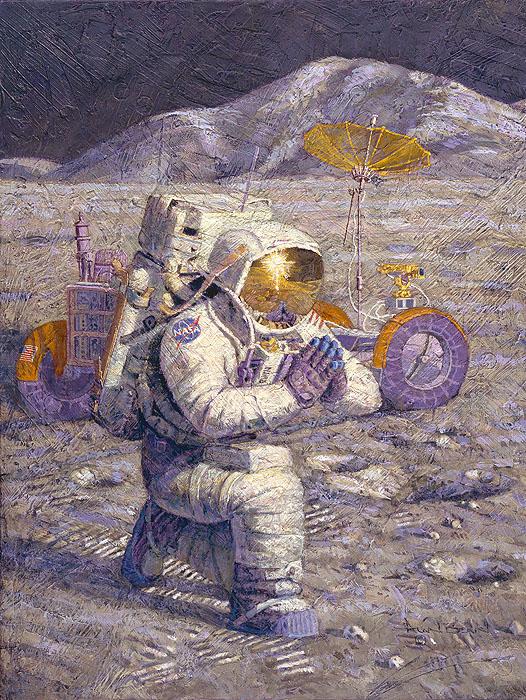
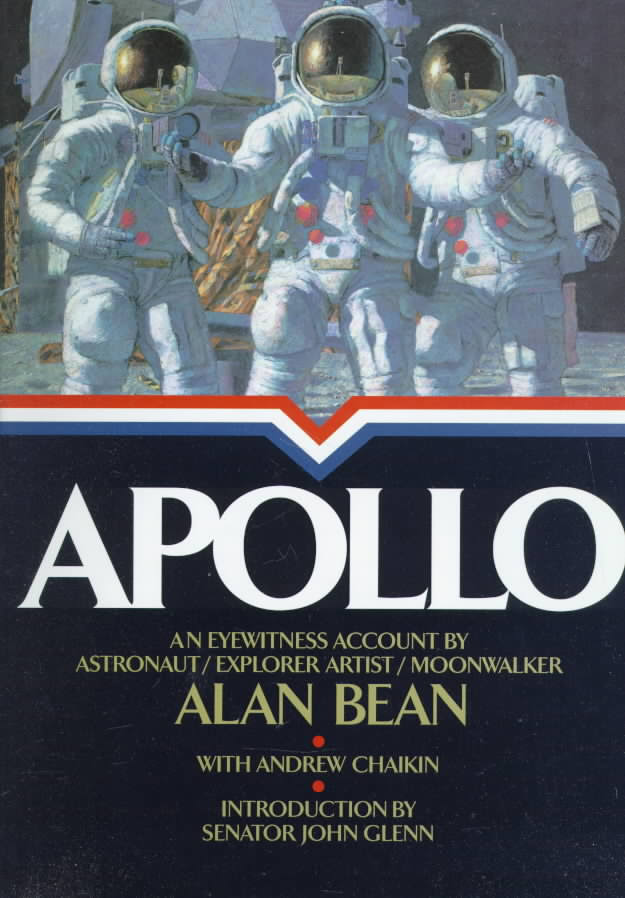
Alan Bean
later became an artist.
One of his painting is of an astronaut
kneeling in prayer
on the moon, titled
"We Came in Peace for All Mankind."
|
|
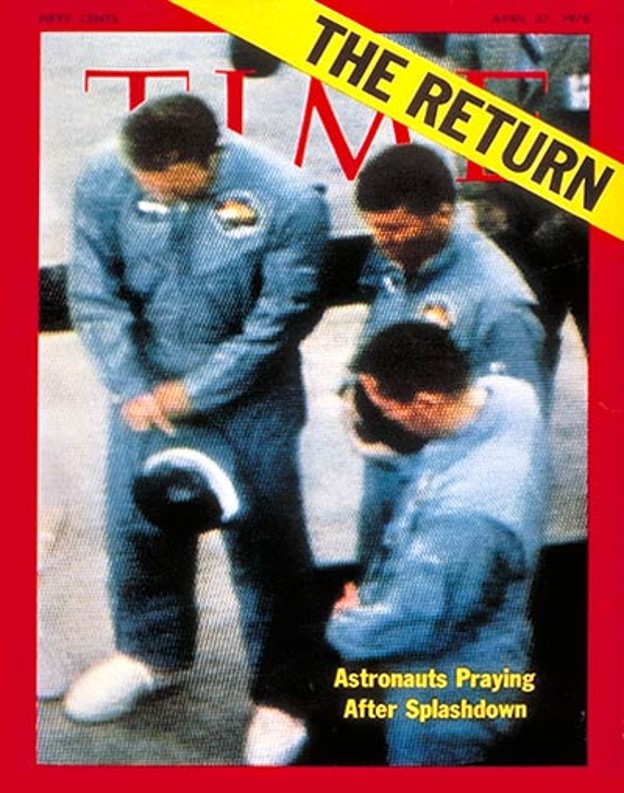
Apollo 13
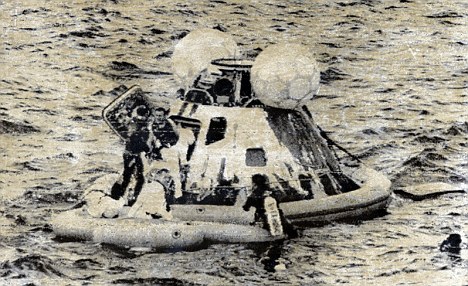
had an oxygen tank explode, irreparably damaging the craft,
President Nixon called the nation to pray.
In sub-zero temperature, the crew pieced together an oxygen filter, jump-charged the command module batteries, and manually steered the ship to land in the ocean near a raging hurricane.
|
|
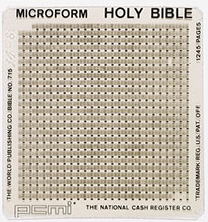
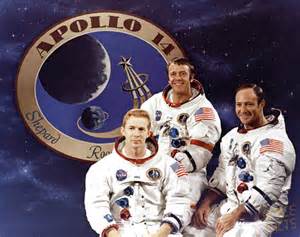
On the
Apollo 14
mission, February 6, 1971,
Astronauts Edgar Mitchell
and
Alan Shepard
left a tiny
microfilm copy of the King James Bible
aboard the lunar module
Antares
on the moon's Fra Mauro highlands.
|
|
On
Apollo 15's
mission, 1971,
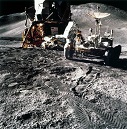
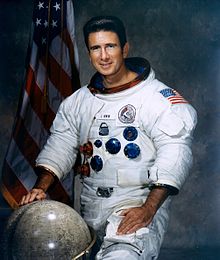
Astronaut James Irwin
became the 8th person to walk on the moon. He spoke of leaving earth:
"As we got farther and farther away it diminished in size. Finally it shrank to the size of a marble, the most beautiful marble you can imagine.
That beautiful, warm, living object looked so fragile, so delicate, that if you touched it with a finger it would crumble and fall apart.
Seeing this has to change a man, has to make a man appreciate
the creation of God and the love of God."
|
|
Jim Irwin
and
Dave Scott
were mentioned in
Alan Bean's
book:
“Jim Irwin
was one of my favorite astronauts ...
Jim
was, unexpectedly, more religious than most of us realized.
I can remember when he and
Dave
were riding along on their rover near the end of their third EVA and
Dave
said, ‘Oh, look at the mountains today,
Jim.
When they’re all sunlit isn’t that beautiful?’ '
Jim
answered, 'Really is,
Dave.
I’m reminded of a favorite
Biblical passage
from
Psalms, "I look unto the hills from whence cometh my help
..." But of course, we get quite a bit from Houston, too.'
Bean
continued:
"Jim
would later say,
'I was aware on the Moon that thousands of people on Earth were
praying
for the success of our mission. The hours I spent on the Moon were the most thrilling of my life. Not because I was there but because
I could feel the presence of God.
There were times I was filled with new challenges and help from
God
was immediate.'"
Alan Bean
concluded:
"Dave
and
Jim
journeyed into space as test pilot astronauts and most of us returned the same way. But
Jim
changed outwardly.
As he explained, 'I returned determined to share with others that
profound experience with God
on the Moon and lift man into his highest flight of life.'”
|
|
Later,
Astronaut James Irwin
became an evangelical minister.
Of his experience of walking on the moon, he stated:
"I felt the power of
God
as I'd never felt it before ...
... Being on the moon had a profound spiritual impact upon my life. Before I entered space with the Apollo 15 mission in July of 1971, I was ... a silent
Christian,
but I feel the
Lord
sent me to the moon so I could return to the earth and
share His Son, Jesus Christ."
He added:
“Jesus walking on the earth
is more important than
man walking on the moon.”
|
|
Astronaut Mike Mullane
flew the Space Shuttle
Discovery,
1984, then, after the
Challenger
disaster, he flew Space Shuttle
Atlantis,
1988, 1990.
|
|
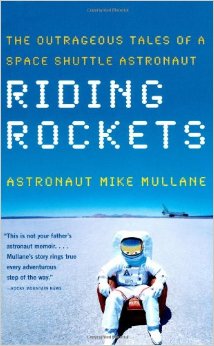
In his book,
Riding Rockets,
Mike Mullane wrote that the night before a launch, he was sleepless with apprehension.
He looked in the nightstand by his bed for a Bible, but found none, stating:
"I didn't need a
Bible
to talk to
God.
I
prayed
for my family. I
prayed
for myself.
I
prayed
I wouldn't blow up and then I
prayed
harder that I wouldn't screw up."
|
|
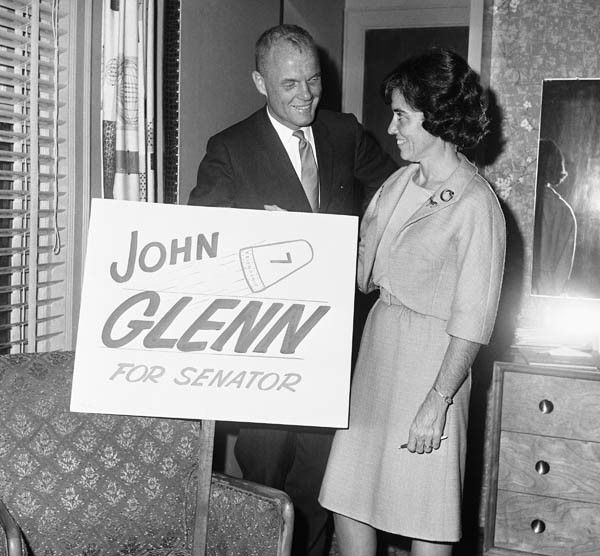
In 1974,
John Glenn
was elected a U.S. Senator.
|
|
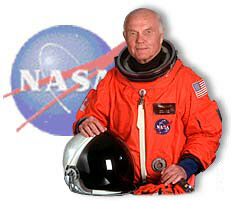
On October 28, 1998,
Astronaut John Glenn
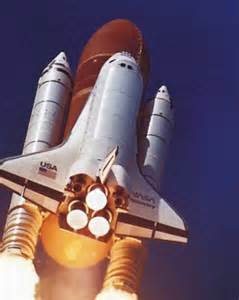
flew aboard the Space Shuttle
Discovery.
At age 77, he was the oldest person to go into space -
36 years after he had been the first American to orbit the earth in 1962.
|
|
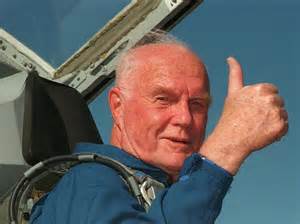
John Glenn
observed the heavens and the earth from his window and stated November 5, 1998:
|
|
"To look out at this kind of creation and not believe in
God
is to me impossible. It just
strengthens my faith.
I wish there were words to describe what it's like."
|
|
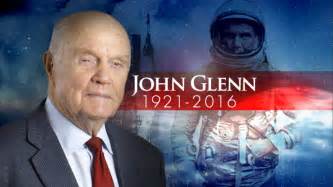
John Glenn
died December 8, 2016, at the age of 95.
The next day, the
Wall Street Journal
printed Tom Wolfe's article
"The Faith of John Glen."
|
|
In 2010, NASA's
Constellation
program was building new rockets and spaceships capable of returning astronauts to the moon, till President Obama suddenly canceled it.
|
|
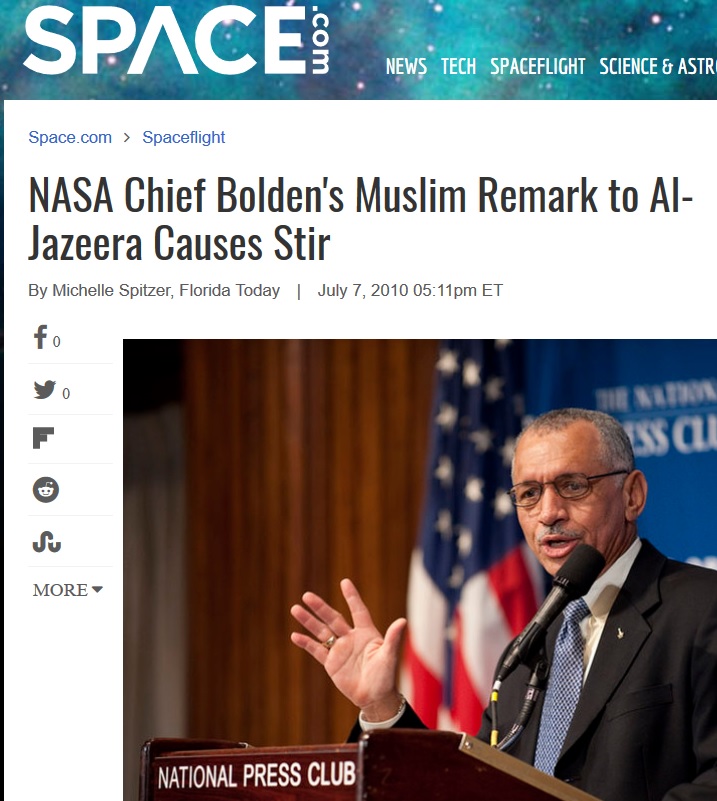
NASA Administrator Charles Bolden
outlined new priorities in an interview with the Middle East News agency in Cairo,
Al Jazeera,
June 30, 2010:
"When I became the NASA administrator... President Obama charged me ... perhaps foremost ... to find a way to reach out to the Muslim world and engage much more with dominantly Muslim nations to help them feel good."
|
|
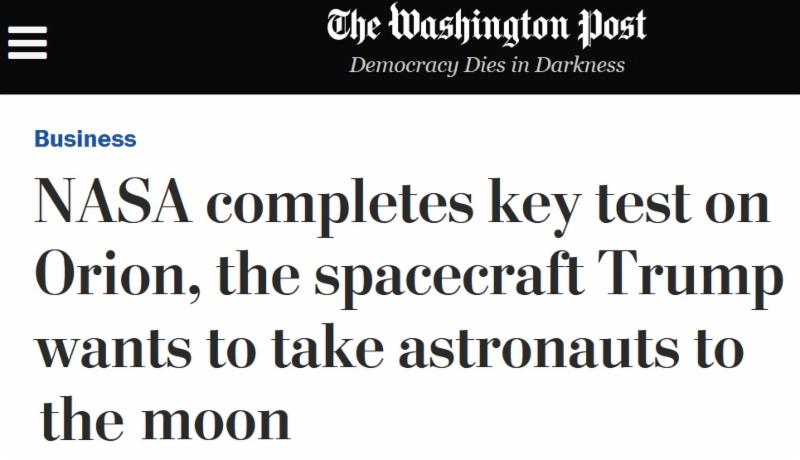
The Trump administration has proceeded with plans for the
Orion program
to return manned space flights to the moon in 2024, and following that, to Mars.
|
|
Americans can remember with pride the tremendous achievements of brilliant scientific minds and courageous hearts of those who dared to go into the unknown, and the prayers of the country that bore them up.
|
|
Schedule Bill Federer for informative interviews & captivating PowerPoint presentations: 314-502-8924
wjfederer@gmail.com
American Minute is a registered trademark of William J. Federer. Permission is granted to forward, reprint, or duplicate, with acknowledgment.
|
|
|
|
|
|
|