|
The fading echoes of a vanishing legacy once trailed behind the California condor as it disappeared from the North American landscape. Parallel to the decline of the condor, Westernization was brutally and forcefully expelling native peoples from their homelands. Along with the original stewards of the land, also lost was the existence and spirit of the land, plants, and animals they depended on to thrive. Not least among these disappearing souls was the mighty condor. In Yurok language, the condor is called the poy’-we-son; “one of the highest animals.“ The condor signifies a messenger of the sky and is a link between people and the world beyond earth, who takes prayers to heaven. Within Yurok stories, the condor appears as a provider, a healer, a protector of the world, a creator.
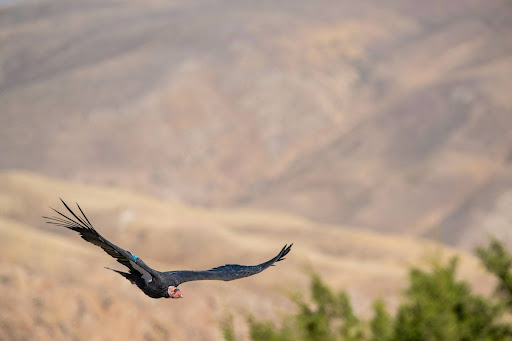
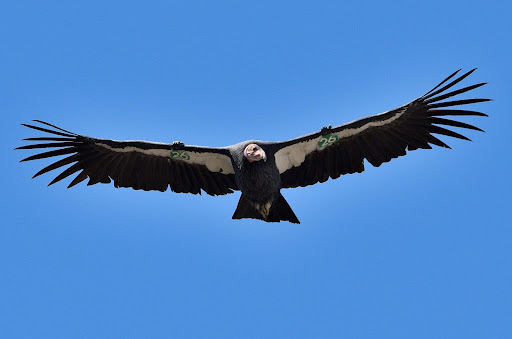
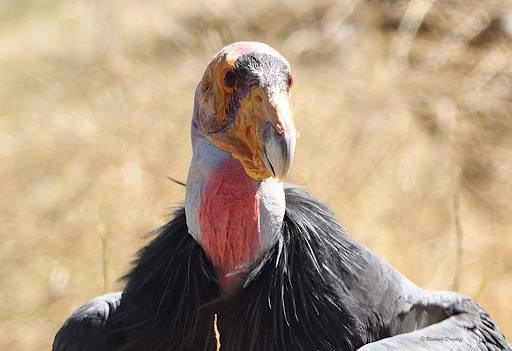
The prevalence of condors in indigenous heritage is understandable with its bold face and formidable 9.5-foot wingspan; the largest bird in North America commands respect. But more than this, the California condor serves as an indicator species for ecosystem health. They have an important role to play in the environment as scavengers, gentle recyclers, of decaying animals. Without the vultures’ effectiveness in removing pathogens and toxins from the environment, humans might be more susceptible to disease.
Unfortunately, habitat loss and a variety of other threats forced the California condor into an extinction of the wild population in the 1980’s. In 1987, the California Condor Recovery Program collected the last remaining 22 wild California condors for captive breeding, an effort intended to one day establish and release self-sustaining populations back into the condor’s historical range. Since 1987, the captive breeding and release program has successfully increased the total population by an order of magnitude, and condors once again fly free in the wild in California, Arizona, Utah and Baja California, Mexico.
The recovery of the California condor, once almost inconceivable, has resulted in captive-bred condors reproducing in the wild; therefore, public recognition and support is increasing. To my own surprise, I recently learned that many well respected nonprofits initially disagreed with the California Condor Recovery Program. Prior to the success of the program, these efforts were met with opposition from organizations like the Golden Gate Bird Alliance and Point Blue Observatory, as they believed funds should’ve been allocated to a species with a better chance of recovery. However, condor management evolved and opposers began to see both the success of the captive breeding program and the overwhelming public support to restore the species to the wild.
Eventually, management styles evolved into a holistic, community-based conservation approach that included big changes towards sustainable growth of condor populations through captive breeding. Those involved in the current management of the species include various zoological organizations, nonprofits, government agencies and tribal communities. Today, with more than 300 condors in the skies across the Southwest, it’s hard to imagine the controversy and deep divisions within the ornithological and birding communities caused by the condor recovery program 30 years ago. Fortunately, the program has made great strides and by 2022, a total of 561 living condors existed with 215 in captivity and 347 in the wild.
However, in the spring of 2023, the Highly Pathogenic Avian Influenza (HPAI) unfortunately caused 21 California condors to die unexpectedly within the Arizona flock. This equated to losing one fourth of the flock, including 13 breeding females (a difficult loss since condors have a slow sexual maturation process before reaching a reproductive age). It is hard to imagine a world without these spiritually magnificent creatures roaming our skies, but disasters like HPAI and the Dolan Fire (an arson fire which killed 11 condors in 2020 within a sanctuary near Big Sur, California), are a reminder of the fragility of recovering this amazing species. Numerous special interest groups and nonprofits began to fundraise for research on an HPAI vaccine. While HPAI was certainly a setback, it did not stop interest groups from taking action to ensure the species persists in the wild. As of November 2023, a vaccine has been developed and the first HPAI-vaccinated condors will soon be released into the wild! This incredible feat displays the ability to overcome some of the many conservation challenges that the California Condor Recovery Program continues to undertake.
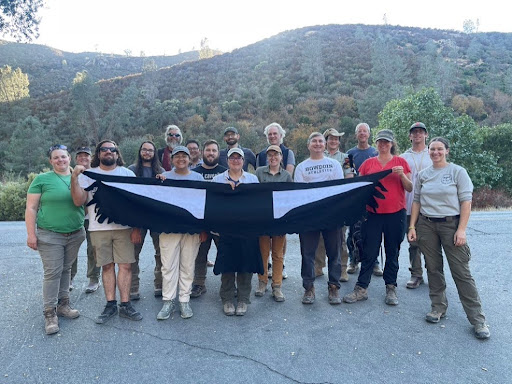
In October 2023, I was lucky enough to participate in one of these fundraising efforts when The Western Section of The Wildlife Society (TWS-WS) offered a California Condor workshop and donated the proceeds to the Ventana Wildlife Society and Friends of Condors Wild and Free, which are two of the principal organizations currently managing condor flocks in California. The 5-day workshop was generously hosted by representatives of the United States Fish & Wildlife Service (USFWS), Pinnacles National Park, the Santa Barbara Zoo, and the Ventana Wildlife Society (some of the biggest stakeholders in condor recovery efforts today). Entitled ‘California Condors: Conservation & Management,’ I found this event to be an educational and explorative experience. Throughout the workshop, attendees came to embrace the mission of TWS-WS, which is “to inspire, empower, and enable wildlife professionals to sustain wildlife population habitats through science-based management and conservation.” Aside from fundraising, the goal of this workshop was to unite and educate wildlife enthusiasts while showing them that conservation efforts backed by multiple communities and organizations do work.
Community-based conservation (CBC) is a holistic, community-led approach to conservation management. In the case of California condor recovery, conservationists engage in a bottom-up approach to best management practices. This encourages active listening by leaders and managers so they can apply the voices and ideas from the community, tribal members and interest groups involved in protecting the species. Through CBC, we learn that taking action together as diversified stakeholders creates better solutions while providing maximum protections for endangered species like the California condor. During the workshop, we observed CBC in action as we learned from various conservation organizations and tribal leaders about how they work together within their partners to manage wild condor flocks.
The first day of the workshop focused on the condor evolution, the value of indigenous ecological knowledge in helping the species, and the current threats that each flock of California condors faces in the wild (including HPAI). Dr. Douglas Long spoke on Cathartid genetic lineages and the condor’s relationship to New World vultures, including some extinct giants like Argentavis whose 20 foot wingspan was double that of the California condor. We also learned how early ranchers deliberately hunted and killed condors because they feared the condors were terrorizing their livestock.
Tiana Williams-Claussen of the Yurok tribe shared stories of indigenous involvement in reintroducing the California condor to Humboldt county; an effort she herself helped spearhead. In addition, she spoke about the legacy of spiritual practices and how it is necessary to restore the species as part of tribal reclamation of Yurok lands. She and her tribe advocated for the return of the Condor to Yurok land for almost two decades until federal agencies finally provided funding to establish a condor flock in her homeland, which is the first new release site since the early 2000’s.
At one point I asked Tiana why it took nearly 18 years for federal agencies to agree to her plea of returning the condor to her ancestral lands, and she explained that it was complicated due to governmental delays, and distrust between state, federal and tribal entities. It was obvious to me that she was alluding to the impacts of colonialism and deep- rooted discrimination against indigenous peoples and their ecological knowledge. I was happy to learn that Yurok conservation efforts have finally paid off and that California condors are flying free again along the Lost Coast!
Tiana Williams-Claussen of the Yurok tribe also shared her expertise on lead ammunition and current hunting community-outreach campaigns to reduce lead in the environment to protect the condor from lead poisoning. Lead is a major threat to condor survival as it bioaccumulates through the food chain as a result of hunting. When condors consume carcasses that have been shot with lead, it poisons them and is often fatal, even if just a small flake is ingested. Although lead has been outlawed in California since 2019, it is poorly regulated and because it is inexpensive, it remains the number one choice of ammunition for hunters. Williams-Claussen has conducted several outreach initiatives throughout Yurok lands and beyond to educate hunters about the impact lead has on the condor, and to advocate for copper rounds. If you want to take action to protect the California condor from this painful cause of death, then you can help by using or encouraging the use of copper ammunition instead of lead.
In the afternoon, Ivan Parr, TWS-WS Workshop Manager, presented on biodiversity and the varied environments within California. He excitedly shared fun facts about California and the species unique and endemic to the state. We learned so much on the first day and it prepared us with a foundation of knowledge about vulture facts, indigenous ecological practices and storytelling, upcoming condor events and California’s species richness.
We also got to know each workshop participant through paired ice breakers and a delicious lunch prepared by chef Nancy Gerbault of Abroad Catering. We shared a fact about our ice-breaker buddy (linked to a real life condor pair of course) and their intention for attending the workshop. All 25 of us agreed that our top goal was to observe a California condor in the wild, and for some of us it would be our very first time seeing a condor. Overall, we had a jam-packed first day with loads of presenting, learning, greeting, eating and preparing for the journey that lay ahead.
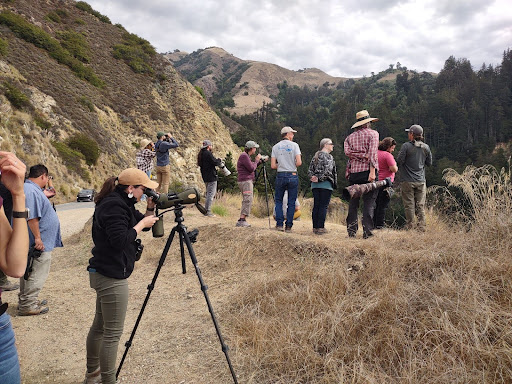
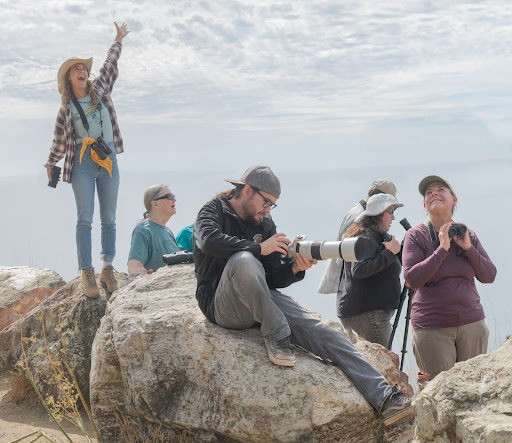
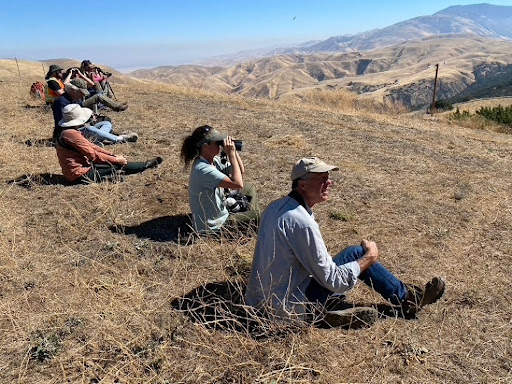
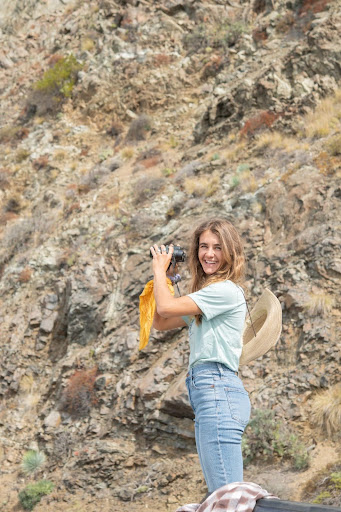
The next four days of the workshop turned into a California condor expedition beyond our wildest imaginations. Each day, we rose with the sunrise to reach a new destination and to search for a different flock. Many of us thought we would never live in a world where the California condor would soar above us. How thrilling it was to be on the go, all 25 of us caravanning down the road, with our eyes peeled for giant, ancient birds.
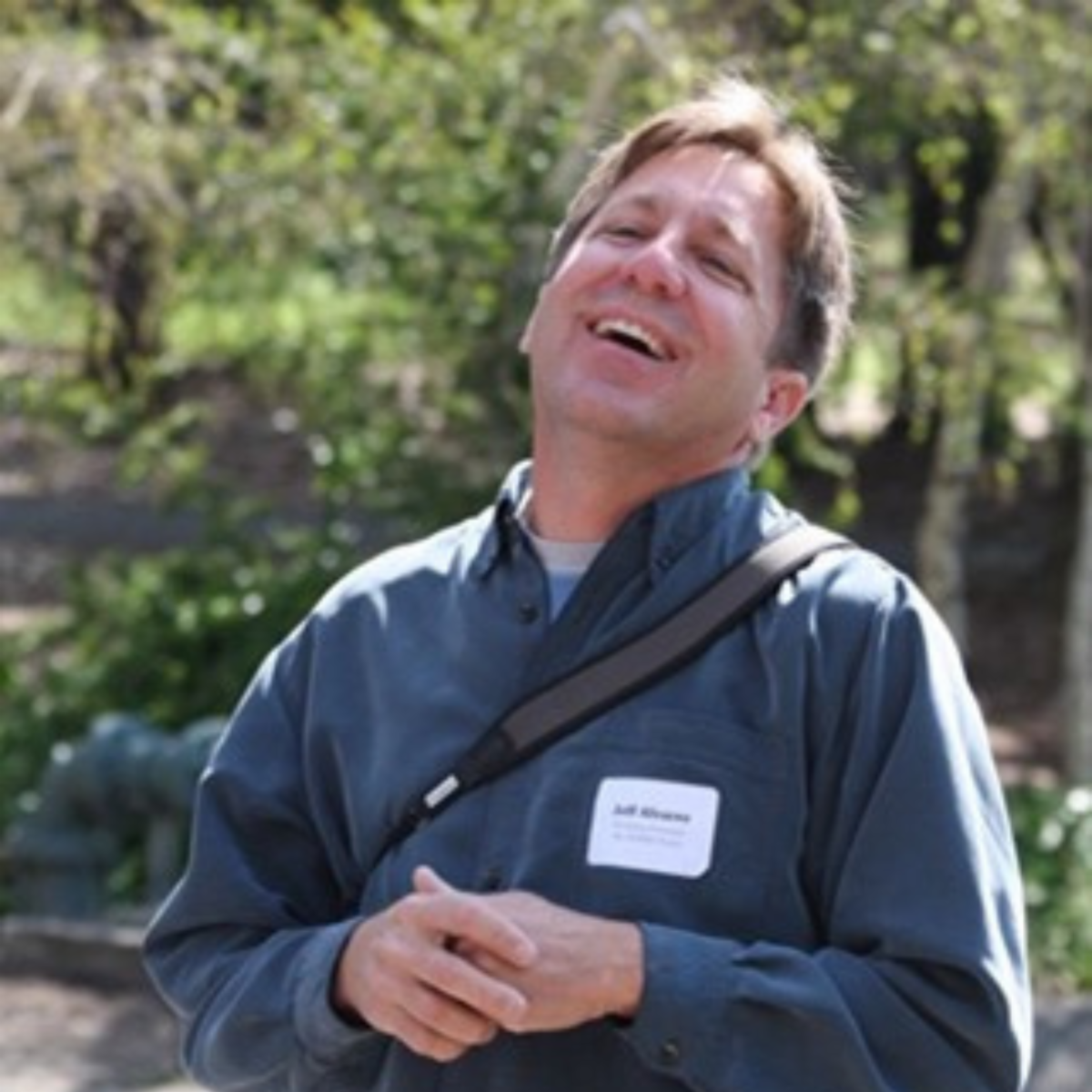
At one point, Chef Nancy and I pulled off the road to search online for directions (typical for the two of us since we carpooled together the whole trip), and one of the other participants, Jeff Schwilk, pulled off next to us and asked “You guys see a condor?!”. Nancy and I hysterically laughed out loud realizing that of all the things that could have been said at that moment, perhaps a car problem, he was asking about a bird, and a pretty incredible one at that. We were all in condor expedition mode, and it made the experience a grand time!
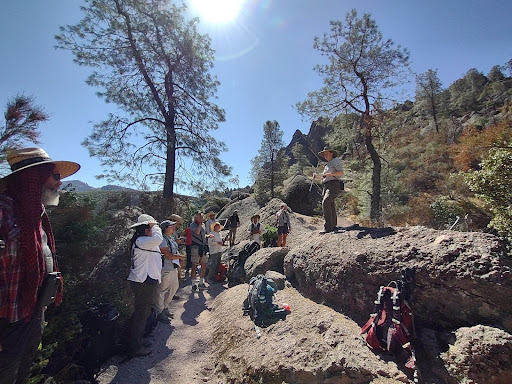
Everyday we endured long, hot, rewarding and awe-striking moments as we hiked to search for condors. We climbed Pinnacles National Park’s Condor Gulch trail, tracked condors through Big Sur, attended a condor work-up (where biologists capture and assess the health of condors) at Bitter Creek National Wildlife Refuge, and learned about captive husbandry at the Santa Barbara Zoo. We met with stakeholders like the National Park Service, Ventana Wildlife Society, the United States Fish and Wildlife Service (USFWS), and the Santa Barbara Zoo to understand how they work together through a holistic approach to conservation management.
Each interest group had different stories to tell about tracking, observing and identifying condors, as well as current conservation and management challenges they face within each flock, wild or captive bred. For example, Pinnacles National Park biologists feed one fetal calf to condors every week. Whereas at Bittercreek National Wildlife Refuge, USFWS biologists do not feed the flock, except to bait them. The main reason for providing food is to support increased breeding efforts in the wild. At Pinnacles, condors produce two broods a year compared to the typical one brood. Additionally, by providing them with food, like stillborn calves, biologists can ensure it won’t be contaminated with spent lead ammunition.
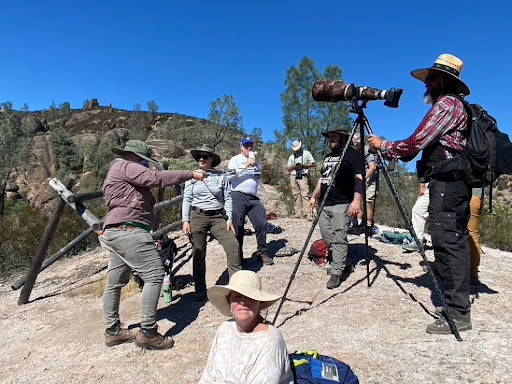
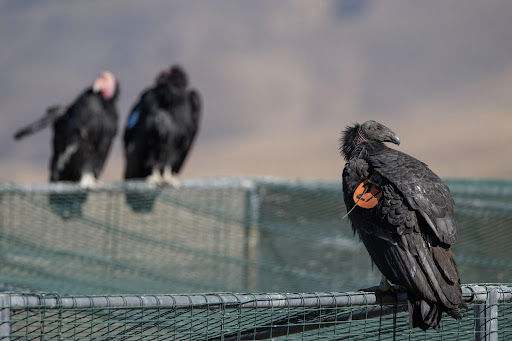
We, the participants, also got to contribute to management data by identifying and reporting every condor we saw, down to the individual. Each condor born in captivity is given a unique tag number and color to identify it by the birth year and age. The number and color of the tag can be looked up using the Condor Spotter application. The app tells us the condor’s unique identification number, its lineage, its offspring, mate, parentage, release site, and birth site. From this information, we could make inferences about the social hierarchy within each flock. If you ever decide to go on a condor venture of your own, be sure to check out the Condor Spotter app!
Best of all, it was fascinating to watch how magnificent the condor’s are in flight. Their majestic presence continued to leave us awe-stricken each day. A few species highlights included Little Stinker flying low enough to investigate us at Pinnacles, and shouting “condor!” so loud when we spotted Amigo and Kodama in Big Sur that some of us nearly jumped off the cliff. At both Pinnacles and Big Sur, we were shown a tracking demonstration, using equipment like the Yagi, which allowed us to determine the condor's distance away based on the strength of the signal. Some of the workshop participants also got to try tracking a condor with the Yagi, and it was a fun way for us to get involved in real-time conservation efforts.
The third and final field day was spent watching the bi-annual condor work up at Bitter Creek National Wildlife Refuge. I recall approaching the aviary at the Bitter Creek wildlife refuge with my jaw dropped in amazement at the sight of several wild condors perfectly perched on top of the aviary. As I looked around at fellow participants I noticed that they too, were just as bewildered and captivated as I was. While at the refuge we observed a condor work up. At a work up, USFWS biologists capture condors, sequester them in a flight cage, test them for lead and various health assessments to ensure that each bird is healthy, and release them. This was an opportunity to have close up views of 21 condors, including #20, one of the original 22 condors to be taken from the wild in 1987. The sheer magnificence of their size and presence left us with goosebumps and I couldn’t help but shed a tear for the success of the California condors' return to the wild.
On the last day of the workshop, we observed a condor feeding frenzy at the Santa Barbara Zoo and learned about the zoo’s role in reducing plastic pollution through condor nest monitoring. We heard from speakers, like Nadia Seal Faith, who provided us with a detailed description of nesting and captive rearing success of the California condor. Nadia guided us through the zoo where we learned from other interpretive specialists about captive condor management and how they feed them. We were all fascinated by the feeding frenzy as each condor ravaged apart jackrabbits. And speaking of birds ravaging mammals, the end of the workshop included an ironic Easter egg. The Santa Barbara Zoo not only provided a full day of talks and tours, but let us explore the exhibits on our own. While in the Australian walkabout, an amorous emu began to stalk and chase us, to the point where the zookeepers had to evacuate the whole group, minus two unlucky souls stuck inside with the beast. A rare glimpse on what it would feel like if the tides turned and the birds began to eliminate humans!
The California condor is a story of hope and serves as an example for how CBC can restore species like the condor back to the wild. We were all captivated in so many ways as we learned about condors, their social hierarchy, complex life history, data collection, and threats to survival. The workshop taught us that we can reduce the California condor’s dependence on human interference for survival by collaborating together through a CBC approach.
Many of us seek solace and hope in the skies above us as it helps us to endure the stress of climate change and biodiversity loss. But if there is one bird that can keep our spirits high, it’s the condor. We left with a new sense of appreciation for what it means to be a conservationist as we all got to witness the astounding efforts that brought the condor back from near extinction.
Thank you to the National Park Service, Ventana Wildlife Society, Yurok Tribe, Santa Barbara Zoo, USFWS, TWS-WS and Ivan Parr for hosting an informative and exciting workshop that introduced us to these impressive interest groups involved in protecting the California condor. We did indeed find our solace in the skies as we saw the condor with our very own eyes everyday of the workshop. Cheers to the California condor, a story of hope and survival in the midst of an ever changing world!
|