ABPC Logo_Main.png

The Spirit of Black Philanthropy

Issue 3 | December 2021

NOTE FROM THE CHAIR

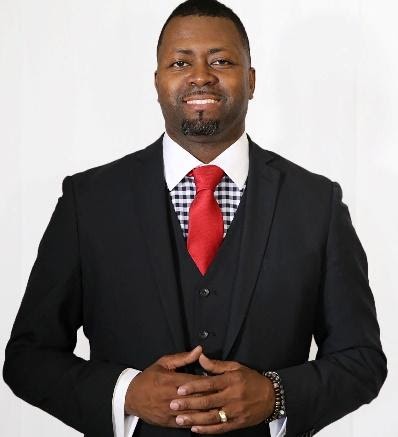
derek-lewis-headshot _1_.jpg

“There is never time in the future in which we will work out our salvation. The challenge is in the moment; the time is always now.” – James Baldwin


We must be mindful not to view our work and the people we serve solely from a state of deficit. Imagining something better takes courage, focus, and a commitment to be tenaciously optimistic. 


It’s easy to complain about our communities, our work, and our nonprofits’ lack of resources. But it is something much more profound to imagine the rose growing in the concrete, to see the community grow in equity, and to witness the lives of the youth we serve changing not just for a moment but for a lifetime. 


My challenge for us as we head into the New Year is to “dream walk.” This requires us to dream of something better, something deeper, something bigger, and something much greater than we experienced in the past.


Dream walk your communities, dream walk your business, dream walk with the people you serve and the communities you advocate for. To make those dreams a reality, we must act with all our passion and talents. 


Do not wait until the perfect moment, big donation, or even until January. There is a call to act now on the dream walk. The time is always now!


Derek Lewis II

President, Derek Lewis Foundation

Chair, Arkansas Black Philanthropy Collaborative

ABPC INAUGURAL CONVENING

Gaining More Through Giving Back: Arkansas Black Philanthropy Collaborative's Inaugural Convening

Thank you to everyone who attended the Arkansas Black Philanthropy Collaborative's Inaugural Convening on Giving Tuesday! You can access the recording at this link.


We'd like to extend a special thank you to our panelists for participating in this virtual event:


  • Susan Taylor Batten, ABFE: A Philanthropic Partnership for Black Communities
  • Dr. Joyvin Benton, University of Arkansas at Pine Bluff
  • Quantia “Key” Fletcher, Mosaic Templars Cultural Center
  • Dr. Joseph Jones, Medgar and Myrlie Evers Institute
  • Janine Lee, Philanthropy Southeast (formerly Southeastern Council of Foundations)
  • Dr. Charlotte Lewellen-Williams, The Center on Community Philanthropy at the University of Arkansas Clinton School of Public Service
  • Tyrone Spann, Indiana Blacks in Philanthropy 
  • Erika Wright, JP Morgan Chase & Co.
WATCH THE CONVENING

PIONEERS IN ARKANSAS BLACK PHILANTHROPY

In each issue of The Spirit of Black Philanthropy, the Mosaic Templars Cultural Center brings attention to the history of giving in our community by spotlighting a Black philanthropic pioneer in Arkansas history.

Can I just start by saying that Eliza Miller was no ordinary woman by any stretch of the imagination? She is one of those people who makes me wonder if there is anything she can’t do. What is even more amazing to me is the strength, determination, and power that she harnessed in her own right, without her notable husband who was one of Arkansas’s first Black legislators and businessmen. She stood in no one’s shadow. 


Quantia “Key” M. Fletcher

Director, Mosaic Templars Cultural Center

Eliza Ann Ross Miller (Courtesy of the Arkansas State Archives. Accessed from the CALS Encyclopedia of Arkansas.)

Eliza Ann Ross Miller


Eliza Ann Ross Miller was born in Arkadelphia, Arkansas, in 1869. She was an extremely savvy businesswoman, which proved to help her family’s businesses become more profitable, thus also allowing her to be a generous giver. She donated a fair amount of land in Helena, Arkansas, to the school board to build a Black high school, which later bore her name. She also gave to Arkansas Baptist College where she was a trustee. Her contributions helped improve the school and fund education for students there. 


Eliza also devoted resources to several religious affiliations. She is probably most known for being the first woman to own and operate a motion picture theatre in Arkansas, the Plaza. It was also the only Black-owned theatre in Helena. 


What continues to surface as we learn about Black philanthropists in Arkansas are the amazing stories of those who went before. Their willingness was always to give towards those areas that they believed would help advance the race as a whole. Eliza Miller is another shining example of how giving creates a ripple effect that can be seen and felt over 100 years later.


For more information about

Eliza Ann Ross Miller and other historical African American leaders in Arkansas, stop by and visit Mosaic Templars Cultural Center. Admission is free, and its hours of operation are Tuesday through Saturday from 9 a.m. until 5 p.m. To schedule a tour, visit mosaictemplarscenter.com.

GET TO KNOW THE ABPC ADVISORY COMMITTEE

In each issue of The Spirit of Black Philanthropy, we introduce you to a member of the ABPC advisory committee. Get to know the people behind the scenes who help make our work possible.

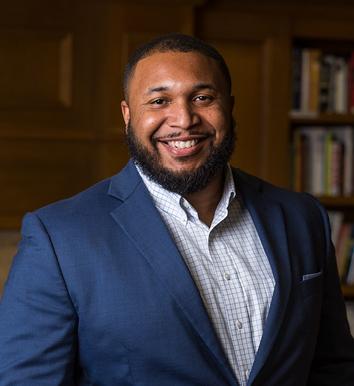
Kent J. Broughton, II


Kent J. Broughton, II is the Community Impact Officer and Equity Educator at The Center on Community Philanthropy at the University of Arkansas Clinton School of Public Service. A Pine Bluff native, Kent graduated from Watson Chapel High School and earned a Bachelor of Arts degree in Political Science from the University of Arkansas at Pine Bluff and a Master of Public Service from the University of Arkansas Clinton School of Public Service.

Kent J. Broughton, II

What does Black philanthropy mean to you? 

It means leveraging resources to make positive growth and sustainable change for generations to come. It is committing to people and communities to support them in creating positive and equitable change. Also, Black philanthropy is local groups, organizations, and individuals who continue to offer their valuable resources to uphold their inherent instinct to give. It's love.


What excites you most about the future of Black philanthropy in Arkansas? 

I am excited about building an intentional collaboration that focuses on creating pathways for people, families, and communities to thrive. I am also enthusiastic that we are exploring innovative ways – individual and collective – that support people and groups to take collective action to build a better now and future. 


What causes are you passionate about and in what ways do you support those causes?

I attended the University of Arkansas at Pine Bluff, a Historically Black University. While at UAPB, I developed a passion for supporting and uplifting Historically Black Colleges and Universities. I support causes and efforts that provide people with access to quality education and opportunities. In addition, I advocate for strengthening resources and collaborations with HBCUs to support their continued success in developing strong, resilient, and innovative leaders. 


What do you love most about living in Arkansas? 

It's home. I love the people and the land – both always giving. 


What do you love most about what you do? 

I love being a part of groups that focus on the resources that individuals and communities have from within to create sustainable transformational change – leveraging their unique strengths, gifts, and talents. But, equally, I love working with amazing people and groups that are committed to advancing equity.


What is the best part of your day?

The best part of my day is waking up; it reminds me that I still have a purpose. 


What quality do you admire most in others?

Compassion and Passion


Favorite quote to live by:

Let all that you do be done in love. 1 Corinthians 16:14 ESV

BBCF GRANTEE SPOTLIGHT

ABPC is proud to work in partnership with the Arkansas Community Foundation to provide grants to 40 Black-led and Black-serving nonprofit organizations in central Arkansas through the Building Black Communities Fund. In each issue, we shine a light on one of the grantees and the amazing work these organizations are doing in our state.

100 Black Men of Greater Little Rock


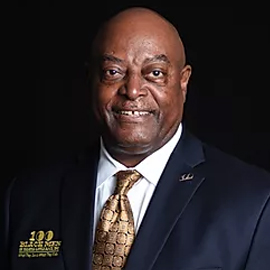
Founded in 2000, the 100 Black Men of Greater Little Rock chapter seeks to improve the quality of life within our communities through Mentoring, Education, Health and Wellness, and Economic Development. The overall concept of The 100 began in 1963 in New York City when a group of concerned African American men began to meet to explore ways of improving conditions in their community. We spoke with Chapter President Kenneth "Muskie" Harris about the nonprofit.

Kenneth Muskie Harris

Describe your background. What did you do before becoming president of 100 Black Men of Greater Little Rock?

I have grown up in Little Rock for 67 years and have been mentored by this community and state. I grew up hunting and fishing and enjoy all sporting events. When I am not with the 100, I am in the woods, on the water, or saving a soul through my rehabilitation services. I am the owner and the drug and alcohol director of Muskie Harris Recovery Service. I have been in this field for 25 years. I am involved in my community through the Boys & Girls Club, Little Rock Central High Tiger Foundation, Rock Creek Baptist Church, Arkansas Sports Hall of Fame, and the Razorback Letterman's Club in Little Rock.


What are some exciting projects you’re working on or have recently completed?

The 100 Black Men of GLR was a major sponsor for the Arkansas Unity & Heritage Festival, which took place Oct. 19-23, 2021. The event was in conjunction with the University of Arkansas vs. University of Arkansas at Pine Bluff football game at War Memorial Stadium, marking the first time these two universities played each other in football. Our chapter hosted a scholarship dinner for Jon Richardson and collaborated on a community project with the Mosaic Templars Cultural Center, where former African American Arkansas Razorbacks players were on display at the museum. We also tailgated at War Memorial golf course that weekend. It was an awesome week of hospitality.


What success stories have you experienced since receiving the grant from the Building Black Communities Fund, either internally and externally?

Internally, the funding has helped us provide fellowshipping services for our mentees, parents, and club members.


What do you wish more people knew about your nonprofit?

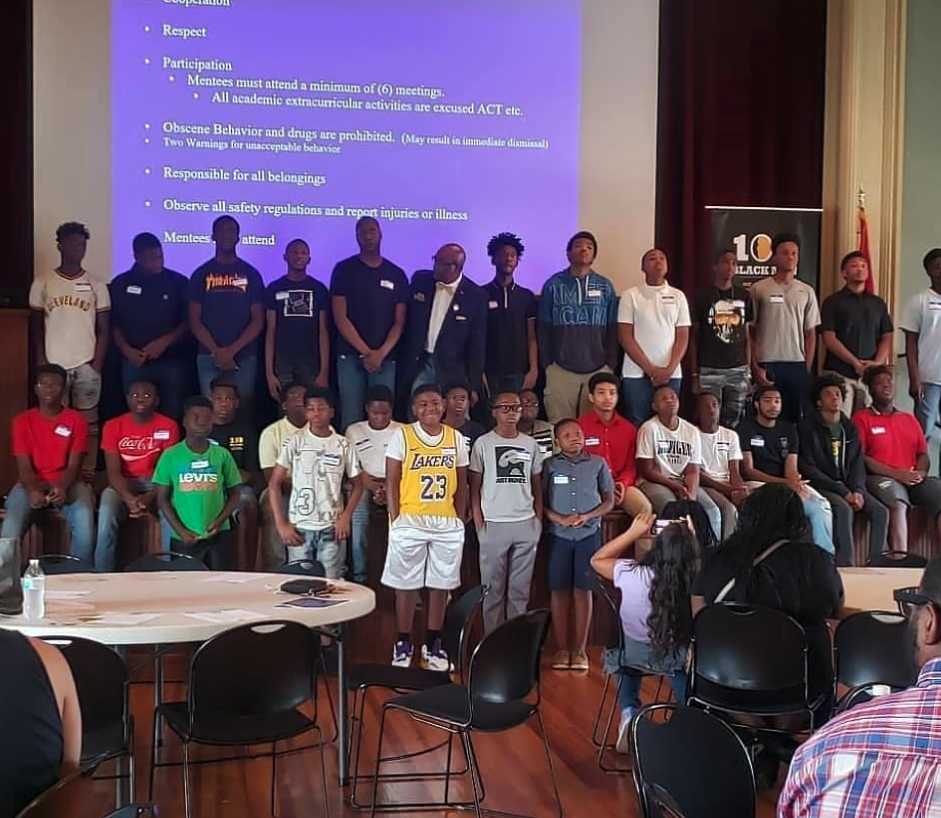
We want the central Arkansas community to know their young boys are eligible to participate in the 100 S.M.A.R.T Academy mentorship program. The purpose of the 100 Academy mentorship program is to effectively mentor young men between the ages of 13-17 by providing them with guidance, support, and education. "SMART" stands for Success, Motivation, Academics, Respect, and Trust.


Where do you see your organization in the next three to five years?

I have plans for our organization to achieve having 100 Men in our chapter. We also would like to have our collegiate program's footprint on all universities and colleges campuses in Arkansas.


How can people support your nonprofit?

They can make donations to our organization using all social platforms.

100-Black-Men-Greater-LR-7.png

The Arkansas Black Philanthropy Collaborative is powered by the Derek Lewis Foundation.

Donate at GiveBlackArkansas.org.

FOLLOW US

Facebook  LinkedIn  Twitter  Instagram