Rep. Stanley working to protect Storer Conservation in Waltham
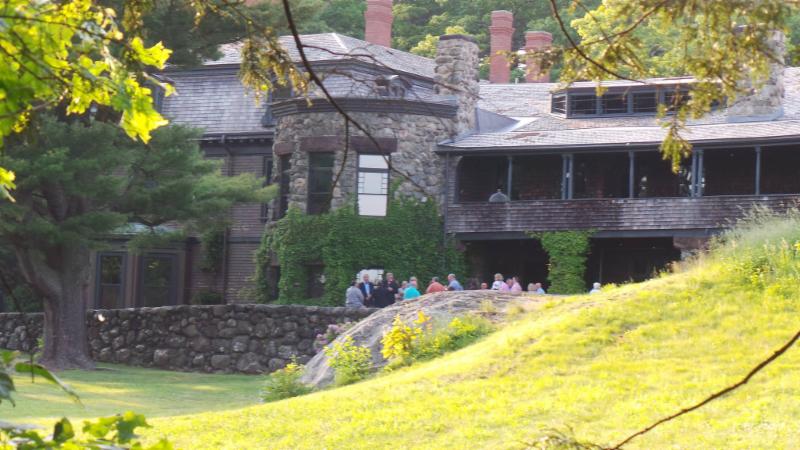
Rep. Stanley supports protecting the Storer Conservation, a section of the Paine Estate, as this property holds historical and environmental significance to the City of Waltham.
The Paine Estate is named after social reformer and affordable housing advocate Robert Treat Paine, the great grandson of the signer of the Declaration of Independence. The property is one of Waltham's most treasured historical resources, earning a listing on the National Register of Historic Places in 1975 as well as a National Historic Landmark designation in 1989. This significance is underscored by the $760,000 in Community Preservation Act funds that have been used to preserve the property over the last decade.
He is firmly opposed to destroying this historic landscape that cannot be replaced or replicated. Waltham needs to protect its wooded-areas and forests to preserve the quality of life for residents and reduce the harmful effects of climate change. He will continue to do all he can to shield these environmental resources from development.
Rep. Stanley supports Zoning Reform Legislation
In a letter to Speaker DeLeo, Rep. Stanley and his colleagues expressed support for a zoning reform and housing initiative package that reflects a balance and compromise of concerns and impacts expressed by interested parties in the fields of housing, planning, environment and municipal government. The legislation is a local option for communities.
Massachusetts families, especially seniors and young people, face a housing crisis that threatens to tear them from their communities and undermine our economic success and quality of life. Businesses indicate that housing scarcity makes it difficult to attract and retain employees, while many cities and towns struggle to create vibrant, walkable places that can attract new investment.
Governor Baker's "Housing Choice" bill, as reported out by the Housing Committee, can serve as a starting point to modernize the Commonwealth's planning, zoning and permitting rules. It contains simple majority approval for zoning improvements and special permits that help to produce and preserve housing, along with local option inter-municipal agreements to share costs and revenue from development. The package Rep. Stanley supports builds on Governor Baker's Housing Choice bill with a set of careful reforms that will make development rules fairer for residents and communities across Massachusetts.
Rep. Stanley submits testimony on Environmental Justice Act
In a letter to Chairman Jeffrey Sanchez of the House Committee on Ways and Means, Rep. Stanley expressed his support of H.2913, legislation relative to environmental justice and toxics reduction in the Commonwealth (the Environmental Justice Act). The Joint Committee on Environment, Natural Resources and Agriculture gave H.2913 a favorable recommendation on March 5th and referred the bill to House Ways and Means. Rep. Stanley asked Chairman Sanchez to take action on the bill because everyone deserves to live in a healthy, pollution-free environment.
This is an important piece of legislation that would make environmental justice a legislative mandate for all state regulatory agencies to better protect the health of all communities, especially those at risk of being harmed by high-pollution industries. Specifically, H.2913 would require all state agencies to develop policies to ensure that low-income communities, communities of color, and immigrant communities have the right to participate in decision-making process when polluting industries want to move into their neighborhoods. The Environmental Justice Act would also require regulators to actively protect vulnerable communities from bearing an unfair and disproportionate share of pollution, environmental degradation, and risks to public health.
Rep. Stanley cosponsors property tax deferral for seniors legislation
In addition to cosponsoring a budget amendment regarding tax deferral for seniors, Rep. Stanley signed onto a bill which will create an indexed senior tax deferral income cap of $40,000 (up from $20,000) and allow cities and towns to raise the cap from $40,000 to $80,000 or the senior circuit breaker income limit, whichever is greater.
This revenue neutral program allows seniors to delay payment of property taxes using the equity in their homes until the property is sold or the owner passes away. Delaying payment allows seniors to pay for other necessities such as groceries, home repairs, or in-home care. The program's use has dwindled in recent years, as less than 1000 seniors enrolled during 2017. The reason for its limited use stems from a number of barriers facing seniors including the income cap and the social stigma of tax deferral. Raising the income limit removes one of the barriers.
Joint Committee on Labor and Workforce Development Announces Budget Highlights
The House budget provides $12.7 million to Youth Works which is administered by the Department of Career Services and provides subsidized job opportunities for low-income and at-risk youth aged 14-21 in over 30 cities across the Commonwealth. Summer jobs teach teenagers the value of accountability and punctuality. These cornerstones of professionalism ensure the success of young adults on their way to college or into the workforce. With a youth unemployment rate that has more than doubled in the past decade, it is vital that we continue to invest in job opportunities for our at-risk teens.
The budget also provides $4 million for One-Stop Career Centers and ensures adequate resources to assist unemployed workers across the State. These centers serve every community in the Commonwealth. They use a triage approach with their unemployed clients and prepare them to re-enter to job market.
The House budget provides $3 million to the Massachusetts Service Alliance. The increased funding will be distributed across the state to various community service and volunteerism organizations, including Urban Leagues of Eastern and Western Massachusetts and St. Francis House. The widely distributed funds allow service groups to experiment with workforce expansion efforts.
The House budget provides $1 million for the Workforce Competitiveness Trust Fund which provides grants to train the long-term unemployed and provide them with new skills. Between 2013 and 2016, with limited funding, WCTF grants were able to place 670 job seekers in new jobs at an average wage of $15.02/hr. Of these employees, 83% were retained after 6 months compared to the national average of 64%.
Joint Committee on Public Health Announces Highlights
The FY19 House Budget for Public Health highlights the importance of investing in prevention and improving health outcomes across the Commonwealth. This budget provides funding to continue our response to the opioid epidemic, strengthen domestic violence and sexual assault response resources, and provide adequate financing to invest in our young people to reduce risky behaviors.
Of particular importance given the state's continued struggle with substance use, over $139 million has been allocated to the Bureau of Substance Addiction Services (BSAS) and community partners. This funding supports opioid and other substance use prevention and treatment services in addition to monitoring trends and implementing related programs across the state. Within this allocation, funds will be directed towards opening five new treatment centers across the Commonwealth, further strengthening our response to this public health crisis.
Budget Highlights: Mental Health, Substance Use and Recovery
House members of the Joint Committee on Mental Health, Substance Use and Recovery announced that the House budget represents a profound investment in our behavioral health system, paving a path to recovery for some of the most vulnerable members of our communities.
The Department of Mental Health (DMH) is funded at over $870 million-the highest level in two decades, even adjusted for inflation. This includes over $90 million in new funding for DMH to modernize and improve our community-based mental health care delivery system for Massachusetts residents with severe, persistent mental illness. With this new funding, DMH will be able to expand clinical services for DMH clients, ensure clients receive peer support and services for any co-occurring substance use disorders, and give clients the tools they need to live fulfilling, independent lives in the community.
The public health crisis related to the opioid epidemic continues to ravage the lives of individuals, their family and friends, and our communities. The budget includes over $137 million for the Bureau of Substance Addiction Services (BSAS), which funds critical programs and community coalitions across the state. There is funding for inpatient rehabilitation services, recovery centers, and naloxone, the overdose reversing drug. Consistent with the recently passed criminal justice reform bill, the budget also invests in appropriate jail diversion programs, ensuring that people with behavioral health conditions receive treatment, rather than arrest and incarceration.
Joint Committee on the Judiciary Announces House Budget Highlights
The House budget builds on the reforms made in the criminal justice reform legislation, and demonstrates a commitment to ensuring that all citizens of the Commonwealth have access to justice through our court system. The FY19 House budget makes strategic investments in our courts and in civil legal aid. It also makes significant investments in supporting programs that address key challenges in the criminal justice system, including recidivism, behavioral health treatment, and the specific issues facing juveniles and young adults.
Below are some highlights:
- $675.8 million for the Trial Court, $19.2 million above the FY18 budget. This includes:
- $4,827,672 for specialty courts, including veterans treatment courts, adult and juvenile drug courts, mental health courts, and the homeless court
- $1.5 million for the expansion of the Housing Court
- $20.75 million for the Massachusetts Legal Assistance Corporation
- The FY19 House budget funds MLAC $2.75 million above the FY18 budget.
- $22,903,499 for the Office of Community Corrections to expand the statewide network of Community Corrections Centers and to implement CSG's recommendations for Justice Reinvestment
- $3 million in grants for community based residential re-entry programs to reduce recidivism by providing transitional housing, workforce development and case management to individuals returning to the community from houses of correction and state prisons
- $1,762,490 for Prisoners Legal Services
- $1,519,972 for Mental Health Legal Advisors
- $1,906,264 for the Social Law Library. The Social Law Library is the only one of its kind in the United States.
- $64,393,432 for the Committee for Public Counsel Services
- $105,394,090 for private assigned counsel compensation within the Committee for Public Counsel Services
- The FY19 House budget includes a rate increase for private assigned counsel who accept Superior Court cases and mental health cases
Environment, Natural Resources and Agriculture Budget Highlights
This FY19 House Budget represents much-needed increases in funding to our Department of Environmental Protection, Department of Conservation and Recreation, and Department of Agricultural Resources. Along with the financial gains our EEA departments received, the inclusion of an increase to both the Dairy Tax Credit and Conservation Land Tax Credit shows a real commitment to supporting our dairy farmers and increasing our protection of open space throughout the Commonwealth.
- The House budget includes $29,055,000 in funding for the environmental strike force, various bureaus, and water quality monitoring and staff, etc.
- The House budget funds the DER at the Department of Fish and Game at $900,156 which will fund river and wetland restoration, grants, and local projects
- The House budget includes funding for emergency food assistance programs across the Commonwealth at $18,098,831
- The House budget funds the State Parks & Recreation line item under DCR at $40,000,000 allowing for the hiring of new staff, grounds crew, engineers, etc.
- The House budget creates a new line item under DCR for local projects for parks, lakes, playgrounds, and other facilities with funding totaling $2,370,000
Elder Affairs Investments
The House budget includes increased funding for MassHealth Senior Care, MassHealth Nursing Home Supplemental Rates and Community Choices which provides health care services provided to MassHealth members who are seniors eligible for community-based waiver services. The House provided $100,000 for a grant to a statewide Alzheimer's disease advocacy and education organization for a public awareness and education campaign as recommended by the Centers for Disease Control and Prevention. The Prescription Advantage and Supportive Senior Housing at State and Federally-Assisted Housing Sites programs also received increased funding, as did Elder Home Care, Elder Home Care Case Management and Elder Protective Services which provides protective services case management, guardianship services, the statewide elder abuse hotline, money management services and the elder-at-risk program. The line items for Congregate and Shared Housing, Elder Homelessness and Council on Aging received increased funding while the elder nutrition program was level funded.
Additionally, the House, at the recommendation of the LGBT Aging Commission, adopted language relative to LGBT provider training. Language now requires the Department of Elder Affairs to develop a curriculum and training program on the prevention and elimination of discrimination based on sexual orientation and improving access for LGBT elders and caregivers.
Joint Committee on Higher Education Announces Highlights
The House Budget for higher education increases funds for the state's scholarships/financial aid line item from $95,853,324 to $103,686,798. This program helps an estimated 100,000 needy Massachusetts' students afford higher education.
The House budget provides approximately $1.04 billion for the operating line items for the state's public higher education institutions. Of the approximately $1.04 billion, approximately: $518.9 million will go to the University of Massachusetts (UMass), $250 million will go to the state universities, and $274 million will go to the community colleges (see chart for breakdown by institution. The budget also provides additional funds for the community colleges and state universities as well as additional funds for the STEM Starter Academy Program which enables community colleges to better respond to the needs of their students who are interested in pursuing careers in science, technology, engineering, and math related areas, yet who lack adequate academic preparation to successfully enroll, persist and complete such programs.
MBTA Commuter Rail App Updated to Further Improve Experience, Add New Features
Keolis Commuter Services announced an updated MBTA Commuter Rail App that includes an easier-to-use interface and several new or improved features. These new or improved features include push notification train alerts, average seat availability, track assignments, average on-time performance data and real-time train tracking. The updated MBTA Commuter Rail App is available now at the Apple App Store and Google Play. It is available in English, Spanish, French, Portuguese (Brazil) and Chinese. Customers should also download the mTicket App for ticket purchase and activation prior to boarding.
The MBTA Commuter Rail App update includes many new features passengers have requested. With an improved user-friendly interface, the app features navigational tabs to allow for easier and quicker functionality. Push notifications sent via the app include T-Alerts, track assignments and arrival/departure reminders based on scheduled and real-time information. Passengers can turn this feature on or off depending on their preference and set a reminder to alert them 5, 10, 15 or 30 minutes before a train's arrival or departure.
The MBTA Commuter Rail App features real-time train tracking that allows a passenger to follow a train as it progresses along its route, helpful for riders as well as friends and families providing transportation from a station. The app also displays helpful information such as average seat availability and average on-time performance. Customized banners were added to provide updates on severe weather, service changes and other commuter rail information. The app also allows passengers to submit feedback to our customer service team, and it includes Lost & Found forms.
House Budget Economic Development Investments
The Massachusetts Office of Business Development will receive $1.5 million to helps businesses seeking to locate or expand in Massachusetts access the Commonwealth's wide array of business development resources. The Small Business Development Center at the University of Massachusetts at Amherst will receive $1.1 million; it offers free technical assistance to small businesses at locations throughout the state. The center also organizes free or low-cost seminars, workshops and conferences addressing a wide range of concerns for both startup and existing firms. The Urban Agenda Economic Development Grants will receive funding to support urban entrepreneurs in an effort to promote small businesses, job growth, and workforce development initiatives in our urban communities. The funds may also be used for affordable housing initiatives. The Massachusetts Growth Capital Corporation, in partnership with community development corporations, will receive $2M for their small business technical assistance grant program. The program provides competitive grants to businesses with 20 employees or fewer in underserved markets for targeted training and technical assistance.
FY19 Budget: Housing Highlights
House members of the Joint Committee on Housing announces that the FY19 budget builds on its annual commitment to providing quality housing for all citizens of the Commonwealth. Below are some highlights:
- $100 million for the Massachusetts Rental Voucher Program (MRVP), which works to maintain stability for families and individuals who are at risk of being homeless.
- $65.5 million for the public housing operating subsidy
- $17 million for Residential Assistance for Families in Transition (RAFT), which provides families and individuals with temporary assistance to obtain or retain housing. This program has helped 1,474 families avoid homelessness
- $2,841,992 for Housing Consumer Education Centers. Nine member agencies statewide offer housing assistance, services, and information to low and moderate income residents.
- $2.34 million for the Home and Healthy for Good Program, which places chronically homeless individuals into permanent housing with supportive services.
- $32 million for HomeBASE, a short term housing assistance program that stabilizes our most at-risk families by diverting them from and out of shelter
- $750,000 for Tenancy Preservation Program (TPP) which acts as a neutral third party between a landlord and tenants facing eviction and helps preserve tenancies at the housing court. TPP prevents homelessness in over 90 percent of cases
FY19 House Budget - Arts & Tourism Highlights
Rep. Stanley is pleased to announce that highlights of the House budget that support the arts, tourism, and cultural development. The budget funds the Massachusetts Cultural Council at $14.5 million. Funding supports grants to a number of program and facilities including non-profits, Local Cultural Councils, Creative Youth Development, EBT Card to Culture, and the Universal participation Initiative.
The 11 Massachusetts Visitor Centers located throughout the state from Cape Cod to the Berkshires received $200,000 in funding. These centers support 55 jobs and provide respite, guides, hotel availability refreshments, and directions to attractions and cultural facilities to 2.5 million visitors.
The Massachusetts Tourism Trust Fund
will provide $6 million for the 16 Regional Tourism Councils to market individual tourism regions by promoting attractions, accommodation, retail, restaurants, events, festival, and cultural facilities. The fund provides $4 million for the Massachusetts Office of Travel & Tourism (MOTT). The agency promotes Massachusetts as a leisure-travel destination and administers the grant program for the Regional Tourism Councils. Tourism generates $1.3 billion in tax revenue and $20.2 billion in travel related expenditures, supporting 135,000 in-state jobs.