Wednesday Weblog for December 10, 2025 | | |
We make a living by what we get, but we make a life by what we give.
-Winston Churchill
| | Leading Off: Become an Expert | | |
We all think we are experts on Christmas, but I learned that I personally am not. And after you read this four-part series, you will be an expert on the traditions associated with the holiday.
From Christmas Cards to Wreaths to Mistletoe, to Gift Wrap to Tinsel, the series of Weblogs are filled with a plethora of pretty much useless information that would allow you, if you are so disposed, to be an expert about the day in your social circle.
Good luck impressing friends and family, although you may not need luck after digesting this edition.
If you missed Part 1 of the series, you can read it here.
| | The Stories Behind the Traditions-Part 2 | |
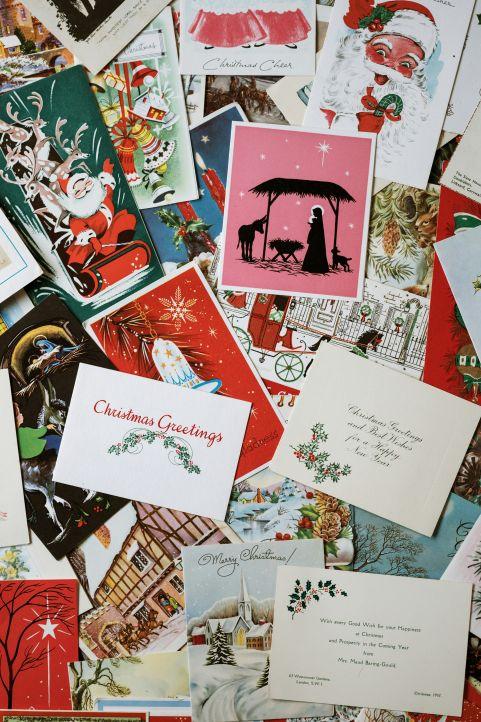
Christmas Cards: A Victorian Innovation to Escape a Pile of Letters
Christmas cards feel timeless, but their origin is surprisingly specific—and tied to one man trying to manage too much mail.
In 1843, Sir Henry Cole, a well-known British civil servant and early advocate for the postal system, found himself overwhelmed. Because he was instrumental in promoting affordable postage, his popularity meant he received heaps of holiday correspondence he had no time to answer.
Cole commissioned artist John Callcott Horsley to design a single, preprinted holiday greeting he could send to everyone at once. The result was the world’s first commercial Christmas card: a small lithograph showing a family gathered around a table, flanked by images of charitable acts. It included space for a handwritten name but otherwise simplified the holiday demands on Cole’s time.
Though innovative, the card sparked controversy—the central image showed people drinking wine, including a child. Victorian critics were scandalized. Still, the idea caught on, especially as printing techniques improved and postal rates fell.
By the late 1800s, Christmas cards became widespread in England and the United States, evolving from simple greetings to elaborate, artistic expressions. Some featured winter landscapes, others Biblical scenes, and many displayed images of Santa, robins, or Victorian coziness. Cards were exchanged between businesses, friends, soldiers abroad, and families separated by distance.
Today’s Christmas cards—digital or paper—descend directly from Cole’s practical solution to a social dilemma. What began as a way to avoid writing dozens of letters became one of the most enduring forms of holiday connection.
|
Mistletoe: From Ancient Sacred Plant to Holiday Kissing Tradition
Few Christmas customs are as quirky—or as misunderstood—as the tradition of kissing under the mistletoe. The plant’s background, however, reaches far beyond holiday romance. Mistletoe was considered sacred in ancient civilizations, associated with healing, fertility, peace, and powerful spiritual symbolism.
Among the Norse, mistletoe is central to the myth of Baldur, the beloved god whose mother Frigg made every plant and creature promise not to harm him—except mistletoe, which seemed too insignificant. Loki exploited this loophole, crafting a spear from mistletoe that led to Baldur’s death. In some versions, after Baldur was restored to life, Frigg declared mistletoe a symbol of love and vowed to kiss anyone who passed beneath it. This myth is often cited—loosely—as a foundation for today’s tradition.
The Druids regarded mistletoe, especially when found on oak trees, as a plant of great power. They believed it could cure illnesses, protect households, and promote fertility. It was cut ceremonially during winter rites and carried home as a symbol of blessing.
The kissing custom emerged much later, in 18th-century England. Mistletoe appeared in Christmas decorations, often accompanied by a social rule: a man could claim a kiss from a woman standing beneath it, and for each kiss, a berry was plucked from the sprig. When the berries were gone, the kissing ended.
Today, mistletoe is mostly a playful decoration, but its deep roots in mythology and ritual remain. What we now treat as a harmless holiday flirtation began as a powerful symbol of healing, hope, and reconciliation.
|
Gift Wrap: Invented by Accident and Popularized by a Holiday Rush
For something so essential to modern Christmas, gift wrap has a surprisingly recent—and wonderfully accidental—origin story. Before the 20th century, gifts were typically wrapped in plain brown paper, cloth, or nothing at all. Wealthier families sometimes used decorative fabric or placed gifts inside ornate boxes, but the idea of brightly patterned wrapping paper simply didn’t exist.
That all changed in 1917 in Kansas City, thanks to two brothers—Joyce and Rollie Hall—who ran a small stationery and gifts shop. Business was booming during the holiday season, and that year they encountered an unexpected problem: they completely ran out of the white, red, and green tissue paper customers used to wrap presents.
Searching their store for alternatives, the brothers found a supply of fancy French envelope liners—thin papers printed with elegant, colorful patterns. They placed the sheets out for 10 cents apiece as an emergency substitute. To their surprise, customers loved them. The patterned papers sold out almost immediately.
Seeing an opportunity, the Halls produced their own decorative wrapping paper the following year, this time designing it specifically for Christmas. It sold even faster. Within a few decades, their company—Hallmark—would become the nation’s leading producer of gift wrap, turning what began as a shortage-driven improvisation into a central holiday tradition.
Gift wrap’s appeal is simple and emotional: it turns a present into a moment of anticipation, a small ritual of mystery and delight. What started as a paper shortage in a Midwestern shop has become one of the defining aesthetics of the season—and an essential part of the joy of giving. Visiting the Hallmark location in Kansas City is a cool experience if you are ever there.
|
Why Christmas Colors Are Red and Green: A Medieval Palette Revived by Modern Marketing
Red and green feel inseparable from Christmas—but the combination became dominant through a fascinating mix of ancient symbolism, religious art, and modern advertising.
In the Middle Ages, holly was the most common winter plant. Its deep green leaves symbolized life in the darkest part of the year; its bright red berries symbolized hope and rebirth. Medieval churches used holly in winter decorations, and illuminated manuscripts often portrayed the Nativity with this color palette.
But the colors weren’t exclusive to Christmas until much later.
In the early 20th century, American printers and advertisers helped standardize holiday colors simply because red and green reproduced well in early color printing. Then, in the 1930s, Coca-Cola advertisements featuring a red-suited Santa against green backgrounds cemented the pairing in the public imagination. Coke didn’t invent the colors—but they amplified them dramatically.
Today, red and green are so iconic that it’s hard to imagine Christmas without them. But the tradition is really a blend of medieval symbolism and modern marketing—a reminder that even timeless colors have a history.
|
Tinsel: A Shiny Holiday Staple with a Glamorous—and Hazardous—Past
Tinsel has been adding sparkle to Christmas trees for centuries, but its history is far more dramatic than most people realize. Originally created in Germany in the early 1600s, tinsel was made from hammered strips of real silver. When candlelit trees illuminated the reflective strands, the effect was dazzling—both beautiful and expensive.
Over time, manufacturers sought cheaper materials. Silver tarnished quickly, so aluminum and tin alloys replaced it. By the mid-20th century, tinsel was mass-produced using lead foil, which hung beautifully but introduced significant health risks. Lead tinsel was eventually banned in the U.S. in 1972.
Despite the material changes, tinsel’s symbolism remained: shimmering strands echoing the glitter of ice, snow, and starlight during the darkest days of winter. Today, most tinsel is made from PVC and is far safer, though the aesthetic has shifted—less elegant, perhaps, but still festive.
From silver luxury to mid-century hazard to nostalgic décor, tinsel reflects the evolving story of Christmas itself: one part tradition, one part innovation, and always a touch of sparkle.
|
Leaving Cookies and Milk for Santa Began During the Great Depression
Today it feels like an essential part of Christmas Eve: a plate of cookies, a glass of milk, maybe even a few carrots for the reindeer. But the tradition of leaving treats for Santa as he makes his rounds is surprisingly modern—and it largely took hold during one of the hardest economic periods in American history: the Great Depression.
In the 1930s, when money was scarce and families were struggling to make ends meet, parents began encouraging children to show generosity and gratitude even when little could be spared. Leaving cookies and milk for Santa became a quiet lesson wrapped in wonder: even in tough times, you could still give. It was a way to teach children about sharing, appreciation, and thinking of others—values that mattered even more during years of hardship.
There were earlier European precedents. Norse children left food for Odin’s horse; Dutch children put out treats for Sinterklaas; and Victorian families sometimes left sherry and mince pies for Father Christmas. But it wasn’t until the Depression that the American version crystallized into a widespread custom.
By the 1940s and 1950s, as the economy improved and Christmas became a more commercially visible holiday, advertisers and women’s magazines helped solidify the ritual. Cookie recipes, Santa plates, and nighttime milk ads made the tradition feel timeless, even though it was only a decade or two old.
What began as a small gesture of generosity during America’s leanest years is now one of the most cherished Christmas Eve rituals—an act of giving before the giving begins.
|
Japan’s Most Popular Christmas Meal Is… KFC
One of the most surprising modern Christmas traditions comes from Japan, where the most popular holiday meal isn’t turkey, ham, or a home-cooked feast—it’s Kentucky Fried Chicken. Every December 25th, millions of Japanese families line up or pre-order weeks in advance for the famous Kentucky for Christmas meal, often complete with buckets of fried chicken, cake, and champagne.
This tradition didn’t emerge from centuries-old custom—it was created almost entirely by clever marketing. In the early 1970s, only a small percentage of Japanese people celebrated Christmas, and those who did viewed it as a secular, Western-inspired season of lights and good cheer rather than a religious holiday. Recognizing an opportunity, KFC’s then-manager in Japan, Takeshi Okawara, developed a simple idea: offer a Christmas party barrel modeled loosely on the Western custom of eating roast poultry during the holidays.
In 1974, KFC Japan launched a national campaign called Kurisumasu ni wa Kentakkii—Kentucky for Christmas. The marketing tapped into a desire for festive Western-style celebrations, and it worked spectacularly. Families began treating KFC as a special-occasion meal; children grew up associating Christmas with a fun, once-a-year indulgence; and the idea became a cultural event rather than a fast-food promotion.Today, KFC restaurants in Japan handle some of their busiest days of the year on December 24th and 25th. Many locations accept reservations a month or more in advance, and some sell out completely.
What began as a creative marketing pitch is now one of Japan’s most beloved holiday traditions—proof that sometimes the quirkiest customs become the most cherished.
| |
Christmas Lights
(Graceland Mansion Pictured)
The tradition of Christmas lights began long before electricity—rooted in the symbolic use of candles during the darkest time of the year. In the 17th century, German families started placing candles on their Christmas trees, attaching them with wax or pins.
These flickering lights represented Christ as the “Light of the World” and brought a warm, magical glow to winter celebrations. It was also incredibly dangerous, and families kept buckets of water or sand nearby just in case.
Everything changed in 1882, when Edward H. Johnson—an associate of Thomas Edison—created the first string of electric Christmas lights. Johnson hand-wired 80 red, white, and blue bulbs and displayed them on a rotating Christmas tree in his New York home. The press called it a marvel. Though innovative, electric lights were initially expensive and slow to catch on.
By the 1920s, as electricity became more common and manufacturers began mass-producing safer, affordable bulbs, Christmas lights spread rapidly across America. Soon trees weren’t the only things glowing—people decorated windows, porches, storefronts, and town squares. Post-WWII suburbia accelerated the trend further, turning entire neighborhoods into dazzling displays of holiday cheer.
The tradition evolved again in the 1990s with the rise of synchronized light shows—set to music and powered by computer controllers—followed by the widespread adoption of energy-efficient LED lights. Today, cities worldwide compete over breathtaking public displays, and millions of families transform their homes into sparkling symbols of celebration.
Despite changes in technology and style, the meaning remains the same: Christmas lights brighten the darkest days of winter and carry forward centuries of hope, warmth, and wonder.
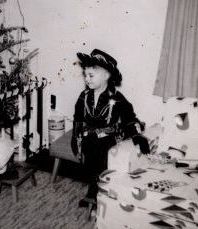
| | Surprise Photo at the End: Roy Rogers Junior | | Joe's Positive Post of the Week | | Join the Smart Subscribers | | If you are reading this on a social media platform, click below and you'll automatically receive a 'different' story every week on Wednesday. | | |
The Roll Call of states and countries where readers reside: Arizona, California, Colorado, Connecticut, Delaware, Florida, Georgia, Hawaii, Illinois, Indiana, Iowa, Kansas, Kentucky, Louisiana, Maine, Massachusetts, Michigan, Mississippi, Missouri, Montana, New Hampshire, New Jersey, New Mexico, New York, North Carolina, North Dakota, Ohio, Pennsylvania, Puerto Rico, Rhode Island, South Carolina, South Dakota, Tennessee, Texas, Vermont, Virginia, Washington and Washington DC, Wisconsin plus Canada, Conch Republic, Australia and the United Kingdom.
| | Refer a friend to Sign Up for the Wednesday Weblog | | |
Ed Doherty
774-479-8831
www.ambroselanden.com
ed-doherty@outlook.com
Forgive any typos please.
| | | | | |