|
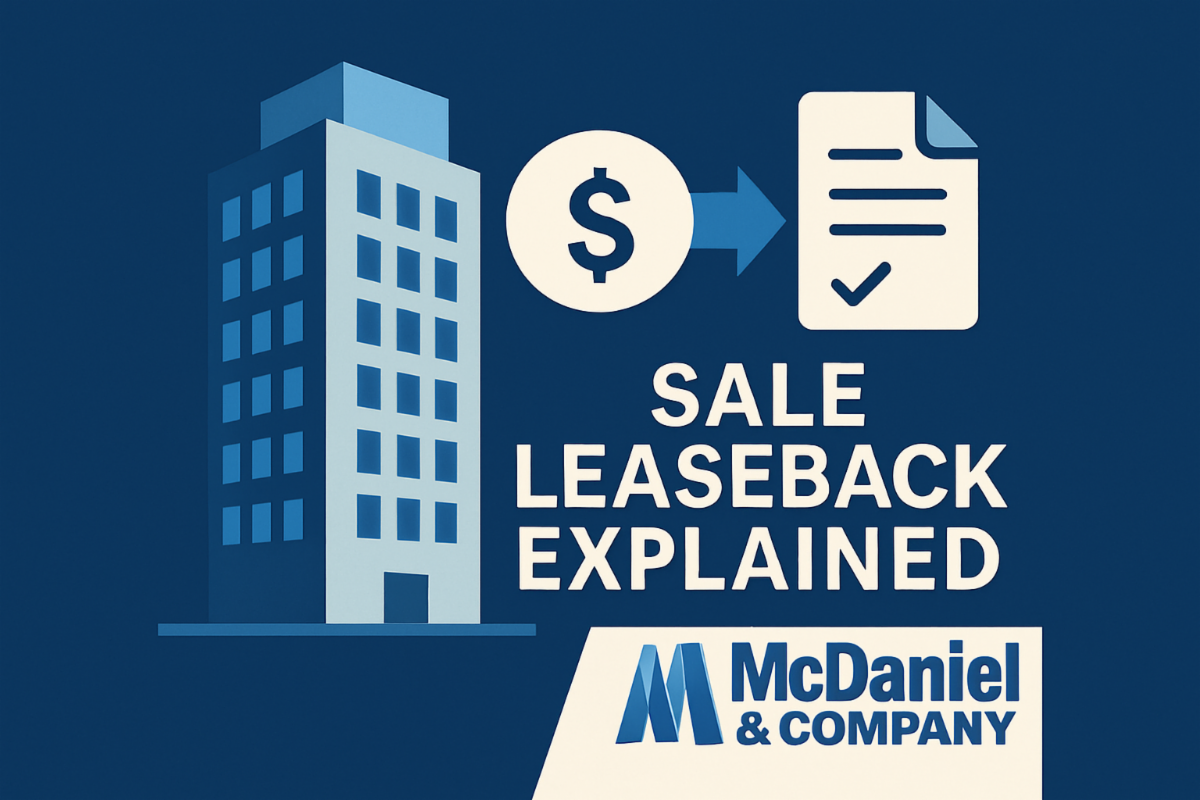
A sale-leaseback is a simple but powerful concept. An owner sells their building to an investor and immediately signs a lease to remain in place as the tenant. The day-to-day operation of the business does not change. You keep using the same facility, serving the same customers, and running the same operation. The only difference is that the equity tied up in the real estate is converted into cash that the business can put to better use.
Why Would An Owner Consider a Sale-Leaseback?
There are several reasons owners consider a sale-leaseback.
Capital
The most common is the ability to free up capital. Instead of borrowing at higher interest rates or delaying growth, some companies prefer to unlock the value of their real estate and reinvest in their core business. This capital can be used for expansion, new equipment, additional inventory, hiring, or strengthening the company's balance sheet.
Debt
Another major reason is debt reduction. Some owners use a sale-leaseback to pay down or eliminate existing loans, improving cash flow and reducing financial pressure.
Market and Timing
Market timing also plays a critical role. An owner may want to sell while the market is strong, even if they are not ready to relocate for several more years. A sale-leaseback allows them to capture today’s value while staying in the building under a lease that gives them time to plan their next move. Owners also pursue this strategy for estate planning, simplifying a future business sale, or transitioning from owner-occupant to long-term tenant to create more operational flexibility.
Why Do Buyers ke Sale-Leaseback Deals?
Buyers find sale-leaseback deals attractive because they are essentially purchasing a fully occupied investment property. They acquire a building with a tenant already in place, typically under a long-term triple net lease that provides predictable income and minimal management responsibilities. This stability makes sale-leasebacks highly desirable for many investors.
Final Thoughts
With financing conditions remaining challenging, a sale-leaseback can be an effective alternative for owners who want access to capital without taking on new debt.
If you are curious about what this could look like for your property, we can provide a comprehensive sale-leaseback analysis to help you compare the potential benefits and see whether reinvesting that capital elsewhere aligns with your long-term goals.
Emma McDaniel Lunning, CCIM
📞 864-580-1131
📧 emma@mcdanielandco.com
|