|
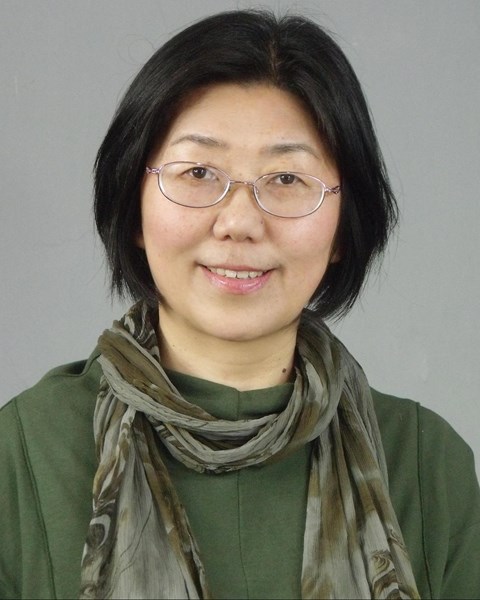
Dr. Liping Yang is the author Social Constructionist Psychology (in Mandarin) and the editor of the Chinese book series, Social Construction in China. She is a pivotal figure in a network of scholars engaged in constructionist and relational inquiry in China. Of central concern to this group is bringing relational constructionist thought together with traditional Chinese philosophy and value, to contribute to cultural wellbeing in China.
Like India, China upholds the culture of filial piety, showing a high level of respect for the elderly both in the family and in public. The culture of filial piety is related to the long-term agricultural civilization. The elderly are respected because families and society need their long-accumulated farming experience and work wisdom to obtain good harvests. Historically, long-term agricultural life has created a strong sense of dependence on the natural environment and each other, manifested as "relational thinking" when dealing with relationships with others and the world. This involves imagining oneself and the other as a whole, and emphasizes the relational process of interdependence, transformation, and generation between opposing sides. For example, the traditional cultural maxim "Cherish not only one's parents and children but those of others," which means people should treat the parents and children of others with the same respect and care as they would for their own. This "dual principle" of thinking and dealing with issues from both self and other perspectives requires individuals to take the initiative to assume the responsibility of promoting the progress of others and society while pursuing their own development. This is fundamentally different from Western society's self-centered individualistic culture.
However, China's Cultural Revolution in the 1960s and 1970s, combined with population mobility, and East-West cultural exchanges, especially the openness of the online society, have gradually weakened Chinese traditional culture. Western self-centered individualistic values have almost become the mainstream culture in Chinese society. In the modern society dominated by individual rationality, self-centeredness and a concept of a bounded self are the root of many problems in our modern society. This goes far beyond the case of intergenerational relations.
Fortunately, we see the "return" of relational thinking in social constructionism. The value of relational thinking does not lie in reviving traditional Chinese filial piety but in reconstructing the culture of that would encourage filial piety. By comparing and interpreting social constructionism and traditional Chinese thinking – especially Buddhism, Taoism, and Confucianism - we hope to awaken the community consciousness of society, help the elderly and the young understand each other's status in the family and society, and promote the establishment of a more compassionate and mutually caring society. Based on relational thinking, we aim to provide an integrated framework for the diverse coexistence of humans in the online era.
| | |
Anne Radford, Taos Associate
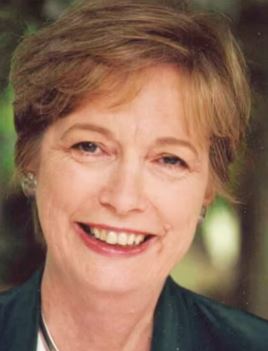
Anne Radford was a pioneer, mentor, and cherished guide in Appreciative Inquiry to many around the world. As founder and editor-in-chief of AI Practitioner (1998–2016), she shaped a global community—encouraging new voices, nurturing ideas, and always asking, “How do we put this into practice?” Anne’s legacy is one of curiosity, kindness, and unwavering belief in people’s potential. A celebration of her life and legacy was hosted virtually on April 10, co-hosted by some of the many organizations of which Anne was a cherished member, including the Taos Institute.
| |
| |
A four-week online course with 3 live meetings
May 19-June 16
9:00-11:00 am EST
Join us in this journey to explore how aspects of the world that are taken for granted are socially constructed, thereby opening space for alternative, more generative ways to engage in complex situations and relationships. In this course you will not just learn about social constructionist theory and practice but also connect it to the challenges you face in your own work and explore the tremendous positive impact that this paradigm shift can have on society at large.
The interactive course includes 3 live zoom meetings. Between meetings, participants meet with a conversational partners to discuss the material (articles and videos) and questions for reflection. Join our learning community to experience first hand how knowledge is co-created! Learn more.
| | |
Your facilitator:
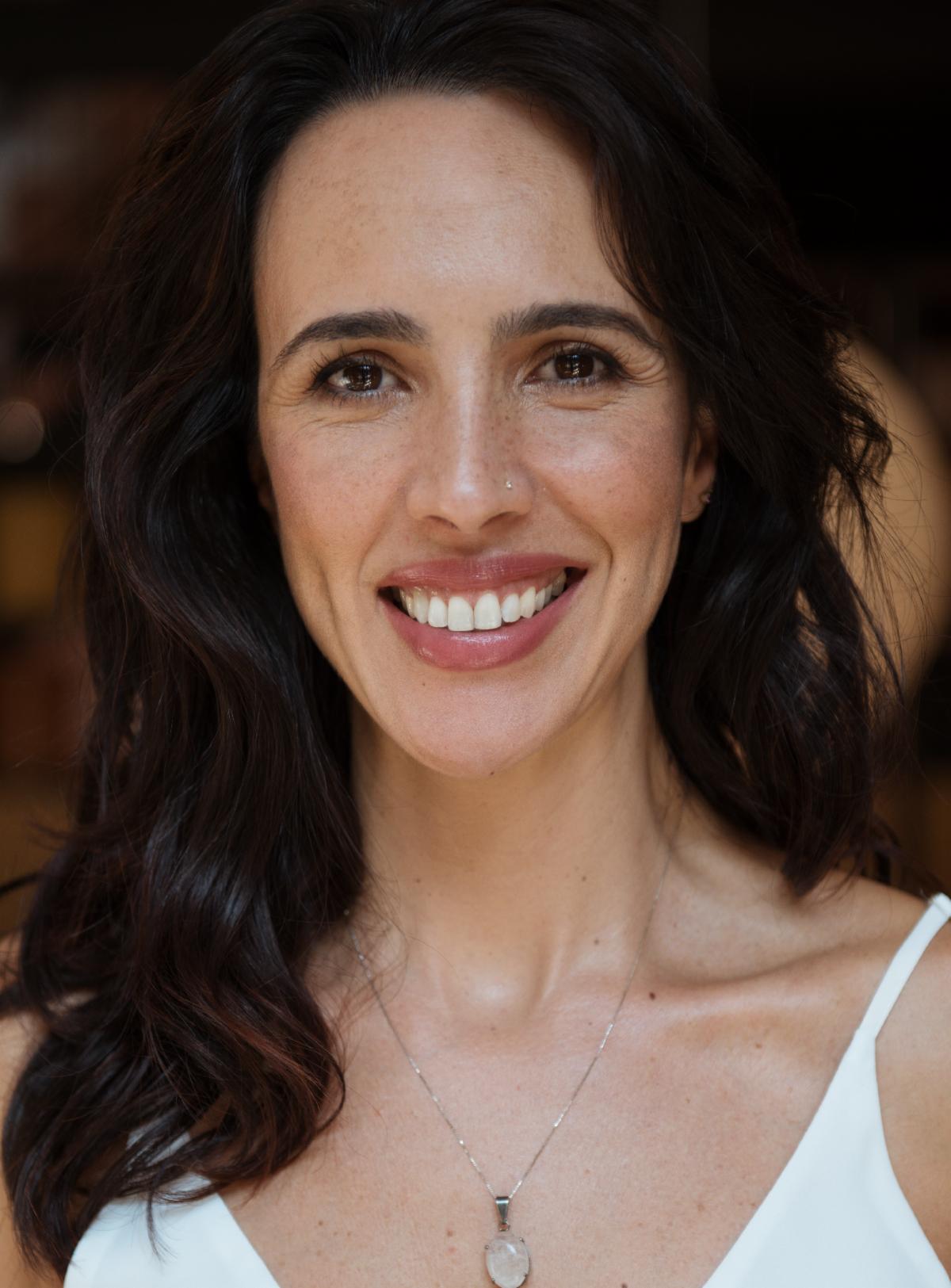
Celiane Camargo-Borges, co-author of Design Thinking and Social Construction
| |
REGISTRATION IS OPEN
New Self-Paced Course, Start Anytime
Provocative, unsettling, liberating, inspiring…all have been applied to the dialogues on the social construction of knowledge. The ideas have swept across the academic world and into personal and professional life. For many, they contain the ingredients for a promising life together on this planet.
We are pleased to introduce the Taos Institute's first online self-paced course! In six modules, each with 3 short videos and questions for reflection, Ken Gergen introduces basic premises of social constructionist theory and how they apply to professional practices in all domains as well as everyday life. Learn more.
*Register now to join a facilitated live group discussion with other course participants on April 16, 10am EST!
| |
Includes six modules with videos by Taos Institute Co-founder & President Ken Gergen! | | |
What otherare already saying:
At the end of the course, the feeling I connected with most was hope. […] It’s a great way to get a glimpse of what social constructionism is and also a way for those who already know about it to reconnect with its potential. — Ederglenn Nobre
The way it introduced and developed key concepts of social constructionism was meaningful, encouraging deep reflections on how knowledge, reality, and interactions are shaped. — Marcos
The course was very dynamic, covering many different topics and providing a good introduction to social construction. — José Damaceno
| | |
Sara Cobb, USA
May 7, 1:00-2:30pm EST
Persistent conflicts, such as wars, the rise of fascism, political and social conflicts over colonialism, marginalization, climate change, race, etc., depend on “master narratives” that keep the parties prisoner to their own logics, their descriptions of histories, and their vision of possible futures. We see master narratives at work, constructing the world, from the local to the global level, in personal conflicts where families fracture over their ideological differences, in communities divided by race, in professional settings where “merit” seems to challenge “diversity” and vice versa, in political settings where “science” is in opposition to “belief,” and of course, in violent conflicts. This webinar offers a strategy for evolving master narratives via the development of new logics, or “proximate narratives,” to open new pathways for conflict transformation. More details.
| |
| You will be prompted to join, or sign in to, the Taos Institute Commons online community to access these events. It's free, quick and easy, and will give you instant access to events, resources, announcements, and a global network centered around social constructionist, relational, and appreciative practices. | | | |
April 17, 9-9:30pm EST
Whether you are new to the Taos Institute Commons online community or already a member (it's free and easy to join!), you are invited to this informal gathering to meet others in our global network to share stories of how you are applying (or hoping to apply) social constructionist, relational and appreciative approaches in your work and life. Stop by to say hello, we would love to meet you.
| | | |
Join with almost 2500 members from around the world in the Taos Institute Commons online community (free) as we explore social constructionist, relational, and appreciative theory and practices. You will instantly get access to free webinars, free books, event replays, announcements, workshops and courses, special interest and language groups, and meaningful connections with others interested in creating more promising futures, one conversation at a time.
Join in the Taos Institute Commons — it's free, quick and easy, to become a part of our global family!
| | | |
TIE is a center of gravity for researchers, practitioners and other like-minded people in Europe, who challenge the known and frozen paradigms of understanding, to build a better world for tomorrow. Join the TIE group in the Taos Institute Commons online community (free) to meet other relational practitioners in Europe.
| | |
TILAC serves as a regional and language hub to strengthen networks of cooperation and support among Spanish- and Portuguese-speakers; share and validate the unique knowledge and practices emerging from these regions; and contribute to the promotion of social constructionist thought. Join the Spanish or Portuguese group in the Commons (free), follow TILAC on Facebook or email tilac@taosinstitute.net.
| | |
The mission of TIJ is to build a network of collaboration and support led by Taos Institute Associates in Japan; to create a forum for dialogue centered on theory, to gather interesting cultural practices in Japan, and to disseminate them both domestically and internationally; and to contribute to the dissemination of social constructionist theory by translating foreign literature and organizing seminars. Visit the Taos Institute Japan Facebook page to connect with TIJ.
| | |
The RRN is a global initiative to explore, share, learn, and create practices and processes for doing research from a relational perspective. Their latest initiative is the "Worlds in Conversation" webinar series. You can access future events, past recordings, and a discussion forum in the Relational Research Network group in the Commons (free). You may also explore their video series.
| | |
Taos Associates represent a network of more than 850 scholars and practitioners around the world, who have demonstrated exceptional talents, research, practices, and dedication relevant to the Taos Institute’s mission. You can find Taos Associates in your area on our website. TIAC is hosting two Virtual Tea, Story & Play sessions on April 15: 8:30am and 12:00pm — everyone is invited!
| | |
The ICCP Network, co-hosted by The Houston Galveston Institute and The Taos Institute, is an interdisciplinary program that provides an intensive, in-depth study of postmodern-social construction-relational theory and the possibilities for personal, organizational, and social transformation. ICCP partners with organizations in 15 countries and regularly host multilingual workshops. Visit their website for details.
| | |
|
Cooperrider Center for Appreciative Inquiry
April 16, 2025, 10:00am-2:30pm EST
Questions are more than a tool for gathering information—they are a catalyst for shaping organizational realities and driving meaningful change. Through engaging discussions and practical exercises, you’ll learn to recognize the impact of your questions, craft more impactful inquiries, and reframe challenges into opportunities for growth. Details
| | |
|
Fundación Interfas
Starts April 29, 2025
The Interfas Foundation (Argentina), in collaboration with The Taos Institute (USA), sponsor a virtual diploma for professionals interested in expanding their understanding and skills of generative practices, the opportunity to learn a perspective and new resources that allow them to work with relational and dialogic creativity. In Spanish and Portuguese. Details
| | |
|
East Side Institute
May 17, 10:30am-1pm or May 22, 7-9:30pm EST
In this two-and-a-half-hour workshop, Institute director Lois Holzman will introduce you to the conceptual framework and share four features of a developmentalist’s practice. You will be invited to try these on and have ample time to practice performing as developmentalists alongside Lois. Details
| | |
|
JST Institute
May 31, 2025, 10:30am-5:30pm EST
When people are consumed by despair and a sense of forboden, the notion of reengaging with hope and possibility can be challenging and risk trivializing their experience. We will explore the key elements of an inspiring, liberating conversation that generates hope, restores personal choice, strengthens social connection, and contributes to personal agency? Details
| | One way the Taos Institute carries out its mission to create brighter futures through social construction is by creating and disseminating a wide variety of resources for scholars, practitioners, and students interested in dialogic and relational approaches. These free resources span many disciplines and languages. To suggest a resource, email info@taosinstitute.net. | | | | The Taos Institute is a non-profit educational organization. We strive to keep our offerings free or at low cost to make social constructionist, relational, and appreciative ideas available to as many people as possible around the globe. Please consider supporting our mission of creating brighter futures through social construction by making a donation. For small, convenient monthly contributions, consider becoming a sustaining donor. | | | | |