|
The Taos Institute Relational Research Network is a global initiative to explore, share, learn, and create practices and processes for doing research from a relational perspective. We emerged as a collective with a common interest in research and we invite you to join.
We view relational research as a philosophical stance more than a method. It centers on processes, a way of being and becoming with each other, a way of thinking and having conversations and taking action together while doing research.
There are certain conditions that characterize relational research.
Relationships are centered
Paying attention to how we are creating relationships: How are we radically present with each other?
Knowledge is democratized and possibilities liberated
By focusing on social transformation and unfolding processes, space is provided for all voices to be included in research design, implementation, and sharing of knowledge generated through dialogue and action.
Embraces an ethic of responsibility and accountability
We aim towards social justice and equity with a collective responsibility and responsiveness to make this world a better place for all people and for all living things.
Focuses on mutual transformation
The aim is that the research might benefit all research participants and communities involved in the process through meaningful narratives and participatory action.
Appreciates the values of connectedness and difference
A space is created where communion and otherness can coexist, and where relational reflexivity is possible. Relational research engages a sense of relational inquiry - engaging in active and embodied listening and empathic caring responsibilities.
Looks at patterns and systemic connections across and between ourselves, within ourselves, and between ourselves and the world
Patterns that connect are attended to. From an ecological perspective, there's a sense of attunement of how the parts of the system align together.
How do we perform relational research?
Relational research is an activity that psychotherapists, teachers, researchers, social workers and others can perform. In relational research we 1) maintain curiosity as we engage in action and 2) strive for collaboration and co-construction. Inquiry and projects are participatory with a common goal among all members of the project and involving everyone in the research. Many ask, is relational research a qualitative or quantitative method? By keeping these principles, it can possibly be both/either.
When facilitating relational research processes there are helpful questions to consider. We ask every step of the way: Who is participating? Who is left out? How are we relating? What are we creating? For whom do we write, publish and distribute the results and processes of such research actions? Is it accessible in language and in economic terms? How is authorship registered? Who benefits from the results? Is everyone involved aware of its effects? How do we respond to unintended consequences of the research?
You can find two inspiring examples of relational research showcased in the Taos Institute Commons online community: Community-Led Participatory Action Research Project on Well-Being in India, by Rituu B Nanda (see the recording in the Event Replays library), and Generative Research in the Anti-Human Trafficking System in Italy, with Giacomo Chiara on July 17 (click here for details.)
You are invited to join in learning with us. Hear people’s voices in the Relational Research Network Video Series and read examples in the free downloadable WorldShare book Social Construction in Action: Contributions from the Taos 25th Anniversary Conference, Part 1: Research and Research Practices.
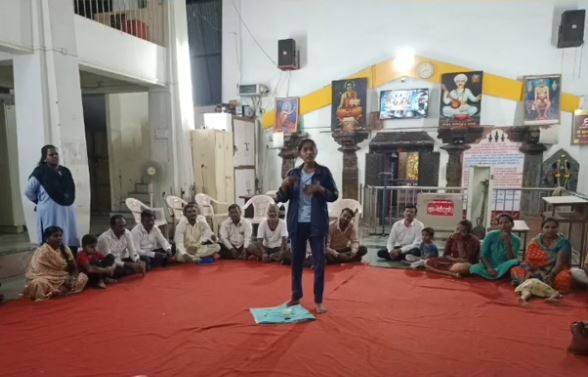
Photo credit: Village-led research in Nandwal Village, Kolhapur India, by Imran Mujawar
|