Young Relational Researchers
Sally St. George and Dan Wulff, Taos Institute Board Members
and Co-Editors-in-Chief of The Qualitative Report, Canada
| |
| |  | Open the heavy doors of many high schools, and the weight of students’ stress is palpable. They shuffle in, shoulders heavy, not only from backpacks, but from the looming pressure of deadlines. Open a laptop, and the blue-light glow of the screen reflects tired eyes. “No AI,” the syllabus now declares. One teacher proclaims, “Essays found using ChatGPT will earn an automatic zero.” In another classroom, students open their pencil cases because teachers won't be taking any chances. Yet, their hand cramps are minute in comparison to the relentless pressure of perfection. In the hallways, fragments of conversations proliferate: “I’m drowning in work!” “How can I finish all this?” “I heard they were accused of using AI.” Whispers like these result from the mounting stress that students face each day. In this stress-filled environment, where balancing high school life—from academic to the personal—is a constant challenge, tools such as ChatGPT have sparked an ongoing debate about the ethical boundaries of artificial intelligence in education. As high schoolers in this specific context, we began our research project with the question: In what ways do pressures within high school communities influence students’ perspectives on justifying or rejecting the use of ChatGPT? (in press)
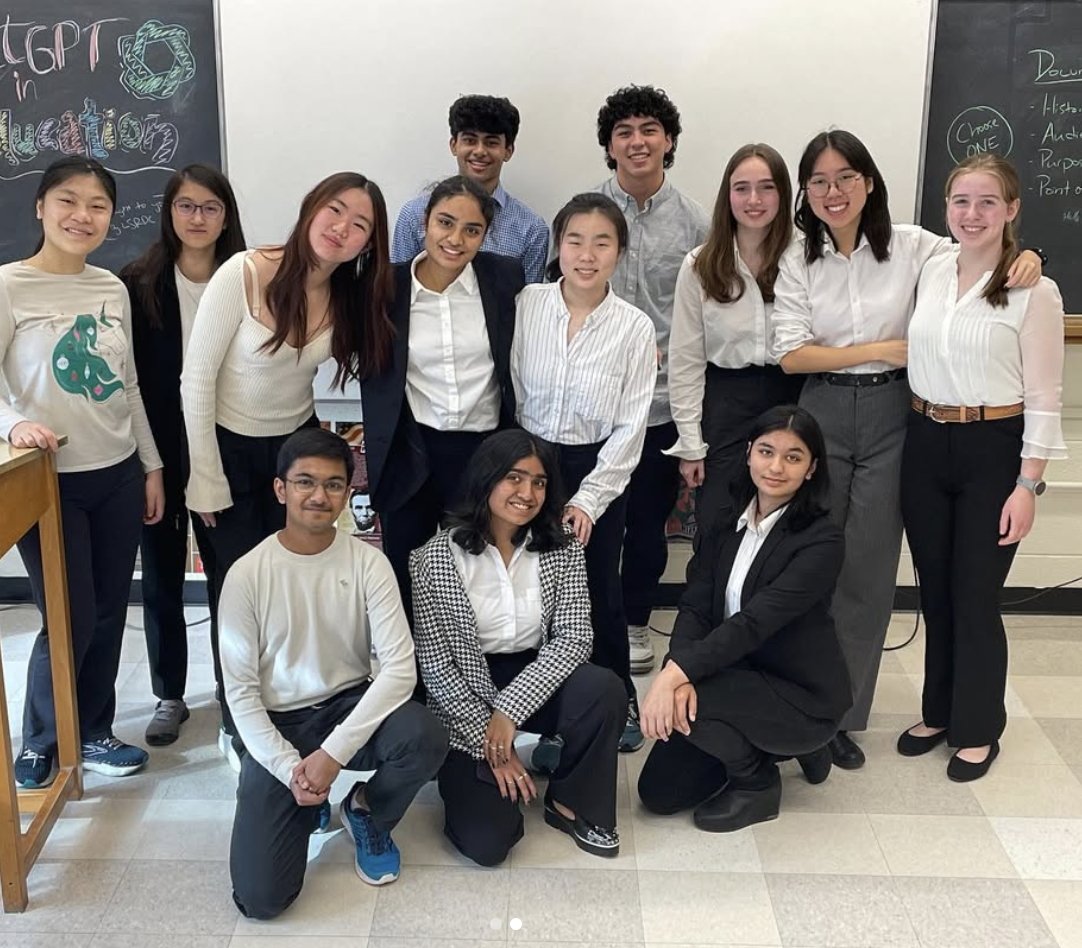
The paragraph above is the opening to a research report written by a group of high school students and their teacher from Lexington High School in Massachusetts, USA. On April 4, this group presented their research entitled “A Teacher, a Tutor, a Friend: ChatGPT and the High School Experience” online with the Taos Institute Relational Research Network. Yes, a group of high schoolers showed their talents at conceiving and conducting research, writing it up for peer review publication, and presenting their work to a professional audience. While their research is relevant, timely, and well-done, it is their remarkable demonstration of relational decision-making, relational concern, and relational collaboration that we would like to spotlight.
Their research, which emanated from a class led by their English teacher and mentor, was conducted to better understand student views of using ChatGPT in their educational experience with the intent to inform school administration and staff and influence school policy. This project took approximately three years under the guidance of their teacher who helped the students form the Lexington Student Research and Publication Collaborative (LSRPC), an extracurricular “club” dedicated to conducting research that is meaningful and useful, academic and personal in their high school context and hopefully beyond. The students worked together in small groups to design and redesign their project, acknowledging and highlighting each person’s contributions; the older students mentored the younger students and those who became leaders in the project generously and graciously maintained practices that encouraged success for all participants. They attended to their relationships with each other as classmates and their teacher/mentor as they made co-decisions at every step. Another very eloquent sign of their attention to a relational perspective was that they collaboratively decided upon interviewing their peers to mitigate power differentials between interviewees and researchers. They valued their peer’s voices, whether they agreed with them or not, and believed that all the voices deserved to be revealed and heard.
There is more to this story, more backstory on the publishing side. As Co-Editors-in-Chief of The Qualitative Report (an online, open access, multidisciplinary global journal of qualitative research), we became aware of this project when the LSRPC submitted their paper to our journal. This was an unusual submission as almost all submissions are at the post-secondary and graduate levels. We were intrigued and curious about this group and through our journal’s own relational mentoring processes, we invited them to work with us to bring this paper to publication. We worked through the revision process that involved decisions about what to include in their reporting and how best to say it. We exchanged our thinking through zoom calls and in comment boxes in the margins of their texts. There was intense listening, many questions asked to help with narrative flow, rationales for decisions, mutual teaching and learning. Our relationship with them flourished and we invited them to present their work through the Relational Research Network so that others could see and experience young relational researchers—they were intrigued and honored and were phenomenal.
We hope that you will read their research when it comes out in The Qualitative Report later this month and watch the recording of their presentation for the Relational Research Network. We suspect that seeing these young researchers at work can be just the kind of boost you might need in these challenging times. And we think that supporting them may give them the boost to join us as our youngest members of the Taos Institute.
Gupta, S., Mehta, V., Kam, R., Ehmann, C., Orgad, A., Kuang, E., Castro Barrantes, A., Posada, M., Shah, S., Prasad, N., Pai, T., Ho, E., Xi, S., Zhou, T., Li, E., Wan, S., Paranjape, S., Dearling, Z., Peng, S. (G)., Kaveti, A., Lowrance, G., Xie, A. Z., Xu, M., Haririam, A., & Muse, A. (2025) A teacher, a tutor, a friend: ChatGPT and the high school experience. The Qualitative Report, 30(5). Advance online publication. https://doi.org/10.46743/2160-3715/2025.7324
| | |
New Self-Paced Course, Start Anytime
Provocative, unsettling, liberating, inspiring…all have been applied to the dialogues on the social construction of knowledge. The ideas have swept across the academic world and into personal and professional life. For many, they contain the ingredients for a promising life together on this planet.
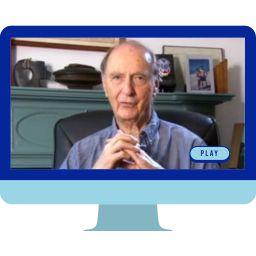
We are pleased to introduce the Taos Institute's first online self-paced course! In six modules, each with 3 short videos and questions for reflection, Ken Gergen introduces basic premises of social constructionist theory and how they apply to professional practices in all domains as well as everyday life.
Sign up now to take part in our next live group meeting with Ken Gergen and Loek Schoenmakers on July 8, 2025, 10-11am EST! (Open to all registered participants.)
| |
Includes six modules with videos by Taos Institute Co-founder & President Ken Gergen! | | |
June 17, 9:00-9:30am EST
Whether you are new to the Taos Institute Commons online community or already a member (it's free and easy to join!), you are invited to this informal gathering to meet others in our global network to share stories of how you are applying (or hoping to apply) social constructionist, relational and appreciative approaches in your work and life. Stop by to say hello, we would love to meet you.
| | | |
With Robyn Penman, Australia
August 4, 6:00-7:00pm EST
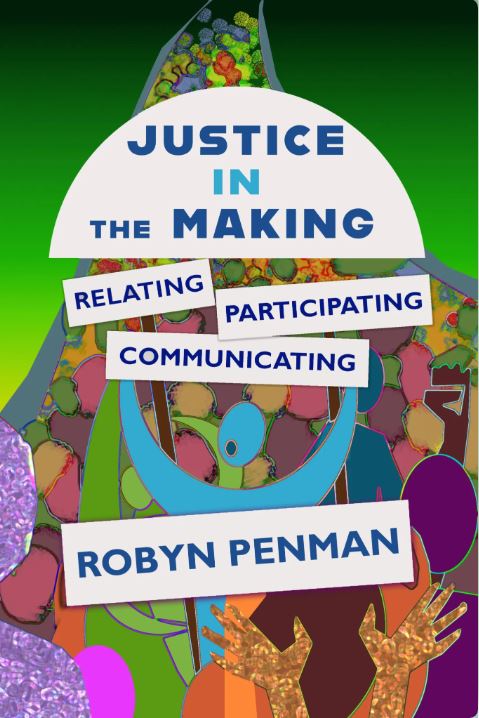
Even though justice is such an enduring concept for judging the quality of our relations with others, so many of our stories about justice are based on outmoded assumptions and narrow views that are simply not appropriate for guiding us in the complex social world of the 21st century. We need a new imagination of justice and this is what the author does: Robyn Penman develops a new story of justice as something we make together in the dynamic process of relating and communicating, with all its uncertainties and open-endedness.
Join us in imagining justice-in-the-making and new possibilities for co-creating a relationally responsible justice that can contribute to the construction of a social world that, relationally-speaking, is better.
| |
| *You will be prompted to join, or sign in to, the free Taos Institute Commons online community to access these events. | | | |
Join with over 2500 members from around the world in the Taos Institute Commons online community (free) as we explore social constructionist, relational, and appreciative theory and practices. You will instantly get access to free webinars, free books, event replays, announcements, workshops and courses, special interest and language groups, and meaningful connections with others interested in creating more promising futures, one conversation at a time.
Join in the Taos Institute Commons — it's free, quick and easy, to become a part of our global family!
| | | |
TIE is a center of gravity for researchers, practitioners and other like-minded people in Europe, who challenge the known and frozen paradigms of understanding, to build a better world for tomorrow. Join the TIE group in the Taos Institute Commons online community (free) to meet other relational practitioners in Europe.
| | |
TILAC serves as a regional and language hub to strengthen networks of cooperation and support among Spanish- and Portuguese-speakers; share and validate the unique knowledge and practices emerging from these regions; and contribute to the promotion of social constructionist thought. Join the Spanish or Portuguese group in the Commons (free), follow TILAC on Facebook or email tilac@taosinstitute.net.
| | |
The mission of TIJ is to build a network of collaboration and support led by Taos Institute Associates in Japan; to create a forum for dialogue centered on theory, to gather interesting cultural practices in Japan, and to disseminate them both domestically and internationally; and to contribute to the dissemination of social constructionist theory by translating foreign literature and organizing seminars. In addition to their Facebook page, you are invited to join the new Taos Institute Japan group in the Commons, and the TIJ Festival, October 25-26, 2025!
| | |
The RRN is a global initiative to explore, share, learn, and create practices and processes for doing research from a relational perspective. Online presentations featuring relational research projects will continue through the spring. Visit the Relational Research Network group in the Commons (free) for announcements. You may also explore their video series.
| | |
Taos Associates represent a network of more than 850 scholars and practitioners around the world, who have demonstrated exceptional talents, research, practices, and dedication relevant to the Taos Institute’s mission. You can find Taos Associates in your area on our website.
| | |
The ICCP Network, co-hosted by The Houston Galveston Institute and The Taos Institute, is an interdisciplinary program that provides an intensive, in-depth study of postmodern-social construction-relational theory and the possibilities for personal, organizational, and social transformation. ICCP partners with organizations in 15 countries and regularly host multilingual workshops. Visit their website for details.
| | |
|
East Side Institute
June 14, 1:30-3pm EST
As diagnostic psychotherapy loses its "magic and wonder," many are seeking out alternative, non-medicalized approaches to therapeutics and wellness. Chris Hoff (host of The Radical Therapist Podcast), Erin Segal & Julie Cho (Thick Press) embarked on a journey to explore a sprawling, uncharted world of radical therapies, social work, healing and wellness modalities. Details
| | |
|
JST Institute
June 21, 2025, 10:30am-5:30pm EST
This introductory workshop serves as a threshold for those practitioners interested in the ongoing study of the key ideas and time sensitive practices of brief narrative therapy, a practice that helps people to challenge problem saturated stories and assist them to explore subordinated “identity stories” that offer new possibilities for their lives. Details
| | One way the Taos Institute carries out its mission to create brighter futures through social construction is by creating and disseminating a wide variety of resources for scholars, practitioners, and students interested in dialogic and relational approaches. These free resources span many disciplines and languages. To suggest a resource, email info@taosinstitute.net. | | | | The Taos Institute is a non-profit educational organization. We strive to keep our offerings free or at low cost to make social constructionist, relational, and appreciative ideas available to as many people as possible around the globe. Please consider supporting our mission of creating brighter futures through social construction by making a donation. For small, convenient monthly contributions, consider becoming a sustaining donor. | | | | |