The Dorothy Gillespie Centennial exhibitions in the Taubman Museum of Art are going to be open to visitors after all.
The Roanoke art museum plans to reopen July 3, with strict social distancing measures in place as required by state guidelines.
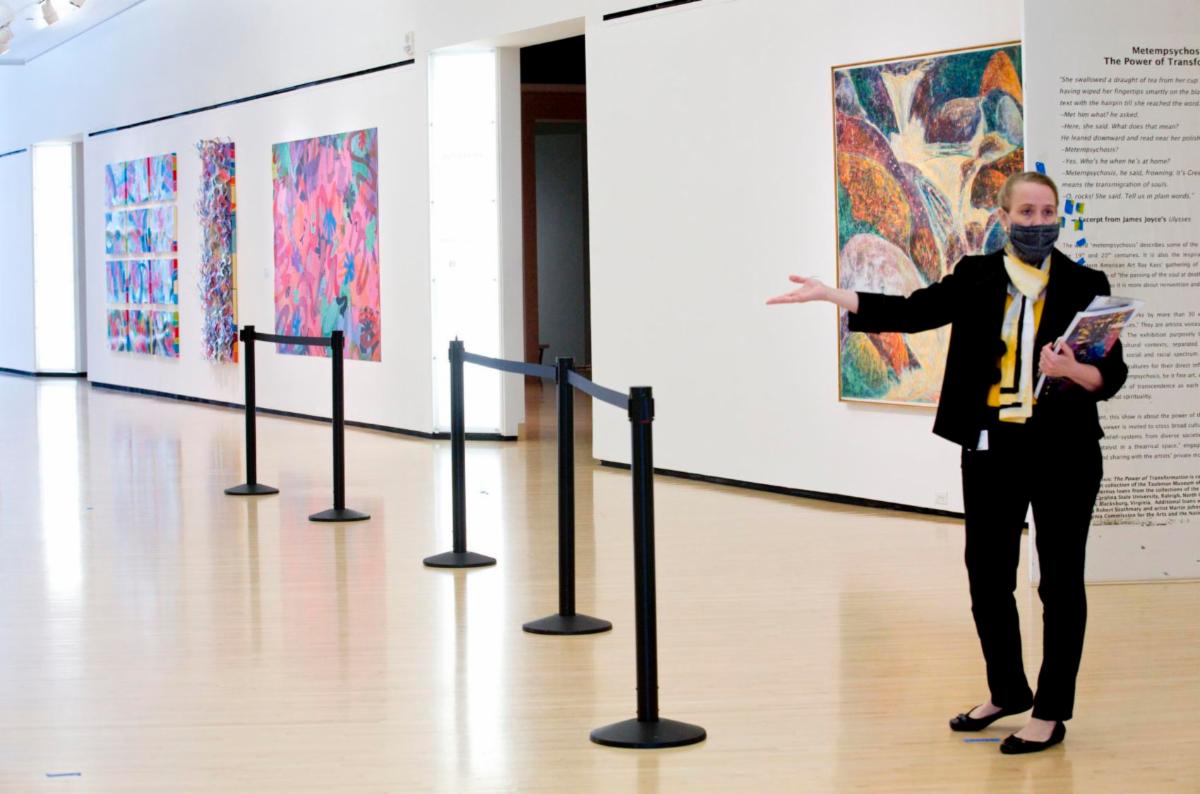
Instead of distributing gallery guides, the museum will offer QR codes for visitors to scan with their cellphones, and maps will be reproduced large on walls instead of printed as handouts. The upstairs galleries will be cordoned so that attendees follow a single file path through the exhibitions. A sneeze guard cut in the curves of a mountain landscape will protect workers and volunteers at the front desk.
The art museum received one of the paycheck protection program loans created as part of the federal stimulus package, which has made it possible to refill part-time jobs that were eliminated when the pandemic-related shutdown began, said Taubman Executive Director Cindy Petersen.
Though Art Venture will remain closed, the museum will provide activity kits for children that are complimentary to members and pay-as-you-will for nonmembers.
The museum will only be open Fridays through Sundays until further notice, Petersen said. Admission remains free.
For three of those three-day weekends, “Celestial Centennial: The Art and Legacy of Dorothy Gillespie,” will still be on display. It closes July 26.
Roanoke-born artist Gillespie, who died in 2012, would have turned 100 this year. A 1938 graduate of Jefferson High School, Gillespie enrolled in an art college against her parents’ wishes, a choice that resulted in a decades-long art career that culminated in a 2003 installation of 185 sculptures in New York’s Rockefeller Center — a show she created when she was 83.
The museum’s description of “Celestial Centennial” asserts that Gillespie “remains the most nationally recognized artist who was born and raised in the Roanoke Valley.”
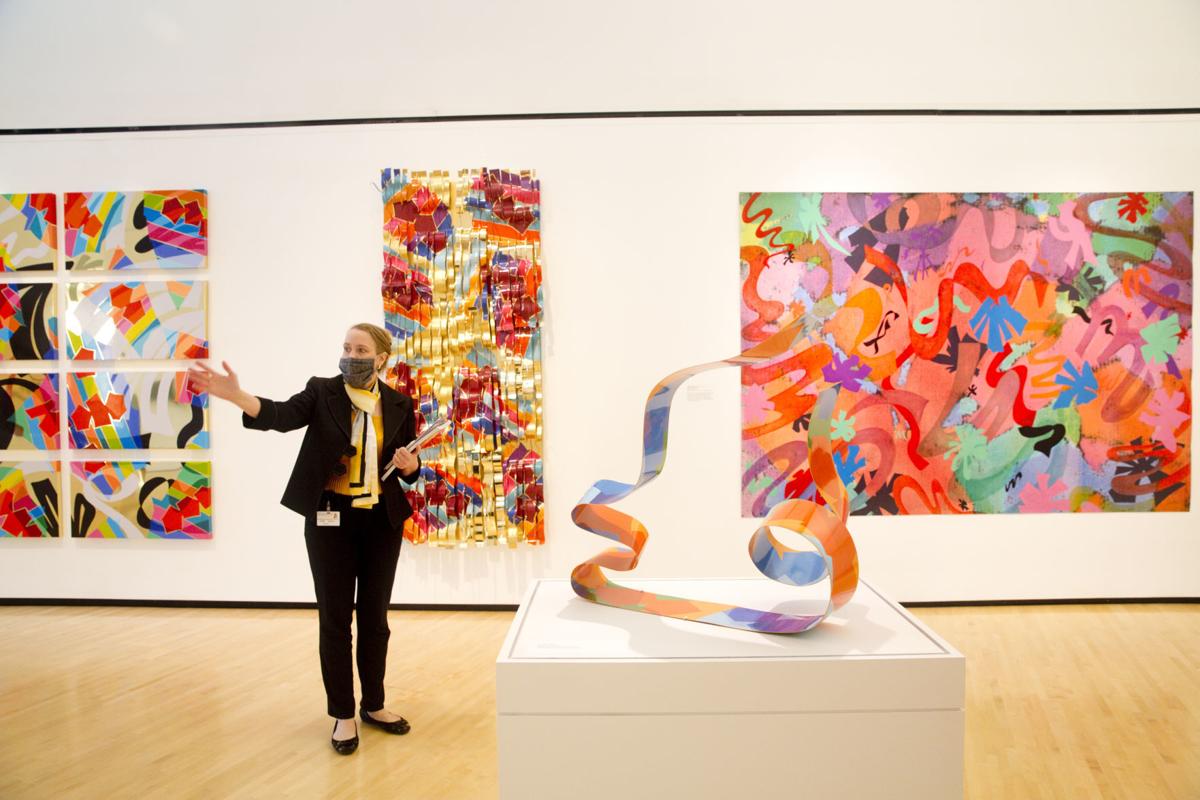
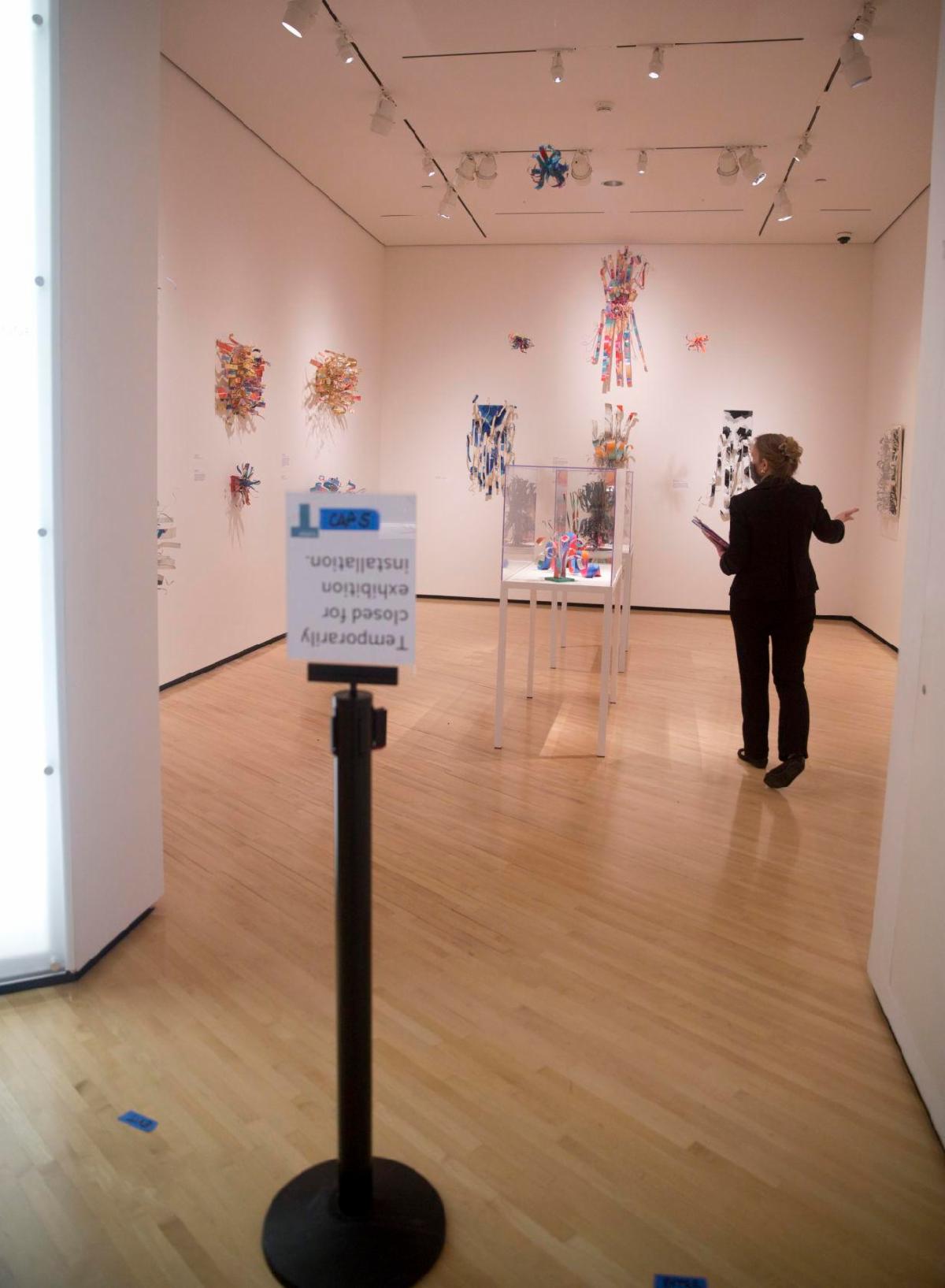
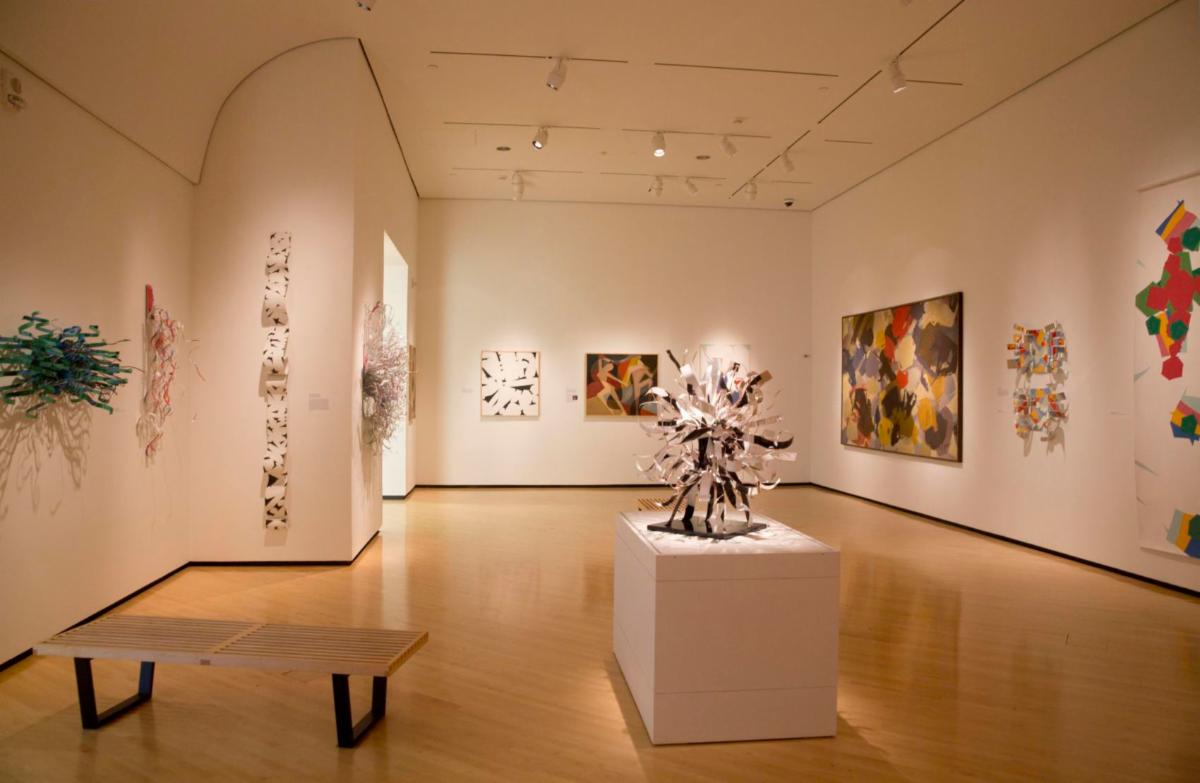
Drawn from the art collection of the Radford University Art Museum — a collection Gillespie helped found while she taught there — “Celestial Centennial” showcases not just the brightly painted sculptures cut into aluminum ribbons that brought Gillespie nationwide fame, but early abstract paintings and works on paper.
One of her sons, Gary Israel, President of the Dorothy M. Gillespie Foundation, has been working to organize a multi-state centennial celebration of his mother’s art. The shutdowns intended to slow the spread of the novel coronavirus caused portions of that massive project to be canceled or delayed, including the Taubman’s shows.
A companion exhibition at the Roanoke museum, “Dorothy Gillespie: Still Enchanting Virginia’s Blue Ridge,” draws from private collections in the region, and will stay open through Nov. 8. A smaller additional display, “Welcome to Dorothy’s World,” includes a vibrant portrait of Gillespie and artifacts from her New York studio.