Fall, 2022 The Teaching Inquirer Issue 2 | |
|
Why Community-Engaged Learning at ETSU?
Why Now?
By Dr. Susan McCracken,
Vice Provost for Community Engagement
| |
As you may have heard, ETSU has selected Community-Engaged Learning as our topic for the SACSCOC Quality Enhancement Plan (QEP). This topic evolved from priorities identified in the 2016-2026 Strategic Plan, the 125 Plan Chapter II, and the Community Engagement Task Force Final Report. I was attracted to ETSU because it seemed that community engagement was a core value of the campus. Now, after 3 months on campus, I know this to be the case.
The QEP will take community engagement to the next level by strengthening the student learning environment. Through the intentional integration of curricular and co-curricular offerings with community needs identified through relationships with community entities, we will establish a sustainable culture of Community-Engaged Learning.
Keep Reading
| |  |
|
10/19 10:30-12:00 Grading for Fairness & Accuracy
10/21 9:00-10:30 Radical Reflections
10/21 12:00-1:00 TED Talk Lunch & Learn: Lunch!
10/25 10:00-11:30 OER: Saving Bucs
10/25 1:00—2:30 Authentic Assessments
10/25 3:00-4:30 Turn Students Into Their Own Teachers
10/27 10:00-12:00 UDL & Disability Services (@ Culp)
10/28 1:00-2:30 Feedback Early & Often
11/1 2:00-3:30 Campus as Text
11/2 10:00-11:30 Turn Students Into Their Own Teachers
11/2 2:30—4:00 If Your Syllabus Could Talk…
11/8 1:30-3:00 Radical Reflections
11/9 2:00-3:30 Campus as Text
11/10 1:00-2:30 Active & Collaborative Learning
See website for more late Fall workshops!
All workshops, unless otherwise noted, held in Room 433 Sherrod Library
Learn more, register, and see additional Fall events at our CTE website.
| | |
|
“Open” is About More Than Just Resources
By Phil Smith
| |
By now, most people involved in higher education have at least heard of OERs, Open Education Resources. Many ETSU instructors and students have used or seen, for example, OpenStax textbooks and felt directly - or indirectly - the benefits of OER in terms of access and cost. This makes a concrete, positive difference for in the lives of many students. But there is more. The “Open” of OER can also be seen as a framework for the whole spectrum of what we do in education, from providing resources to engaging students in learning processes: From Open Resources to Open Practices. Most faculty who use OERs report that it also involves rethinking and adjusting course design, always for the better. Using Open resources creates opportunities to integrate more inclusive teaching practices.
Keep Reading
| |
Dr. Constanze Weise, Dept. of History |
|
Dr. John Rankin,
Dept. of History
| |
|
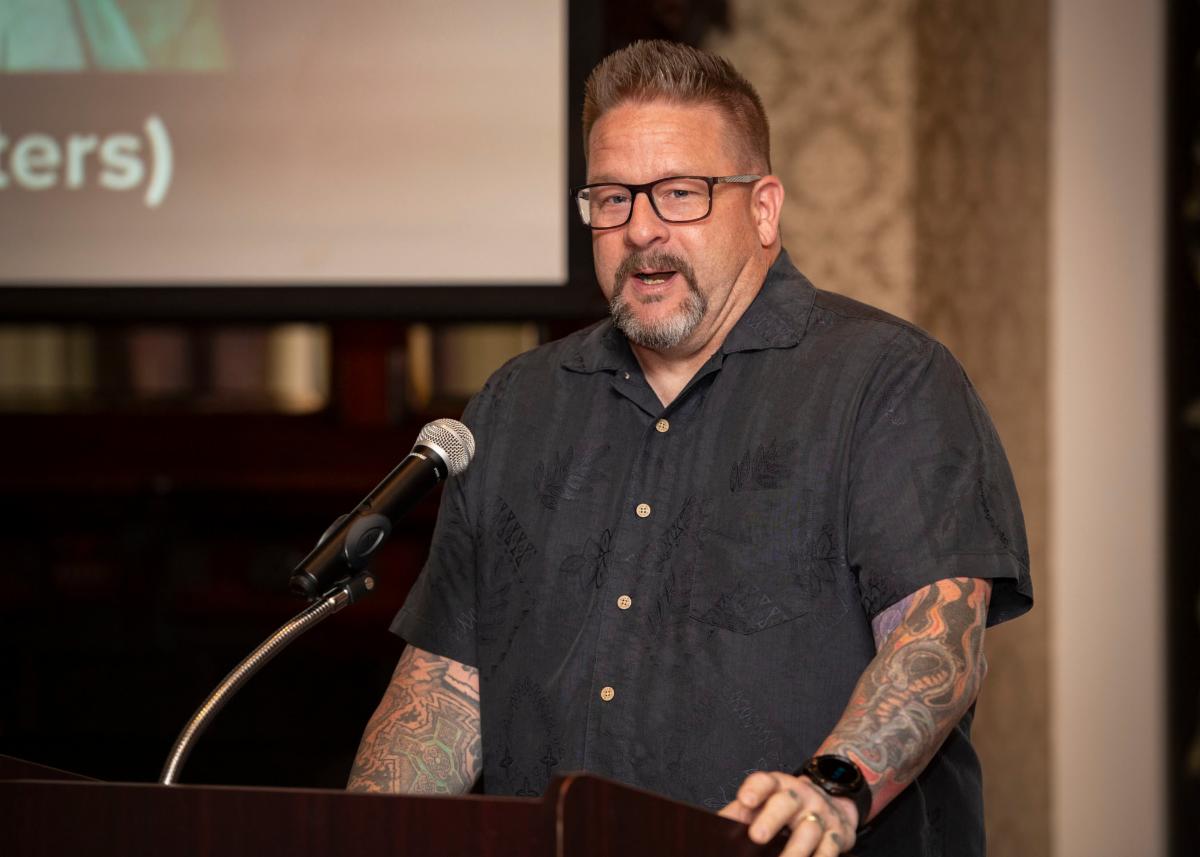
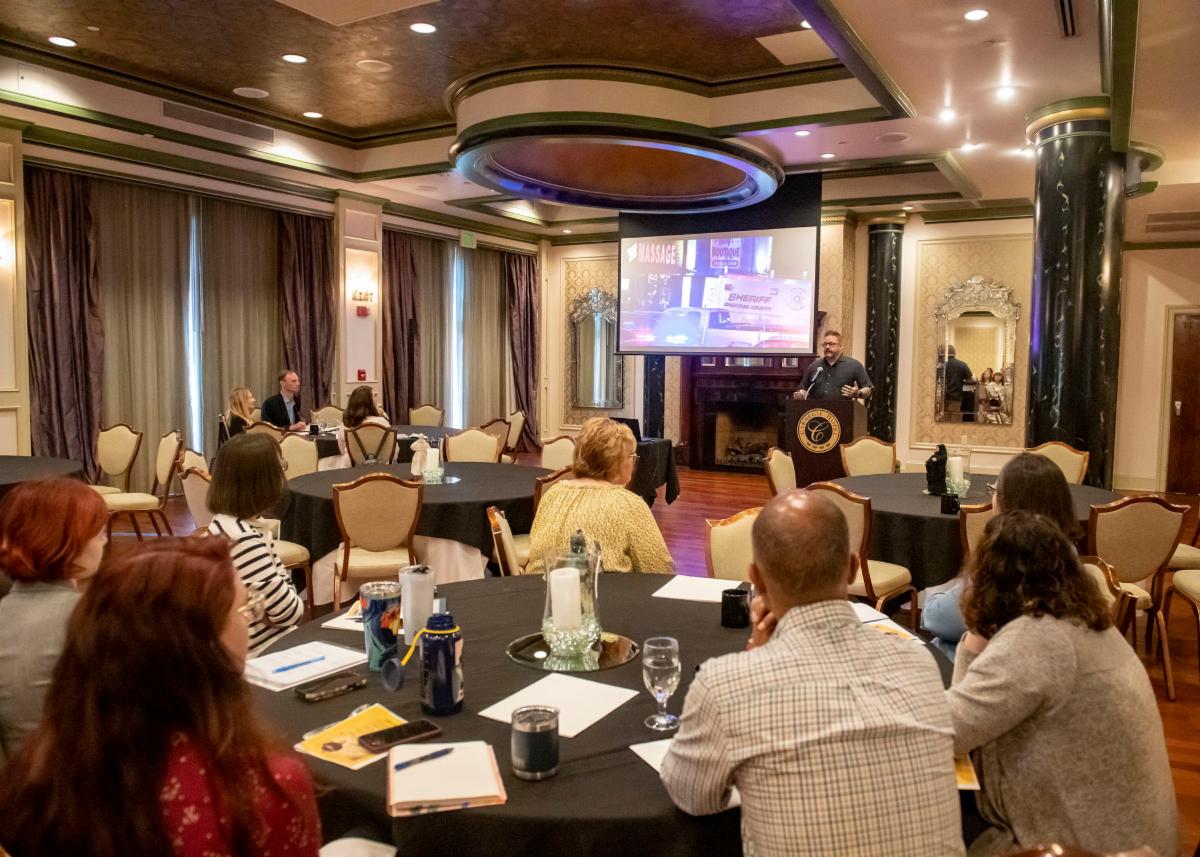
The CTE hosted another successful Conference for High-Impact Instructional Practices, held August 9, with a pre-conference workshop on August 8. Our guest speaker, Dr. Kevin Gannon (aka “The Tattooed Professor”), led engaging sessions that encouraged faculty to create pedagogies of hope by giving students both agency and the equitable pathways to reach their goals.
ETSU faculty and guests from other institutions also led break-out sessions on topics ranging from ungrading to embedding student reflections on learning experiences. Participants were motivated by what they learned: “Very engaging and thought provoking;” “[M]ade me think so much!”
Faculty can continue to learn at our “booster” Micro-CHIIPs conference this January! Scroll down for more.
| |
Student Voices
By Patrick Brown
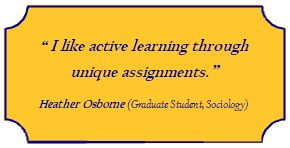
I often ask my students, “Do you suppose Peyton Manning got so good as a quarterback by looking over his notes on how to throw a football, or listening to a lecture on how to read a defense?” They, of course, answer no. It would be ridiculous to assume someone can gain the level of skill necessary to be inducted into the Football Hall of Fame by only listening to lectures and taking notes. Peyton Manning achieved the level of skill he did through active learning. He did drills, received coaching, lifted weights, and engaged in thousands of hours of practice. Sure, he watched film of previous games, and he studied a playbook, but the bulk of what made him the professional he became was though active participation in his learning.
In order to help students like Heather, it is essential that we, as educators, take up a “practice like you play” mentality and create experiences for our students that will engage them in the types of tasks and problems that are authentic and engaging. Visit the CTE online to learn about opportunities to learn more about how to create active and collaborative learning assignments for your classes.
| | |
 | |
Patrick Brown, CTE Fellow
I’m currently reading Designing Authentic Performance Tasks and Projects: Tools for Meaningful Learning and Assessment by Jay McTighe, Kristina J. Doubet, and Eric M. Carbaugh. This text is a detailed “how-to” for creating authentic assessments - that is, projects, tasks, or activities that place the learner in a real-world context to demonstrate achievement of course goals in a manner that requires deep learning and often creative thinking. This book provides support for designing assessments that will challenge your students to think deeply, work creatively, and generate a product that demonstrates their mastery of course content. The authors even include an excellent chapter on creating the evaluation tools to provide feedback to the students. Although it is written largely toward K-12 educators, I have found it to be a treasure trove of solid course design advice.
Phil Smith, CTE Assistant Director
I've been following this series in the Chronicle Teaching Newsletter on the topic of class participation and how instructors should evaluate it (Main article: “Teaching: Is It Time to Redefine Class Participation?” by Beth McMurtrie). Class participation is one of those things that seems obvious until you really try to pin it down and give it points. Is it just speaking up in class? What about that quiet student who writes thoughtful reflection pieces? It opened my eyes to see all the ways professors have creatively approached this in a variety of disciplines and modalities. One theme I noticed whether it is large science classes or intimate graduate seminars is that reflecting on what constitutes participation seems to inspire instructors to use more active learning and offer students a variety of ways to participate. Check it out and see if any of these ideas might work for you!
Alison Barton, CTE Director
It should come as no surprise that I’m learning more about community-engaged learning by reading Dr. Barbara Jacoby’s foundational work, Service Learning Essentials: Questions, Answers, and Lessons Learned. I find the book very engaging and, for someone who is relatively novice to the idea of community-engaged learning, enlightening. The research Dr. Jacoby reviews affirms the significant learning impact this instructional practice has in higher education teaching!
| Find all kinds of teaching books for check-out in our CTE Teaching Collection - Room 441 Sherrod Library! | | |
|
We are delighted to welcome Kelechi Onyenemezu as our Center’s graduate assistant. Kelechi has earned a medical degree in his home state of Nigeria and now has turned to a graduate degree in Epidemiology (Public Health).
He says, “I have been a promoter of teaching and learning from a long way back. It spans from helping my peers towards academic success in elementary and high school to tutoring junior course mates in the university, then contributing to the advancement of medical education with participation and contributions to the Pathology club, Medicare Journal, etc. My position at the CTE will further boost my knowledge and capacity for enhancing and promoting great teaching models. The CTE will hopefully be my anchor to a successful teaching career in the Public Health discipline.”
Please help us welcome Kelechi - he will become a familiar face!
| |
~ A virtual, morning conference ~
Keynote: V. Sathy & K. Hogan,
authors of Inclusive Teaching
January 11, 2023
9:00 - Noon
Registration &
Call for Proposals
Are Open!
Wed, Jan 11: Optional in-person lunch and retreat time @ CTE in the afternoon until 2:50 (Pairs well with Book Club!)
January Retreat: Optional virtual & in-person workshops, lunch, retreat time, and social breaks on 1/10 & 1/12.
Registration for optional events is à la carte.
Learn more, view Call for Proposals, and register under Micro-CHIIPs and January Retreat tabs at link below:
| | | |
|
|
Spring 2023
Faculty Book Club
January 11, 3:00—4:30
Sherrod 309
Register for your spot - 25 available!
Free book with registration*
*Registration indicates a commitment to attending the book club meeting
| | | | |