Fall 2025 The Teaching Inquirer Issue 2 | | Because every student deserves good teaching | | Pedagogical Wellness: More Than Just "Nice to Have" | | by Alison Barton, CTE Director | | |
As we pass the halfway mark of the semester, we may notice how salient burnout and exhaustion can be for both our students and ourselves. Focusing on improving pedagogical wellness in your classes can be a way to diminish those low energy levels and negative feelings. During our September Student Wellness Challenge, our instructor-participants read an article about student well-being and noticed that, rather than diminishing productivity, compassion actually improves it for students (and probably for instructors, too).
The last half of the semester is when we all need more compassion, as well as taking other small steps that can increase everyone’s well-being in our classes. For example, our Challenge participants found that asking about recent “moments of joy” from students tended to make the mood more buoyant for the rest of the class meeting.
Looking for ways to nurture your own well-being as we wrap up the semester? Consider signing up for our Instructor Emotional Wellness Challenge (starting today! Oct. 20 – Nov. 21), join us for the next session in our Instructor Wellness Series: Learning in Community (10/22, 1:00 – 4:00), or participate in our upcoming Teaching Round: The Hidden Cost of Grading (10/24, 1:00 – 2:00, Zoom). You can also explore the role of injecting creativity into instruction as a way to boost student well-being (I suspect yours will be elevated, too!): Creativity in Instructional Planning (11/14, 2:30 – 4:00, Zoom).
And please consider holding the date for our upcoming Micro-CHIIPs online conference, January 7, 8:20 – 12:00, where we welcome Dr. Sharon Lauricella, co-author of Ludic Pedagogy: A Seriously Fun Way to Teach and Learn, who will share with us the value of including fun in our courses. (Hint: It’s not antithetical to good learning!)
We’ll continue our focus on pedagogical wellness into the spring semester, so watch for additional programming that you can take advantage of!
| | Graduate Teaching Corner: Intentions into Actions | | Complied by Norbert Ogar, CTE Graduate Assistant | | |
Teaching is more than transferring knowledge, it’s about sparking curiosity, guiding discovery, and building relationships that support both student learning and your own growth as a teacher. During TA Orientation and Onboarding sessions earlier this semester, we asked TAs what their teaching intentions for the year are. Based on these responses, we identified a number of themes for these intentions. Here are a few powerful strategies you can use to make your classroom more engaging while also advancing your professional development:
-
Make Engagement the Centerpiece: Students learn best when they are active participants, not passive listeners. Use strategies like quick polls, open-ended questions, and small group activities to involve everyone.
- Tip: End each class with a one-minute reflection where students share what they learned or what’s still unclear.
-
Cultivate a Supportive Classroom Environment: Students thrive in spaces where they feel safe and respected. By showing empathy, acknowledging challenges, and creating an inclusive atmosphere, you set the stage for deeper engagement.
- Tip: Use names, listen actively, and affirm student contributions. This builds trust and models professionalism, key for your growth as an educator.
-
Seek Feedback and Reflect Often: Great teachers are reflective teachers. Inviting student input and reflecting on your own practice helps refine your teaching while modeling a growth mindset.
- Tip: Try short anonymous surveys or peer observations. Regular feedback helps you adjust your strategies and strengthens your professional portfolio.
Norbert generated this post with AI assistance and reference to the "Open Guide To Teaching and Learning in Higher Education"
| |
Department of Computing Graduate Assistants Are Leading the Way!
Several Department of Computing Teaching Assistants have been active with CTE events this Fall.
Abdulqoyyum Aderoju and Segun Onilude shared their expertise with the development and application of artificial intelligence to their courses - and Segun also shared his experiences with unanticipated student use of AI as a panelist - at our "Generating AI Solutions" event on October 8.
Ameerat Bello, Preet Adhikari, Max Kyei, and Prinsa Ghimire took advantage of our pilot program for cohorts and have formed a Teaching Development Cohort for the academic year - committing to engaging in professional development activities about teaching and cohort meetings to discuss what they are learning. They have already met once, going through a suggested CTE rubric for giving feedback to one other, and sharing experiences and learning points on each item. Ameerat says, "We are grateful for the opportunity to learn from each other and become better at teaching."
We are thrilled that so many Computing graduate students are dedicating their time to professional development in teaching!
| | | by Scott Jenkinson, CTE Faculty Fellow for Community-Engaged Learning | |
Critical reflection is the linchpin of Community-Engaged Learning (CEL), as it requires us to pause and connect meaning to the lived experiences in which we all take part. It is exciting to announce that we are at the midpoint of our university-wide implementation of CEL as a high impact teaching practice! That makes this a perfect time for all our ETSU community to pause and critically reflect on our engagement and work thus far. Stay tuned with some announcements from the Office of Community Engagement for more details about several upcoming opportunities to join this process! A few dates to announces:
October 31st we will be working with Dr. Karen Tarnoff to look at how we can best Refine the CEL Rubric.
January 14-15th we will have a 2-day retreat opportunity to talk with a broad range of stakeholders to learn more about our current processes and how we can continue to look toward the future growth of CEL.
The Community-Engaged Learning team and I look forward to working with you as we continue to reflect on how we can best Go Beyond the Classroom. Please reach out if you have any questions: jenkinson@etsu.edu.
| | Compiled by Phil Smith, CTE Assistant Director | | At our CHIIPs conference earlier this year, we asked faculty to share a guiding intention for their teaching this year. We then shared some of these intentions with students who read them aloud and offered their reflections. I asked AI to generate a summary of the main themes and what emerged was a powerful glimpse into how deeply students value what their instructors bring to the classroom. Below are a few of these themes with videos of student reactions, along with supporting resources and research for more on these themes. Click the pics to watch the brief videos! | | |
Students responded most strongly to intentions centered on joy and playfulness. They affirmed that when teachers are genuinely having fun and bringing energy to their teaching, it creates an atmosphere that helps them stay engaged and motivated: “If you’re not having fun, what are you doing?”
Learn more about joy in teaching with some of these follow-up resources: Instructor Presence, Ludic Pedagogy
| | |
Equally impactful were commitments to kindness and empathy. Several students reflected on the way compassion creates a sense of safety and confidence, contrasting it with the stress of “tough love.” One student affirmed what was stated by an instructor: “Kindness yields confidence.”
Explore more on how kindness leads to learning: Fostering Belonging and Self-Confidence, Pedagogy of Kindness
| | |
Watch for more themes, videos, and accompanying resources in our upcoming spring newsletters!
|
| Jordan Center Grand Opening | | From our friends at the Mary V. Jordan Center | | |
We invite the campus community to join us for the Grand Opening of the Mary V. Jordan Center on Thursday, October 23, 2025, at 10:30 a.m. on the second floor of the D.P. Culp Center. Special remarks from President Brian Noland and Mary V. Jordan will be the highlights of this event.
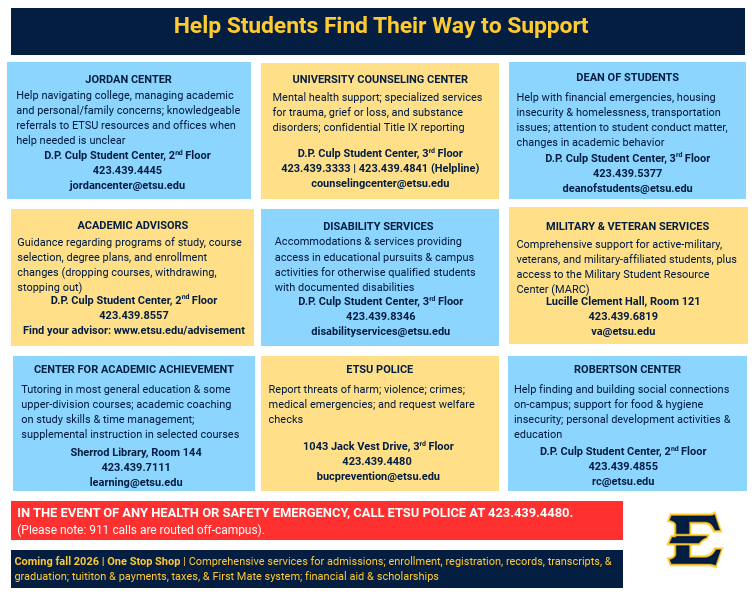
The mission of the Mary V. Jordan Center is to connect students with people, resources, and opportunities that help them start strong, stay on track, and achieve their goals. We support the whole student through individualized success planning, proactive case management, and a concierge-style referral system that ensures every student gets to the right help at the right time. The Jordan Center embodies our vision of creating a student-centered environment where every Buccaneer feels seen, supported, and empowered to succeed—academically, personally, and professionally.
| |
The Center’s mission comes to life through four key pillars that guide our work:
1) Our Student Success Specialists provide individualized success planning to help our Jordan Scholars set goals and stay on track.
2) The walk-in support and lounge area offer an inclusive, responsive space for immediate assistance and seamless referrals to campus resources.
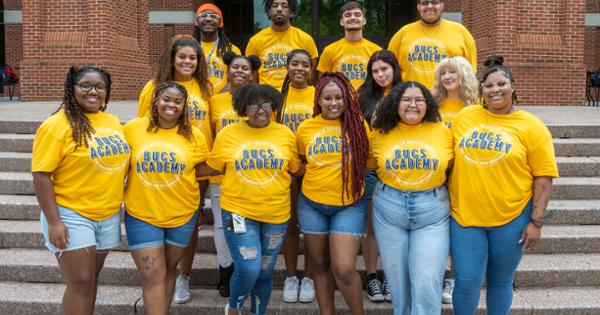
3) Leadership Development and Mentoring opportunities connect students with peers, faculty, and alumni and build confidence, belonging, and leadership (Peer Mentoring, Nichols Academy, BUCS Academy, and QUEST for Success).
4) Finally, embedded mental health support and wellness programming promote balance, self-awareness, and resilience. Together, these efforts ensure that every Buccaneer receives the right support, at the right time, to achieve their goals.
For more information:
https://www.etsu.edu/students/jordan/ | jordancenter@etsu.edu
| New Resource from the Dean of Students | |
|
by Susan Epps, CTE Associate
In Kindness and Community in an Online Asynchronous Classroom, Seth Offenbach (also a guest on the Teaching in Higher Education podcast) describes ways to show kindness through your syllabus, due dates, and communication (which I would argue applies to ALL classrooms!)
A number of years ago, I took a class taught by Dr. Patrick Brown and Dr. Alison Barton in which we revised a syllabus for one of our courses. I had never looked at my syllabi from the viewpoint of the student and when I did, I realized they read like a legal document (maybe because I was using the only style of syllabus I had ever seen?)
So, here’s my tip: Review your syllabus from the students’ perspective – does it reflect kindness? Does it reflect that you want students to engage in learning? Does it reflect a joint commitment to that learning? If it doesn’t and it reads like "all the ways to mess up and the consequences that come with it," it’s time to revise! (Schedule a Casual Consult with CTE staff for help!)
|
| |
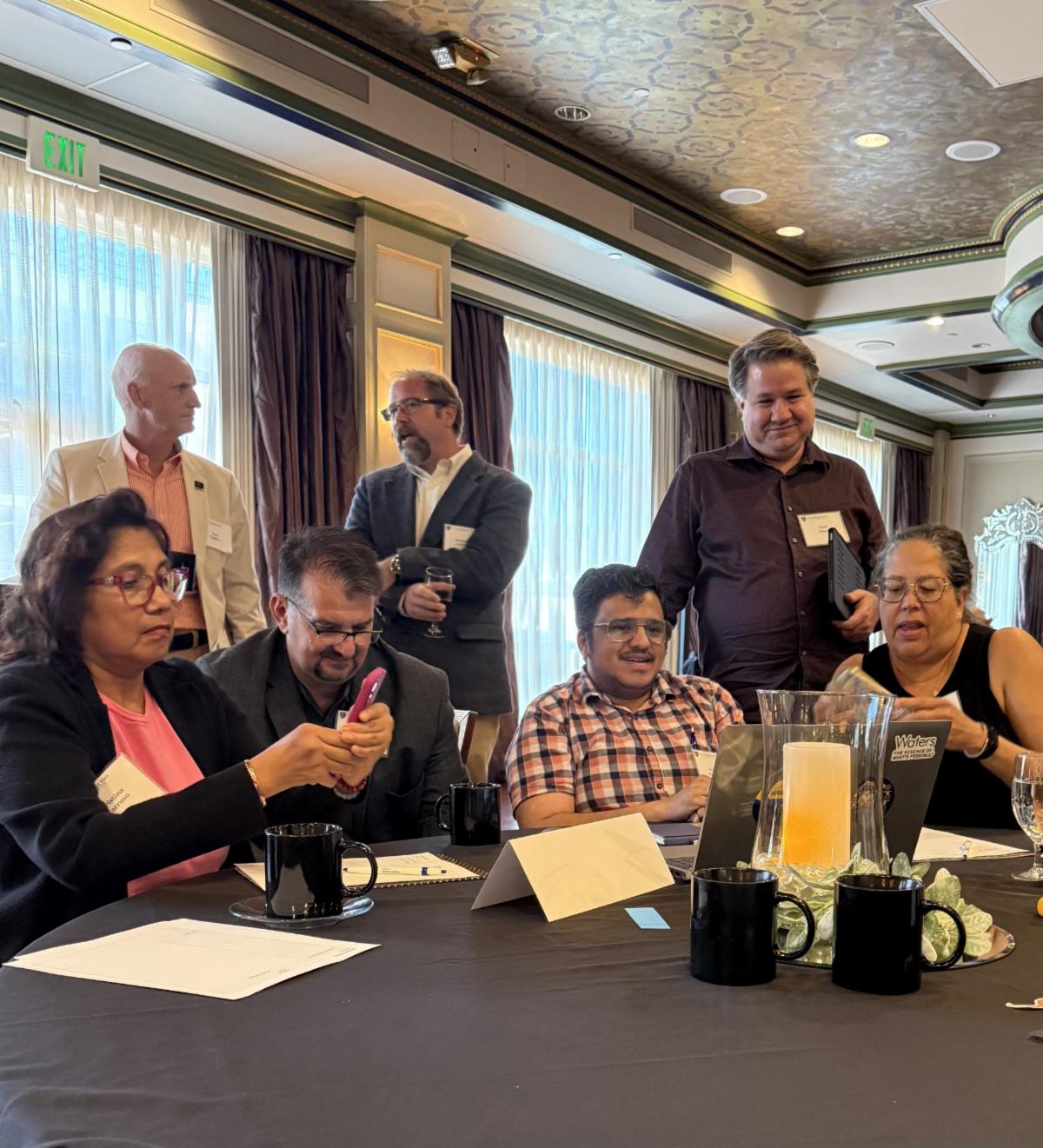
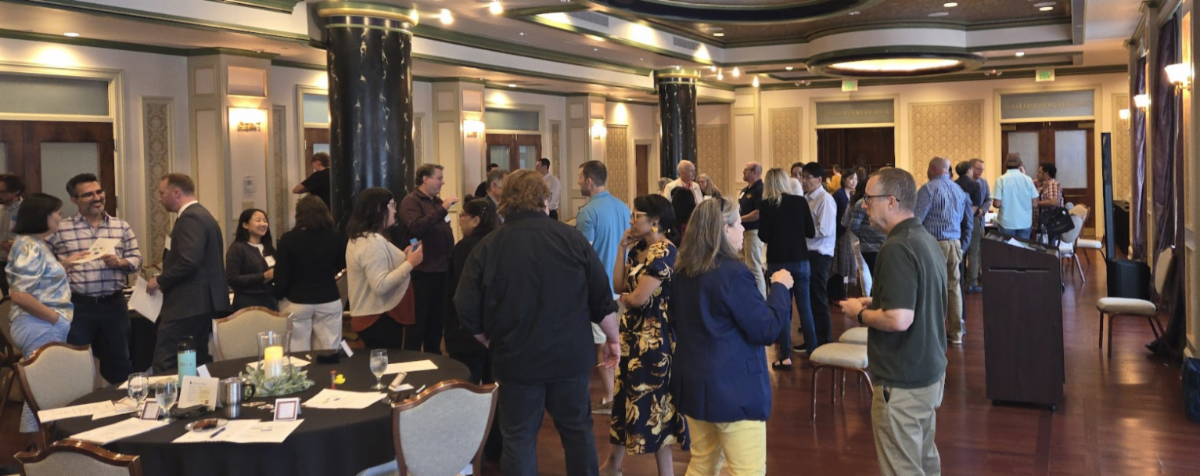
Just before Fall Break, the CTE hosted a half-day event at the Carnegie Hotel about artificial intelligence: “Generating AI Solutions.” Fifty-one ETSU faculty, teaching assistants, and staff attended the event to discuss their views and ethics around Generative AI (Gen AI), explore ways to address and avert student misuse of Gen AI, and learn more about the latest AI developments, syllabus statements about acceptable AI use, and how to employ Gen AI in instruction and course planning. The CTE is grateful to the panelists and table session presenters for sharing their stories and expertise. While there are no easy answers out there for the many questions Gen AI presents, we had lively discussions and a lot of idea-sharing!
| | |
Last year was a busy year! See what the CTE has been up to in our latest Annual Report: Conferences, Institutes, Workshops, Special Events, Consultations and other services, and more! | |  | The Open Guide to Teaching and Learning in Higher Education is an open educational resource (OER) created by CTE Assistant Director Phil Smith to support faculty with accessible, evidence-based approaches to teaching. Developed with AI assistance and community input, it offers strategies, examples, and quick tips designed to grow with our teaching community. | | |
Brittany Butler, CTE Faculty Fellow
Recently, I listened to a Teaching in Higher Ed. podcast episode titled, “How Mattering Matters (No. 413) from May 12, 2022. In this episode, host Bonnie Stachowiak spoke with Heidi Weston and Peter Felton about “how mattering matters.”
The episode explored the related but distinct concepts of student “belonging” and “mattering” in higher education. Felton describes belonging as having two parts: “One is a sense that you're valued in the community, and then the second is that you fit in the community – that you are integrated into, connected to, similar to others in the community” (9:29). Belonging in higher education has been extensively researched and is linked to overall positive outcomes for students, including persistence, academic performance, and well-being. However, the concept of belonging on a college campus can often imply that students should try, and it is their responsibility to “fit in.” This is especially true and can be highly problematic for students with marginalized identities who may not feel a sense of historical or cultural fit within traditional institutions.
The concept of “mattering” originates from psychological research on well-being. Mattering retains the value aspect of belonging but eliminates the requirement of “fitting in” at an institution, on campus, or in a classroom. Felton states that “mattering is about a sense that others depend on you or see you as important or see you as an individual” (12:40). It also means that someone is paying attention to who you are as a person, recognizing your distinct identities, contributions, and ways of being in the community. Weston highlights three sources of mattering from interviews with students: a feeling that they are taken seriously, having a voice, and feeling that someone is invested in their success. Mattering is also presented as a more transferable and durable concept than belonging. It fosters a sense of agency in students, promoting self-advocacy and advocacy for others.
Educators are challenged to cultivate a sense of mattering by building trust and demonstrating genuine care for students as people and learners. As educators, we can articulate high standards while also expressing belief in students’ capacity to succeed.
| | | |
Alison Barton, CTE Director
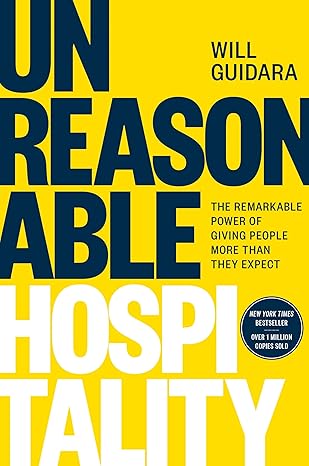
I recently finished reading Unreasonable Hospitality: The Remarkable Power of Giving People More than They Expect, by Will Guidara. (He is also a producer for the TV series, “The Bear,” and you’ll see some parallels to what he shares in this book!) Guidara shares his story of rising in the restaurant business – on the hospitality side – to ultimately managing the restaurant voted “Best in the World.” As he tells his story, he also drops lessons learned, and they are transferable to a number of contexts - including teaching. It makes me wonder: Where can I sometimes offer unreasonable hospitality for my students, and how will that improve the learning environment?
| |
| | Find all kinds of teaching books for check-out in our CTE Teaching Collection - Room 441 Sherrod Library! | | | | |