Spring 2024 The Teaching Inquirer Issue 1 | |
Because every student deserves good teaching | |
An Introduction to High-Impact Teaching Practices | |
|
As we revamp our General Education design and course offerings here at ETSU, part of the new expectations for these courses are that they include “high impact teaching practices,” or HITPs. So, what do we mean when we talk about HITPs?
For our purposes at ETSU, we are really talking first and foremost about getting students more cognitively active in these classes. We want to be sure they feel engaged and that their brains are making meaningful connections among course concepts and, more broadly, among their accumulated knowledge and experiences.
The good news: HITPs can happen in big or small ways. While big, complex projects can be great for ensuring students are cognitively engaged, we can also achieve that same result in lots of smaller ways. Breaking up lectures with paired discussions or other activities where students take time to process what was just shared is a great way to ensure they are working with that information, which leads to better learning and remembering of it.
| |
The other good news: HITPs are not just for Gen Ed classes! We encourage them in ALL of our classes at ETSU – but we want to make sure students get that rich, deep learning experience right off the bat as they engage in their foundational learning through their Gen Ed curricular choices.
The CTE offers lots of support for learning about all the ways you can include HITPs in your teaching: See our HITPs Toolkit for a great place to start. Watch also for HITPs-specific workshops (or invite us to your department for one), check out our Four Teaching Essentials workshops (which introduce several HITPs strategies), and watch for details about visiting expert Dr. Patti Clayton’s open sessions on March 5 & 6, where she will also share ideas that reflect HITPs.
When you include HITPs in your instruction, your students get more engaged in your class – and you might find that you will, too!
Alison Barton, CTE Director
| |
Featured Events this Spring Semester | | |
|
Come learn more about ways you can get students more engaged by integrating high-impact teaching practices into your instructional design – both big and small!
January 26
Friday | 2:00 – 3:30
433 Sherrod Library
February 6
Tuesday | 1:00 – 2:30
Zoom
| |  |
Exceptional Teaching: Get Inspired | Come hear why creative and engaging instruction is so important, and learn from your colleagues what they are doing that is innovative or inspiring in their own classrooms! | |
February 1
Thursday | 2:00 – 4:00
309 Sherrod
| | |
Dr. Patti Clayton - CEL Visit | Dr. Clayton will present several sessions during her visit that will discuss creating intentional classrooms for engagement and developing deeper and more specific opportunities for critical reflection. | |
March 5 & 6
Tuesday & Wednesday
More details forthcoming
| | |
I wish my teachers knew that... | |
|
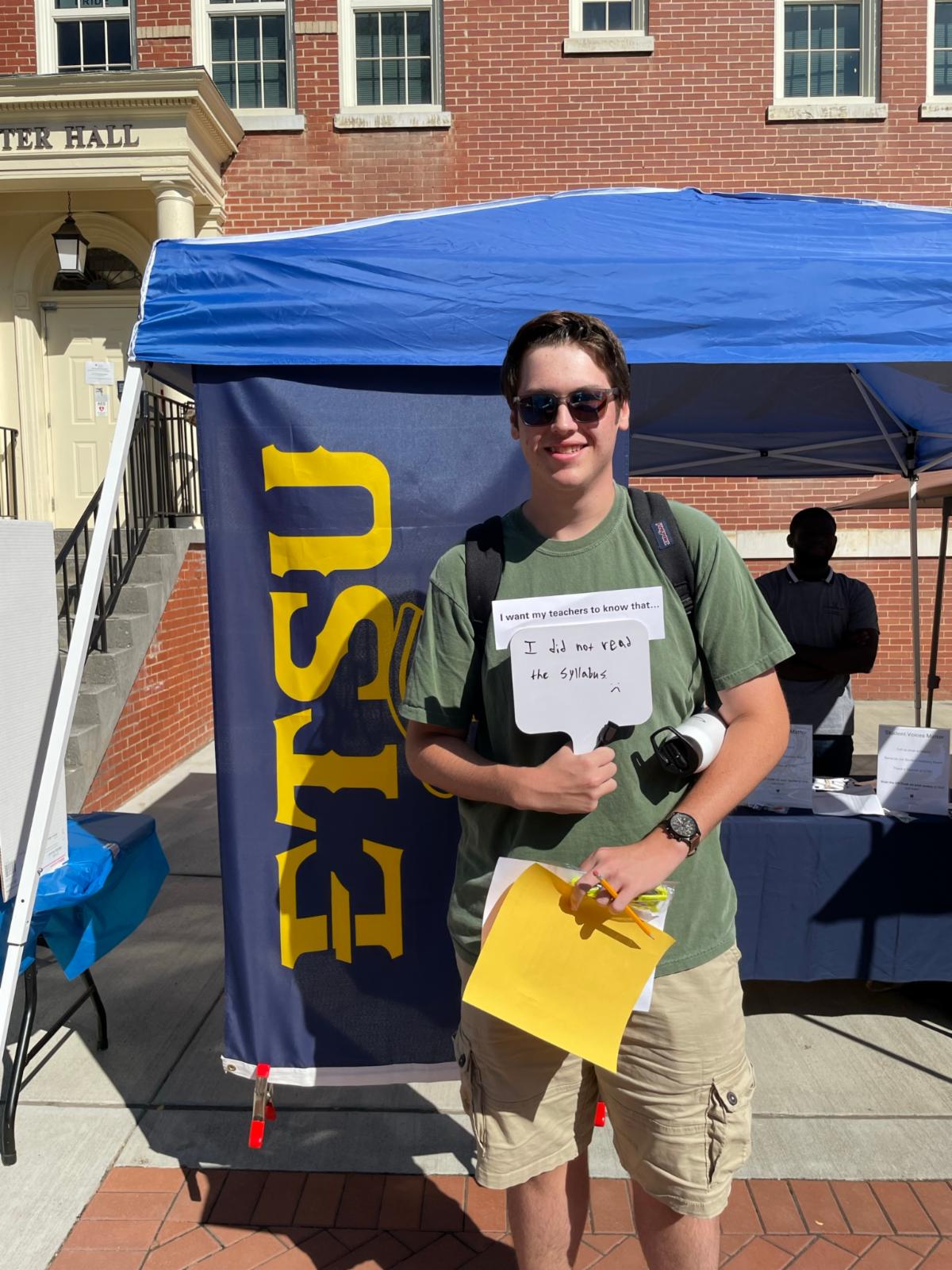
Last fall the CTE set up a table during an event on the campus Commons. We invited students to finish the prompt, "I wish my teachers knew that..." We were delighted, inspired, and sometimes concerned with the responses. Some comments included:
- "You are doing a great job. I always enjoy the interaction."
- "I am quiet but want to be involved."
- "I enjoy the energy they bring."
- "We appreciate office hours."
- "I am nervous about new people."
| |
The student pictured here candidly shares, "I didn't read the syllabus." This may be a common sentiment to students and instructors alike, but it does not have to be! Instead of viewing the syllabus through the metaphor of a dry legal contract, what if we thought of it more like a promise, invitation, or menu? Looking forward to Spring semester, how can we challenge ourselves to warm up the language of the syllabus and make it something students will actually want to read? CTE Faculty Associate Susan Epps is a great resource for learning more! | |
+1 Teaching Tip: Can You Picture It? | |
|
Ever wish you could quickly assess your students' knowledge and assumptions about a topic from the moment they enter your classroom?
The Zaltman Metaphor Elicitation Technique (ZMET) was originally designed for marketing research purposes, but its application has expanded to many domains. This relatively straightforward technique is flexible and can be easily scaled up or down — from a quick classroom exercise to a more extended, semester-long assignment.
| |
|
Join this upcoming workshop to explore how visual associations can be used as a quick, revealing, and fun tool for better understanding your students’ perspectives. In addition to learning about the essentials of ZMET, I'll share my firsthand experience employing it in the classroom. Hear about how this technique sparked dialogue, nurtured community, and enabled students to track their growth throughout the semester.
Can you picture it? If not, we assure you that by the end of this dynamic and interactive workshop, you'll gain a new appreciation for how this simple tool can improve your classroom teaching.
Jennifer Adler, CTE Faculty Affiliate
| |
Can You See It? Using the Zaltman Metaphor Elicitation Technique (ZMET) in Teaching and Learning – Jennifer Adler | |
January 30
Tuesday | 10:00 – 11:30
433 Sherrod Library
March 27
Wednesday | 1:00 – 2:30
433 Sherro Library
| |
Exceptional Teaching: Get Inspired | |
|
Teaching can become rote if we are not careful, leading to stagnation in the classroom. If we regularly reflect on our teaching, and seek out new ideas, we can keep burnout at bay as we consider creative tweaks to how we approach a class topic or module.
While we have lots of ways for you to learn about small changes to your teaching, one of the best ways to learn is by seeing what others are doing around us. Learning from one another not only broadens the scope of possibilities as we see all the diverse approaches to teaching, but also lets us know it is possible – because someone else is already doing it.
This spring, we encourage you to learn from your colleagues here at ETSU through a couple of special events: Open Teaching Week and Exceptional Teaching: Get Inspired.
| |
|
Laurie Schroder, CTE Faculty Associate
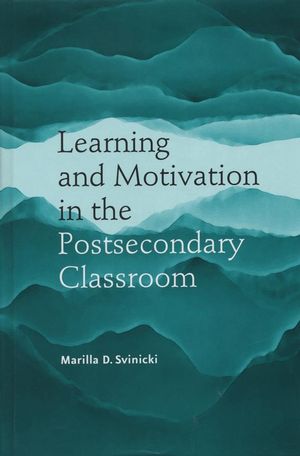
As a reader delving into Learning and Motivation in the Postsecondary Classroom (Svinicky, 2004), I have been immersed in a compelling exploration of educational psychology tailored for higher education. The book, authored by an expert in the field, presents a nuanced understanding of how learning and motivation intersect in a college setting, offering invaluable insights for both educators and students.
The author begins by establishing a foundational understanding of learning theories. She masterfully intertwines classical theories with contemporary research, providing a comprehensive overview that is both informative and accessible. This section is particularly enlightening, as it lays the groundwork for understanding the complex dynamics of motivation in the learning process.
One of the most striking aspects of the book is its deep dive into motivation. The author doesn't just present motivation as a singular concept but explores its multifaceted nature. It highlights intrinsic and extrinsic motivators, and how these can be leveraged in an educational context. The discussion on the impact of societal and cultural factors on student motivation is particularly thought-provoking, revealing the layered complexity of motivational dynamics in diverse classrooms.
Another highlight is the practical application of theories. The book is replete with real-world examples and case studies that bring the theories to life. These examples are not just illustrative but also serve as a guide for applying these concepts in actual classroom settings. This practical approach is invaluable for educators seeking to enhance their teaching strategies and for students aiming to improve their learning techniques. Furthermore, the book addresses the challenges of technology and online learning environments. The author's insights into how digital tools can both aid and hinder learning and motivation are timely and relevant, especially in an era where digital education is increasingly prevalent.
"Learning and Motivation in the Postsecondary Classroom" is a thoughtfully crafted work that bridges theory and practice in educational psychology. Its comprehensive coverage, real-world applicability, and insightful analysis make it an essential read for anyone involved in higher education. Whether you're an educator looking to refine your teaching methods or a student seeking to maximize your learning potential, this book offers valuable perspectives that can profoundly impact your approach to education.
| | |
Find all kinds of teaching books for check-out in our CTE Teaching Collection - Room 441 Sherrod Library! | |
|
Alison Barton, CTE Director
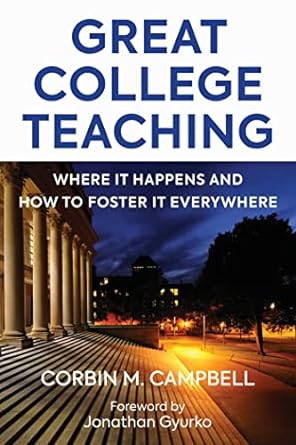
Concerned by the Chronicle’s report about the quality of teaching in higher education, I ordered a copy of the book upon which the Chronicle’s article was centered, Great College Teaching: Where It Happens and How to Foster It Everywhere, by Campbell & Gyurko (2023). There, I’m learning where colleges are performing strongly and where we may need work. For example, while many classes use active learning strategies, they are often not considered to be very cognitively deep. The information in this book is helping guide some approaches we are taking here at the CTE!
| | |
|
Scott Jenkinson, CTE Faculty Fellow for Community Engaged Learning
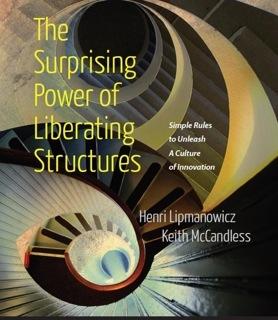
Recently I have been doing some thinking and reading about how community-engaged learning (CEL) fits into the global context and how that might affect faculty members' pedagogical choices. With this line of questioning, I have been enjoying some of the thinking, readings, and example activities on the Liberating Structures website (www.liberatingstructures.com). Not only does this website look at a shift in how facilitators think and approach complex global concepts with groups, but it also provides a number of great links to many other liberatory practices. Additionally, I have been drawn to thinking about how we as a campus might document our collective journeys with CEL through collaborative autoethnographies; which, has lead me back to reading some ideas from Norman Denzin's Interpretive Autoethnography.
| | | | | |