Spring 2025 The Teaching Inquirer Issue 1 | |
Because every student deserves good teaching | |
Let's Get Curious Together | |
|
Welcome to the start of Spring 2024! As can often be the case mid-academic year (and especially in a year that includes Hurricane Helene!), energy and engagement can be limited commodities...both for our students and for ourselves.
The CTE would like to invite you to find inroads to help your students re-engage with their learning. How can we invite and inspire curiosity and wonder? How can we introduce play and imagination into our classes? How can we do all of this in the service of meeting our learning goals?
See what we have to offer this semester that can help you find new ways to nudge students in this direction. We have workshops and flash mentoring sessions about cultivating curiosity, resilience, and open inquiry in the classroom. And while you’re at it – get curious yourself about new ways to teach (small and big). You might find through opportunities at the CTE that your own energy and engagement in teaching get replenished!
| |
Events this Spring Semester | | |
Getting Your Course AI-Ready | |
Plan ahead for the role AI will play in your courses this semester.
January 13
Monday | 3:00 – 4:00
Zoom
| |  |
|
Open Teaching Week is an opportunity to go visit classes on campus where the instructors have agreed to host visitors. You can find a class that fits your schedule, go watch some great teaching, and pick up an idea or two. Many of our volunteer instructors are also open to follow-up questions!
| | |
Question Formulation Technique Workshop | Unlock the potential of questioning with this well-regarded technique for getting students asking better questions. | |
January 31
Friday | 10:00 – 11:00
433 Sherrod
| | |
Thank-a-Teacher, Fall 2024 | |
|
Last fall, we received over 50 Thank-a-Teacher notes from grateful students. We leveraged the speed of generative AI to find out what the most common themes were. Here’s what we found:
-
Support and Encouragement: Many students highlighted how their instructors were patient, kind, and understanding, offering emotional and academic support. This theme appeared frequently and often in the context of helping students navigate challenges.
-
Effective Teaching and Clarity: Students consistently expressed gratitude for instructors who explained concepts clearly, made lessons accessible, and used creative teaching methods to ensure understanding.
-
Making Learning Enjoyable: A significant number of notes emphasized how instructors made classes fun, engaging, and enjoyable through humor, enthusiasm, and interactive activities.
-
Flexibility and Accommodation: Instructors’ flexibility with deadlines and their willingness to meet students where they were stood out as a recurring theme.
| |
|
As we embark on exploring ways to evoke students’ curiosity and imagination, consider how these four impactful approaches, above, make those goals easier to achieve – and likely to be appreciated by students. Our CTE workshops and events for this semester can give you plenty of support opportunities to learn more about each approach and how to strengthen them!
| |
+1 Teaching Tip: Braver Angels | |
|
This +1 Tip contributed by CTE Affiliate and General Education Institute Scholar Dr. Bria August-Rae, Assistant Professor, Department of Communication Studies & Storytelling.
I just wanted to let you know that I appreciate how you went about this debate today. If I'm going to be honest, I have been so nervous about this day since I found out we would have a debate in class, but I truly think it was beneficial for everyone (even if others don't think so). I think that this setup for a debate was super interesting, and it helped people speak up about their beliefs more than they would have if it had been a normal debate. I've told you before, but I truly do appreciate the culture of your classes and that is one of the few reasons I even worked up the courage to speak my opinion and belief today. I also enjoyed getting to hear my peers' thoughts and beliefs on this topic without it being a "heated" conversation. I think we can all learn from each other even when we do not see eye to eye. If you ever have Political Differences as a topic in this class again, I definitely would keep this as an assignment!
-Email from student in COMM 4356: Intercultural Communication
As I prepped to teach my Intercultural Communication class on Nov. 13, 2024, I was wracked with anxiety. Just a week after a historically contentious and polarizing presidential election, I would be facilitating an in-class “Braver Angels” debate on abortion access. Braver Angels is a nonprofit that focuses on depolarizing America through structured debates, workshops, and other events that engage people from across the political spectrum. After learning about Braver Angels through a CTE workshop in October, I thought their debate format sounded like a great fit for my Intercultural Com class’s unit on communicating across political difference.
However, by the time the morning of the debate rolled around, my doubts were mounting. Students posted “research briefs” outlining their position on the debate ahead of class and it became evident students in my classroom held very different positions on this issue. I was worried that, in the course of the debate, the sense of community and respect we had cultivated throughout the semester would be lost.
Despite my misgivings, we moved forward. We began class by reviewing previously discussed strategies for communicating across difference. I then explained Braver Angels debate guidelines, such as “direct questions to the debate chair, rather than naming individual speakers,” which help to prevent conversations from becoming too heated or adversarial. With a bang of my “gavel” (my phone), we started the debate. Students were initially hesitant to speak, and we sat in silence for some minutes. Eventually, one brave student raised her hand and shared her perspective. Other students posed thoughtful questions to the speaker. We then heard from a student with an opposing view, and continued from there. As class drew to a close, there were suddenly hands up all across the room. Students did not want the debate to end!
During our debrief, students shared that they enjoyed the debate and especially the opportunity to ask questions and hear different perspectives in a non-combative manner. Multiple students reached out after class to share that they found the activity impactful, including an email from a student containing the message above. I’m so grateful for my brave, thoughtful students! I encourage other instructors to explore what a Braver Angels debate could bring to your classroom.
| |
Common Read Spring Themes | |
|
The 2024-25 Campus Read is All the Light We Cannot See by Anthony Doerr. The Campus Read brings the campus community together to read and discuss one text and its themes.
This year’s Campus Read was chosen by the Campus Read Committee after soliciting book recommendations from ETSU faculty, students, and staff. The themes, including the power of knowledge, imagination, innovation, and kindness in spite of differences resonated with the committee.
| |
February: “Curiosity & the Power of Knowledge”
The characters in our Common Read exhibit curiosity, particularly for the natural world and science.
Related CTE Events:
- Teaching First Year Students Club
- Question Formulation Technique Workshop (1/31 @ 10:00a)
- Using Questions to Drive Thinking and Learning (2/24 @ 9:00a)
- FM: Tips for Using Critical Reflection (2/24 @ 12:30p)
- Tips for Designing Your Class COIL (Collaborative Online International Learning; 2/27 @ 10:00a)
- Open Inquiry Workshop (TBD)
March: “Resilience in Adversity”
Despite the main character’s [dis]ability, she and her father expect her to be successful.
Related CTE Events:
-
Crash Course on the 4 Pillars of Alternative Grading (FEB 4 @ 9:00a)
- Teaching First Year Students Club
- FM: Ways to Be Flexible Without Burning Out (3/3 @ 11:30a)
- FM: Ways to Help Students Be Resilient (3/25 @ 12:00p)
- Crash Course on Microaggressions in the Classroom (3/10 @ 9:00a)
April: “Models”
What can models represent? What are their limitations? How does the city model in the story parallel models we use in our own disciplines and their strengths/drawbacks?
Related CTE Events:
- Teaching First Year Students Club
- Using Images for Thinking & Learning Workshop (4/11 @ 9:00a)
- Teaching and Learning is like... (4/4 @ 9:00a)
| |
Celebrating Our Fall 2024 SuperUsers | |
|
A CTE "SuperUser" is an ETSU faculty or staff member who has spent 6 or more learning hours at CTE events during the previous semester (excludes CHIIPs & Retreat attendance).
We celebrate our Fall 2024 SuperUsers below!
- Jillian Alexander (College of Business & Technology)
- Susan Epps (Clemmer College of Education and Human Development)
- Kenneth Loveday (College of Business & Technology)
-
Chelsea White (CTE; Adjunct Instructor for College of Arts & Sciences)
| |
|
Brittany Butler, CTE Faculty Fellow
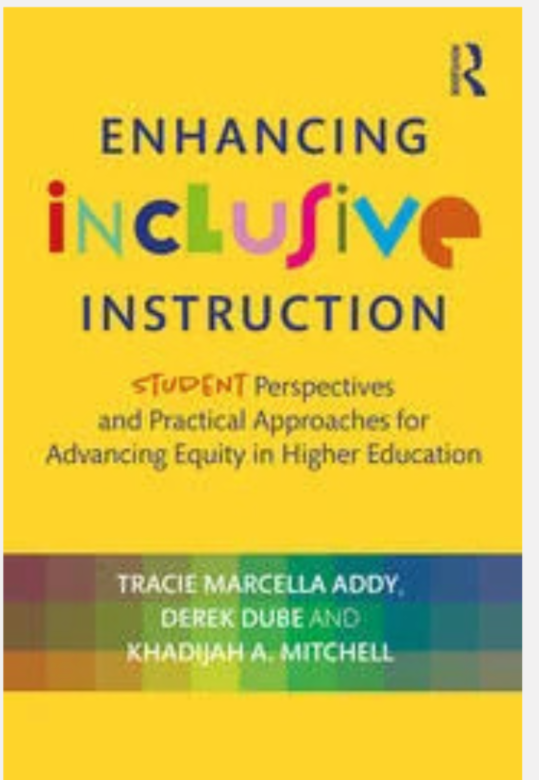
I am currently reading, Enhancing Inclusive Instruction: Student Perspectives and Practical Approaches for Advancing Equity in Higher Education by Addy, T.M., Dube, D., and Mitchell, K.A., published in 2024. This book focuses on student voices and how they perceive their educational experience. The authors intentionally include students’ perspectives on the inclusive practices of their instructors related to course design, making students feel welcomed, and classroom conduct. Enhancing Inclusive Instruction emphasizes the lived experiences of students as the foundation for transformative teaching and provides teaching strategies for faculty who actually want students to learn.
The book delves into specific challenges that marginalized students often encounter, such as microaggressions, inaccessible course materials, and a lack of representation in the curriculum. These narratives are paired with suggestions for instructors, such as designing flexible assessments, integrating diverse perspectives into course content, and fostering open dialogue to create an environment where all students feel valued and heard. The authors also highlight the impact of invisible barriers—like assumptions about student capabilities—and include how instructors can dismantle these through reflective practice and equity-focused pedagogy.
Additionally, the book dispels the myth that inclusive instruction lowers academic rigor. Instead, it shows that equitable practices, like designing assignments with multiple ways to demonstrate mastery, often lead to deeper engagement and higher-quality work. By listening to students' voices and making thoughtful adjustments, instructors enhance the learning experience for everyone. I find, and this book demonstrates that inclusive teaching is not about giving special treatment; it is about ensuring that all students have an equal opportunity to succeed.
| | |
|
Chelsea Gilbert White, CTE Coordinator
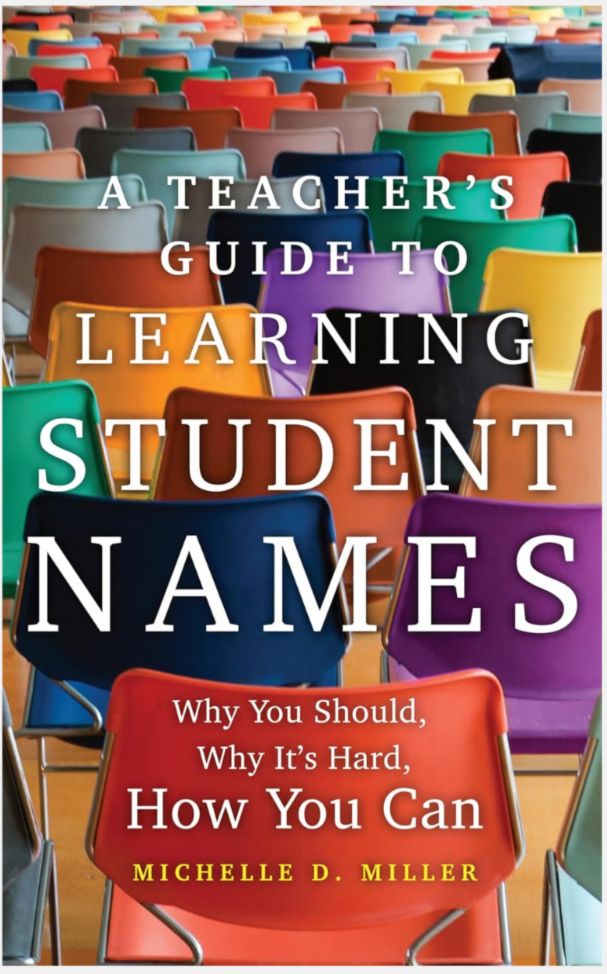
What’s really in a name? According to Michelle Miller’s A Teacher’s Guide to Learning Student Names: Why You Should, Why It’s Hard, How You Can, a lot. This book, though short, offers various ways to learn student names, regardless of how long you have been teaching or through what modality (in-person or online). Instead of presenting a guide one must read chronologically from start to finish, Miller allows us readers to pick which techniques and bits of information work best for us. I appreciated how this book helps bring meaning and fun to those often-dreaded icebreaker activities (especially those that help more introverted students), provides alternatives for those who may experience complications in the name learning process and delves into memory and its workings without being too overwhelming.
| | |
Find all kinds of teaching books for check-out in our CTE Teaching Collection - Room 441 Sherrod Library! | | | | |