Spring 2025 The Teaching Inquirer Issue 2 | | Because every student deserves good teaching | | Sustaining End-of-Year Energy | | by Alison Barton, CTE Director | | |
The cycle of the academic year, the stress of the day-to-day, and singular, impactful events can all work together to wear down even the most dedicated instructors and students, lowering the energy in our classes as the spring semester comes to an end.
Here are some ways to care for yourself, your students, and your learning environment as we try to keep our own energy high and our students engaged through the finish line:
-
Focus on building positive relationships. This means with your students and with your colleagues. Relationships matter, and support matters. Remembering the importance of human connection is vital to maintaining our energy levels.
-
Focus on today. Ask yourself: What am I here to do today? How can I do that as well as possible? And then work to successfully accomplish these smaller goals. Keeping the scope narrow and your checklist short helps with feelings of overwhelm.
-
Be present for students. Conduct periodic check-ins with your students to see how they are doing. Encourage them to visit during your office/student hours. Your interest in students is often reciprocated with their interest in your class.
-
Support an environment of inquiry. Student curiosity can be a powerful springboard into meaningful and energetic discussions. How can you ignite that curiosity as you teach your students?
-
Check in with yourself. It’s important to care for yourself so that you can be effective at leading others. Engage in activities that give you a break from the end-of-semester (and daily) stressors. Find moments during the day to pause and breathe.
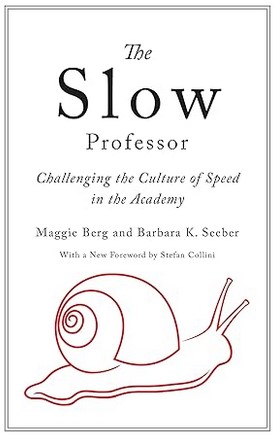
Our Center for Teaching Excellence takes your wellbeing seriously, because who we are as teachers impacts how we teach. As we prepare to enter into our next academic year, watch for opportunities from the CTE to develop and support your pedagogical wellness, some of which are described more in this newsletter: Our May Teaching Retreat, our Summer Book Club meeting with a book about slowing down our academic pacing (The Slow Professor), and – watch for a later announcement – a late-summer Teaching Renewal Retreat to help us rediscover our values and identities as educators.
Even outside of these offerings, the CTE remains available for your instructional support whenever you encounter challenges. Don’t hesitate to reach out to us with questions or to brainstorm. We care about you and the success of your students!
| | |
Plan now to attend our
May 2025 Teaching Retreat
Wednesday, May 14
8:15 – 4:15
Carnegie Hotel
| | |
Enjoy food, camaraderie, and light learning options as you make course adjustments for fall!
Registration deadline: May 6, 2026
| | by Brittany Butler, CTE Faculty Fellow | | |
Twice a semester, a Student Advisory Board (SAB) gathers to inform CTE staff on best practices in teaching here at ETSU. Students met in February to discuss one of the four teaching essentials – active & collaborative learning. SAB members were asked how they feel about active learning compared to traditional lectures.
One student shared that they were much more likely to show up to class if the professor used active learning techniques. Active learning is generally preferred, and several students commented that they would rather spend class time interacting with their instructor and peers. A student also shared that they really struggle to learn when there is “straight off-the-slide lecturing with little to no emphasis on key points.”
Ultimately, having the opportunity to collaborate or work in small groups created the best learning experience for students. Student-centered instructional practices that are active and collaborative give students the opportunity to “make connections” and “find real-world value” in the material that is being covered.
Next month, SAB members will discuss and provide insights related to another one of the teaching essentials – feedback, early & often.
| | |
We introduced our wonderful Graduate Assistant, Norbert Ogar, a first-year doctoral student in the College of Public Health in a previous newsletter. Norbert is passionate about supporting Teaching Assistants (TAs) and fostering teaching excellence at ETSU. As part of his role, he:
- Supports TAs by enhancing communication and sharing valuable teaching strategies.
- Collaborates with a SoTL (the Scholarship of Teaching and Learning) research group, helping advance evidence-based research on effective teaching methods.
- Piloted the "TA Teaching Tips" blog under the guidance of CTE Assistant Director, Phil Smith, featuring five impactful posts on best teaching practices.
- Works with CTE Director, Dr. Barton, on the Thank-A-Teacher Project, an initiative designed to recognize and boost the morale of ETSU instructors.
Through these efforts, Norbert is making a meaningful impact on teaching and learning at ETSU. Stay tuned for more TA resources and insights!
| | by Patrick Brown, CTE Senior Affiliate | | | | |
We all know by now that collaboration is an important part of learning, but forming students into groups for assignments or in-class activities can be challenging.
There are three main ways by which instructors typically form student groups: random assignment, student choice, and criteria-based. Each has their own particular strengths and weaknesses which are summarized well in this article from Faculty Focus. I tend toward a mixed approach, starting with instructor assigned groups (random assignment in my large enrollment courses, criteria based in higher-level courses) and rotate students through several groups in the first half of the course. Then, once they have had a chance to get to know their classmates and find who they tend to work well with, I switch to allowing the students to choose who they work with.
One last tip is to give students an option to be put into instructor-assigned groups. I find that in my large-enrollment classes (c.a. 110 students) about a third of the students are more comfortable being assigned to a group rather than choosing their own.
| | Common Read Spring Themes | | |
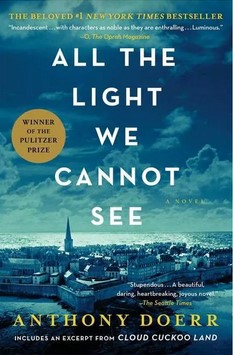
The 2024-25 Campus Read is All the Light We Cannot See by Anthony Doerr. The Campus Read brings the campus community together to read and discuss one text and its themes.
This year’s Campus Read was chosen by the Campus Read Committee after soliciting book recommendations from ETSU faculty, students, and staff. The themes, including the power of knowledge, imagination, innovation, and kindness in spite of differences resonated with the committee.
| |
April: “Models”
What can models represent? What are their limitations? How does the city model in the story parallel models we use in our own disciplines and their strengths/drawbacks?
Related CTE Events:
| | |
A CTE "SuperUser" is an ETSU faculty or staff member who has spent 6 or more learning hours at CTE events during the previous semester (excludes CHIIPs & Retreat attendance).
Winners get special recognition from us and a pick of some of our goods: books, tee-shirts, water bottles, blankets, and more
Visit our website to see more ways we support our teaching community.
| | General Education Scholars' Institute | | Join us for our Summer 2025 Book Club! | | |
This Summer we are taking it easy with The Slow Professor: Challenging the Culture of Speed in the Academy by Maggie Berg and Barbara K. Seeber.
Monday, June 16
3:00 – 4:00
CTE Faculty Lounge
Snacks, sweets, coffee
Register by May 1 to be entered in a drawing for one of 3 free books!
|
| CHIIPs 2025 Call for Proposals | | |
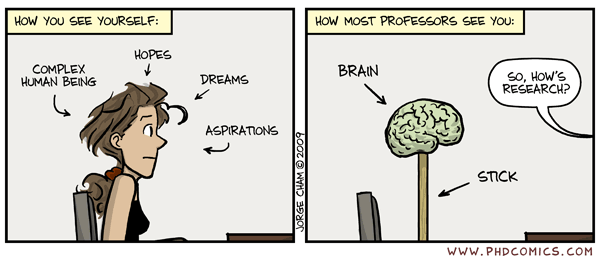
ETSU’s 8th Annual Conference for High-Impact Instructional Practices (CHIIPs) will be August 6, 2025, featuring keynote speaker Dr. Susan Hrach (pronounced “rock”), author of Minding Bodies. Dr. Hrach’s work highlights the fact that we and our students are fully embodied persons existing in a physical body and occupying physical space; we are more than mere “brains on sticks.”. Dr. Hrach argues that we have, for far too long, had a sedentary approach to educating adults and should reassess how physical movement, spatial awareness, social and environmental interactions, and multisensory experience can enhance learning.
The conference committee invites you to submit session or poster proposals that connect to the conference theme, “Teaching the Whole Student,” and that highlight what you are doing in your classroom – online or face-to-face – to contribute to excellence in teaching.
Proposal Deadline: May 30, 2025
|
| |
Susan Epps, CTE Faculty Associate
I’m a big fan of Chip and Dan Heath and Dan has written another book that came at just the right time! Although it’s probably more relevant for business and healthcare settings, Reset: How to Change What’s Not Working has made me re-think some of what I am doing and how I’m doing it. He does use a setting so appropriate to our work in higher education in describing a meeting to do something that should take about 40 hours – only instead of just knocking out the work in 40 hours (a week or so), we can drag things out over time and end up spending three times that much by the time we’re done – and that can be demoralizing and unmotivating. He writes about how a “burst” of work can be motivating to getting things done. I need to go focus now and get a burst of work done!
| | | |
Amber Arsenault, CTE Faculty Associate
As an educator adapting to the growing role of artificial intelligence (AI) in higher education, I found José Bowen and C. Edward Watson’s Teaching with AI: A Practical Guide to a New Era of Human Learning both practical and insightful. Instead of fearing AI, the authors encourage us to see it as a tool to enhance—rather than replace—critical thinking, creativity, and engagement. They offer concrete strategies for integrating AI into teaching while maintaining academic integrity and a focus on human-centered learning. Their guidance on assignment design, digital literacy, and ethical AI use makes this book especially relevant for today’s classrooms.
What I appreciated most is the book’s balanced, optimistic approach. Bowen and Watson do not minimize the challenges AI presents, but they provide a clear roadmap for using it thoughtfully. For faculty unsure of where to start, this book offers practical ideas without being overwhelming. It is a good read for educators looking to embrace AI while keeping the human element at the heart of learning.
| | | Find all kinds of teaching books for check-out in our CTE Teaching Collection - Room 441 Sherrod Library! | | | | |