Spring 2026 The Teaching Inquirer Issue 2 | | Because every student deserves good teaching | | by Alison Barton, CTE Director | | |
The warmer spring weather brings with it a sense of hope, lightness, and possibility – even as we enter the second half of the semester, a time traditionally reserved for heavy grading and managing student burnout.
It’s with this juxtaposition in mind that we are pleased to support our ETSU instructors with programming that addresses both the stress of the semester’s end and the yearning for renewal. We will finish our year of focus on pedagogical wellness with final installments for Teaching Rounds (“Having to Say No”), Instructor Wellness (Slow & Strategically Restful Teaching”), and Student Wellness (“Learning Strategies that Build Community”). These events can be both restorative and future-focused to help you ever-improve your instructional approaches.
As we reach the end of our semester, watch for and join us at our End of Semesta Fiesta, a time to come together for a provided lunch and celebrate the end of the term. And shortly after Spring 2026 is over, we will have our annual May Teaching Retreat, held at the Carnegie Hotel – a day to meet in community, apply the lessons we learned from this semester to our upcoming classes, and optionally learn new tidbits to juice up our teaching. Finally, we anticipate being able to again offer a Summer Institute for a limited number of people, so please keep an eye out for application information, once details are settled.
We’re so grateful for the attention our instructors give to their teaching here at ETSU. We hope you have an inspiring end to this semester!
| | |
Conference on High-Impact Instructional Practices
Save the Date!
We are pleased to announce our date for our 9th Annual CHIIPs Conference:
Wednesday, August 5
9:30 - 4:30
Keynote Speaker: Dr. Carter Moulton
Keynote Interactive Address: “Between Harm Reduction and Hope: Toward a Human-Centered AI Pedagogy”
Pre-Conference Workshop: Tuesday, August 4
Invited Facilitator: Dr. Monica Miller
Workshop: "Fredagogy: Applying the Pedagogy of Fred Rogers to the Higher Education Classroom"
CHIIPs Call for Proposals open now!
| | Community-Engaged Learning Updates | | by Scott Jenkinson, CTE Faculty Fellow for Community-Engaged Learning | |
Sign up now for the CEL CREATOR Workshop taking place on July 29 & 30. During this 2-day intensive you will learn the ins and outs of CEL pedagogy and walk away with the details for implementing a community-engaged learning experience for the 2026-2027 school year. Registration is limited to 10 participants who will each receive a $500 stipend. Register here: Summer 2026 Community-Engaged Learning CREATORs Summer Workshop
Submit your Fall 2026 course for CEL designation now! The CEL Designation process is on-going; however, getting your course in now allows you time to refine and prepare over the summer! Use this link to complete the form!
| | New Teaching Resource: D2L Tips | | |
If you teach, you use technology, especially platforms like D2L. But do you know about Development Sites, release conditions, and descriptive labels for replacing traditional numerical grading?
We asked our CTE Affiliates to share ways to enhance instructor presence and support students in D2L and they contributed a variety of tips and tricks they wished someone had shown them earlier. We share them with you here as part of a new Online Teaching Toolkit on our Toolkits page.
D2L Tips from ETSU Faculty
Online Teaching Toolkit
| | Compiled by Phil Smith, CTE Assistant Director | | |
At our CHIIPs conference last Fall, we asked faculty to share a guiding intention for their teaching this year. We then shared some of these intentions with students who read them aloud and offered their reflections. The results were so heartening we wanted to share them out in a little video series here.
I asked AI to generate a summary of the main themes and what emerged was a snapshot into how deeply students value what their instructors bring to the classroom. Below are a few of these themes with videos of student reactions, along with supporting resources and research for more on these themes. Click the pics to watch the brief videos!
| | |
Students appreciated it when instructors framed themselves as learners alongside their students, emphasizing growth, curiosity, and openness to new ideas. One reflection captured this well: “It makes me feel good to know that teachers are learning off of us as well.”
Always staying open to learning something new yourself is one of the best remedies for the expert blind spot: Instructor Prior Knowledge: Expert Blindspot, Research Roundup: Curiosity & Engagement
| | |
Finally, creative intentions like “teach in color” or “create deep and meaningful learning experiences” were met with enthusiasm. Students saw these as commitments to making learning memorable, engaging, and personally relevant. “You’ll learn more from the things you choose to do than the things you’re told to do,” one student observed.
Some follow-up resources for connecting with students and being transparent: Reflection on Your Role as an Educator, TILT Higher Ed
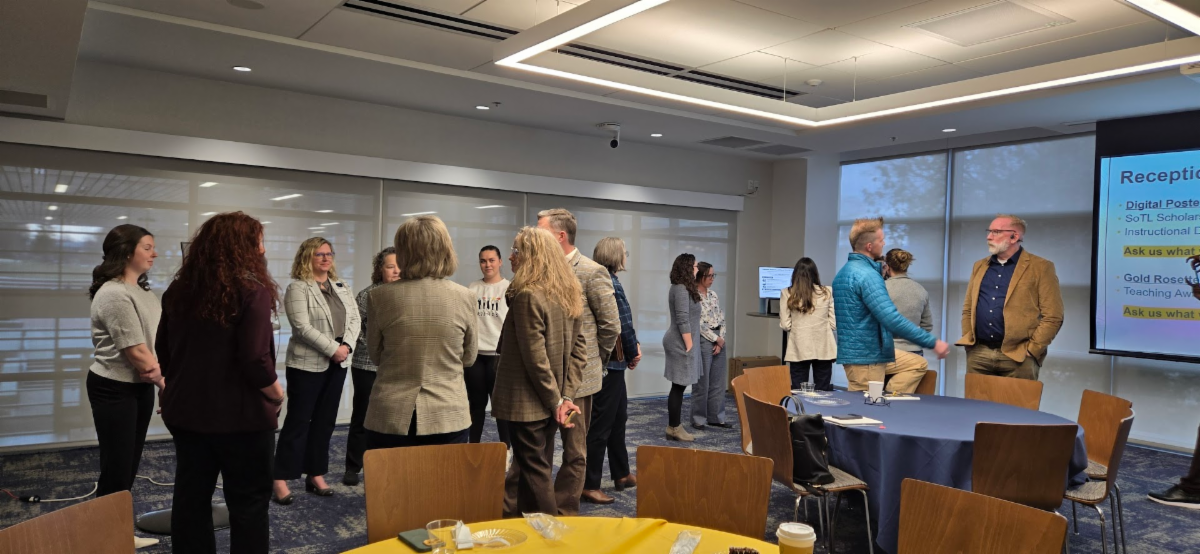
| | Celebration of Exceptional Teaching: Event Highlights | We were pleased to have a healthy crowd attending our annual Celebration of Exceptional Teaching this year! Following remarks from Provost Kimberly McCorkle and Dr. Mike Stoots, we were happy to present the CTE Micro-Award for New Faculty to Dr. Jennifer Adler. In addition, because of the strength of our pool of candidates, we presented Mrs. Jillian Alexander with a Rising Star in Teaching award, and Dr. Paul Byrum and Dr. Jingyuan Zhang with Spirit of Reflective Teaching awards. Congratulations to them all! | |
After remarks and awards, we enjoyed refreshments while mingling and visiting digital poster presentations from our two [2024-2026] SoTL Scholars Co-ops (see more information about them in another article, below) and this year’s IDG award winners: Teresa Brooks Taylor, Jennifer Zorotovich, Kimberly Jessee, & Jon Borland (Dementia Simulation to enhance Development of Future Health Science Professionals), and Mick Whitelaw, Chris Gregg, & Arpita Nandi (Boom-Mounted Stereo/Petrographic Microscope for Petrographic Instruction).
We get excited about great teaching and look forward to showcasing more examples at next year’s event!
| | |
This +1 Teaching Tip comes from Dr. Paul Byrum, Professor of Practice in Strategic Management in the College of Business and Technology, who we honored at the Exception Teaching event with the Spirit of Reflective Teaching award.
Paul shares a structured “decision readiness gate” approach, which he uses in strategy courses to move students from analysis to executive-level decision-making. Rather than stopping at frameworks (e.g., SWOT, Five Forces), students must pass a "gate" where they clearly define the strategic decision, identify constraints and trade-offs, and commit to a single course of action. This is often implemented through boardroom-style simulations where teams defend decisions under time pressure. The approach emphasizes judgment, not just analysis, and creates a clear transition point between analysis and decision, mirroring how decisions are made in practice.
Dr. Byrum observes positive outcomes from this strategy. He relates how students demonstrate stronger ability to translate analysis into actionable recommendations and become more comfortable making decisions under uncertainty. He observes improved clarity in written and verbal communication, more realistic consideration of trade-offs, and less reliance on “listing” frameworks without interpretation. Over time, students shift from asking “what is the right answer?” to defending a position with evidence and constraints.
This strategy is a good example of an active learning technique sometimes called Case-Based Decision-Making which combines real-world scenarios with the critical thinking process of making and justifying decisions. Another related approach is Problem-Based Learning (PBL) which is a form of inquiry-based learning where students work on complex problems that don't have simple solutions.
There are many ways to adapt such a strategy to various class settings and modalities. Paul suggests this approach works best after students have been introduced to core analytical frameworks, as it assumes a baseline level of understanding. He warns that instructors should be prepared to enforce commitment—students will often try to avoid choosing a single path. It is most effective in upper-division or graduate courses where ambiguity and trade-offs can be explored meaningfully. Clear expectations and structured prompts help maintain rigor.
Dr. Byrum says this approach was developed through his experience of course design and iterative refinement in undergraduate and MBA strategy courses. He also notes it has been strengthened through reflective teaching practices encouraged by the Center for Teaching Excellence, particularly through opportunities to examine and adapt instructional approaches in response to classroom experience.
| | by Norbert Ogar, CTE Graduate Assistant | | |
My experience as a Graduate Assistant with the Center for Teaching Excellence (CTE) over the past two years has been transformative, both professionally and personally. It has reshaped how I understand teaching, not simply as delivering content, but as intentionally creating meaningful, supportive, and evidence-informed learning experiences. As a student of Public Health, I have always been passionate about teaching; however, this role has deepened that passion and given it clearer direction.
Through my work at CTE, I have come to see strong parallels between public health and teaching. Both fields rely on evidence-based approaches guided by theory, frameworks, and continuous evaluation. Just as public health interventions must be tested and refined, effective teaching practices must also be grounded in research and adapted to meet learners’ needs. This realization shifted my mindset from simply “teaching” to intentionally designing learning environments that promote engagement, inclusion, and student success.
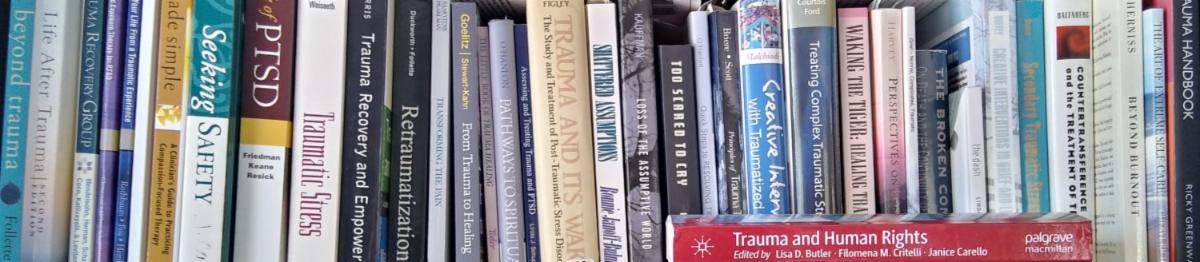
One of the most meaningful aspects of my journey has been serving as a Scholarship of Teaching and Learning (SoTL) Scholar. Studying trauma-informed teaching practices allowed me to reflect deeply on how students’ lived experiences shape their ability to learn. Using the MUSIC Model of Motivation, we explored how fostering empowerment, usefulness, success, interest, and caring can transform the classroom into a space where students feel seen, supported, and capable. This work extends beyond theory; it has fundamentally influenced how I facilitate courses, provide feedback, and approach my role as an instructor.
Ultimately, my experience at CTE has prepared me not only to support my peers but also to grow into an educator who values both evidence and empathy. It has strengthened my commitment to public health by showing me that teaching itself is a form of intervention; one that can empower individuals, reduce inequities, and create lasting impact.
|
| by Alison Barton, CTE Director | | |
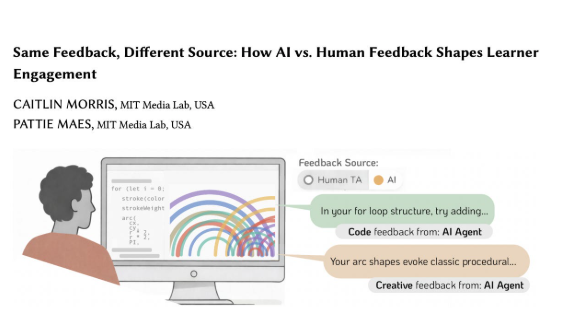
A recent publication, reviewed and summarized here, has shed some light on using AI to give students feedback in higher education classes. In short, the study found that students who know they are receiving AI-generated feedback, while finding it helpful, stop trying to do as well in their classes. The takeaway? Our relationships with students matter to them. If they feel they are not connected to us as their instructors, they are not as invested in the learning for their classes.
Remember: Our ETSU policy and accompanying guidance for the use of AI insists that we be transparent when we use AI – so if you are using it to give students feedback, it’s important to tell your students you are doing so. Also in line with our ETSU guidance, you should review each generated item for accuracy and to add your own voice to the feedback (and you can tell students you are doing this, too). But beware – even if you add your own touches, it could be that this practice turns students off from learning. Your connection to students is a vital ingredient to their good learning!
| | CTE Support for AI in the Classroom | | |
As our SoTL Scholars Co-ops, Class of 2026 wrap up their projects with an eye toward publication, our latest Scholars Co-op and our Affinity SoTL Group (Class of 2027) are making strides to get their research projects ready for data collection this fall!
"SoTL" stands for the Scholarship of Teaching & Learning, and the focus is research examining teaching practices in higher education. Our Co-ops consist of cross-disciplinary ETSU instructors who commit to a rigorous timeline to complete a research project, with the aim of submitting proposals for presenting and/or publishing their findings at the conclusion of the timeline. Learn more about our SoTL Scholars Co-op program here, and see what our Scholars are exploring, below!
SoTL Scholars 2024-2026
- Faculty Co-op: Kim Tweedale, Lisa Dunkley, Md Rasheduzzaman, & Brittany Wilkins
- Investigated how Kolb's four-stage experiential learning methods, combined with strengths-based reflections, impact students’ confidence, motivation to learn, and growing competence in the subject.
- Graduate Co-op: Laura Trull (faculty lead), Tiffany Bonnagio, Jessica Templeton, & Norbert Ogar
- Explored the impact of trauma-informed teaching on student motivation and perceptions of the instructor. Manuscript is being drafted for submission to a journal!
SoTL Scholars 2025-2027
- Faculty Co-op: Stephen Rice, Michelle Sullivan, Kimberly Jessee, Mark Hernandez, Heather Killmeyer
- This co-op is planning on researching the use of generative AI as a strategic planning partner to support student success (defined as well-being and self-reported goal attainment) by enabling them to produce course-specific strategies and timelines using instructor-provided resources (syllabus and schedule), their specific course goals (grade and process), and including any challenges they may be facing in the semester. The study will examine whole-group student outcomes as well as outcomes by subgroups of students who may have differential experiences.
- Faculty Affinity Group: Michelle Hurley, Fenfen Wang, Trisha Mims, & Christina Dzioba
- This Affinity Group is examining outcomes associated with student/faculty pedagogical partnerships. They are specifically examining whether, in classes where a student (not enrolled in the class) and an instructor are partnered to discuss the teaching practices for a class, students in the class are more engaged. Outcomes for the student partner and instructor will also be explored.
| | Brittany Butler, CTE Faculty Fellow | |
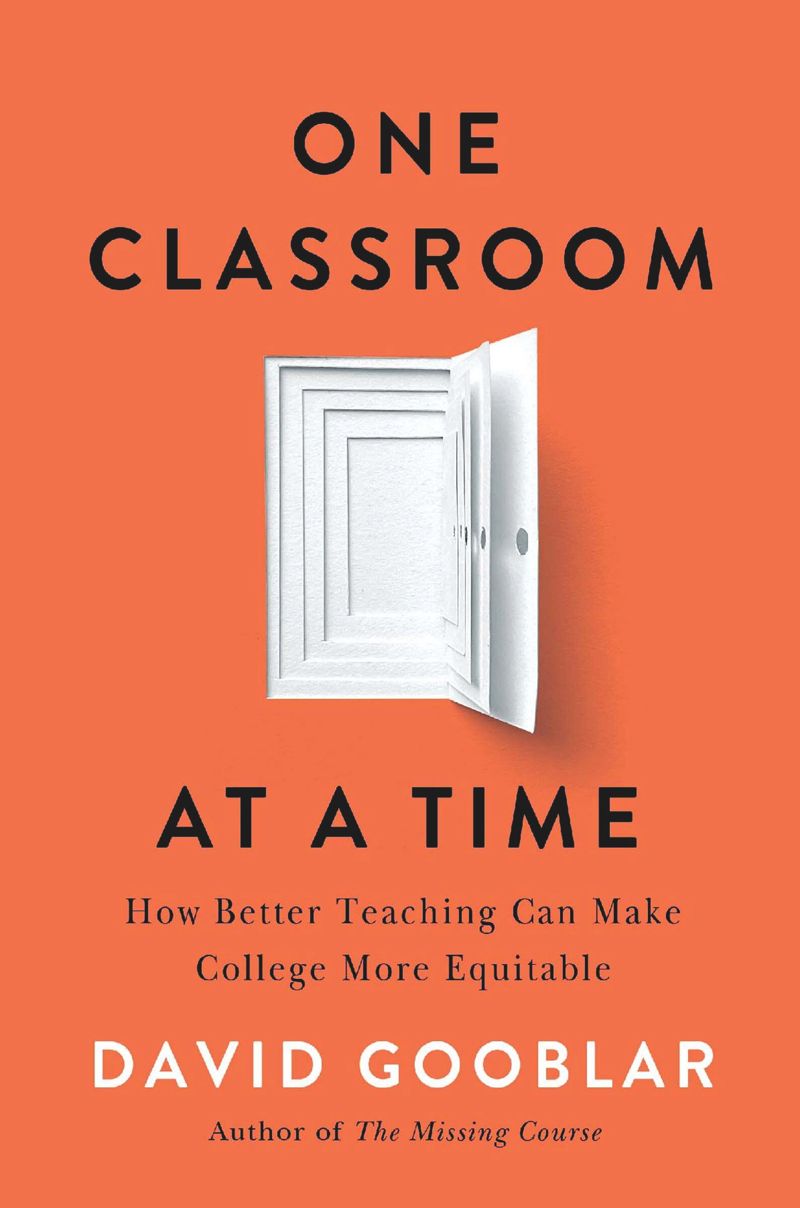
As a Faculty Fellow for the CTE and an instructor of several high‑challenge, large-enrollment gateway courses, I was asked to serve as one of four leads in a university-wide Student Academic Success Workgroup. The subgroup I lead focuses on undergraduate student degree progression. In preparing for this role, I found David Gooblar’s One Classroom at a Time: How Better Teaching Can Make College More Equitable. The book encourages faculty to move beyond old instructional models and design our courses for the students we are actually teaching today.
Gooblar’s main argument is a simple one: too often, we build our courses around “imaginary students” who are the well-prepared, well-supported learners of past decades and not the diverse students in our classrooms now. Today’s undergraduates vary widely in background, age, race, socioeconomic status, disability, and life circumstances. Many balance work, family obligations, financial pressures, and gaps in prior knowledge long before they encounter our course content.
Gooblar urges faculty to use teaching practices that foster belonging, increase clarity, and minimize unnecessary cognitive load. Small choices, such as incorporating structured collaboration, making expectations transparent, offering varied assessment formats, or being flexible, when possible, can make our courses more accessible and supportive for students whose path to college has been anything but straightforward. Most importantly, Gooblar does not argue for lowering standards. Instead, he encourages faculty to adopt strategies that help all students meet those standards, not just a select few.
One Classroom at a Time offers both a challenge and an invitation. It asks us to examine our assumptions, reflect on our course designs, and intentionally align our teaching with the needs of the students who are actually in front of us ready to learn and deserve every opportunity to succeed.
| |
Alison Barton, CTE Director
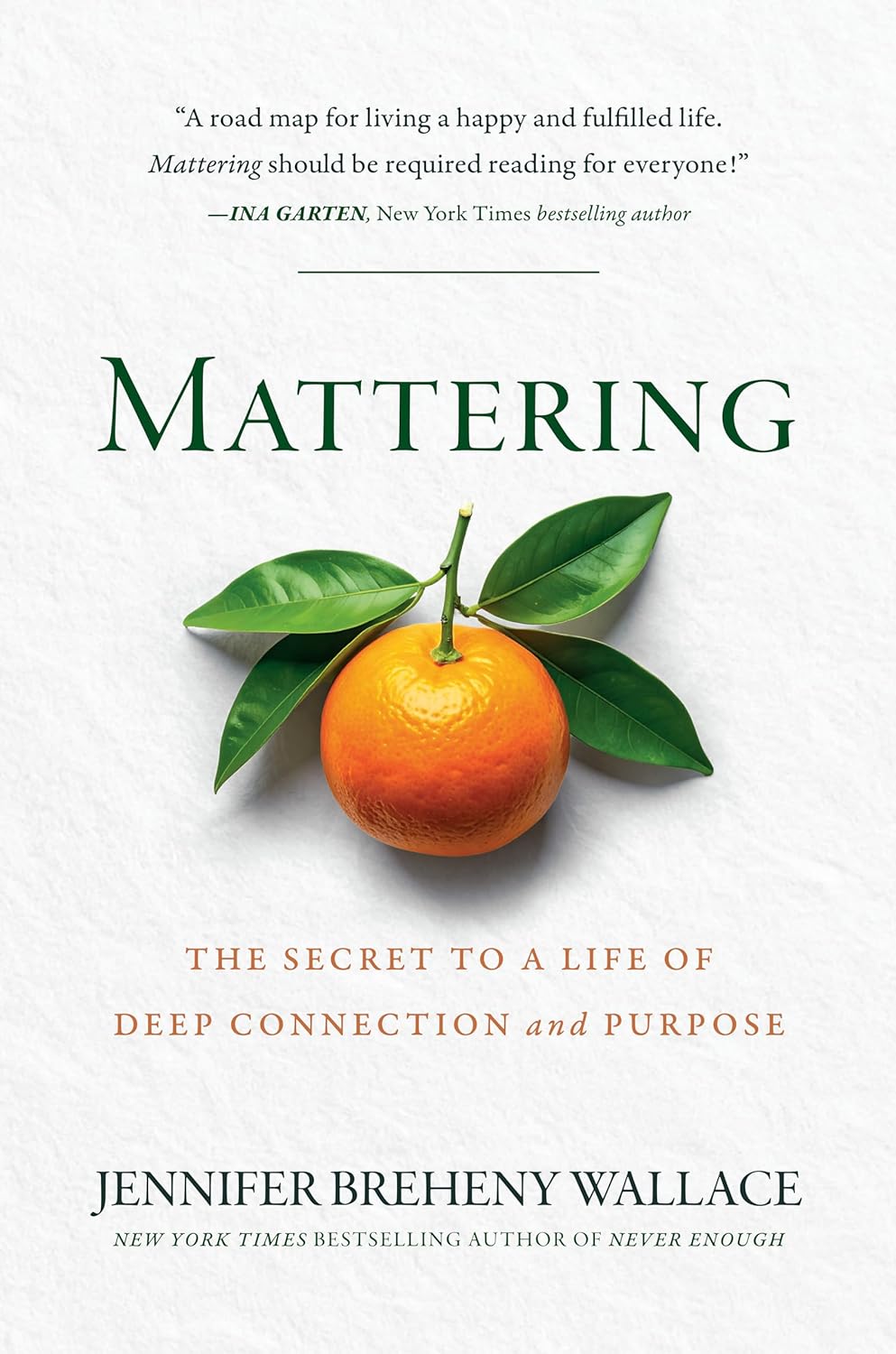
Upon the recommendation of Dr. Lori Meier, I got myself a copy of the book Mattering: The Secret to a Life of Deep Connection and Purpose, by Jennifer B. Wallace. The premise of the book resonates: “Mattering is the feeling that we are valued and have value to add to the world” (p. 2). Wallace defines the “Mattering Core” as Recognition (You and your actions are valued, and your absence would be felt), Reliance (You feel needed because others depend on you), Importance (You feel significant because you’re prioritized), Ego Extension (You feel cared for because others are invested in your well-being), and Attunement (You feel deeply understood and meaningfully responded to). Mattering is a step beyond belonging, because it isn’t just about feeling included, but that your inclusion is valued. In fact, Wallace argues that mattering is an essential human need, just after basic survival needs.
I’m enjoying the challenge of applying the Mattering Core to my teaching: How can I help students not just feel that they belong, but that they matter? How can I ensure that they feel both valued and that what they bring to the class adds value to it and/or the world? Great questions to ponder!
| | | Find all kinds of teaching books for check-out in our CTE Teaching Collection - Room 441 Sherrod Library! | | | | |