|
|
"El Magonista"
Vol. 5 No. 17
June 7, 2017
2 days left to apply for our CMD Winter 2017 Dreamers Study Abroad Program
|
The California-Mexico Studies Center
1551 N. Studebaker Road, Long Beach, CA 90815
Phone: (562) 430-5541 Cell: (562) 972-0986
|
|
|
The United States and Mexico:
Education and understanding
Last week, officials from the U.S. and Mexico revitalized their commitment to fight cross-border smuggling of drugs, arms and money. U.S. officials recognized America's demand for drugs as "
the magnet" that feeds drug smuggling, and Mexico committed to tackle jointly the elements of the cartels' business model.
While illegal immigration and drugs dominate much of the public discourse around U.S.-Mexico relations, the partnership between these countries is vital and dynamic in many other ways.
The
two neighbors trade over U.S. $1 million a minute, employ many millions in good jobs on both sides of the border, have over a million legal border crossings each day and have over 35 million citizens of shared heritage.
We have devoted years of our professional lives (in government, academic and social sectors) to developing and implementing strategies for improving our countries' relationship. As such, we've been taken aback by the sharply critical U.S. rhetoric about Mexico in recent months and the anti-American sentiment that quickly rekindled in Mexico.
Our most recent work, however, shows that
educational and research exchanges can bridge the widening divide, while also building workforces that can help the two nations thrive in the technological revolutions ahead.
Academic exchanges as long-term bridges
We have seen firsthand the impact of programs on young Mexicans who returned from U.S. stays with pride, enthusiasm and improved English. We've also witnessed how American students interacting with their counterparts in Mexico enhance the appreciation and respect for each others' countries.
Yet,
student exchange numbers are not encouraging.
Mexico ranks 10th for the number of full-time students studying in the U.S., placing it far behind China and India, and also trailing Saudi Arabia, Brazil, Vietnam, and northern neighbor Canada. The story is worse in
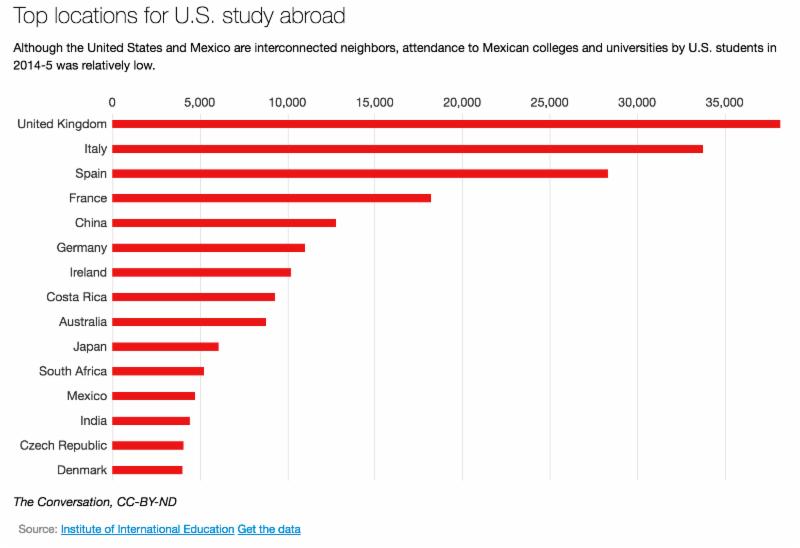
the other direction: Only 4,712 U.S. students were studying in Mexico in 2014-15, 12th among destinations for U.S. students.
There are many reasons for the low numbers, but here is the bottom line:
Two such interconnected neighbors should be doing better.
In 2013, we were a part of launching an initiative aimed at tackling this problem. The
Bilateral Forum on Higher Education, Innovation and Research (known by its Spanish acronym,
FOBESII) gathers educators, private citizens, companies and officials from universities and government. Their aim is to expand long-term investments in education and research partnerships between the U.S. and Mexico.
In the
past four years, FOBESII has fostered more than 115 new agreements between Mexican and U.S. universities.
Mexico's federal government allocated an unprecedented $42.9 million for these programs during 2014-16. More than 100,000 Mexican students - many of them from low income families -
came to the U.S. as full-time graduate students, as single-semester researchers or in summer programs designed to improve English proficiency. These experiences changed the way students (and their families) viewed
their future potential and, importantly these days, their opinion about the United States was greatly improved.
Unfortunately, the U.S. public funds to support these exchanges were more limited than the investments made by Mexico. Private sector sponsors, however, have worked with the U.S. government to develop
32 academic projects with Mexican universities, ranging from engineering, physics, geology and health to environmental sciences.
Building things together
While targeting such exchanges provides opportunities to young scholars and promotes cultural understanding, it can also produce better educated workforces.
Mexico and the United States literally and figuratively
build things together, with pieces crossing the border many times before a finished product emerges. American parts and products make up, on average, about
40 percent of the value of a finished manufactured product from Mexico. That's much more than the U.S. contributes to other countries' manufacturing and positively impacts U.S. jobs and profits.
The "
fourth industrial revolution" is unfolding: digital technologies are leading to faster and more complex advances in practically all facets of life. Both countries are going to need better equipped labor forces to maintain this highly integrated production network and to compete with others in the world.
|
Winter 2017 California-Mexico
Dreamers
Study Abroad Program
DEADLINE TO APPLY IS THIS FRIDAY JUNE 9
APPLICATION DEADLINE AND IMPORTANT DATES:
- Apply online by THIS FRIDAY, JUNE 9, 2017
- Submit a Personal Statement of Purpose essay and 2 letters of recommendation by JUNE 16, 2017
- Attend an in-person or Skype interview between JUNE 20-24, 2017, as scheduled by CMSC Staff after you submit your application and supporting documents.
|
#UndocuTestimonies:
Kenia Duarte, a Dreamer, shares her experience after studying abroad in Mexico
Kenia Duarte, one of the 35 Dreamers that participated in our Summer 2016 California-Mexico Dreamers Study Abroad Program shares her testimony and experience after being able to return to her native Mexico after 19 years.
Watch this short video about her experience in regards to our program last year, and what she thinks about the current participants of this year's Summer and
Winter 2017 programs:
Video produced by: Lidieth Arevalo for the California-Mexico Studies Center, Inc.
|
|
Blanca Rubio had to go the distance to get where she is now-all the way from Juarez, Mexico. Rubio first ran for office in 1997, elected to the Valley Country Water District and a member for two full terms. Since then, she's been a classroom teacher, school board president, and a passionate advocate for ESL students...
Read More
|
|
La educación superior sirve como punto de encuentro, donde las fronteras no existen y la colaboración académica funge como un puente que conecta a distintas instituciones del mundo. En este contexto, la semana pasada, una delegación de instituciones de educación superior mexicanas participó en la Conferencia Anual de la Asociación Internacional de Educadores NAFSA. En esta ocasión, representantes de 24 instituciones, tanto públicas como privadas, se dieron cita en la ciudad de Los Ángeles, California.
.
.
Leer Más
|
|
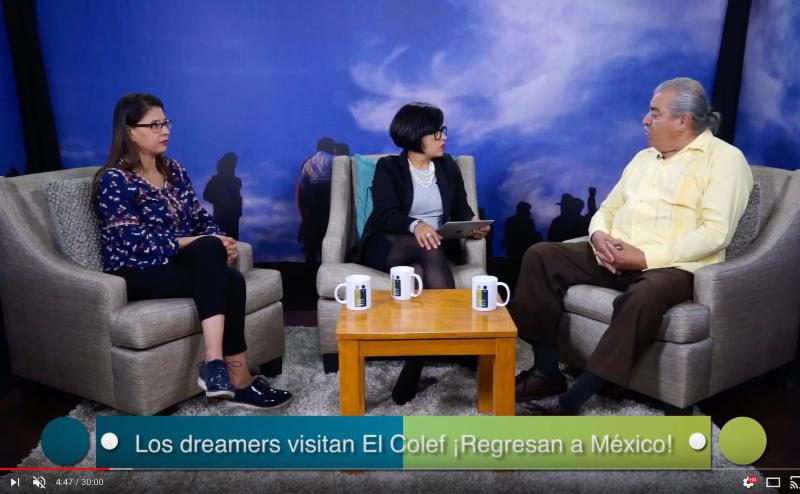
Conoce más sobre el programa "Summer 2017 California-Mexico Dreamers Study Abroad," sus organizadores, así como también 2 de los participantes en este episodio de Diálogos Desde la Frontera del Colef.
..
Leer Más
|
|
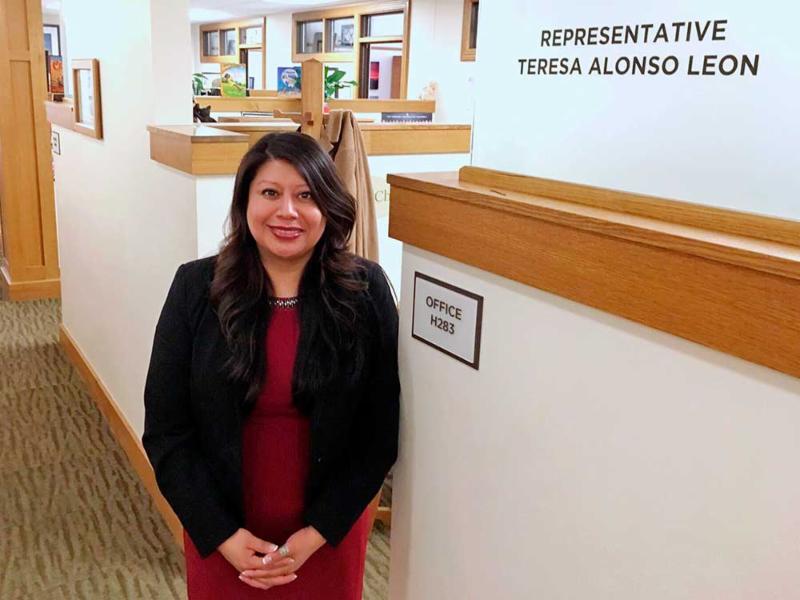
Teresa Alonso pensó que la esperaba una vida mejor en una tierra prometida cuando de niña la trajeron de México a Estados Unidos. Pero su familia terminó en una vivienda sin calefacción ni agua corriente en Oregon, trabajando en el campo, en una plantación de fresas. Hoy, Alonso es una de las primeras personas traídas indocumentadas a Estados Unidos que llegan a una legislatura.
..
Leer Más
|
|
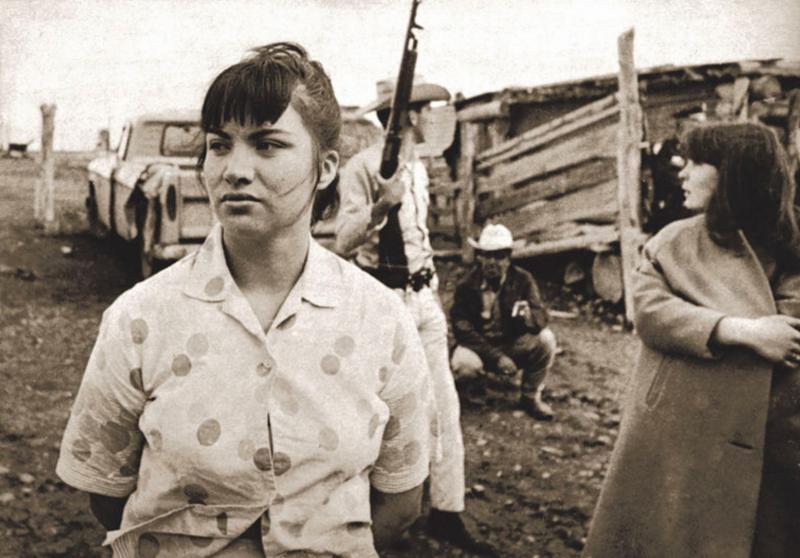
On the afternoon of June 5, 1967, Santa Fe New Mexican city editor Jim Neal received an urgent bulletin on the newsroom teletype machine. Shots had been fired at the Río Arriba County Courthouse. At least one man was wounded, and prisoners were said to be on the loose. As Neal and reporter Peter Nabokov sped 90 miles north to the village of Tierra Amarilla, radio bulletins blared: "One officer injured... Shiprock state policeman
...
Read More
|
|
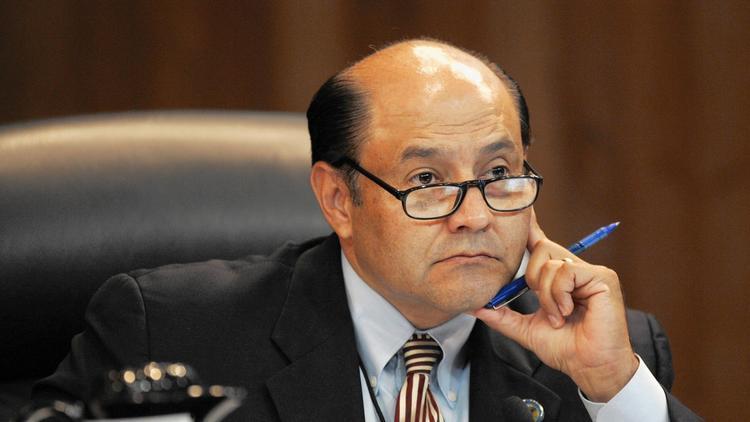
The majority of calls into Rep. Lou Correa's Orange County congressional office are about immigration worries and what the Trump administration's enforcement policies mean for Correa's many Latino constituents. So the freshman Democrat has held seven town halls, all focused on immigration and explaining immigrants' rights.
...
Read More
|
|
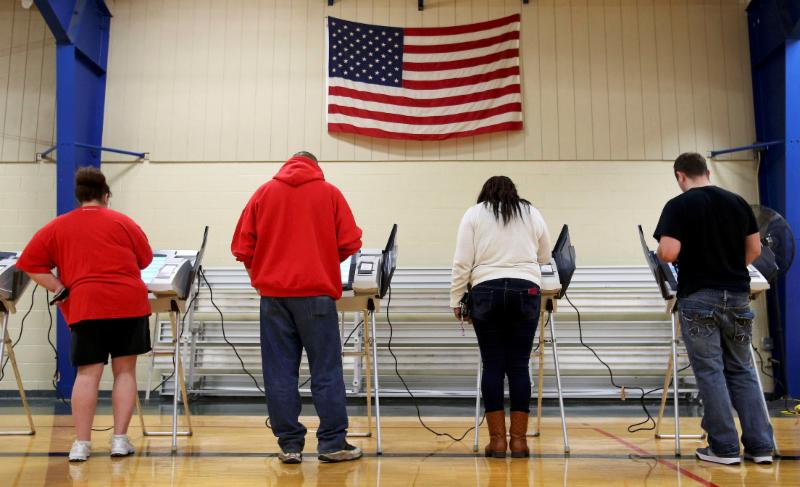
The Latino voter turnout rate held steady at 47.6% in 2016, compared with 48.0% in 2012. Overall turnout remained flat despite expectations heading into Election Day of a long-awaited, historic surge in Latino voters. Due largely to demographic growth, the number of Latino voters grew to a record 12.7 million in 2016, up from 11.2 million in 2012...
Read More
|
|
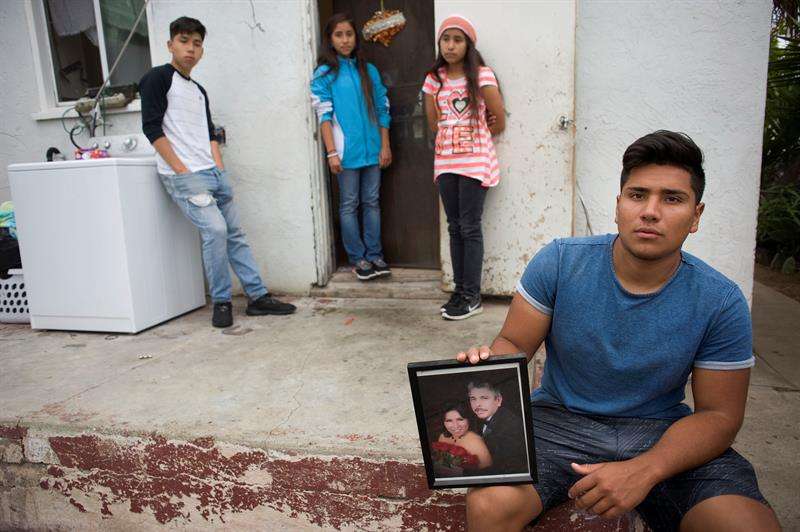
Cuatro hermanos de la ciudad californiana de National City se quedaron de repente sin sus padres, que fueron arrestados por Inmigración, pero han recibido más de 60,000 dólares de la comunidad para gastos legales y del hogar. El pasado 23 de mayo Francisco Duarte fue interceptado por agentes de Patrulla Fronteriza cuando salió como todos los días a comprar el periódico en una tienda cercana... Leer Más
|
|
|
|
|
|
|
|
|
|