|
atomic house album artwork [Download]
Today, The Undercover Dream Lovers released their new album atomic house via SoundOn. Los Angeles-based musician and producer Matt Koenig has stepped away from his fuzzy, dream-pop sound to allow for kinetic moments to be driven by his scratchier voice and guitar. A dusty basement television hums to life, the curved screen flickering like a memory you didn’t know you still had. On atomic house, The Undercover Dream Lovers latch onto the totemic power that even the seemingly smallest objects and memories can hold. The album’s 14 songs are built from tactile details and lived-in scenes that don’t just recall the past, but make it feel present again — Stream.
“Whether it’s dial up phones or the feeling of pushing a doorbell when you’re running around the neighborhood and playing ding-dong ditch, there are so many tactile things that just get us excited,” Koenig explains. “That was my anchor for this whole record, remembering those feelings and stepping back into my own experience or into the shoes of a character who may have had these experiences.”
Fittingly, lead single “Prom Queen” opens with the sound of a VHS tape being popped in, that clicking and whirring practically an ASMR nostalgia trigger for a generation of VCR users, a portal into a specific time both in history and in life. Over the ELO-meets-Phoenix glittering wash of synths, guitar chops, and weeping strings that ensues, the singer-songwriter leaps into that timeless teenage moment. “Slowly/ Making up for lost dreams/ I’m dancing to a new beat/ No I don’t need a prom queen,” he sighs in layered vocals.
Both the golden warmth and bleary urban nights of LA are infused in Undercover Dream Lovers’ sound, and atomic house amplifies those strengths even further. A bicycle bell and the sound of youthful chattering open album highlight “lies lies lies”, a track powered by a refusal to give up on childhood dreams in the face of buttoned-up expectations. “I sat in my room/ Stared at the wall/ I wanted to be like Jimi playing guitar,” he sighs, before lashing out at the lies fed to wide-eyed dreamers told to get a real job. For Koenig, the track both encapsulates the vision of his younger years and the new life he’s built himself. “I wanted this album to capture what it was like growing up in the ‘90s, this gap in time between two more defined eras,” he says. “But it comes to life in a way that feels very modern, where any listener can live in it and make the emotions of those experiences their own.”
That incredible ability to give listeners a sense of being the main character of the narrative is exemplified on “banging my head”. Backed by scorched neon guitar and distorted vocals, Koenig delivers a powerful manifesto on frustration. The song may have been inspired by memories of literal childhood head trauma (“baseball bats and hockey pucks, I think I split my head open three times as a kid”), but the songwriter was able to carve out the universal truth behind them: emotionally beating yourself up can feel physical. “I was gifted this old red Gibson guitar and it unlocked this intense facet to my writing,” he says. “It was also the first time I’d really screamed in the vocal booth—so much so that I lost my voice for a month. Both the song and the record as a whole are me stepping outside of my creative comfort zone and finding something new, while also working from ideas and feelings that are very familiar.”
Elsewhere, the sweltering, swaggering “molly” kicks off with a dialing phone, tapping into the story of a frustrating diva type. The propulsive “you” brings a more romantic tone, daubing a sparkly glitchiness over the swirl of acoustic guitar. And the rippling “escape artist” breaks down a Strokes-y garage rock riff and melody into a wide-eyed leap into outer space, breaking the confines of the genre.
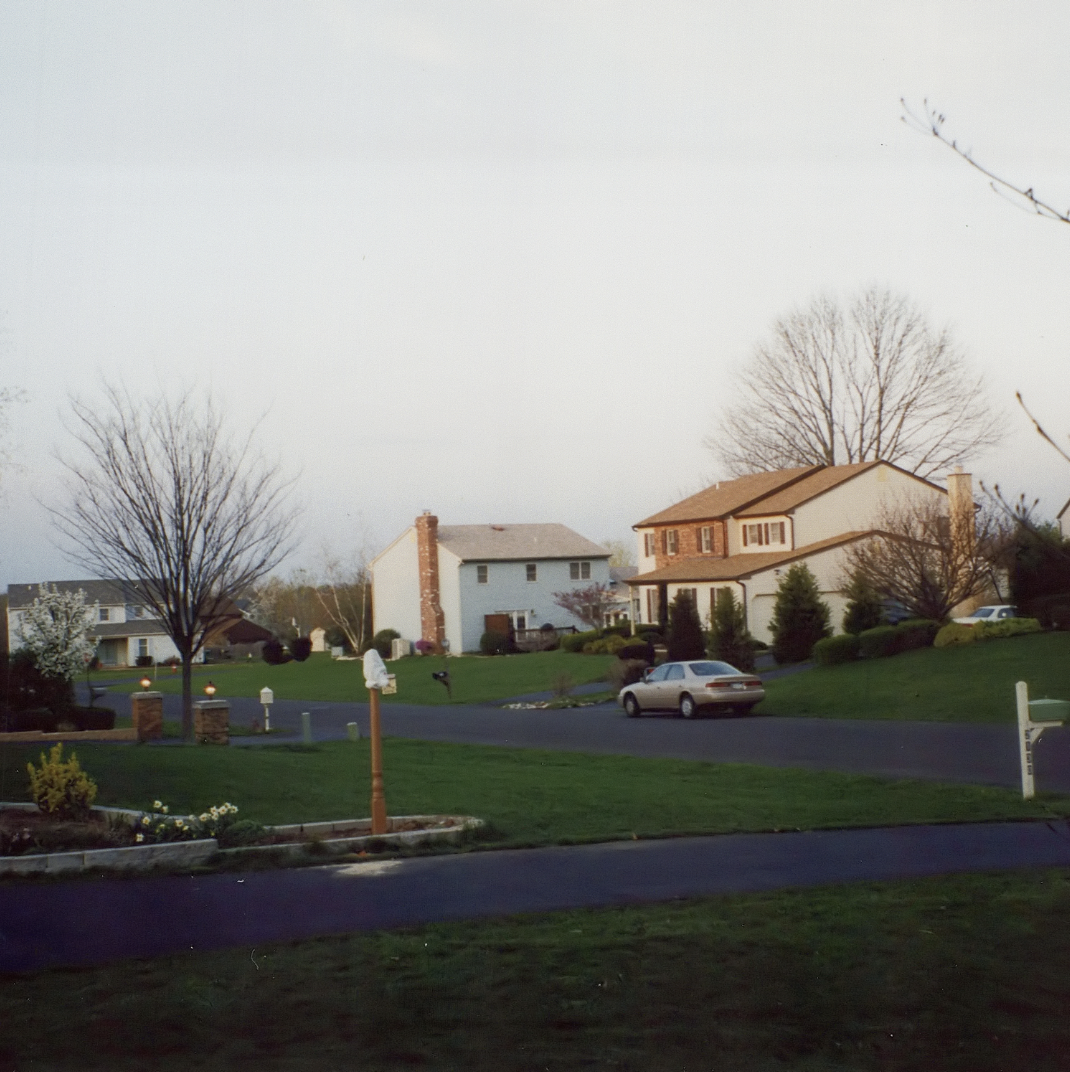
And on “one more evening”, Koenig latches onto the last day of summer before school starts—or, more broadly, to that sense of freedom and possibility—refusing to let it go. “One more evening in the neighborhood/ Been feeling like a stranger in the cul de sac that raised us,” he sighs, a skittering drum beat and Beck-adjacent scraggly guitar building into a palpable daydream. “My dad was recovering from a stroke and thinking about my parents getting older really hammered home how important the idea of home can be,” he says. “Every little change can totally change the world, and I think there’s beauty in that chaos—but it is chaos. It's a little dangerous, a little exciting, a little scary.”
And as that old CRT TV flicks back to darkness, the vibrant images of atomic house remain projected in the mind. Koenig’s memories become the listener’s, as field recordings, sound effects, and thoughtful sonic textures don’t function as window dressing so much as emotional architecture. Every detail is meticulously considered, yet never overworked, grounding Koenig’s songwriting in a form of indie rock that is both impeccably crafted and deeply human. The result is a record that invites immersion rather than nostalgia for its own sake, one that gently urges listeners to slow down and stay with what’s in front of them. As Koenig puts it, “This record is a reminder to be present, to enjoy life for what it is and not get anxious about the future.”
|