|
|
Hello!
Welcome to the Newsletter of the Friedrich-Ebert-Stiftung's Regional Center on Peace and Security
| |
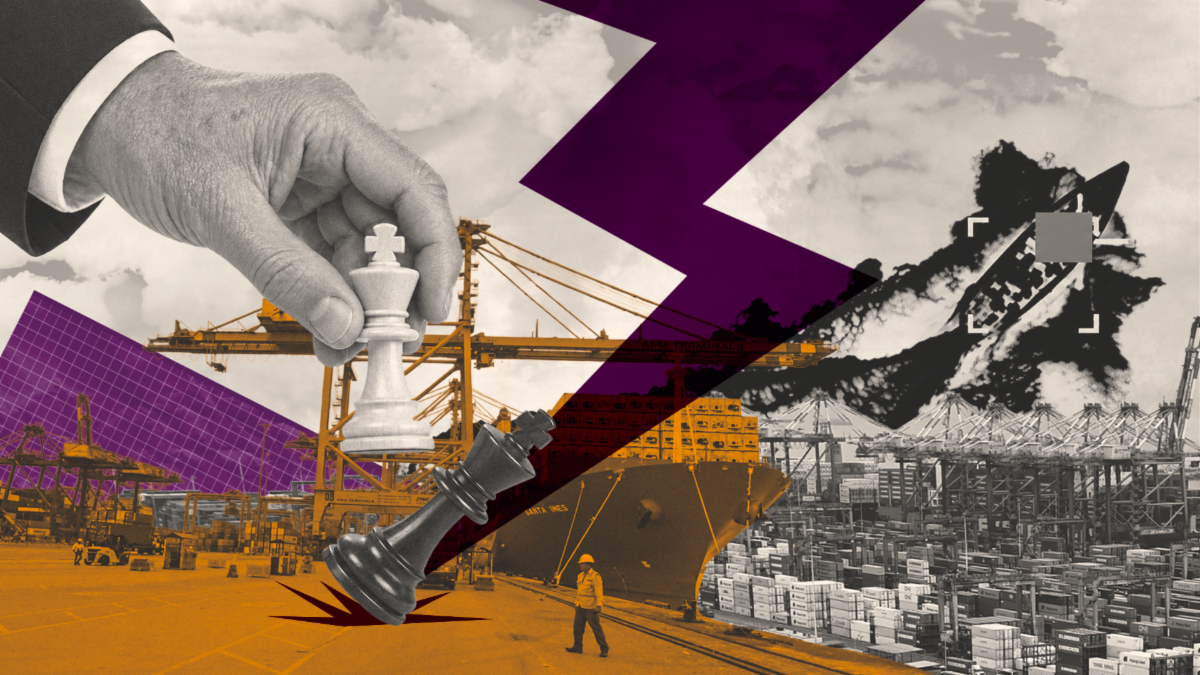
The Negative U.S.-Latin America Security Alliance | For seventy years, the United States has built a close political-military relationship with Latin America in the context of the Cold War and the decades that followed, a relationship now embodied in the Shield of the Americas. Augusto Varas warns that these policies destabilize political-military relations and hinder progress toward a regional zone of peace. | | | |
Criminal Recruitment on TikTok by Mexican Criminal Groups | Since 2024, the Seminar on Violence and Peace of El Colegio de México has been conducting research-operating through a TikTok user account-to track the algorithmic behavior of content that glorifies criminal culture, particularly posts featuring images and symbols that praise criminal groups' activities. | | | |
Colombia's Elites and the Missing Economy for Peace | A reflection on the book ¿Quién manda en Colombia? Élites, poder y nación (Mediapluma Editorial, Bogotá, 2026) | | | | |
The expansion of the Shield of the Americas, discussed by Augusto Varas as one of the guest authors, gained momentum in September at the UN General Assembly. Donald Trump’s initiative has evolved from a political alliance into an instrument for combating drug trafficking and restoring U.S. preeminence in the hemisphere. According to Juan Gabriel Tokatlián and Mónica Hirst, the announcements aim to coordinate potential military actions, even outside the OAS and UN framework.
The intensification of the wars on drugs and terrorism included the designation of twenty cartels and criminal groups as foreign terrorist organizations, as well as attacks on alleged narcolanchas (drug-smuggling boats). Now, cooperation is going much further. U.S. Defense Secretary Pete Hegseth indicated that troops deployed in Europe could be redeployed to Central and South America.
For his part, U.S. Southern Command commander, General Francis L. Donovan, announced an expansion of military cooperation after meeting with the Colombian and Ecuadorian defense ministers. U.S. forces are already operating alongside Ecuadorian troops, while Colombia plans to designate all armed groups as terrorist organizations. It remains unclear what types of military action to expect and under whose command.
The Shield of the Americas is backed by the Americas Counter-Cartel Coalition (ACCC), which includes 19 countries and aims to combat “malign foreign influences.” The initiative may exacerbate the authoritarian trends and weaken institutions and the rule of law.
| | |
Jorge Heine, Carlos Fortín, and Carlos Ominami argue for the continued relevance of active nonalignment in the latest issue of Foreign Affairs Latinoamérica. In a context where major powers seek automatic allegiance, it is a strategy for adapting to a world marked by structural rivalries, normative uncertainty, and the growing instrumentalization of extraterritorial sanctions for geopolitical purposes.
The Handbook of South American Regionalism, edited by José Briceño-Ruiz and Andrea Ribeiro Hoffmann, offers a comprehensive review of regional cooperation and integration processes, as well as initiatives since the 1960s, including their advances and setbacks. The volume, which includes dozens of essays, examines various countries' perspectives and analyzes the links between regionalism and globalization, the geopolitics of regional integration, and its role in foreign policy.
| | |
The issue of sovereignty and non-interference in states' internal affairs has resurfaced.
Juan Gabriel Tokatlian addresses the issue of sovereignty in Latin America —a key geopolitical issue— from two perspectives. On the one hand, he examines sovereignty's influence and its limited weight in key areas of international relations. On the other hand, he highlights its relevance, noting that the region plays a prominent role in international relations due to its extraordinary resources (choke points, biodiversity, and natural resources).
After the end of the Cold War, the debate centered on whether it was legitimate to intervene in states that committed massive human rights violations. The question now is whether, in the name of combating organized crime, the United States and its allies can claim the right to intervene in other countries. Beyond the issue of interference, international law is under attack from multiple fronts.
Host-state consent allows a third party to intervene militarily without violating the UN Charter’s prohibition on the use of force, but this is not sufficient. The international legal order requires determining whether an armed conflict exists in order to define the legal framework and permissible actions. The digital platform Just Security also published a collection in which several authors analyze the legality of U.S. military attacks against alleged drug traffickers and the capture of Nicolás Maduro.
The International Criminal Court (ICC), established in 1998 as a permanent and independent court of last resort, tries those responsible for genocide, war crimes, crimes against humanity, and the crime of aggression. Its recent investigations into political and military leaders have provoked harsh international reprisals. The current and former presidents of the Assembly of States Parties are calling for the Court's defense against the law of the strongest.
Despite fragmentation and multilateral rivalries, negotiations on a Convention on the Prevention and Punishment of Crimes Against Humanity are moving forward. However, opposition is growing, and states and civil society must act effectively to advance the process.
The International Committee of the Red Cross is promoting negotiations to regulate the growing use of autonomous weapons and address their humanitarian, legal, and ethical implications. At this event, experts in international law, artificial intelligence, and humanitarian action analyze what is at stake. Regarding the guest author in this newsletter, the ICRC also examines here the legal implications of recruiting children through digital tools.
| | |
For the launch of the CIDOB 2026 Yearbook, which is dedicated to the crisis of democracy, experts Michael Ignatieff and Erica Benner addressed the main threats—both internal and external—facing contemporary democracies, as well as ways to reverse the current process of democratic erosion worldwide. The event can be viewed here.
The 2026 Latinobarómetro Report analyzes the state of democracy in Latin America based on nearly 20,000 interviews conducted across 17 countries on political systems, international relations, migration, and security. The report questions how far liberal democracy has taken root in the region and emphasizes authoritarian tendencies among populations, which “do not emerge after transitions, rather they precede them.”
In this regard, Anna Ayuso, also from CIDOB, highlights that the right-wing wave in Latin America is not homogeneous and has also analyzed the impact of organized crime on the region’s political systems.
| | |
The event “Illegal Economies, Organized Crime, and Power in Latin America,” held in July in Lima, highlighted the rapid expansion and diversification of illicit activities and the growing influence of criminal networks over territories and institutions, against a backdrop of democratic decline, a crisis of representation, and the predominance of interests of a select few.
The report on fentanyl and synthetic drugs in the U.S., Canada, and Mexico shows that, over the past 30 years, seizures have unevenly expanded in geographic scope depending on the substance. The Cartel Jalisco Nueva Generación’s franchise model reduces the impact of dismantling laboratories, while criminal groups expand through the forced recruitment of young people. At the same time, the priority given to seizures in Mexico overshadows the need to treat addiction.
FES Colombia continues its series on Bold Ideas for tackling organized crime. The militarization of the fight against illicit drug trafficking by sea and its routes is affecting fishing communities along the Pacific coast. María Alejandra Vélez, from the Universidad de los Andes and the Center for Drug and Safety Studies, analyzes this impact and proposes a joint research agenda involving Mexico, Colombia, Costa Rica, and Ecuador. In this episode, she explains why militarizing the sea does not protect those who depend on it for their livelihoods.
In Bolivia, coca cultivation reached record levels for the third consecutive year, apparently driven by international demand for cocaine rather than by the country’s legal coca leaf markets.
The NGOs CELS, DeJusticia, CEA Justicia Social, Mujeres Libres, Elementa DDHH, RIMUF, and IDPC have published a study titled Castigo Extra on violence against women in the fight against organized crime. These organizations, which constitute the Grupo de Trabajo Mujeres y Encarcelamiento [Women and Incarceration Working Group], have investigated the situation of women who come into contact with the prison systems due to crimes related to organized crime in Argentina, Colombia, and Mexico. The study analyzes the consequences of policies targeting organized crime for those women who are or have been deprived of their liberty and for their families.
The report Entre rejas y violencias analyzes the experiences of people deprived of their liberty—particularly the life stories of women—in Colombia. It concludes that expanding prison capacity does not necessarily address the structural causes of incarceration.
|
|
Luiz Inácio Lula da Silva, Brazil's 80-year-old president, won the election against Flávio Bolsonaro by staging a comeback in the runoff—against all odds—and securing nearly five million more votes than the senator. He is the first president in Brazil to win after losing the first round. The result is a major setback for the U.S. and its efforts to engage with the region, and it further cements Lula’s legacy—though he will govern a deeply divided country.
The election campaign was marked by political, diplomatic, and commercial pressure from Washington. A group of congress members and another group of senators called for an end to such interference. The Washington Office on Latin America (WOLA) analyzed the convergence of trade pressure and political intervention and the reasons behind Brazil’s growing ties with China, particularly over rare earth minerals.
Analysts affiliated with the U.S. think tank Brookings Institution offer their views on Brazil’s future in light of the election results, including the new government’s potential international decisions and its role in the Global South and the BRICS.
The election results will shape the climate transition and Amazon protection. According to Chatham House, a Congress-backed Bolsonaro presidency could significantly weaken environmental protections, though his ability to act would depend on commercial, trade, and private-sector interests.
The Center for Economic and Policy Research notes that Brazil grew by 9.2% between 2022 and 2025, far outpacing its neighbors. Social welfare measures included raising the minimum wage, expanding sick leave, and ensuring equal pay for women, while the Bolsa Familia program, aimed at low-income households, increased by nearly 70%.
| | |
Colombia’s new president, Abelardo de la Espriella, began his term by reaffirming his campaign pledges on security. Any armed group will be classified as terrorist under the draft of the new Statute, while the draft bill on surrender reduces incentives for those who lay down their arms. In addition, the government is imposing budgetary and operational restrictions on agencies implementing the 2016 peace agreement with the FARC.
In conflict and humanitarian crisis zones, the new security policy, the August 10 earthquake, and reduced international cooperation are forcing communities to rethink their security and self-protection strategies.
The landscape of violence is complex and fragmented: armed groups operate in half of the municipalities, and nine actors control territories. These hybrid organizations combine illicit revenues, state functions, local governance, and control over the population. As crime converges, the state suffers from five forms of fragmentation: strategic, horizontal, vertical, geographic, and supranational.
A report by the NGO Indepaz indicates that “the main transformation of violence in Colombia does not consist of an increase or decrease in the number of combatants, but rather in the shift from insurgent and counterinsurgent organizations with a national reach toward regional regimes of violent power, integrated into complex macro-criminal networks that combine legality and illegality, coercion and institutional capture, economic accumulation, and political control.”
Meanwhile, the International Crisis Group warns of the risks of an exclusively militarized approach and recommends strengthening military capabilities alongside effective negotiations. This video shows how drones are changing Colombia’s conflict.
| | |
A special issue of Latin American Perspectives, dedicated to Colombia ten years after the Peace Agreement between the government of Juan M. Santos and the FARC, examines its implementation and transitions, the rural and urban dynamics of the conflict, and changing patterns. It concludes with lessons for peacebuilding and conflict studies, including the need to ensure the long-term continuity of these policies in electoral democracies.
In the same issue, Sabine Kurtenbach and Angelika Rettberg challenge the narrative that illicit drugs explain postwar violence. They argue that its patterns and levels depend more on the interaction between war economies, the state’s political and economic capacities, and territorial control: violence increases when that relationship is weak and decreases when it is strong.
NACLA Report also marks this tenth anniversary with a special issue on Peace from Below, featuring voices that reflect the country’s geographic diversity and multiple identities. It includes reflections on the Special Jurisdiction for Peace (JEP), the search for the disappeared, and the new government’s legislative and budgetary offensive against peace.
The Agreement has remained at the center of the political struggle over these past ten years, and its implementation has had its ups and downs. Although violence and difficulties persist, less visible transformations have taken place: according to the UN, more than 11,000 people who laid down their arms remain engaged in their reintegration process.
A project by the Institute of Studies on Conflicts and Humanitarian Action (IECAH) and the Universidad de los Andes examines the challenges and the role of former FARC combatants and signatories to the Agreement. For the Ideas for Peace Foundation (FIP), institutional support for those who lay down their arms is a capacity that Colombia cannot afford to lose.
The anthology Crossing Borders in Search of the Truth. The work of the Colombian Truth Commission with the exiled community (Universidad El Externado, Bogotá, 2026), reflects on the Truth Commission’s pioneering work with the exiled population, carried out by more than twenty teams outside the country. It offers lessons for transitional justice and tools for including exiled individuals in other peacebuilding processes.
Legal scholar Rodrigo Uprimny and General (Ret.) Oscar Naranjo offer a thought-provoking analysis of security in Colombia, developing a series of scenarios—ranging from the catastrophic to the “desirable”—based on “policies to overcome structural problems” in the book Colombia 2050. 65 voces para construir hoy el país del futuro (Penguin-Random House, Bogotá, 2026), edited by Fernando Carrillo and Andrée Viana. The book includes a selection of essays on major current issues in politics, the economy, trade, climate, diversity, freedom of expression, democracy, and technology, among others, as well as possible solutions for the coming decades.
The 2016 peace process remains relevant for other countries. In this podcast, Humanas Colombia and Alianza 5 Claves recount their trip to Nigeria to share experiences and recommendations on involving civil society—especially women’s organizations—in peacebuilding.
| | |
In late August, the Trump administration announced an agreement with Caracas that would give the U.S. a significant stake in Venezuela's oil industry. This is another example of Washington’s direct control over key parts of the Venezuelan economy and its excessive influence on Delcy Rodríguez's government. Many analysts find its impact on the country's political future alarming.
In this podcast, Adam Isacson and Francisco Monaldi of the Baker Institute for Public Policy at Rice University discuss the issue.
| | |
Haiti’s Provisional Electoral Council has once again postponed the presidential and legislative elections indefinitely. Violence by gangs, which control much of Port-au-Prince, is hampering preparations and has left some municipalities without registration centers. In this dossier, Insight Crime analyzes the main characteristics of organized crime and the political system. Similarly, the British think tank Chatham House just published a report emphasizing that the priority is holding elections in a secure environment. Confirming the violent climate and the widespread nature of the violence, CNN has released a video about the activities in Haiti of the mercenary company led by Erik Prince, former president of the private security firm Blackwater.
The UN High Commissioner for Human Rights, Volker Türk, reported that at least 5,700 people were killed or injured in Haiti between January 1 and September 11, 2026, as a result of gang activity or operations against them. During that period, gangs kidnapped more than 230 people and raped more than 1,000 women and girls; so-called self-defence groups caused approximately 280 deaths or injuries.
| | |
Transitional justice processes—such as the one now at risk of being nullified or weakened in Colombia—did not exist or were not referred to as such when the military dictatorships in Latin America’s Southern Cone came to an end four decades ago. Perpetrators of human rights violations during the dictatorships in Brazil and Uruguay were able to avoid trials, unlike in Argentina and Chile, and many of their crimes went unpunished.
Lawrence Weschler, formerly a journalist for The New Yorker, wrote A Miracle, a Universe: Settling Accounts with the Torturers in 1990. There, he examined testimonies, cases, and legal proceedings the justice system had overlooked, paying special attention to the clandestine, patient work of dozens of human rights activists who collected, hid, preserved, and eventually made public testimonies about human rights violations.
The book, now republished in Spain, includes new chapters on political developments in Brazil, Argentina, and Uruguay, as well as reflections on the authoritarianism projected by the Trump administration.
| | The yearbook Peace Talks in Focus 2025: Analysis of Trends and Scenarios, published by the Barcelona School for a Culture of Peace (ECP), identified 53 peace processes and negotiations worldwide last year—the highest number since 2017. The report details the processes, their structure, their negotiation agendas, and the third parties involved. However, the increase in the number of processes has not reduced violence and global armed conflict; instead, it coincides with rising armed conflicts and tensions. |
| |
Sergio Díaz-Granados, executive president of CAF—the development bank of Latin America and the Caribbean— outlines the main dilemmas and options regarding artificial intelligence in Latin America in an opinion piece published by El País.
Last April, the U.S. Army ordered the creation of the Southern Command’s Autonomous Warfare Command (SAWC). This will be an autonomous warfare force based on artificial intelligence that will support the organization’s missions in Latin America and the Caribbean, to dismantle narco-terrorist networks and assist in natural disasters, among other objectives.
In light of the growing integration of robotics and AI into weapon systems, Júlia Marcon of Brazilian Action for Humanitarian Disarmament argues that “a regional agreement on autonomous weapons could set common safety standards, strengthen cooperation among states, prevent the proliferation of these technologies, and reduce the risk of uncontrolled development, which could endanger millions of lives.”
| | |
Newsletter of the Regional Center on Peace and Security
Edited by Mariano Aguirre Ernst and Mabel González Bustelo
Translated by Yenni Castro (Valestra Editorial)
More information: Catalina Niño (Catalina.Nino@fes.de)
Calle 71 # 11 - 90, Bogota, Colombia
© 2026 FES
|
| | | |