Glute Muscles: The Unsung Hero of Healthy Aging | | |
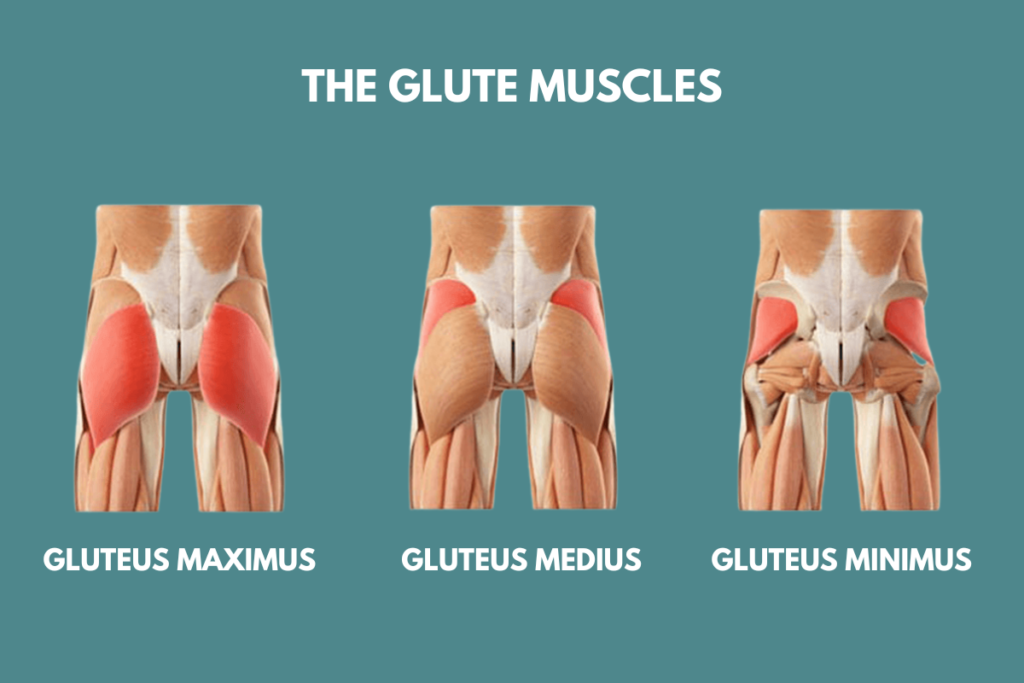
Who knew that (and not just for older adults) sitting on your butt (AKA derriere, gluteus maximus, medius, and minimus) could cause increased risk for cardiovascular disease, diabetes, low back pain, as well as increased risk of falling for older adults?
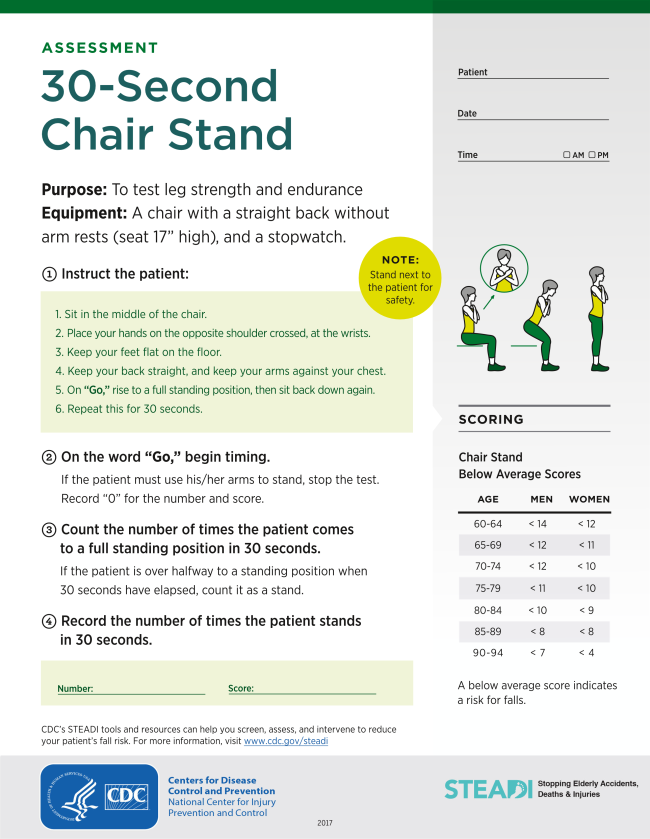
If you are between 60 and 94, take this test to see if you need to "beef up” your butt muscles!
| |
1. Sit-to-stand in 30 seconds
-
Get out your watch/timer
- Sit down in a sturdy chair (not soft and cushy)
- Do a practice run first
- Stand up and sit down as fast and safely as you can for 30 second (without using your hands to help).
- Record your score (how many times did you do it).
- Rest and then do it again.
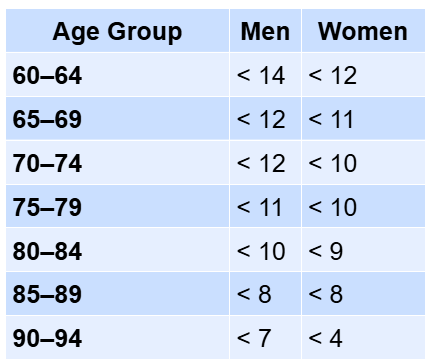
Compare your score here:
|
- Use these benchmarks to identify if you are at increased risk for falls as an older adult.
- Look for good exercises to get stronger and prevent falls—at the end of this article.
| | |
3. New York Times, March 2026: “This Muscle is the Unsung Hero Of Longevity."
Couldn’t have said it better myself!
- “Building your butt muscles will help you stay injury-free and independent in midlife and beyond.”
- “…experts are increasingly finding that having a powerful posterior isn’t just about looking good in jeans. The glutes are the largest muscles in our body and are closely tied to stability, balance and aging well. They act like shock absorbers when we walk or climb stairs, and building a strong butt can help prevent and manage back pain at any age and reduce the risk of falling for older adults.”
- “Long periods of sitting are bad for your whole body, but they can weaken your glutes in particular, leading to what’s called 'dead butt syndrome.' Despite this, many people neglect these muscles in their workout, said Sandor Dorgo, a professor of kinesiology at the University of Texas at San Antonio, adding that it’s especially important for older people to focus on their lower bodies.”
- “If your glutes are weak, your body can overuse your hamstrings and back muscles, which can lead to strains and joint pain or cause you to arch your back while walking or running. Perhaps less obviously, weak glutes can affect how confidently you move, one of the reasons they can lead to more falls," said Constanza Cortes, an assistant professor at the USC Leonard Davis School of Gerontology.”
How to tell if your glutes are weak:
- “The size of your glutes is not necessarily an indicator of their strength.
- “The way you move and how you feel while doing it is often a better guide. For instance, if your hips sway side-to-side or you waddle as you walk, that can be a sign of a weak gluteus medius, Dr. Marko said. Slouching, or pain in the hips, knees, or lower back, can also indicate weak glute muscles.”
- “Weak glutes can make it difficult to get out of a chair without using your arms, squat to the floor, or walk up or down stairs," Dr. Cortes said. People with weak glutes will often lean slightly forward while climbing stairs, and they may also rely on the handrail."
- "Tight hamstrings or calves can also be warning signs as they take over the job of your glutes when you’re walking, running, or squatting. Weak glutes can even cause pain as far away as your feet or heels. Discomfort in your hamstring when doing a bridge exercise is a dead giveaway," Dr. Marko said.”
Too much sitting! What you can do about it:
“The risk of prolonged sitting could be eliminated with 60 to 75 minutes per day of exercise, approximately 4 to 5 times higher than the current World Health Organization recommendation.”
| | |
4. New York Times, October 2024: "Why Sitting All Day May Shorten Your Life" by Jen Murphy
-
“Spending too much time in a chair can unravel your fitness goals and make you feel older.
-
“We’ve all heard that sitting too long is bad for you. We’re not evolved to do it; it can undermine our exercise gains; it causes dead butt syndrome.”
- “Other studies go further, suggesting sedentary people need to double the standard weekly exercise recommendations... Sitting for extended periods has also been linked to lower back pain. Small studies suggest the height of your lumbar disc might be compressed after sitting more than four hours without interruption.”
- “Furthermore, your large leg and gluteal muscles can stop activating after just 30 minutes of sitting," Dr. Owen said. Over time, they can weaken and cause back or knee pain. Sitting also doesn’t burn much energy. Over time, a sedentary lifestyle can affect your ability to regulate blood sugar and break down fat, potentially leading to weight gain and Type 2 diabetes. American workers today burn about 100 fewer calories per day than they did 50 years ago. That’s roughly equal to 30 minutes of walking," said Thom Rieck, an exercise specialist at the Mayo Healthy Living Program in Rochester, Minn.”
- “Lastly, sitting affects mood and cognition, increasing the odds of depression and anxiety.”
*Try these exercises (especially for folks who CANNOT easily get on the floor to exercise”)
| | |
5. AUSTRALIAN PHYSICAL THERAPIST, MIKE KUTCHER — for older adults (or anyone)
Here’s a great video by Mike Kutcher, a physiotherapist from Australia (No need to get up and down from the floor — all done in standing!)
*Try these exercises (especially for folks who CAN easily get on the floor to exercise).
| |
|
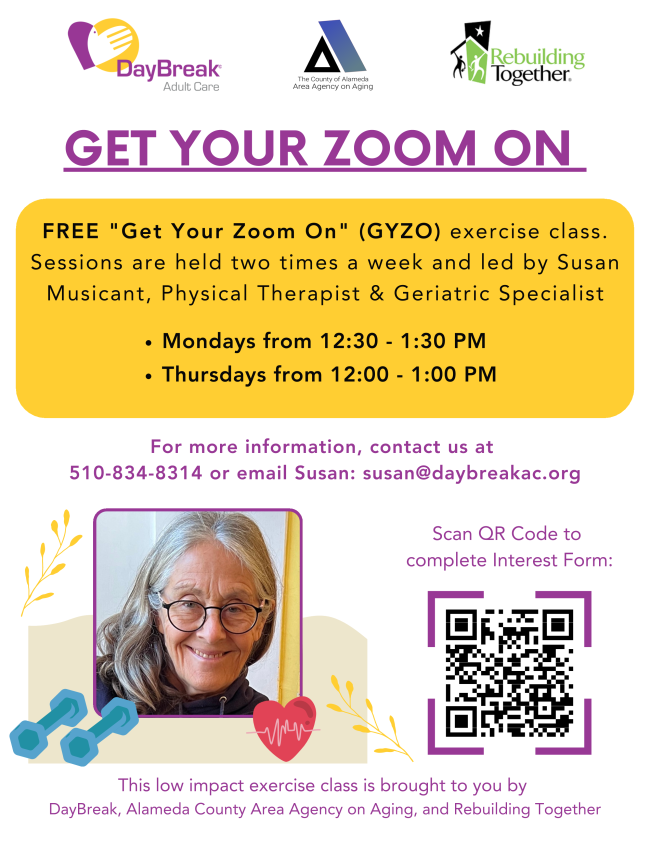
7. AND you can “GET YOUR ZOOM ON” with DayBreak’s free virtual exercise classes. Mondays and Thursdays.
Check out the link below:
Free weekly, hour-long virtual live exercise class given by Susan Musicant, a geriatric-certified doctor of physical therapy.
| | |
— Susan Musicant, DPT
Injury Prevention Specialist at DayBreak
| |
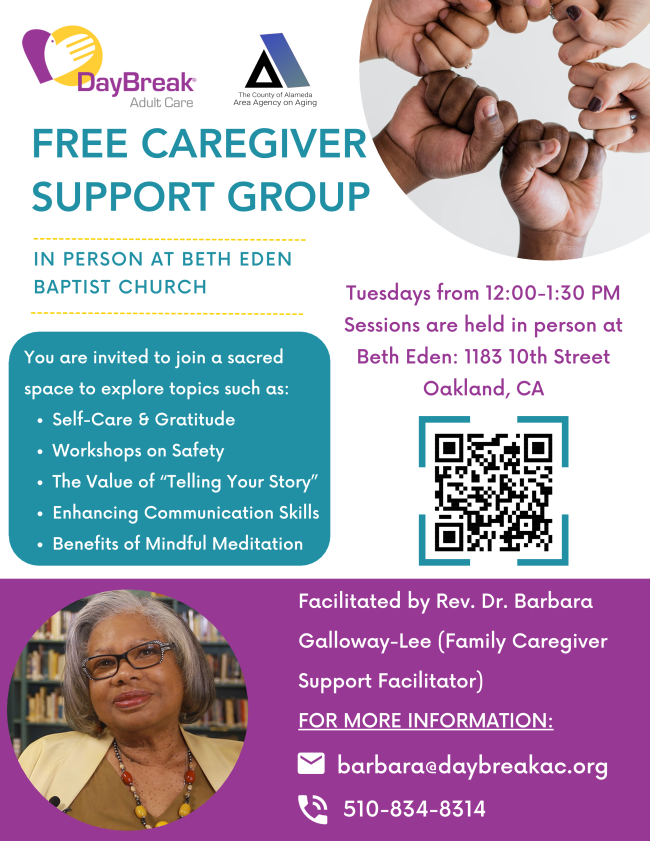
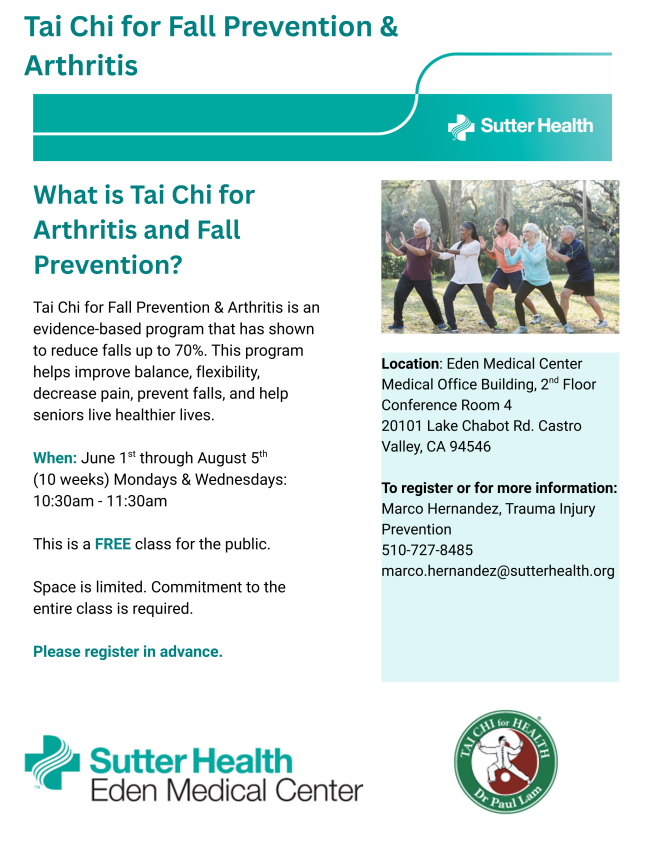
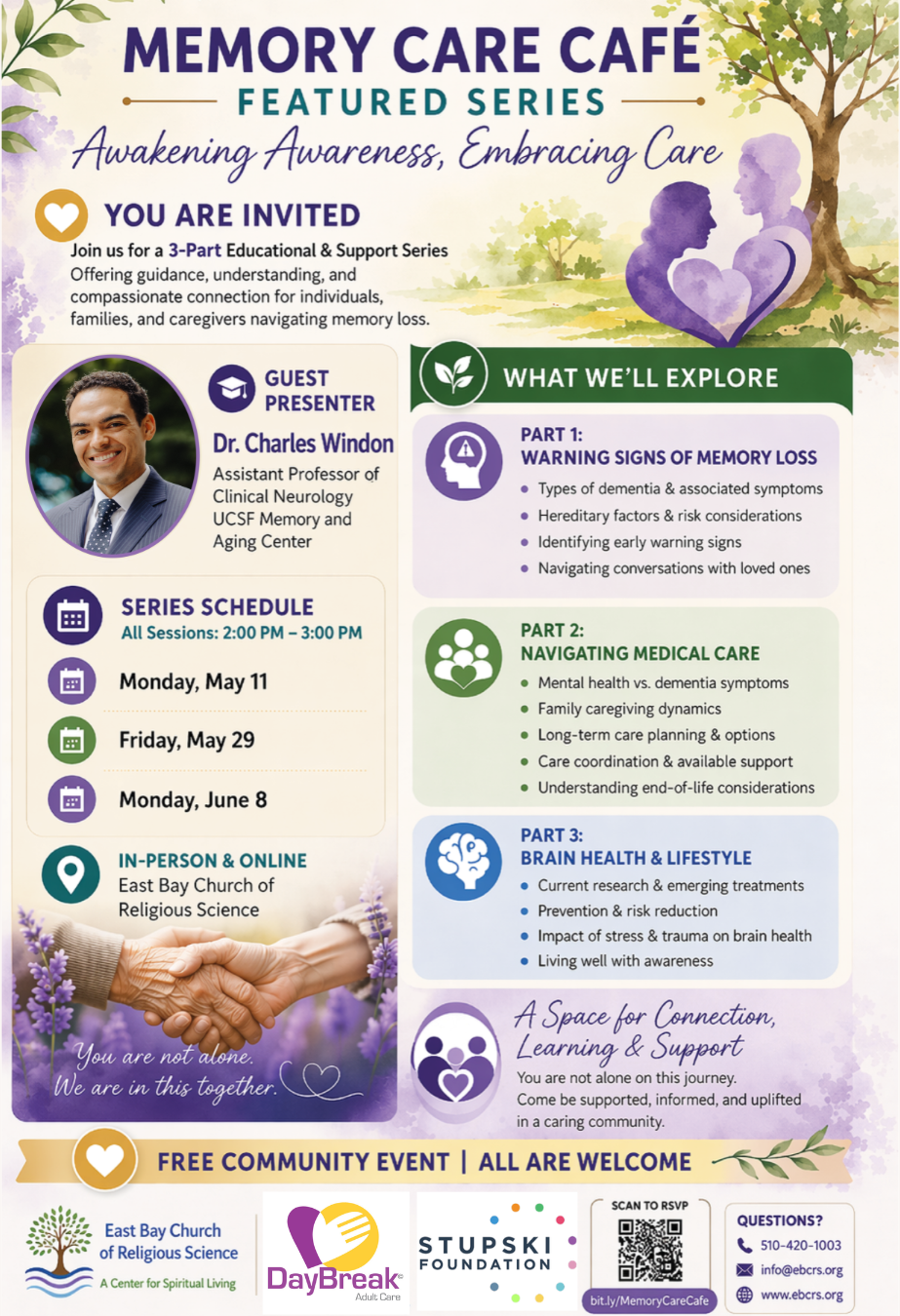
Upcoming Events & Workshops 📣 | |
Join Our Community of Care 💜
| | Your support helps older adults remain safe, connected, and cared for while aging with dignity at home. Thank you for making this work possible. | | |
If you know an elder in need of our care and coordination services, or a caregiver seeking support, please encourage them to reach out to us at:
510-834-8314
| | | | |