INTERNATIONAL WOMEN'S DAY and the MARCH WOMEN'S
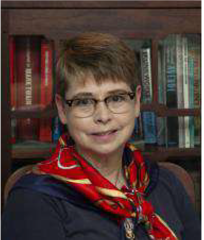
Holly Bogner, LWVGLA Member
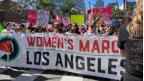
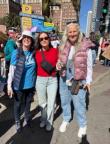
There were about 2,000 of us that descended on Downtown Los Angeles Saturday March 8 for The Women’s March. Organized by the Women’s March Foundation, this was part of a global movement in support of International Women’s Day. We came together to allow our collective voices to be heard.
My take away on the main themes were abortion access, stopping violence against women and LGBTQ+, and immigrant rights. The energy was fierce. We walked peacefully from Pershing Square to Downtown City Hall. The Signs that people made were works of art! All ages, young and old, male and female, from every walk of Los Angeles life were represented.
We watched a wonderful Native American dance then listened to a group of amazing speakers. There was a sense that many of us have become disillusioned by what is going on politically and could no longer be silent. A gathering like this unites us in common causes. I left feeling energized and ready for whatever the next chapter holds!
| | |
CELEBRATING LEADERSHIP AWARDS | |
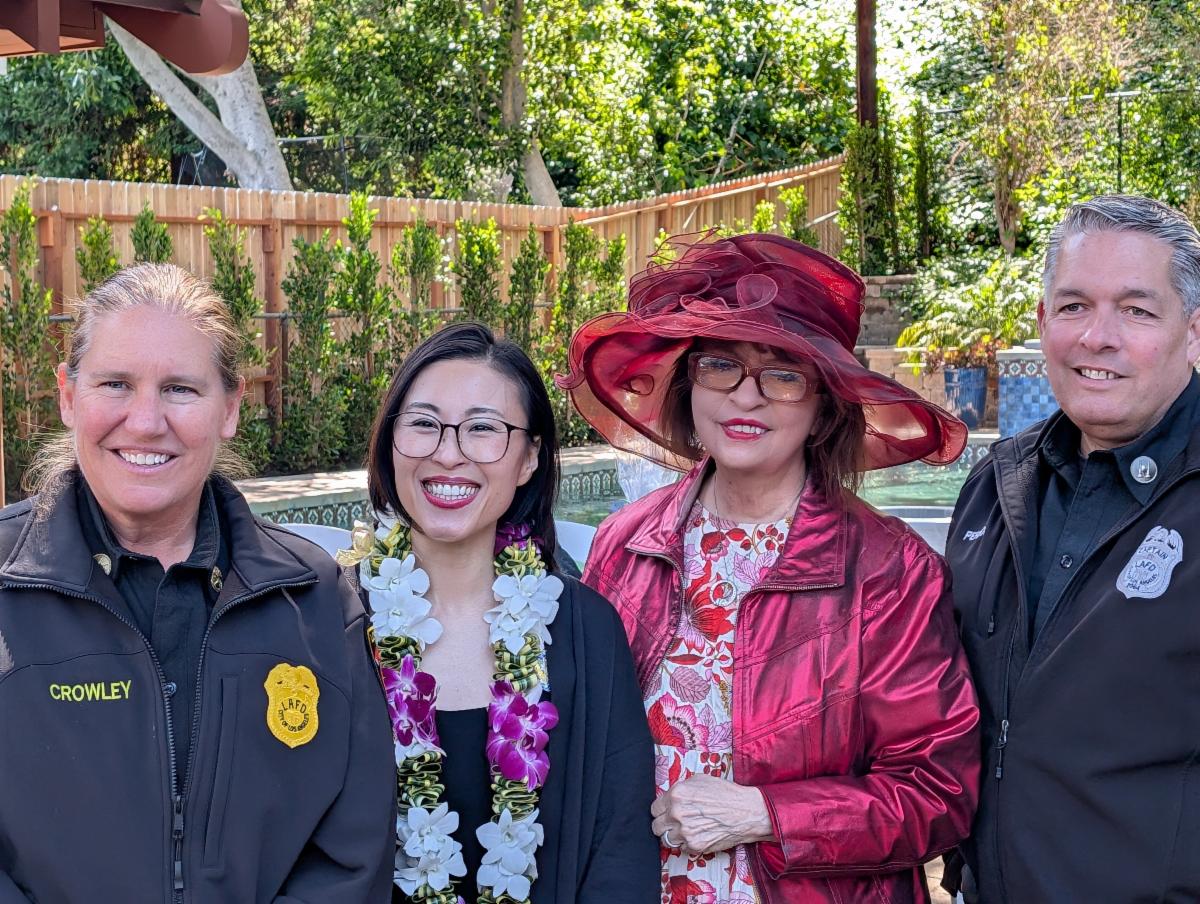
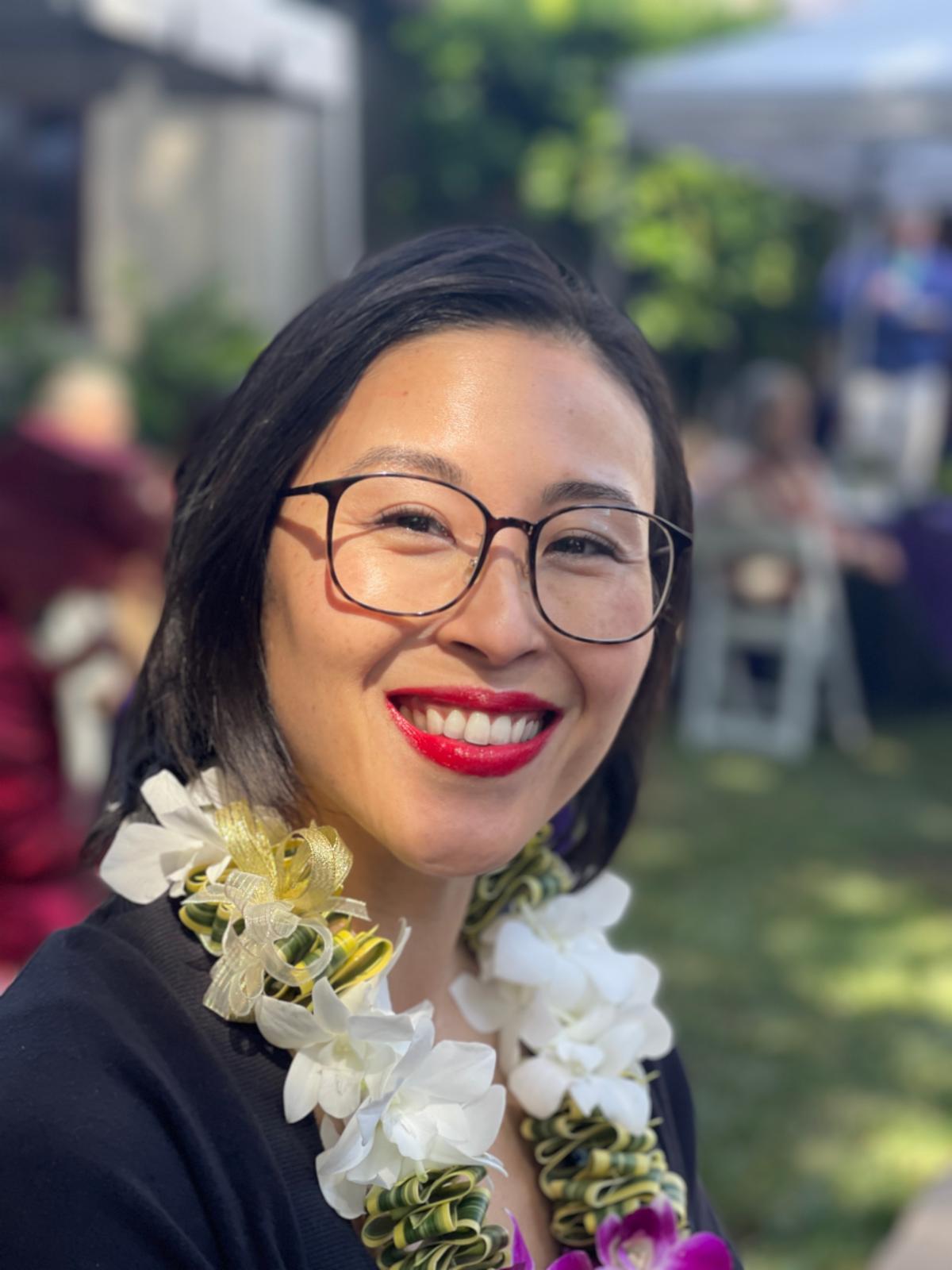
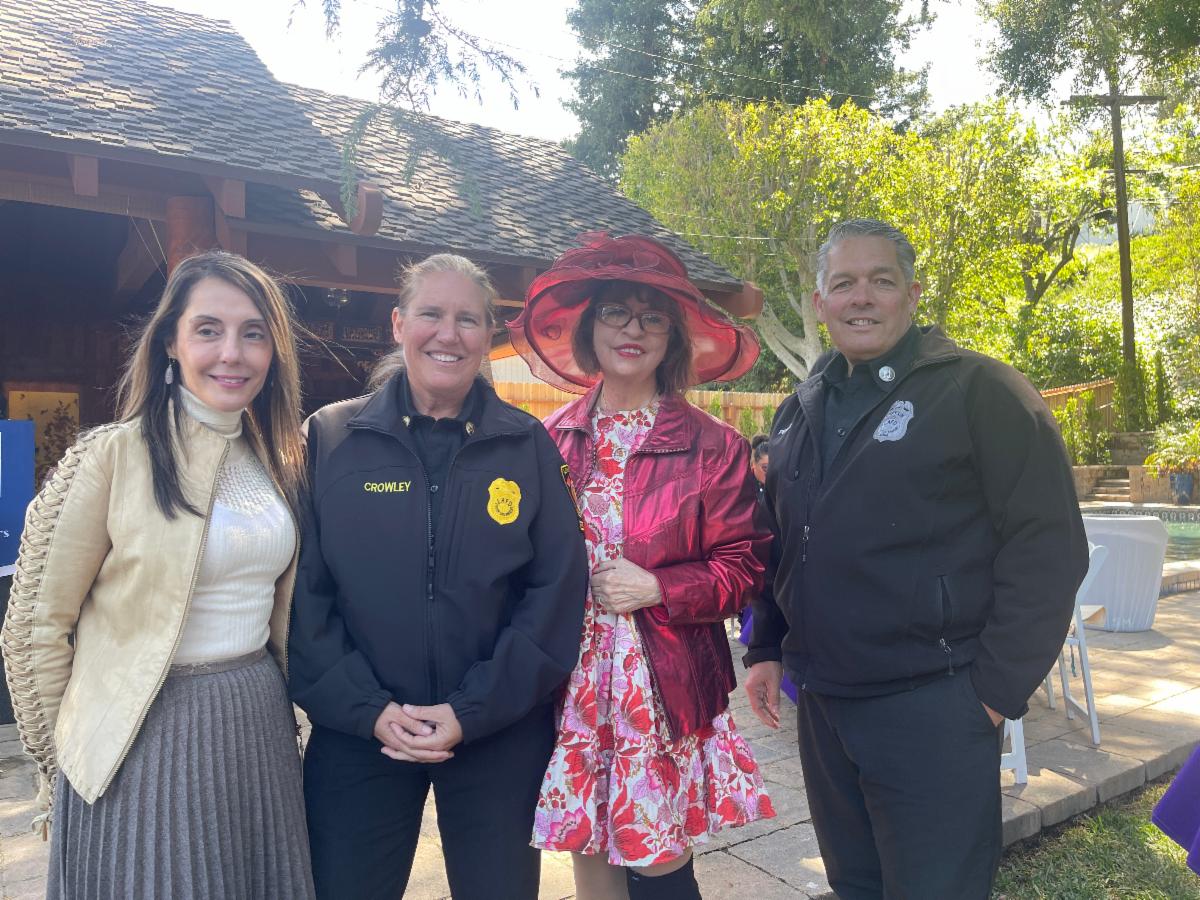
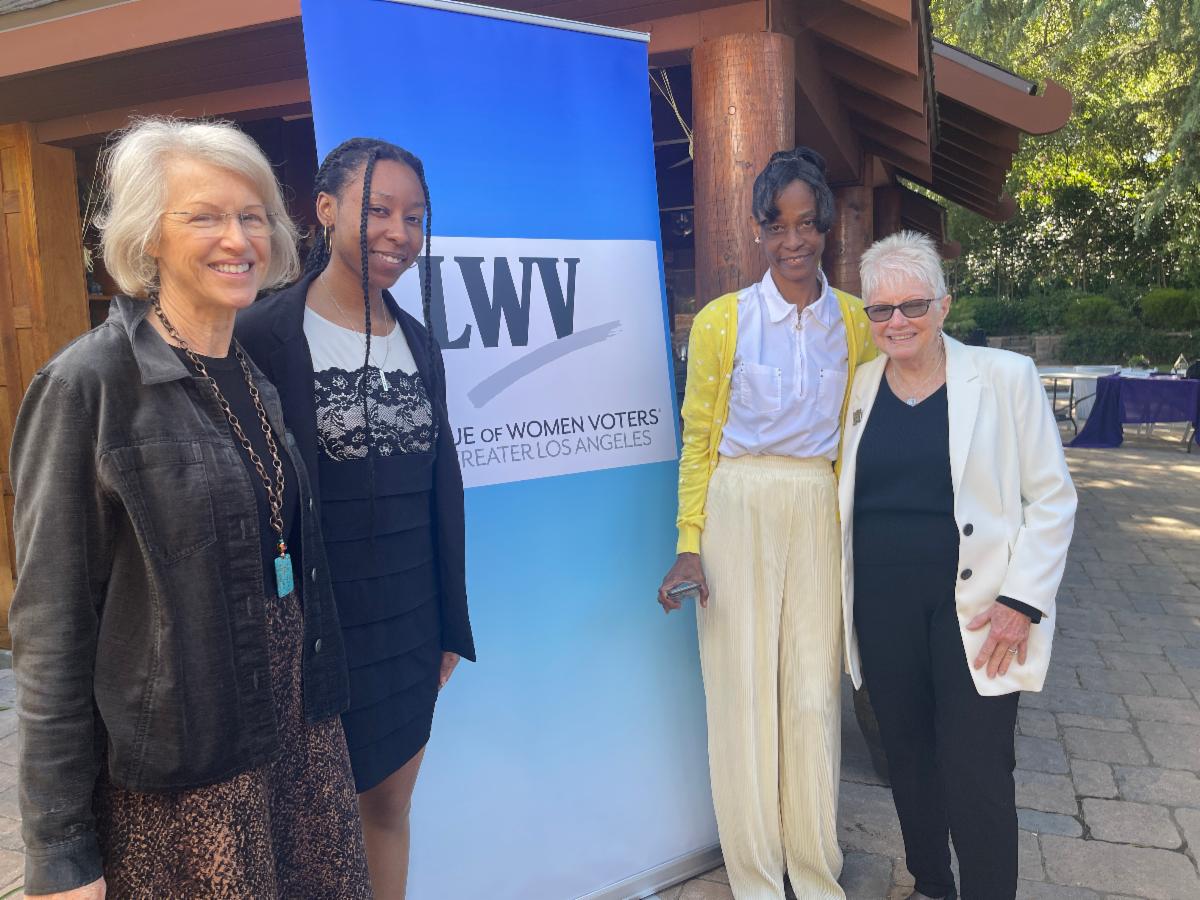
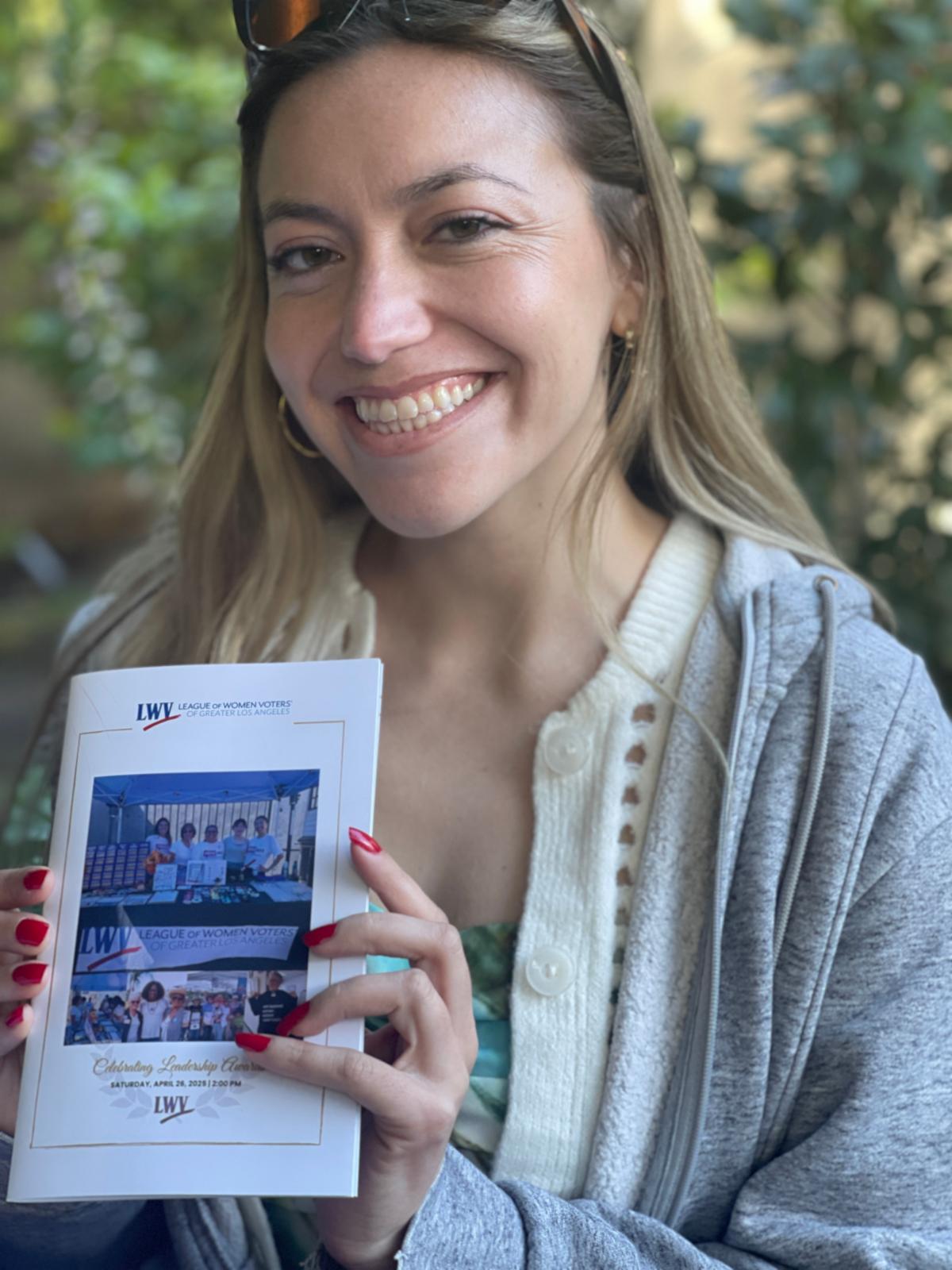
Thank you to friends, members, and supporters of the League for attending the 2025 Celebrating Leadership Awards event on April 26th.
Patt Morrison, a highly respected journalist, receive the Leadership in Media Award.
Valerie Morishige received the Voter Rights Champion Award.
Assistant Fire Chief Kristin Crowley received the Leadership in Community Safety Award.
The Valley Unit received special recognition.
WriteGirl Alumna Shandela Contreras performed her poem "A Vow of the Union"
| | | |
INSIDE CIVIC SOCIETY: A WOMEN'S HISTORY MONTH CONVERSATION WITH LA CITY COUNCIL MEMBER EUNISSES HERNANDEZ
Carla Fuentes and Gina Thornburg, Ph.D.
LWVGLA Board Members
Civic Society is the League of Women Voters of Greater Los Angeles’ signature donor program, founded over 15 years ago by Susan Rice and fellow League leaders to create a space for intimate, high-impact conversations on civic life, policy, and democracy in action. Through thoughtfully curated salons hosted in private homes, Civic Society offers members exclusive access to the elected officials, organizers, and changemakers shaping the future of Los Angeles.
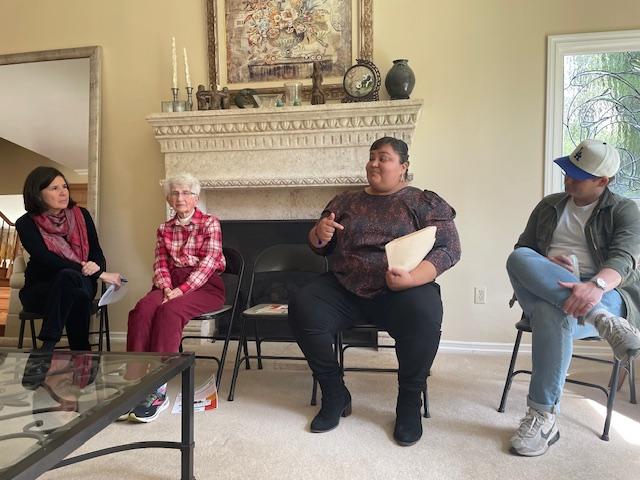
In celebration of Women’s History Month, we were proud to welcome Councilmember Eunisses Hernandez for a candid and powerful Civic Society gathering. A lifelong Angeleno, daughter of Mexican immigrants and one of the youngest members of the Los Angeles City Council, Councilmember Hernandez is part of a historic female majority now serving on the Council. Since taking office in 2022 she has advanced a bold Care First agenda centered on community care, harm reduction, and social services.
Councilmember Hernandez offered Civic Society members a rare behind-the-scenes look at the inner workings of LA City Hall. She covered a range of topics, discussing the city’s ongoing budget crisis, homelessness approaches, fire-recovery efforts, reasons for delayed response times in city services, and shelters for victims of domestic violence. She also stressed the importance of building relationships with members of the LA County Board of Supervisors Her reflections sparked a meaningful dialogue with League members about the effects of everyday governance on Angelenos and the importance of becoming and staying civically engaged.
If you’re looking to move beyond the headlines and into the rooms where honest, solution-focused conversations happen, Civic Society is for you. Join a network of thoughtful leaders and supporters committed to strengthening democracy through informed dialogue and collective action.
The expected annual contribution to the League's Civic Society is $1,000.
Become a member of Civic Society today! Contact Crissi Avila.
| | |
|
SB 42: CALIFORNIA FAIR ELECTIONS ACT
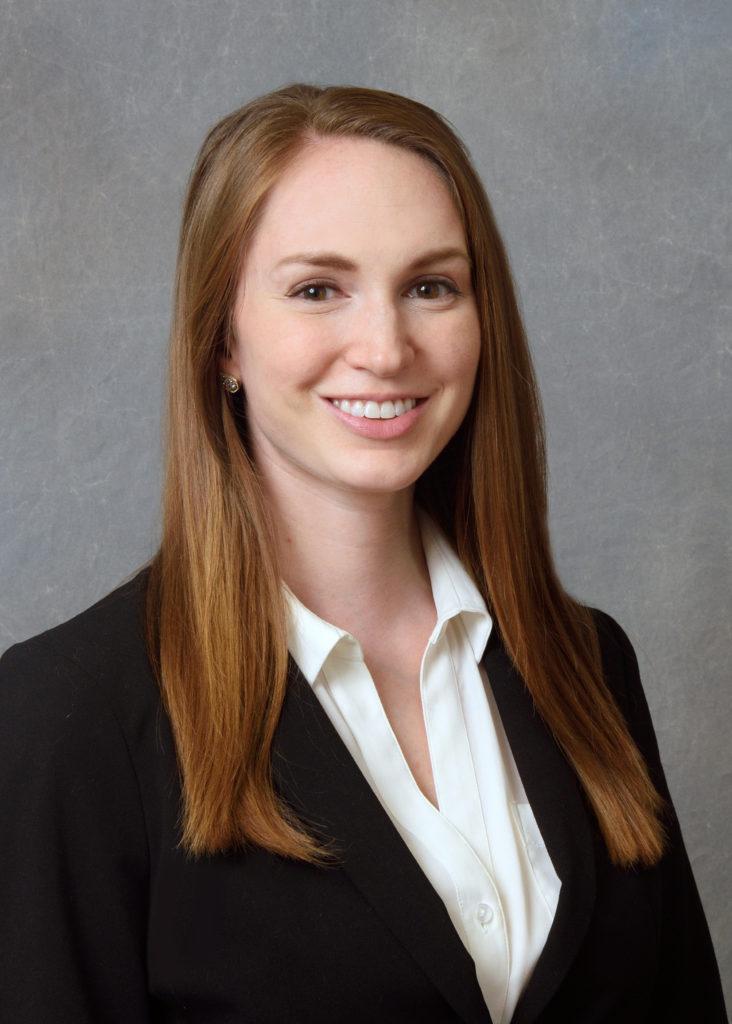
Grace Kishiyama, Intern with Criminal Justice Reform Committee
| |
The Political Reform Act of 1974 currently prohibits a public officer or candidate from accepting or expending public funds. The Secretary of State is required to submit the provisions to California voters on November 3, 2026, for approval. If passed, this law will allow candidates to accept public funds to seek elective office, assuming that the funds have not been designated for a local or state entity, education, transportation, or public safety. Such funds will not be allowed to pay legal defense fees or to pay personal loans accumulated by the candidate during the campaign. If passed, this Act would allow local and state officials to enact public financing in campaigns. Authors of the bill argue that this would create fairer and more competitive elections. Further, they add that public financing allows every individual to be heard, not just private and wealthy donors. This fairness comes from a reduction in the financial advantages of incumbency as well as an incentive to consider everyone’s voice. Public financing will also protect the state against corruption, since candidates will be required to rely on the broader electorate rather than a few wealthy donors to fund their campaigns. LWV California believes SB 42 will preserve the political integrity of our state and prevent corruption.
We are fortunate that Los Angeles City has public financing. This SB 42 would grant the same option to other municipalities in California. The bill is scheduled for a hearing during the week of May 19.
| | | |
|
WOMEN ON DEATH ROW
HILARY WAGNER, LWVGLA Member
| |
A February 2025 New Yorker article by Lawrence Wright entitled “The Nuns Trying to Save the Women on Texas’s Death Row,” recently caught my attention.1 As an organization of women dedicated to increasing knowledge for public policy issues, I thought the story was particularly compelling for this group.
The article described how a Catholic deacon convinced an order of nuns in central Texas to minister to a group of women on death row. At first reluctant to do anything but pray for the condemned women, the nuns, who lived mostly in silence, finally visited the prison. They quickly bonded with the incarcerated women over leading a modest life, having structured days, living in small and sparse quarters, and pursuing a deep faith in God. The article detailed the lives of several of the women on each side of the bars. All of the women on death row in that prison are mothers. Almost all of them are convicted of murders involving children – either their own or of a caretaker of children. All of them had lives filled with physical and sexual abuse, chronic poverty, addiction, exploitation, and mental illness. The author pointedly asked the nuns whether any of them had experienced violence in their lives. None had. Wright ponders what the lives of the women on death row would have been if they’d had the upbringings, families, and opportunities of the women who became nuns. The life details of these incarcerated women have stuck with me since reading the article.
Being a somewhat recent transplant to California, the article had me wondering what the landscape of the death penalty is in our own state. I admittedly assumed that as a mostly liberal state, we don’t execute people here. As it turns out, that is only partly true.
The first state-conducted execution was held March 3, 1893, at San Quentin State Prison.2 The first woman put to death by California was Ethel Leta Juanita Spinelli in 1941. Executions were first conducted in California as hangings, then with lethal gas or electrocution, and, beginning in the 1990s, condemned inmates were given a choice between lethal gas and lethal injection. Currently, there are 48 women on death rows in states across the country; 19 of them are in California.3 However, no woman has been executed in California since 1962. Two state propositions (one in 2012 and one in 2016) giving Californians the choice to abolish capital punishment have failed. On March 13, 2019, California Governor Gavin Newsom signed an executive order instituting a moratorium on the death penalty in California in the form of a reprieve for all people sentenced to death.4
So, while our state has not executed any women (or men) recently, more than a dozen are still living on death row at Central California Women’s Facility, northwest of Fresno. The New Yorker article digs into the complex considerations of capital punishment, which are applicable anywhere, not just Texas where this reporting took place. One issue is the suffering of the victims’ families who often wait decades to see their loved one’s murderer put to death. On the flip side is the suffering of the convicted people who often ride the unpredictable roller coaster of legal appeals that gives them hope of freedom, a new trial, or a more lenient sentence. There is also the inevitability that the justice system failed criminal defendants in some portion of cases. Research published by the National Academy of Sciences estimates that at least 4% of inmates on death row have been wrongfully convicted. Many people argue that even one wrongly convicted 5 person put to death is too many.
The League of Women Voters US adopted an official stance on the topic in 2006, stating that it supports the abolition of the death penalty.6 Yet 27 states, including California, still have capital punishment.
LWVLA members interested in this issue can turn to a number of resources and action items:
- Read the New Yorker article HERE.
- Listen to an EPISODE of the podcast Ear Hustle specifically about the women on Death Row in California.
- Consider joining our League’s Criminal Justice Reform Committee. Contact: Carolina Goodman at cjreform@lawlosangeles.org
- Write to your state legislator advocating your opinions on two bills: AB 1071 and SB 734, both related to racial bias in the appellate process. Read more about the potential legislation HERE.
- https://www.newyorker.com/magazine/2025/02/17/the-nuns-trying-to-save-the-women-on-texas-death-row
- https://www.cdcr.ca.gov/capital-punishment/history/
- https://deathpenaltyinfo.org/death-row/women
- https://www.cdcr.ca.gov/capital-punishment/
- https://www.pnas.org/doi/full/10.1073/pnas.1306417111
- https://lwvc.org/position/position-death-penalty/
| | |
COLLEGE OPPORTUNITIES IN CALIFORNIA PRISONS
MICHELLE ZHANG, LWVGLA Intern from Pomona College
Beginning in the fall of 2024, incarcerated students at the Norco California Rehabilitation Center (CRC) have the opportunity to earn a Bachelor of Arts degree in Education, Society, and Human Development with a concentration in Social Justice from the University of California Riverside. This program addresses the lack of degree-seeking opportunities for incarcerated individuals. Out of the 4,500 degree-granting universities in the United States, only 7% (315) provide some form of higher education in prison spaces. This semester, I’m taking a class at CRC on the Philosophy of Emotion, which cross-enrolls outside students from the Claremont Colleges and inside students who are incarcerated. Each week, we participate in and lead discussions on different theories of emotion. It’s been really eye-opening to hear the inside students’ perspectives and personal anecdotes relevant to these ideas. The space of the classroom incentivizes students to come to class prepared and ready to participate.
UC Riverside’s program builds upon UC Irvine’s LIFTED program, another UC-offered program which launched in fall 2022 at Ronald J. Donovan Correctional Facility near San Diego. LIFTED, Leveraging Inspiring Futures Through Educational Degrees, is the first in-prison BA-degree completion program in the University of California system. LIFTED enables incarcerated individuals to apply to transfer into UCI as juniors and earn a bachelor’s degree from UCI while serving their sentence. In 2014, the Governor of California signed legislation that allowed community colleges to teach face-to-face classes in prisons and to be compensated at the same level as regularly enrolled students.
| |
MEET LWVGLA INTERN GRACE KISHIYAMA
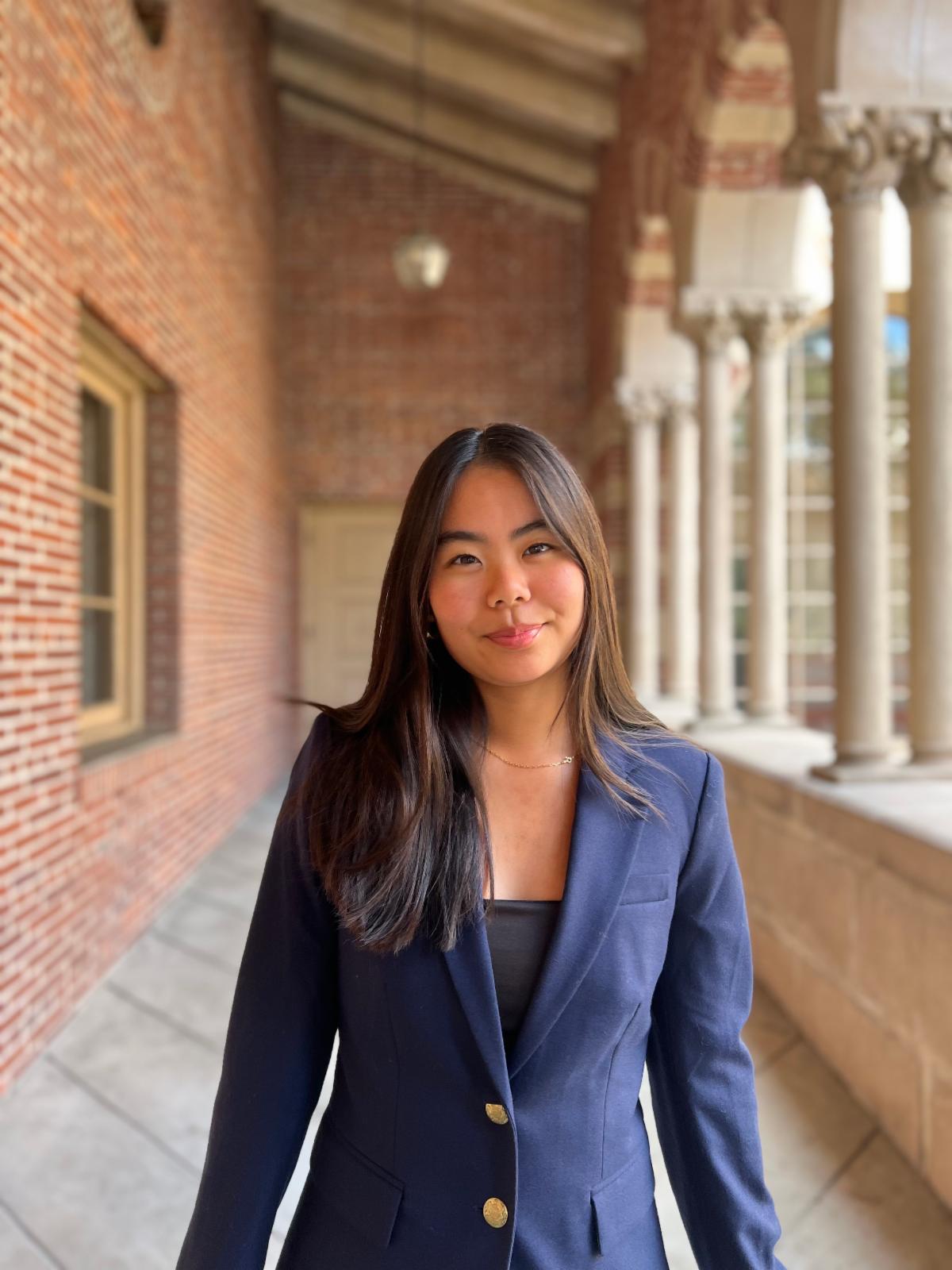
GRACE KISHIYAMA, LWVGLA Intern from USC
Grace Kishiyama is a junior at the University of Southern California pursuing a degree in Political Science with a minor in Business Finance. She is passionate about all things American politics and government-related and hopes to eventually pursue a career in public service or corporate law. In her free time, Grace enjoys swimming, baking, trying new restaurants around Los Angeles, and spending time with her friends and family.
| |
IN MEMORIAM
VIRGINIA WEXMAN, LWVGLA Member
Virginia Wright Wexman's specialty was film studies. She taught courses on film history, film genres, film authorship, and national cinemas. Her books include Creating The Couple: Love, Marriage, And Hollywood Performance; Roman Polanski; A History Of Film (co-authored with Jack Ellis); and an edited volume Film And Authorship.
When she joined LWVGLA she immediately got members excited about how women are portrayed in film. She organized "Women to the Polls: A Suffrage Film Festival" to shine a light on the need for continued vigilance in the
fight for universal suffrage at a time when voter suppression still exists in many parts of the country.
Over four Sundays in March 2020, screenings that speak to the complex history of the suffrage
movement were scheduled to be followed by conversations with notable figures from the political, creative, and academic worlds. After one screening and discussion enjoyed by League members and friends ........ You remember what happened in March of 2020. Virginia continued to give film recommendations in the League's Voter.
When Virginia and her husband John Huntington moved to DTLA, she turned her attention to Chairing the LWVGLA Transportation Committee. She was instrumental in the founding of South Park Neighborhood Association (SPNA). She was one of a small group that met to create a way to build community, give voice to residents’ concerns, and support local businesses. About 2015, Virginia founded “Dining Around Downtown” (DAD) for her fellow residents. A few years later, Virginia and John moved to a senior living facility in Pasadena.
Virginia was the best example of a League and community activist. She will be missed.
| | |
ERA RESOURCES - Keep the conversation going | |
What is the status of the ERA?
- The ERA has met all ratification requirements and is therefore a valid part of the Constitution “to all intents and purposes,” according to Article V of the Constitution.
- The ERA was introduced by suffragist Alice Paul in 1923. It was passed by Congress in 1972 with more than the necessary 2/3 vote in both chambers, and in 2020 it passed the 38-state threshold (¾ of states) for ratification.
- On January 17, 2025, President Biden released a White House statement affirming that the ERA is the law of the land.
Resources for all and some specifically for young people
| | | |
THANK YOU TO THOSE PEOPLE
WHO JOINED THE ECONOMIC BOYCOTT - KEEP IT GOING
| |
These are additional dates for new boycotts.
May 6-12 Amazon Boycott
May 20-26 Walmart Boycott
June 3-9 Target Boycott
June 24-30 McDonalds Boycott
July 4 Independence Day
| | | |
ABOUT UNITE AND RISE 8.5
Starting May 1, the League will launch the Unite and Rise 8.5 initiative, which aims to mobilize 8.5 million voters using the power of voter engagement as a cornerstone of our democracy. Unite and Rise 8.5 will showcase the many ways voters can drive change, including through advocacy, mobilization, civic education, and engagement. The initiative is part of LWV’s Women Defend Democracy campaign.
| | | | | |