|
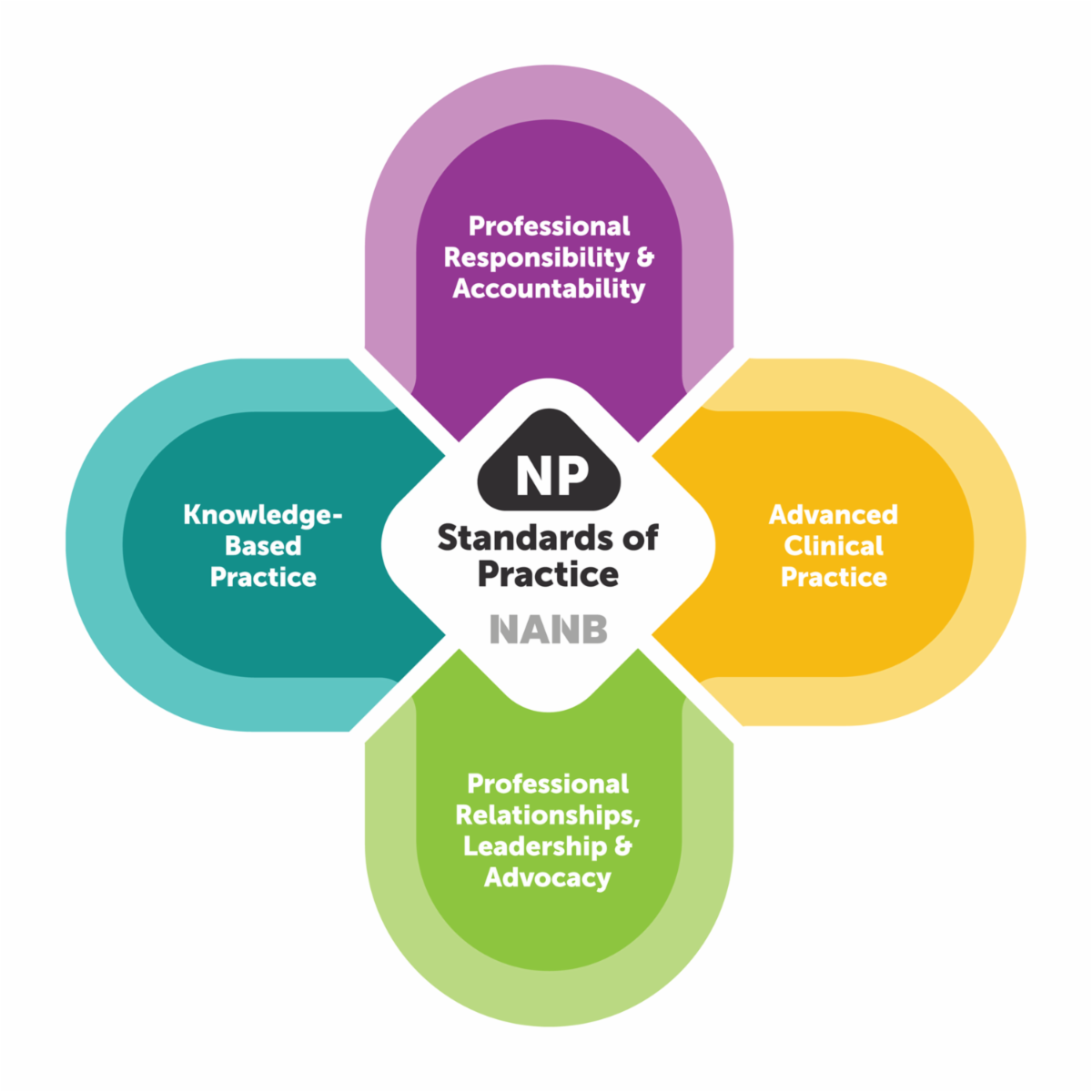
Nurse practitioners (NPs) have been globally identified as an essential component of effective and sustainable models of healthcare delivery1. NPs are well-poised as agents of change in the healthcare system, and this is reflected in Standard 4: Professional relationships, leadership, and advocacy. This standard serves as a benchmark for professional NP engagement to support healthcare reform and achieve a range of health outcomes (i.e., client, education, policy). It is known that NP leadership within organizations and health systems positively influences healthy work environments2; recognition of this professional accountability in the revised Standards of Practice for Nurse Practitioners supports NPs working in all role dimensions so they continue to achieve optimal healthcare outcomes through safe, competent, and ethical practice.
1. Splane, J., Horvath, S., Ziegler, E., Savard, I., Carter, N., Kilpatrick, K., Bryant-Lukosius, D., & Martin-Misener, R. (2023). Retention of advanced practice nurses: What will it take? Canadian Journal of Nursing Leadership, 36(1), 16-32. doi:10.12927/cjnl.2023.27126.
2. Ulrich, B., Cassidy, L., Barden, C., Varn-Davis, N. & Delgado, S. A. (2022). National nurse environments – October 2021: A status report. Critical Care Nurse, 42(5), 59-70. doi:10.4037/ccn2022798.
|