JBS announces Souderton closing | | | |
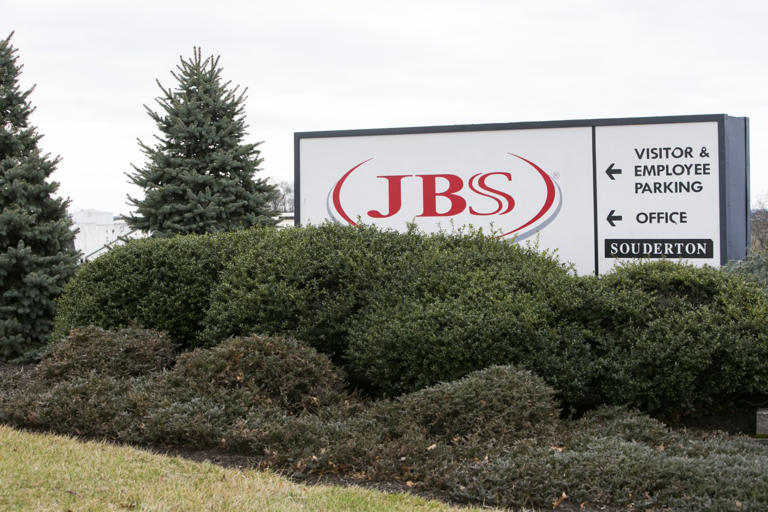
JBS, the world’s largest meatpacker, is preparing to close a beef-processing plant in Pennsylvania, the latest facility to close as a cattle shortage in the U.S. squeezes meatpacking companies.
The single-shift Souderton, Pa., plant employs about 1,700 people and can slaughter roughly 2,000 cattle a day. The facility, located just outside of Philadelphia, is one of JBS’s smaller slaughter facilities. JBS is the largest beef processor in the U.S. by volume.
About half of the cattle slaughtered at JBS’s Pennsylvania plant were trucked long distances, including from Iowa and Canada. The other half of cattle moving through the plant were culled dairy cows and livestock from the southeastern U.S. and upstate New York. The cattle will be shifted to other JBS facilities.
(source: Wall Street Journal)
Thoughts from PA Cattlemen's President, Bill Devore:
The Pennsylvania Cattlemen's Association received very disappointing news on June 12, 2026, that JBS plans to close its Souderton plant. This closure will affect not only cattle producers in Pennsylvania, but the entire East Coast, where processing capacity is already limited.
PCA President Bill DeVore said the decision to close Souderton is extremely disappointing, and the trickle-down effect will be felt not only by large feedlots marketing finished cattle, but also by the small cow-calf producers who are the heart of Pennsylvania agriculture.
Unfortunately, JBS's decision to close the Souderton plant on August 14 is final. However, the company will continue purchasing cattle in Pennsylvania, with those animals being transported to its Plainwell, Michigan, plant for processing.
PCA has remained in close contact with NCBA and JBS, and will continue providing updates to members as needed.
Update from JBS:
Our relationships with producers remain a top priority, and we do not expect disruption to our partnerships as a result of these changes. Even with the closure of the Souderton facility, we will continue to have cattle buyers active in the state and region, and we fully intend to remain a strong, consistent participant in the local market.
Production from the impacted facility will be absorbed into other JBS USA operations across our network wherever possible, including plants such as Plainwell, Michigan, among others. This includes cattle procurement, which will continue to be supported through our broader system.
These adjustments are part of aligning our network more efficiently—not reducing our commitment to the producers who are critical to our business. We remain focused on:
• Maintaining strong, consistent procurement programs
• Providing stability and continuity for our producer partners
• Supporting long‑term relationships across our supply chain
Overall, these changes position us to serve producers more effectively through a stronger, more modern, and more efficient production network—while continuing to show up in the market as a reliable buyer and partner.
| | New World Screwworm Updates | |
Guidance on Screwworm (NWS) in the United States
Note: There has been an abundance of information released on NWS in the past few weeks, but we felt that the Appaloosa Horse Club provided a timely update and tips for prevention. You'll find their news release here:
Following official confirmations by the U.S. Department of Agriculture’s Animal and Plant Health Inspection Service (USDA APHIS) of localized cases in Texas livestock and companion animals, agricultural officials are urging producers and animal owners nationwide to maintain high vigilance. The New World Screwworm is an aggressive parasitic pest whose larvae feed on the living flesh of warm-blooded animals. While the U.S. food supply remains entirely safe and the risk to the general public is low, the pest poses a significant threat to animal health and the agricultural economy.
"Early detection and strict herd management are our strongest lines of defense against the spread of this parasite," said Todd Branson, Director of Competitions and Marketing. "By taking immediate preventative steps, monitoring animals daily, and utilizing newly authorized veterinary tools, producers can safeguard their livelihoods and help contain this pest."
Critical Prevention Guidance for Livestock and Pet Owners
To minimize the risk of infestation, the Appaloosa Horse Club recommends the following immediate actions based on USDA APHIS Prevention Guidelines:
- Postpone Elective Procedures: Delay surgical operations that cause open wounds—including dehorning, branding, castration, ear notching, and tail docking—until active fly tracking subsides.
- Perform Daily Animal Inspections: Closely examine herds and pets for any open wounds, particularly around the face, genitals, and the umbilical areas of newborn animals.
- Treat Wounds Immediately: Clean and treat all cuts, scratches, and newborn umbilical stumps immediately with an approved topical insecticide or wound dressing.
- Mitigate Pasture and Pen Hazards: Inspect fences, equipment, and facilities to remove sharp edges, loose wires, or hazards that could scratch or injure animals.
- Control Secondary Parasites: Implement strict tick and fly control programs to minimize skin irritation that could attract adult screwworm flies.
- Inspect Transportation Vehicles: If traveling through or leaving an active NWS monitoring zone, check vehicles and trailers to ensure adult flies are not being inadvertently transported to new areas.
Recognizing the Signs of Infestation
Adult screwworm flies are attracted to wounds as small as a tick bite. Property owners should look for the following red flags:
- Wounds that rapidly enlarge, drain fluid, or produce a distinct, foul odor.
- The presence of white or cream-colored maggots burrowed deep within living tissue (unlike common blowfly maggots, which feed on dead tissue).
- Animals displaying signs of severe discomfort, lethargy, or separating themselves from the herd.
Authorized Veterinary Treatment Options
The U.S. Food and Drug Administration (FDA) and federal agencies have fast-tracked several emergency treatments to aid in mitigation. Livestock producers can consult veterinarians regarding conditionally approved preventatives, such as Dectomax-CA1 (doramectin injection), which treats and protects cattle from larval reinfestation for up to 21 days. Multiple treatments are also available for companion pets.
How to Report Suspected Cases
Do not attempt to treat a suspected screwworm wound without collecting samples first. If you observe suspicious maggots or an unexplained wound failure:
- Isolate the animal immediately to prevent further fly exposure.
- Contact your local veterinarian or state animal health official right away.
- Collect a sample of the larvae in a leak-proof container filled with rubbing alcohol, if safe to do so, for diagnostic testing.
For up-to-date tracking maps, regulatory movement mandates, and comprehensive toolkits, visit the centralized federal hub at Screwworm.gov or monitor the USDA APHIS Current Status Dashboard here:
| | |
Affiliate Updates - WCCA has been busy!
News from Washington County Cattlemen's Association (provided by Ethan Shriver)
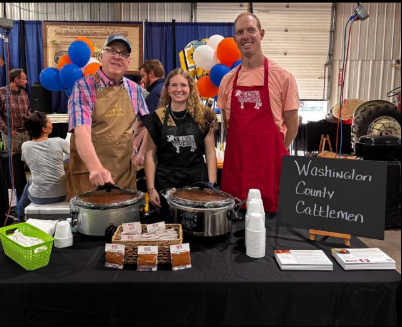
The 37th annual Ag Days at the Washington County Fairgrounds was held April 17 & 18, 2026. Many of our local ag organizations, 4-H Clubs/FFA Chapters attend each year, showcasing their commodities and conversing with the community. The Washington County Cattlemen’s Assoc. was busy over the two days with our educational booth and also participating in the chili cook-off. The Cattlemen’s took home 1st Place in the Judges Choice! Special tto our treasurer & PCA President Bill Devore in crafting our winning chili recipe & our beef rep Faith Ealy in helping serve. The highlight of the event is the WCCA Old-Fashioned Apple-Pie Contest & Auction. Each Ag Days, local pie bakers and community buyers come together to support the WCCA Educational Grant Scholarship Program. This year we had 14 apple pie entries; (8 Jr. Division Age 21 & under; and 6 Sr. Division Over Age 21) 6 of our 8 junior pies were WCCA/PCA Jr Members. Our apple pies raised $15,550 collectively for our scholarship program. As our panel of (3) judges commented; “The apple pies this year; all had excellent taste, & creativity.” WCCA awards prizes to the top 3 in each division & an overall prettiest pie.
WCCA Junior Cattlemen are eligible to apply for the Educational Grant Scholarship following 4 years of WCCA related community service (ex: volunteering at our steer check in dates, the county & community fair beef shows & market sales, Ag Days or other WCCA events) and 1 year of post-secondary education. WCCA awards the grant scholarships at our Fall annual meeting/banquet. The WCCA currently serves 60 junior members.
Also, following the WCCA Apple Pie Auction, a special apple pie was auctioned off. April 1, 2026. Alyvia Kemis, a 16-year-old 4-Her (showing market goats & rabbits; and attending Lincoln Park Performing Arts Charter School) here in Washington County had an unexpected heart attack. On Easter Sunday she received her wings, while her work continued as an organ donor. Her organs have been given to 5 individuals across the United States. The community rallied together and $4,000 was raised for the Kemis family to continue Lyv’s humanitarian spirit, kindness and generosity to all who had the honor and privilege to be in her circle of family and friends. Special Thanks to WCCA Board Member/PCA Member Charity Richards for
baking the apple pie and buyers WCCA President/PCA Member Lisa Bioni & WCCA/PCA Member Gino Bioni of Bioni Industries.
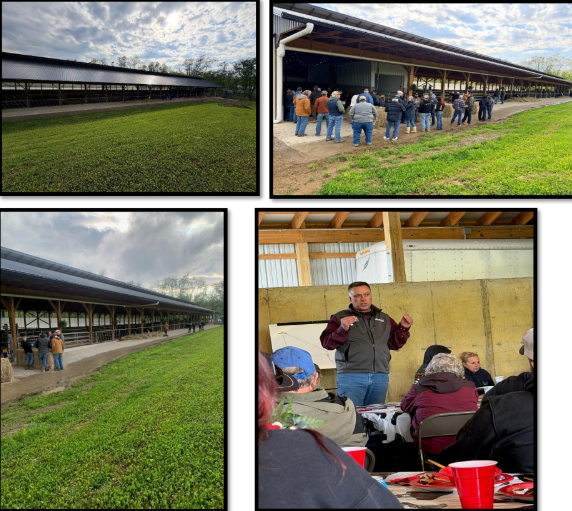
WCCA hosted a Spring Field Day Friday May 1, 2026, at the farm/feeding facility of WCCA/PCA Members David & Renee Dickson of Washington. Over 80 WCCA/PCA & other community agriculture members joined for an evening of fellowship, food & education. We thank Dr. Lowell Midla for coming back to his childhood home turf and speaking on the daily operations of cow/calf management. We also send thanks to our state team at PCA for helping us give out sorting flags to those in attendance. The chilly & damp early May weather did not thwart an enjoyable, innovative event.thwart an enjoyable, innovative event.
| |
Above: The winning chili cook-off team!
Below: Washington County Cattlemen's Spring Field Day
| | Field Day Reservations due now! | | |
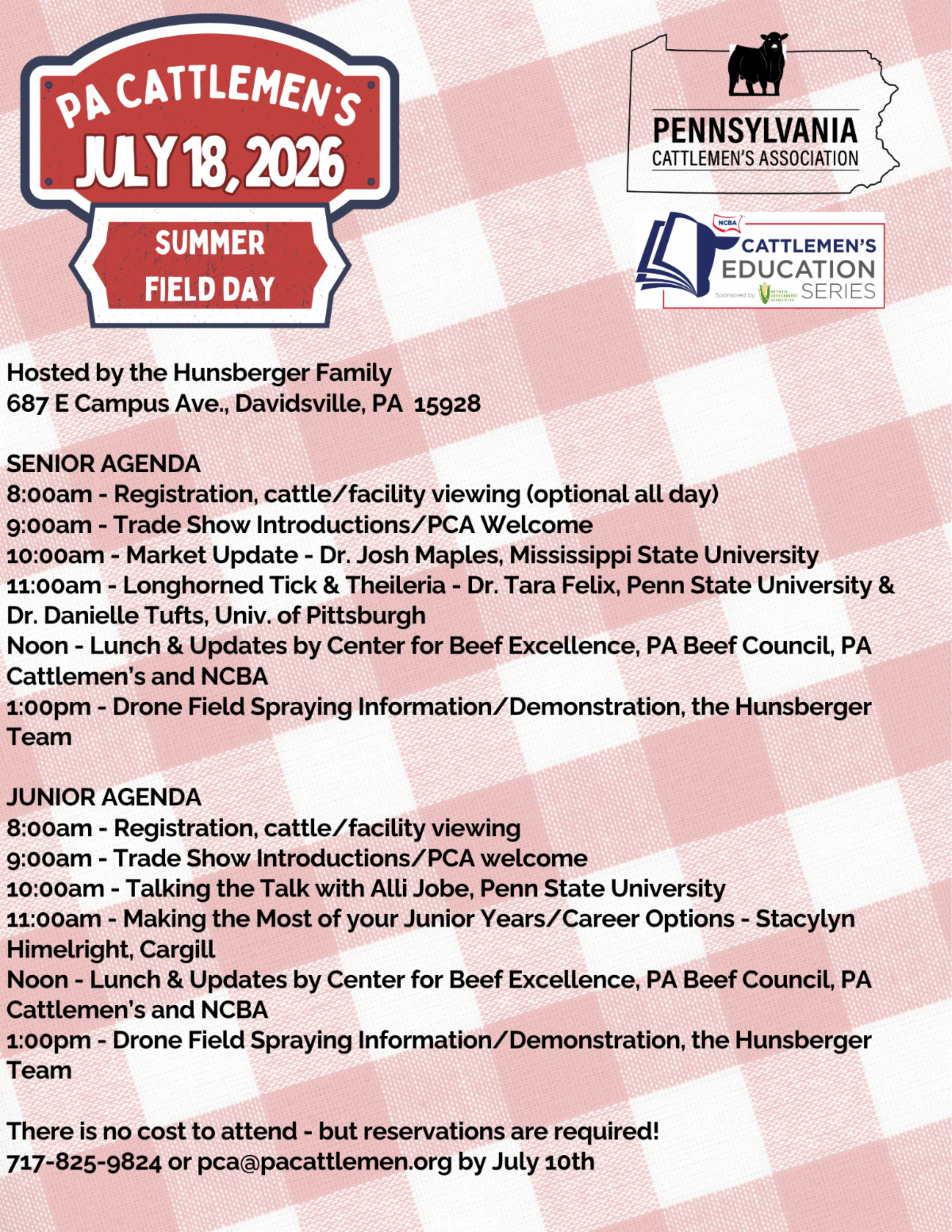
Pennsylvania Cattlemen's Association cordially invites you to the 2026 Summer Field Day, that will be held at the Hunsberger Farm in Somerset County.
This year's event will have both an adult and junior program, featuring a stellar lineup of speakers. More details will be posted in the coming weeks on our PA Cattlemen's Facebook page and website. You can also reserve your spot for the Field Day online at www.pacattlemen.org.
We hope to see you there! Reservations are due by July 10th!
| | |
We have been asking our speakers why they are excited to join us next month at the Field Day, and we wanted to share responses as we get them back. Be sure to watch our Pennsylvania Cattlemen's Facebook page for more updates.
| | |
Stacylyn Himelright of Cargill is one of our featured speakers. She will be presenting on career options, and sharing a bit of her journey in finding a job in the agricultural industry.
"Working with our industry’s youth truly feels like a vital and fulfilling investment in the future of the cattle business. Many mentors shaped both my professional and personal development, and their guidance gave me firsthand experience in just how critical it is to spend time with the next generations. I’m looking forward to engaging with the Juniors and helping inspire their journey."
| |  | |
Dr. Josh Maples is the Assistant Director for MSU Extension and an Associate Professor at Mississippi State University. You may be familiar with his weekly market updates that he writes with Kenny Burdine and James Mitchell, "Cattle Market Updates Weekly."
"I’m excited to join the Field Day because it is such a fun time to dig into cattle markets. I’m looking forward to sharing some of the factors that are driving these record prices and discuss what will affect prices the rest of this year and into 2027."
| | | |
Your Pennsylvania Cattlemen's Association is committed to serving you and strengthening our industry. To ensure we are meeting your needs, we invite you to participate in a brief survey about your communication preferences and our Keystone Cattlemen magazine. We are partnering with the Livestock Advertising Network and the UF/IFAS Center for Public Issues Education in Agriculture and Natural Resources.
Your feedback will help us better understand what information is most valuable to you, how you prefer to receive updates, and how we can continue to improve both our communications and publication.
The survey will only take a few minutes, and your responses will play an important role in shaping future association efforts.
At the end of the survey, you will have the option to enter for a chance to win a $50 gift card provided by the Livestock Advertising Network.
Thank you for taking the time to share your perspectives and for your continued support of the Pennsylvania Cattlemen's Association!
| | |
Upcoming Events
July 2-4 PA Angus Breeder's Show, Huntingdon, PA
July 18 PA Cattlemen's Field Day, Hunsberger Farms, Davidsville, PA
July 25-26 Stierwalt Cattle Fitting, Showmanship & Cattle Care, Washington, PA
July 29 Southeast Cattle Feeders Small Group Meeting, Lancaster, PA
August 11-13 Ag Progress Days, PA Furnace, PA
September 15-18 National Red Angus Convention, Hershey, PA
September 30-October 4 - Beef "weekend" at KILE, Harrisburg, PA
October 13-14 Penn State Beef Short Course, State College, PA
*If you have an event you'd like listed in the calendar, please send all information to pca@pacattlemen.org. Thank you!
| | | | |