Protecting Land & Water | Advocacy | Balanced Growth
| |
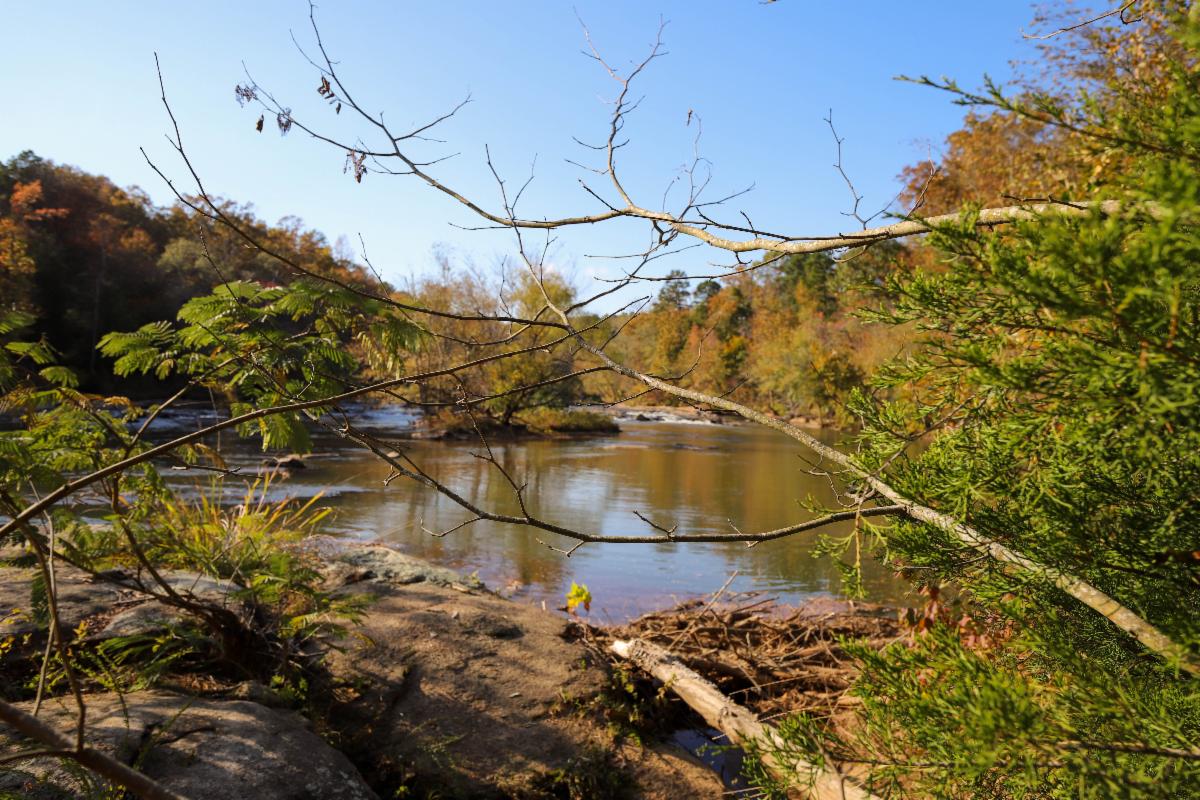
Tyger River Watershed at Nesbitt Shoals (The Tyger River Foundation) | |
|
The Water Log: Winter 2024
Happy Holidays from Upstate Forever's Clean Water Team!
Since we last checked in with you, our team has been busy advancing ongoing clean water projects and policies. In addition to this work, our staff presented on how our program utilizes land protection as a tool for protecting water quality at the South Carolina Water Resources Conference. Read on to learn more about this key component of our work and to get updates on ongoing projects.
Wishing you a cozy and joyful holiday season,
| |
|
Rebecca Wade
Clean Water Specialist
Upstate Forever
| |
|
Land Conservation and Clean Water
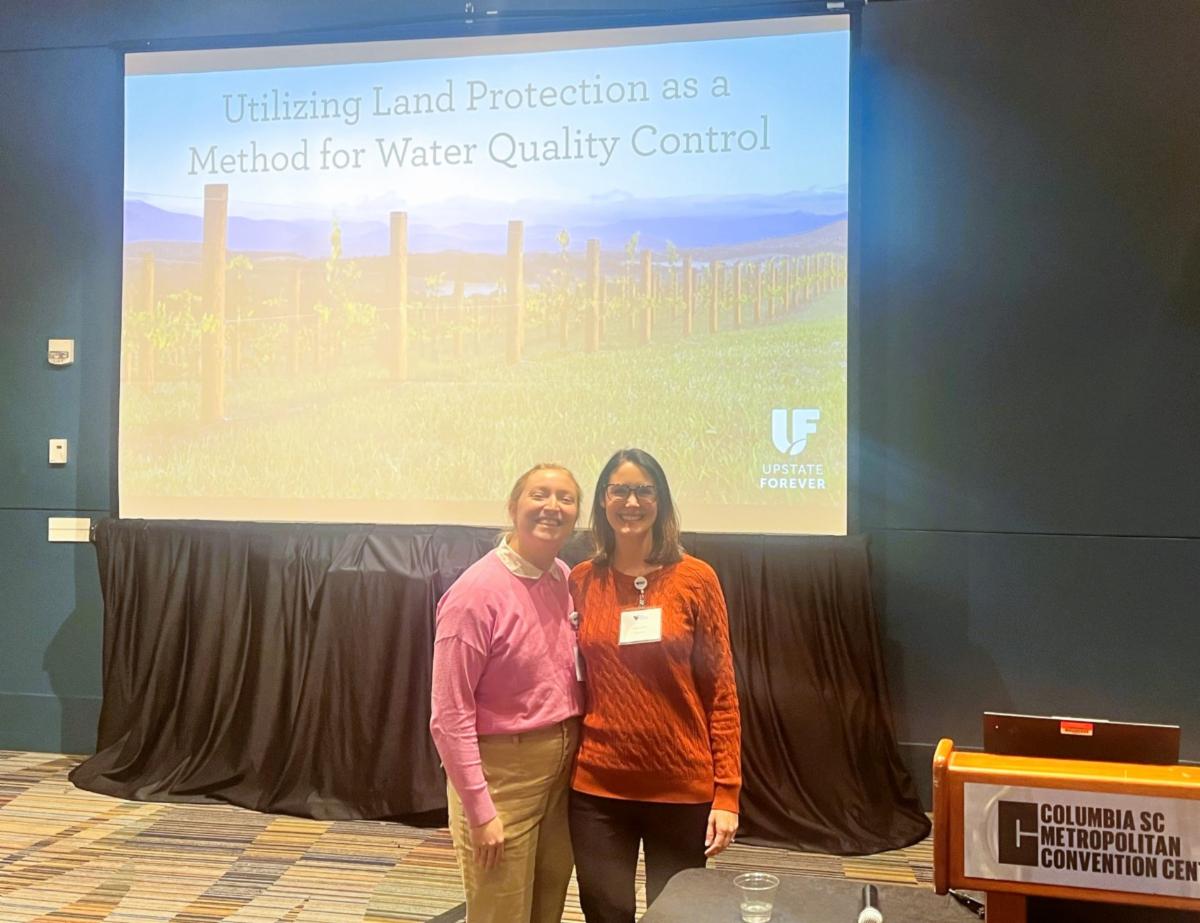
As many of you know, Upstate Forever (UF) works to protect critical lands and waters in Upstate, SC. But not everyone knows how our Land Conservation and Clean Water programs work together to accomplish this important work. To help explain this process our team members — Katie Hottel and Rebecca Wade — presented at the South Carolina Water Resources Conference (SCWRC) in Columbia, SC, back in October 2024.
One of the foundational ways our Clean Water and Land Conservation programs collaborate to protect land and water is through watershed-based planning (WBP) and Section 319 implementation grants, funded and administered by the South Carolina Department of Environmental Services (SCDES). In previous Water Logs, we have explained how WBPs and Section 319 grants work together to enhance and protect water quality. For a refresher, click here.
Section 319 funding contributes cost-share funding to landowners who protect their property with a conservation easement. Everything starts at the WBP level where we conduct land prioritization analysis. This analysis essentially ranks parcels of land that, if developed, would have negative impacts on water quality. Factors included in this analysis include proximity to other protected lands, presence of waterways and riparian corridors, soils, and land uses.
By prioritizing parcels, we are able to see what parts of a watershed, if protected, would have the greatest impact on enhancing and protecting water quality. Using this information, our Clean Water and Land Conservation programs are able to strategically target landowners who rank the highest for conservation. This prioritization analysis also provides a framework for our Land Conservation team to obtain grants for land protection to work alongside SCDES-administered grants to maximize funding opportunities for landowners.
Next, our organization provides cost-share assistance to landowners who are protecting their property by covering due-diligence costs through our Section 319 grants. Examples of such expenses include appraisals, surveys, and attorney fees, which are often not covered by conservation funding through the state and other organizations. This funding is essential because the average due diligence costs for a conservation easement are $12,000! Therefore, providing funding through Section 319 grants is sometimes needed to get over the final hurdle of protecting a parcel of land.
UF's unique and collaborative approach for protecting land and water resources was also recently highlighted by the US Environmental Protection Agency in a water protection resource for land trusts! Click here to view this fact sheet.
| |
Rebecca Wade (left) and Katie Hottel (right) at the South Carolina Water Resources Conference on October 16th, 2024. | |
|
Protecting Working Agricultural Lands
In addition to this great collaborative work, our teams are protecting working agricultural lands in the Upstate. Specifically in the Three & Twenty Creek and the South, Middle, and North Tyger River watersheds, UF has leveraged funding sources and site design knowledge from the Natural Resources Conservation Service (NRCS) to protect water resources.
UF's Land Conservation team was awarded more than $3.9 million in funding to protect farmland through the Regional Conservation Partnership Program through NRCS. Eligibility for this program is based on prime farmland soils, the amount of open lands, and the property owner's willingness to permanently maintain their property as a farm through a conservation easement. This funding resulted in a concerted effort on UF's part to protect and enhance working agricultural properties in the Three & Twenty Creek Watershed.
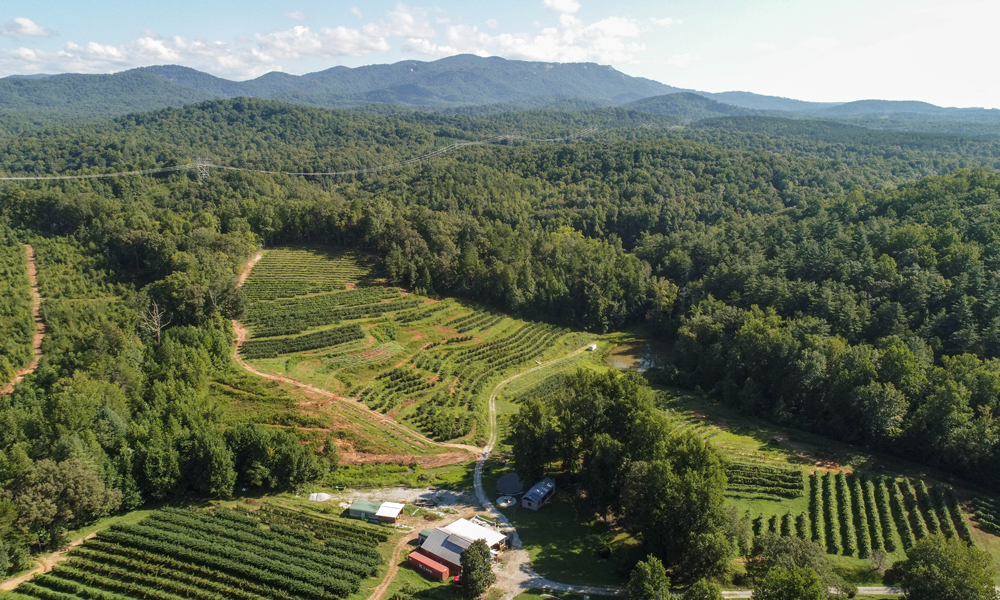
In the Tyger River watersheds, UF staff were able to maximize funding sources and program expertise by working with the landowners at Calico Vineyard, a 113-acre family-owned vineyard and farm in northern Greenville County that was permanently protected by a conservation easement in 2021. This conservation project was made possible in part by SCDES Section 319 funding.
| |
Calico Vineyard - a protected property in the South Tyger River Watershed. | |
|
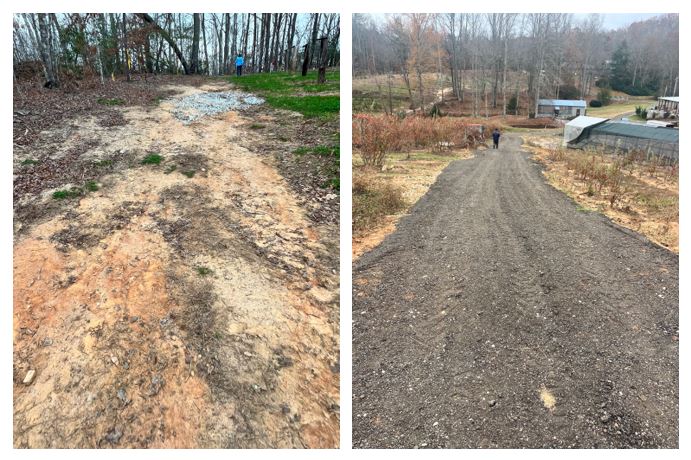
Our programs and this landowner took it one step further! In 2024, our team worked to install an agricultural best-best management practice (BMP) by stabilizing steep and eroding farm roads on the property. In total, more than 7,890 square feet of farm road were stabilized to prevent erosion when moving heavy machinery to service the vineyard.
Our teams are delighted to highlight this progressive and collaborative work. If you have any questions, reach out to Clean Water Specialist, Rebecca Wade, and consider what funding opportunities might be available to you through these programs!
| |
Before (left) and after (right) farm road stabilization projects at Calico Vineyard. | |
|
The South Carolina Department of Environmental Services (SCDES) wants to hear from you!
SCDES is spearheading an effort called WaterSC — a working group tasked with evaluating surface water demands with increasing population and economic growth across the state.
To evaluate this demand, there are diverse stakeholders involved that represent various interest groups such as conservation, utilities, state agencies, and more. A significant component of this work is hearing from people like you!
SCDES is hosting an Open House and a Listening Session on Tuesday, January 7 at Phillips Market Center at 117 Ballard Court, West Columbia.
-
4:00 pm | How to be better informed and share comments
-
6:00 pm | Opportunity for recorded public comments
For more information about WaterSC and this engagement opportunity, click here!
| |
|
Watershed Based Plan (WBP) Updates
Twelvemile Creek WBP Completed!
We have successfully completed a Watershed-Based Plan for the Twelvemile Creek Watershed, which encompasses the eastern portion of Pickens County extending southwest to Lake Hartwell. View the WBP
| |
Rocky River WBP
We have kicked off another WBP for the Rocky River Watershed, which includes sections of both Anderson and Abbeville counties and contains a drinking water intake for the City of Abbeville. We are thrilled to get started on this WBP and expand cost-share funding opportunities to more areas across the Upstate.
If you, or someone you know, is interested in participating in this planning effort, please reach out to Clean Water Specialist, Rebecca Wade, at rwade@upstateforever.org. We will be working on this plan through the spring of 2026.
| |
|
Three & Twenty Creek WBP Implementation – Phase 2
We are plugging along with Phase 2 in the Three & Twenty Creek Watershed (Anderson & Pickens Counties)! We continue to complete project installations across this region by providing cost-share assistance to the public for septic repairs and replacements, agricultural BMPs, and land protection.
So far, we have completed the following:
- 10 septic repairs/replacements with 4 in progress
- 3 agricultural projects with 10 in progress
-
5 conservation easements in the works
| |
|
Tyger River WBP Implementation – Phase 2
This grant wraps up in July 2025, and similarly to Three & Twenty Phase 2, we have limited funding available for BMPs.
To date, we have completed the following:
- 41 septic projects
- 2 agricultural projects
- 3 conservation easements with 1 more in progress
Funding is available first come, first served through 2027! Learn more or see if you qualify for cost-share assistance for septic tank repairs, agricultural projects, and/or conservation easements, by visiting upstateforever.org/319grants or contacting Rebecca Wade at rwade@upstateforever.org.
| |
|
Grant Funding Opportunity - EXTENDED!
The Anderson County Watershed Protection Council — also referred to as the Anderson Water Council (AWC) — is seeking grant applications! The AWC is a volunteer advisory committee working to assist nonprofit organizations including Upstate Forever and Savannah Riverkeeper in identifying, prioritizing, and funding projects to restore water quality in areas of the Savannah River watershed impacted by the Kinder Morgan 2014 petroleum pipeline spill.
Eligible organizations are able to apply for awards ranging from $10,000 to $50,000 for education and outreach, and up to $100,000 for site remediation and land protection grants in the impacted area.
Applications for this grant are being accepted on a rolling basis and will be reviewed quarterly. For more information about this funding opportunity, click here.
|
|
|
Until next time!
Thank you for signing up to receive The Water Log, UF’s email newsletter dedicated to Clean Water news, issues, and information. We appreciate your interest and dedication to safeguarding the Upstate’s water resources.
If you have any questions about this topic or would like to learn about another Clean Water issue in a future edition, please contact Rebecca at rwade@upstateforever.org.
| |
Follow us on social media: | |
Click the icons below to learn more about our work | |
|
Upstate Forever is a nonprofit conservation organization that protects critical lands, waters, and the unique character of Upstate South Carolina. Over the past two decades, we have worked to protect the natural assets that make the Upstate so special — our farmlands, forests, natural areas, rivers, and clean air. We are committed to ensuring that our communities are vibrant and retain their green spaces, outdoor heritage, and unique identities in the face of rapid development and significant sprawl. Our vision is an environmentally healthy, economically prosperous Upstate that offers a high quality of life now and for future generations.
Funding for watershed improvement projects provided wholly or in part by the US EPA under Section 319 Grants through the SC Department of Environmental Services (SCDES).
Funding for WBPs provided wholly or in part by the US EPA under a Capitalization Grants for Drinking Water State Revolving Funds Grant through the SC Department of Environmental Services (SCDES).
For more information, visit our website at upstateforever.org or send us an email.
| | | | |